

The GAPS explanation of celiac disease begins at the intestinal wall. Gluten matters, but the source does not treat gluten as a problem acting in isolation. It connects the immune response with abnormal gut flora, unhealthy enterocytes, incomplete protein digestion, a permeable gut wall, antibody formation, and reactions to other grain and plant proteins.[1] This page follows that sequence one step at a time.
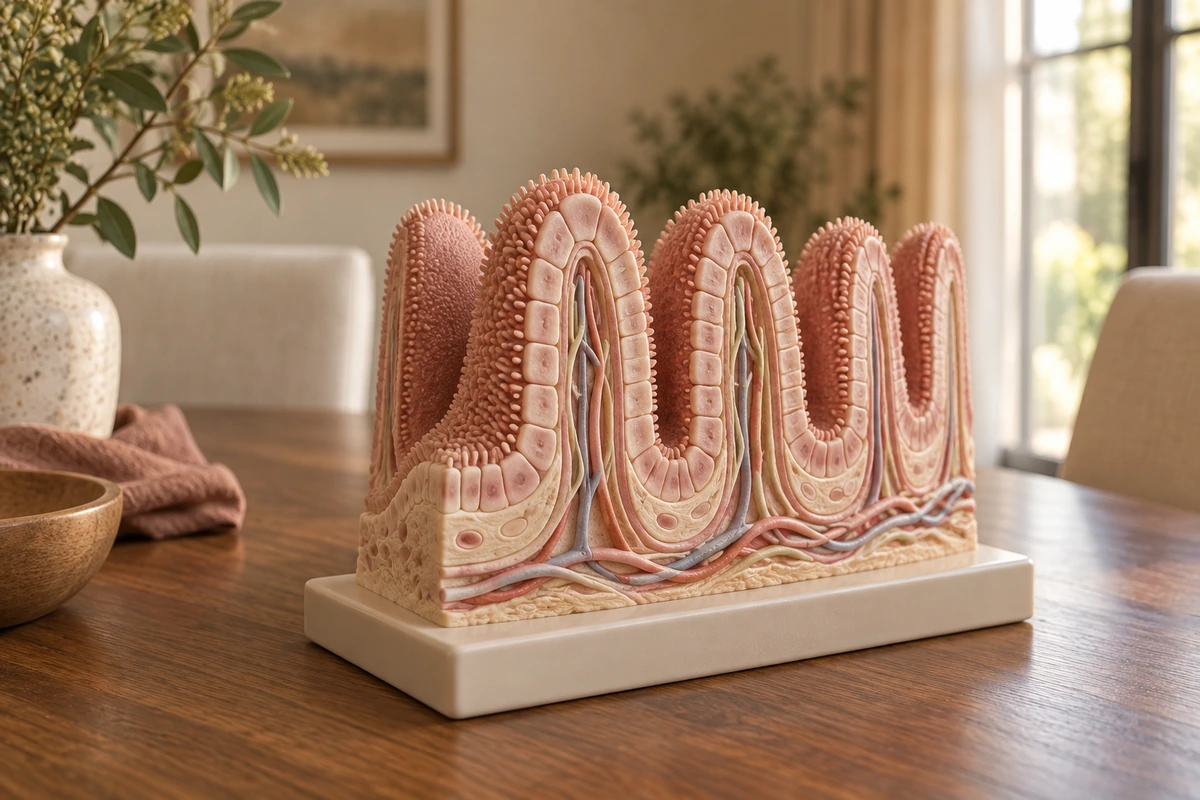
It Starts With the Intestinal Wall
The small intestine is covered with tiny projections called villi. The cells on those villi are enterocytes, and they help finish digestion before nutrients pass into the blood and lymph. The 2020 GAPS book describes beneficial microbes as part of the system that feeds, protects, and helps renew these cells.[2]
When the gut flora is abnormal, enterocytes are exposed to microbial toxins and lose some of their ability to do that work. Pathogenic microbes can also damage the tight junctions between the cells. Food that should be broken down and carried through the enterocytes can then cross the intestinal wall in larger, partially digested forms.[3]
How Protein Digestion Is Supposed to Finish
Proteins reach the enterocytes as peptides, which are short chains of amino acids. Enzymes on the enterocyte surface, called peptidases, are meant to break those chains into individual amino acids before absorption. GAPS describes sick enterocytes as producing too few of those enzymes to finish the job well.[4]
Gluten from grains and casein from milk are the two examples the book discusses most. When they are not fully digested, larger peptide fragments can pass through the damaged intestinal wall. The immune system then meets food material in a form and a place where it was not meant to appear.
Gluteomorphins and the Antibody Response
The GAPS book describes some partially digested gluten and casein peptides as having an opiate-like structure. It calls them gluteomorphins and casomorphins and connects their absorption with brain and mood symptoms such as depression, memory trouble, difficulty concentrating, and sleep disruption.[4] That is the source’s explanation for why a food-protein problem may not stay confined to the digestive tract.
For celiac disease, antibody formation is the central immune piece. The official GAPS FAQ says partially digested gluten can cross through a damaged gut wall and prompt the immune system to develop antibodies against it.[5] The 2020 protein section describes tolerance as a range from mild symptoms to celiac disease.[4]
Why the Mechanism Is Bigger Than Gluten
Gut and Physiology Syndrome names other grain proteins, including serpins, purinins, amylase and protease inhibitors, globulins, farinins, and lectins, as possible immune triggers. It also describes cross-reactions with proteins from other plant foods. In this framework, removing wheat while leaving a damaged intestinal wall and abnormal gut flora in place does not address the full mechanism.[1]
The GAPS FAQ gives rice, other grains, and potatoes as a practical example. It says they contain substances that can damage the gut wall and can cross-react with gliadin antibodies, even though the foods themselves are gluten-free.[6] This is why the GAPS food route is broader than choosing products with a gluten-free label.
The Microbial Transglutaminase Mechanism
The 2020 book also describes microbial transglutaminase, often shortened to mTG, as a proposed part of the autoimmune mechanism. Microbes can produce mTG, and the food industry uses a microbial form to bind proteins in processed foods. The enzyme cross-links proteins, including gluten, into new complexes. The GAPS source says those complexes can damage the intestinal lining, pass through a damaged wall, and prompt antibody formation.[7]
The source is specific about the distinction between enzymes. The human body makes tissue transglutaminase for normal jobs in organs and tissues. Microbial transglutaminase is a different enzyme. The book does not say that the immune system simply mistakes every human transglutaminase for a microbial one. It points to microbial mTG, cross-linked food proteins, intestinal permeability, and antibody formation as the proposed sequence.[7]
The papers cited in the book describe this as an active research question. A 2015 hypothesis paper examined a possible association between bacterial transglutaminase used in food processing and celiac disease. A 2016 review reported that microbial transglutaminase can cross-link many molecules and discussed its immunogenicity in people with celiac disease.[8][9]
How This Mechanism Shapes the GAPS Route
If the problem were only gluten, swapping wheat flour for another starch would complete the job. The GAPS framework instead removes grains and difficult starches, uses the Introduction Diet when deeper digestive healing is needed, and gives the intestinal wall and gut flora time to change before harder foods are tested again.[1]
The mechanism also explains why nourishment matters. Celiac disease can involve pancreatic and fat-digestion problems, malabsorption, anemia, weight loss, and failure to thrive. The symptoms and gut-signs guide brings those practical patterns together, while the foods and stages guide covers what GAPS does with the mechanism.[10]
For the complete GAPS recovery and timing explanation, read Celiac Disease and the GAPS Diet: Complete Guide. It explains how the four-to-five-year recovery period and the later sourdough test fit together.
If you want a guided introduction to the wider GAPS approach, my Understanding & Preparing for the GAPS Diet course is in the WFLI shop catalog.
Frequently Asked Questions
Why Doesn’t Everyone Who Eats Gluten Develop Celiac Disease?
The GAPS book describes gluten tolerance as varying with a person’s overall health, constitution, gut flora, and intestinal condition. In that source, the range runs from mild symptoms to celiac disease.[4]
Is Microbial Transglutaminase the Same as Tissue Transglutaminase?
No. Microbial transglutaminase is produced by microbes and is also used in food processing. Tissue transglutaminase is made by the human body. They belong to the same enzyme family but are not interchangeable terms, and the GAPS source explicitly distinguishes them.[7][9]
Can a Gluten-Free Product Still Fall Outside GAPS?
Yes. Gluten-free products can still be made from grains, starches, gums, sugar, and other ingredients that do not fit the GAPS protocol. The label answers a gluten question. It does not answer the separate GAPS question about ingredients, digestion, or stage.
References
- Campbell-McBride, N. Gut and Physiology Syndrome (2020), “Coeliac (celiac) disease,” pp. 412–413.
- Campbell-McBride, N. Gut and Physiology Syndrome (2020), pp. 131–133.
- Campbell-McBride, N. Gut and Physiology Syndrome (2020), p. 57.
- Campbell-McBride, N. Gut and Physiology Syndrome (2020), pp. 134–135.
- Campbell-McBride, N. “Diet/Food,” Q41, GAPS FAQs.
- Campbell-McBride, N. “Diet/Food,” Q64, GAPS FAQs.
- Campbell-McBride, N. Gut and Physiology Syndrome (2020), pp. 51–52.
- Lerner, A., and T. Matthias. “Possible association between celiac disease and bacterial transglutaminase in food processing: a hypothesis.” Nutrition Reviews, 2015.
- Matthias, T., P. Jeremias, S. Neidhöfer, and A. Lerner. “The industrial food additive, microbial transglutaminase, mimics tissue transglutaminase and is immunogenic in celiac disease patients.” Autoimmunity Reviews, 2016.
- Campbell-McBride, N. Gut and Physiology Syndrome (2020), pp. 437–438.

Leave a comment