

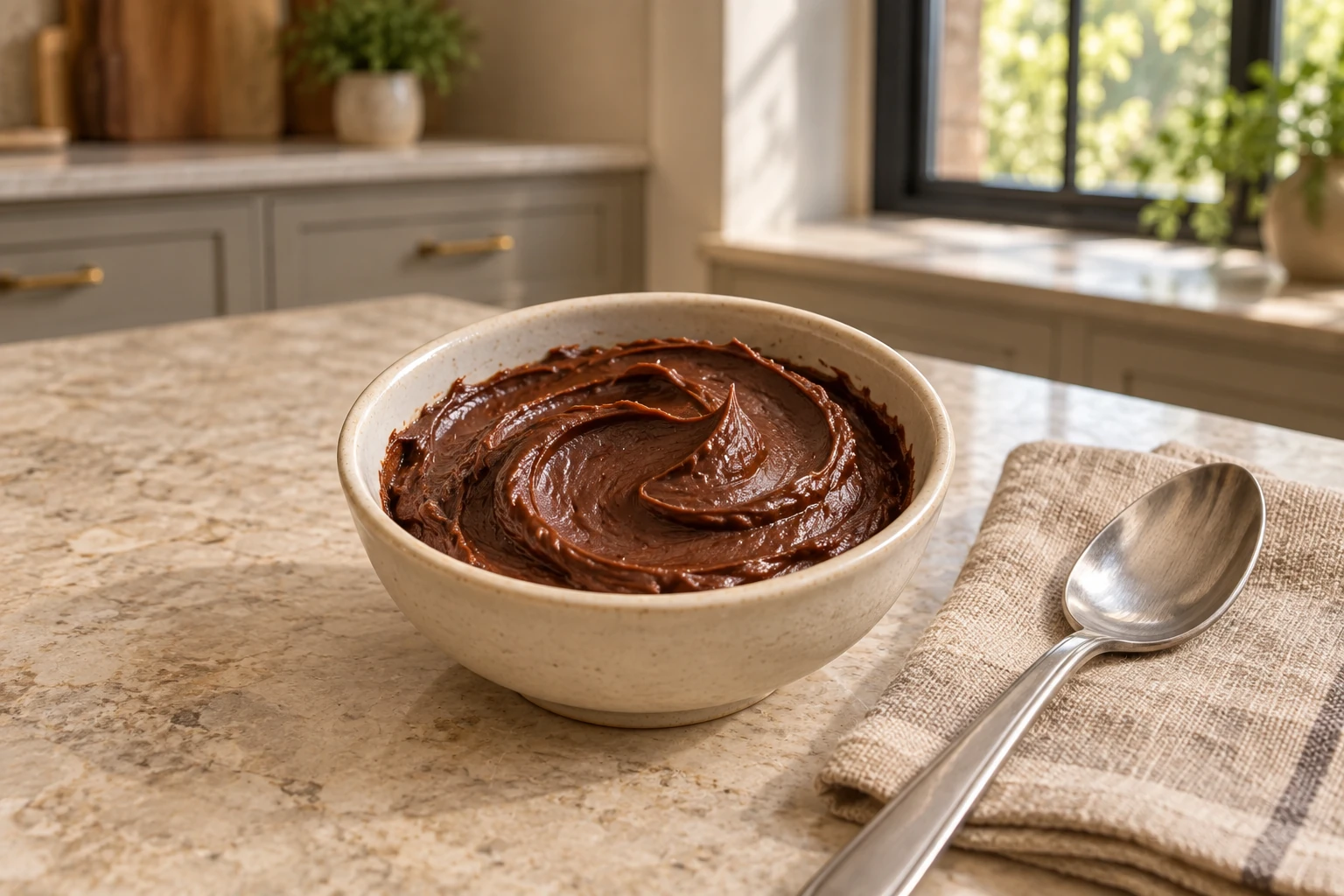
This five-minute chocolate frosting makes one generous serving with a strict two-to-one-to-one ratio: two tablespoons soft tolerated butter or homemade ghee, one tablespoon pure organic cocoa and one tablespoon raw honey. Stir it in one small bowl until the color is even and the spoon leaves a smooth trail.
It is a later Full GAPS treat for the point when digestive symptoms are gone and pure cocoa is already working well. The batch is small on purpose. You can frost one cupcake, a slice of cake or a stack of pancakes without making a mixer bowl of leftovers.
Why a One-Person Frosting Is Useful
With six children and second-shift work, I pay attention to how much a recipe makes and how much cleanup it creates. A single-serving frosting gives me a measured chocolate topping without asking me to soften a full stick of butter, pull out the mixer or find freezer space for the extra.
The small bowl also makes the ratio easy to see. There is no guessing after the cocoa goes in. If a larger dessert needs frosting, use the card’s 2x or 3x control before mixing so every ingredient increases together.
Keep the Two-to-One-to-One Ratio
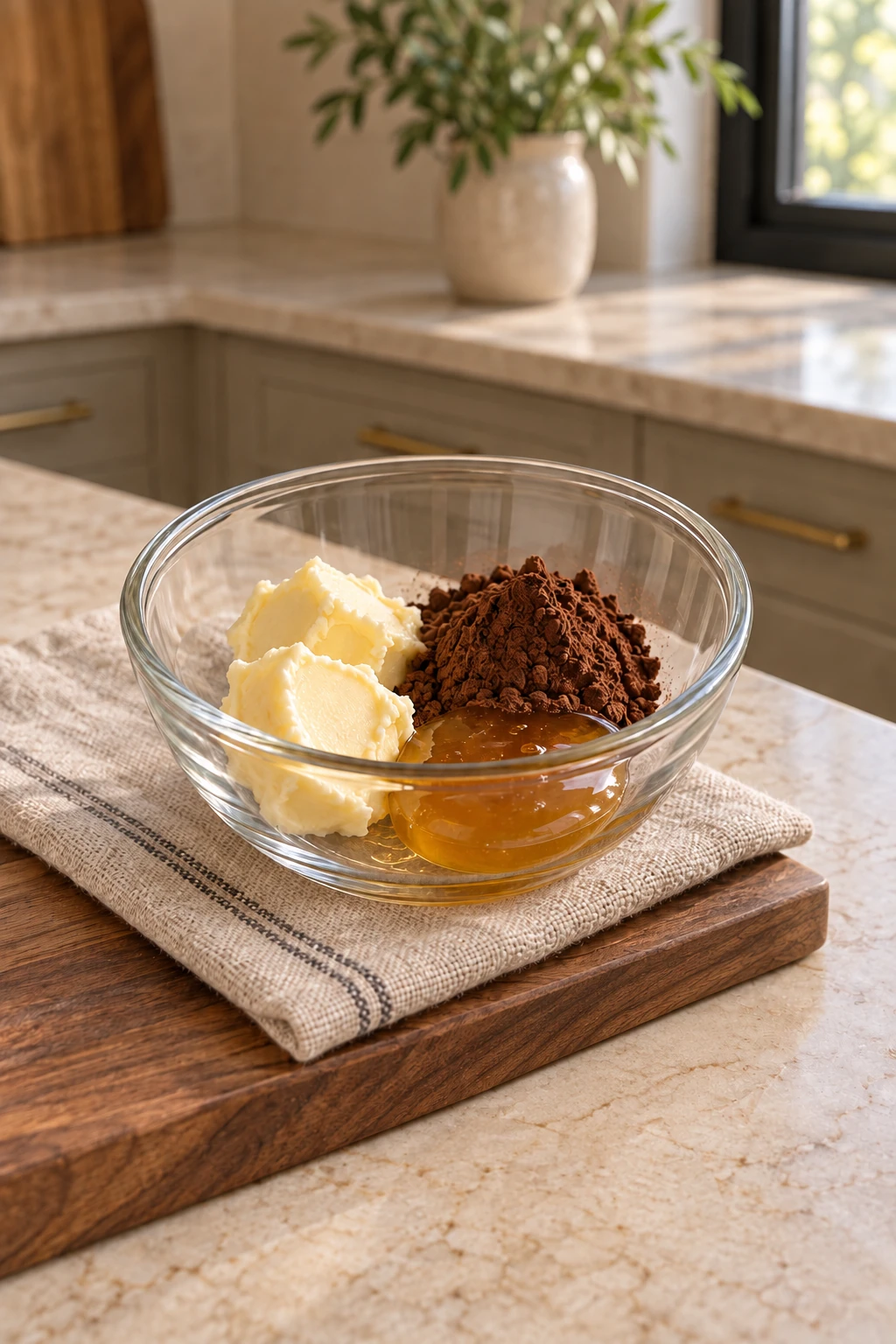
The base is two parts soft fat, one part cocoa and one part raw honey. For one serving, that means two tablespoons butter or ghee, one tablespoon cocoa and one tablespoon honey. The optional pinch of salt and single drop of homemade vanilla add flavor without changing the structure.
More honey makes the frosting loose and sticky. More cocoa makes it dry and bitter. More fat makes it pale and greasy. Keeping the ratio intact gives the spoon enough resistance to spread while still allowing the frosting to soften on a room-temperature cake or pancake.
Level the cocoa and honey measures rather than using rounded spoonfuls. In a full-size frosting bowl, a small measuring difference can disappear across several cups. In this one-person batch, another teaspoon changes the whole texture. Scrape the measured honey into the bowl, but do not replace the thin coating left on the spoon with an extra pour.
The ratio also makes scaling straightforward. At 2x, use four tablespoons fat, two tablespoons cocoa and two tablespoons honey. At 3x, use six, three and three. Choose the scale before stirring so the cocoa and honey are distributed through one batch instead of folding a second partial batch into finished frosting.
Use Soft Fat, Not Melted Fat
The butter or ghee should be at room temperature and spreadable. Press it with the back of the spoon before adding anything else. It should give easily and hold the spoon mark. Cold fat stays in small pale lumps; melted fat turns the mixture glossy and runny instead of creamy.
If using butter, choose a tolerated butter form that already fits your dairy stage. If using ghee, use homemade stovetop ghee and let the measured two tablespoons soften without becoming liquid. The finished color may vary slightly between butter and ghee, but the ratio and endpoint remain the same.
Room temperature is a texture cue, not a fixed number of minutes on the counter. A thin pat softens faster than a deep spoonful, and the kitchen changes with the season. Test the fat itself. When the spoon presses through without cracking the edges or finding a liquid center, it is ready.
Measure the Cocoa and Honey Exactly
Use one level tablespoon pure organic unsweetened cocoa powder. If it has hard lumps, sift or press them through a small stainless strainer before measuring. Dry lumps can hide inside the frosting even after the outside looks smooth.
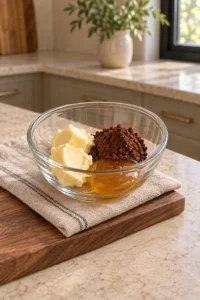
Measure one tablespoon raw honey. Let thick honey slide off the spoon into the bowl instead of adding a second partial spoonful to replace what clings. The photos show the three base ingredients separated before mixing: soft fat, cocoa and honey in their exact proportions.
Add Salt and Homemade Vanilla Only If You Want Them
A tiny pinch of mineral salt can sharpen the chocolate flavor. One drop of homemade vanilla extract for Full GAPS can round it out. Both are optional, and neither should become a pour that changes the frosting’s moisture.
Use the linked homemade vanilla, made without added sugar or non-GAPS additives. This recipe does not use an ordinary commercial vanilla bottle whose alcohol, sweetener or flavor system has not been established.
Stir to a Smooth, Spreadable Finish
Place the ingredients in a small glass or ceramic bowl. Start by pressing the cocoa into the soft fat with the back of a stainless spoon. The first few strokes may look dry and streaky. Keep folding the honey and cocoa toward the center instead of adding liquid.
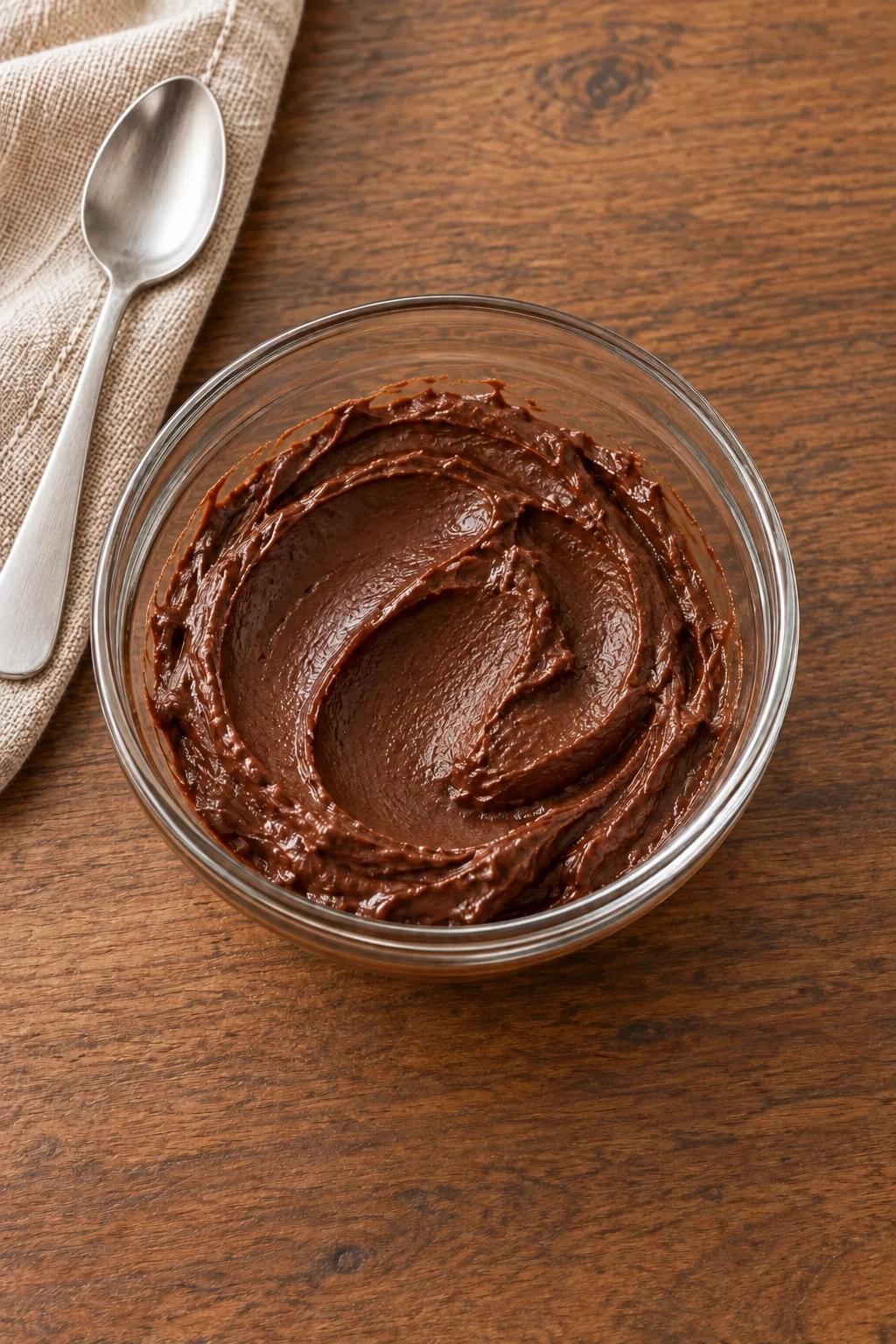
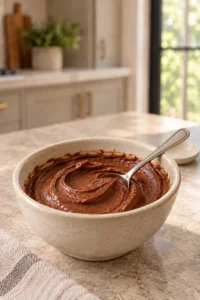
The frosting is finished when the brown color is even, no dry cocoa pockets remain, and no amber honey streak sits at the bottom. Pull the spoon through the bowl. It should leave a clean, smooth trail with soft ridges on each side, and the trail should stay visible instead of closing like sauce.
Scrape around the curve where the side meets the bottom. That is where dry cocoa and honey most often hide in a small bowl. Turn the spoon over and check its back as well. Finished frosting coats it evenly; an unfinished batch shows pale fat spots, powdery cocoa or a translucent line of honey.
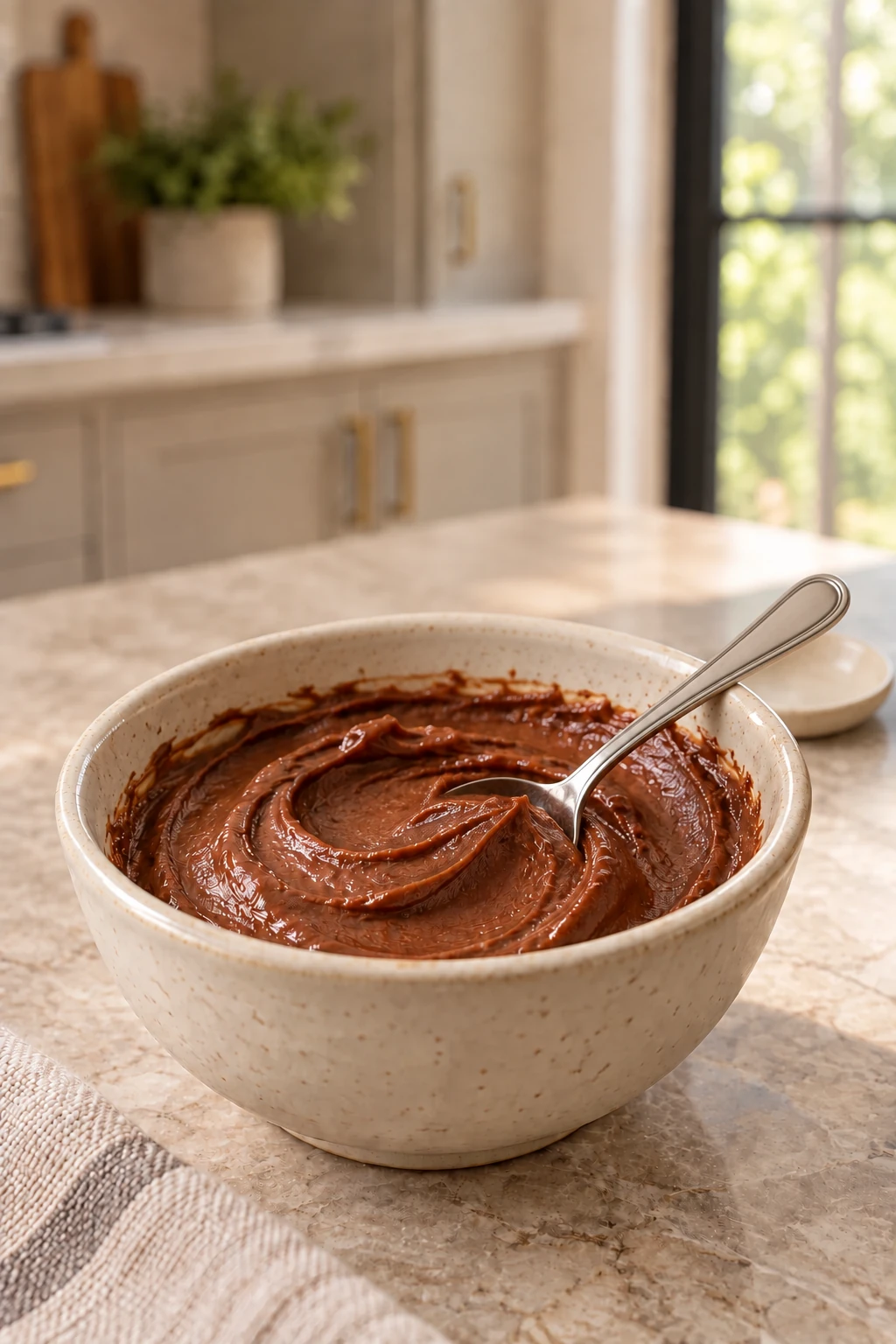
If pale fat specks remain, keep pressing and stirring. If the frosting has become liquid, the fat was too warm. Let the covered bowl cool until the mixture returns to a spreadable texture rather than adding extra cocoa by guess.
What the Finished Frosting Should Be Like
The frosting should be deep cocoa brown, smooth and thick enough to mound on the spoon. It is softer than a powdered-sugar buttercream and firmer than chocolate sauce. The raw honey gives it a clean sweetness without a gritty sugar texture.
The flavor is chocolate first, followed by butter or ghee and honey. A single drop of vanilla should sit in the background. If vanilla is the strongest aroma, more than the optional measured drop was used.
Where This Fits on GAPS
This is an occasional later Full GAPS recipe. Pure organic cocoa belongs after digestive symptoms are gone, not at the beginning of Full GAPS and not during the Introduction Diet. The tolerated butter or homemade ghee, raw honey and optional homemade vanilla must also fit the person’s current foods.
The recipe does not use maple syrup, agave, coconut sugar, erythritol, commercial cream cheese or a carob substitution. Those choices belong to other dietary branches or would create a different measured frosting.
Ways to Use One Small Batch
Spread it over one cupcake or slice of a Full GAPS cake. Spoon it onto nut butter pancakes or waffles when cocoa is already appropriate. For a pourable chocolate topping with a different texture, use the five-minute Full GAPS cocoa ganache instead of thinning this frosting.
You can also serve the frosting in the small bowl with the dessert and let the person spread it themselves. That keeps the exact single serving together and avoids leaving a thin coat behind in a large mixing bowl.
If the dessert is warm, wait until it is no longer steaming before adding the frosting. Heat melts the fat and turns the spoon-trail texture into a glaze. That may still taste good, but it is a different finish from the thick single-serving frosting this recipe is designed to make.
The small batch also works as a controlled component when one person at the table is ready for later-Full-GAPS cocoa and someone else is not. Keep the cocoa frosting in its own bowl rather than changing the base cake, pancake or waffle for everyone.
Storage
Use the frosting immediately for its softest texture, or move it to a small airtight glass container. Refrigerate for up to seven days or freeze for up to three months, following the captured recipe. Thaw frozen frosting in the refrigerator.
Cold frosting will be firm. Let the measured portion soften at room temperature, then stir it back to the smooth spoon-trail texture before spreading. Do not microwave it into a liquid; melted fat changes the endpoint.
For freezing, use a container that leaves as little empty space as practical and label it with the date. Thaw only the amount you intend to use. Repeated warming and chilling make the texture harder to judge and add no benefit to a recipe that takes five minutes to mix fresh.
Recommended Equipment
You need a small glass or ceramic bowl or mug, tablespoon measure, a small stainless spoon for pressing and stirring, and a small spatula if you want to scrape every bit from the bowl. A small stainless strainer is useful only when the cocoa is lumpy.
Frequently Asked Questions
When Can Cocoa Be Used on Full GAPS?
Pure organic cocoa is an occasional later Full GAPS food after digestive symptoms are gone.
Does the Butter or Ghee Need to Be Melted?
No. It should be soft and spreadable at room temperature. Melted fat makes the frosting runny.
Can I Make a Bigger Batch?
Yes. Use the card’s scaling control so the two-to-one-to-one fat-cocoa-honey ratio stays intact.
Can I Use Maple Syrup?
No. Use one tablespoon raw honey for this Full GAPS formula.
Do I Have to Add Salt or Vanilla?
No. Both are optional. If using vanilla, add one drop of the linked homemade Full GAPS extract.
Why Is My Frosting Grainy?
The cocoa may be lumpy or the fat may be too cold. Sift lumpy cocoa and begin with soft room-temperature fat.
Chocolate Frosting for One Recipe
Full GAPS Chocolate Frosting for One
Ingredients
Equipment
Method
- Put the soft room-temperature butter or homemade ghee, cocoa powder and raw honey in a small glass or ceramic bowl or mug. Add the optional mineral salt and homemade vanilla extract if using.
- Press and stir with the back of a stainless-steel spoon until the cocoa is fully moistened and the frosting is smooth, creamy and evenly colored, with no dry cocoa pockets or honey streaks. Serve at once or transfer to a covered glass container.
Notes
Tried this recipe?
Let us know how it was!More Small-Batch Full GAPS Treats
The upcoming Muffins, Cakes & Cookies Cookbook is built for moments when a familiar treat needs a measured GAPS version instead of a full pantry overhaul. Find current resources and release updates in the WFLI shop.

Leave a comment