

Unstrained fermented cashew milk is the simplest of these Full GAPS cultured milks because the smooth blended cashew stays in the jar. One cup fresh unroasted cashews blends with exactly four cups filtered water, then homemade cultured whey and raw honey support a 20-to-24-hour ferment.
The method has two details that belong only to this formula: cashews soak for one to three hours, never longer than six, and the milk is not strained. The finished drink is silky, creamy, and slightly more body-rich than strained nut milk while remaining easy to pour.
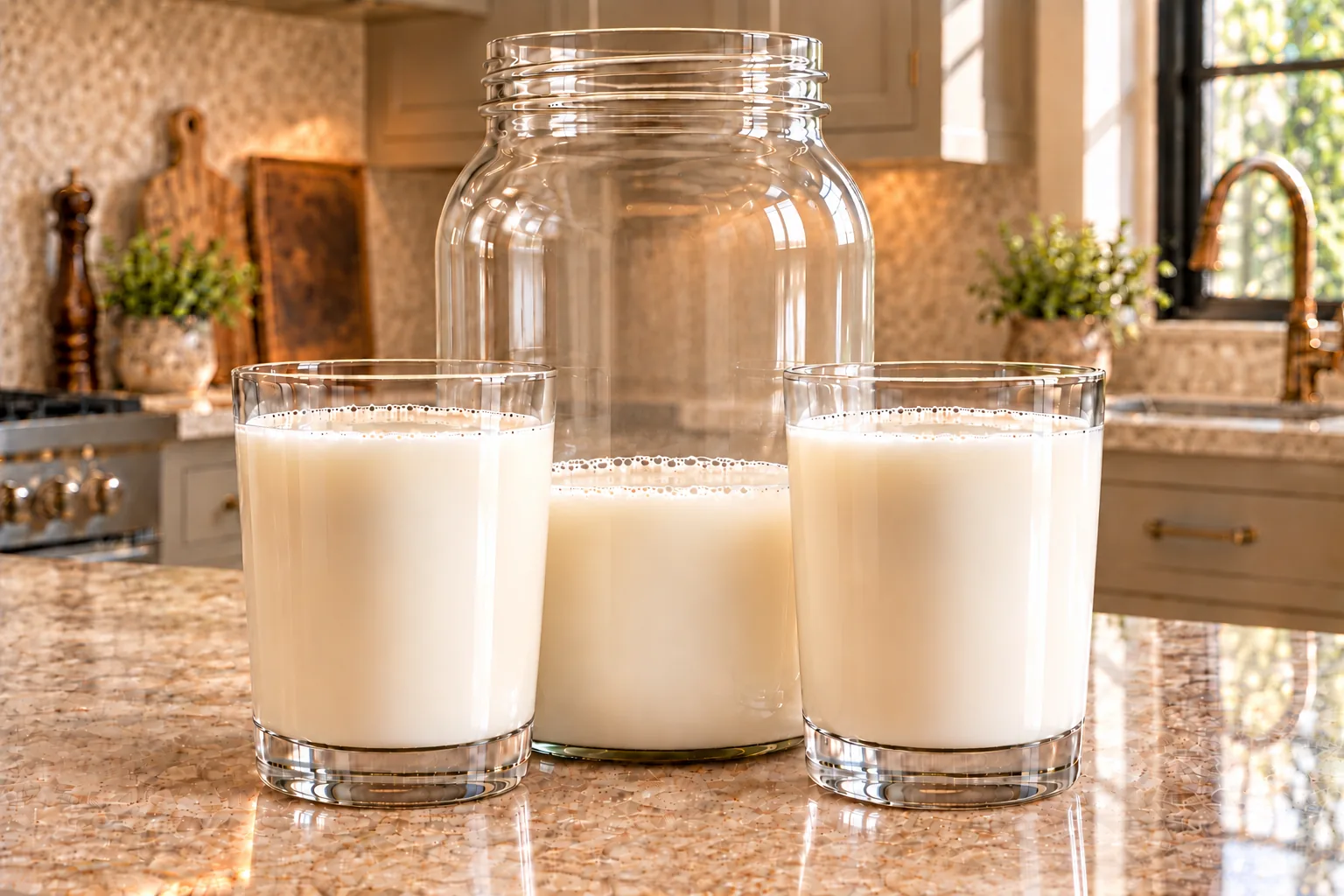
Why Cashew Milk Stays Unstrained
Fresh cashews soften quickly and blend into a very fine, smooth liquid. When the blender has done its job, there is no coarse pulp to remove. Keeping the whole blend gives the milk its creamy body and avoids losing part of the measured cup in a cloth.
This direct method is useful in our family kitchen. With six children, work, and homeschool filling the same schedule, one fewer straining setup means fewer parts to wash and a faster move from blender to fermenting jar. The method stays practical without changing the formula.
Unstrained does not mean chunky. The finished milk should be completely smooth. Visible cashew pieces, grit, or a paste that will not pour indicate that the blending step needs attention before the starter is added.
Leaving the milk whole also means the blender cue carries more weight. There is no later cloth strain to remove a rough texture. Stop and inspect before adding the whey: the liquid should look even from top to bottom, and the inside wall should show only a smooth creamy film rather than specks or fragments.
Choose Fresh Unroasted Cashews
Measure one cup fresh unroasted cashews. Use plain cashews without oil, salt, seasoning, or a coating. Avoid stale nuts with a flat or rancid aroma because fermentation will not turn poor-quality cashews into a clean-tasting milk.
This formula is for cashews. Almonds, walnuts, pecans, macadamias, pumpkin seeds, sunflower seeds, and sesame require the separate strained methods and their own water ratios. Do not carry this no-strain step into those recipes.
Cashews also use a shorter soak than the overnight nut and seed formulas. Keeping that difference visible prevents the cashews from sitting too long and becoming waterlogged.
Soak For One To Three Hours
Place the cashews in a glass or ceramic bowl with two to three cups filtered water and two teaspoons natural mineral salt. Cover and soak for one to three hours. Do not exceed six hours.
The cashews should look slightly plumper and feel softer when pressed. The soaking water may turn cloudy. Drain it completely because it does not become part of the milk.
Rinse with cool filtered water and let the excess drain. A quick, thorough rinse removes the soaking water from the curves and creases in the cashews before they enter the blender.
Blend With Exactly Four Cups Water
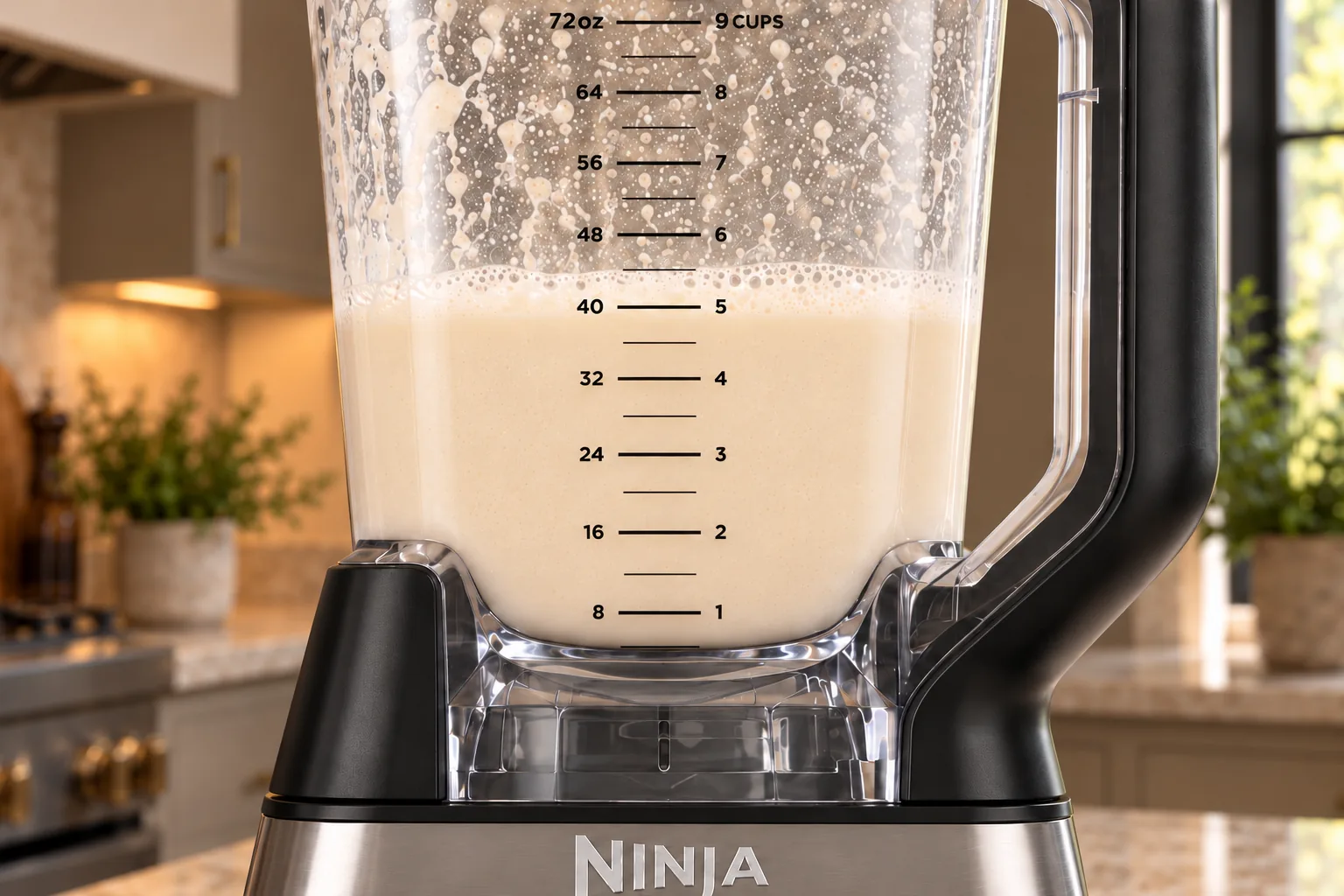
Add the drained cashews to the 72-ounce Total Crushing pitcher of the Ninja Professional Plus Kitchen System BN801 with exactly four cups fresh filtered water. Blend for about 50 seconds on medium-high.
Stop the machine before checking the texture. The milk should be uniformly creamy off-white, completely smooth, and free of visible cashew pieces or coarse pulp. It may coat the inside wall of the blender and form a modest uneven foam ring, but it must still pour freely.
If you can see pieces or feel obvious grit in a small sample, blend a little longer. Do not keep running the machine until the mixture becomes hot. The goal is silky milk, not cashew butter or a thick smoothie.
Add Homemade Whey, Raw Honey, And Salt
Add one-quarter cup homemade cultured whey, two tablespoons raw honey, and one-half teaspoon natural mineral salt. Use whey drained from homemade yogurt or kefir fermented for at least 24 hours. This 24-hour GAPS yogurt method provides a clear starting point.
Blend for only a few seconds to distribute the additions. The milk should stay creamy and pourable. Raw honey fills the measured sweetener position without adding excluded maple syrup.
Commercial whey powder, protein concentrate, flavored yogurt, and commercial probiotic powder are different ingredients. Keep the starter at the measured one-quarter cup of homemade cultured whey.
Transfer Directly To The Fermenting Jar
Do not strain this milk. Transfer it directly from the blender into a clean wide-mouth glass jar and leave headspace at the top.
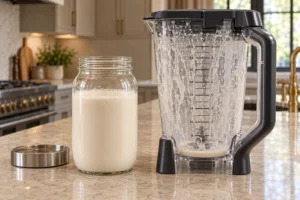
The paused method photograph shows the useful endpoint. The filled fermenting jar sits flat on the counter beside the exact Ninja BN801 pitcher, removed from its base and nearly empty with a thin creamy film inside. No strainer, cloth, pulp, filter basket, or receiving bowl appears. The stainless lid rests flat beside the jar, ready to be placed loosely.
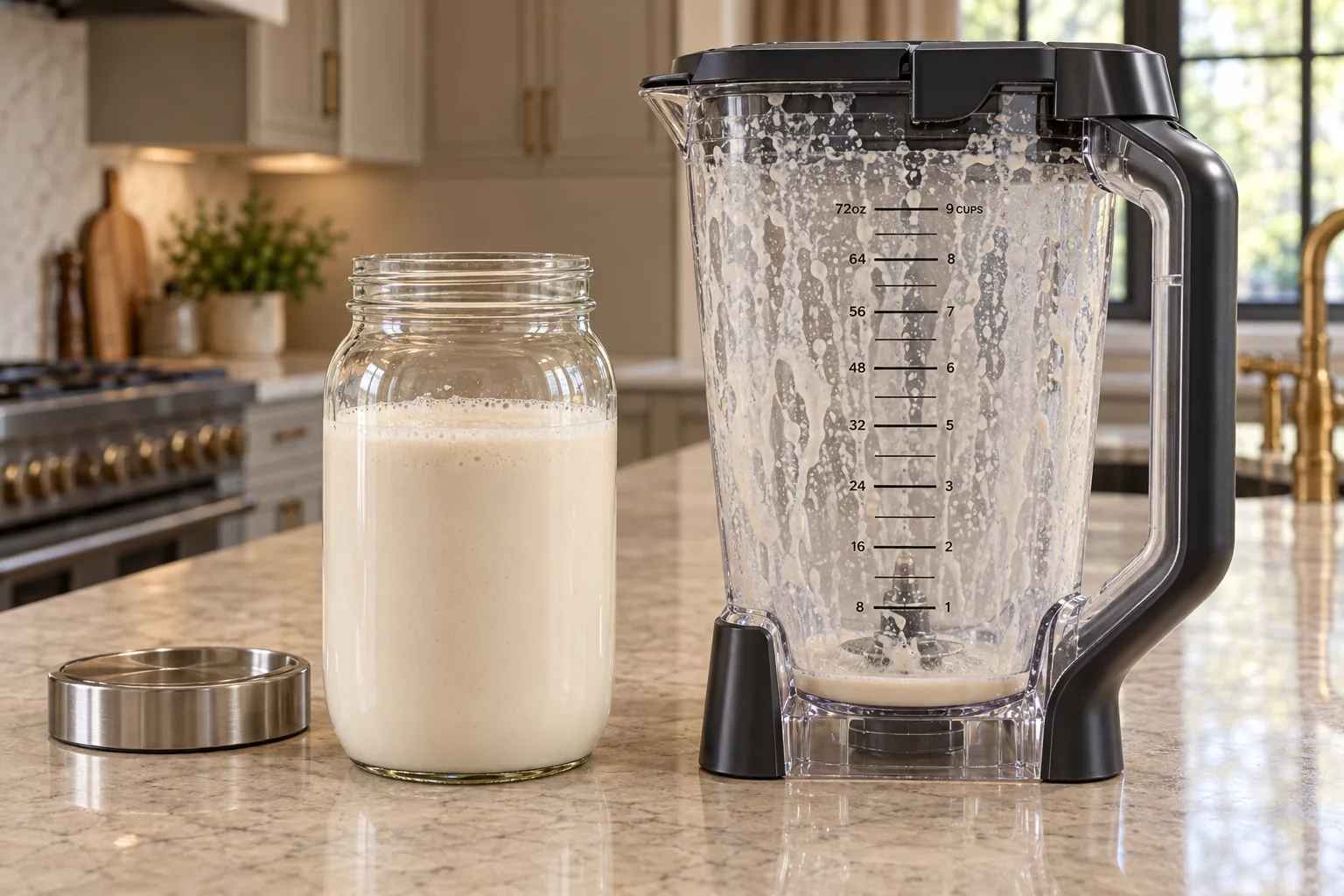
Fit an airlock or set a plain stainless-steel lid loosely enough for pressure to vent. Do not tighten a rigid lid during active fermentation.
Choose a jar large enough to hold the full batch without filling to the rim. The headspace visible in the method photo gives the active milk room while keeping the jar compact enough for the refrigerator later. If one jar is too small, divide the complete blended formula between two clean jars rather than forcing it into an overfilled vessel.
Ferment For 20 To 24 Hours
Keep the jar in a warm, steady place for 20 to 24 hours. The aroma should become clean and cultured while the cashew flavor remains mild underneath. A light foam line or early separation may appear.
The milk should remain smooth and pourable. If the jar develops continued pressure under a tight lid, loosen the closure; the method calls for a pressure-aware setup throughout the active ferment.
Move the jar to the refrigerator within the measured window. Once chilled, close it fully. Do not extend the room-temperature ferment simply to make the milk more sour.
Texture, Flavor, And Serving Cues
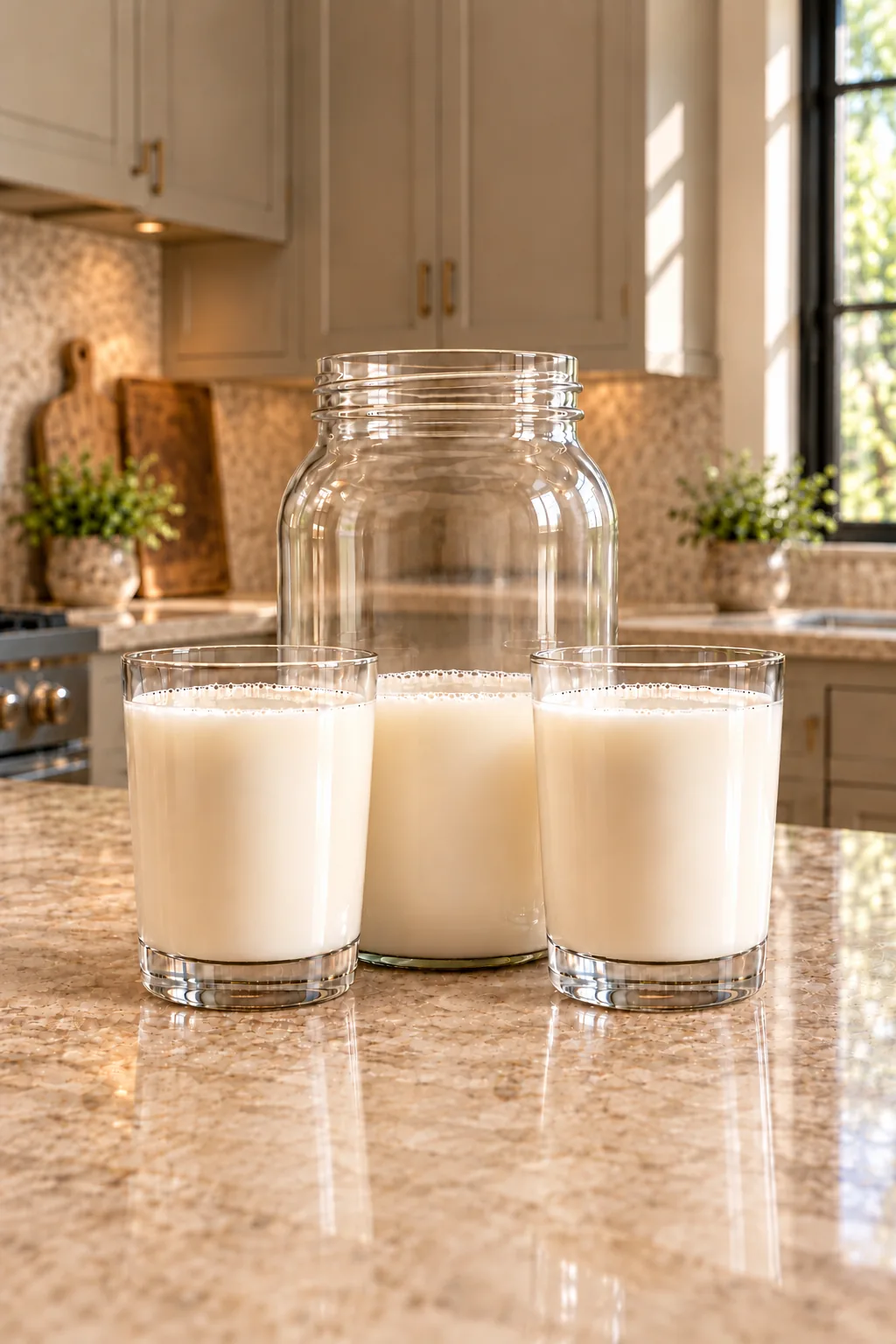
The finished milk should pour in a smooth, creamy ribbon and settle quickly in the glass. A faint coating line may remain above the liquid. It should not mound, hold peaks, or contain pieces.
The aroma is gently sour and clean. Cashew gives the milk a mild creamy background rather than the stronger seed note of sesame. The finished batch should not taste like a sweet honey drink.
Shake the closed chilled jar before measuring or serving. Drink it cold, blend it into a smoothie, or use it in a grain-free batter, creamy sauce, or dessert where a cultured cashew milk with more body is useful. This version uses homemade yogurt whey and contains dairy.
For baking, shake first and measure after the milk looks uniform. For a plain glass, serve it well chilled. If you want a thinner, lighter result, use the separate standard strained formula instead of adding extra water to this finished jar.
Where This Fits On GAPS
This recipe belongs on Full GAPS after properly prepared cashews are tolerated. It uses fresh unroasted cashews, filtered water, homemade cultured whey, raw honey, and natural mineral salt. It is not an Introduction Diet milk.
The formula does not include commercial cashew milk, maple syrup, cane sugar, protein powder, hemp, chia, or flax. It also does not use the overnight soak that belongs to the other nut and seed formulas.
If your household follows a narrower Full GAPS variation, use this milk only when each measured ingredient fits the individual plan.
Storage
Keep the milk covered in the refrigerator for up to seven days. Pour servings from the storage jar rather than drinking from it.
Natural separation is expected even though the milk is unstrained. Shake the closed jar until the color and body look even before every pour.
Discard a batch with visible surface growth, an unexpected putrid aroma, or pressure that continues building after refrigeration. Wash and dry the bowl, Ninja BN801 pitcher, jar, and lid before another batch.
Recommended Equipment
Use a glass or ceramic soaking bowl, the 72-ounce Total Crushing pitcher of the Ninja Professional Plus Kitchen System BN801, and a clean wide-mouth glass fermenting jar. An airlock is useful when it fits; a loose plain stainless lid can also provide a pressure-aware closure.
No strainer, cheesecloth, or receiving bowl is used. Keeping those tools out of the setup helps distinguish the exact cashew method from the strained nut, seed, and sesame formulas.
A flexible jar brush helps clean the blender and fermenting jar after use, but it does not enter the food during preparation. Rinse the Ninja BN801 pitcher promptly so the creamy film does not dry around the blades or under the rim.
Frequently Asked Questions
Why Is Cashew Milk Not Strained?
Properly soaked cashews blend into a smooth milk without the coarse pulp produced by other nuts. The whole blend stays in the formula.
How Long Should Cashews Soak?
Soak for one to three hours and never longer than six. This is shorter than the overnight soak used for other nuts and seeds.
Can I Use Roasted Cashews?
No. Use fresh unroasted cashews without added oil, salt, seasoning, or coating.
Can I Strain It Anyway?
Straining would remove part of the measured cashew and change the intended body. Follow the direct-transfer method for this card.
Can I Use Store-Bought Cashew Milk?
No. Commercial milk does not follow the measured soaking, blending, starter, and fermentation method.
Why Does It Separate In The Refrigerator?
Homemade cashew milk can naturally separate. Close and shake the jar before serving.
How Long Does It Ferment?
Ferment for 20 to 24 hours in a warm steady place, then refrigerate. Keep the active jar pressure-aware.
Can I Double The Recipe?
Yes. The 2× card control doubles every measured ingredient. Use the Ninja BN801 pitcher and fermenting jars with enough working capacity, and process in batches when needed.
Unstrained Fermented Cashew Milk Recipe
Unstrained Fermented Cashew Milk for Full GAPS
Ingredients
Equipment
Method
- Combine the fresh unroasted cashews with 2 to 3 cups filtered water and 2 teaspoons mineral salt in a glass or ceramic bowl. Cover and soak for 1 to 3 hours, never longer than 6 hours.
- Drain and discard the soaking water. Rinse thoroughly with cool filtered water and let the excess water drain.
- Blend the drained cashews with exactly 4 cups fresh filtered water in the 72-ounce Total Crushing pitcher of the Ninja Professional Plus Kitchen System BN801 for about 50 seconds on medium-high, until the milk is uniform, silky, creamy off-white, and free of visible cashew pieces or grit. Stop the blender before checking.
- Add the homemade cultured whey, raw honey and remaining 1/2 teaspoon mineral salt. Blend for only a few seconds to distribute them.
- Do not strain. Transfer the smooth cashew milk directly from the Ninja BN801 pitcher into a clean wide-mouth glass jar, leaving visible headspace. Fit an airlock or set a stainless-steel lid loosely so pressure can vent.
- Ferment in a warm steady place for 20 to 24 hours. Keep the active jar pressure-aware rather than tightly sealed.
- Refrigerate within the 20-to-24-hour window. Once chilled, close the jar fully. Shake the closed jar before serving because natural separation is expected.
Notes
Tried this recipe?
Let us know how it was!More Creamy Drinks And Ferments
The upcoming Drinks & Ferments Cookbook will gather cultured drinks, dairy-free options, family-sized batches, and exact physical cues. Watch the WFLI shop as the collection is completed.

Leave a comment