

Ginger-lime salmon with zucchini is a one-dish Full GAPS dinner with a bright, chunky marinade and a short bake. The salmon rests directly on sliced zucchini and green onion, so the vegetables catch the ginger, garlic, lime, coconut aminos, honey, and cooking fat as everything cooks together.
The useful part of this recipe is not just that it is quick. It tells you what properly cooked salmon feels and looks like before the center dries out: hot, bright pink, glossy, moist, and tender enough to give gently when pressed. Those cues matter more than adding extra minutes because one fillet is thicker than another.
This post contains one complete five-serving formula using one and one-half pounds salmon, two to five zucchini, a 20-minute rest, and a 10-to-13-minute bake. The visible card keeps the source’s 15-minute prep, 15-minute cook, and 30-minute total fields.
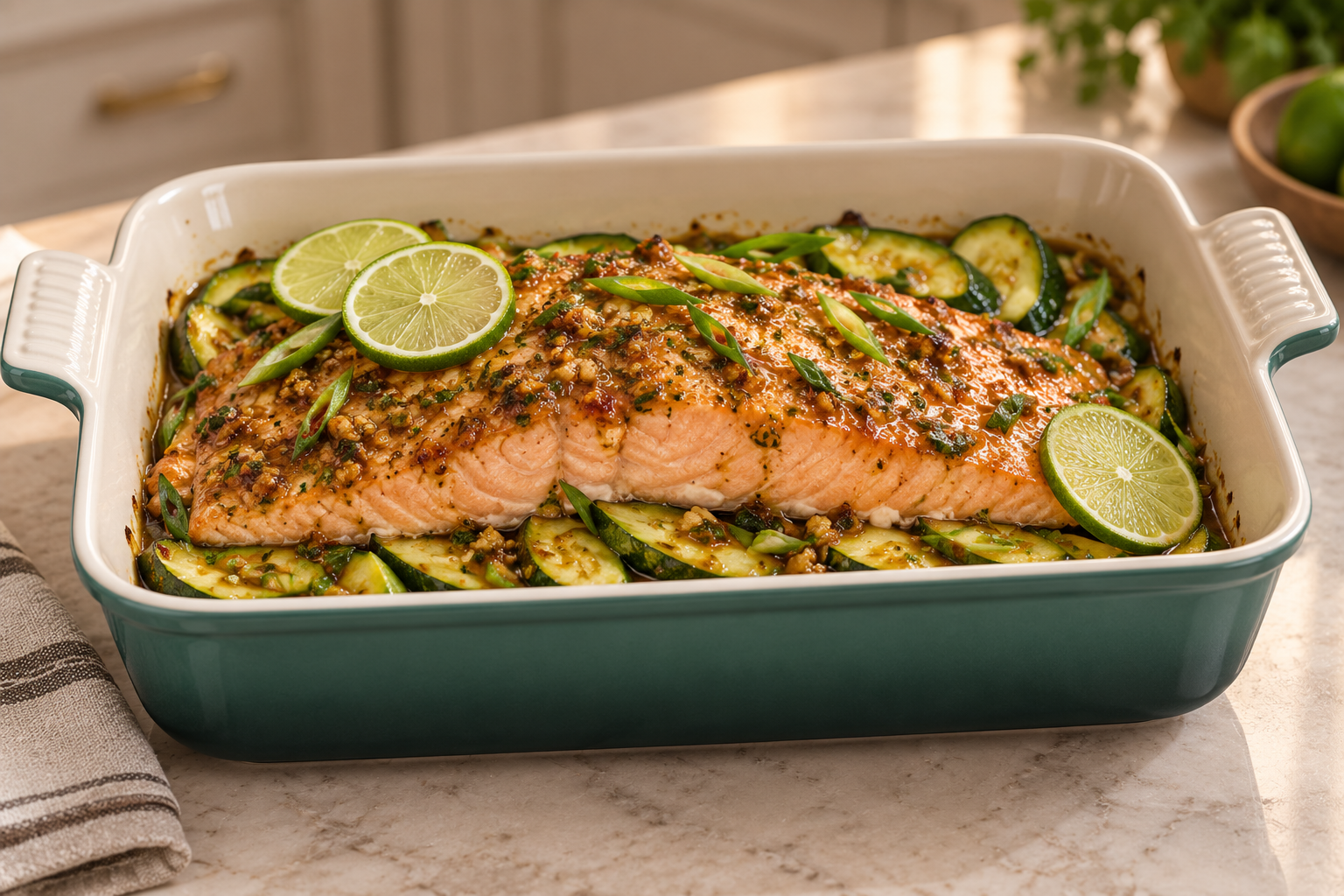
Why the Salmon Bakes Over the Zucchini
The diagonal zucchini slices form the vegetable base while the cold salmon rests above them. Marinade runs from the fish into the dish, seasoning the vegetables without creating a separate pan or sauce.
Use two zucchini for a fish-forward meal or up to five when you want roughly one zucchini per person. The source allows that range, so the recipe card preserves it instead of inventing one fixed vegetable amount.
Choose Fresh or Fully Thawed Salmon
Use one and one-half pounds salmon, enough for five servings. Fresh salmon and previously frozen salmon both work. When starting frozen, unwrap it while still frozen and thaw it fully on a large plate in the refrigerator; the source says this can take six to eight hours.
The fish should be cold when it goes onto the vegetables. Pat away excess thawing liquid so the chunky marinade stays on the fillet rather than becoming diluted in the dish.
Use the Verified Coconut Aminos
The measured marinade uses two tablespoons coconut aminos. The accepted product route is BetterBody Foods Organic Coconut Aminos, whose current manufacturer ingredient list contains organic coconut syrup and Himalayan salt. Check that exact product identity and current ingredient list before using it.
Tamari and soy sauce are not substitutes. A different coconut-aminos product needs its own complete current ingredient review rather than being assumed equivalent because the front label uses the same category name.
Choose a Full GAPS Cooking Fat
Use one-quarter cup gently melted and cooled ghee, coconut oil, or another accepted rendered animal fat in the marinade. Use another tablespoon of the same accepted cooking-fat family for the zucchini and green onion.
The fat must be cool enough that it does not begin cooking the onion, ginger, garlic, or fish during blending and resting. It should remain fluid enough to combine with the other marinade ingredients.
Prepare the Zucchini Base
Heat the oven to 375°F. Choose a glass, ceramic, or exact Le Creuset Heritage rectangular stoneware dish in Artichaut that fits the salmon and vegetables without folding the fillet or stacking the zucchini into a deep mound.
Slice two to five zucchini on the diagonal. Separate one bunch green onions into whites and greens, then dice both portions. Toss the zucchini and reserved green tops directly in the baking dish with one tablespoon melted cooking fat.
Pulse a Chunky Ginger-Lime Marinade
Add the diced green-onion whites, one-quarter cup melted and cooled fat, a two-to-three-inch piece of grated fresh ginger, two crushed garlic cloves, two tablespoons verified coconut aminos, one tablespoon fresh lime juice, one teaspoon zest from an organic lime, one teaspoon raw honey, and one-quarter teaspoon mineral salt to a blender with a glass or stainless-steel food-contact container.
Pulse only until the onion whites are cut into small pieces. Stop before the mixture becomes a smooth puree. The finished marinade should be spoonable and visibly chunky, with small onion, ginger, garlic, and zest pieces suspended in the liquid.
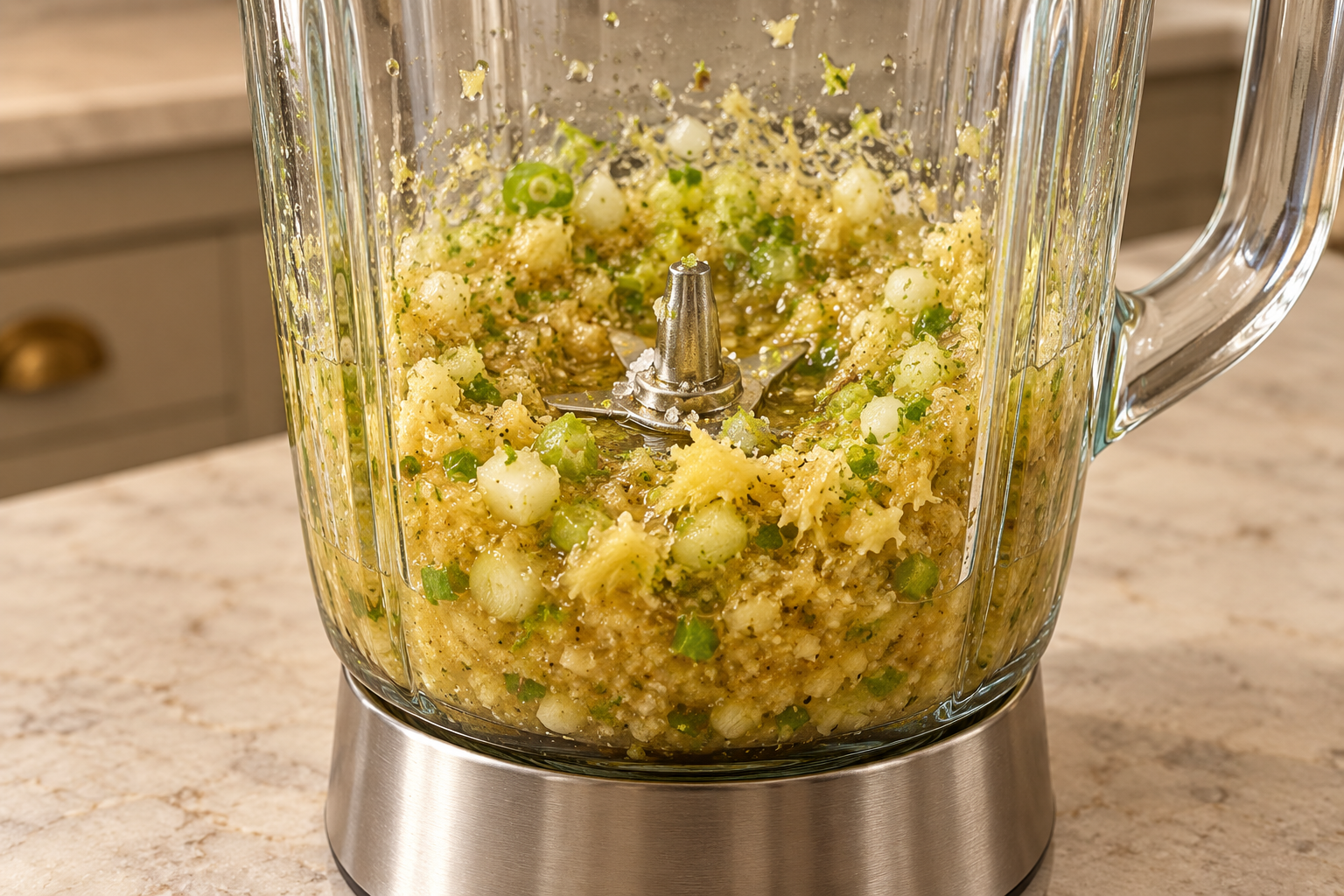
Coat the Salmon and Rest for 20 Minutes
Place the cold salmon directly on the prepared zucchini. Pour the chunky marinade over the top, spreading the pieces across the fillet while allowing some liquid to run into the vegetables.
Let the assembled dish rest for 20 minutes. The source permits the rest on the counter or in the refrigerator. Keep the exact 20-minute rest rather than folding it into the displayed prep or cook fields or skipping it because the oven is ready.
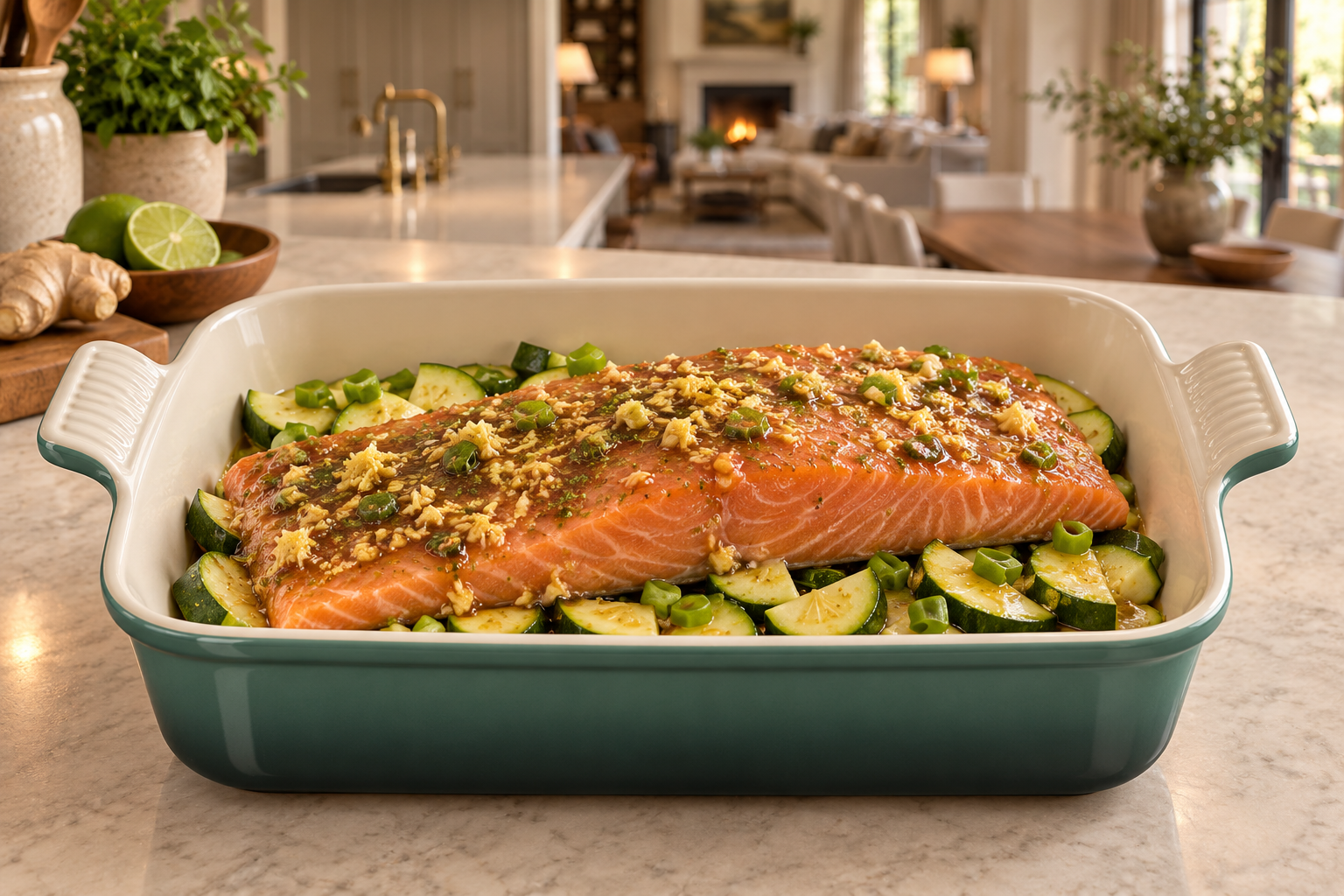
Bake for 10 to 13 Minutes
Move the dish to the 375°F oven and bake for 10 to 13 minutes. Fillet thickness and starting temperature affect the exact point within that range, so begin checking the center rather than automatically choosing the longest time.
The salmon continues to change quickly near the end. Check without repeatedly leaving the oven door open, and remove the dish as soon as the center reaches the supported physical cues.
Read the Center Instead of Overcooking It
Properly cooked salmon remains bright pink at the center. It should look hot, glossy, and very moist, with gentle give when pressed. The source compares that tenderness to the fleshy base of your thumb when the thumb touches the index finger lightly without tensing.
A little white protein, or albumin, around the edges is acceptable. White protein spreading across the top, a center that turns dull and opaque, or flesh that feels dry, firm, and excessively flaky signals overcooking.
Troubleshooting the One-Dish Bake
If the salmon center is still cold at 13 minutes, check whether the fillet was fully thawed and whether the 20-minute rest happened in the refrigerator. A very thick, refrigerator-cold fillet can need a little more time. Continue checking in short increments and stop as soon as the center is hot, glossy, bright pink, and gently yielding.
If the zucchini is firmer than your family prefers when the salmon is ready, lift the cooked fish to a warm ceramic platter and return only the vegetables to the oven. This preserves the salmon’s moist center instead of overcooking the fish while waiting for thicker zucchini slices to soften.
If the marinade slides off in one smooth layer, it was blended too far. Pulse the next batch only until the onion whites are cut into small pieces. The mixture should remain chunky enough for ginger, garlic, onion, and zest to stay visible on the fish.
If the dish looks watery before baking, the salmon may have carried thawing liquid into the pan. Fully thaw frozen fish on a plate, then remove excess surface moisture before setting it over the zucchini.
Finish With the Measured Garnish
Add lime slices and reserved green-onion tops after baking. This Full GAPS version omits optional sesame seeds because properly prepared sesame would require its own explicit ingredient route and is not needed for the dish.
Let each serving include salmon, zucchini, green onion, and some of the ginger-lime juices collected in the bottom of the dish.
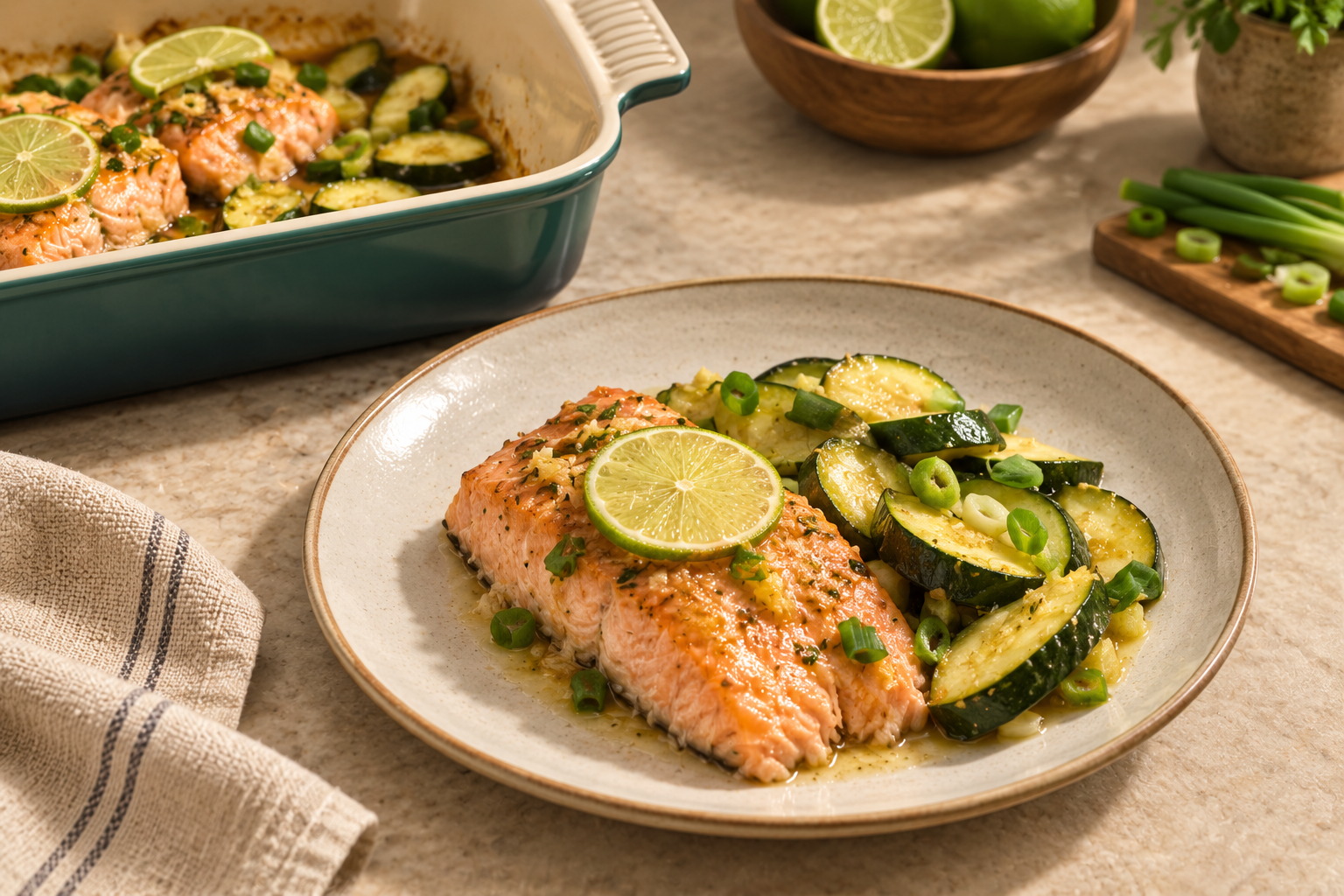
Ginger-Lime Salmon with Zucchini for Full GAPS
Ingredients
Equipment
Method
- Preheat the oven to 375°F. Choose a glass, ceramic, or exact Artichaut Le Creuset Heritage rectangular dish that fits the salmon and vegetables without folding or deep stacking.
- Toss the diagonally sliced zucchini and a portion of the reserved green onion tops with 1 tablespoon melted cooking fat directly in the baking dish.
- Pulse the diced green onion whites, 1/4 cup melted and cooled fat, ginger, garlic, verified coconut aminos, lime juice, zest, raw honey, and mineral salt in a glass or stainless-contact blender only until the onion is in small pieces. Keep the marinade visibly chunky, not pureed.
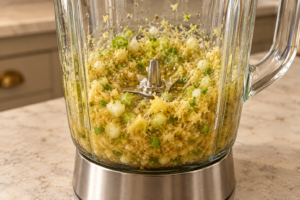
- Place the cold salmon directly on the zucchini. Pour and spread the chunky marinade over the fillet, allowing some liquid to run into the vegetables. Rest for 20 minutes on the counter or in the refrigerator.
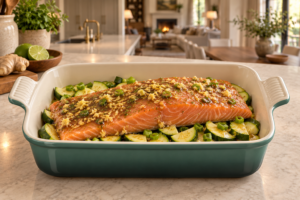
- Bake for 10 to 13 minutes. Remove when the center is hot, bright pink, glossy, moist, and gently yielding. A little edge albumin is acceptable; dull opacity, firm dryness, excessive flaking, or albumin spreading across the top indicate overcooking.
- Garnish with lime slices and the remaining green onion tops. Serve each portion with zucchini and ginger-lime juices from the dish.
Notes
Tried this recipe?
Let us know how it was!Full GAPS Placement
This is a Full GAPS meal after salmon, zucchini, green onions, ginger, garlic, lime, raw honey, mineral salt, the selected cooking fat, and the verified coconut-aminos product are appropriate and tolerated. Ghee follows individual dairy introduction and tolerance; coconut oil or rendered animal fat provides a dairy-free route.
The current product verification applies to the exact BetterBody Foods Organic Coconut Aminos identity. It does not turn tamari, soy sauce, or every product labeled coconut aminos into an approved substitute.
Serving Ideas
This recipe already includes its vegetable side. For a larger meal, add a simple salad or another cooked vegetable that fits the eater’s current Full GAPS variation. The ginger-lime juices are flavorful enough that the plate does not need a separate bottled sauce.
For more everyday meal structure, the Full GAPS Diet guide explains how the main foods fit together across regular family meals.
Storing and Serving Leftovers
The source stores leftovers in a covered glass dish and especially likes the salmon cold on the second day. It also reports a third day when the recipe begins with fresh salmon. Keep the fish refrigerated rather than leaving it at room temperature after the meal.
The source does not prefer ordinary reheating because extra heat can dry the salmon. If warming is necessary, it suggests a low oven or covered sauté pan and stopping before the already-cooked center becomes firm and opaque.
Recommended Equipment
- Le Creuset Heritage rectangular baking dish in Artichaut, or an approved glass or ceramic casserole dish
- Blender with glass or stainless-steel food-contact container
- Stainless-steel knife
- Wooden cutting board
- Stainless-steel measuring cups and spoons
- Fine grater or zester
- Stainless-steel or wooden serving utensil
Frequently Asked Questions
Can I Use Frozen Salmon?
Yes. Unwrap it while frozen and thaw it fully on a plate in the refrigerator, allowing roughly six to eight hours before assembling the recipe.
Why Is the Marinade Chunky?
The onion whites should be cut into small pieces rather than pureed. The visible ginger, garlic, onion, and zest pieces coat the fish and season the zucchini as the dish bakes.
Can I Replace Coconut Aminos With Tamari?
No. Use the exact verified two-ingredient coconut-aminos route. Tamari and soy sauce remain excluded.
How Do I Know the Salmon Is Done?
The center should be hot, bright pink, glossy, moist, and gently yielding. Dull opacity, firm dryness, excessive flaking, or albumin spreading across the top indicate overcooking.
Should I Peel the Zucchini?
The accepted formula does not require peeling. Slice the zucchini diagonally and keep the pieces in a reasonably even layer under the fish.
Can I Skip the 20-Minute Rest?
Keep the source’s measured rest. It is part of this formula even though the WPRM prep, cook, and total fields remain 15, 15, and 30 minutes as supplied.
More Full GAPS Dinners
For more complete family dinners built from the same practical ingredient rules, visit the Well Fed & Lived In shop for the upcoming Dinner Cookbook and Two-Week Full GAPS Meal Plan.

Leave a comment