

This gentle Chinese chicken wild mushroom stew is made for Full GAPS and cooks the chicken and mushrooms together under a lid over low heat. The chicken skin stays soft instead of crisping, then comes off the cooked chicken and goes into the blender with half of the mushroom mixture. That small step turns the meat-stock sauce silky and rich without flour, starch, or dairy.
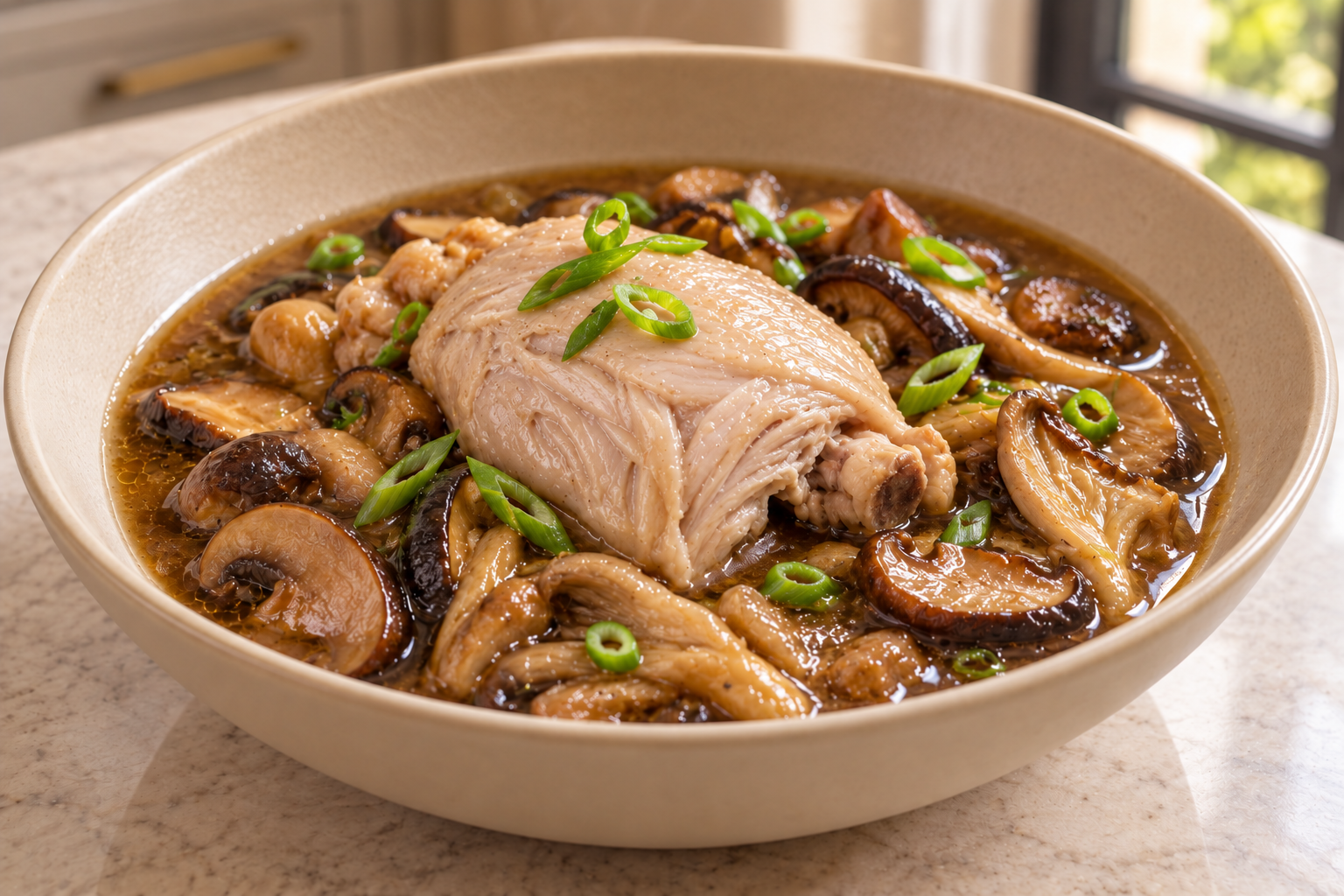
The finished chicken is skinless, tender, and surrounded by a medium-brown gravy with visible crimini, oyster, and shiitake pieces. Ginger, garlic, coconut aminos, cider vinegar, and raw honey round out the mushroom flavor, while a measured amount of green onion finishes the bowl.
What Gentle Means in This Recipe
Gentle describes the cooking method. The covered pan holds moisture around the chicken, and the low heat keeps the liquid at a quiet simmer instead of a hard boil. The skin stays soft, the meat cooks without a browned crust, and the mushrooms soften in the same liquid.
This is still a Full GAPS recipe because it includes mushrooms, coconut aminos, cider vinegar, honey, ginger, garlic, and green onion. It is not an Introduction Diet recipe. The gentle technique changes the texture and fat handling; it does not change the stage placement of the complete dish.
Why Cook With the Skin and Remove It Later?
The chicken cooks with its skin so the rendered fat stays in the pan. Once the chicken reaches its doneness cue, the soft skin is easy to lift away with a fork and knife. Instead of discarding it, you cool it with half of the mushrooms and blend it into the gravy.
The puree should become smooth enough that you no longer see separate folds of skin. Stirred back into the pan, it gives the gravy more body and a glossy finish. The finished bowls show skinless chicken because the skin has become part of the sauce.
Choose a Pan That Does Not Crowd the Chicken
Use one very wide covered pan or divide the recipe between two covered pans. Arrange the chicken around the perimeter, leaving the center open for the mushrooms. The mushrooms need enough room to bubble in the liquid and move when you stir them from time to time.
A 10.25-inch Le Creuset Artichaut skillet holds a partial batch comfortably. For the full two-pound recipe, use a second covered pan if the chicken cannot sit in one layer. Divide the fat, mushrooms, aromatics, stock, coconut aminos, vinegar, honey, and salt evenly between the pans, then combine the mushroom mixture before blending.
Use Bone-In Skin-On Chicken
Choose two pounds of bone-in skin-on chicken thighs or whole legs. Bone-in pieces stay intact through the covered cook and give you a clear place to check the meat without slicing it into smaller pieces first. Pat the chicken dry before it goes into the fat, even though the skin will remain soft.
Season the chicken with mineral salt. The recipe does not use black pepper, soy sauce, tamari, sesame oil, or a commercial sweetener. Duck fat supplies the cooking fat, and homemade raw-meaty chicken stock supplies the measured liquid.
Use Fresh, Wild, and Dried Mushrooms
Fresh crimini or shiitake make up most of the mushroom volume. Oyster mushrooms provide the wild-mushroom shape and texture, while dried shiitake add concentrated flavor after they are softened and rinsed. Slice the common mushrooms evenly and tear large oyster mushrooms into bite-size pieces.
The mushrooms should end the covered cook soft and glossy, with no dry centers. Because half will remain whole, even cutting matters. Large tough pieces will still be noticeable after the other half has been pureed.
Rehydrate the Dried Shiitake First
Put three-quarter cup dried shiitake mushrooms in a small stainless-steel saucepan with one and one-half cups water. Cover and simmer for fifteen to twenty minutes. Watch the last few minutes so the water does not evaporate completely.
Drain the mushrooms, rinse them well, and let them cool enough to handle before slicing. The soaking water is not the meat stock for this stew. Use fresh homemade chicken meat stock made with raw meaty pieces for the measured cooking liquid.
Build the Covered Pan
Melt the duck fat over low heat. Arrange the chicken around the outside of the pan, then put the fresh and rehydrated mushrooms in the center with grated ginger, garlic, and one-half teaspoon mineral salt. Add one and two-thirds cups homemade chicken meat stock, two tablespoons coconut aminos, one teaspoon cider vinegar, and one teaspoon raw honey.
The liquid should sit around the food without completely burying the chicken. If you split the recipe between two pans, divide every liquid and seasoning before cooking so one pan does not become saltier or sweeter than the other.
Keep the Simmer Quiet
Cover the pan and cook over low heat for about forty-five minutes. Look for small, steady bubbles around the mushrooms rather than a rolling boil. Move the mushrooms gently from time to time so pieces at the center and edge trade places.
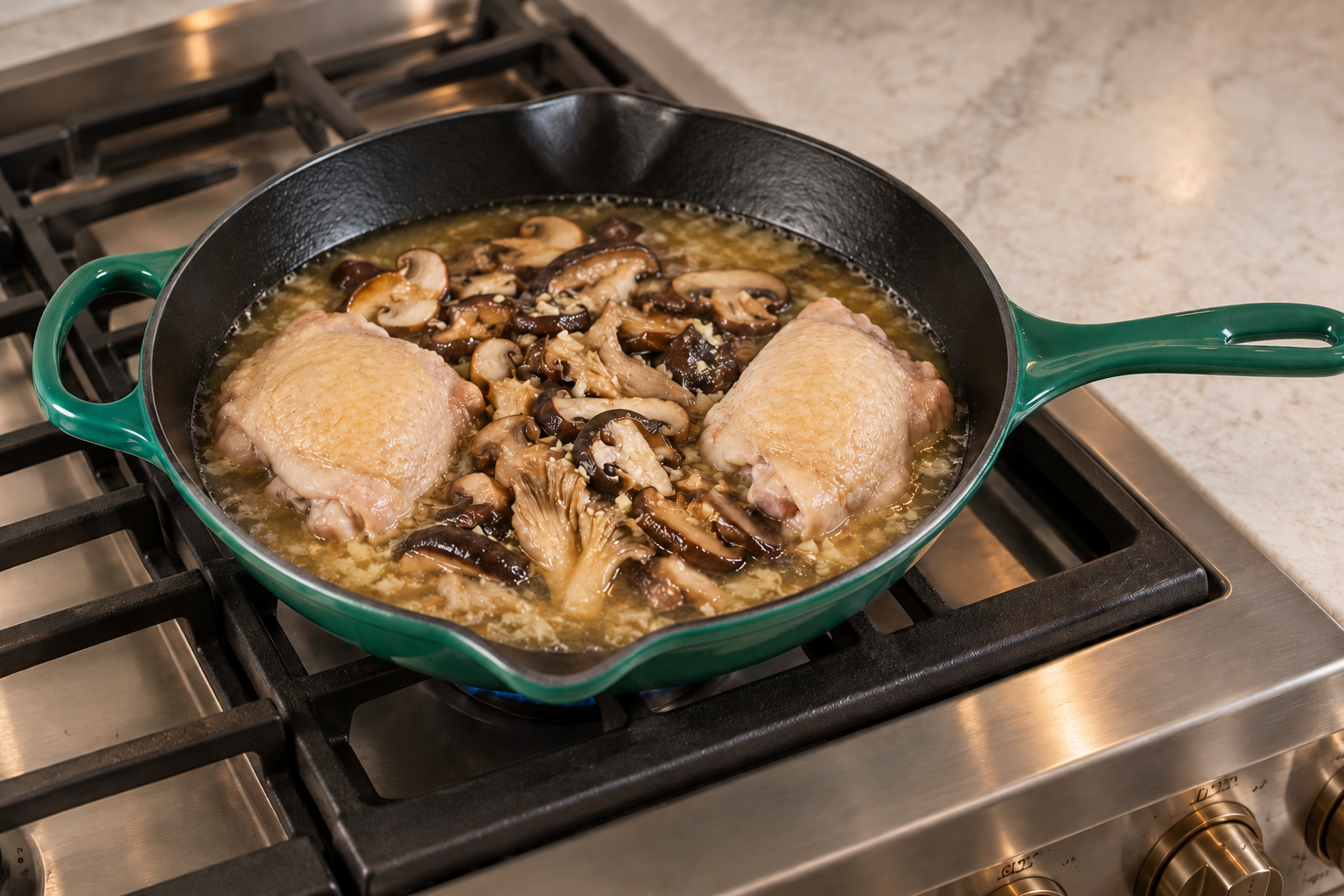
The chicken skin should remain pale and soft, and the mushrooms should collapse into the liquid. The aroma should lead with chicken and mushrooms, followed by ginger and garlic. If the pan is boiling hard or the liquid is disappearing quickly, lower the heat.
Check the Chicken Before Removing the Skin
Test the thickest piece without touching the bone. An instant-read thermometer should read 165°F, and the juices should run clear when the meat is pierced to the bone. The meat should feel tender but still hold together when lifted.
Move the chicken to a plate. Use a fork and knife to lift away the soft skin, keeping the chicken pieces intact. Put the skin in a heat-safe bowl with about half of the cooked mushroom mixture and enough gravy to keep it moist.
Cool the Blender Portion Before Pureeing
Let the skin-and-mushroom portion cool from very hot to warm before it goes into the glass blender. Do not seal very hot liquid under the blender lid. Keep the remaining mushrooms and gravy covered over the lowest heat.
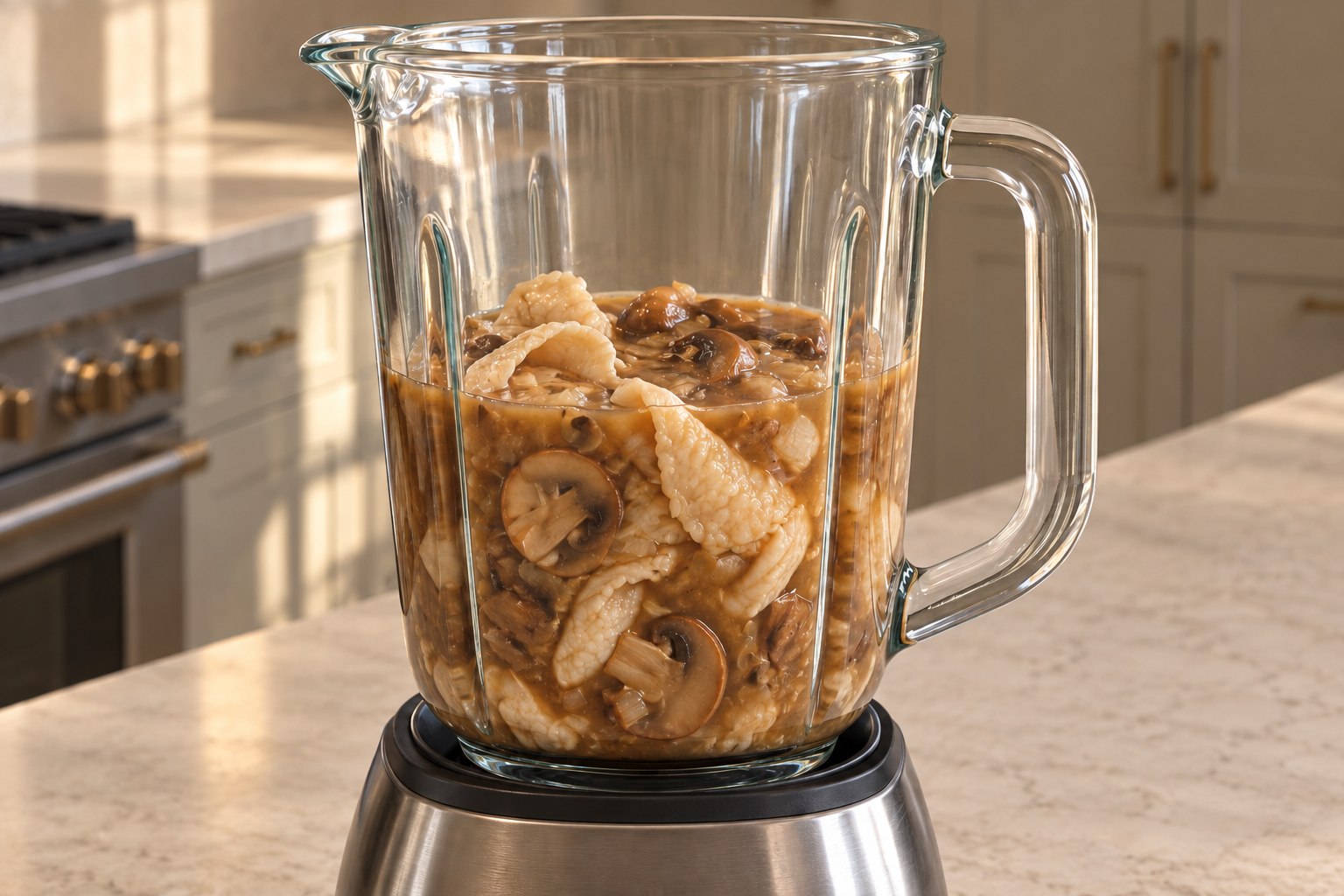
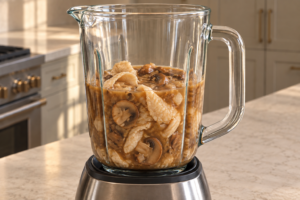
Blend on medium for about fifty seconds. The puree should be smooth and medium brown, without visible strips of skin or large mushroom pieces. If the mixture does not circulate, stop the blender and redistribute it rather than adding unmeasured liquid.
Finish the High-Fat Mushroom Gravy
Stir the puree back into the whole mushrooms and gravy. Work from the center toward the edge until the color looks even. The sauce should coat the back of a spoon but slide from it slowly. It should feel silky rather than gummy because mushrooms and skin provide the body.
Return the skinless chicken to the gravy just long enough to warm it through. Divide the chicken among shallow bowls, spoon the mushroom gravy around it, and finish with the measured sliced green onions.
This recipe uses Nutiva Organic Original Coconut Aminos, formerly Coconut Secret. Its current ingredient list is organic coconut tree sap and sea salt. Do not substitute soy sauce, tamari, teriyaki sauce, or a flavored coconut-aminos blend.
What the Finished Stew Should Look and Taste Like
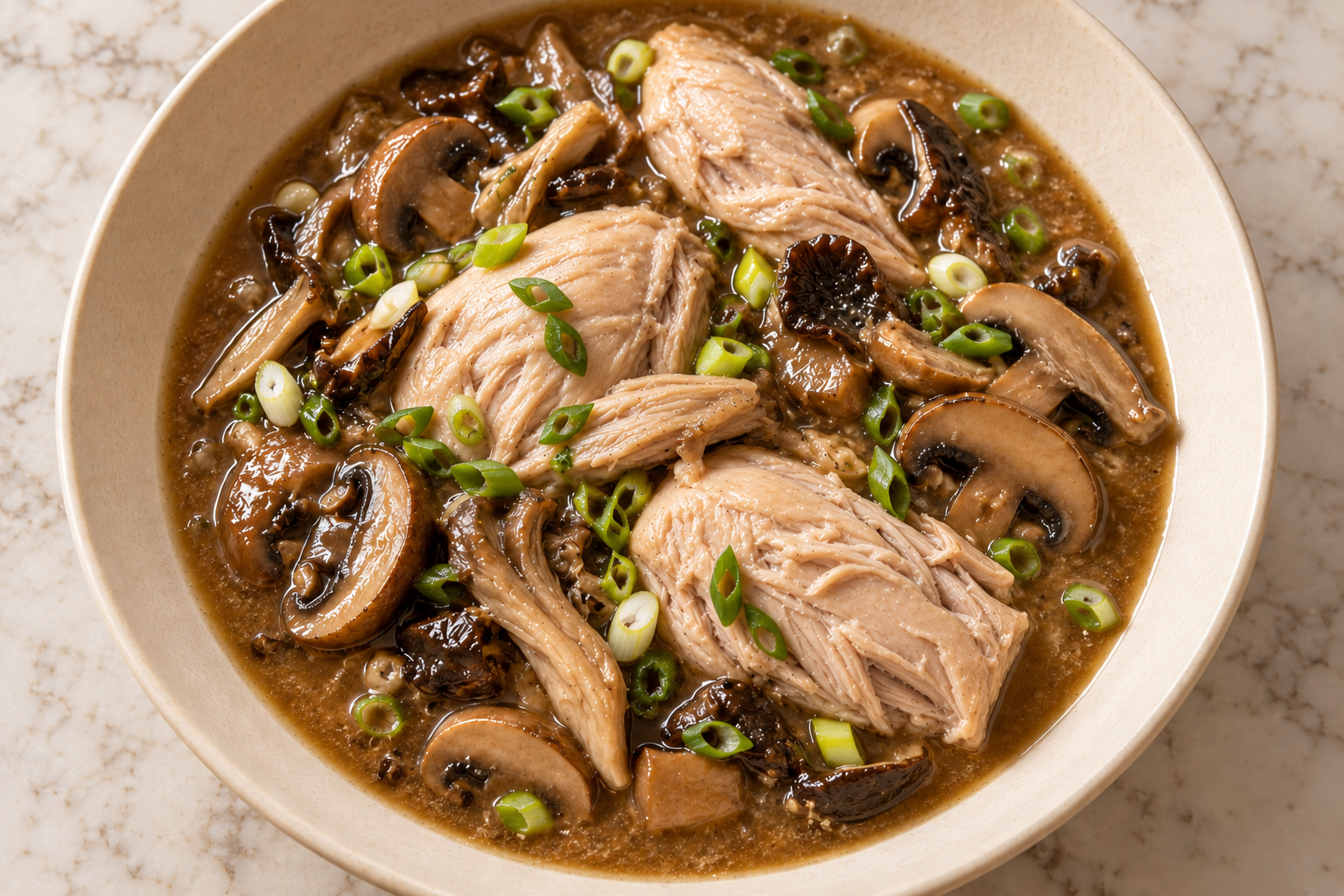
The chicken should look pale and tender rather than roasted, with the skin removed and the meat surface visible. Whole mushroom pieces should remain in the medium-brown sauce. A thin sheen of duck and chicken fat is expected on the hot gravy.
The stew should taste deeply mushroomy and savory, with ginger and garlic behind the chicken. Honey softens the cider vinegar without making the sauce taste sweet. The pureed skin should disappear into the gravy rather than remain as visible pieces.
Where It Fits on GAPS
This is a Full GAPS dish after every plant ingredient in the recipe is accepted. It is dairy-free, egg-free, nut-free, grain-free, and starch-free. It does not fit the Introduction Diet or the No-Plant variation as written.
Using meat stock instead of long-cooked bare-bone broth follows the current GAPS distinction, but that substitution alone does not make the mushroom-and-coconut-aminos stew an Intro recipe.
Serving and Storage
Serve the stew hot with roasted cauliflower, mashed cauliflower, or another tolerated Full GAPS vegetable. With six children at the table, I like serving the chicken in shallow bowls first and then ladling the mushrooms and gravy around each piece so the portions stay even.
Cool leftovers promptly and refrigerate them covered for up to five days. Reheat in a covered pan over low heat, stirring the gravy occasionally, until the chicken is hot through. Add a spoonful of meat stock only if the chilled gravy has become too thick to loosen as it warms.
Recommended Equipment
You need one very wide covered pan or two covered pans, a small stainless-steel saucepan, a colander, tongs, a fork and knife, a heat-safe bowl, a glass blender, measuring cups and spoons, and an instant-read thermometer.
If you use two pans, measure before dividing the ingredients. Recombine the cooked mushroom mixtures before removing the blender portion so the final gravy has the same balance throughout.
Frequently Asked Questions
Is This an Introduction Diet Recipe?
No. The gentle low-heat method does not change the Full GAPS placement of mushrooms, coconut aminos, vinegar, honey, and the other plant ingredients.
Why Is the Finished Chicken Skinless?
The chicken cooks with its skin, but the soft cooked skin is removed and blended with half of the mushrooms. That keeps its fat in the dish and gives the gravy body.
Can I Cook Everything in One Pan?
Yes, if the chicken fits around the perimeter in one layer and the mushrooms have room in the center. Otherwise divide the recipe evenly between two covered pans.
Can I Use Bone Broth?
Use homemade raw-meaty chicken stock for this Full GAPS recipe. Meat stock and long-cooked bare-bone broth are different preparations with different protocol timing.
Can I Double the Recipe?
Yes. Double every measured ingredient and use additional covered pans so the chicken remains in one layer. Blend the warm skin-and-mushroom mixture in batches within the blender’s safe capacity.
Gentle Chinese Chicken and Wild Mushroom Stew Recipe
Gentle Chinese Chicken and Wild Mushroom Stew for Full GAPS
Ingredients
Equipment
Method
- Put the dried shiitake mushrooms in the stainless saucepan with 1 1/2 cups water. Cover and simmer for 15 to 20 minutes, watching the final minutes so the water does not evaporate. Drain, rinse well, cool enough to handle, and slice.
- Melt the duck fat over low heat in one very wide covered pan or divide it evenly between two covered pans. Arrange the chicken around the perimeter in one layer. Put the fresh and rehydrated mushrooms in the center with the ginger, garlic, and 1/2 teaspoon salt.
- Add the chicken meat stock, coconut aminos, apple-cider vinegar, and raw honey, dividing evenly if using two pans. Cover and cook over low heat for about 45 minutes, moving the mushrooms from time to time, until the chicken skin is soft and pale, the juices run clear when pierced to the bone, and an instant-read thermometer away from the bone reads 165°F.
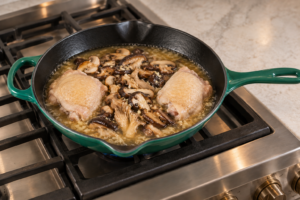
- Transfer the chicken to a plate. Use a fork and knife to remove the soft skin while keeping the chicken pieces intact. Put the skin in a heat-safe bowl with about half of the cooked mushroom mixture and enough gravy to keep it moist.
- Cool the skin-and-mushroom portion from hot to warm. Transfer it to the glass blender and puree on medium for about 50 seconds, until no skin strips or large mushroom pieces remain.
- Stir the puree into the whole mushrooms and gravy until the color is even. Return the skinless chicken just long enough to warm through. Serve in shallow bowls with the green onions divided over the top.
Notes
Tried this recipe?
Let us know how it was!Choose the Mushroom Chicken Method That Fits Tonight
For browned chicken served with a separate sauce, use Chinese Chicken With Wild Mushroom Gravy. For a one-dish oven finish, use the Chinese Chicken and Wild Mushroom Casserole. Each method has its own complete recipe and card.
More Soups and Stews for the Family Table
For more family-sized recipes built around meat stock and practical batch cooking, our planned Soups & Stews Cookbook is the most relevant resource for this meal. Watch the WFLI shop as it is released.

Leave a comment