

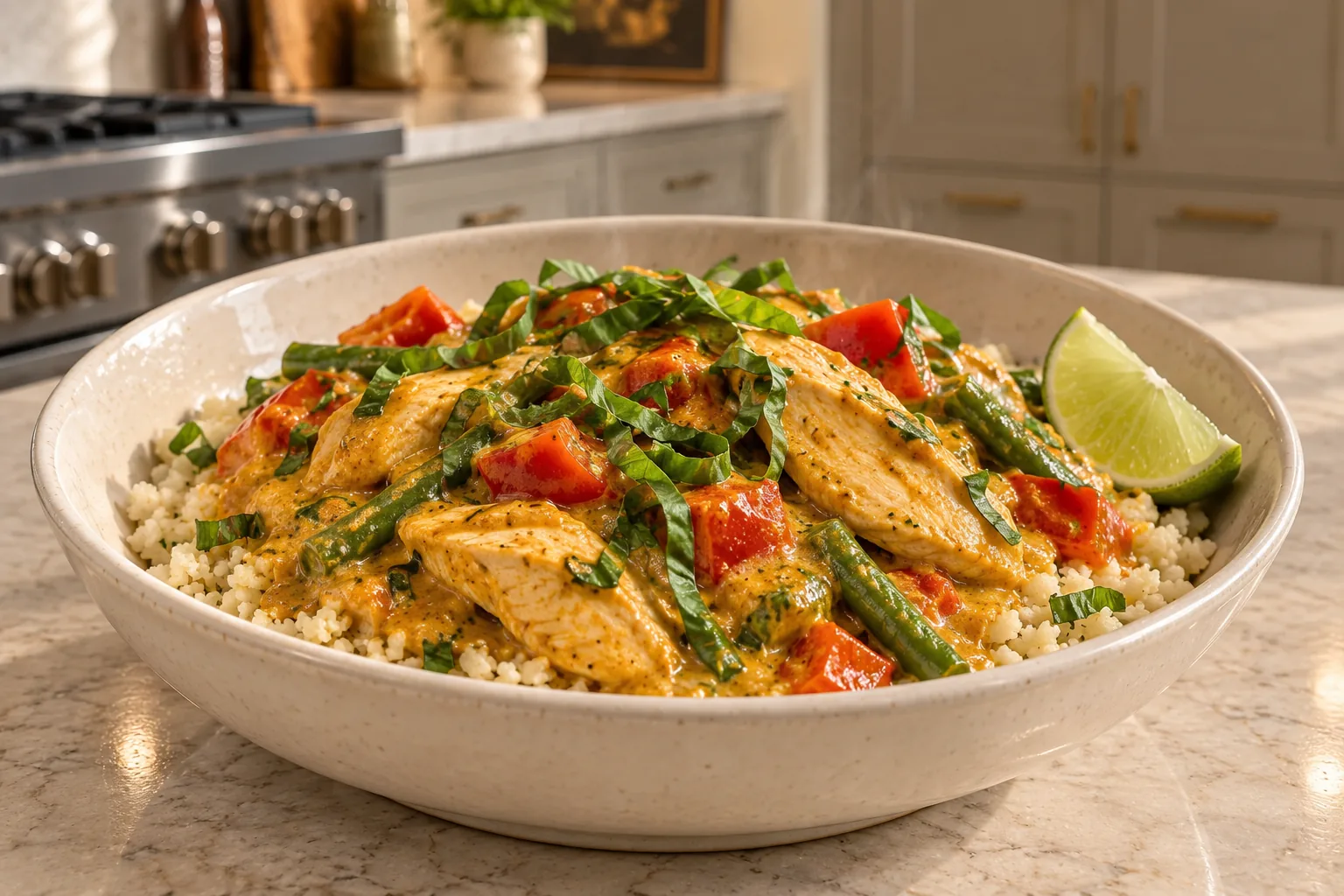
This Thai-inspired chicken curry is the kind of dinner I reach for when the day has already used up most of my attention. Onion and fresh chile soften in ghee, curry powder blooms in the hot fat, and homemade coconut milk turns the pan into a warm golden sauce. Bell pepper, green beans, and thin chicken pieces cook together until the chicken is tender and the vegetables still hold their shape.
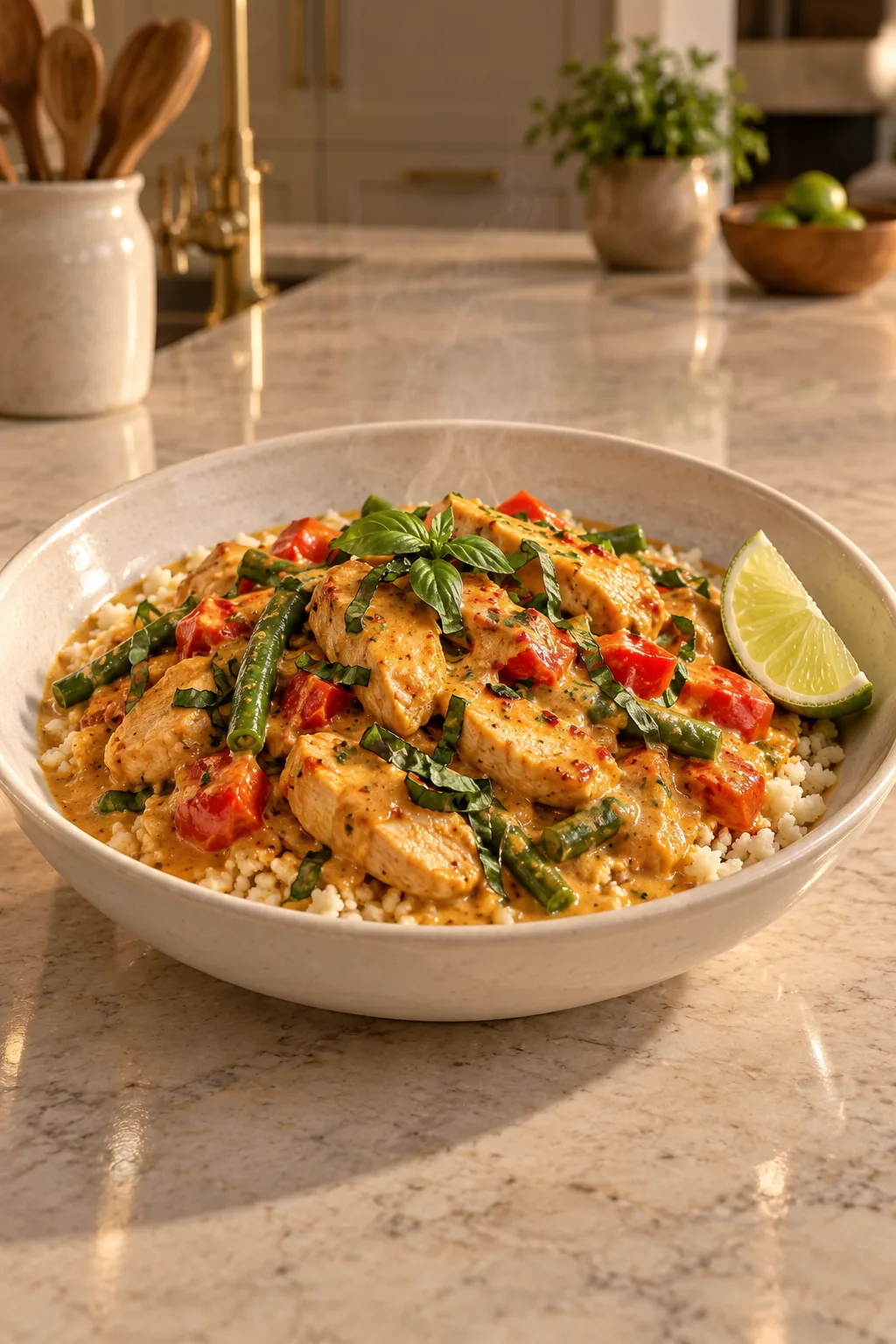
The finished curry smells first of toasted spice, then lime and basil. It should be creamy enough to coat the chicken without becoming pasty. Served over cauliflower rice, it makes a full bowl with plenty of sauce in every bite.
As a working, homeschooling mom of six, I appreciate a recipe that lets me do the chopping before the busy part of the evening and then uses one cooking vessel. The physical cues matter more than hovering over a timer: translucent onion, fragrant spices, a gentle simmer, and fully opaque chicken tell you where you are.
Where This Chicken Curry Fits On GAPS
This recipe fits Full GAPS after its individual ingredients are introduced and tolerated. The route uses homemade coconut milk, pure additive-free curry powder, qualifying fish sauce, and homemade ghee or coconut oil.
Canned coconut milk, commercial curry sauce, palm sugar, coconut sugar, and rice are left out. The source recipe already allows curry powder in place of curry paste, so the card follows that measured branch instead of inventing a paste formula.
Serve the curry with Full GAPS steamed cauliflower rice. If you want the source recipe’s optional sweetness, stir in one to two tablespoons raw honey after the pan comes off the heat.
Choose The Curry Ingredients
Use curry powder made only from permitted spices. The blend may include turmeric, coriander, cumin, ginger, black pepper, cinnamon, cardamom, clove, or chile. Read the ingredient list and leave blends with starch, sugar, maltodextrin, flavoring, or flow agents on the shelf.
For fish sauce, look for fish or anchovies, sea salt, and water. Ten to twenty drops are enough to deepen the sauce without making the curry taste plainly fishy. Add it near the end so you can taste before adding more.
The source calls for two fourteen-ounce cans of coconut milk or cream. This version preserves the same twenty-eight-fluid-ounce measure as three and a half cups homemade coconut milk. Homemade milk can be thinner than canned coconut cream, so the uncovered simmer is part of the texture control.
Taste the coconut milk before it goes into the pan. It should smell clean and lightly coconutty, without a sour edge. Stir it well if the cream has risen. A separated homemade milk is normal; an off smell is not. Starting with evenly mixed milk makes it easier to judge how much the sauce has reduced later.
Prepare The Chicken And Vegetables
Thinly slice two to four boneless chicken thighs or breasts across the grain. Pieces close to one-half inch thick cook evenly in the sauce. Keep the slices similar in size so the thickest piece is not raw after the smallest pieces are done.
Dice one bell pepper into bite-size pieces and trim one cup green beans into short lengths. Dice the onion small. Seed and finely dice one or two small chile peppers. The chile amount controls heat without changing the measured sauce.
Set the prepared ingredients in the order they enter the pan: onion and chile, curry powder, coconut milk and lime, then chicken and vegetables. This small bit of organization keeps the spice powder from scorching while you search for a measuring cup and keeps raw chicken away from the finished basil and lime.
Use a vegetable peeler to remove one thick strip of lime zest before quartering the lime. Take only the green outer zest, leaving the bitter white pith behind. Optional lime leaves can simmer with the zest and come out before serving.
Soften The Onion And Chile
Lightly coat a large stainless steel or enameled cast-iron pan with ghee or coconut oil and set it over medium heat. Add the diced onion and chile. Stir for about two minutes.
The onion is ready when the sharp raw smell softens and the outer edges look translucent. It should still be pale. If the pieces begin browning before they soften, lower the heat; browned onion would pull the sauce away from the clean coconut-and-lime flavor.
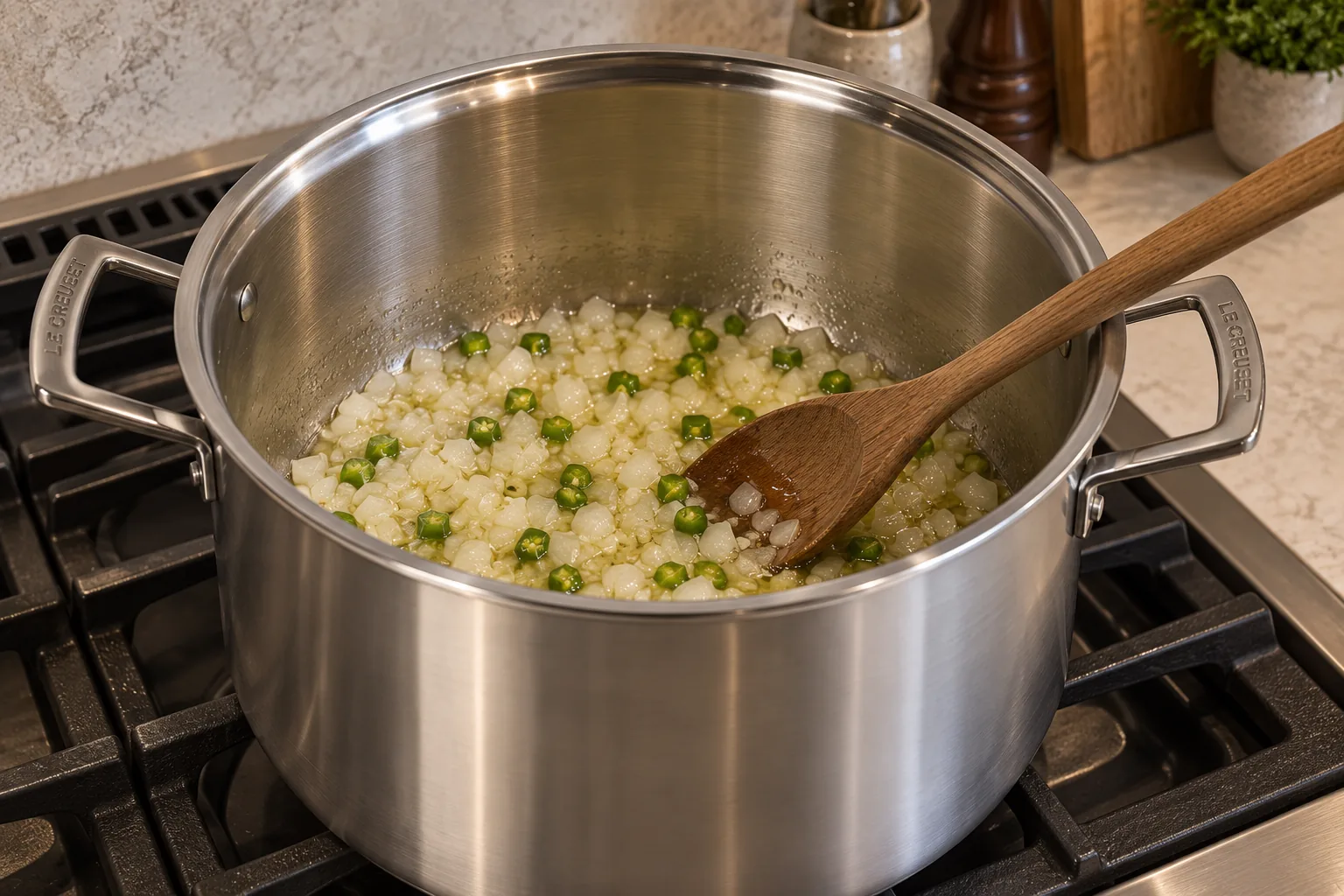
Keep the onion and chile moving across the bottom so the small pieces do not catch. The fat should glisten around them without pooling deeply.
Bloom The Curry Powder
Add one tablespoon curry powder to the softened onion and chile. Stir it through the hot fat for thirty to sixty seconds. This brief frying step wakes up the spice blend before the coconut milk dilutes it.
Use your nose as the cue. The powder should smell rounded and fragrant, with turmeric and toasted spice becoming more obvious. Stop before it smells scorched or leaves dark dry patches on the pan.
Build The Coconut Curry Sauce
Pour in three and a half cups homemade coconut milk. Add the thick strip of lime zest and three to four lime leaves, if using. Scrape across the bottom as the milk goes in so every bit of curry powder joins the sauce.
Bring the sauce to a gentle simmer over medium-low heat. Look for small bubbles around the perimeter rather than a rolling boil. The color should be evenly golden, with no dry clumps of curry powder floating on top.
Simmer The Chicken And Vegetables
Add the bell pepper, green beans, and sliced chicken. Stir so every chicken piece is separated and surrounded by sauce. Keep the pan at a gentle simmer for about twenty minutes.
The chicken is done when every piece is opaque through the center and the thickest one reaches 165°F. The bell pepper should be tender but recognizable, and the green beans should bend easily while keeping their green color. The sauce will look looser while the chicken releases moisture, then begin to cling again.
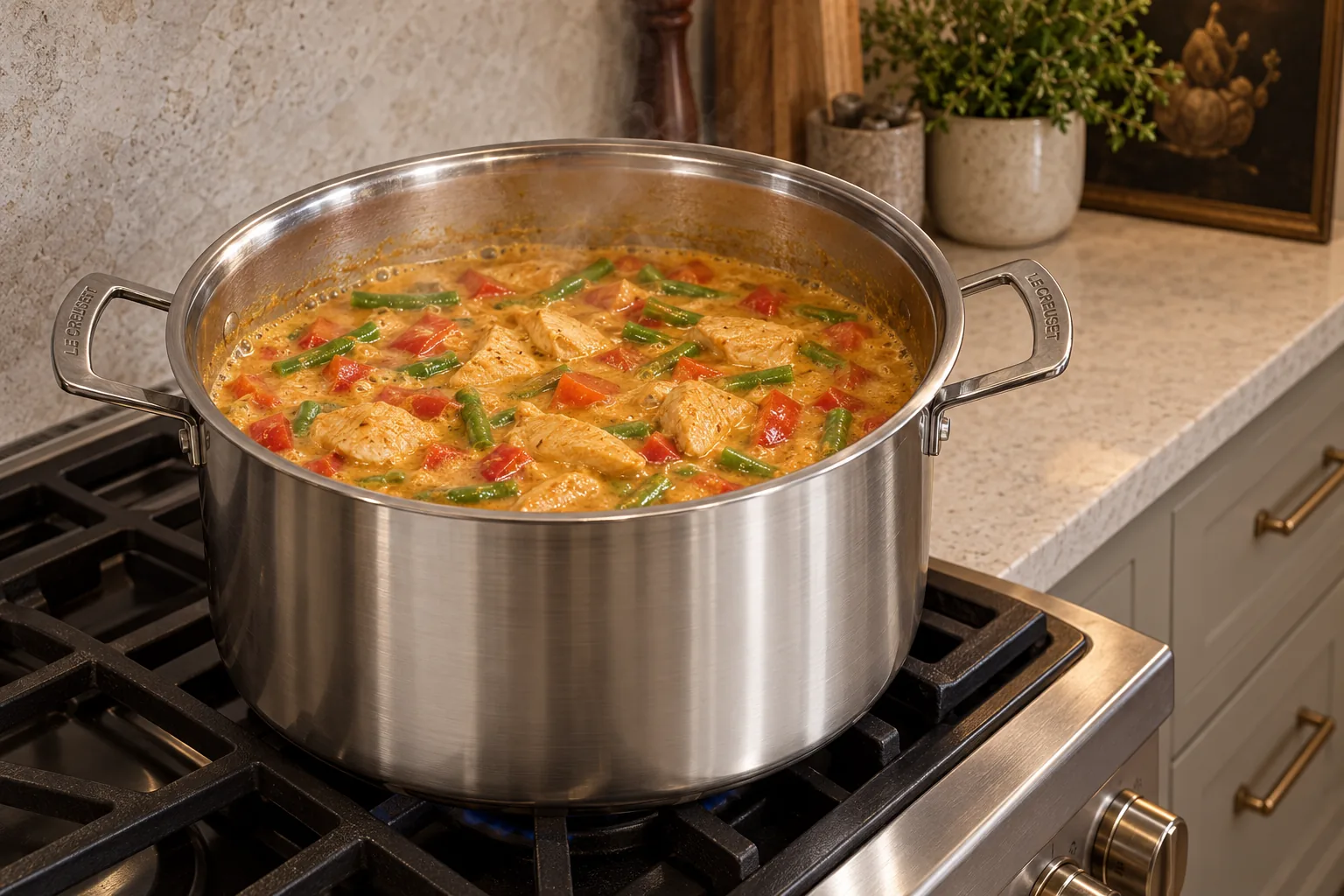
If the sauce is thinner than you want, simmer it uncovered for several more minutes. If it becomes too thick, add water one tablespoon at a time. The endpoint is a spoon-coating sauce that settles around the chicken instead of running like broth.
Finish With Lime, Basil, And Fish Sauce
Remove the lime zest and lime leaves. Add ten drops fish sauce, stir, and taste. Add more a few drops at a time, up to twenty drops, followed by sea salt as needed.
Take the pan off the heat. Stir in optional raw honey now if you are using it. Add thinly sliced basil just before serving so it stays green and aromatic. Squeeze lime over each bowl rather than boiling the juice in the sauce.
Serve It With Cauliflower Rice
Spoon cauliflower rice into each bowl and ladle the curry over it. The rice should catch the coconut sauce without disappearing underneath it. Finish with basil and one lime wedge.
For a larger table, use the card’s 2× control. The source specifically doubles this recipe for four adults with four to five chicken breasts or six to eight thighs. Use a vessel large enough to keep the sauce below the rim and simmer in batches if needed.
Store And Reheat The Curry
Cool leftovers promptly and refrigerate the curry separately from the cauliflower rice for up to three days. The sauce thickens when cold. Reheat gently in a saucepan, stirring in a splash of water if needed, until the chicken and sauce are steaming throughout.
Freeze the curry without the cauliflower rice for up to two months. Coconut milk may look slightly separated after thawing; slow reheating and steady stirring bring the sauce back together. Add fresh basil and lime only after reheating.
For lunch portions, divide the cooled curry among shallow containers and pack the cauliflower rice separately. That prevents the rice from absorbing all the sauce overnight. When reheating one serving, warm the curry first, then spoon it over hot cauliflower rice and add a fresh lime wedge.
Recommended Equipment
- Le Creuset Classic Stainless Steel Stockpot, 10 quart
- Wooden spoon
- Chef’s knife and cutting board
- Liquid measuring cup and tablespoon measure
- Vegetable peeler
- Instant-read food thermometer
Frequently Asked Questions
Can I Use Canned Coconut Milk?
Use homemade coconut milk for this Full GAPS route. The measured amount is three and a half cups, matching the source’s two fourteen-ounce cans.
Can I Use Store-Bought Curry Paste?
This card uses the source’s curry-powder branch because a pure spice blend is easier to verify. Commercial curry pastes often include sugar, starch, oil, or other ingredients that do not fit this version.
Can I Use Chicken Breasts Or Thighs?
Either works. Thighs stay especially tender during a longer simmer. Breast meat cooks well when sliced evenly and removed from heat once the thickest piece reaches 165°F.
Are Sugar Snap Peas Used In This Version?
The source suggests sugar or snap peas as one green-vegetable option. This card uses green beans for a clear Full GAPS route and keeps the same one-cup measure.
How Do I Make The Curry Milder?
Use one seeded chile, choose a mild pure curry powder, and serve extra lime at the table. Do not reduce the coconut milk; it balances the spice and makes the sauce.
Can I Prepare It Ahead?
Dice the vegetables, slice the chicken, and measure the spices earlier in the day. Keep the chicken refrigerated. Wait to slice the basil and squeeze the lime until serving so their aroma stays fresh.
Thai-Inspired Chicken Curry Recipe
Thai-Inspired Chicken Curry With Coconut Milk for Full GAPS
Ingredients
Equipment
Method
- Lightly coat a large pan with ghee or coconut oil over medium heat. Add the onion and chile and cook for about 2 minutes, stirring, until the onion edges are translucent but not browned.
- Add the curry powder and stir through the hot fat for 30 to 60 seconds, until fragrant but not scorched.
- Pour in the homemade coconut milk. Add the strip of lime zest and the lime leaves, if using. Scrape the bottom and bring the sauce to a gentle simmer over medium-low heat.
- Add the bell pepper, green beans, and sliced chicken. Simmer gently for about 20 minutes, until the vegetables are tender, the chicken is opaque, and the thickest piece reaches 165°F.
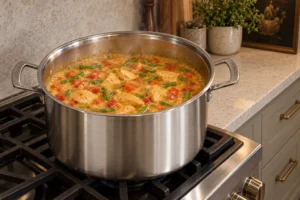
- Simmer uncovered for several more minutes if the sauce is thin. If it becomes too thick, add water 1 tablespoon at a time until the sauce coats a spoon.
- Remove the lime zest and lime leaves. Stir in half of the measured fish sauce, taste, then add more as needed. Season with sea salt. Remove from heat and stir in the measured optional raw honey.
- Serve over cauliflower rice with sliced basil and a lime wedge.
Notes
Ingredient route: Use homemade coconut milk, pure additive-free curry powder, and fish sauce made from fish or anchovies, sea salt, and water.
Sweetener: The source optional palm or coconut sugar becomes the same measured amount of raw honey, added off heat.
Storage: Refrigerate curry separately from cauliflower rice for up to 3 days or freeze for up to 2 months.
Tried this recipe?
Let us know how it was!Make Full GAPS Weeknights Easier
The upcoming Full GAPS Batch-Cooking Guide is built for dinners like this: component prep, realistic family portions, storage plans, and a kitchen rhythm that keeps a nourishing meal from taking over the whole evening. Find current releases and upcoming additions in the WFLI shop.

Leave a comment