

Campbell-McBride groups swimming and barefoot walking together in the GAPS detoxification chapter. She prefers natural water to chlorinated pools and describes contact with the ground as beneficial. These are her recommendations; the water or ground still needs to be assessed as the place you actually plan to use.[1]
The practical question is more specific than “Is nature good?” A lake can have an advisory, a pool can have an air-quality problem, and a walking surface can be uncomfortable or unsafe. It helps to look at those situations separately.
What the Book Says About Pools
The book strongly criticizes chlorine-treated pools, mentions a small number using ozone, and recommends natural waters instead. It describes chlorine exposure through skin and air as an added burden. That is the author’s position, not a technical certification rule that every ozone-treated pool is safe and every other pool is unsafe.[1]
The pool-air issue includes chloramines, which form when chlorine reacts with substances brought into the water by swimmers. Chloramines can irritate eyes and airways, especially where air handling is poor. This is more precise than describing every pool as a thick blanket of elemental chlorine gas. Disinfection also has the important job of controlling germs.[2]
If a pool environment causes irritation, the response is to address the actual conditions rather than assume that exercise in any pool must be unhealthy. Ventilation, maintenance, and the swimmer’s own symptoms are relevant details.
Natural Water Has Its Own Checks
Campbell-McBride names lakes, rivers, seas, and oceans and says to avoid industrial pollution. The book’s preference is clear, but distance from industry is not a complete water-quality test.[1]
Before swimming, check local closures and advisories. Recent heavy rain, contaminated runoff, and harmful algae can matter even where water looks clear. CDC advises against swallowing recreational water and explains situations in which wounds or illness change the decision about entering it.[3]
- Check the local advisory for the specific beach, lake, or river.
- Look at recent weather and any posted closure or warning.
- Do not use clear appearance as proof that water is free of germs or algae-related hazards.
- Use ordinary water-safety precautions and supervision as well as the water-quality check.
Use the places realistically available to you. An outdoor routine has to fit your location, access, and the conditions that day.
How the Book Explains Barefoot Walking
The chapter describes the body through an electromagnetic framework and proposes that contact with the earth rebalances it. It also calls the soles of the feet a detoxification organ and describes an exchange of substances through them when walking on grass, sand, or soil.[1]
Those are the book’s explanations. The chapter does not measure how much, if any, toxic material a walk removes. An outdoor routine can be pleasant or useful movement without using that experience to establish a chemical-clearance claim.
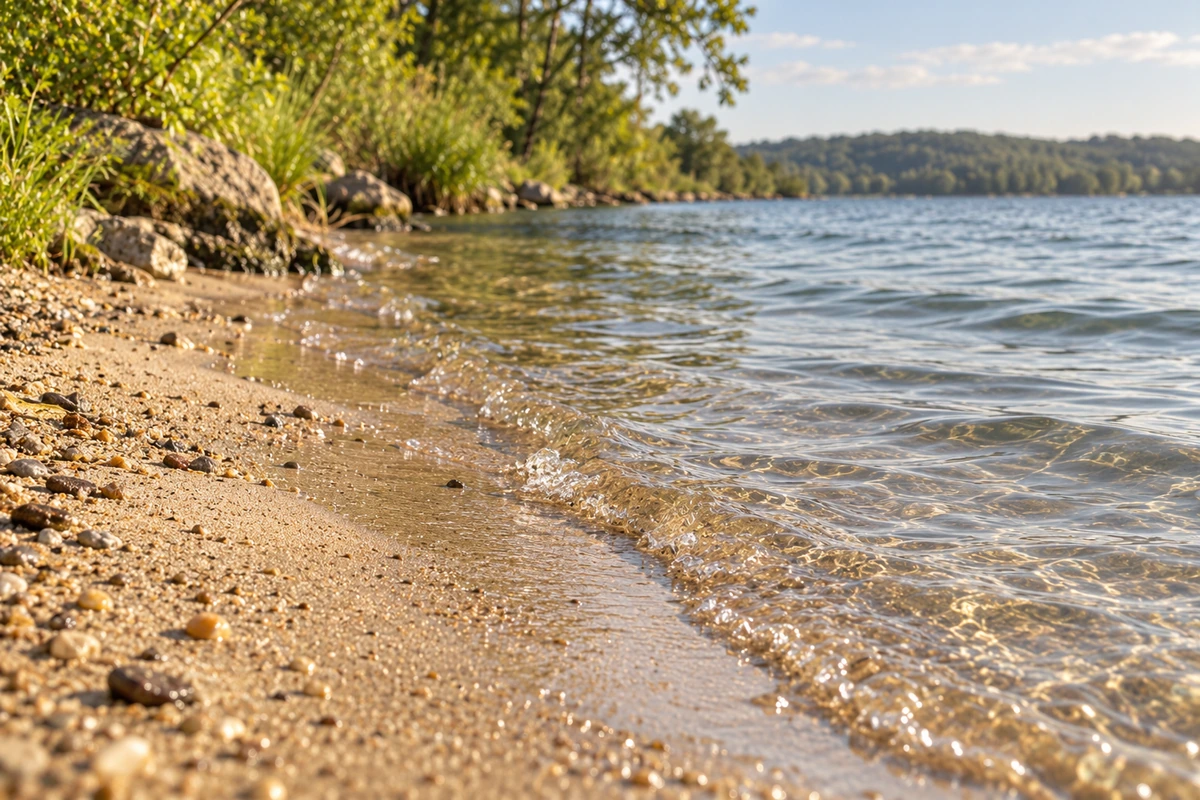
The author highlights beach walking and paddling in shallow water, again with an emphasis on avoiding contamination. Before going barefoot, consider the surface itself, including sharp objects and uncomfortable temperatures. The source does not provide a required distance, duration, or amount of toxin removal.[1]
Foot Patches and Foot Baths Are Separate Products
The book mentions foot patches and foot baths briefly, saying that some people find them helpful. It does not provide a detailed product protocol or a validated test of what those products remove.[1]
A small study of an ionic footbath found no specific induction of toxic-element release through the feet under the conditions tested. That study does not test every effect of spending time outdoors, but it is a reason not to treat a commercial footbath as the same claim as enjoying a walk. Discolored water or a darkened pad should not be taken as proof that toxins left the body.[4]
Choose an Outdoor Routine for Its Actual Setting
Start with where you can comfortably and safely spend time. Check the place, the conditions that day, and what your family needs. A pool visit, a walk, and a shallow-water outing each involve different practical decisions; they do not need to be squeezed into one treatment schedule.
Keep the description of your experience just as specific. “The pool air irritated my eyes” or “that surface was too hot” is useful information. It does not need to become a conclusion about your total toxic burden.
Put Everyday Routines in Context
GAPS Lifestyle is for readers who want the broader daily-routine context. You can see it in the course catalog.
Your Next Step
Check the conditions for the place you are considering. For the separate sunlight discussion, read the GAPS sun-exposure guide; for the complete chapter structure, return to the overview.
References
- Campbell-McBride, Natasha. Gut and Physiology Syndrome (2020), “Detoxification for People with Gut and Physiology Syndrome,” “3. Swimming and barefoot walking”.
- Centers for Disease Control and Prevention. Chloramines and Pool Operation.
- Centers for Disease Control and Prevention. How to Safely Visit Oceans, Lakes, and Rivers.
- Kennedy et al.. Objective Assessment of an Ionic Footbath: Testing Its Ability to Remove Potentially Toxic Elements From the Body.

Leave a comment