

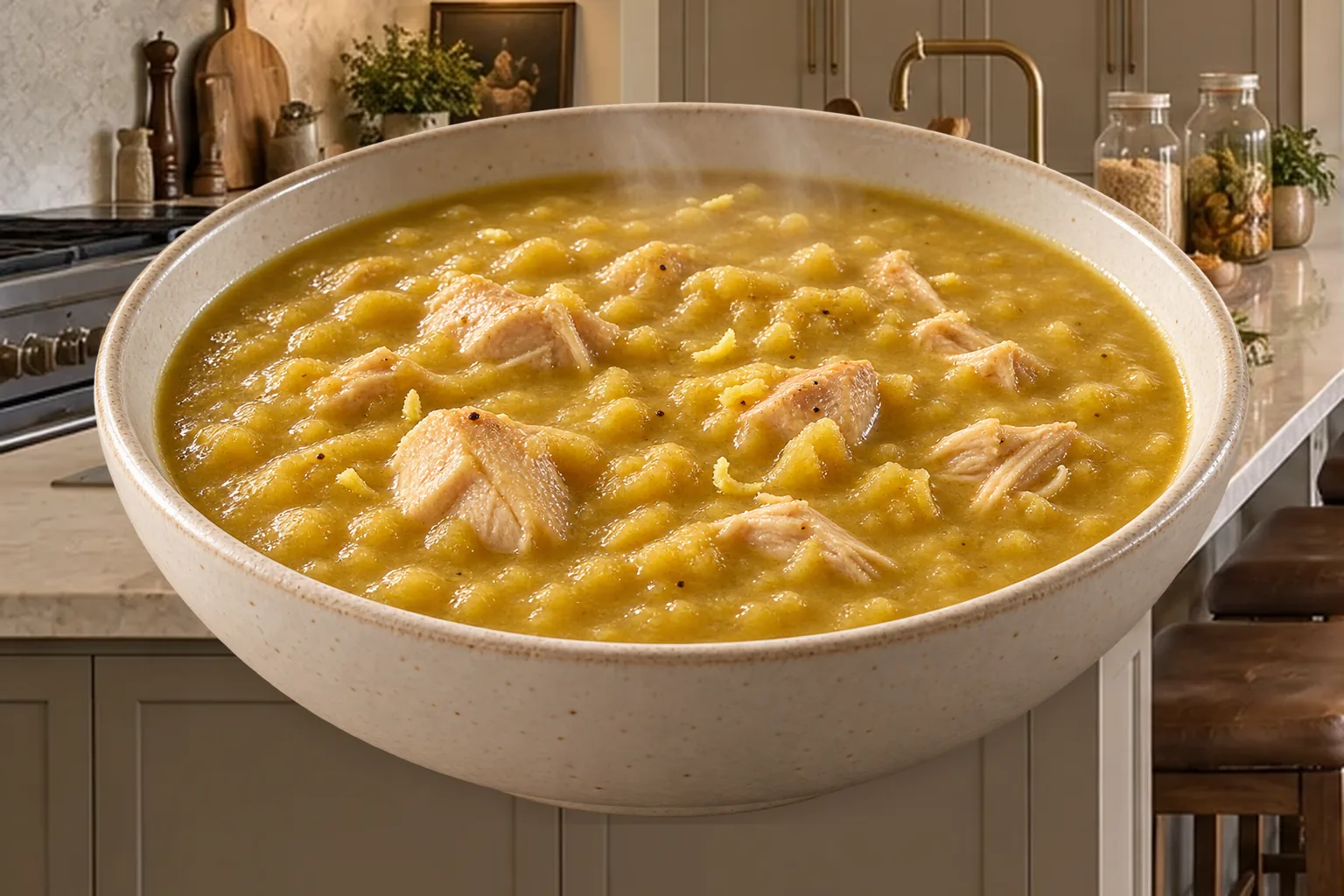
This GAPS split pea soup with chicken and ginger is a thick, savory Full GAPS meal made with properly soaked split peas, bone-in chicken thighs, fresh ginger, sea salt, and a small amount of ground cloves. The peas cook until they lose their dry center and soften into the broth, while the chicken is pulled from the bones and returned in bite-size pieces.
The soak is part of the recipe. Split peas are one of the legumes allowed on Full GAPS, but they do not go straight from the bag to the soup pot. They need 7 to 12 hours in hot acidulated water before cooking. That preparation changes this from a quick pressure-cooker recipe into a planned stovetop soup, and that is the version the card measures.
For our family of eight, a one-pot dinner is still useful even when I have to start one part the night before. I homeschool before work and leave for second shift, so the best plan is simple: soak the peas while I am doing something else, rinse them, then let one stockpot handle dinner. The hands-on work stays short.
Where Split Pea Soup Fits On GAPS
This soup fits Full GAPS after split peas have been introduced and tolerated. Split peas are not an Introduction Diet food. They belong with the small group of legumes allowed later, and they still require preparation before cooking.
Even properly prepared legumes do not work for every GAPS person right away. If split peas bring back bloating, cramping, diarrhea, constipation, or visible undigested food, pause them. Give your digestion more time before trying a small amount again.
If you are still learning which foods belong in each part of the protocol, keep the GAPS Diet Food List nearby. It separates Intro foods from the wider Full GAPS list so a hearty soup does not get mistaken for an early-stage recipe.
Why The Split Peas Must Be Soaked
Split peas are seeds. Like other legumes, they carry antinutrients that make them harder to digest. Full GAPS allows them only after they have been prepared to reduce that burden.
Split peas do not sprout, so the practical route is soaking or fermenting before cooking. This recipe uses the simpler soak. It is long enough to do real preparation without turning one soup into a nearly week-long fermentation project.
Use just-simmered water rather than cold tap water. You need enough to cover the dry peas by at least two inches because they swell as they sit. Acidulate that water with homemade whey, lemon juice, or apple cider vinegar.
The measured pound of split peas is about 2 1/4 cups. The soaking ratio is one tablespoon of neutralizer per cup of peas, so this batch needs 2 1/4 tablespoons. Measure it instead of adding a vague splash.
Soak The Split Peas For Seven To Twelve Hours
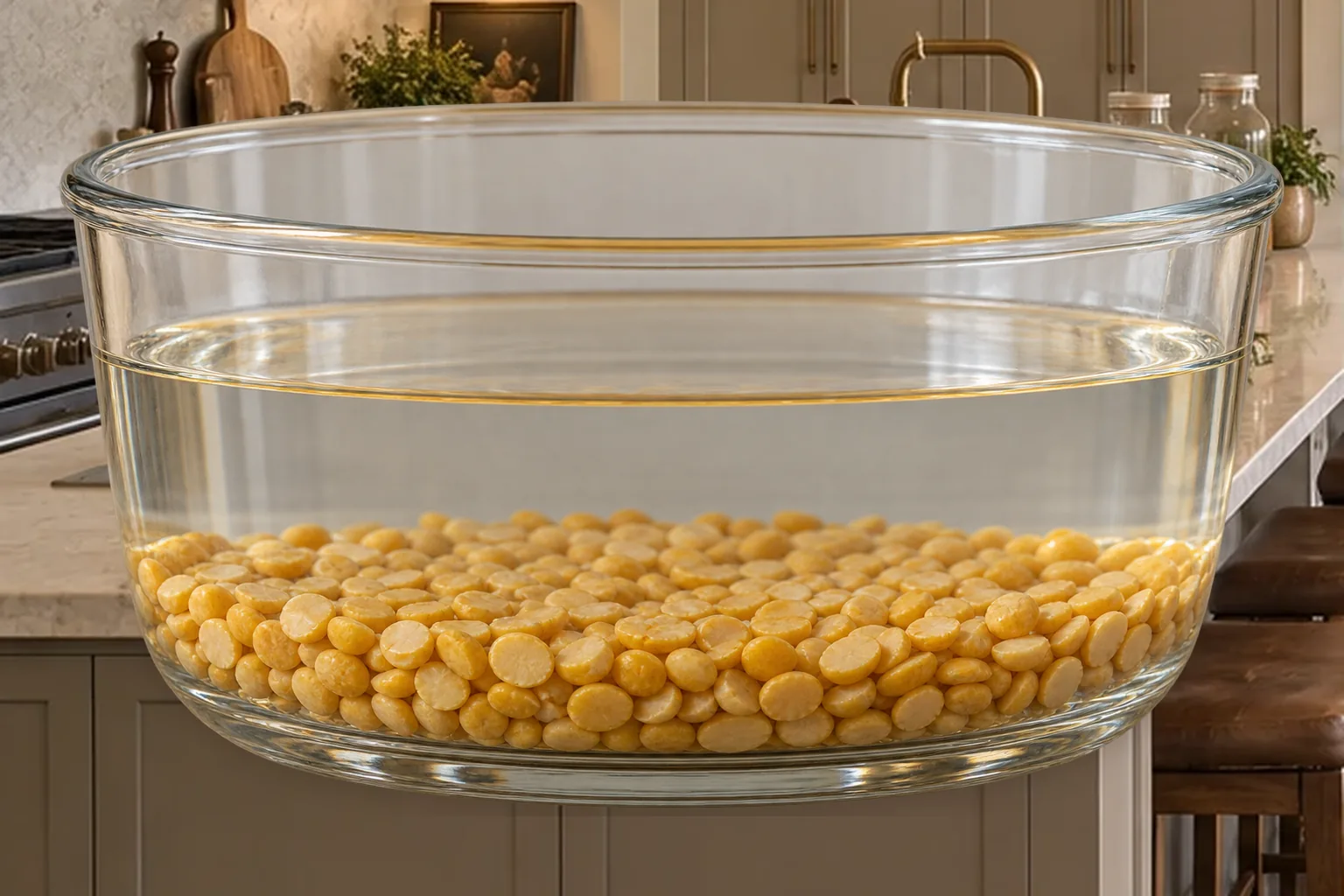
Put the dry split peas in a large clear glass bowl. Pick through them and remove any debris, then pour in enough just-simmered filtered water to cover them by at least two inches. Stir in the measured whey, lemon juice, or apple cider vinegar.
Cover the bowl loosely and leave it for 7 to 12 hours. The peas will look a little plumper and the water may become cloudy. That is expected. They should remain submerged for the whole soak.
If you are soaking close to the full 12 hours and the water has cooled completely, replace it once with fresh just-simmered filtered water and the same measured amount of neutralizer. The goal is not to keep reheating the peas all day. One replacement is enough for this route.
Do not cook the soup in the soaking water. Drain the peas, rinse them well with fresh water, and let them drain again. Rinse at least once and up to three times until the runoff looks cleaner.
Use A Stockpot Instead Of A Pressure Cooker
The original idea is an Instant Pot soup, but that equipment does not fit the current GAPS technique for legumes. High heat and pressure are specifically excluded for cooking beans and legumes. This Full GAPS version uses a low stovetop simmer instead.
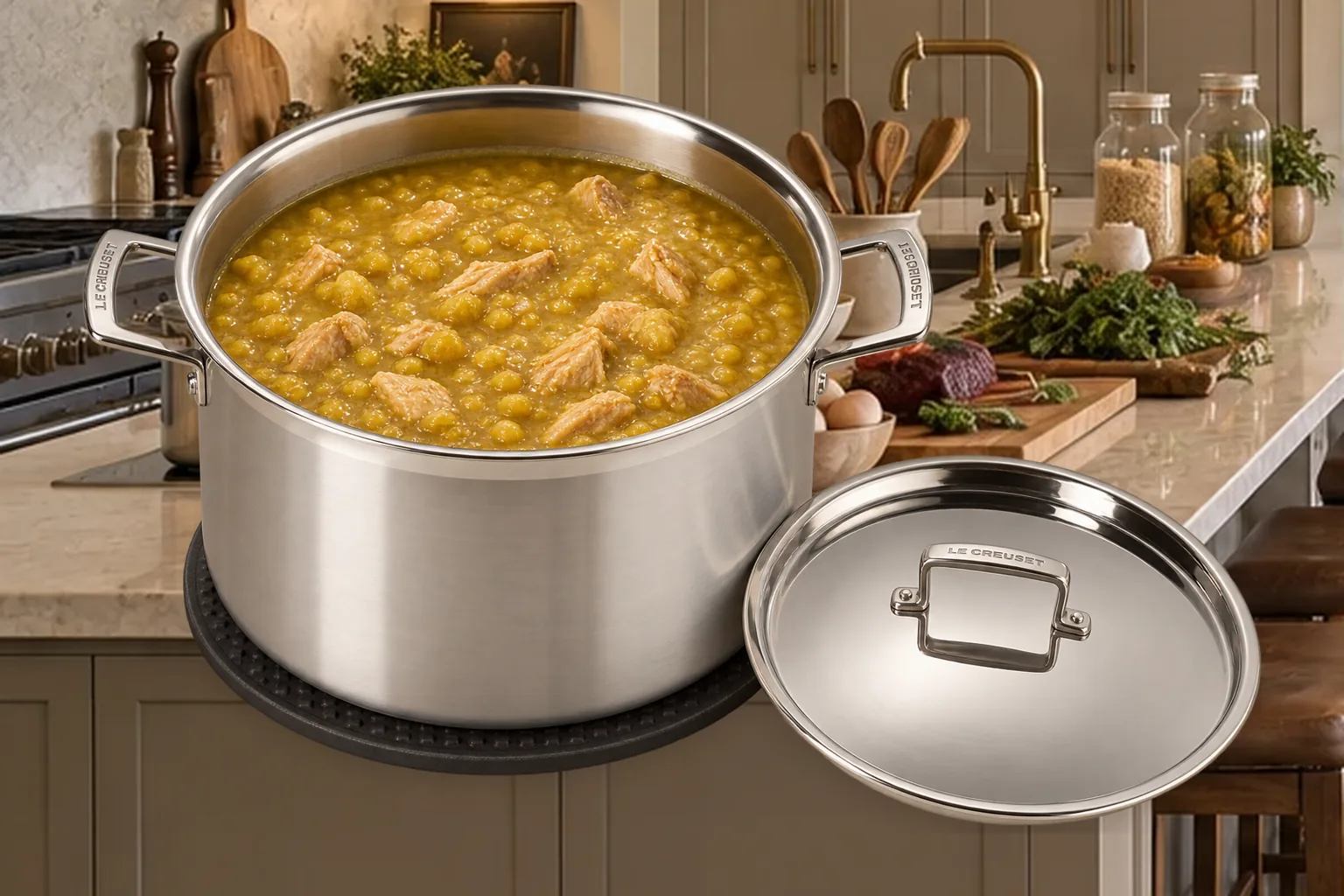
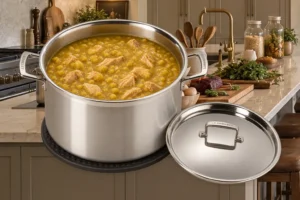
Use a large, heavy stockpot. The 10-quart Le Creuset Classic stainless steel stockpot gives the peas room to move without crowding the chicken against the bottom. A different heavy stockpot can do the same job, but it needs enough room for the six cups of water, three pounds of chicken, and the expanding peas.
This is not a separate meat-stock formula. The water, chicken, and split peas cook together as one soup. If you want the daily raw-meaty stock used throughout GAPS, make the GAPS Chicken Meat Stock as its own recipe.
Build The Soup With Fresh Water
Put the drained split peas in the stockpot and add six cups fresh filtered water. Add three pounds bone-in, skin-on chicken thighs. The bones, skin, and connective tissue stay with the chicken while it cooks, then the meat is removed from the bones before serving.
Add three tablespoons fresh ginger. Grate it when you want the ginger distributed quietly through the soup. Mince it when you want small warm bites to remain. The measured alternative is one tablespoon dried ginger powder.
Add one tablespoon sea salt and 1/4 teaspoon ground cloves. The clove is a background note. The soup should not smell like a holiday pomander or taste sweet. Measure the quarter teaspoon level.
Do not replace the sea salt with a commercial potassium-salt blend. The Full GAPS route here uses plain sea salt with no added anticaking agents or flavor system.
Simmer On The Lowest Heat For Forty-Five To Sixty Minutes
Bring the pot up to a gentle boil over medium heat. As soon as the surface is moving steadily, lower the heat to maintain a quiet simmer. The liquid should make small, regular bubbles rather than rolling hard enough to throw peas up the sides of the pot.
Cook for 45 to 60 minutes at the lowest heat that keeps that simmer. Stir along the bottom every so often because split peas settle as they soften. Use a long stainless or wooden spoon and make sure no thick layer is catching on the base.
The soup will change from separate peas in clear liquid to a cloudy golden broth, then to a thick soup. The split peas should lose their dry, chalky center. Press one against the side of the pot with the spoon. It should mash easily without a hard bead in the middle.
The chicken is ready when the meat pulls away from the bone without resistance. A thick thigh may need the full hour. Use the food, not the shortest number on the clock, to decide when the pot is done.
If the soup becomes too thick before the peas are completely soft, add a small amount of hot filtered water and keep the simmer gentle. The finished soup should be thick and spoonable, not a dry paste.
Debone The Chicken And Return It To The Soup
Lift the chicken thighs onto a sturdy cutting board with stainless tongs. Let them cool just enough to handle. Pull the meat from the bones and keep the soft edible meat, skin, and connective tissue. Cut or tear it into bite-size pieces.
Return all of the chicken pieces to the stockpot and stir gently. The meat should be distributed through the peas instead of sitting in one clump. Give the pot a minute over low heat so everything is hot together.
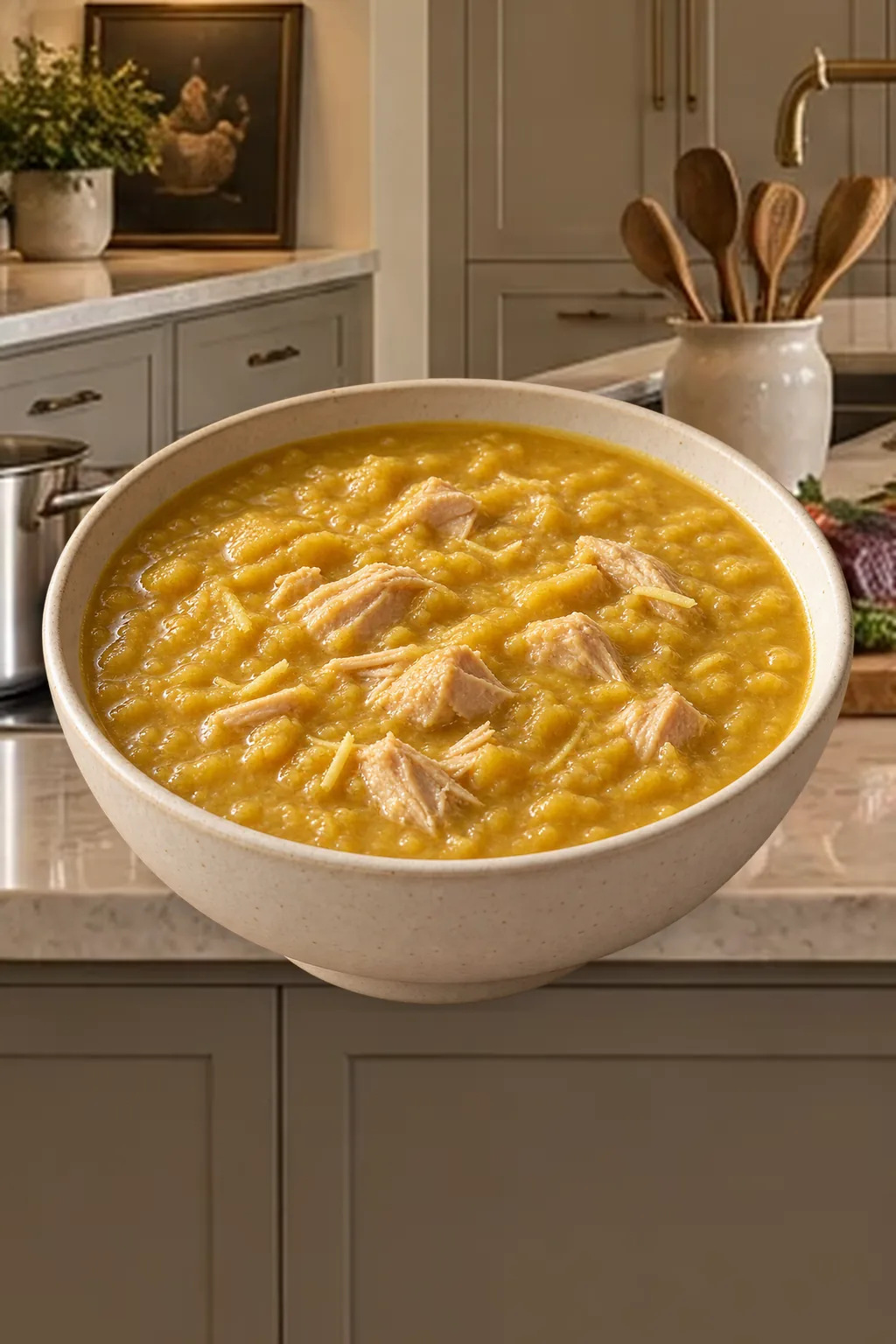
Taste one spoonful after the chicken is back in the soup. Ginger should smell warm and fresh. Clove should be subtle. The peas should feel creamy, and the chicken should still be moist enough to separate with the edge of a spoon.
Use Yellow Or Green Split Peas
Yellow and green split peas both work in the measured formula. Yellow peas make a golden soup and are the choice shown in the photographs. Green peas make the same soup olive-green and bring a slightly earthier flavor.
Keep the weight and volume the same whichever color you use: one pound, or about 2 1/4 cups. Do not combine a full pound of each unless you intentionally double every other measured ingredient.
Older peas can take longer to soften. If you reach 60 minutes and still find a firm center, keep the pot at the same quiet simmer until the peas mash easily. Add hot filtered water only as needed to prevent scorching.
Serve And Reheat The Soup
Ladle the soup into wide bowls so each serving gets both chicken and peas. This batch makes six servings. It is filling on its own and does not need bread, rice, potatoes, or a packaged topping.
If you want another warm Full GAPS soup in the same week, try GAPS Potsticker Soup or Carrot Ginger Soup With Fresh Mint. For another properly prepared legume meal, use Full GAPS Lentil Soup With Swiss Chard and Sausage.
Split peas continue absorbing liquid as the soup rests, so leftovers will be thicker. Cool them, cover and refrigerate. Reheat gently with a splash of filtered water until the soup is steaming and spoonable again.
Recommended Equipment
- Large clear glass soaking bowl
- Fine-mesh stainless strainer or colander
- Le Creuset Classic stainless steel stockpot, 10 quart
- Long stainless or wooden spoon
- Stainless tongs
- Sturdy cutting board
- Sharp chef’s knife
- Measuring cups and spoons
Frequently Asked Questions
Is Split Pea Soup Allowed On The GAPS Introduction Diet?
No. Split peas are a Full GAPS legume. Wait until Full GAPS and introduce them only after the required preparation.
Can I Skip The Soak?
No. Soak the split peas for 7 to 12 hours in just-simmered acidulated water, then drain and rinse them before cooking.
Can I Make This In An Instant Pot Or Pressure Cooker?
Not for this GAPS route. The controlling GAPS technique excludes pressure cookers for beans and legumes. Use the measured low stovetop simmer.
Can I Use Boneless Chicken Thighs?
Yes. Boneless thighs also work. This version uses bone-in, skin-on thighs. With boneless thighs, check the chicken earlier and remove it once it is tender while the peas finish softening.
Can I Use Dried Ginger?
Yes. Replace the three tablespoons fresh ginger with one tablespoon dried ginger powder. Keep the sea salt and ground cloves unchanged.
Why Are My Split Peas Still Firm?
They may be old, the simmer may be too low, or the soak may have been short. Keep cooking gently until one pea mashes without a hard center. Add hot filtered water if the pot becomes too thick.
What If The Soup Is Too Thick?
Stir in a small amount of hot filtered water until it is spoonable. Add only enough to loosen it so the ginger, salt, and clove do not become washed out.
What If Split Peas Cause Digestive Symptoms?
Stop and give your digestion more time. Proper preparation improves digestibility, but it does not make legumes workable for every person at every point in Full GAPS.
Split Pea Soup With Chicken And Ginger Recipe
Split Pea Soup With Chicken and Ginger for Full GAPS
Ingredients
Equipment
Method
- Pick through the split peas and place them in a large clear glass bowl. Pour in enough just-simmered filtered water to cover the peas by at least 2 inches, then stir in the homemade whey, lemon juice, or apple cider vinegar.
- Cover loosely and soak for 7 to 12 hours. For a long soak, replace the cooled water and the same measured neutralizer up to once. Drain, rinse well with fresh water 1 to 3 times, and drain again.
- Put the drained peas in the Le Creuset 10-quart stainless steel stockpot. Add 6 cups fresh filtered water, the chicken thighs, ginger, sea salt, and ground cloves.
- Bring to a gentle boil over medium heat, then lower the heat to the quietest steady simmer. Cook for 45 to 60 minutes, stirring along the bottom occasionally, until the peas mash without a dry center and the chicken releases from the bones without resistance.
- If the soup becomes too thick before the peas are completely soft, stir in a small amount of hot filtered water and continue the gentle simmer until the soup is thick but spoonable.
- Lift the chicken thighs onto a cutting board with stainless tongs. Cool just enough to handle, pull the meat from the bones, cut or tear it into bite-size pieces, and return all edible chicken, skin, and soft connective tissue to the soup. Stir gently until evenly distributed.
- Heat the reunited soup over low heat for 1 minute. Taste for a warm ginger aroma, subtle clove, creamy peas, and moist chicken, then divide among 6 bowls and serve.
Notes
Mandatory preparation: Soak split peas 7 to 12 hours in just-simmered filtered water with 1 tablespoon homemade whey, lemon juice, or apple cider vinegar per cup of peas. Drain and rinse before cooking.
Cooking method: Simmer on the lowest heat for 45 to 60 minutes. Do not use a pressure cooker for this legume route.
Physical cues: Peas mash without a dry center, chicken releases from the bones, and the finished soup is thick but spoonable.
Timing: The card records the minimum 7-hour soak. A 12-hour soak makes the full elapsed time 13 hours 10 minutes.
Tried this recipe?
Let us know how it was!Plan The Soak Before The Busy Part Of The Day
The planned Full GAPS Batch-Cooking Guide is built for recipes like this, where a short task the night before makes the next day’s meal easier. Find current resources and upcoming releases in the WFLI shop.

Leave a comment