

This spinach artichoke egg casserole is soft, savory, and packed with tender artichoke hearts and spinach. It cooks in a covered bowl inside the pressure cooker, so the eggs stay moist while the center sets. Lemon and chives keep the flavor bright, and the ingredient list stays flour-free and dairy-free.
The recipe makes eight slices from one small round casserole. You can serve it warm after a five-minute rest, or chill the whole casserole and cut it the next morning. The cooking method is especially useful when the oven is busy or you do not want to watch a skillet in batches.
GAPS placement: Full GAPS
Prep: 10 minutes
Pressure cook: 18 minutes
Rest: 5 minutes
Total: 33 minutes, plus the cooker’s variable time to reach pressure
Yield: 8 servings
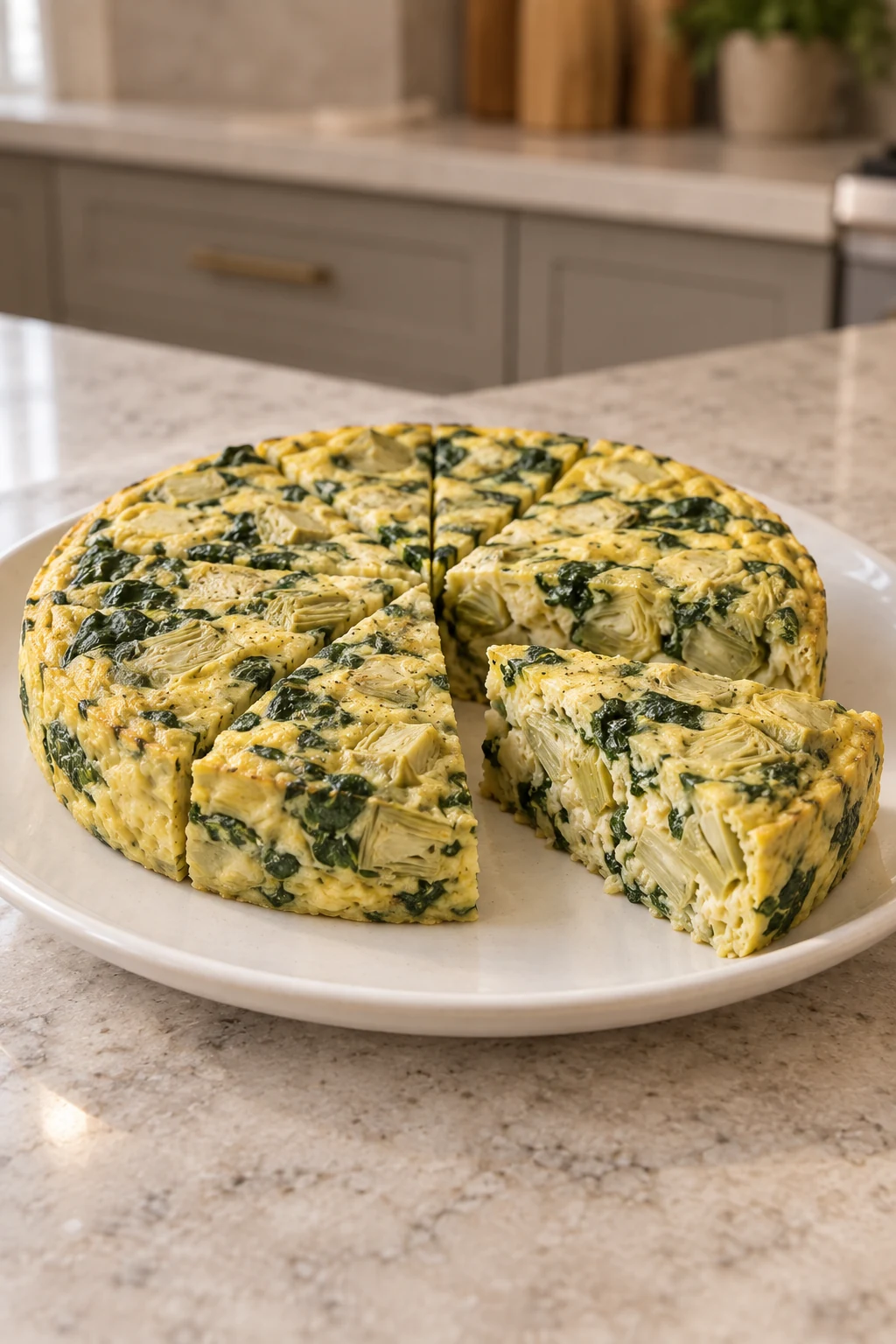
With six kids, homeschooling before I leave for second shift, breakfast needs to fit around the rest of the morning. A casserole gives me one thing to portion instead of asking me to stand over a pan while everyone needs something else. Making it ahead also means I can open the refrigerator and see breakfast already handled.
Why This Pressure-Cooker Casserole Works
The casserole bowl sits above two cups of water on the pressure-cooker rack. The water never goes into the eggs. It produces the steam that builds pressure around the covered cooker insert, while the glass bowl holds the egg mixture in a compact layer.
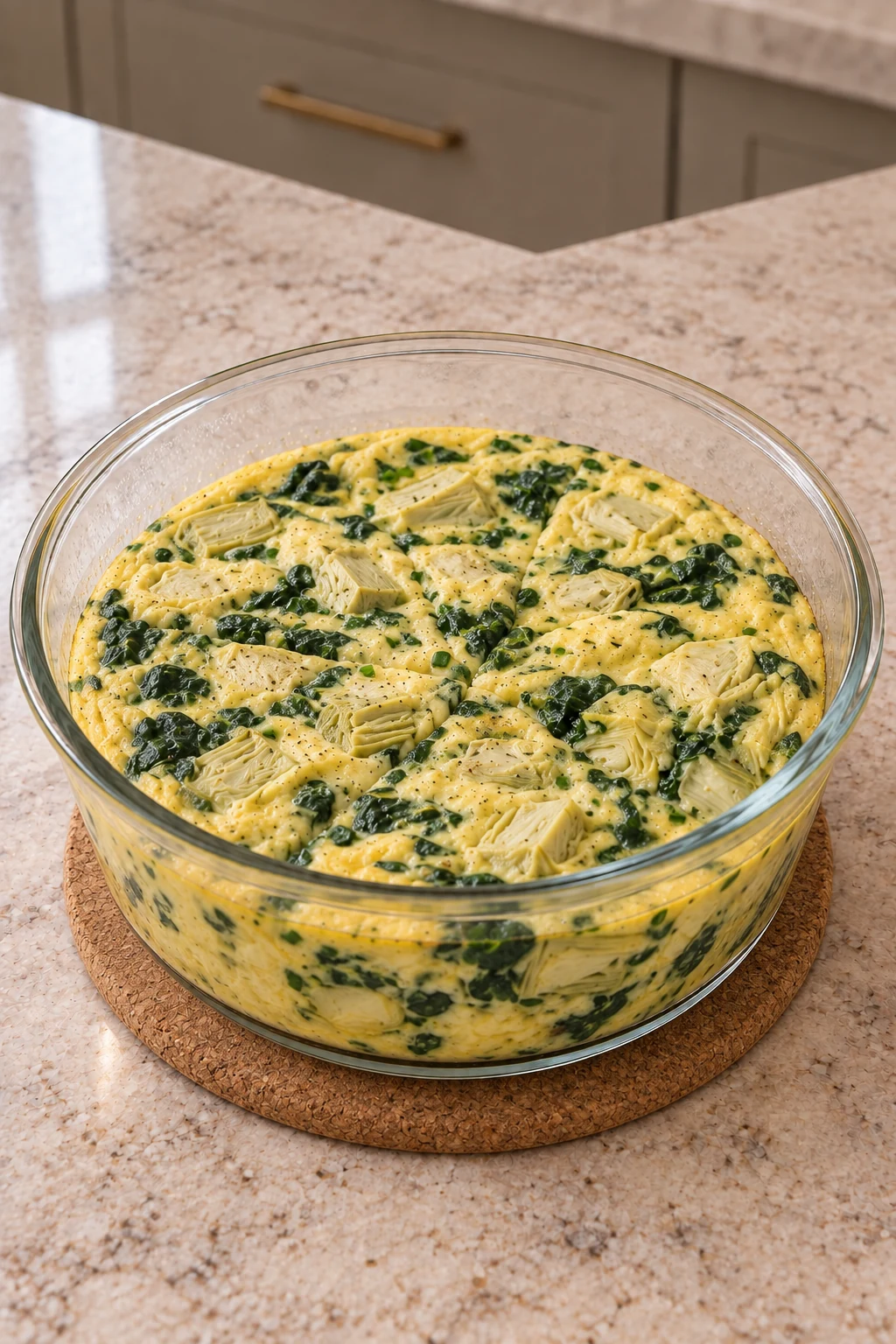
Egg casseroles can look set at the edges while the middle is still loose. Here, the eighteen-minute pressure cycle cooks from every direction. The center should look matte rather than wet when the lid comes off. It may tremble slightly when the bowl moves, but it should not ripple like liquid.
The five-minute rest matters. The egg proteins continue to settle after the bowl leaves the cooker, and the slices become cleaner as the trapped steam escapes. Cutting immediately can make a properly cooked center look wetter than it is.
Ingredients
- 1 teaspoon homemade ghee, softened, for the cooking bowl
- 12 large eggs
- 1/4 cup filtered water
- 4 cups loosely packed baby spinach
- 14 ounces cooked artichoke hearts, cooled, very well drained, and chopped
- 1 tablespoon finely chopped fresh chives
- 1 tablespoon fresh lemon juice
- 3/4 teaspoon sea salt
- 1/2 teaspoon freshly ground black pepper
- 1/4 teaspoon pure granulated garlic
The artichokes need to be cooked before they enter the casserole. If you are starting with whole fresh French artichokes, use the fresh artichoke cooking guide, cool them, remove the inedible choke and tough leaves, then weigh fourteen ounces of tender hearts. Additive-free frozen artichoke hearts also work when fully thawed, drained, and patted dry.
Do not use oil-packed or seasoned jarred artichokes in this formula. Their oil, vinegar, salt, and seasonings change both the moisture and the flavor. The measured casserole uses plain cooked hearts.
Recommended Equipment
- Six-quart electric pressure cooker with an uncoated stainless-steel insert
- Pressure-cooker rack or trivet
- Six-inch round pan or seven-cup round heat-safe glass bowl that fits on the rack
- Medium mixing bowl
- Balloon whisk
- Silicone or wooden spatula
- Measuring cups and spoons
- Clean kitchen towel or potholders for lifting the hot bowl
- Thin knife or flexible spatula for releasing the edge
- Heat-safe trivet
Check that the cooking bowl fits inside your pressure cooker with enough room for steam to circulate around it. The bowl must sit level on the rack, not directly on the bottom of the stainless insert. Use the lifting method supplied for your cooker and bowl. The bowl will be hot and may have condensation around its rim.
Current pressure-cooker, heat-safe glass bowl, and basic kitchen-tool links are collected in the WFLI shop.
Make the Spinach Artichoke Egg Casserole
- Prepare the bowl. Rub one teaspoon softened ghee over the bottom and sides of a six-inch round pan or seven-cup heat-safe glass bowl. Make sure the bowl fits level on your pressure-cooker rack before adding food.
- Whisk the eggs. Crack twelve eggs into a medium bowl. Add one-quarter cup filtered water and whisk until the whites and yolks are completely combined. The mixture should be an even yellow with no ropes of clear egg white.
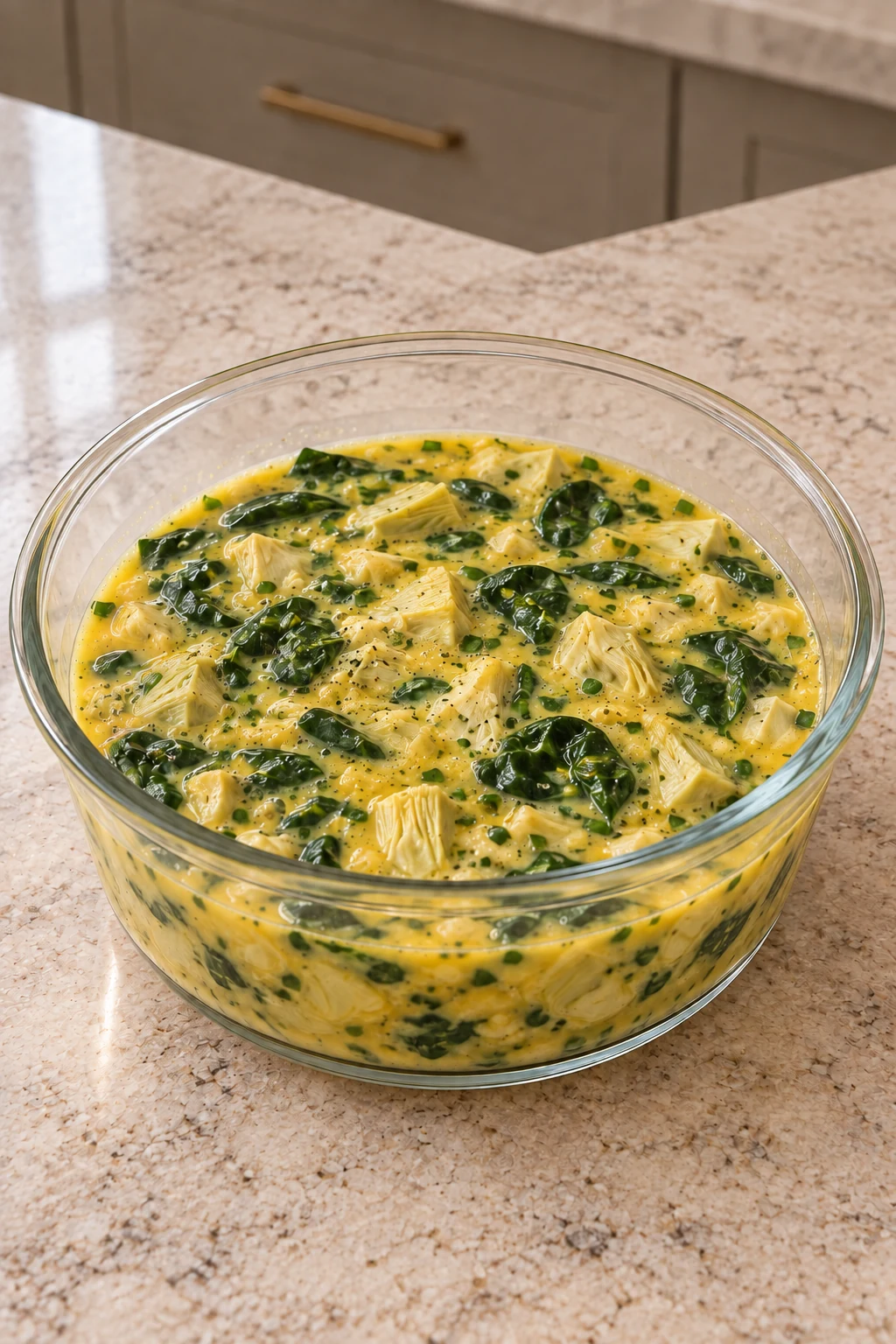
- Add the vegetables and seasonings. Fold in the spinach, chopped drained artichoke hearts, chives, lemon juice, sea salt, black pepper, and granulated garlic. Keep folding until the spinach and artichoke pieces are distributed throughout the eggs rather than piled in one area.
- Fill the cooking bowl. Pour the mixture into the greased bowl. Press any spinach leaves resting high above the egg surface back into the liquid. Set the bowl aside while you prepare the cooker.
- Pressure-cook for eighteen minutes. Pour two cups filtered water into the stainless pressure-cooker insert and set the rack in place. Put the filled bowl level on the rack. Lock the lid, set the valve to sealing, and cook on High Pressure for 18 minutes. The cooker will take additional time to reach pressure before the countdown begins.
- Release the pressure. When the timer ends, use the cooker’s quick-release procedure. Keep your face and hands away from the steam path. Wait until the float indicator drops completely before opening the lid.
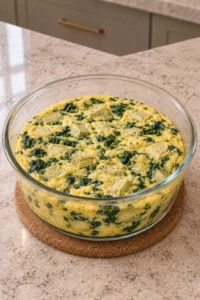
- Rest and slice. Lift the hot bowl out and set it on a heat-safe trivet. The center should look matte and set, without liquid egg pooling on top, and reach 160°F when checked with a food thermometer. Rest for 5 minutes. Loosen the edge with a thin knife or flexible spatula, cut into 8 wedges, and serve.
What to Look, Smell, and Taste For
Before cooking, the egg mixture will look full of vegetables. Spinach leaves should be coated with egg, and the pale green artichoke pieces should be visible from top to bottom. If watery liquid collects around the hearts, drain them again before you fill the bowl. Excess water can make the center take longer to settle.
When the lid opens, the casserole should smell like cooked eggs and artichokes with a fresh onion-like note from the chives. The lemon should brighten the flavor without making the eggs taste sour. The surface will be pale yellow with green spinach and artichoke pieces showing through. It should not smell scorched because the casserole bowl never touches the heating surface.
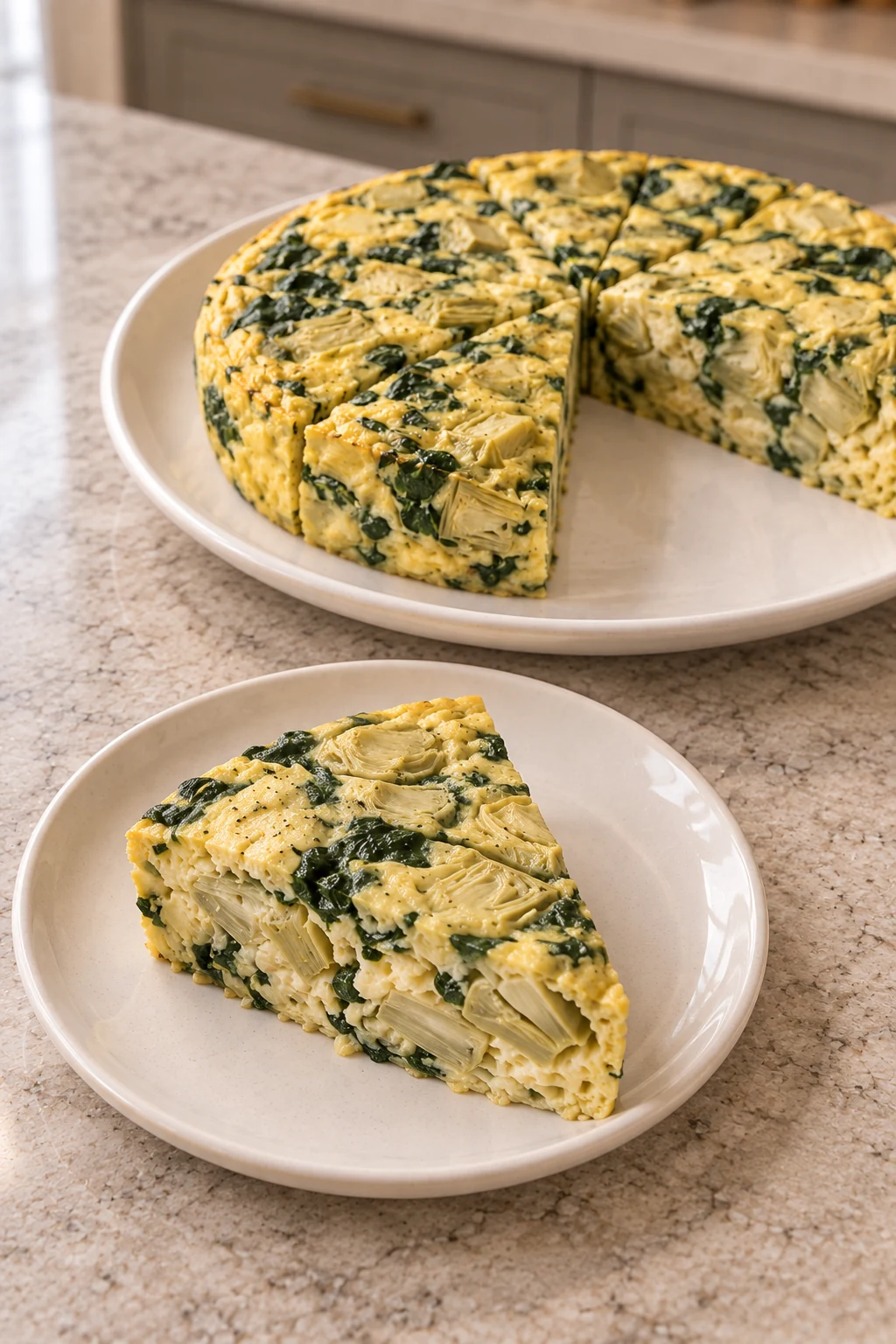
The finished texture is tender and moist, not dry or bready. A knife inserted near the center should come out without raw egg. The edges may puff slightly during cooking and settle during the five-minute rest. A warm slice should hold together on a plate while still yielding easily to a fork.
Spinach Artichoke Egg Casserole
Ingredients
Equipment
Method
- Rub the softened ghee over the bottom and sides of a six-inch round pan or seven-cup heat-safe glass bowl. Make sure the bowl fits level on the pressure-cooker rack before adding food.
- Crack the eggs into a medium bowl. Add the filtered water and whisk until the whites and yolks are completely combined, with no ropes of clear egg white.
- Fold in the spinach, chopped drained artichoke hearts, chives, lemon juice, sea salt, black pepper, and granulated garlic. Keep folding until the vegetables are evenly distributed.
- Pour the mixture into the greased cooking bowl. Press any spinach leaves resting high above the surface back into the egg mixture.
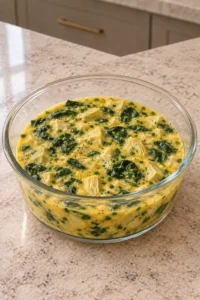
- Pour two cups filtered water into the stainless pressure-cooker insert and set the rack in place. Put the filled bowl level on the rack. Lock the lid, set the valve to sealing, and cook on High Pressure for 18 minutes.
- When the timer ends, use the cooker’s quick-release procedure. Keep your face and hands away from the steam path. Wait until the float indicator drops completely before opening the lid.
- Lift the hot bowl out and set it on a heat-safe trivet. Rest for 5 minutes. The center should look matte and set, without liquid egg pooling on top, and reach 160°F when checked with a food thermometer. Loosen the edge, cut into 8 wedges, and serve.
Nutrition
Notes
Tried this recipe?
Let us know how it was!Full GAPS Placement and Dairy Options
This recipe belongs on Full GAPS. It uses eggs, non-starchy vegetables, fresh herbs, lemon, pure seasonings, and homemade ghee. It is not assigned to an Introduction Diet stage. Artichokes and spinach bring more plant fiber than the early Introduction Diet recipes, and the black pepper belongs with the broader Full GAPS range of seasonings.
The measured recipe is dairy-free apart from the clarified butter used to grease the bowl. If ghee has not been introduced or tolerated, use a thin coating of animal fat that stays solid at room temperature. Do not grease the bowl with olive oil because this is a heated cooking method.
For a later Full GAPS dairy variation, fold in one-quarter cup grated natural cheddar only after cheese has been introduced and tolerated. The dairy-free version in the recipe card is the photographed formula, so the base amounts and nutrition do not assume cheese.
Make It Ahead Without Drying It Out
You can mix the casserole in its greased bowl, cover it, and refrigerate it for up to twenty-four hours before cooking. Set the bowl out only while the pressure cooker is prepared. A cold bowl may add a little time before the cooker reaches pressure, but the programmed cooking time stays eighteen minutes.
You can also cook the casserole ahead. Let it cool, cover the bowl, and refrigerate it. Slice only what you need. Reheat individual wedges gently in a covered stainless-steel skillet with a spoonful of water, or place them in a covered heat-safe dish until the center reaches 165°F. High heat makes egg casseroles rubbery.
Serving Ideas
Serve a warm wedge with sliced avocado, fermented vegetables, or another Full GAPS breakfast item already tolerated in your household. The casserole has vegetables built in, so it also works alone when breakfast needs to be simple.
For a stovetop egg breakfast with a creamy spinach base, use the Full GAPS Eggs Florentine. When you need smaller individual portions, the Full GAPS Mini Quiches bake in cups and use cheddar after dairy has been introduced.
Storage and Reheating
Cool leftovers promptly and refrigerate them in a covered glass container for up to four days. Keep the wedges together until they are cold, then separate them with parchment if you are packing individual portions.
The casserole can be frozen after cooking. Cool it completely, cut it into wedges, and freeze the pieces in a single layer before transferring them to a covered freezer container. Thaw overnight in the refrigerator. Reheat gently so the spinach stays green and the eggs remain tender.
Frequently Asked Questions
Can I Use Canned Artichoke Hearts?
Use cooked fresh artichoke hearts or plain additive-free frozen hearts for this Full GAPS version. Canned and jarred products can bring preservatives, vinegar, heated plant oils, or other ingredients that do not belong in the measured formula.
Do I Need to Cover the Casserole Bowl?
The tested pressure-cooker method places the bowl uncovered on the rack. Condensation may collect on the surface. Let the cooked casserole rest for five minutes, and blot a small pool of plain condensation at the edge if needed without pressing the eggs.
Can I Bake This Exact Mixture Instead?
This formula is timed for moist pressure cooking in a six-inch bowl. An oven exposes a broader dish to dry heat and allows more evaporation, so the pan size, depth, and cooking time change. Use a separately tested oven casserole rather than copying the eighteen-minute pressure time into an oven.
Why Is There Water in the Pressure Cooker and in the Eggs?
The two cups in the stainless insert create steam and never mix with the casserole. The one-quarter cup whisked into the eggs keeps the cooked center tender. Both amounts have different jobs and should not be combined or omitted.
Can I Use Frozen Spinach?
The measured recipe uses four cups fresh baby spinach. Frozen spinach is denser and holds more water even after squeezing, so it is not a cup-for-cup swap in this formula.
How Do I Know the Center Is Done?
Look for a matte surface with no liquid egg. The center may tremble slightly when the bowl moves, but it should not ripple. A food thermometer at the center should read 160°F. After the five-minute rest, a knife inserted near the center should come out without raw egg.
Can I Double the Recipe?
Use the 2× control for ingredient amounts only when your cooker can safely hold two separate bowls or a correctly sized larger bowl while preserving steam circulation. Do not overfill the original seven-cup bowl. Cook one base batch at a time if your equipment cannot hold the doubled volume safely.
Build a Faster Full GAPS Breakfast Routine
The upcoming Slow Cooker and Instant Pot Cookbook collects appliance-specific liquid amounts, timing, release methods, and finished-texture cues for busy GAPS kitchens. Find it with the other WFLI kitchen guides in the shop.

Leave a comment