

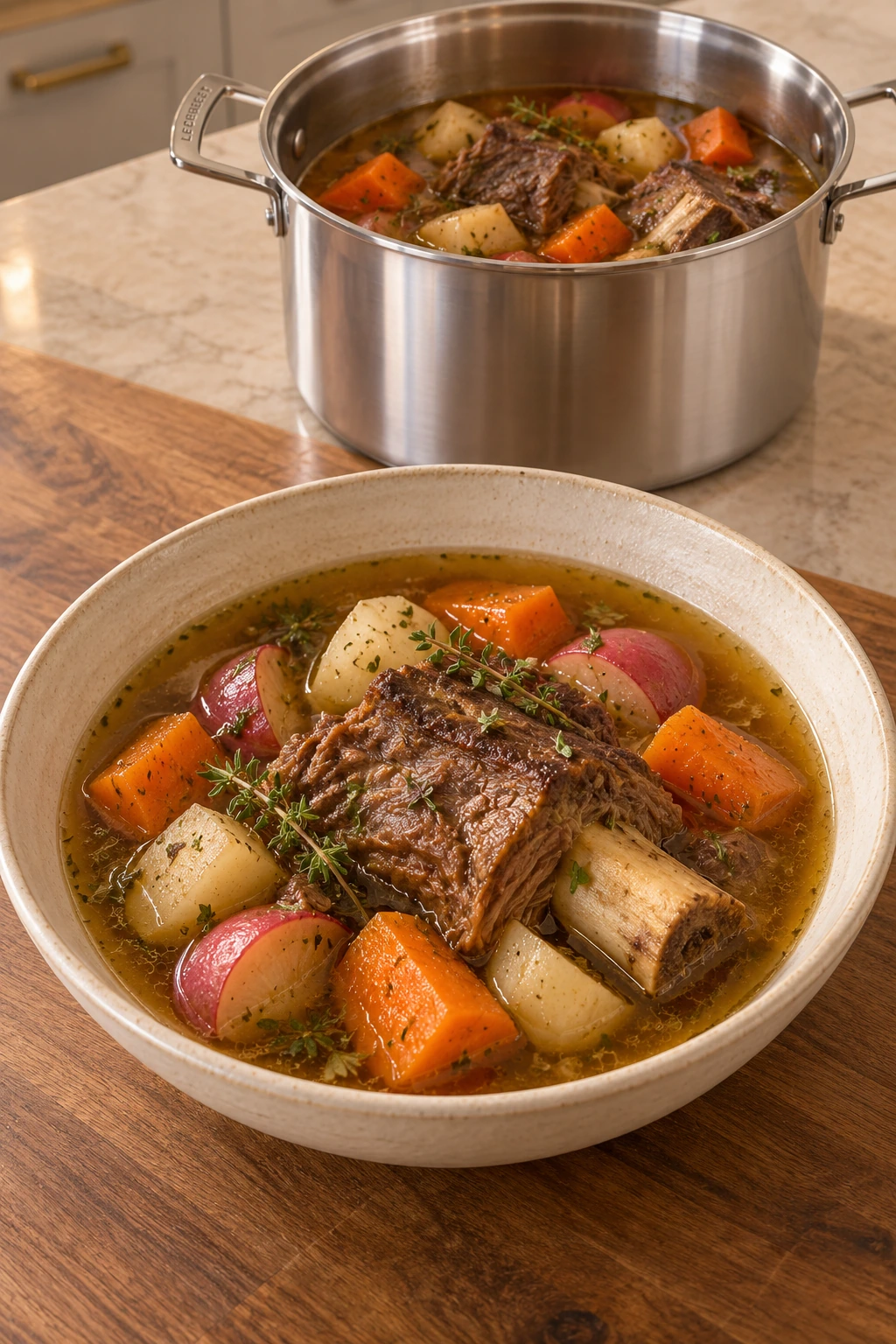
This seed-free Middle Eastern beef stew gives a long-simmered pot of short ribs, turnips, radishes, and carrots a warm herb-and-ginger flavor without sesame, sumac, or cumin. A measured quarter cup of the linked seed-free blend seasons the pot, and two tablespoons fresh lemon juice brighten the broth after cooking.
The finished stew stays brothy. There is no flour, starch, bean, or gum to make it thick; the richness comes from the beef, bones, connective tissue, and slow cooking.
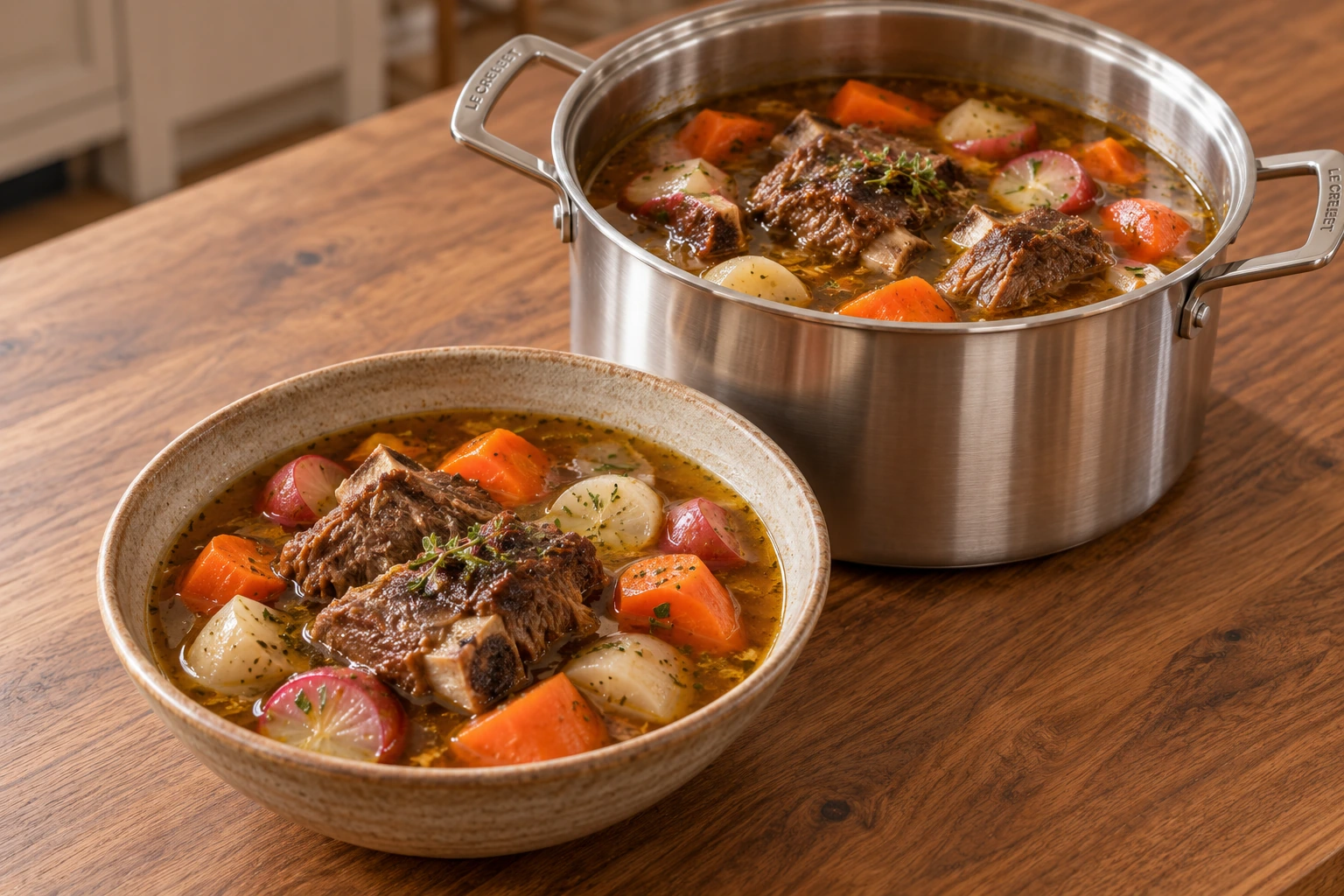
A Brothy Full GAPS Short Rib Stew
Short ribs bring meat, fat, bone, and connective tissue into the same pot. As they simmer, the cooking liquid becomes deeply savory without needing a separate batch of meat stock.
Turnips replace the starchy root vegetables often used in beef stew. Radishes soften and mellow, while carrots bring sweetness against marjoram, thyme, oregano, dried ginger, and the fresh lemon finish.
On a day when I homeschool before leaving for second shift, a covered pot that can finish quietly is useful. The active work is mostly cutting vegetables and assembling the pot; the physical cue at the end matters more than the clock.
Where This Stew Fits on GAPS
This version fits Full GAPS after marjoram, thyme, oregano, dried ginger, and fresh lemon have each been introduced and tolerated. Use the separate seed-free Middle Eastern herb blend and omit its optional cumin.
The stew contains no sesame, sumac, cumin, potatoes, cassava, parsnips, chickpeas, tapioca flour, xanthan gum, or heated plant oil. If you make the optional crisp turnip garnish or separately roast the radishes and carrots, use tallow, lard, or homemade ghee.
The prepared-sesame za’atar stew remains a separate formula and post. This card keeps the seed-free seasoning and lemon finish intact from start to finish.
Choose Short Ribs With Plenty of Meat
Use two pounds bone-in beef short ribs with a generous amount of meat attached. The bones should be surrounded by thick bands of beef rather than mostly exposed.
Chuck roast or stew meat can cook in the same measured formula, but short ribs give the most tender result and add bone and connective tissue directly to the pot.
Cut the carrots into substantial chunks so they hold their shape. Trim and halve or quarter the radishes. Peel the turnips and leave them whole or halve them lengthwise so they can be lifted out cleanly when tender.
Assemble the Pot in Layers
Put the short ribs in a heavy stainless-steel pot with a tight lid. Pour in five cups filtered water for the stovetop method, then add one-quarter cup seed-free herb blend and four teaspoons mineral salt.
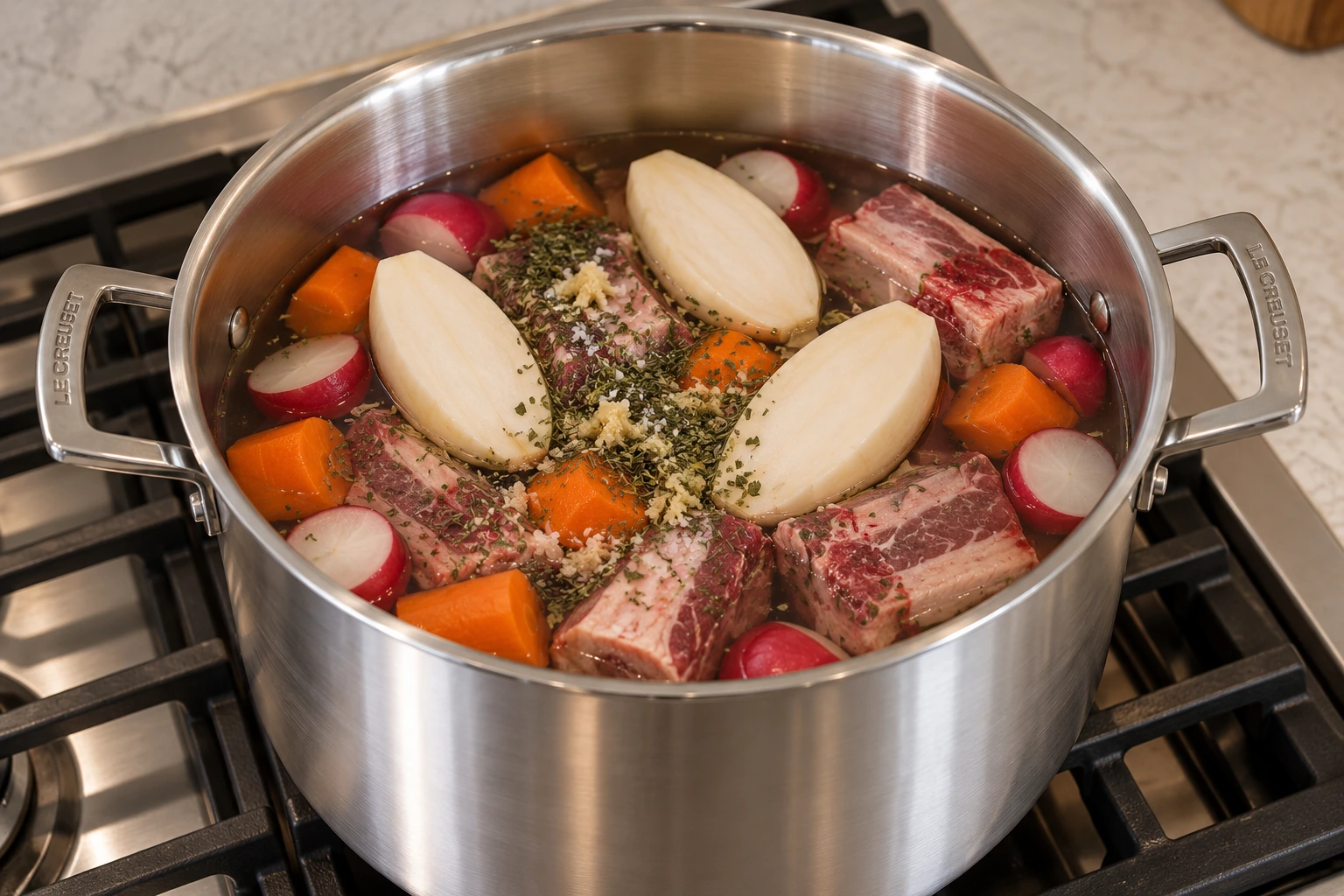
Stir only until the dry herbs and ginger are wet. Arrange the radishes and carrots around the beef, and set the whole or halved turnips on top.
At this point, the liquid is thin and herb-speckled. The short ribs remain raw, the carrots are bright orange, the radishes are firm, and the turnips sit above much of the liquid.
Keep the Simmer Slow
Cover the pot and bring it to a slow simmer over medium-low heat. Once small bubbles appear around the edges, lower the heat enough to keep the surface moving gently.
A rolling boil is too aggressive. You should hear a quiet simmer under the lid, not a hard rattle. Check occasionally that the liquid is not boiling away, but keep the lid closed as much as possible.
Cook for two to two and one-half hours. The exact finish depends on the thickness of the ribs, so use the meat rather than the timer as the final test.
Look for Meat That Pulls Easily From the Bone
The short ribs are ready when the meat has shrunk back from the bone and separates with almost no resistance. A piece lifted gently should begin to loosen rather than spring back or feel tight.
The carrots and radishes should be tender without disappearing into the broth. A knife should slide easily into the turnips.
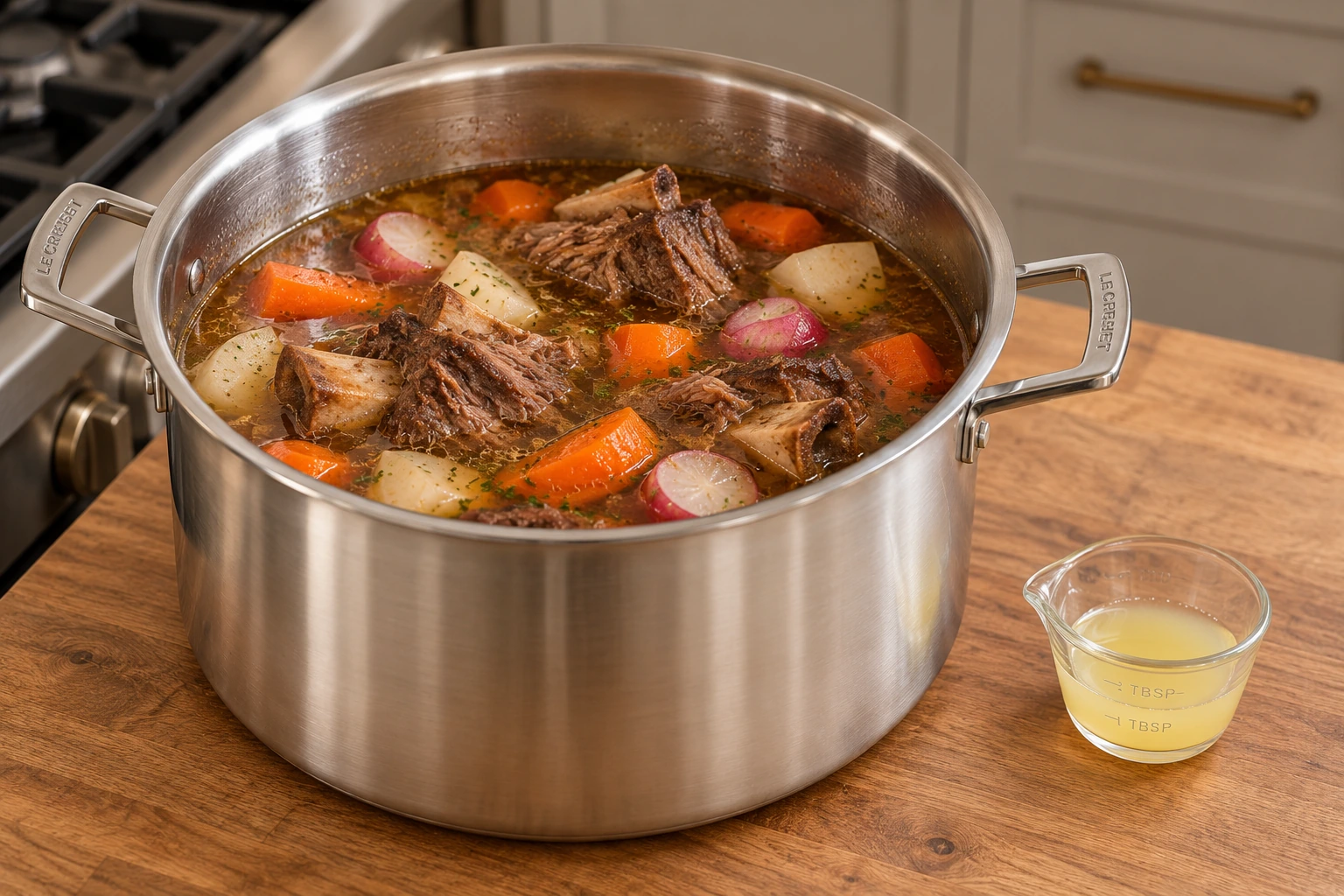
The liquid remains brothy, with small droplets of beef fat on the surface and herbs dispersed throughout. It should smell savory and deeply herbal; the fresh lemon comes after the heat is turned off.
Cut and Return the Turnips
Lift the tender turnips onto a wooden cutting board and cut them into bite-size cubes. Stir most of the cubes back into the pot.
For the optional crisp garnish, heat one tablespoon tallow, lard, or ghee in a thick-bottomed stainless-steel or cast-iron skillet. Brown a small portion of turnip cubes with a pinch of salt, then spoon them over the finished bowls.
Turn off the heat and stir in two tablespoons fresh lemon juice. The broth should taste brighter without becoming sharply sour. Serve with a few fresh thyme leaves if desired.
Oven, Slow Cooker, and Pressure Cooker Methods
For the oven, assemble the pot at 350°F, cover tightly, and bake 30 minutes. Reduce the heat to 325°F and continue for about two hours, until the meat is tender.
For the slow cooker, use the full five cups water and a ceramic insert. Cook on Low for 8 to 12 hours. Lift out the turnips once tender, usually around six hours, while the beef continues.
For a pressure cooker with a stainless-steel insert, use the measured four to five cups water without crossing the fill line. Cook on the Stew setting for 35 minutes, allow 25 minutes natural release, then release the remaining pressure.
Optional Separately Roasted Vegetables
For more browned edges, keep the radishes and carrots out of the stew pot. Toss them with two tablespoons tallow, lard, or ghee and roast at 400°F for 35 to 45 minutes, turning once.
If the stew is baking at 350°F at the same time, allow the vegetables up to one hour and check them as they cook. Fold the roasted vegetables into the finished stew so they keep their browned surfaces.
Storage and Reheating
Cool leftovers promptly and refrigerate them in a covered glass container. Keep the meat, vegetables, and cooking liquid together so the ribs stay moist.
Reheat only the portion you need in a stainless-steel saucepan over gentle heat. Stir carefully so the tender short ribs do not break into tiny pieces.
Freeze extra portions with enough broth to cover the meat. Thaw in the refrigerator before reheating.
Recommended Equipment
The photographed stovetop method uses the registered Le Creuset Classic Stainless 10-quart stockpot with its tight lid. You also need stainless measuring cups and spoons, a wooden cutting board, a chef’s knife, a ladle, and shallow serving bowls.
For the optional garnish, use a thick-bottomed stainless-steel or cast-iron skillet. For the alternate methods, use a ceramic-insert slow cooker or a pressure cooker with a stainless-steel insert.
Frequently Asked Questions
Why Is the Stew Brothy Instead of Thick?
The formula uses no starch, flour, or gum. The beef, bones, connective tissue, and slow cooking enrich the liquid while it remains a broth-style stew.
Can I Use Chuck Roast or Stew Meat?
Yes. Use the same two-pound measure. Short ribs are the most tender and bring bones and connective tissue into the pot.
Can I Use Lamb or Venison?
Yes. Fresh or frozen lamb or venison can replace the beef at the same weight after it fits your Full GAPS routine.
Do I Make Meat Stock First?
No. Water cooks with the fresh short ribs, bones, vegetables, salt, and seed-free herb blend in this formula. The liquid in the pot becomes the stew broth.
How Do I Know the Short Ribs Are Done?
The meat should shrink back from the bone and separate easily with almost no resistance. If it still feels tight, keep the simmer gentle and cook longer.
Why Is the Lemon Added After Cooking?
The fresh lemon supplies the bright note that sumac provides in the separate za’atar formula. Stir it in after the heat is off so the flavor stays fresh.
Seed-Free Middle Eastern Beef Stew Recipe
Seed-Free Middle Eastern Beef Stew for Full GAPS
Ingredients
Equipment
Method
- Put the short ribs in a heavy stainless-steel pot with a tight lid.
- Pour in 5 cups filtered water. Add the seed-free Middle Eastern herb blend and sea salt, and stir briefly, just until the dried herbs and ginger are wet.
- Add the radishes and carrots around the meat, unless roasting them separately. Set the whole or halved turnips on top.

- Cover and bring to a slow simmer over medium-low heat. Lower the heat so small bubbles move around the edges without a hard boil.
- Simmer 2 to 2 1/2 hours, until the meat has shrunk back from the bone and separates with almost no resistance.
- Lift the tender turnips onto a wooden cutting board and cut them into bite-size cubes.
- For the optional garnish, heat the fat in a thick-bottomed stainless-steel or cast-iron skillet. Brown a portion of the turnip cubes with the pinch of salt, then set them aside.
- Stir the remaining turnip cubes back into the pot.
- Turn off the heat and stir in the 2 tablespoons fresh lemon juice. The broth should taste brighter without becoming sharply sour.
- Ladle into bowls. Top with the crisp turnips and a few fresh thyme leaves if desired.
- Heat the oven to 350°F. Assemble the pot exactly as for stovetop in a covered stainless-steel or enameled cast-iron pot.
- Bake covered for 30 minutes, then lower the oven to 325°F.
- Cook about 2 hours more, until the meat is tender and pulling easily from the bone. Finish as directed above.
- Assemble the pot in a slow cooker with a ceramic insert, using the full 5 cups water.
- Cover and cook on Low for 8 to 12 hours, until the meat is very tender.
- Lift out the turnips once tender, usually around 6 hours, while the stew finishes. Finish as directed above.
- Assemble in a pressure cooker with a stainless-steel insert using 4 to 5 cups water without crossing the fill line. Cook on Stew for 35 minutes, allow 25 minutes natural release, then release the remainder and finish as directed above.
- Keep the radishes and carrots out of the pot. Toss them with 2 tablespoons tallow, lard, or ghee and roast at 400°F for 35 to 45 minutes, turning once. At 350°F, allow up to 1 hour. Fold them into the finished stew.
Notes
- Full GAPS: Use after marjoram, thyme, oregano, dried ginger, and fresh lemon have each been introduced and tolerated.
- Seed-free blend: Use the linked seed-free Middle Eastern herb blend and omit its optional cumin.
- Lemon finish: Turn off the heat before stirring in the 2 tablespoons fresh lemon juice.
- Water: Use the full 5 cups for stovetop and slow cooker. The pressure-cooker route may use 4 to 5 cups while staying below the fill line.
- Cooking fat: Use tallow, lard, or homemade ghee for the optional crisp garnish or separate-roast variation.
- Scaling: At 2x, use a vessel large enough to hold the doubled batch safely; do not cross a pressure cooker fill line.
Tried this recipe?
Let us know how it was!More One-Pot Dinners for Busy Days
The planned One-Pot & Sheet Pan collection will bring complete family dinners, component recipes, timing cues, and practical prep order together. Find current guides and catalog updates in the WFLI shop.

Leave a comment