

These high-fat scrambled eggs use the source’s exact ratio: four tablespoons butter or lard for two eggs. The eggs cook directly in the melted fat, producing soft, rich curds without milk, cream, bread crumbs, or any other filler.
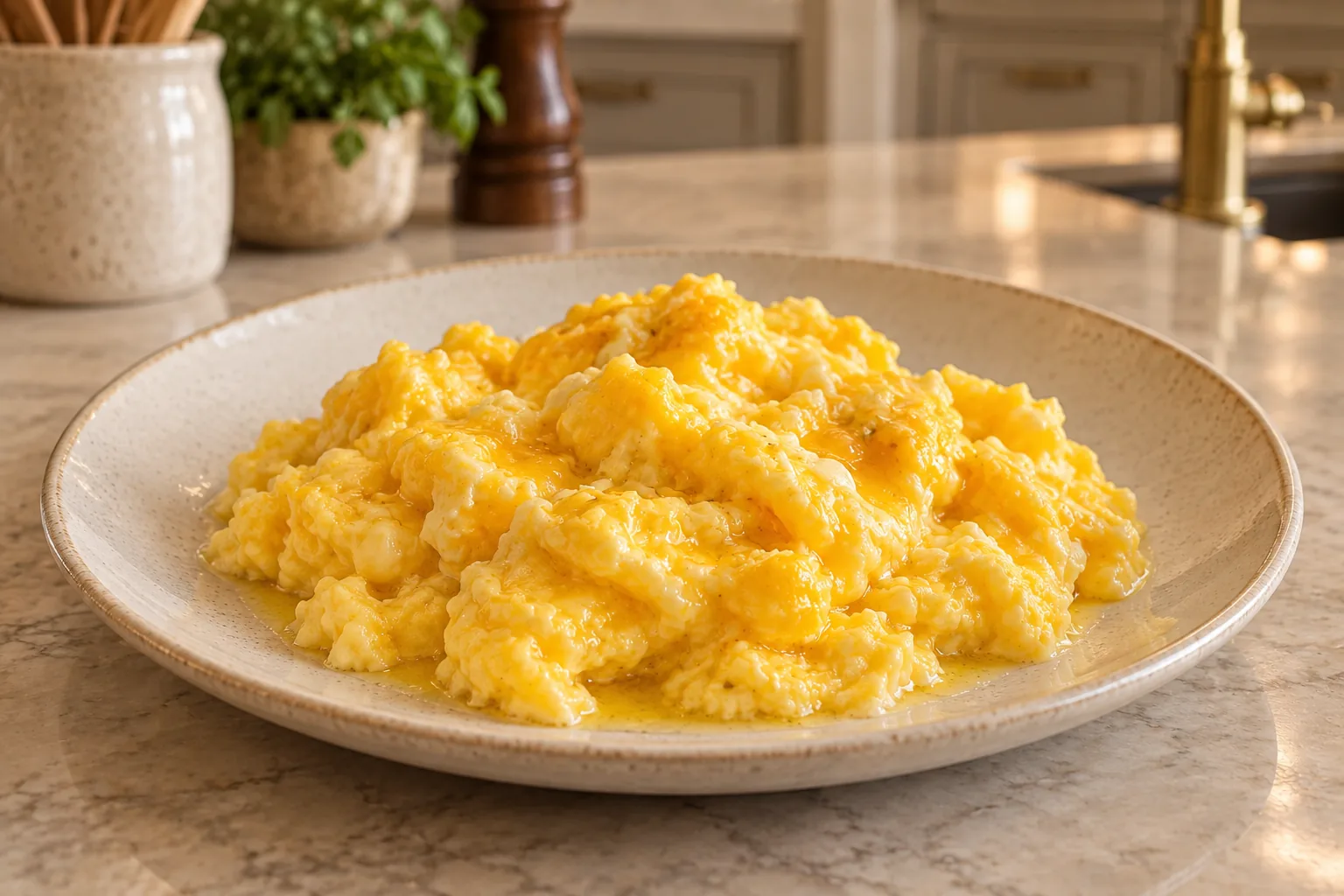
Eggs are one of the quickest substantial foods in our kitchen, especially on mornings when six children need breakfast on different schedules. This small one-serving formula is also useful for learning the texture before scaling it. You can see exactly how the fat and eggs combine and how quickly the curds change near the end.
The high fat ratio is the defining feature. Four tablespoons may look generous beside two eggs, but reducing it creates a different scramble. This card keeps the measured ratio instead of treating the fat as a light pan coating.
What High-Fat Scrambled Eggs Taste Like
Butter gives the eggs a round, lightly sweet dairy flavor, while lard makes the result more savory and neutral. Either choice creates moist curds with a silky surface. The eggs should taste rich without leaving a separate pool of fat on the plate.
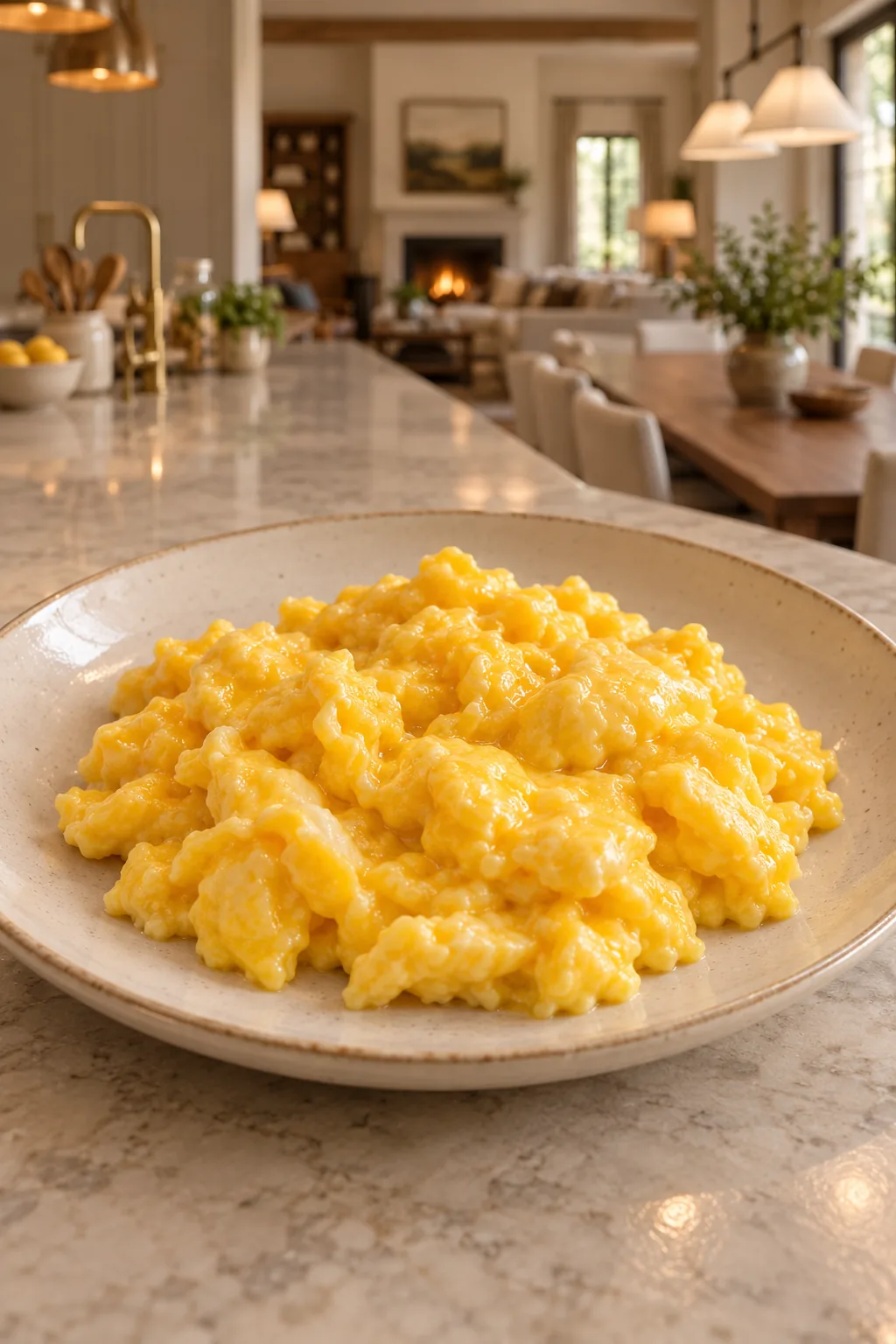
The curds are soft and irregular rather than dry, tiny, or browned. When they are ready, they hold together on the spatula but still look glossy. A fork should pass through them without resistance.
Where They Fit On GAPS
This formula is for Full GAPS. It uses eggs and the source’s measured butter-or-lard cooking-fat route. The card does not add milk, cream, commercial butter substitutes, spray oils, or unmeasured toppings.
The other scrambled-egg formulas in this source collection use their own measured vegetables, meat, salt, and fat. They remain separate recipes rather than being folded into a single card or averaged into this two-egg base.
Melt The Full Fat Measure First
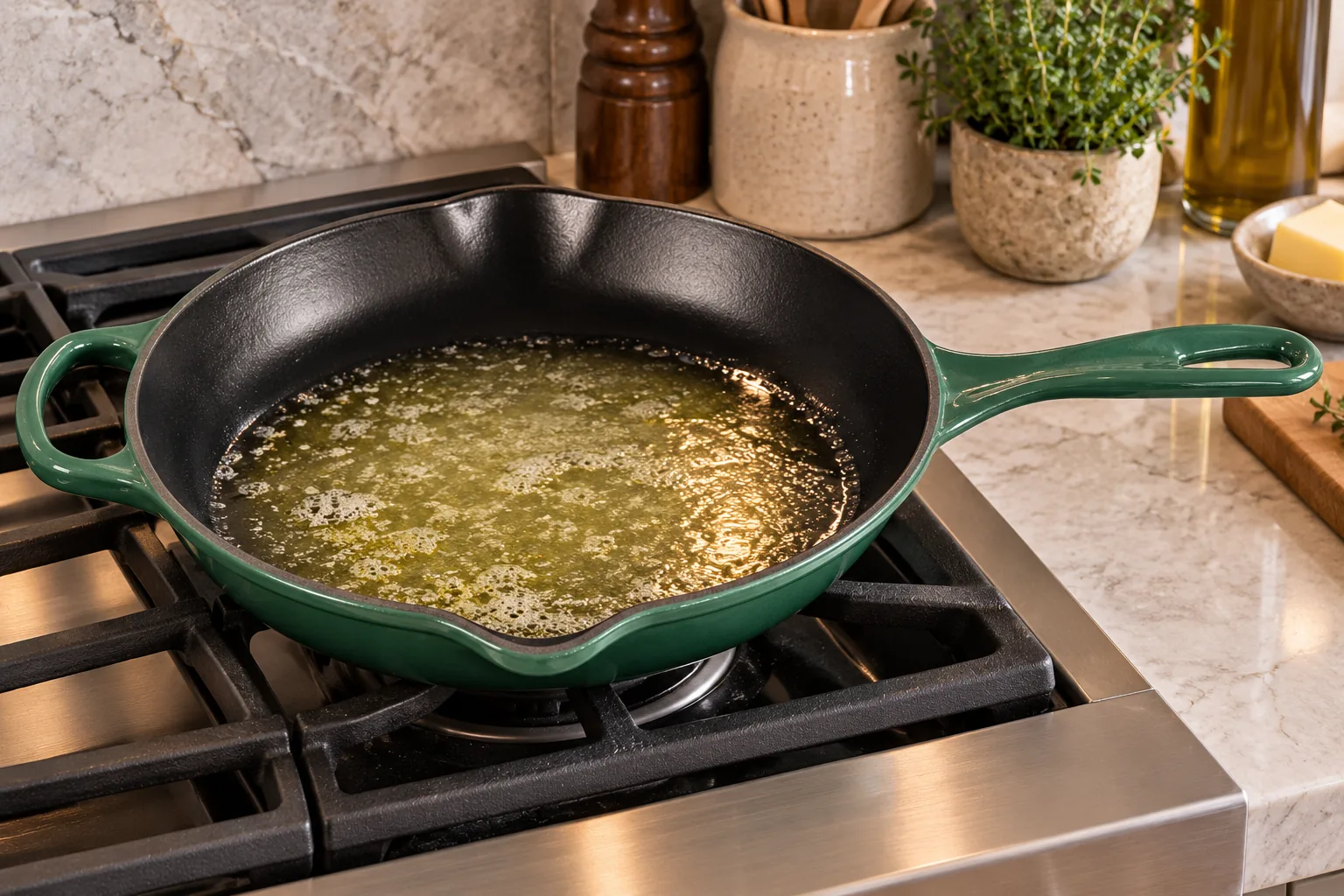
Add all four tablespoons butter or lard to the exact Le Creuset Signature Artichaut skillet. Heat it over medium until fully melted. The surface should shimmer gently, but butter should not turn brown and lard should not smoke.
The melted fat will cover more of the black enamel than a standard lightly greased scramble. That is correct. Keep the heat steady while the eggs are whisked so the fat stays hot without darkening.
Whisk The Eggs Completely
Crack two eggs into a medium glass bowl. Whisk with a fork or small whisk until no distinct ropes of white remain and the color looks even from edge to center.
A completely combined egg mixture reaches the skillet evenly. Large unbroken white sections set at a different speed and make it harder to judge the soft-curd endpoint.
Stir Quickly As The Eggs Enter The Fat
Pour the whisked eggs into the melted fat and begin stirring immediately. Draw the spatula through the center and around the edge so the fat and egg combine instead of separating into oily pockets.
At first the mixture looks loose and glossy. Small curds begin forming along the pan surface. Keep moving them so the cooked egg folds through the uncooked portion and no patch sits long enough to brown.
Stop At Soft, Moist Curds
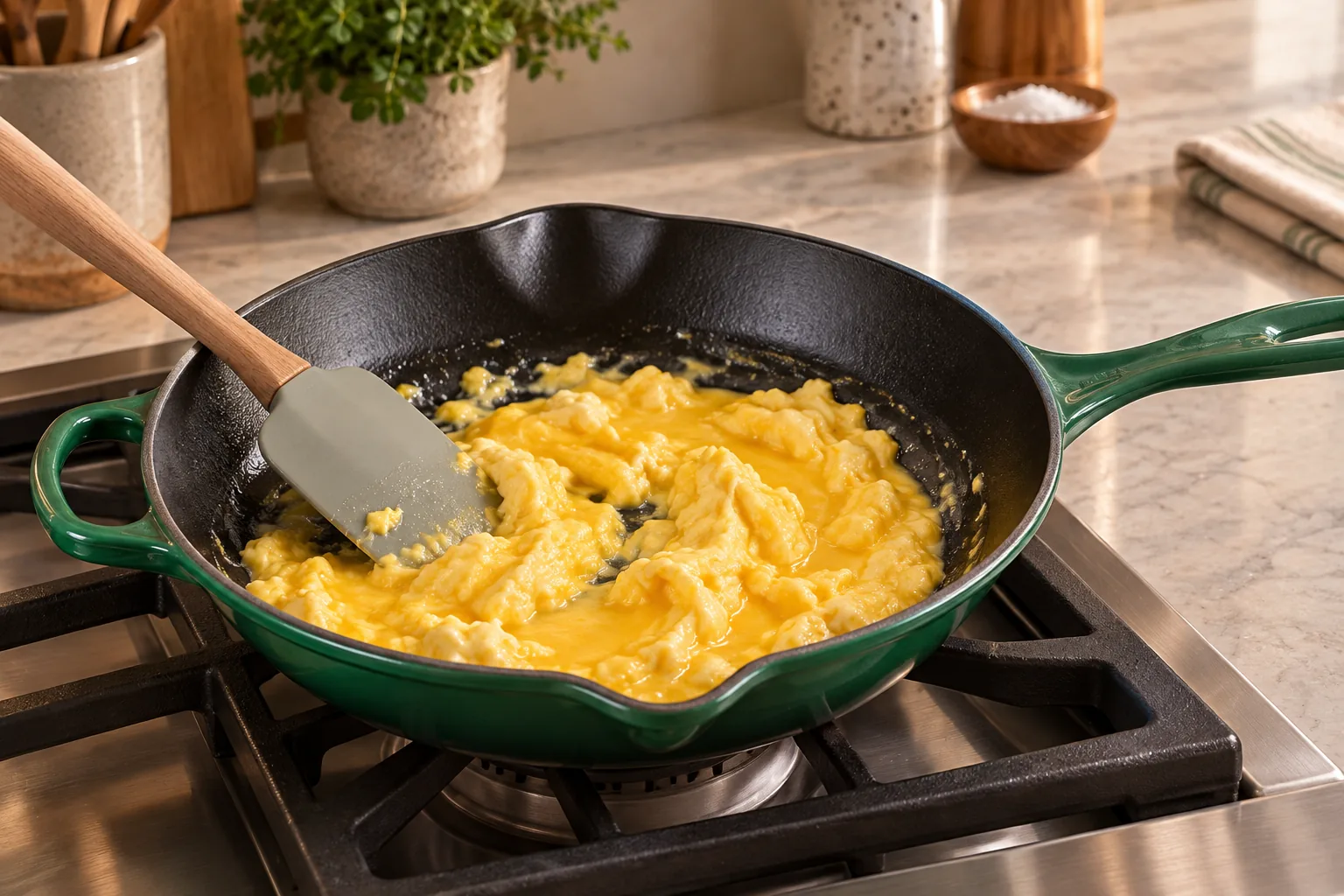
Continue scraping and stirring for about two to three minutes. The eggs are ready when the curds look set but moist and glossy. No liquid egg should run across the skillet when it is tilted.
Turn off the heat and transfer the eggs to a plate immediately. The hot enamel continues cooking after the burner is off, so leaving the eggs in the skillet can take them from soft to dry.
Season At The Plate
Add mineral salt and black pepper to taste after transferring. Season lightly first, taste, and add more only if needed. The butter or lard flavor should remain clear.
Storage And Reheating
These eggs are best served immediately. If a portion remains, cool it promptly and refrigerate it covered. Reheat gently in a small skillet over low heat, stirring only until warm.
Avoid high heat during reheating because the already-set curds dry quickly. Add no extra liquid unless you are intentionally testing a different formula.
Frequently Asked Questions
Is Four Tablespoons Of Fat Correct?
Yes. Four tablespoons butter or lard for two eggs is the defining measured ratio in this source formula.
Can I Reduce The Fat?
Reducing it creates a different scramble. Use the full amount when you want the texture and richness documented on this card.
Why Are My Eggs Oily?
Begin stirring as soon as the eggs enter the skillet and keep scraping through the center and edges. The goal is to combine the fat through the curds rather than let it remain in separate pools.
Why Did The Eggs Brown?
The heat was too high or the eggs remained in the hot skillet after setting. Keep the burner at medium, stir continuously, and transfer the soft curds immediately.
Can I Double The Recipe?
Use the card’s 2× control so the eggs and fat double together to four eggs and eight tablespoons fat. Use a skillet with enough surface area for steady stirring.
Recommended Equipment
- Le Creuset Signature 10.25-inch skillet in Artichaut
- Medium glass mixing bowl
- Fork or small whisk
- Flexible silicone spatula
- Measuring spoon
The black-enamel Artichaut skillet makes the changing curd texture easy to see. Keep the spatula in contact with the pan so no edge browns while the center remains loose.
High-Fat Scrambled Eggs for Full GAPS
Ingredients
Equipment
Method
- Melt all 4 tablespoons butter or lard in the Le Creuset Artichaut skillet over medium heat until fully liquid and hot without browning.
- Crack the 2 eggs into a glass bowl and whisk until the whites and yolks are fully combined.
- Pour the eggs into the melted fat and stir quickly so the fat and eggs combine instead of forming separate pools.
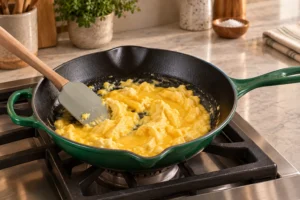
- Continue scraping and stirring for 2-3 minutes, until soft curds are set but still moist and glossy.
- Remove the skillet from the heat and transfer the eggs to a plate immediately. Season with mineral salt and black pepper to taste.
Notes
Tried this recipe?
Let us know how it was!More Full GAPS Breakfasts
The planned WFLI Full GAPS Breakfast Guide will collect exact portions, physical cooking cues, and separate family-size and vegetable variations. Watch the WFLI shop for the release.

Leave a comment