

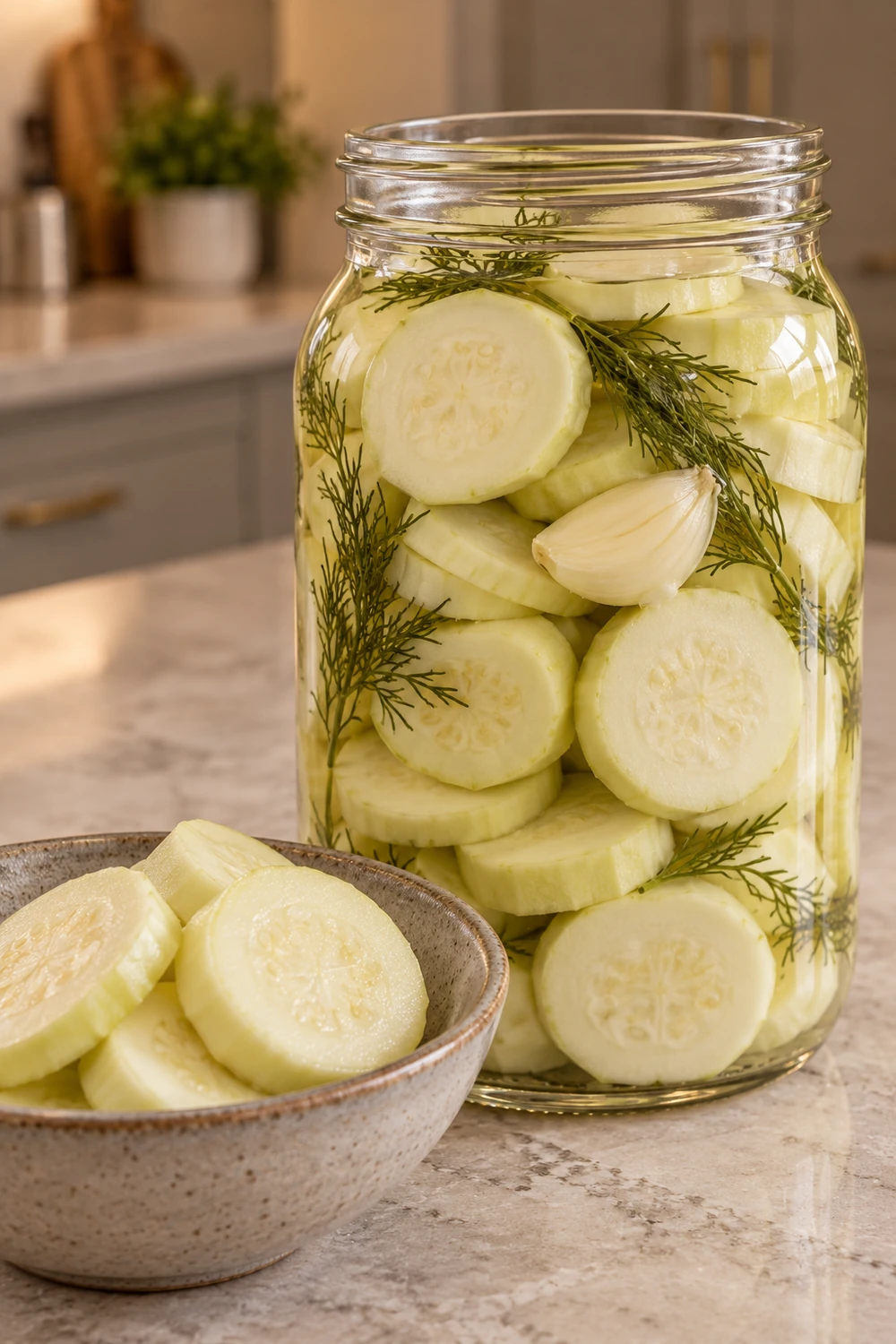
These no-sugar refrigerator pickled zucchini are tart, snappy, and useful anywhere you would normally reach for a cucumber pickle. The slices are peeled, packed with dill and optional garlic, covered with a simple hot vinegar brine, and chilled until the flavor reaches the center. There is no sweetener in the jar.
This is a quick vinegar pickle for Full GAPS. It is not a live ferment, and it is not a shelf-stable canned recipe. The jar stays in the refrigerator, where the zucchini changes from raw and watery to pleasantly crisp-tender and sharply seasoned over 24 to 48 hours.
In our working, homeschooling family of eight, a cold jar like this earns its place by making the rest of a meal easier. I can set it beside roast meat, add a few slices to a chicken-salad plate, or put it on a snack board without cooking another side. When garden zucchini gets ahead of us, this recipe also turns two measured cups into something the children recognize as a pickle instead of another pile of squash.
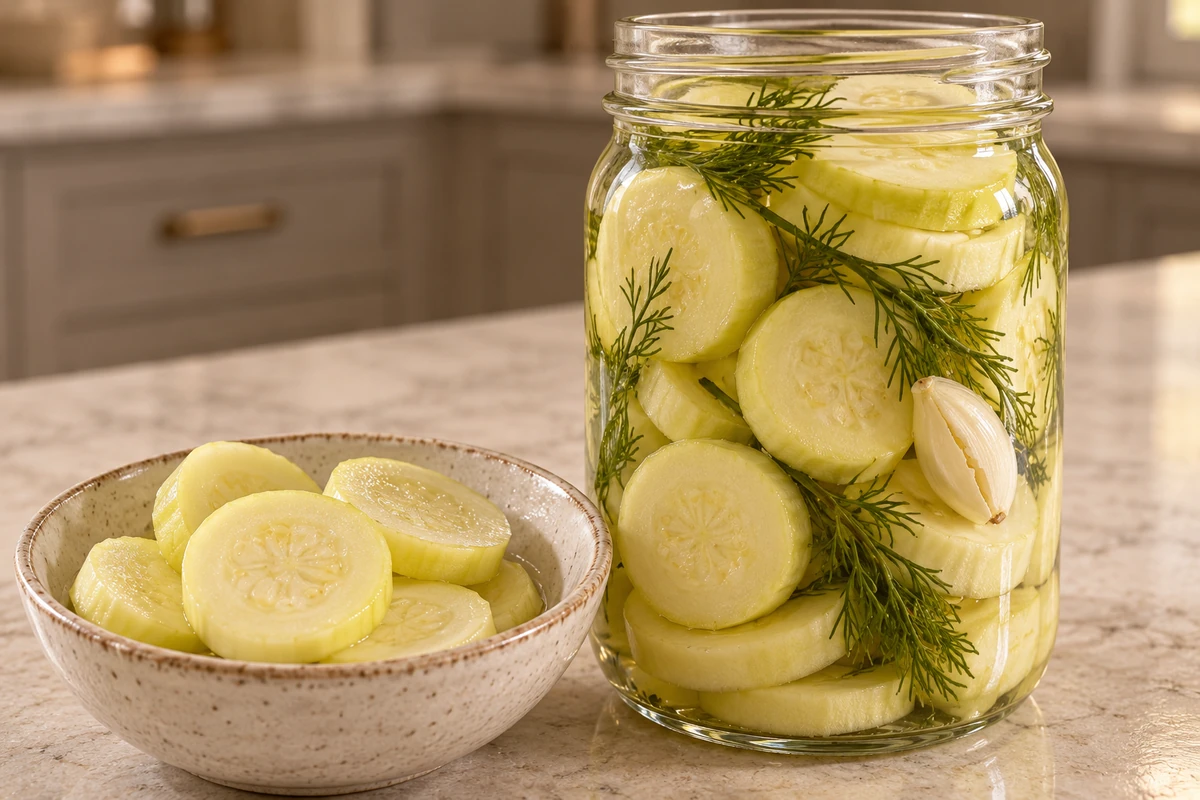
Where Pickled Zucchini Fits on GAPS
Use this recipe on Full GAPS after zucchini, the chosen vinegar, dill, garlic if included, and natural sea salt are already introduced and tolerated. Apple cider vinegar and white vinegar are the two routes used here. Choose a bottle with no added sugar, flavoring, color, or preservative that conflicts with your GAPS ingredients.
These are vinegar pickles. The hot brine supplies acidity and flavor, while refrigeration keeps the batch cold. They do not replace the fermented vegetables used for their live bacterial activity. For that separate method, make DIY Sauerkraut for Full GAPS.
This recipe does not use rice vinegar or balsamic vinegar. It also does not include sugar, honey, maple syrup, commercial pickling spice, or a packaged seasoning blend. The result is a clean savory pickle rather than a sweet bread-and-butter style pickle.
Choose and Peel the Zucchini
A medium-large zucchini usually supplies the two cups needed for one 16-ounce jar. Peel it completely, trim the ends, and cut the flesh into rounds about one-quarter inch thick. Uniform thickness matters more than perfect circles: thin pieces soften faster, while thick pieces stay raw in the center.
The cut surfaces should look moist and pale, with no slippery film or soft brown patches. A mandoline makes even rounds quickly, but a sharp stainless-steel knife works well. If you use a mandoline, use its guard and stop before the remaining piece becomes too small to hold safely.
Overgrown zucchini can work. Cut one open and inspect the center first. If the seeds are hard and the middle is spongy, remove that center and slice the firm outer flesh into wedges. If you want broad rounds for sandwiches, keep a tender center intact. Large zucchini need the full 48-hour chilling time because their flesh contains more water.
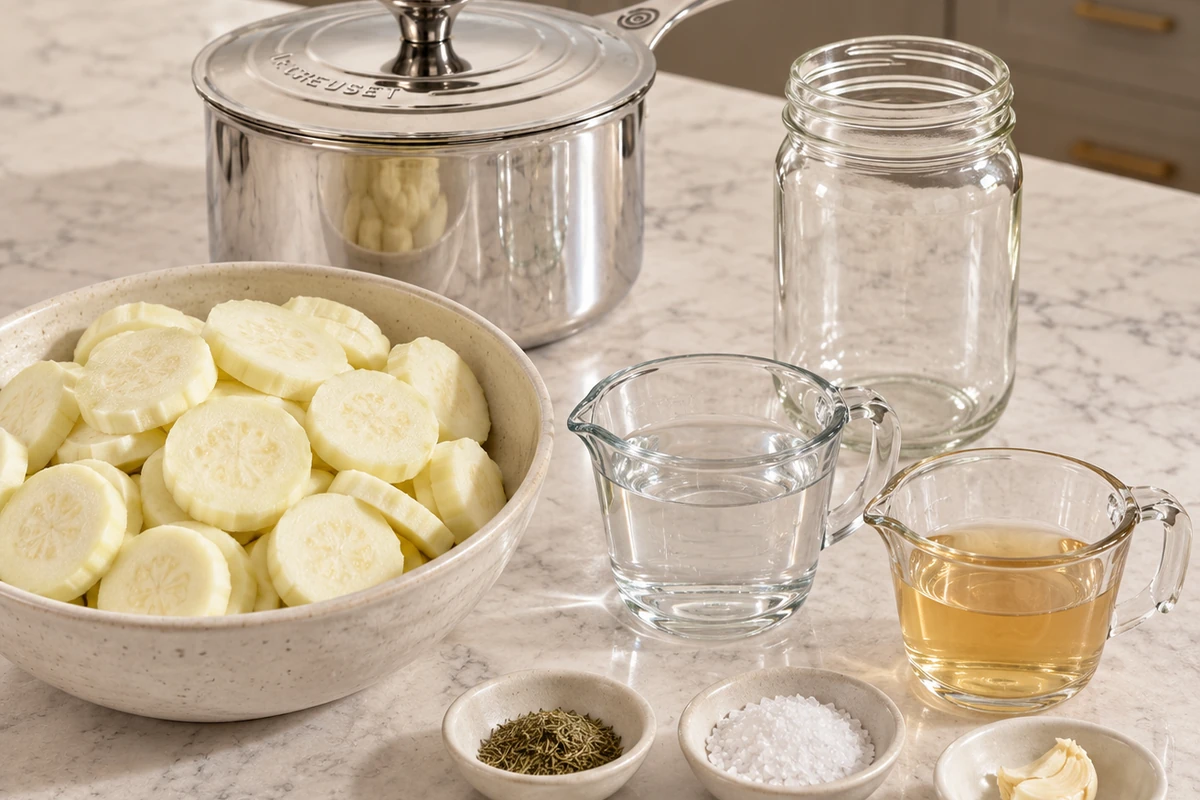
Pack the Jar Without Crushing the Slices
Put one-half teaspoon pure dried dill or a generous fresh dill sprig in a clean 16-ounce glass jar. Add the peeled zucchini rounds a few at a time. Turn some slices upright around the outside and let the rest settle naturally. Pack the jar firmly enough to use the space, but do not mash or bend the rounds.
A regular-mouth jar helps keep buoyant slices below the brine. A wide-mouth jar is easier to fill and clean. Either works. A clean glass weight can sit on top while the jar cools, but it is optional for this refrigerator vinegar pickle. Unlike a live salt-brine ferment, this jar is not held at room temperature to develop acidity.
Boil the Simple Vinegar Brine
Combine three-quarter cup filtered water, one-half cup additive-free apple cider vinegar or white vinegar, one teaspoon natural sea salt, and one optional smashed garlic clove in a small Le Creuset stainless-steel saucepan or another GAPS-compatible stainless pan.
Stir over medium-high heat until no salt crystals remain on the bottom. The brine will look clear with a pale gold tint when apple cider vinegar is used. Bring it to a full boil, then remove it from the heat. The sharp vinegar smell becomes stronger as the pan heats; that is expected.
Let the brine cool for 5 to 10 minutes. It should still be hot enough to begin softening the surface of the zucchini, but it should no longer be rolling or spitting. Pour slowly over the packed slices until they are covered. Tap the jar gently on a folded towel to release trapped air, then add the remaining brine if the level drops.
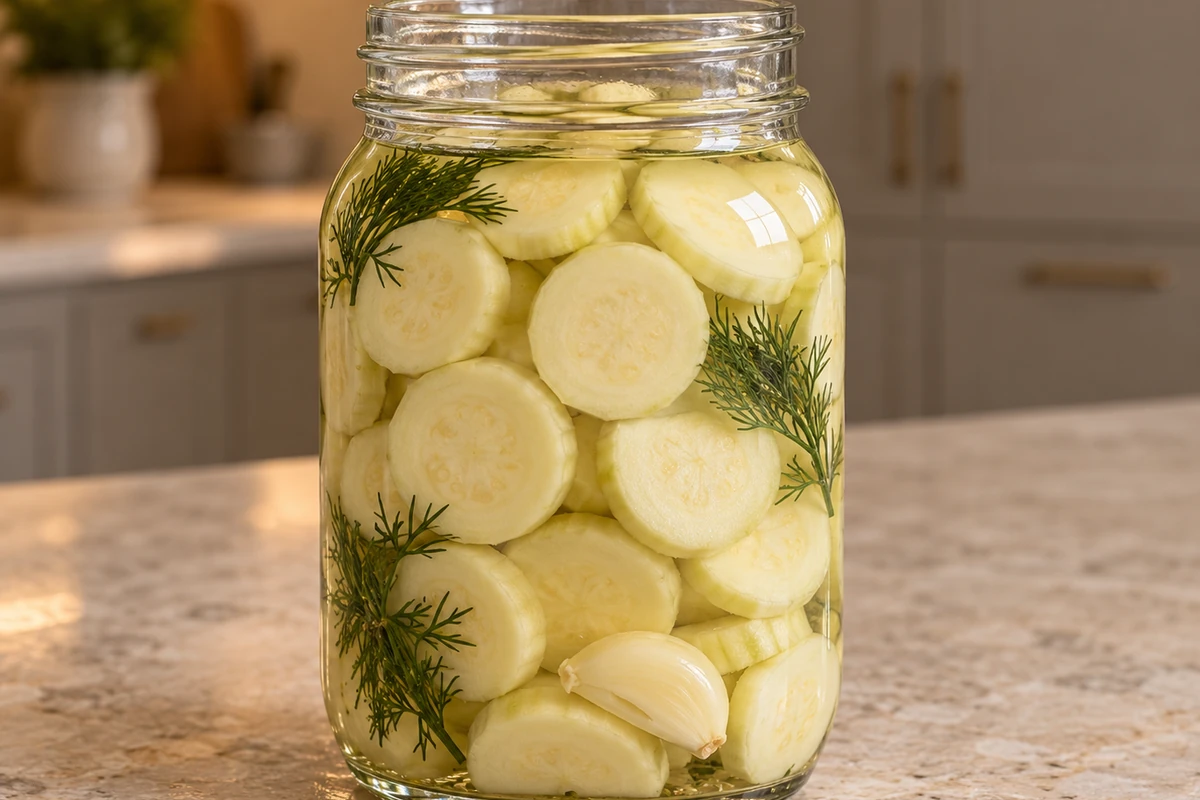
Cool, Refrigerate, and Check the Texture
Leave the jar uncovered until it is mostly cool. Then add the lid and move it to the refrigerator. Wait at least 24 hours before tasting. The color stays pale, the dill settles around the slices, and the raw zucchini smell gives way to a clean vinegar-and-dill aroma.
At 24 hours, a regular zucchini slice should bend slightly without going limp. The center should taste tart rather than watery, and the edge should still offer a small snap. If the middle tastes plain, refrigerate the jar another day. Extra-large zucchini should rest for at least 48 hours.
Use a clean fork to remove slices, keep the remaining zucchini under the brine as much as practical, and return the jar to the refrigerator promptly. This is a small fresh batch, so make another jar when you need it instead of treating it like a shelf-stable canned preserve.
Serving and Storage
Serve these pickles beside roast beef, chicken, fish, burgers, egg dishes, or a simple salad. Their acidity cuts through rich foods, and their cold crunch works well on a snack plate. They are also useful with Chicken Salad with Capers and Homemade Mayonnaise or alongside Bacon-Wrapped Steak Bites.
Keep the jar covered in the refrigerator. Use a clean utensil each time. Discard the batch if the brine becomes slimy, the vegetables develop an unpleasant odor, or visible mold appears. Those are spoilage signs, not normal features of this vinegar pickle.
Recommended Equipment
You need a vegetable peeler, sharp stainless-steel knife or guarded mandoline, cutting board, measuring cups and spoons, one clean 16-ounce glass jar or two 8-ounce jars, a small Le Creuset stainless-steel saucepan or another GAPS-compatible stainless pan, a silicone or wooden spoon, canning funnel if helpful, and an optional glass weight.
Frequently Asked Questions
Are These Pickles Probiotic?
No. This recipe uses a hot vinegar brine and refrigeration. A live fermented vegetable follows a different salt-brine process.
Can I Leave the Peel On?
This formula uses fully peeled zucchini. Peeling produces the intended gentler texture and lets the brine reach the flesh evenly.
Can I Use Balsamic or Rice Vinegar?
No. Use additive-free apple cider vinegar or white vinegar for this Full GAPS recipe. Balsamic and rice vinegar are outside this formula.
Why Are the Pickles Still Watery After One Day?
The slices may be thick, or the zucchini may be large and watery. Give the jar the full 48 hours and check that the rounds are surrounded by brine.
Can I Double the Recipe?
Yes. Use the card’s 2× control and divide the zucchini and brine between two 16-ounce jars so the packing depth and chilling cues remain useful.
No-Sugar Pickled Zucchini Recipe
No-Sugar Refrigerator Pickled Zucchini
Ingredients
Equipment
Method
- Peel the zucchini completely and cut it into uniform 1/4-inch slices. Measure 2 cups. If using an overgrown zucchini with a hard, spongy center, remove that center and slice the firm outer flesh.
- Put the dill in a clean 16-ounce glass jar, or divide it between two 8-ounce jars. Pack the peeled zucchini slices over the dill without crushing or bending them.
- Combine the filtered water, chosen vinegar, sea salt, and optional smashed garlic in a small stainless-steel saucepan. Stir over medium-high heat until no salt crystals remain.
- Bring the brine to a full boil, then remove the pan from the heat. Let the brine cool for 5 to 10 minutes.
- Pour the hot brine slowly over the packed zucchini until the slices are covered. Tap the jar gently to release trapped air. Add an optional glass weight while the jar cools.

- Leave the jar uncovered until mostly cool. Add the lid and refrigerate for 24 to 48 hours before eating. Regular zucchini should taste tart through the center and remain crisp-tender; extra-large zucchini needs at least the full 48 hours.
Notes
- Full GAPS: Use after zucchini, the chosen vinegar, dill, garlic if included, and sea salt are introduced and tolerated.
- Vinegar pickle: This is a refrigerated hot-brine pickle, not a live ferment and not a shelf-stable canned recipe.
- Vinegar: Use additive-free apple cider vinegar or white vinegar. Do not use balsamic or rice vinegar in this formula.
- Storage: Keep covered in the refrigerator and use a clean utensil each time.
Tried this recipe?
Let us know how it was!Keep More Condiments Homemade
The planned Sauces, Dressings & Condiments Cookbook will gather practical recipes like this into one kitchen reference, with exact ingredient checks and physical cues. Until it is released, find the current guides and recipe resources in the WFLI shop.

Leave a comment