

This GAPS Pad Thai keeps the sour, salty balance of fish sauce and tamarind while swapping rice noodles for spiralized zucchini. Ground pork, garlic, green onions, properly prepared peanuts, and lime make it a complete later-Full-GAPS dinner in about thirty-five minutes.
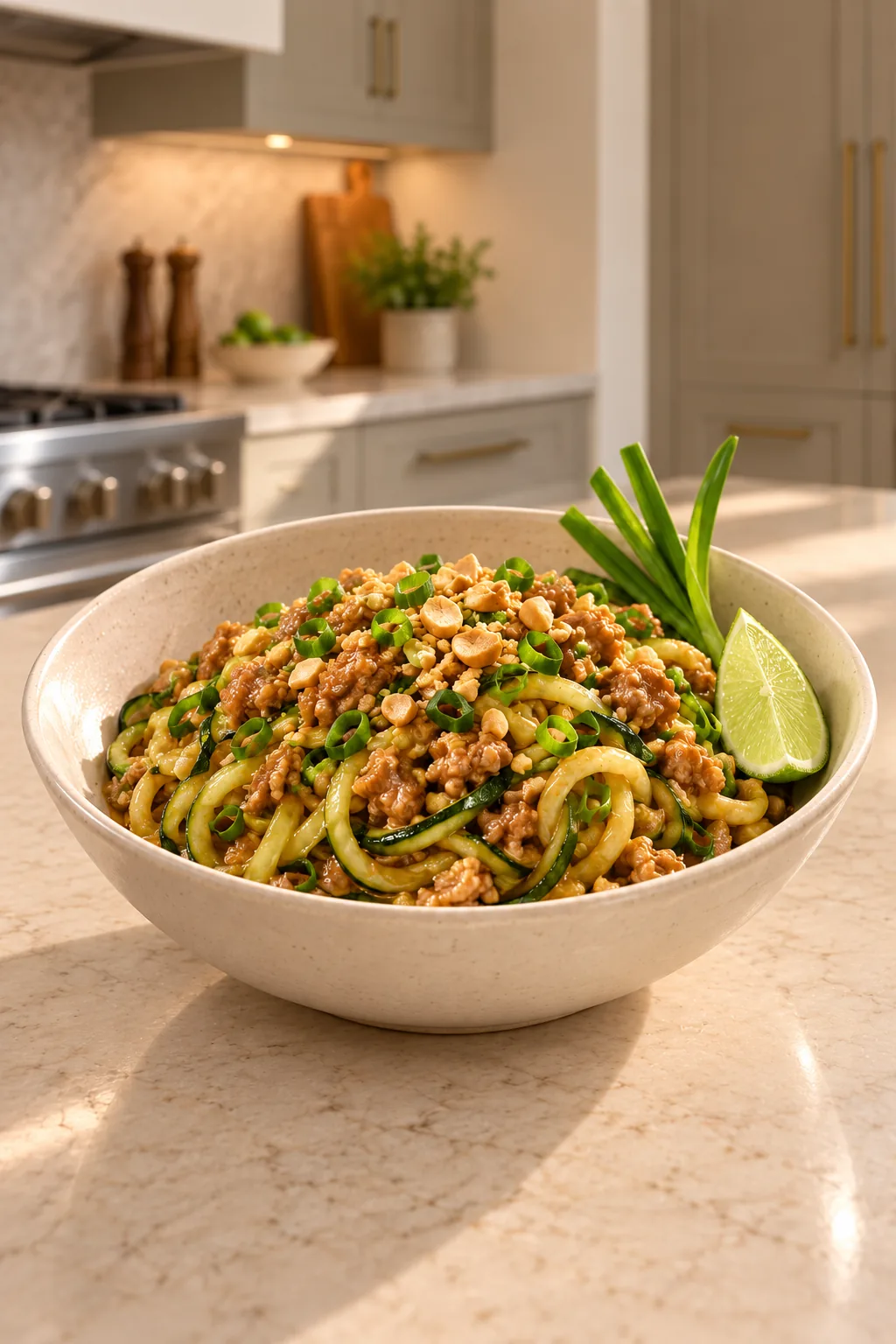
The finished noodles should be hot and flexible but still distinct, with a glossy light-brown coating rather than a pool of water in the bowl. The pork should be broken into small pieces, the peanuts should stay crisp, and the lime should brighten the sauce without covering the fermented fish-sauce flavor.
I like a skillet dinner when the prep has a clear order. With homeschooling, six children, and second shift shaping our evenings, it helps to cook the pork first, set it aside, and give the zucchini the full pan instead of crowding everything together and hoping it works.
Why This Is Later Full GAPS
This version has no grain noodles, stevia, mung bean sprouts, tamari, or soy sauce. The sauce uses traditionally fermented fish sauce, pure unsweetened tamarind paste, and natural salt. Zucchini takes the place of rice noodles, and the pork cooks in lard.
Tamarind places the recipe later in Full GAPS, after major digestive problems have settled. It may not suit someone prone to loose stools. Properly prepared peanuts or cashews also belong after nuts have been introduced and tolerated.
Check the Fish Sauce and Tamarind
Use three tablespoons traditionally fermented fish sauce made from fish or anchovies, natural sea salt, and water, with no sugar or other additives. A short ingredient list matters more than the brand name on the front.
The tamarind should be pure, unsweetened paste. Measure one tablespoon. Do not substitute a sweetened tamarind sauce, Pad Thai sauce, concentrate blended with sugar, or a seasoning packet.
Prepare the Zucchini Noodles
Spiralize five zucchini. Keep the strands reasonably long, but trim a few of the longest loops so they are easier to turn in the skillet and eat from a bowl. Pat away obvious surface water before cooking.
Zucchini releases liquid as it heats. A large pan lets moisture escape and keeps the noodles from steaming into softness. If your skillet is crowded, cook in batches rather than extending the time until the noodles collapse.
Mix the Three-Ingredient Sauce
In a medium bowl, stir together three tablespoons fermented fish sauce, one tablespoon pure tamarind paste, and one-half teaspoon natural sea salt. The mixture will smell sharp and savory and look thin enough to coat the noodles quickly.
Set the sauce beside the stove before the cooking begins. Once the zucchini enters the pan, the remaining steps move quickly and the sauce should be ready to pour without stopping to measure.
Cook the Ground Pork
Heat a large cast-iron skillet over high heat. Add two tablespoons of the quarter cup lard. Add one pound ground pork and one teaspoon natural sea salt.
Break the pork into small pieces with a wooden spatula and stir frequently until no pink remains, about ten to twelve minutes. The crumbles should be cooked through with a few lightly browned edges, not packed into large meatball-size pieces.
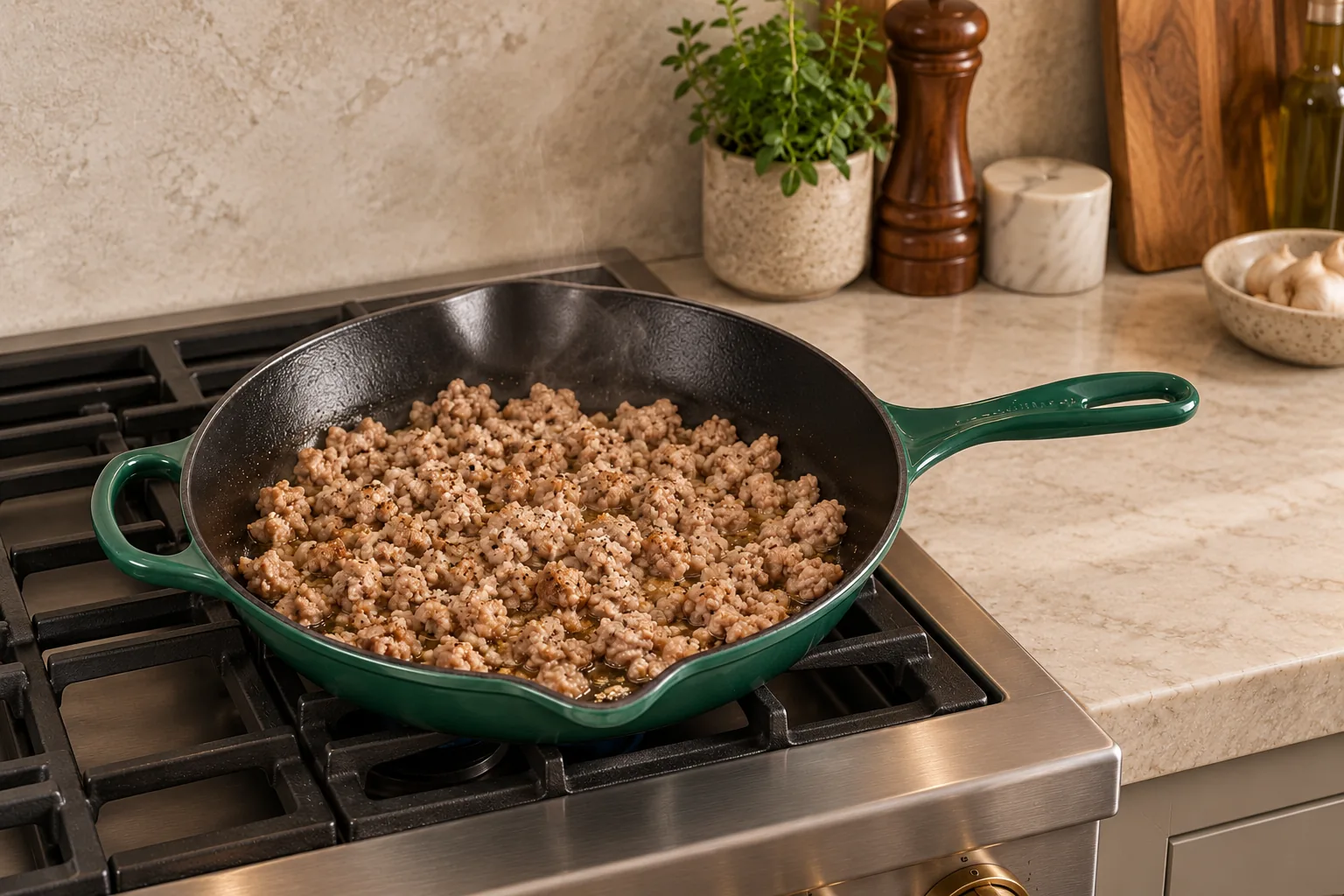
Transfer the cooked pork to a clean dish and set it aside. Removing it gives the zucchini room to wilt evenly and prevents the meat from overcooking while the vegetables finish.
Sauté Garlic, Green Onions, and Zucchini
Keep the skillet over high heat. Add the remaining two tablespoons lard, then two minced garlic cloves and one cup chopped green onions. Sauté for about two minutes, until fragrant.
Add all five zucchini worth of noodles. Turn them constantly with stainless-steel tongs or two forks for about five minutes. Stop when they are hot and just slightly wilted. They should bend easily while holding their spiral shape.
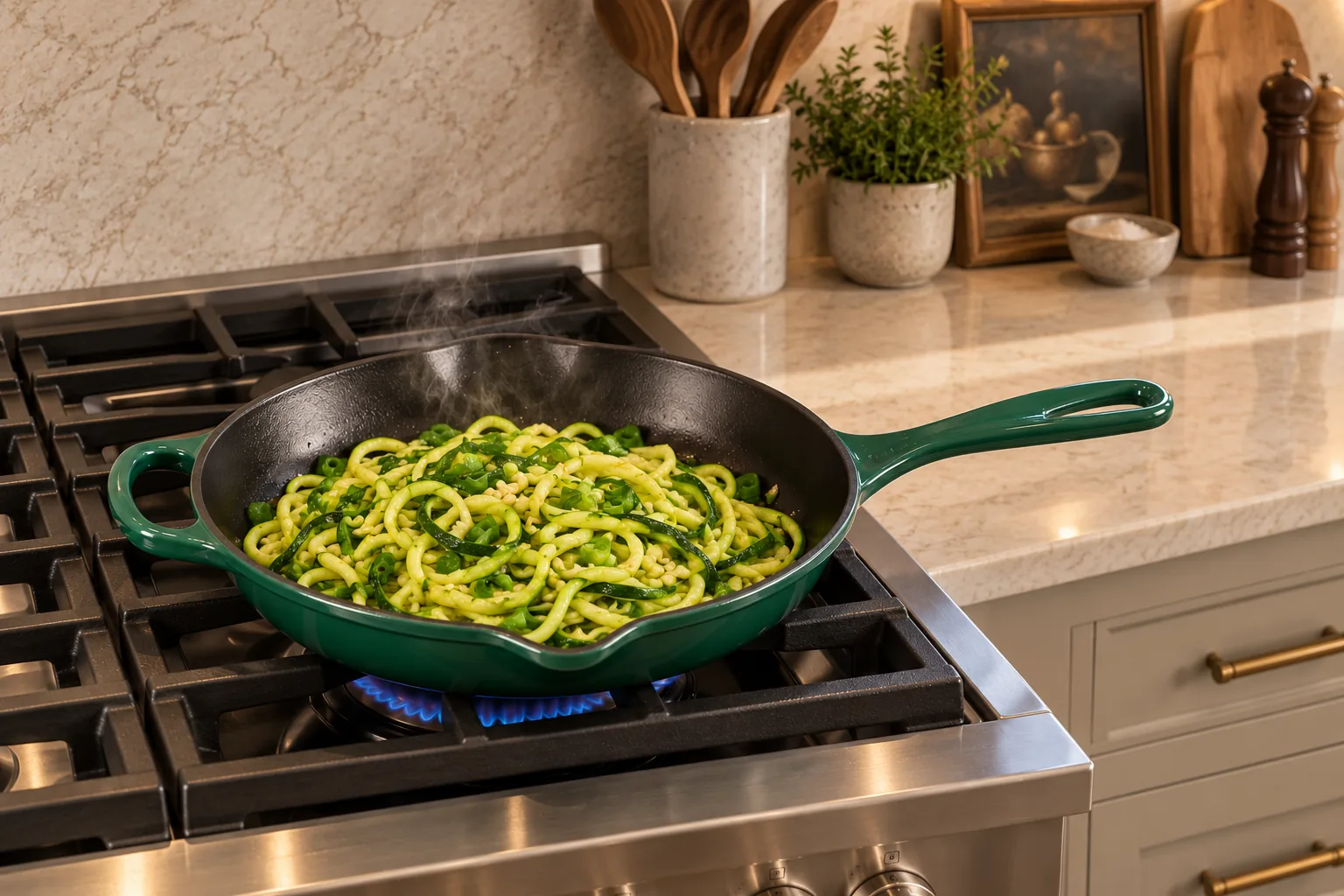
Coat and Finish the Pad Thai
Pour the prepared sauce over the zucchini and toss until the color is even. Return the pork to the pan and add one-half cup properly prepared chopped peanuts. Toss and heat for about two minutes.
The sauce should cling to the noodles and pork. If liquid collects in the bottom of the pan, keep the heat high and turn the noodles briefly rather than simmering them until soft.
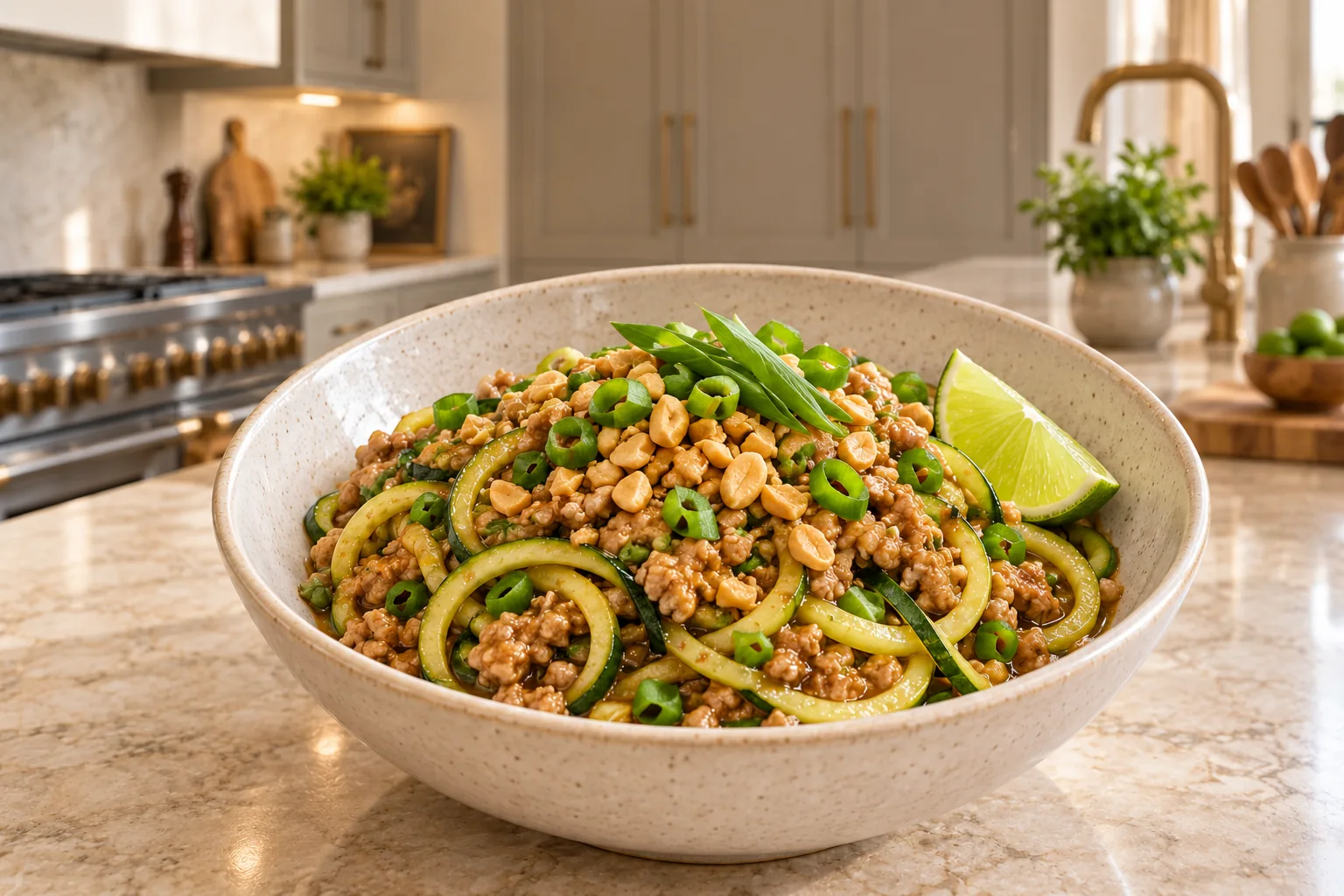
GAPS Pad Thai with Zucchini Noodles and Pork
Ingredients
Equipment
Method
- In a medium bowl, stir together 3 tablespoons fish sauce, 1 tablespoon tamarind paste, and 1/2 teaspoon natural sea salt. Set aside.
- Heat the large skillet over high heat and add 2 tablespoons of the lard.
- Add the pork and 1 teaspoon salt. Cook, stirring often and breaking it into small pieces, until no pink remains, about 10 to 12 minutes. Transfer to a clean dish.
- Keep the skillet over high heat. Add the remaining 2 tablespoons lard, garlic, and chopped green onions. Sauté until fragrant, about 2 minutes.
- Add the spiralized zucchini. Turn constantly for about 5 minutes, until hot and just slightly wilted while the spirals remain distinct.
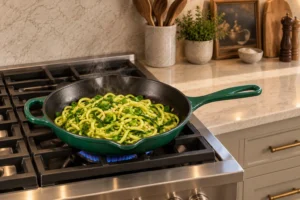
- Pour in the sauce and toss to coat. Return the pork and add 1/2 cup chopped peanuts. Toss and heat for about 2 minutes.
- Divide among 5 bowls. Top with scallion greens and lime wedges. Pass extra qualifying fish sauce and prepared peanuts. Use pure red pepper flakes if desired; when omitting them, sprinkle exactly 1 tablespoon qualifying coconut aminos over the finished full batch.
Notes
Tried this recipe?
Let us know how it was!Serve with Lime and Scallions
Divide the Pad Thai among five bowls. Top with one-half cup sliced scallion greens, divided among the servings, and place a lime wedge beside each bowl.
The aroma should be savory and tangy, with garlic, lime, fermented fish sauce, and toasted peanuts all easy to notice. The noodles should form loose curls around the pork rather than collapsing into a soft mound. A fork or chop-free serving utensil should lift a portion cleanly without leaving a puddle in the bowl.
Squeeze the lime just before eating. Its fresh acidity wakes up the tamarind, pork, green onions, and fermented fish sauce, while adding it in the hot skillet would mute the bright finish.
Pass extra qualifying fish sauce and properly prepared chopped peanuts at the table. Pure red pepper flakes are optional. When leaving off the pepper, sprinkle exactly one tablespoon qualifying coconut aminos over the finished full batch. Check that every ingredient on its label fits GAPS.
Raw honey may be offered at the table for someone who wants a sweeter edge. Because the accepted source does not provide a measured amount, it remains an optional table adjustment rather than a scaled card ingredient.
Properly Prepare the Peanuts or Cashews
Use one-half cup properly prepared peanuts for the photographed pork version. Start with raw, good-quality peanuts, soak them in warm salted water, then dry them thoroughly before chopping.
Cashews are the supported alternative. Their soak is shorter: one to three hours and never longer than six. Dry the cashews fully before chopping so they add crunch instead of softness.
Prepare more than one-half cup if you want extra nuts at the table. The measured half cup goes into the skillet; garnish remains optional.
Pork and Prawn Routes
The photographed formula uses one pound ground pork and cooks it for about ten to twelve minutes until no pink remains. The source also permits prawns in the same place in the assembly.
Prawns cook much faster, about two to five minutes. Remove them as soon as they are cooked, then return them with the sauce and nuts near the end. Do not use the pork timing for seafood.
Later Full GAPS Placement and Adaptations
Use this recipe after tamarind and properly prepared nuts are appropriate and tolerated. The dish is naturally egg-free and dairy-free. It does not need a commercial noodle substitute or packaged Pad Thai sauce.
Peanuts are the accepted Keto/GAPS route. Properly prepared cashews work for the Paleo or Whole30 variation. The AIP changes from the source do not define this GAPS card and are not nested as another recipe.
Coconut aminos are conditional here and never replace the fish sauce. The three tablespoons fermented fish sauce remain the sauce foundation; one tablespoon coconut aminos is only the measured finish when red pepper flakes are omitted.
Storage and Reheating
Pad Thai made with zucchini is best soon after cooking because the noodles continue releasing moisture as they sit. Cool leftovers promptly in covered glass and refrigerate them.
Reheat gently in a skillet just until hot. Avoid repeated stirring or a long simmer, which can break the zucchini strands and create a watery sauce. Add fresh lime after reheating rather than cooking the wedge.
The accepted GAPS repair does not assign an invented fixed storage duration. Use clean utensils, keep leftovers cold, and discard them if their aroma, surface, or texture changes unexpectedly.
Troubleshooting the Skillet
The noodles are watery. Pat the zucchini dry, use a large hot skillet, and turn the noodles only until slightly wilted.
The pork formed large clumps. Break it apart continuously with the spatula while it cooks.
The noodles became mushy. They cooked too long or the pan was crowded. Stop while the spirals remain distinct.
The sauce tastes too sharp. Toss it through the full measured quantity of noodles and pork before adjusting at the table.
The dish tastes flat. Add the lime wedge and check the fish-sauce ingredient and fermentation quality before adding more salt.
The nuts are soft. They were not dried fully after soaking or sat too long in the skillet. Add them only for the final two-minute toss.
Recommended Equipment
- Le Creuset Signature 10.25-inch Artichaut skillet or approved cast-iron skillet
- Zucchini spiralizer
- Medium mixing bowl
- Approved wooden cutting board
- Stainless-steel knife
- Stainless-steel measuring cups and spoons
- Wooden spatula
- Stainless-steel tongs
- Neutral ceramic utensil rest
Frequently Asked Questions
Is Tamarind Allowed on GAPS?
Use it with caution later in Full GAPS, after major digestive problems have gone. It may not suit someone prone to loose stools.
Why Are There No Bean Sprouts?
Mung beans and bean sprouts are not included in this GAPS formula. Zucchini noodles and pork make the dish complete without them.
Can I Use Shrimp Instead of Pork?
Yes. Use prawns in place of pork and cook them for about two to five minutes rather than the longer pork timing.
Can I Add Stevia?
No. This GAPS version contains no stevia. Raw honey may be offered to taste at the table.
Can I Use Soy Sauce or Tamari?
No. The measured sauce uses qualifying fermented fish sauce. Tamari and soy sauce are not substitutions.
How Many Servings Does It Make?
The measured formula makes five servings.
More Weeknight GAPS Help
For more measured dinners built for real family schedules, visit the Well Fed & Lived In shop for the planned Full GAPS Batch-Cooking Guide.

Leave a comment