

This Mediterranean squash and olive crustless quiche turns six eggs, homemade coconut cream, tender winter squash, brined olives, roasted red peppers, and za’atar-style spices into a dairy-free Full GAPS breakfast or supper. A double ring of properly prepared sesame seeds forms a distinct edge without adding a flour crust.
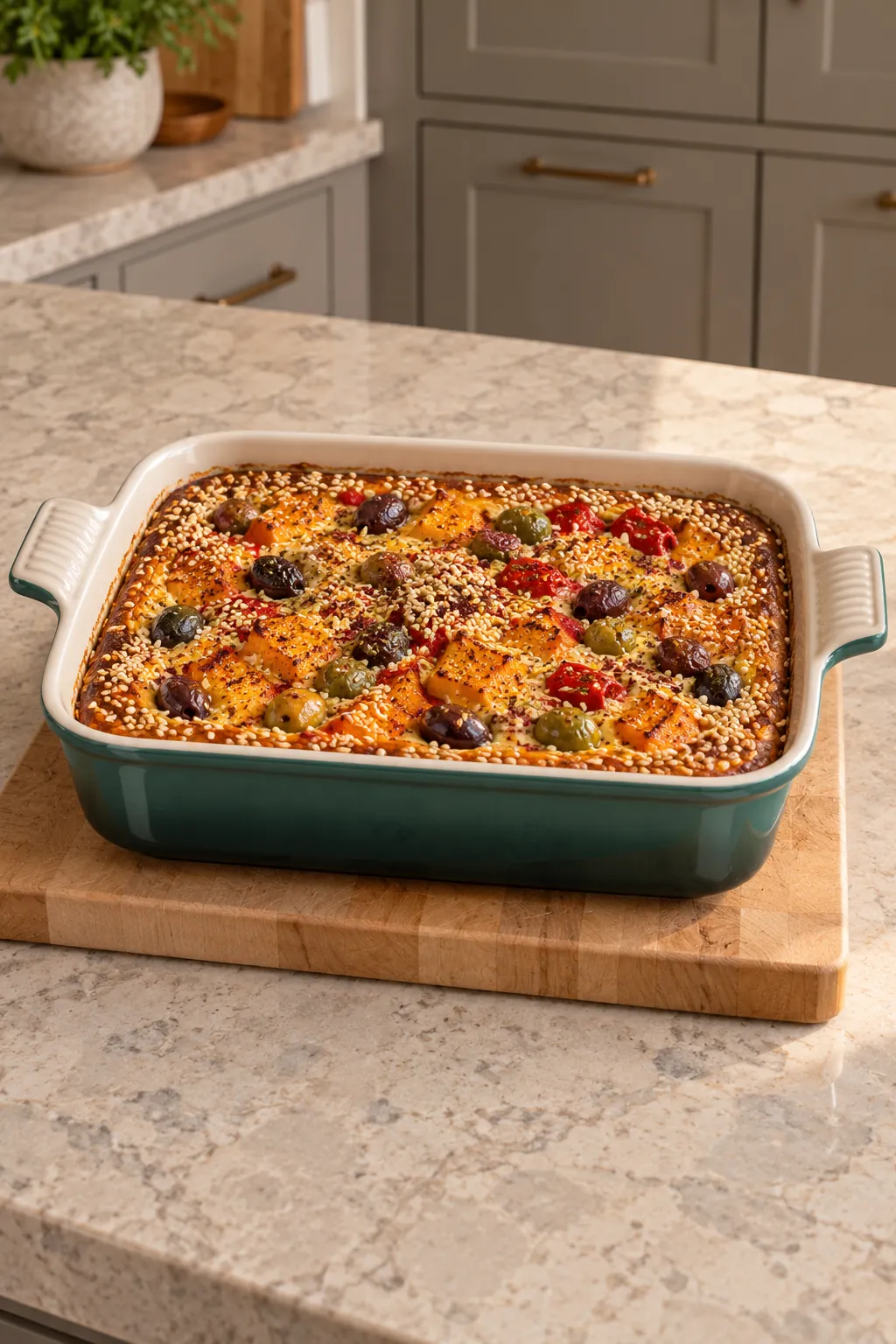
The quiche is creamy but not smooth. Winter squash is pulsed into small pieces that stay suspended in the egg custard, while the olives and peppers remain visible across the top. The center finishes slightly puffed and the whole surface should be golden before it leaves the oven.
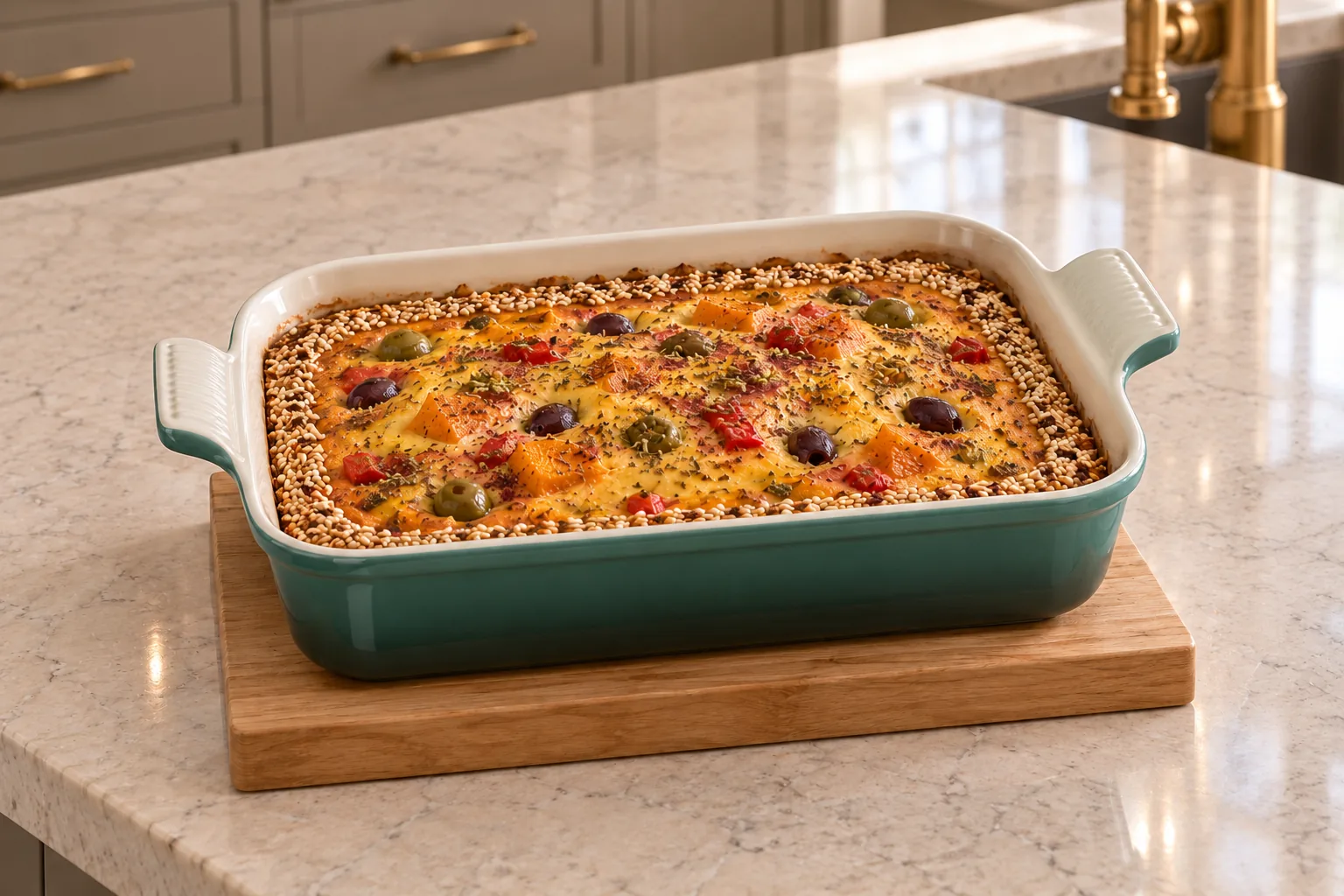
A Dairy-Free Quiche With Real Texture
Many dairy-free egg bakes turn soft and wet because they rely on eggs alone. Here, homemade coconut cream gives the custard body, and the partially blended winter squash keeps it substantial without making it heavy.
In a house with six kids, an egg bake is useful because it can cover more than one kind of meal. Serve it warm for breakfast, let it cool for lunch, or add a crisp salad and use it as an easy dinner.
Sumac brings a clean tart flavor. Oregano and cumin make the custard savory, while olives, roasted red peppers, and sesame give each slice enough contrast that it does not need cheese.
Where This Quiche Fits on GAPS
This is a Full GAPS recipe once whole eggs, winter squash, peppers, olives, coconut cream, and properly prepared sesame seeds have been introduced and tolerated.
Potatoes are left out because they are a starchy vegetable on the GAPS avoid list. One pound of winter squash takes their place without changing the rest of the measurements.
Wait until diarrhea has settled before using sesame seeds. The seeds need a 12-to-24-hour soak followed by sprouting or fermentation and complete drying. A soak-and-dry batch alone is not the preparation used here.
Prepare the Coconut Cream, Sesame, and Vegetables
Use one-half cup thick homemade coconut cream from fresh coconut. The hot-water homemade coconut milk method gives you the fresh coconut base; use the thick cream portion for this custard.
Choose hulled sesame seeds that have already completed their soak, sprouting or fermentation, and drying before recipe day. They must be dry enough to sprinkle freely rather than clumping into the custard.
Read the olive and roasted-pepper ingredients carefully. Use brined olives without sugar or preservatives, and roasted red peppers with no sugar, starch, citric-acid blend, or other excluded additions.
Cook the Winter Squash Until Fork-Tender
Peel and seed one pound of winter squash, such as butternut, and cut it into even chunks. Put the squash in a small-to-medium stainless-steel saucepan, cover with filtered water, and add a few pinches of sea salt.
Bring the water to a boil, lower it to a steady simmer, and cook until a fork slides through the thickest piece without resistance. Drain well and let the steam escape for several minutes.
When the squash is cool enough to handle, cut any large pieces down to roughly eighth-size chunks. They do not need to be tiny; the blender will break them up further without turning them into puree.
Blend the Egg and Coconut-Cream Base
Grease the Le Creuset Heritage rectangular baking dish in Artichaut with lard or natural non-hydrogenated coconut oil. Heat the oven to 375°F.
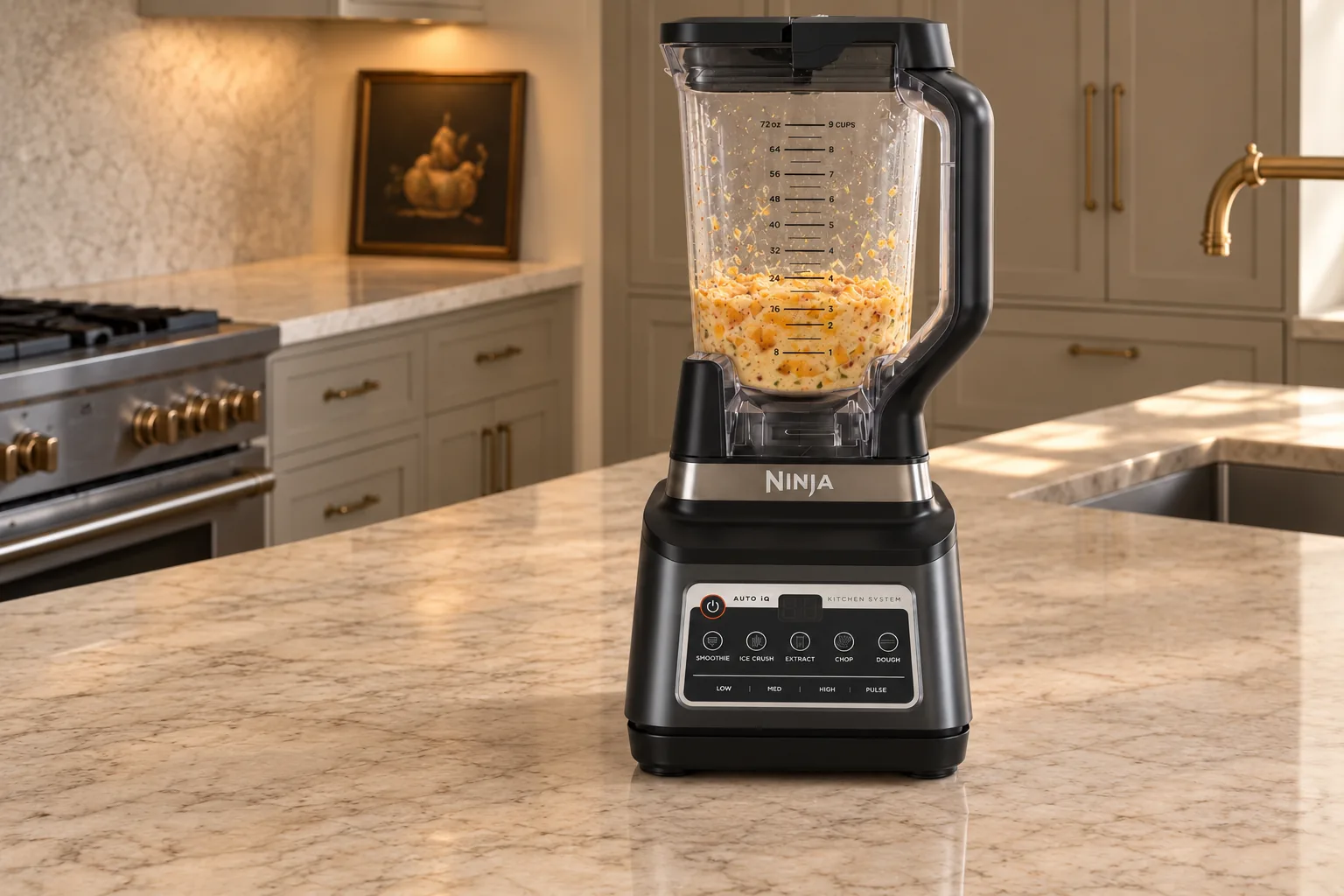
Put six eggs, one-half cup homemade coconut cream, one-half teaspoon sea salt, and about ten grinds of black pepper in the Ninja Professional Plus Kitchen System BN801. Blend on medium for about 15 seconds.
The base should look pale yellow and completely combined, with no separate streaks of egg white or coconut cream.
Pulse the Squash Without Puréeing It
Add the drained squash, one-half teaspoon dried oregano, one-half teaspoon sumac, and one-quarter teaspoon ground cumin to the blender pitcher.
Pulse about five times. Stop while small orange squash pieces are still visible throughout the custard. The mixture should pour thickly, but it should not look like smooth soup.
If a few pieces remain larger than the rest, that is fine. Long blending would erase the texture that makes the finished quiche substantial.
Assemble the Olive, Pepper, and Sesame Top
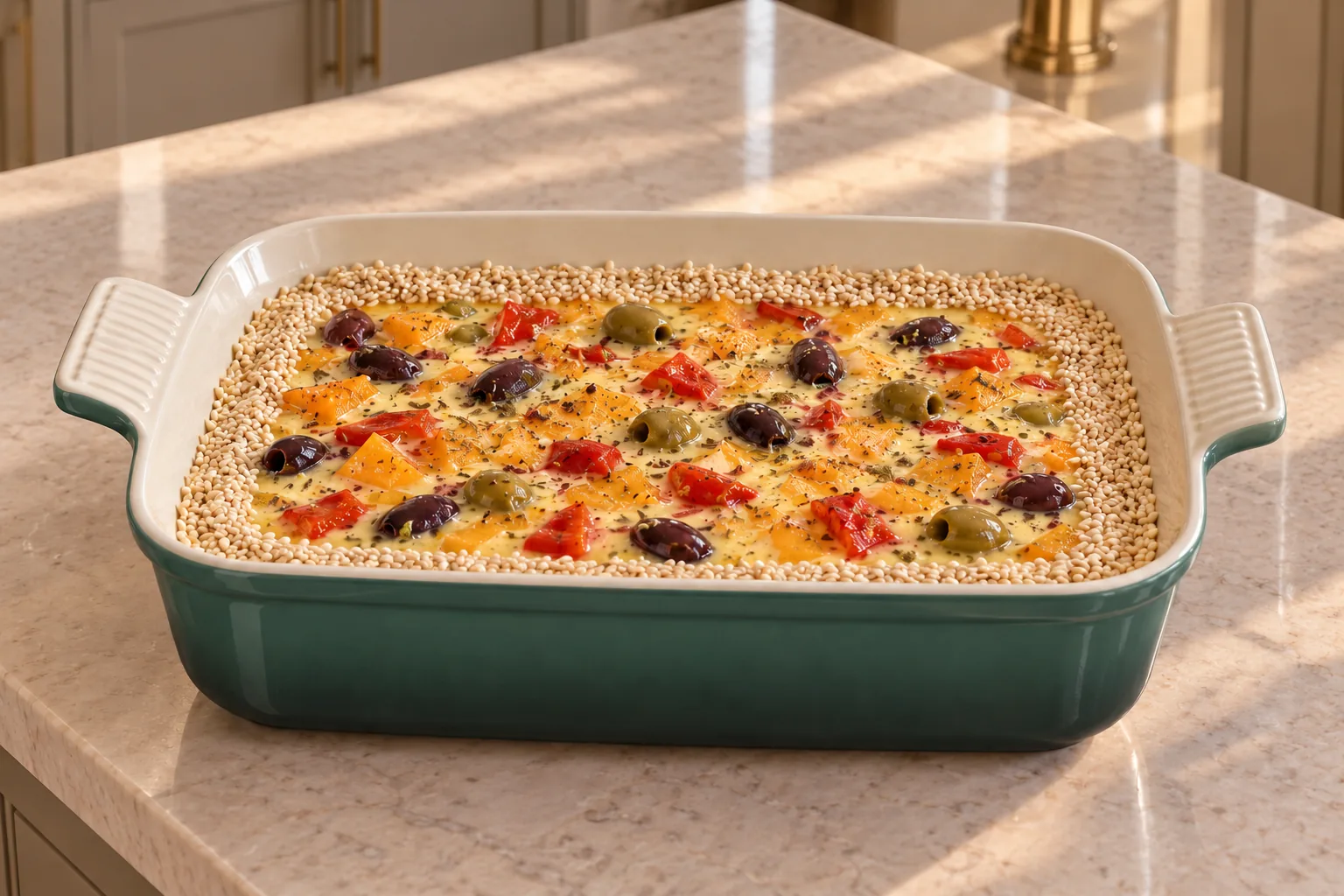
Pour the thick custard into the greased Artichaut dish. Scatter one-quarter pound of brined olives and one-half cup chopped roasted red peppers evenly over the surface.
Sprinkle a light pinch of dried oregano over the top. Then make the sesame edge in two passes: circle the outside once with the prepared dry seeds, then repeat the same path.
The finished unbaked dish should show olives and red-pepper pieces across the custard with a clearly thicker sesame border around the perimeter. The seeds should rest on the surface instead of disappearing.
Bake Until Golden and Slightly Puffed
Bake at 375°F for about 30 minutes. The exact time changes with the depth and shape of the baking dish, so use the physical cues rather than the clock alone.
The top should be golden across the center, not only at the edges. The middle should rise slightly and look set rather than wet or rippling when the dish is moved gently.
Set the hot dish on a wood trivet and rest it for 10 minutes before slicing. The brief rest lets the custard settle so each portion holds together.
Serve It Warm or Cool
Cut the quiche into six portions. Warm slices are soft and creamy; cooled slices become firmer and show the squash, olives, peppers, and sesame more clearly.
Serve it with a simple green salad, fermented vegetables, or a crisp cucumber side. For another egg bake with a different vegetable profile, see the GAPS crustless quiche with zucchini, kale, and garlic.
The olives already bring salt and richness, so taste the finished slice before adding anything at the table.
Storage and Reheating
Cool leftovers promptly and refrigerate them covered for up to four days. Store slices in glass containers so they stay intact.
Reheat covered at 300°F until warm through, or let a slice come close to room temperature and serve it without reheating. Avoid a high oven, which can toughen the egg custard.
Freeze individual slices only after they are completely cool. Thaw overnight in the refrigerator; the squash may release a little moisture, so reheat the slice uncovered for the final few minutes if needed.
Recommended Equipment
Use a small-to-medium stainless-steel saucepan, stainless colander, the Le Creuset Heritage rectangular baking dish in Artichaut, Ninja Professional Plus Kitchen System BN801, stainless measuring cups and spoons, chef’s knife, stainless or wood cutting board, flexible silicone spatula, oven mitts, and a sturdy wood trivet.
Frequently Asked Questions
Can I Use Potatoes?
No. Potatoes are not used on GAPS. Keep the measured one pound of winter squash.
Which Winter Squash Works Best?
Butternut is easy to peel and gives the custard a clear orange-gold color. Another firm winter squash can work when weighed after peeling and seeding.
Why Do the Sesame Seeds Need More Than Soaking?
The preparation used here continues after the 12-to-24-hour soak: sprout or ferment the hulled sesame, then dry it fully before use.
Can I Use Canned Coconut Cream?
Use one-half cup homemade coconut cream from fresh coconut for this Full GAPS version.
How Do I Know the Center Is Done?
The center should be golden, slightly puffed, and set without a wet ripple when the dish is moved gently.
Can I Leave Out the Roasted Red Pepper?
If peppers are not yet tolerated, wait to make the complete recipe. The measured peppers are part of this quiche.
Mediterranean Squash and Olive Crustless Quiche Recipe
Mediterranean Squash and Olive Crustless Quiche for Full GAPS
Ingredients
Equipment
Method
- Put the winter squash in a stainless saucepan, cover with filtered water, add a few pinches sea salt, bring to a boil, and simmer until fork-tender. Drain and cool slightly.
- Cut any large cooked squash pieces down to roughly eighth-size chunks so they pulse evenly.
- Grease the Artichaut baking dish with lard or coconut oil. Preheat the oven to 375°F.
- Blend the eggs, homemade coconut cream, 1/2 teaspoon sea salt, and black pepper on medium for about 15 seconds, until completely combined.
- Add the squash, oregano, sumac, and cumin. Pulse about 5 times, stopping while small squash pieces remain visible in the thick custard.
- Pour the custard into the greased dish. Scatter the olives and chopped roasted red peppers evenly over the surface and add a light pinch of oregano.
- Sprinkle the prepared sesame seeds around the edge in two passes so the border is thick enough to stay visible on the surface.
- Bake about 30 minutes, until golden across the surface, slightly puffed in the center, and set without a wet ripple.
- Rest 10 minutes on a wood trivet, then cut into 6 portions and serve.
Notes
- Full GAPS: Use after whole eggs, winter squash, peppers, olives, coconut cream, and properly prepared sesame seeds are introduced and tolerated.
- No potatoes: Keep the measured 1 pound winter squash.
- Sesame preparation: Soak 12 to 24 hours, then sprout or ferment and fully dry before use.
- Storage: Refrigerate covered for up to 4 days.
- Scaling: At 2x, use 2 pounds winter squash, 12 eggs, 1 cup coconut cream, 1 teaspoon each custard salt, oregano, and sumac, 1/2 teaspoon cumin, 1/2 pound olives, 1 cup roasted peppers, and 6 to 8 tablespoons sesame; divide between two dishes.
Tried this recipe?
Let us know how it was!Make Breakfast Easier to Plan
The planned Weekly Kitchen Rhythm Planner will help you map breakfasts, make-ahead dishes, ferments, and freezer work without loading every task onto one day. Find current guides and catalog updates in the WFLI shop.

Leave a comment