

In her 2020 book, Gut and Physiology Syndrome, Dr. Natasha Campbell-McBride uses “die-off” for symptoms she attributes to toxins released as gut microbes die during treatment.[4] The useful next step is to name the exact symptom, timing, food or product, and amount instead of relying on the label alone. Our first six weeks on GAPS were horrible. I’d read plenty going in that gave me hope, but nothing prepared me for how hard the beginning actually felt while we were living through it as a family.
When a Reaction Needs Immediate Help
Trouble breathing, sudden tongue or throat swelling, collapse, or a person who cannot be woken up needs emergency help. Call 911 or your local emergency number. For suspected anaphylaxis, use prescribed epinephrine as directed by the person’s emergency plan. Do not wait to see whether these symptoms settle as die-off.[1]
The GAPS food-allergy guidance also treats dangerous anaphylactic reactions separately from its ordinary food-introduction advice.[5] A known or suspected serious food allergy is not something to test again at home because a few weeks have passed.
What GAPS Die-Off Means
Campbell-McBride describes familiar symptoms temporarily becoming stronger, as well as tiredness, headache, skin rash, emotional changes, and sleep difficulties after probiotic introduction. She advises building the amount slowly and controlling the reaction so the person does not become debilitated.[4]
The GAPS FAQ extends that discussion to changes in diet, fermented foods, and antimicrobial remedies. Its practical distinction is between a reaction following one of those changes and a reaction following the introduction of a new food.[2] If you want the full protocol map before going further, What Is the GAPS Diet? A Clear Guide to the Basics lays out Intro and Full GAPS side by side.
The recent introduction and response to slowing it down are useful details in the GAPS account. Timing alone does not establish what caused a symptom. A headache, rash, or digestive change still needs its own description because food reactions, inadequate intake, dehydration, medication changes, and infection can overlap with the same symptom list.
Our Difficult Beginning
We started GAPS in July 2024, shortly after the birth of my fifth child. I now have six children. We followed Intro closely and moved slowly, largely according to how our almost-2-year-old with eczema was doing.
During the first week, I noticed a substantial drop in weight and bloating, and I welcomed both. A few of us were very tired and needed rest. By the second week, the child with eczema and the child with speech difficulties were both having a harder time, and that difficult stretch continued through week six.
Our almost-2-year-old’s eczema showed up in places we hadn’t seen it before, including the face. After about six weeks on Intro, it was gone. The constant screaming became manageable, and it stopped completely over the following months. We also saw more words come in while using speech exercises from Agents of Speech.
Topical steroids were stopped abruptly during this period. I have come to understand part of that hard stretch as topical steroid withdrawal; that is my interpretation of our family’s sequence.
The complete account, including the other changes we made and the details around stopping those steroids, is in Our GAPS Journey. It was a complicated stretch with different experiences happening across our household at the same time, and I don’t want a short phrase like “die-off” to flatten all of that into one identical process.
Our six weeks are our timeline. They aren’t a required period of suffering, and they aren’t a prediction for what your six weeks will look like.
What About the Herxheimer Reaction?
You may see “Herxheimer reaction” used alongside die-off. The medical term Jarisch-Herxheimer reaction has a specific treatment context. The CDC describes an acute reaction with fever, sometimes headache and muscle aches, within the first 24 hours after treatment for syphilis. It distinguishes that reaction from a penicillin allergy.[3] That definition cannot identify the cause of several weeks of symptoms after changing food or probiotics.
Describe the Reaction Before You Name It
Instead of reaching for a label, describe what’s actually going on. Is the main problem a headache, nausea, itching, abdominal pain, diarrhea, constipation, dizziness, or a change in mood? How severe is it, and when did it start?
Note whether it’s new or a change in something that was already there. Write down the timing relative to a meal, a supplement, a medication, or another change you made. Those specifics reveal more than saying the reaction “feels intense.”
Timing helps separate immediate reactions from changes that build over several days. The GAPS wrist sensitivity test is part of the book’s introduction routine.[4] It does not establish that a food is safe to eat for someone with a suspected or known serious allergy.[6]
If a particular food or product seems involved, do not keep increasing the amount to test a theory. Pause a suspected trigger food and record what changed. For a newly introduced probiotic supplement, do not increase the amount while symptoms are unsettled.[2][4]
Check Food, Fluids, and Energy First
A big diet change can quietly cut how much someone actually eats and drinks. Actual intake is one of the things to review when someone feels worse. Familiar meals disappear before replacements are ready. Nausea or a disliked texture can shrink how much someone eats. It’s entirely possible to believe you’re following Intro while mostly drinking stock and eating very little of the meat and vegetables that are supposed to be there.
Look at the food that’s actually being eaten, not just the plan on paper. GAPS Intro isn’t meant to be a broth-only fast. The Stage 1 meals include boiled meat, soft tissues, and suitable well-cooked vegetables alongside the meat stock.[4] There needs to be enough of the actual meal for the person eating it.
Changes in caffeine, sleep, fluid intake, and overall energy intake can also change how someone feels, and a first-week headache can’t tell you on its own which of those is involved. Weakness, dizziness, unwanted weight loss, or difficulty eating and drinking show that actual intake needs immediate attention.
Pregnancy, breastfeeding, childhood, and existing medical conditions all call for particular attention to adequate nutrition. Don’t borrow another adult’s restrictive menu and apply it to one of those situations.
New Fermented Foods and Probiotics
Fermented foods and probiotic supplements can be a substantial change from someone’s previous routine, and the specific food or product matters more than the general category. A new yogurt contains dairy. A vegetable ferment might contain several vegetables, spices, or homemade whey drained from properly fermented GAPS yogurt or kefir. A probiotic capsule can include prebiotic fibers or other ingredients beyond the organisms listed on the label.
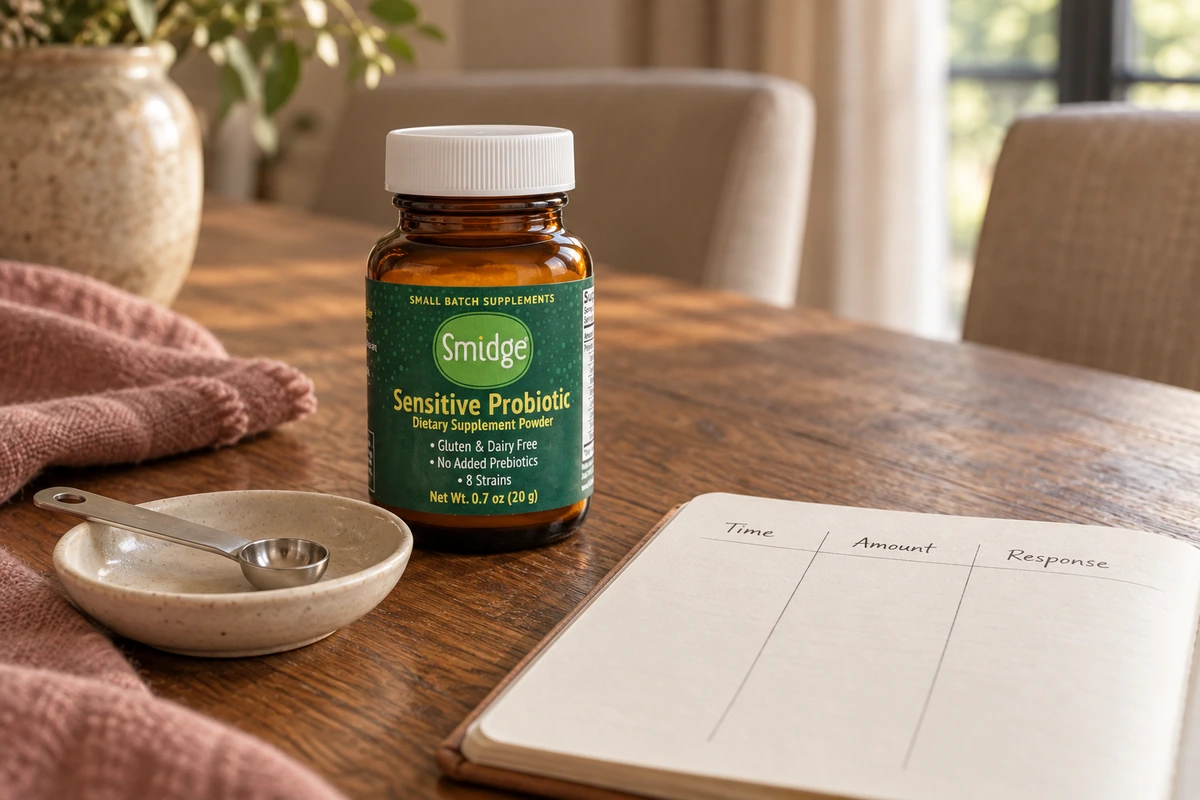
A reaction deserves attention to the actual product and amount, not just the word “probiotic.” The 2020 book introduces probiotic foods from Stage 1 and discusses probiotic supplements separately, with small starting amounts and gradual increases.[4] These are separate introductions: a spoonful of fermented-vegetable juice is not the same as a probiotic capsule. Record the exact organisms, added fibers, amount, and timing instead of assuming a stronger product is better.
For probiotic supplements, the book describes starting with a very small amount, observing the response, and allowing symptoms to settle before the next increase. The therapeutic amount is individual, with the manufacturer and practitioner helping to establish it.[4] Keep a separate record for each food or product so you can see which amount changed.
Constipation and Diarrhea Deserve Their Own Attention
Constipation can make the early weeks particularly uncomfortable, and it deserves attention as its own issue rather than being read only as a sign that some bigger process is happening. The 2020 book identifies chronic constipation as a reason some people may do better starting with Full GAPS.[4] A narrower range of food isn’t automatically the better choice, and staying in the earliest stages isn’t a goal by itself.
Constipation with persistent abdominal pain, vomiting, an inability to pass gas, or blood in the stool needs prompt medical attention.[7]
Diarrhea can lead to dehydration, especially in children. Seek prompt care when someone cannot keep fluids down or shows signs of dehydration, such as markedly reduced urination or unusual drowsiness.[8]
Rest and a Simpler Kitchen While You’re Adjusting to the GAPS Diet
Several of us needed more rest at the beginning. There was still food to cook, and learning a new way of feeding everyone took work. Having a familiar meal ready mattered on the days when nobody had much energy.
Keep the food prep as manageable as you can. Repeat meals that work, keep extra portions on hand, and ask for practical help wherever it’s available. A smaller rotation of reliable dishes is often more useful than trying every new recipe the moment a stage allows it.
My GAPS shop lists the Die-Off & Reaction Log for keeping food, product amounts, and symptoms together. GAPS SOS is the related course. Choose the support that fits the question you are working through; you do not need the whole catalog to begin.
Make room for actual sleep and ordinary care, too. Rest supports you through a hard stretch, but it isn’t a substitute for getting help with a severe or persistent symptom. Someone who’s unusually hard to wake, fainting, or growing confused needs urgent assessment, not a nap.
Baths, Binders, and Other Additions
Aalgo baths, other detox baths, filtered water, and supplements have all been part of our wider GAPS experience. During the worst eczema stretch in Stages 1 through 3, though, we stopped bathing the children. In our experience, their skin did better without the baths then. We brought baths back after those first six weeks.
Because several changes happened together, our account cannot isolate which measure caused which improvement. That is why the sequence belongs in the story.
Keep prescribed medication changes with the prescriber. Our decision to stop topical steroids abruptly is part of our history, not an instruction for another household.
Choose support based on what the person actually needs, with a clear purpose for each addition. A hard day doesn’t automatically call for a bigger supplement stack.
Keep a Short Timeline
Keep a short record of what changed and what happened afterward. The date, the food or product, the amount used, the symptoms, and the effect on eating, drinking, sleep, and ordinary activity are enough to start with.
If medicines changed, write that down too. In our case, we stopped topical steroids abruptly, and I interpret part of that period as topical steroid withdrawal. That detail stays with the account any time the story is told.
A short record keeps several overlapping changes from disappearing behind one convenient label.
Looking Back Without Simplifying It
I’m grateful for the changes our family experienced, and I also remember exactly how hard the beginning was. Both of those are true at once. I wouldn’t want someone reading only the outcome to assume every week felt encouraging or straightforward, because ours didn’t.
Our six weeks are our timeline, not a required stretch of suffering and not a forecast for your household. What’s actually useful to carry forward is honest observation, enough food, practical support, and a willingness to respond to what the person in front of you actually needs.
A word used to describe a hard experience should help the conversation along, not end it before anyone’s looked closely at what’s really going on.
Frequently Asked Questions
What Does “Die-Off” Mean on the GAPS Diet?
Campbell-McBride uses the term for symptoms she attributes to microbial die-off after a diet, probiotic, or antimicrobial change.[2] The 2020 book describes gradual introduction and allowing a reaction to settle before increasing a probiotic supplement again.[4]
How Long Does GAPS Die-Off Last?
The 2020 book describes a few days to a few weeks for a reaction, while building up a probiotic supplement may take weeks to months. Those are different timelines. Our difficult first six weeks describe our household, not a waiting period for someone whose symptoms need attention.[4]
Is GAPS Die-Off the Same as a Herxheimer Reaction?
The terms are often used together online, but the CDC’s Jarisch-Herxheimer description concerns an acute treatment reaction, not a diagnosis for symptoms after a dietary change.[3]
Should I Keep Going if I Feel Worse on GAPS?
Describe the actual symptom, severity, and timing. Check food and fluid intake, new products, and medication changes. Use emergency care for the emergency signs above, route medication-related symptoms to the prescriber, and pause a suspect food or product rather than pushing the amount higher.
If none of the urgent signs above apply, write down what was eaten and drunk today, the specific symptom, when it started, and any new food, product, or medication from the last few days. Use that short note to decide which introduction to slow, pause, or separate from the others.
References
- NHS. Anaphylaxis: symptoms and emergency response.
- Campbell-McBride, Natasha. Official GAPS FAQs. “Die-off reaction,” questions 1–4 and 7.
- Centers for Disease Control and Prevention. STI Treatment Guidelines: Syphilis. “Jarisch-Herxheimer Reaction.”
- Campbell-McBride, Natasha. Gut and Physiology Syndrome. 2020. “GAPS Introduction Diet,” starting considerations and Stage 1; “Supplementation for People with GAPS,” probiotic introduction.
- Campbell-McBride, Natasha. Food Allergy. Dangerous anaphylactic-type allergy exception.
- NIAID-Sponsored Expert Panel. Guidelines for the Diagnosis and Management of Food Allergy in the United States. Guidelines 8 and 11, patch testing and oral food challenges.
- National Institute of Diabetes and Digestive and Kidney Diseases. Symptoms and Causes of Constipation. When to seek medical care.
- National Institute of Diabetes and Digestive and Kidney Diseases. Symptoms and Causes of Diarrhea. Dehydration and when to seek care.

Leave a comment