

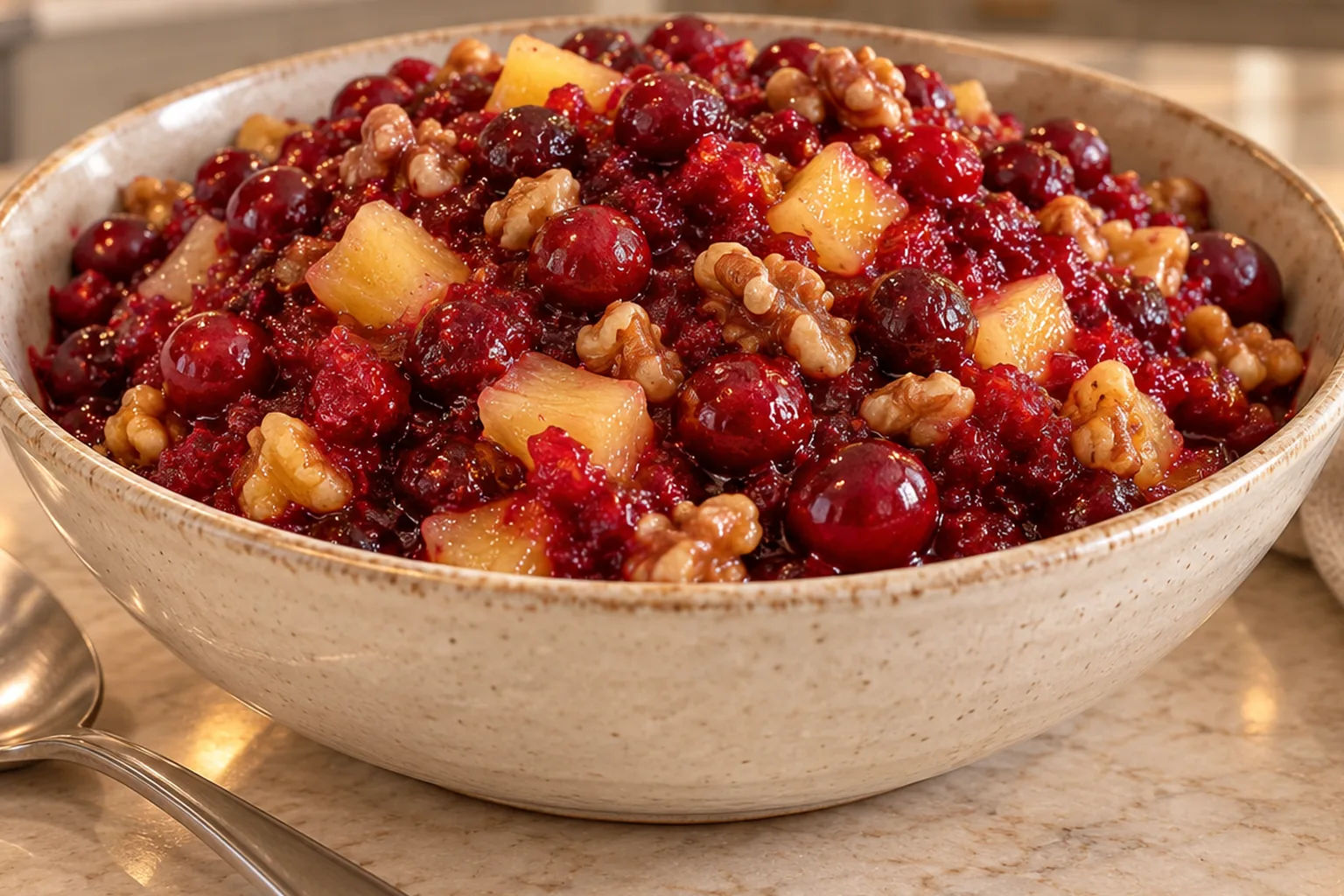
This cranberry pineapple sauce keeps the tart snap of fresh cranberries but softens it with the juice and fruit from one sweet, ripe pineapple. Chopped prepared walnuts, fresh lime juice, and a small amount of ground cloves go in after the cranberry base leaves the heat, so the finished bowl has several clear textures instead of becoming one smooth red paste.
The recipe makes five cups and needs a full 24 hours in the refrigerator before serving. That timing is useful for a holiday table because the saucepan work is finished the day before. It also means the final texture should be judged after chilling, when the sauce has thickened and the pineapple, cranberry, lime, clove, and walnut flavors have had time to settle together.
In our household of eight, a five-cup condiment is a practical family-sized batch rather than a decorative spoonful. I want every serving to carry some cranberry, pineapple, and walnut, so I use a wide bowl and stir from the bottom before bringing it to the table. The result is bright, tart, lightly sweet, and substantial enough to sit beside roast meat without disappearing into the plate.
Why Sweet, Ripe Pineapple Matters
The pineapple provides both fruit and most of the cooking liquid. After the rind and core are removed, the pieces are crushed, drained, and measured indirectly through their juice. That juice is combined with enough filtered water to make exactly two cups before it reaches the cranberries.
Choose a pineapple that smells sweet at the base and has golden flesh rather than a pale, hard center. The original recipe notes that an underripe, unsweet pineapple changes the whole batch and demands more sweetener. For this locked formula, begin with genuinely ripe fruit instead of trying to repair a sharp pineapple with an unmeasured amount of honey.
The pineapple pieces should remain moist and irregular after draining. They are not squeezed dry. You need to collect the free juice for the saucepan while keeping enough moisture in the crushed fruit for it to fold into the hot cranberry base without feeling stringy.
Where This Sauce Fits On Full GAPS
This is a Full GAPS condiment after fresh cranberries, fresh pineapple, raw honey, properly prepared walnuts, fresh lime juice, and pure ground cloves are established. It is not an Introduction Diet recipe.
Use raw honey as the measured sweetener and pure cloves with no sugar, starch, anti-caking blend, or flavoring. The walnuts should be properly soaked, sprouted, or fermented as appropriate, then fully dried before they are chopped and measured. Fully dried nuts keep their distinct bite after the sauce rests overnight.
This is a cooked cranberry sauce. It is separate from fermented cranberry sauces, cranberry chutneys, jellied cranberry molds, and cranberry-kombucha gelatin. Each of those needs its own measured formula, timing, stage placement, photos, and recipe card.
Crush And Drain The Pineapple
Trim away the rind, remove every hard piece of core, and cut the pineapple flesh into manageable chunks. Crush the pieces in a large bowl with a potato masher. You are looking for ragged small pieces that release juice, not a smooth puree.
Transfer the crushed pineapple to a fine-mesh stainless-steel sieve set securely over a bowl. Let the juice drip through. Measure the collected juice, then add only enough filtered water to reach two cups total. Keep the drained pineapple close by; it is folded into the sauce after the cranberries have cooked.
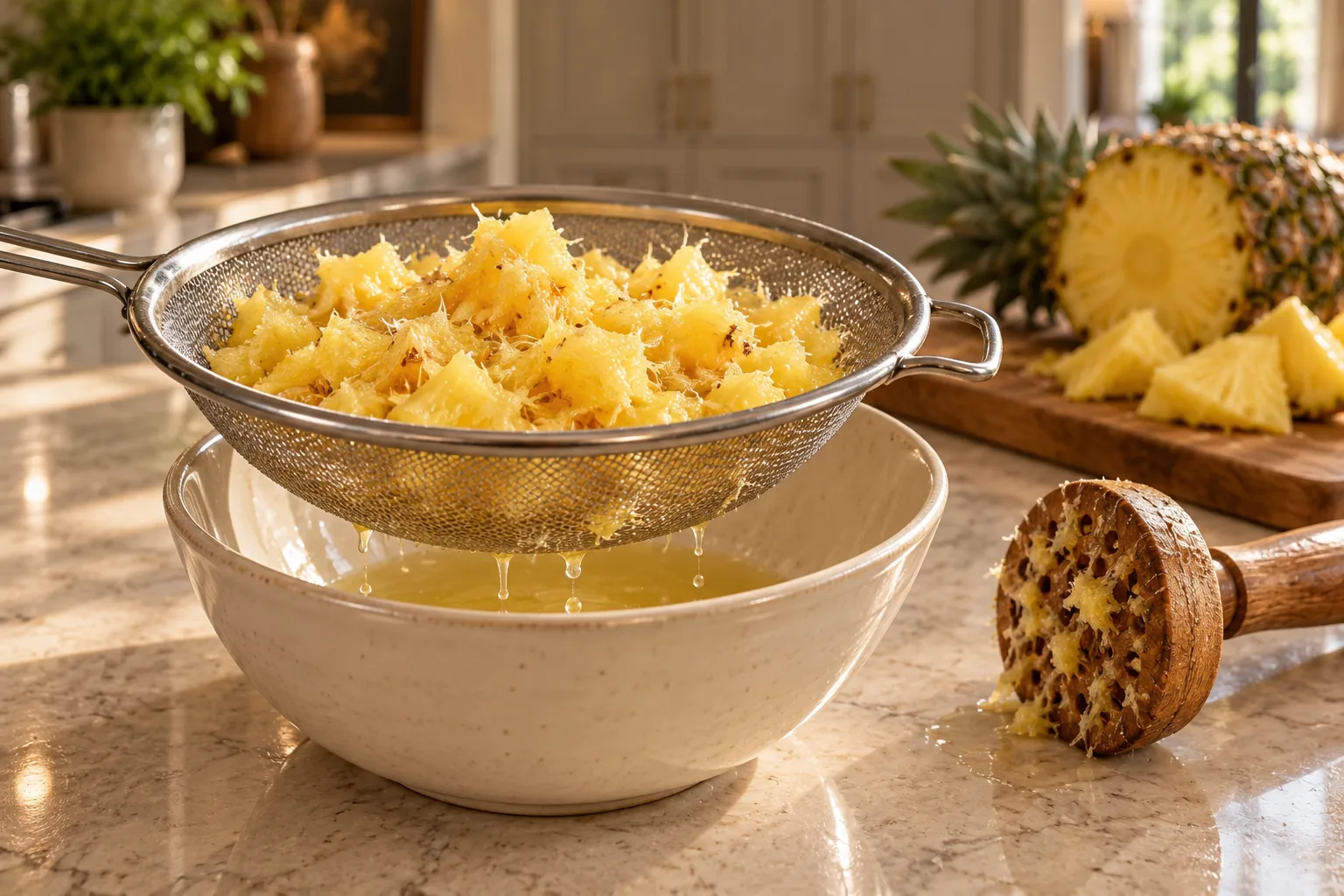
The liquid should smell clearly of fresh pineapple and look pale gold. If large hard pieces remain in the sieve, crush them again rather than leaving oversized chunks that will not distribute through the finished sauce.
Sort The Cranberries Before Cooking
Rinse the fresh cranberries under cool water and pick through them by hand. Keep firm berries, including berries with ordinary differences in color. Discard any that feel collapsed, leaking, or unusually mushy before they enter the saucepan.
Fresh cranberries begin glossy and firm. As they heat, their skins split with small pops and the pale interiors turn red. That physical change is the main cooking cue, so it helps to begin with sound whole fruit rather than a mixture of firm and already-soft berries.
Cook Until Most Berries Pop
Combine the 24 ounces of cranberries, the two cups of pineapple juice and filtered water, and the half cup of raw honey in a large stainless-steel saucepan. Stir over medium heat and bring the mixture to a boil.
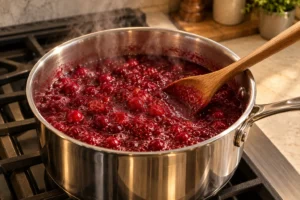
Continue boiling for about 15 minutes, stirring often enough to move berries from the edge toward the center. Most of the berries should pop. Some whole berries can remain, but the free liquid should thicken and turn deep ruby red.
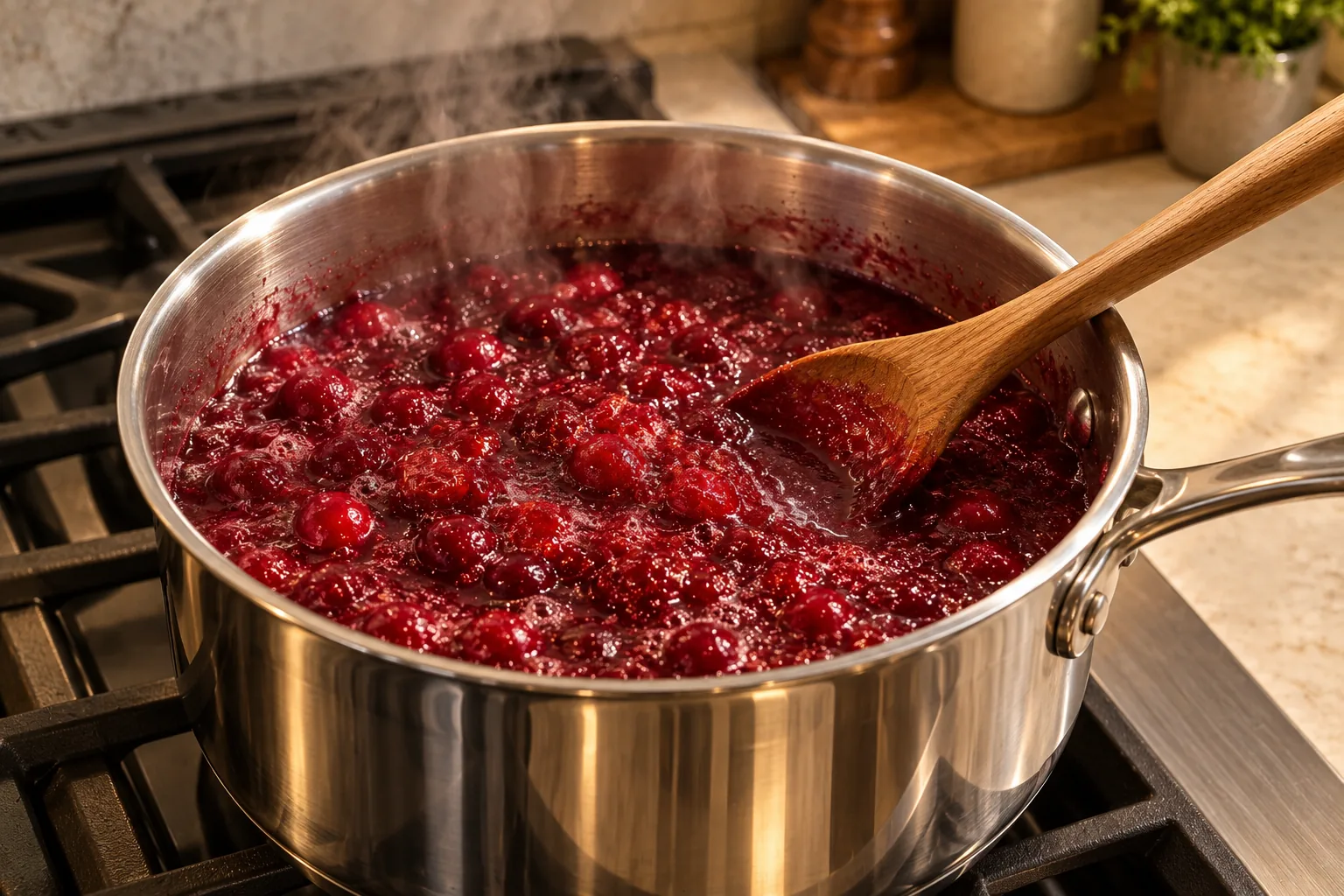
Drag the wooden spoon across the bottom of the pan. The path should remain visible for a moment before the sauce slowly closes over it. If it floods back immediately like thin juice, keep cooking and check again. If it stands stiff and dry around the spoon, remove it from the heat promptly.
Fold In The Fruit, Walnuts, Lime, And Cloves
Remove the saucepan from the heat before adding the drained pineapple, one and one-quarter cups chopped prepared walnuts, one tablespoon fresh lime juice, and one-quarter teaspoon pure ground cloves. Stir from the bottom until the golden pineapple pieces and walnut pieces are distributed through the red cranberry base.
The hot sauce should smell tart and fruity first, with lime and clove underneath. The clove is meant to round out the cranberry and pineapple, not perfume the entire kitchen. Measure it level and do not add a second unmeasured shake.
At this point the walnuts should still feel distinct, and the pineapple should be visible as small golden pieces. The sauce will be softer while warm than it will be after the required refrigerator rest.
Cool, Then Refrigerate For 24 Hours
Let the sauce cool to room temperature, then transfer it to a covered glass container and refrigerate for 24 hours before serving. Do not seal a steaming-hot batch in a small container. Use a broad enough vessel that the heat can leave evenly while it cools.
After the overnight rest, the sauce should be thick and spoonable. It should mound gently instead of running across the plate. Stir through the full depth of the container before serving so settled walnuts and pineapple return to every spoonful.
What The Finished Sauce Tastes Like
The first flavor is cranberry: tart, bright, and unmistakable. Sweet pineapple and raw honey round the edges without turning it into candy. Lime keeps the fruit lively, while the measured clove adds a warm finish rather than a heavy spice flavor.
The texture is intentionally rustic. Burst cranberry flesh provides the thick base, a few whole berries give soft pops, pineapple pieces stay juicy, and the fully dried prepared walnuts keep a gentle crunch. It should not resemble canned jellied sauce or a completely pureed chutney.
Serving And Storage
Serve the sauce chilled or let the serving bowl lose some of its refrigerator chill while the rest of the meal is arranged. It works beside roast turkey, chicken, pork, or beef, and it can add a tart fruit note to a simple Full GAPS plate.
Keep the remaining sauce covered in the refrigerator. The formula does not call for freezing or canning, and it does not provide a tested shelf-stable process. Make it as a refrigerated fresh condiment and use clean utensils every time you serve it.
For another pineapple dish with a different fresh texture, see Carrot Raisin Pineapple Salad for Full GAPS. The Loaded Apple Salad with Prepared Walnuts is another practical place to use properly prepared walnuts. For a distinctly different cranberry set, see Cranberry Kombucha Gelatin Squares.
Keep Full GAPS Ingredient Swaps Easy To Find
The upcoming GAPS Food Swap Guide is the most useful WFLI companion for this recipe because it keeps legal sweeteners, pure spices, properly prepared nuts, and common packaged-food replacements in one place. It will be available through the WFLI shop.
Recommended Equipment
Use a sturdy cutting board, chef’s knife, large ceramic or glass bowl, wooden potato masher, fine-mesh stainless-steel sieve, liquid measuring cup, large stainless-steel saucepan, wooden spoon, measuring cups and spoons, and a covered glass storage container large enough for five cups.
A wide saucepan gives the cranberries room to move and makes the spoon-path test easier to see. The sieve should sit securely over the bowl without being held in place, and the masher should rest flat on the counter when it is not in use.
Frequently Asked Questions
Can I Use Canned Pineapple?
No. The formula uses one fresh pineapple, and its freshly released juice becomes the measured cooking liquid. Canned fruit would change both the liquid and the ingredient profile.
Can I Use Frozen Cranberries?
This exact formula specifies fresh cranberries. Keep the fresh-fruit route here rather than quietly changing the moisture and cooking behavior inside the same card.
What If My Pineapple Is Not Sweet?
Wait for a sweeter ripe pineapple. The fruit supplies much of the liquid and flavor, so an underripe pineapple cannot be corrected reliably with an invented honey amount.
Why Are The Walnuts Added After Cooking?
Adding them off the heat preserves their distinct bite and keeps the sauce from taking on a long-cooked walnut texture. Chop them before measuring so they distribute through all five cups.
Can I Serve The Sauce The Same Day?
Plan on the full 24-hour refrigerator rest. The chilled texture and combined flavor are part of the measured method, not an optional make-ahead suggestion.
Can I Blend The Sauce Smooth?
No. This recipe is meant to retain burst cranberries, visible pineapple, and chopped walnuts. A smooth cranberry puree or jellied sauce is a different formula.
Can I Leave Out The Walnuts?
The walnuts are part of the named formula and its five-cup texture. A walnut-free cranberry-pineapple sauce should be treated as a separately measured recipe rather than hidden as an untested variation here.
Cranberry Pineapple Sauce Recipe
Cranberry Pineapple Sauce with Walnuts for Full GAPS
Ingredients
Equipment
Method
- Trim the pineapple rind, remove the hard core, and cut the flesh into chunks.
- Place the pineapple chunks in a large bowl and crush them with a wooden potato masher until ragged small pieces release their juice.
- Set a fine-mesh stainless-steel sieve over a bowl. Drain the crushed pineapple. Measure the collected juice and add filtered water until the combined liquid equals exactly 2 cups. Reserve the drained pineapple.
- Rinse and sort the cranberries, discarding any that are collapsed, leaking, or unusually mushy.
- Combine the cranberries, the 2 cups pineapple-juice mixture, and raw honey in a large stainless-steel saucepan. Stir over medium heat and bring to a boil.
- Boil for about 15 minutes, stirring often, until most cranberries have popped and the thick ruby sauce leaves a brief path behind the spoon.
- Remove from the heat. Fold in the drained crushed pineapple, chopped prepared walnuts, lime juice, and ground cloves until evenly distributed.
- Cool to room temperature, transfer to a covered glass container, and refrigerate for 24 hours before serving. Stir from the bottom before spooning into the serving bowl.
Notes
Tried this recipe?
Let us know how it was!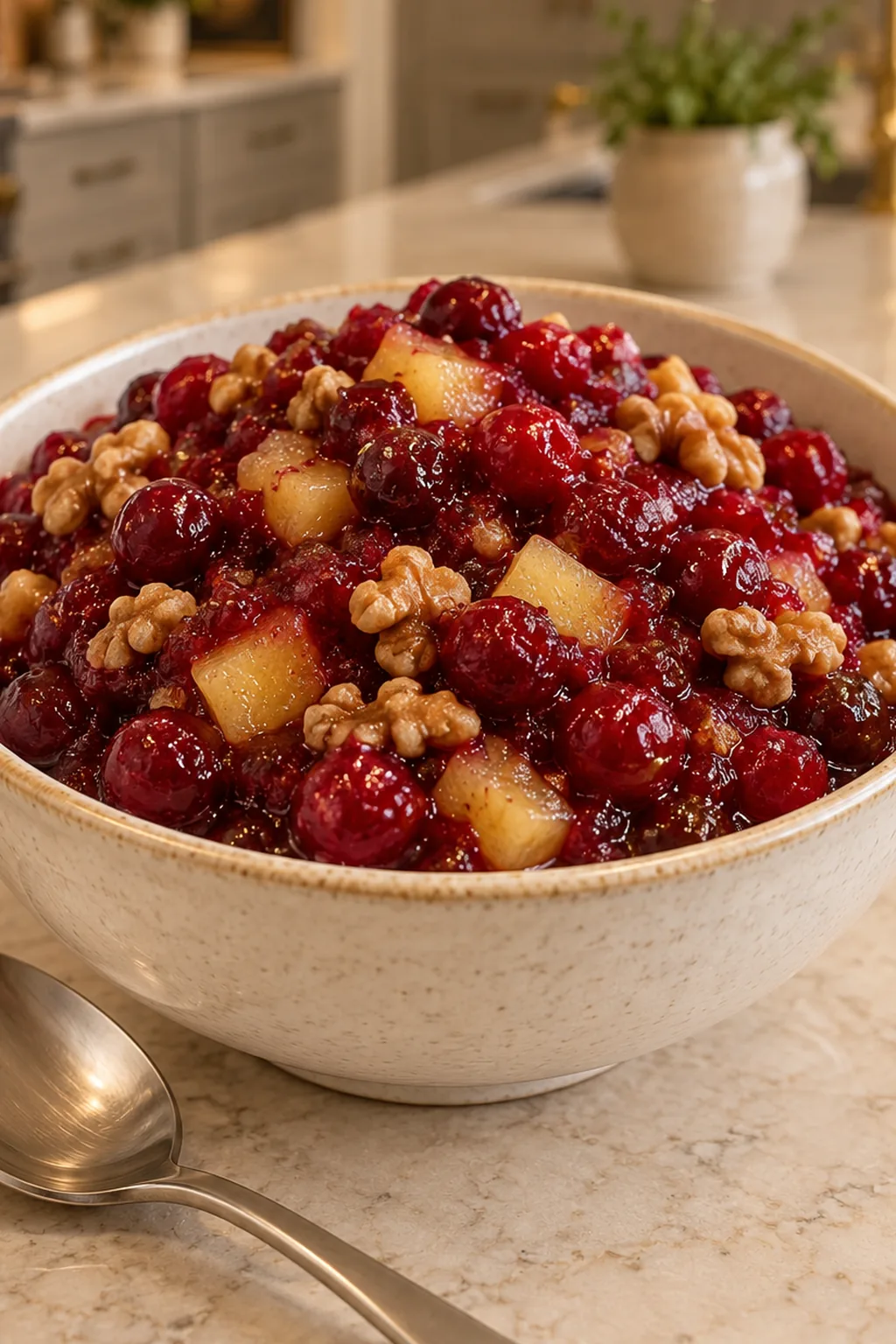

Leave a comment