

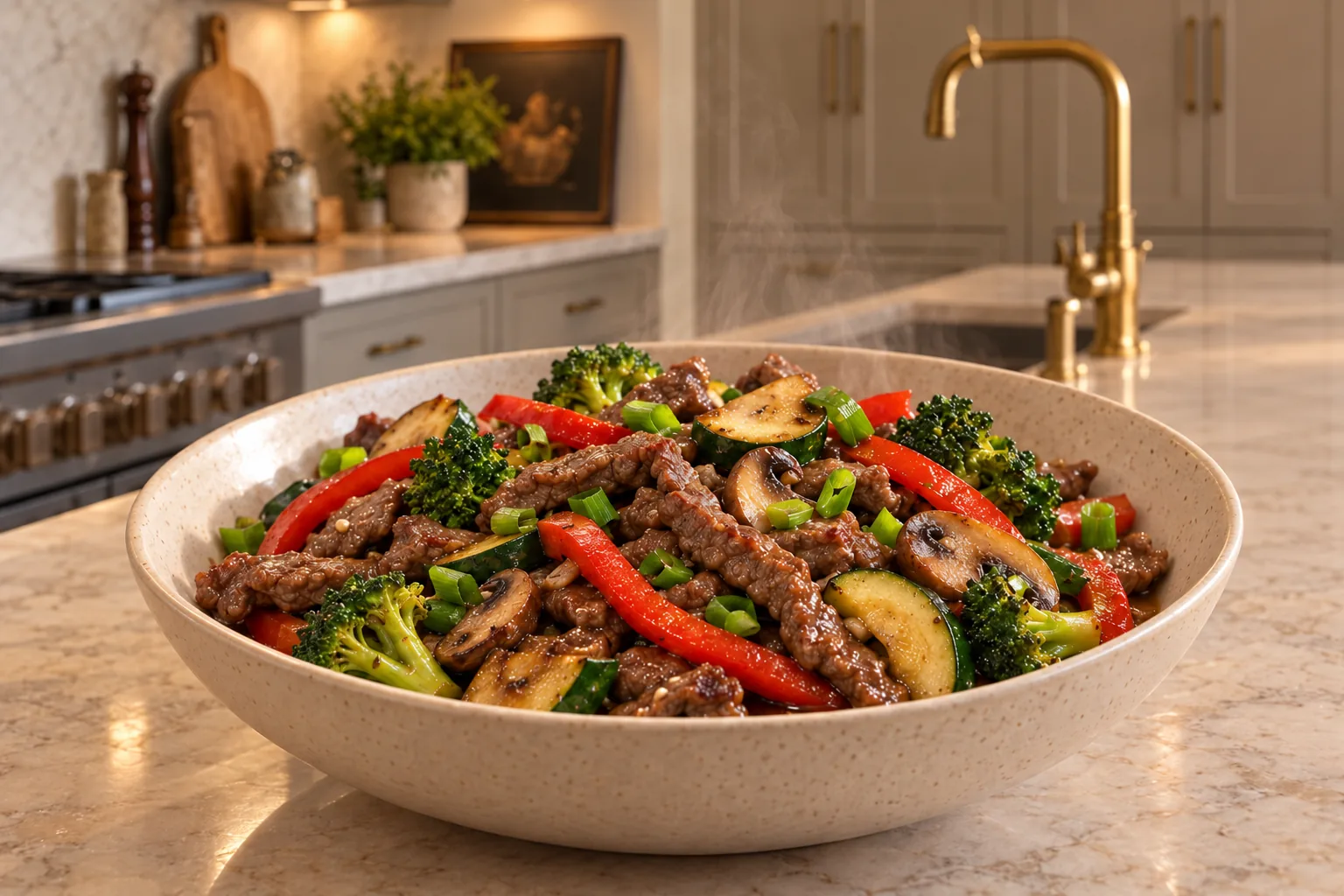
This Full GAPS beef stir fry is fast, savory, and built around a real homemade sauce instead of a bottle. Thin strips of skirt steak or sirloin cook with red bell pepper and your choice of vegetables, then everything is tossed with Homemade GAPS Teriyaki Sauce after the pan leaves the heat.
The method keeps the vegetables bright and lightly charred, the beef tender, and the cold-pressed sesame oil in the sauce out of the high-heat cooking step. The finished sauce is thin rather than starch-thickened, so it lightly coats the beef and settles into every piece of broccoli, mushroom, or zucchini.
As a working, homeschooling mom of six, I need weeknight dinners that can absorb whatever vegetables are already in the refrigerator without turning into a completely different recipe. This one does that well. The beef, salt, cooking fat, green onions, and measured half cup of sauce stay fixed; the vegetable selection can change with the week.
Why This Stir Fry Works
The pan stays hot because the vegetables cook in two batches before the beef goes in. If everything is piled into the skillet at once, the released moisture cools the pan and the vegetables steam. Two uncrowded rounds give the vegetables browned edges while their color and shape remain clear.
Skirt steak is especially useful here because it has strong beef flavor and cooks quickly when it is sliced across the grain. Top sirloin also works. The important part is making thin, even slices so the meat finishes in the same short window.
The separate teriyaki sauce is already complete before the stir fry begins. Use it freshly blended or from the cultured overnight branch. Measure one-half cup for this recipe, then keep a little extra nearby if your vegetable combination needs more.
Where It Fits On GAPS
This is a Full GAPS meal for the point when the selected vegetables, raw honey, cider vinegar, coconut aminos, sesame, ginger, turmeric, garlic, green onions, and chosen cooking fat have already been introduced and tolerated. It is not an Introduction Diet recipe.
The stir fry itself uses fresh beef, permitted vegetables, sea salt, and a stable cooking fat. Use natural non-hydrogenated coconut oil, homemade ghee, or rendered animal fat in the hot skillet.
The homemade sauce contains cold-pressed sesame oil, so it does not go into the pan while the burner is on. Finish cooking the beef and vegetables first, move the skillet off the heat, let the hard sizzling stop, and then add the sauce.
Make The Teriyaki Sauce First
Prepare the separate Homemade GAPS Teriyaki Sauce before you heat the skillet. The sauce recipe makes about twelve fluid ounces. This stir fry uses one-half cup, so there will be some left for another meal.
The fresh branch takes about ten minutes in the Ninja BN801. The cultured branch uses the same base plus one measured tablespoon of homemade whey or live sauerkraut juice and an overnight room-temperature rest. Either branch works here.
Measure one-half cup into a small measuring cup so it is ready for the finish. Refrigerate the remaining sauce in its own jar for another meal.
Slice The Beef Across The Grain
If the skirt steak is rolled like a loose spiral, unroll it and cut the long piece into two manageable sections. Lay each section flat. Look for the long muscle fibers running in one direction, then slice across those lines rather than parallel to them.
Keep the slices about one-quarter inch thick or thinner. Short, curved strips are normal for skirt steak. Sirloin can be sliced into straight thin strips. Try to keep the pieces close in thickness so one piece does not dry out while a thicker one is still pink in the center.
Set the sliced beef aside while you prepare the vegetables. Keep the green onion whites separate from the green tops: the whites cook with the vegetables, while the greens stay fresh for the finish.
Choose And Prepare The Vegetables
The fixed vegetable is one sliced red bell pepper. Add your choice of bok choy or another cabbage, broccoli, mushrooms, zucchini, yellow onion, or asparagus. If you are leaving out nightshades, omit the bell pepper and use more of the other vegetables.
Cut the vegetables into pieces that can cook quickly. Use thin pepper and onion strips, small broccoli florets, sliced mushrooms, half-moons of zucchini, or short asparagus lengths. Large uneven pieces will not reach the same endpoint together.
Before the skillet gets hot, divide the vegetables into two batches and divide the salt: one-quarter teaspoon for each vegetable batch and the remaining one-half teaspoon for the beef. Stir fries move quickly once cooking starts, so this little bit of setup prevents guessing over a hot pan.
Sear The Vegetables In Two Batches
Set the empty Le Creuset Signature 10.25-inch Artichaut skillet over high heat. Once it is hot, add the two tablespoons of coconut oil, ghee, or rendered animal fat. The fat should loosen and move easily across the black enamel cooking surface.
Add the first half of the vegetables, including the red bell pepper and green onion whites, with one-quarter teaspoon sea salt. Spread them out instead of piling them in the center. Cook for eight to ten minutes, turning them as needed.
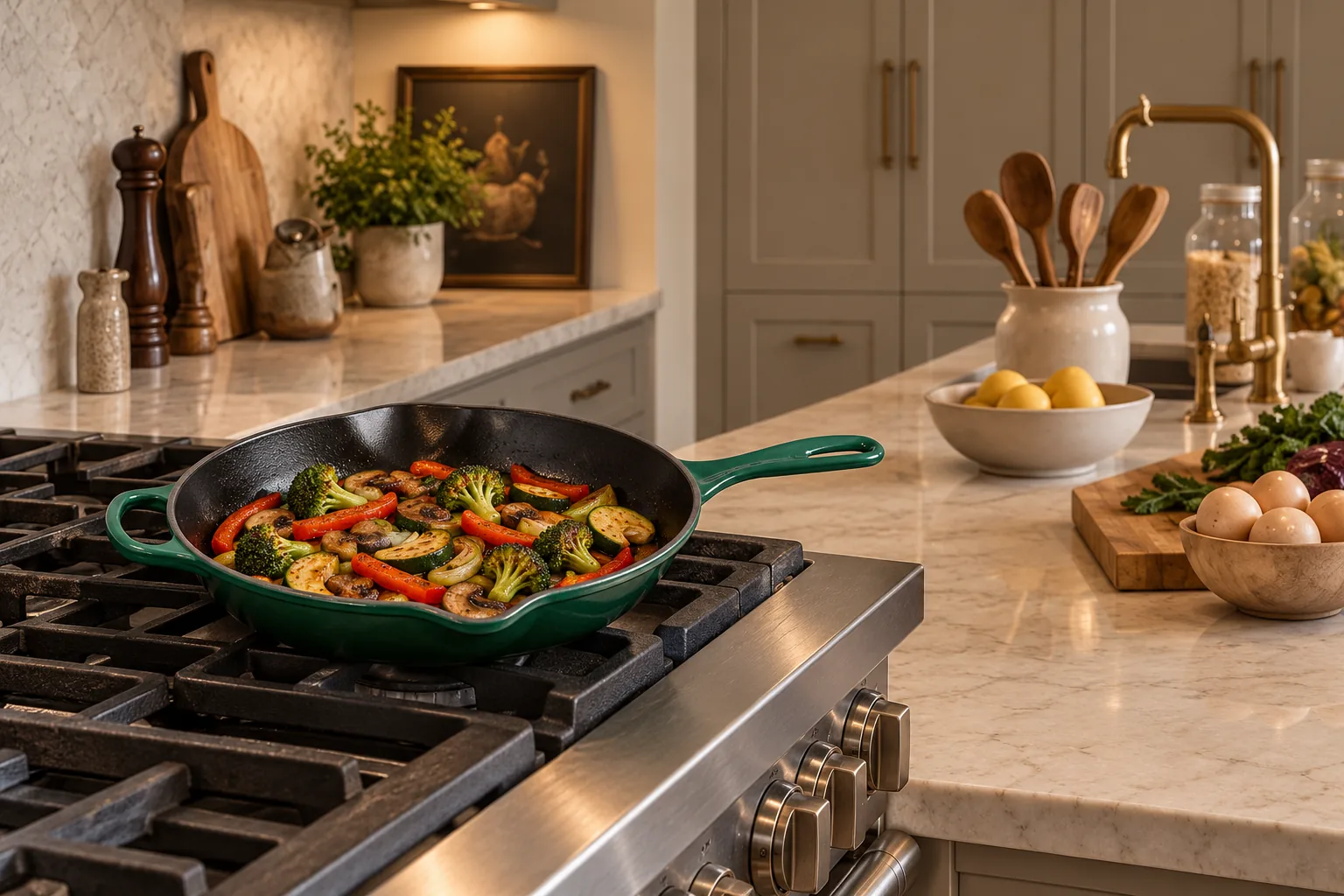
The vegetables are ready to come out when they are wilted and browned in spots but still hold their shape and color. A pepper strip should bend easily without collapsing. Broccoli should be brighter and tender at the edges. If the browned spots race toward black before the centers soften, reduce the heat to medium-high.
Lift the first batch out with a slotted spoon. Add the second vegetable batch with another one-quarter teaspoon salt and repeat. Keep the first batch nearby so it can return as soon as the beef is done.
Cook The Beef Quickly
When the second vegetable batch comes out, add the sliced beef and the remaining one-half teaspoon sea salt to the hot skillet. Toss and turn the strips so they make contact with the pan instead of sitting in a mound.
Cook for five to eight minutes, until most of the visible pink is gone. The meat should have browned edges and released juices, but the thin strips should still bend rather than look stiff and dry.
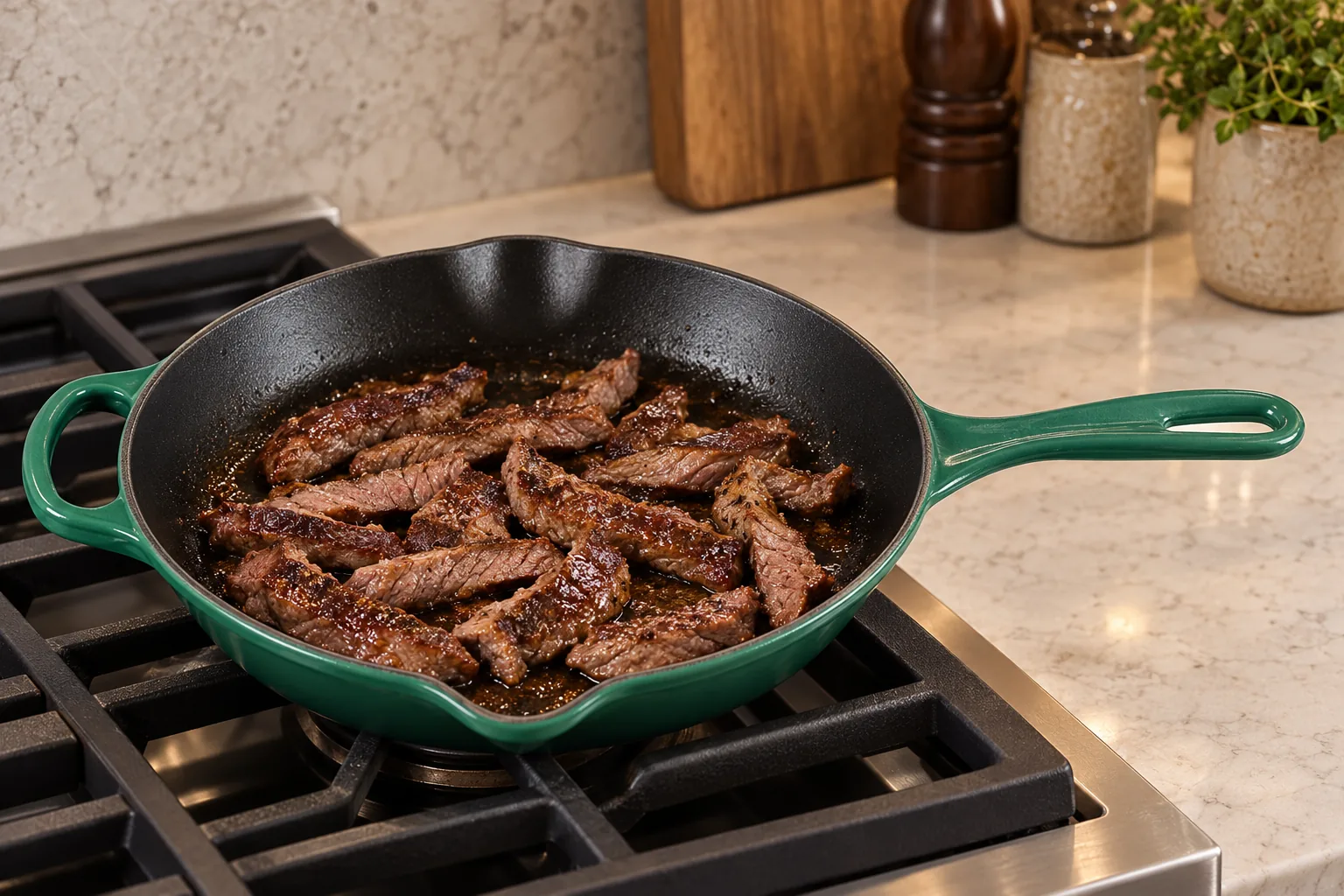
Return both vegetable batches to the skillet and toss just long enough to distribute them through the beef. Do not pour in the teriyaki sauce yet.
Finish With The Sauce Off The Heat
Move the skillet completely off the burner and wait until the hard sizzling stops. Pour in one-half cup finished teriyaki sauce and toss until the beef and vegetables have a light, even coating.
The sauce will stay loose and pourable. That is intentional. It contains no starch or gum, and it does not need to simmer into a glaze. Taste after tossing, then add more finished sauce if the amount or type of vegetables needs it.
Scatter the reserved green onion tops over the finished stir fry. Their fresh onion aroma and crisp texture give the hot pan a clean finish without another cooking step.
What The Finished Stir Fry Should Look And Taste Like
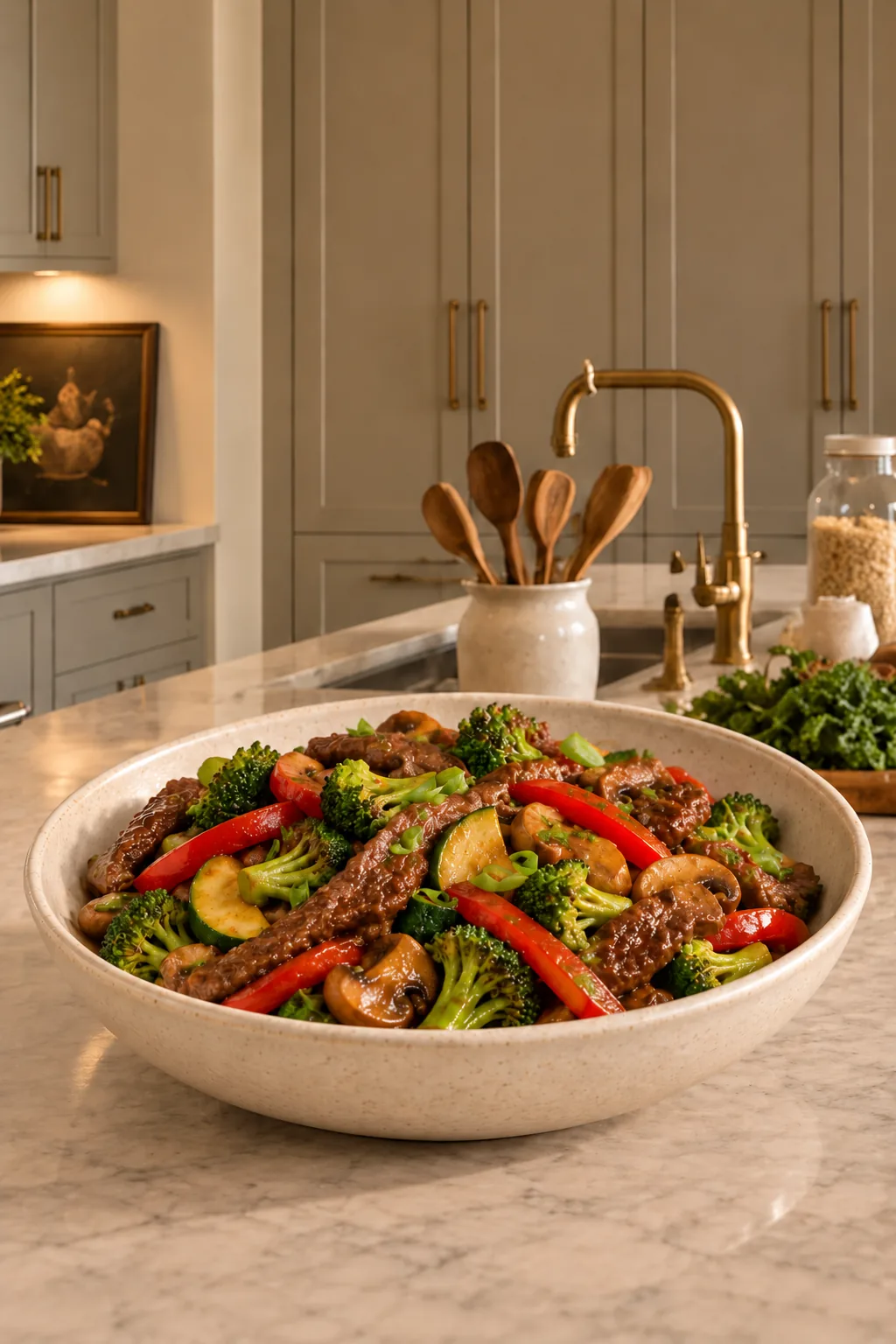
The beef should be browned at the edges and tender enough to bite cleanly. The vegetables should look cooked, not raw, with visible seared spots and enough structure to stay distinct in the bowl.
The flavor is savory, gently sweet, tangy, and aromatic with ginger, turmeric, garlic, and sesame. It should not taste like a thick commercial glaze. The sauce is meant to season the meat and vegetables while leaving a little liquid at the bottom for a side dish to catch.
Serving Ideas
Spoon the stir fry over Full GAPS Steamed Cauliflower Rice for a simple bowl. The small cauliflower pieces catch the extra sauce without adding a grain.
For a cooler side, serve it with GAPS Japanese Cucumber Salad with Honey Ginger Dressing. Keep the portions separate on the plate so the cucumber stays crisp beside the hot beef.
The stir fry also works on its own when you use a generous vegetable mix. If different family members avoid different vegetables, cook their permitted selection as one of the two batches instead of changing the beef or sauce formula.
Storage And Reheating
Cool leftovers promptly and refrigerate them in a covered glass container. Keep extra teriyaki sauce in its own jar rather than pouring it over the stored stir fry; that lets you reheat the beef and vegetables without heating the cold-pressed oil in the sauce again.
Warm the stir fry gently in a skillet or covered oven-safe dish just until hot. Remove it from the heat, then add a small spoonful of cold sauce if the reheated portion needs more moisture or flavor.
For make-ahead work, prepare the sauce and slice the vegetables in advance, then cook the beef and vegetables when you are ready to eat.
Recommended Equipment
- Le Creuset Signature 10.25-inch Skillet in Artichaut
- Wooden cutting board
- Sharp stainless chef’s knife
- Two mixing bowls for the vegetable batches
- One bowl for the sliced beef
- Slotted spoon
- Stainless or wooden tongs
- One-half-cup measure and measuring spoons
The wide enameled skillet gives the vegetables room to brown, and the black interior makes the color and char easy to see. Keep the handle and helper handle supported and clear of the counter edge while you work.
Frequently Asked Questions
What Is The Best Beef For Stir Fry?
Skirt steak and top sirloin both work well. Skirt steak has strong flavor and is usually the more economical choice. Slice either cut thinly across the grain.
Why Do The Vegetables Cook In Two Batches?
Two batches keep the skillet hot enough to sear. One crowded batch releases too much moisture at once and steams instead of browning.
Can I Leave Out The Red Bell Pepper?
Yes. Leave it out for a nightshade-free version and use more of the other vegetable options listed above.
Can I Use Soy Sauce Or Tamari?
No. Use the separate Homemade GAPS Teriyaki Sauce, which uses a compatible coconut aminos product and keeps the complete sauce formula in its own post.
Can I Pour The Sauce In While The Pan Is Still On The Burner?
No. Move the skillet off the burner and wait for hard sizzling to stop first. The sauce contains cold-pressed sesame oil that stays out of the high-heat cooking step.
Why Is The Sauce Thin?
The Full GAPS sauce has no starch or gum. It lightly coats the food rather than forming a thick commercial-style glaze.
How Much Teriyaki Sauce Should I Use?
Start with one-half cup for the full six-serving recipe. Taste after tossing and add more finished sauce if you want a saucier result.
Can I Use The Fresh Sauce Instead Of The Cultured Version?
Yes. Both sauce branches use the same base. Use either one after it is fully prepared according to the separate sauce recipe.
What Can I Serve Instead Of Rice?
Use Full GAPS Steamed Cauliflower Rice, another cooked permitted vegetable, or a Full GAPS salad. Rice is not part of this recipe.
Can I Make The Whole Stir Fry Ahead?
You can prepare the sauce and cut the vegetables ahead. The beef and vegetables have their best texture when cooked close to serving.
Full GAPS Beef Stir Fry Recipe
Full GAPS Beef Stir Fry with Homemade Teriyaki Sauce
Ingredients
Equipment
Method
- Slice the steak. If skirt steak is rolled, unroll it and cut the long piece into two sections. Lay each section flat and slice across the grain into strips about 1/4 inch thick or thinner. Set the beef aside.
- Set the empty Le Creuset Artichaut skillet over high heat. When it is hot, add the scaled coconut oil, homemade ghee, or rendered animal fat.
- Add half the vegetables, including the red bell pepper and scaled green-onion whites, with one-quarter of the 1x salt measure. Cook over high heat for 8 to 10 minutes, turning as needed, until wilted and browned in spots but still bright and distinct. Reduce to medium-high if they start to scorch.
- Lift the first vegetable batch out with a slotted spoon. Add the remaining vegetables with another quarter of the 1x salt measure and cook them the same way, then lift them out.
- Add the sliced steak and the remaining half of the 1x salt measure. Cook over high heat, tossing so it cooks evenly, for 5 to 8 minutes, until most visible pink is gone and the strips have browned edges but remain flexible.
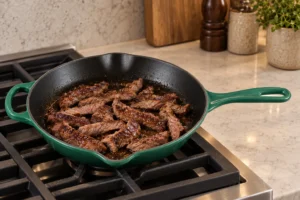
- Return both vegetable batches to the skillet and toss just long enough to distribute them. Move the skillet completely off the burner and wait until the hard sizzling stops.
- Pour in the scaled finished teriyaki sauce and toss until the beef and vegetables have a light, even coating. Add more finished sauce to taste. Top with the reserved green-onion greens and serve.
Notes
Tried this recipe?
Let us know how it was!Put A Full GAPS Week On Paper
The planned Two-Week Full GAPS Meal Plan brings breakfasts, lunches, dinners, snacks, and shopping lists into one usable schedule. Find current resources and upcoming releases in the WFLI shop.

Leave a comment