

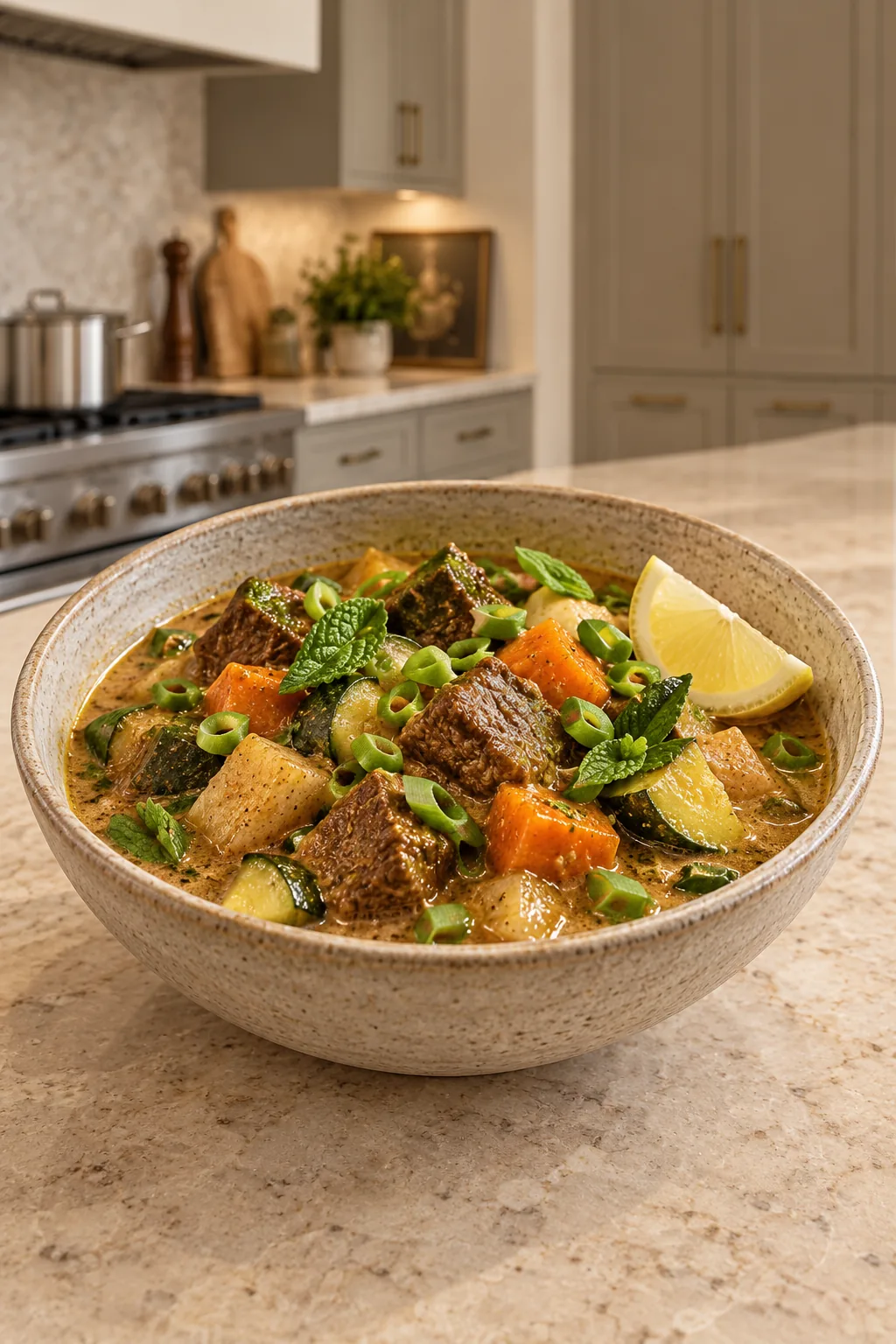
This GAPS beef curry stew is the kind of large, practical dinner that gives you tender meat, soft vegetables, and a bright finish from one pressure-cooker batch. Fresh ginger cooks with four pounds of beef, carrots, turnips, and zucchini. Homemade coconut cream and pure tamarind go in only after the bubbling stops, so the broth stays creamy and the tamarind keeps its sharp, citrusy edge.
The finished stew should be spoon-tender rather than shredded. The carrots and turnips will be very soft, the zucchini will nearly melt into the broth, and the liquid will be creamy but pourable because this GAPS version uses no arrowroot, xanthan gum, or other starch thickener.
A pot that can feed up to ten is useful in our house. Homeschooling six children and working around second shift means dinner often needs to cook while I am doing something else. The long natural release is part of the plan here: it finishes tenderizing the beef without another round of hands-on work.
This is also a useful recipe when different people want slightly different bowls. Keep the measured stew mild and fragrant, then put the mint and lemon on the table. One person can add more lemon, another can take more broth, and someone who prefers fewer vegetables can still receive a substantial serving of beef without changing the whole pot.
Why This Is Later Full GAPS
The measured formula uses fresh beef, filtered water, natural sea salt, permitted vegetables, fresh ginger, homemade coconut cream, pure tamarind, green onion tops, mint, and lemon. It leaves out the original arrowroot and xanthan routes. Arrowroot is a starch, and xanthan gum is not part of this GAPS version.
Tamarind places the stew later in Full GAPS, after major digestive problems have settled. It may not suit someone prone to loose stools. Use pure, unsweetened tamarind paste rather than a bottled curry or tamarind sauce containing sugar, starch, gums, or seasoning blends.
The dairy-free photographed route uses homemade cream made from fresh coconut. If properly cultured homemade sour cream has already been introduced and tolerated, it may replace the coconut cream in the same one-and-one-half-cup measure.
Choose Four Cups of GAPS Vegetables
The card keeps the source’s four-cup vegetable slot, but every choice must fit GAPS. Use any combination of bok choy, carrots, pumpkin, winter squash, spinach, bell peppers, eggplant, tomatoes, turnips, or daikon radish. Cut sturdy vegetables into bite-size chunks so the pressure cooker softens them evenly.
The photographed batch uses two cups of carrots and two cups of turnips. That gives the finished bowl a warm orange-and-cream color and keeps the ingredient state exact across the article and photographs. Two additional zucchini are measured separately because they soften enough to give the broth body.
Parsnips, sweet potatoes, and yams do not belong in this GAPS version. When using tender greens such as spinach or bok choy, expect them to disappear into the broth more than carrots, turnips, pumpkin, or winter squash.
If you change the vegetable combination, keep the total at four cups. Do not add four cups of every vegetable on the list. Holding that total steady protects the water-to-food ratio, prevents the insert from becoming overcrowded, and keeps the final yield close to the tested batch.
Layer the Pressure Cooker
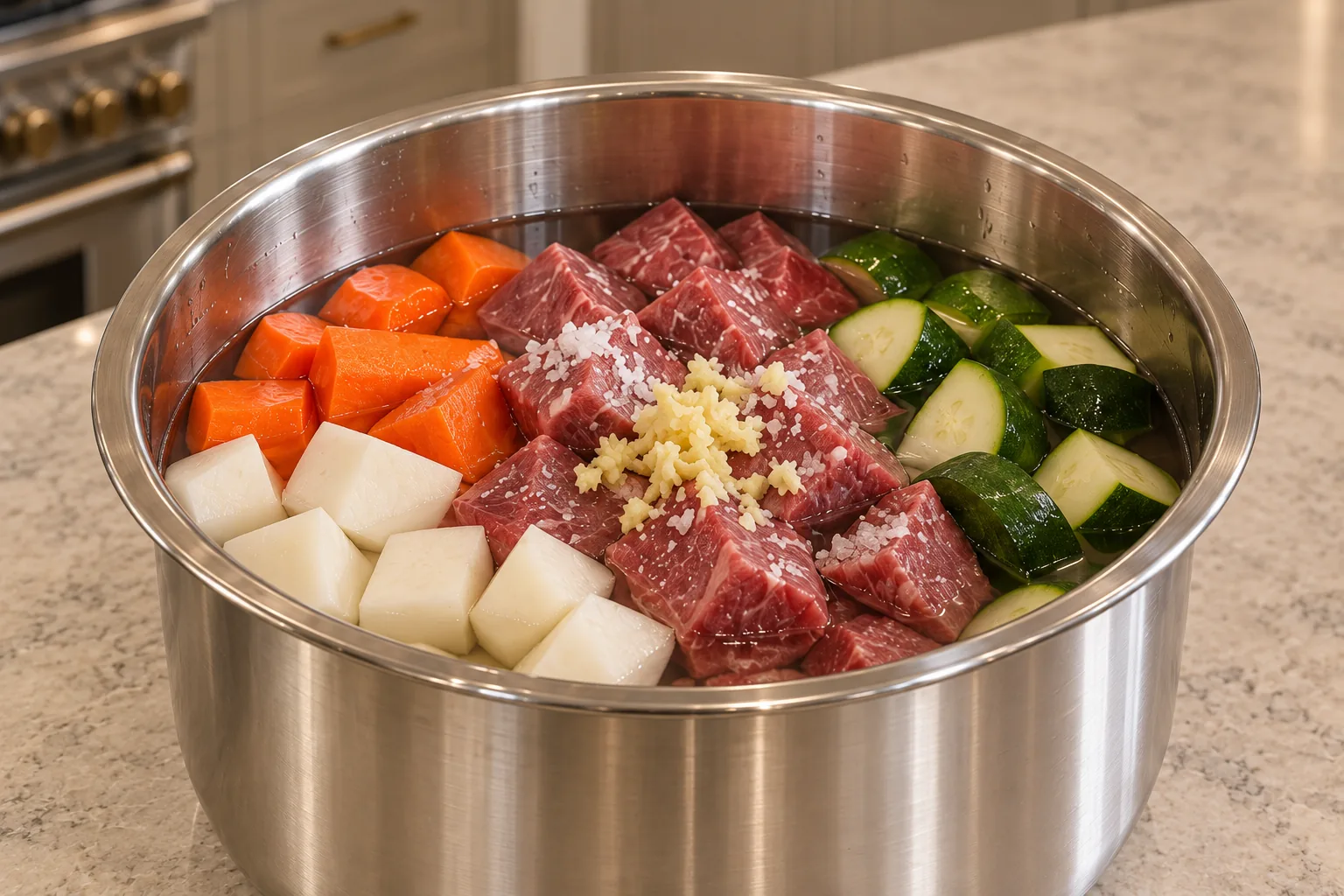
Pour four cups filtered water into the stainless pressure-cooker insert, then add four pounds beef stew meat or cubed chuck roast. Lamb stew meat is the source-supported alternate. Sprinkle two tablespoons natural sea salt over the meat.
Add the four cups of bite-size vegetables, two large-chunk zucchini, and one-quarter cup minced or grated fresh ginger. Keep the ingredients layered rather than stirring them into a packed mass. The insert will look full, but the vegetables soften substantially during cooking.
Pressure Cook and Let the Beef Release Naturally
Secure the lid and close the steam valve. Use the pressure cooker’s Meat/Stew program or high pressure for thirty-five minutes. When the cooking cycle ends, leave the cooker alone for a full sixty-minute natural release for the measured timing used in this card.
After the natural release, carefully vent any pressure that remains before opening the lid. The beef should yield easily when pressed with a fork. The vegetables should be soft, and the zucchini should look partly dissolved around the meat.
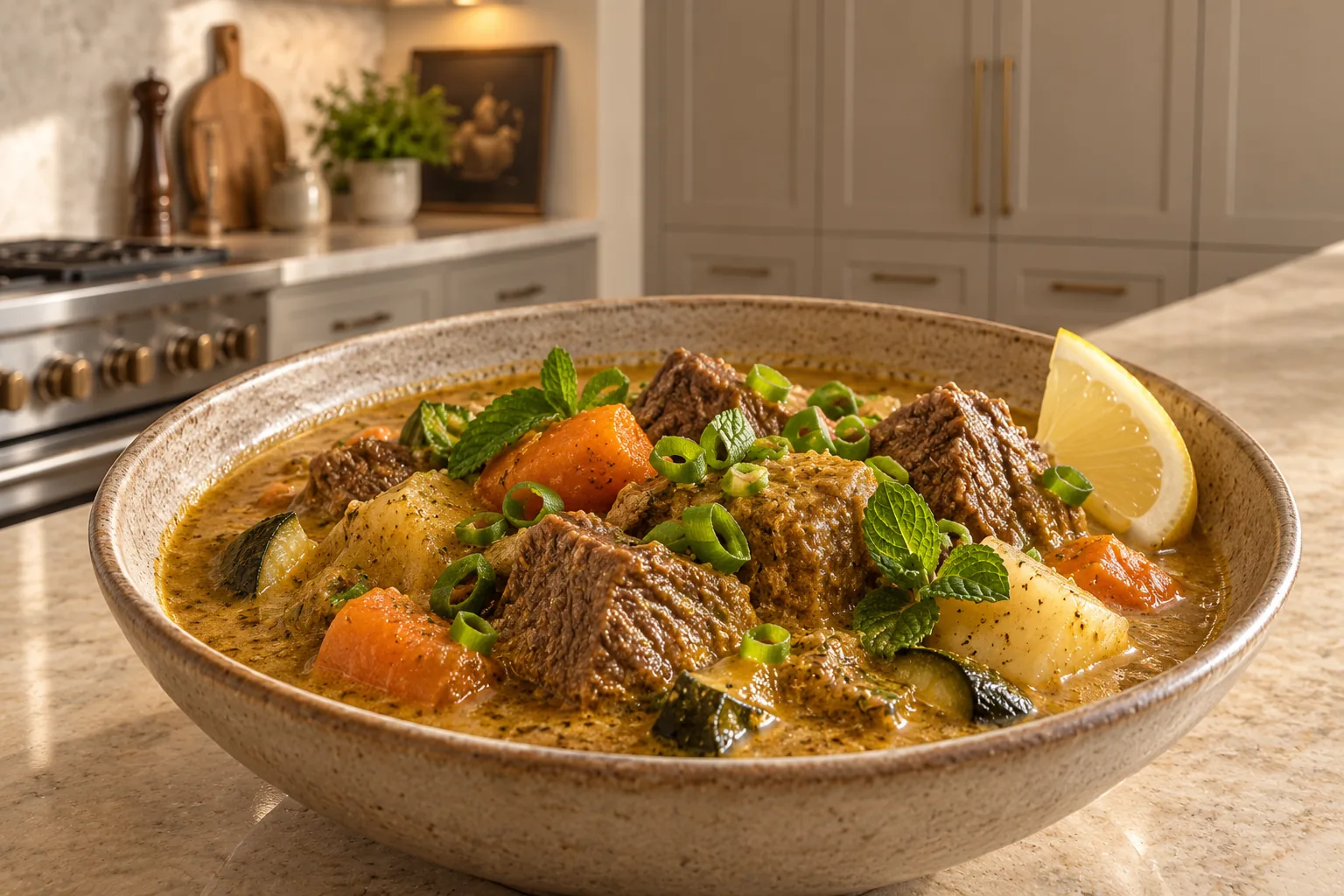
Look at the beef before moving on. A fork should enter without a rubbery bounce, and the edges of each cube should be rounded from the long moist cook. The broth will look golden-brown and slightly opaque, with small beads of fat on the surface. Those are the cues that the base is ready for its creamy finish.
The liquid is a rich stew broth formed while boneless beef cooks in water. It is not GAPS meat stock, which begins with raw pieces containing bones, joints, cartilage, and connective tissue.
Whisk the Coconut-Tamarind Finish
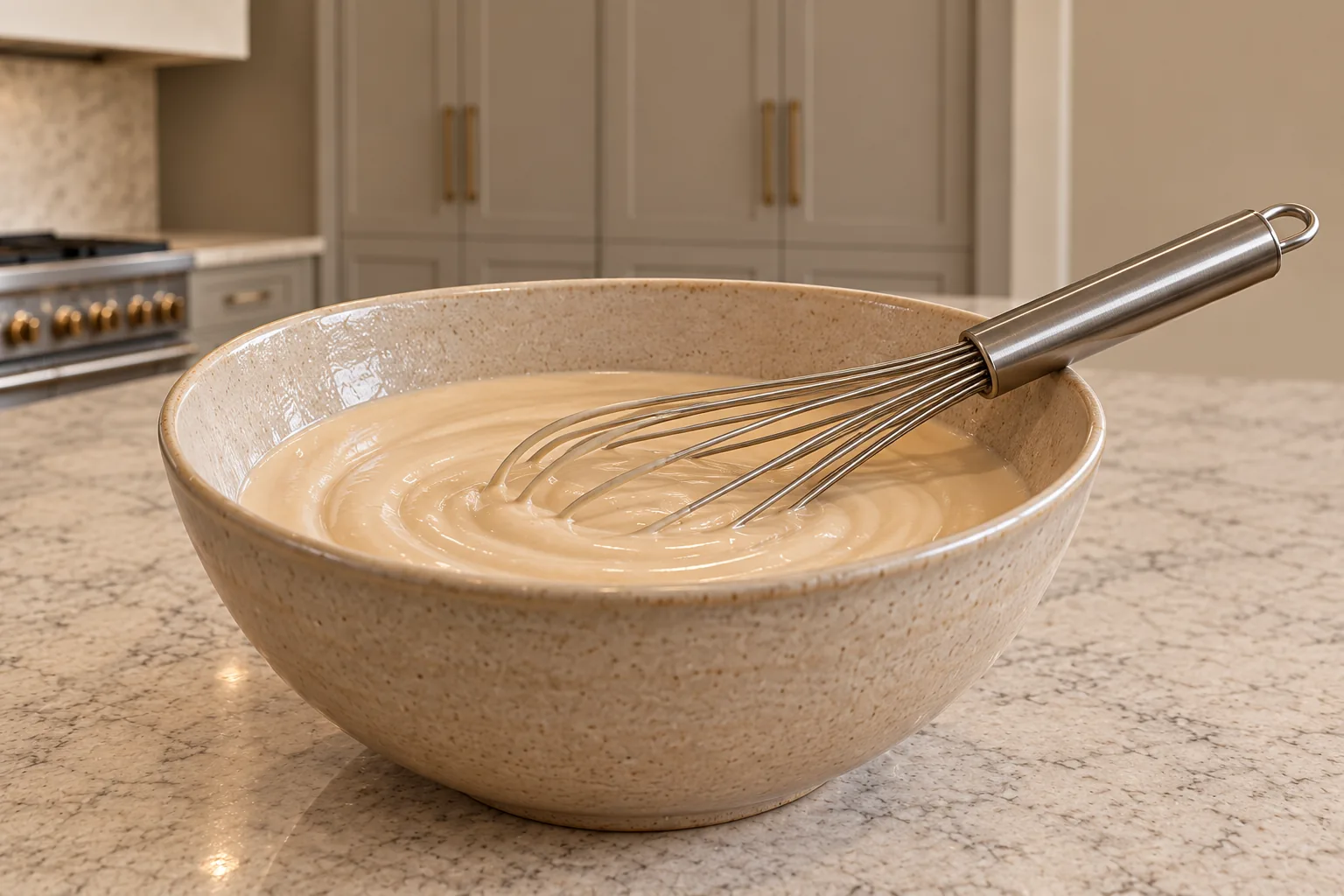
While the pressure releases, whisk one-and-one-half cups homemade coconut cream with two tablespoons pure unsweetened tamarind paste. The mixture should become completely smooth, pale beige, and free of dark tamarind streaks.
If using the cultured-dairy route, whisk the same amount of introduced homemade sour cream with the tamarind. Keep either mixture at room temperature while the cooker finishes releasing so an ice-cold cream does not cool the stew unevenly.
Finish the Stew After the Simmering Stops
Open the cooker and watch the surface. Wait until active bubbling has stopped before adding the cream mixture. Pour it into the hot stew and stir until the broth is evenly creamy with no pale streaks.
Stir in the chopped green onion tops. The broth should lightly coat the beef and vegetables but remain looser than a flour-thickened curry. The aroma should move from plain beef and ginger to tangy tamarind, fresh coconut, and warm ginger.
Taste only after the cream and tamarind are fully distributed. A spoonful should begin savory and rich, then finish brighter from the tamarind. If one part tastes sharply sour while another tastes plain, the pot needs more gentle stirring rather than another ingredient.
GAPS Beef Curry Stew with Tamarind and Coconut
Ingredients
Equipment
Method
- Pour the filtered water into the stainless pressure-cooker insert. Add the beef and sprinkle the natural sea salt over it.
- Layer the 4 cups permitted bite-size vegetables, zucchini, and fresh ginger over the meat without packing them down.
- Secure the lid and close the steam valve. Use Meat/Stew or high pressure for 35 minutes.
- When the cycle ends, allow a full 60-minute natural release. Carefully vent any pressure that remains before opening the lid.
- During the release, whisk the homemade coconut cream and pure tamarind paste until completely smooth and free of dark streaks.

- Open the cooker. Confirm the beef yields easily to a fork, then wait until active bubbling has stopped.
- Stir the coconut-tamarind mixture through the hot stew until the broth is evenly creamy with no pale streaks.
- Stir in the chopped green onion tops.
- Ladle into bowls. Top with fresh mint and serve with lemon wedges for squeezing.
Notes
Tried this recipe?
Let us know how it was!Serve with Mint and Lemon
Ladle the stew into bowls and add fresh mint. Serve lemon wedges on the side so each person can squeeze in as much brightness as desired. The lemon should sharpen the ginger and tamarind rather than make the broth taste sour.
Because the pot already contains meat, vegetables, and a creamy finish, it can stand alone as dinner. A completed homemade ferment may be served separately once that ferment is appropriate and tolerated.
For serving, use a ladle that reaches the bottom of the insert so every bowl receives both broth and the heavier beef pieces. Finish all bowls with green onion tops first, then let each person choose mint and lemon at the table.
Getting More Texture from the Vegetables
Pressure cooking makes every vegetable soft. That is part of this stew’s character. If you want a firmer contrast, sauté an additional permitted vegetable in homemade ghee or coconut oil and spoon it over the finished bowls.
Spinach or bok choy works well as a separate topping because it needs only a brief sauté. Keep that extra vegetable outside the measured pressure-cooker formula so the card’s liquid and yield remain accurate.
Storage and Leftovers
Cool leftovers in covered glass containers. Refrigerate for up to four days or freeze for up to three months. Thaw a frozen portion in the refrigerator overnight.
Reheat gently in a saucepan over low heat, stirring until hot. Avoid a hard boil after the coconut cream or cultured sour cream has been added. Gentle reheating keeps the broth smooth and prevents the cream from separating.
Troubleshooting the Stew
The beef is still firm. The cubes may be unusually large or the natural release may have been shortened. Return the lid and cook a little longer rather than boiling the finished cream mixture.
The broth is thinner than expected. This GAPS adaptation intentionally removes arrowroot and xanthan. Let the zucchini soften into the broth and serve the stew as a creamy, pourable curry.
The tamarind formed dark streaks. Whisk it completely into the cream before adding it to the stew.
The cream looks separated. The stew was still bubbling hard or the cream was very cold. Wait for simmering to stop and mix gradually.
The flavor tastes flat. Add the measured green onion tops, mint, and a squeeze of lemon before increasing the salt.
Recommended Equipment
- Eight-quart electric pressure cooker with stainless insert
- Approved wooden cutting board
- Stainless-steel chef’s knife
- Stainless-steel measuring cups and spoons
- Medium glass or neutral ceramic mixing bowl
- Stainless-steel whisk
- Wooden spoon
- Stainless-steel ladle
- Heat-safe wooden trivet for the removable insert
Frequently Asked Questions
Is Tamarind Allowed on GAPS?
Use pure tamarind cautiously later in Full GAPS, after major digestive problems have gone. It may not suit someone prone to loose stools.
Why Is There No Arrowroot?
This GAPS version removes the source’s arrowroot and xanthan options. The softened zucchini gives the broth some body without a starch or gum.
Is the Cooking Liquid Meat Stock?
No. This formula cooks boneless stew meat in water, so the liquid is stew broth. GAPS meat stock begins with raw pieces containing bones, joints, cartilage, and connective tissue.
Can I Use Homemade Sour Cream?
Yes, after properly cultured homemade sour cream has been introduced and tolerated. Replace the homemade coconut cream with the same one-and-one-half-cup amount.
Can I Use Lamb?
Yes. Lamb stew meat is the source-supported alternate to beef and uses the same measured amount and pressure-cooking schedule.
How Many Servings Does It Make?
The measured batch makes up to ten servings.
More Full GAPS Batch-Cooking Help
This large pressure-cooker dinner is a natural fit for a weekly kitchen rhythm. The planned Full GAPS Batch-Cooking Guide in the Well Fed & Lived In shop will help organize substantial dinners, component prep, and leftovers without turning every day into a cooking marathon.

Leave a comment