

This leek and beet green coconut soup is creamy without dairy and makes use of the stems and leaves from two full bunches of beets. Leeks and garlic cook slowly in chicken meat stock, the chopped stems go in next, and the leaves finish the pot before homemade coconut milk is stirred in off the heat.
I like recipes that use the parts of a vegetable that are easy to overlook. In our house, one pot of meat stock is the routine that makes GAPS manageable. Turning that stock into a vegetable soup also gives the cooked meal enough volume for a family table without making the broth feel like the same meal again.
With six children to feed, I also appreciate a pot that does not need a separate garnish, topping, or side dish to feel complete. The leeks, stems, leaves, and coconut milk all go into the same stockpot in a clear order. Once the chopping is done, the visual cues tell you when each vegetable is ready for the next one.
What This Soup Tastes Like
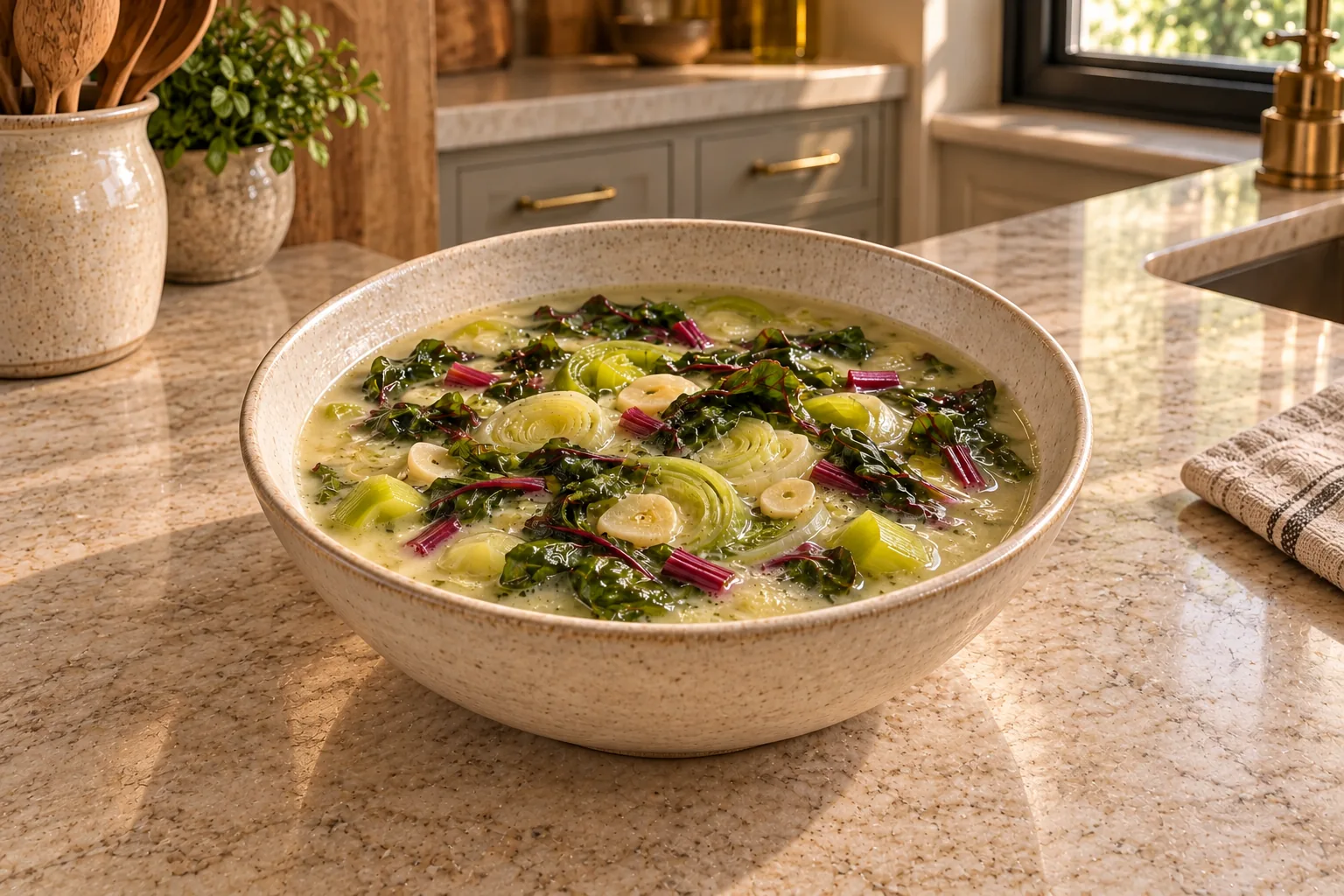
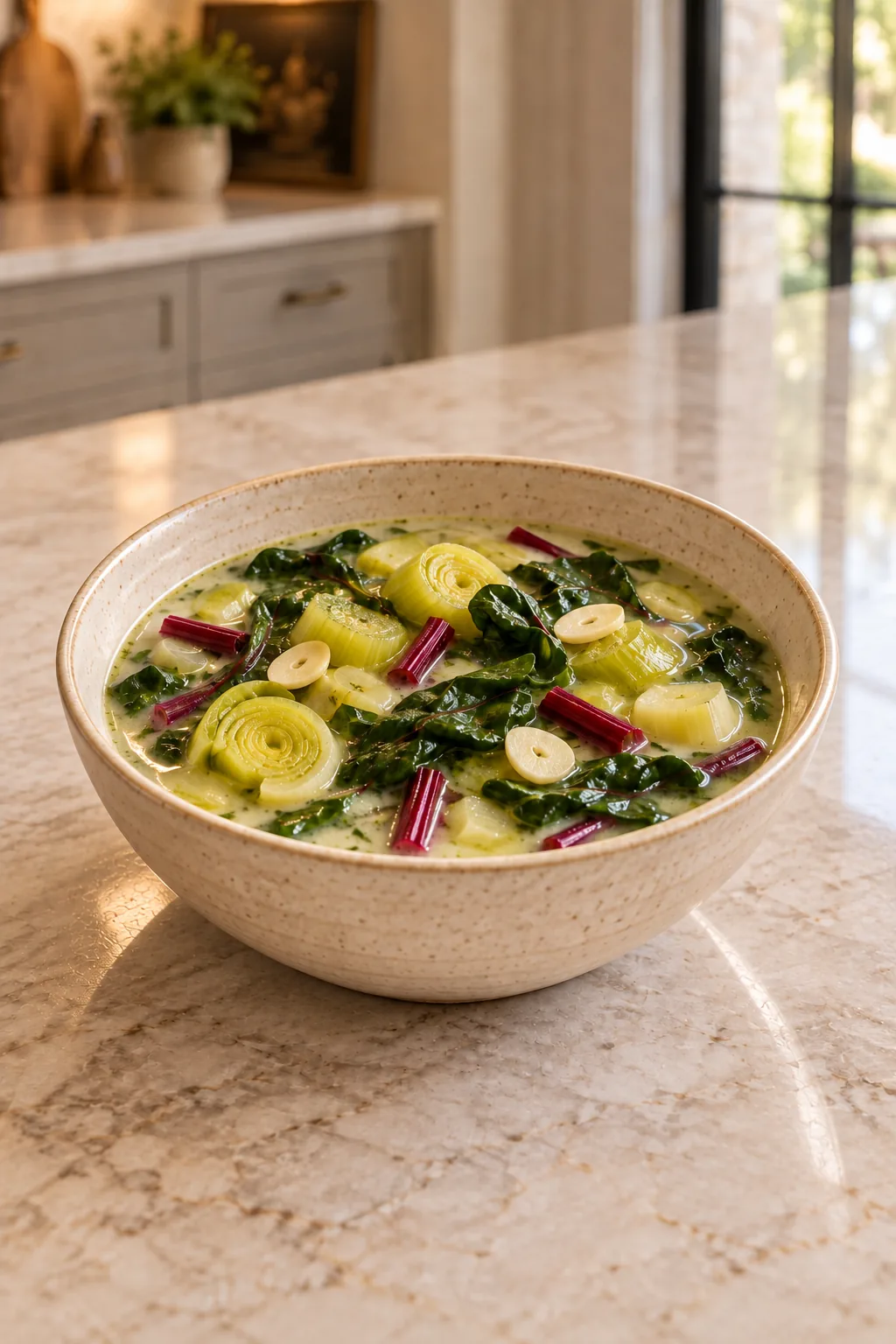
The leeks become soft and mellow during the first covered cook. Beet stems add an earthy bite and a little color, while the leaves wilt down like other sturdy greens. Homemade coconut milk makes the finished broth pale and creamy with only a mild coconut flavor.
Garlic runs through the whole bowl without taking it over. Seven sliced cloves sound assertive, but the long covered cooking softens their sharpness. The finished soup should smell savory and gently sweet from the leeks, with the earthy scent of cooked greens underneath.
Warm, it feels like a light creamy vegetable soup. Chilled, the coconut milk and softened leeks give the broth a fuller texture without blending. That makes this one of those useful soups that can move from a warm dinner bowl to a cold lunch without becoming a different recipe.
Expect visible pieces rather than a pureed texture. The leek rounds soften at their edges, the beet leaves fold into silky ribbons, and the small stem pieces keep just enough shape to give each spoonful some contrast. If the leaves still feel leathery or the thickest stem pieces resist the spoon, the pot needs more covered cooking before the coconut milk goes in.
Where It Fits On GAPS
This is a Full GAPS recipe. Use homemade chicken meat stock, not bone broth, and homemade noncanned coconut milk. The coconut milk goes in after the pot comes off the heat.
It is not an Introduction Diet soup. The coconut milk and the complete combination belong in the Full GAPS part of the recipe collection. Keep the meat-stock base intact rather than substituting boxed broth, bouillon, or a store-bought soup base.
If your stock is concentrated, use two cups stock plus two cups filtered water. Either route gives four cups total liquid before the vegetables and coconut milk are added.
That distinction matters when you judge the pot. Four cups of liquid may not look like much beside three leeks and two bunches of greens, but both vegetables collapse substantially. Resist topping up the pot simply because it looks crowded at first. The covered cooking draws moisture from the vegetables, and the coconut milk adds more liquid at the end.
Clean And Slice The Leeks Carefully
Trim the root end from three leeks and remove the toughest top four inches of the dark green ends. Dirt hides between the layers, so separate and rinse them until no grit remains. Slice them about one-eighth inch thin.
Leeks deserve a little patience here. A quick rinse over the outside will not reach the soil tucked between the nested layers. Split or fan the usable portion enough for water to run through it, then check the folds with your fingers. When the rinse water stays clear and you cannot feel grit, drain the leeks before slicing so extra water does not dilute the stock.
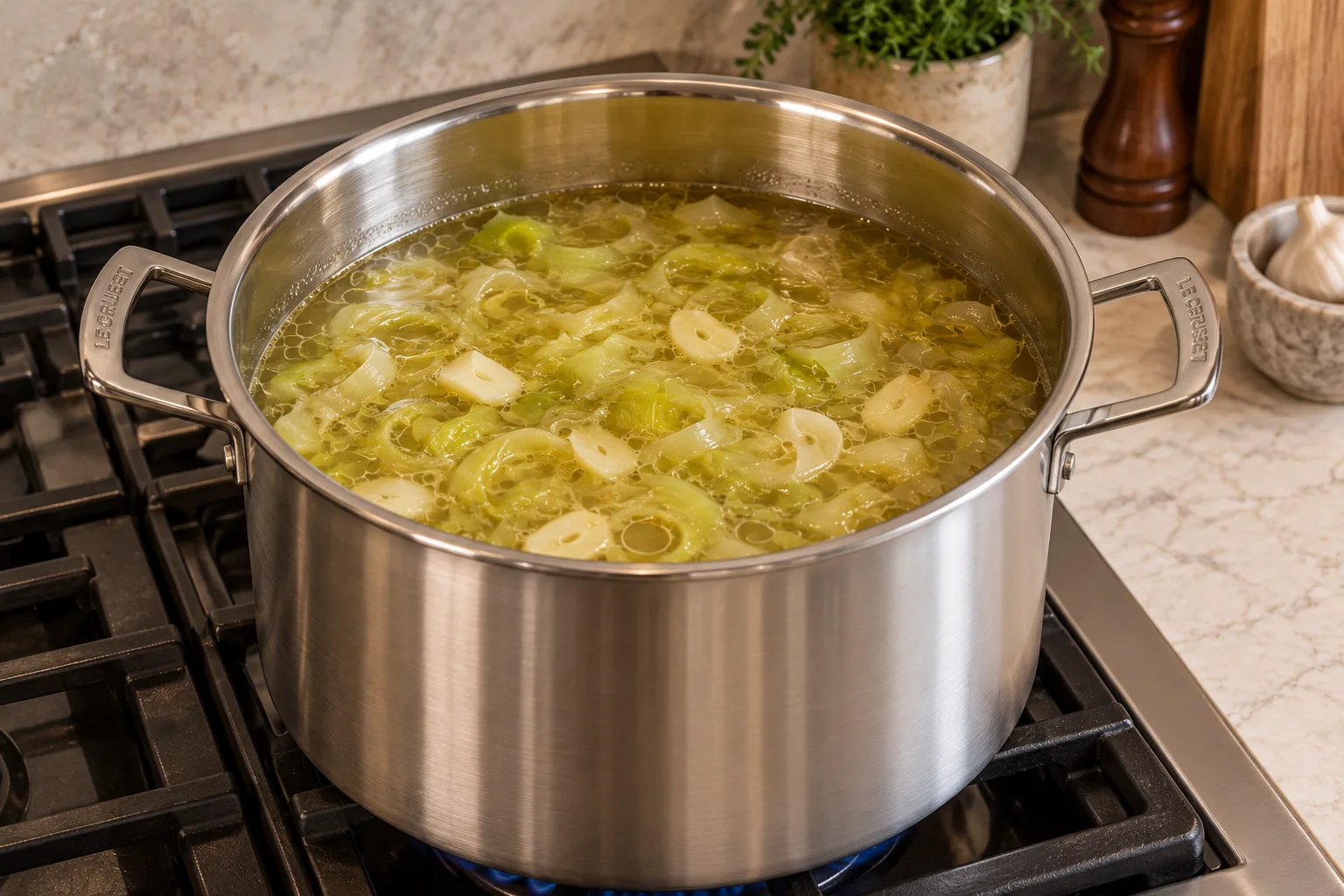
Bring the measured stock to a boil, then add the leeks and seven thinly sliced garlic cloves. Cover the pot and cook for 20 to 30 minutes. The leeks are ready for the next stage when they look collapsed and silky rather than like firm rings.
Keep the slices reasonably even so they soften together. At the beginning, the pale rings float distinctly in the golden stock. By the end of this first cook, their edges should look translucent and relaxed, and a ring pressed against the side of the pot should bend without springing back.
Cook The Beet Stems Before The Leaves
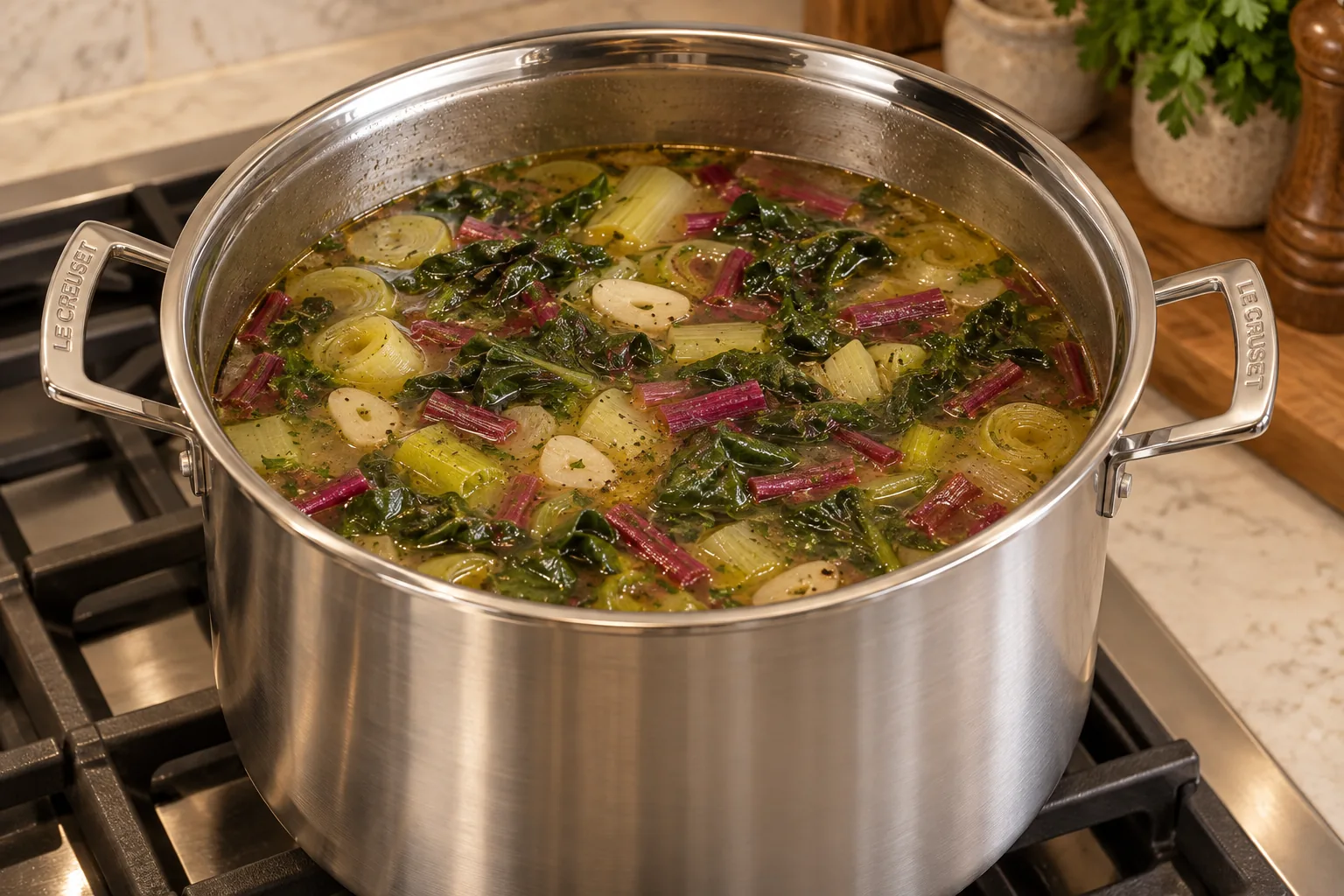
Separate the stems from the leaves of two beet bunches. Cut the stems into one-quarter-inch pieces and add them to the covered pot. Cook another 20 to 30 minutes.
Do not put the stems and leaves in together. The stems are denser and need their own head start. Slice across them rather than leaving long pieces, paying extra attention to the thick lower sections. The small pieces should scatter through the pot instead of gathering into stringy lengths.
Test one of the thickest stem pieces. It should yield easily when pressed with the edge of a spoon and should no longer feel stringy in the center. The leaves cook much faster, which is why they wait until the final stage.
The stems will tint the broth slightly, but they should not turn it into a beet-root soup. This recipe does not use the roots. The color comes from the magenta stems and their contact with the stock, while the flavor stays centered on leeks, garlic, greens, and coconut.
Add The Beet Leaves And Seasonings
Slice the beet leaves into thin strips. Add them with one tablespoon parsley flakes, one teaspoon granulated garlic, one teaspoon mineral salt, and one teaspoon black pepper.
Cook for 20 minutes. The leaves should be fully wilted and tender, with no stiff center ribs. The broth will darken slightly from the greens and beet stems, while the leeks should be almost melting into it.
Stir from the bottom once the leaves begin to collapse so every ribbon spends time in the hot stock. A finished leaf should drape over the spoon rather than stand upright. The surface will still look brothy at this point; the pale creamy finish comes only after the coconut milk is stirred in.
Stir In Coconut Milk Off Heat
Remove the stockpot from the heat before adding 13.5 fluid ounces homemade coconut milk. Stir until the broth becomes evenly creamy. Do not replace it with canned coconut milk or return the finished soup to a hard boil.
Pour the coconut milk around the pot rather than into one spot, then stir slowly from the bottom. Watch for the broth to shift from clear gold-green to an even pale ivory-green. White streaks mean the coconut milk still needs to be distributed; vigorous bubbling is not part of this final step.
Taste after the coconut milk is distributed. The measured salt and pepper are already in the pot, so adjust only if the finished batch needs it.
This is also the moment to check the vegetables one last time. A spoonful should contain soft leek, a tender stem piece, and a wilted leaf without any of them feeling raw. If the vegetables were cooked through before the pot left the heat, gentle stirring is all the finished soup needs.
Serving Hot Or Cold
Serve the soup hot after the coconut milk is stirred in, or cool it before refrigerating for a cold meal. When cold, stir before ladling so the vegetables and creamy broth are evenly distributed.
For a hot bowl, ladle from the bottom so the greens and stems do not stay behind in the pot. For a cold bowl, give the container a thorough stir first. Coconut milk can settle and firm slightly in the refrigerator, so the soup may look thicker before it is mixed again.
The full pot makes six servings. Avoid stretching it with extra water, which would weaken both the meat-stock base and the coconut finish.
The soup already has plenty happening in each spoonful, so it does not need a decorative topping. Keeping the surface plain also makes the actual doneness easy to see: silky leeks, tender magenta stems, dark wilted leaves, and creamy broth.
Storage
Divide the soup into smaller covered containers so it cools promptly before refrigeration. The coconut-rich broth may thicken slightly when cold; stir it before serving cold or rewarm only the portion you need over gentle heat.
If you plan to eat some hot and some cold, divide those portions before chilling. That way the cold portion stays cold while you warm the other gently. Avoid repeatedly heating and cooling the full batch.
Keep it covered, use a clean ladle, and discard it if it develops an off smell, surface growth, or another ordinary spoilage sign.
Frequently Asked Questions
Do I Use The Beet Roots?
No. This formula uses only the stems and leaves from two beet bunches. Save the roots for a separate recipe.
Can I Use Bone Broth?
Use chicken meat stock for this Full GAPS soup. Bone broth has a different timing and protocol role.
Why Are My Beet Stems Still Tough?
They need the full separate covered cook before the leaves go in. Cut them into even one-quarter-inch pieces and continue until the thickest piece yields easily.
Can I Blend The Soup?
The measured formula is an unblended soup. Blending it changes the intended texture and appearance.
Can I Add The Coconut Milk Earlier?
Keep the formula’s order and add it after the pot comes off the heat. The vegetables cook in meat stock first, and the coconut milk supplies the creamy finish once every stem and leaf is tender.
What If My Soup Looks Too Crowded?
Give the leeks and greens time to collapse before changing the liquid. Three leeks and two bunches of beet tops take up much more space raw than cooked. Adding unmeasured water at the beginning can leave the finished soup thin.
Recommended Equipment
- Le Creuset Classic Stainless Steel 10-quart stockpot
- Cutting board and sharp chef’s knife
- Fine-mesh strainer for cleaning leeks
- Measuring cups and spoons
- Stainless-steel or wood spoon
A roomy stockpot gives the raw greens space to collapse without spilling over the rim. A sharp knife matters just as much: even leek slices and small stem pieces are easier to cook to the same tenderness. The strainer is useful for holding the separated leek layers under running water and letting them drain before they reach the stock.
Leek and Beet Green Coconut Soup for Full GAPS
Ingredients
Equipment
Method
- Bring the chicken meat stock, or the concentrated-stock and filtered-water branch, to a boil in the stockpot.
- Add the cleaned sliced leeks and sliced garlic. Cover and cook for 20 to 30 minutes, until the leeks are very soft.
- Add the beet stems cut into 1/4-inch pieces. Cover and cook for 20 to 30 minutes, until the stems are tender.
- Add the thinly sliced beet leaves, parsley flakes, granulated garlic, mineral salt, and black pepper.
- Cook for 20 minutes, until the leaves are fully wilted and tender.
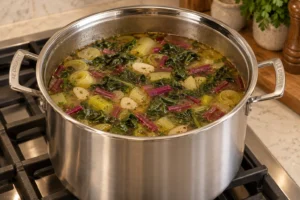
- Remove the pot from the heat. Stir in the homemade coconut milk until the broth looks evenly creamy.
- Serve hot, or cool and refrigerate before serving cold.
Notes
Tried this recipe?
Let us know how it was!Keep Full GAPS Soup Nights Easier
The upcoming Soups & Stews Cookbook will keep meat-stock soups and their homemade components together. Watch the WFLI shop for the release.

Leave a comment