

Lavender blueberry switchel is a tart, lightly sweet Full GAPS drink made with blueberries, raw honey, apple-cider vinegar, fresh ginger, culinary lavender, and filtered water. The blueberries form the fruit base, the ginger and vinegar give it a sharp edge, and the lavender adds a clear floral aroma without turning the pitcher into a perfume experiment.
This version uses the measured raw-honey branch and two tablespoons of culinary lavender. It is blended, strained, diluted, and chilled as a fresh drink. The pitcher does not sit at room temperature, and the method is not a controlled ferment.
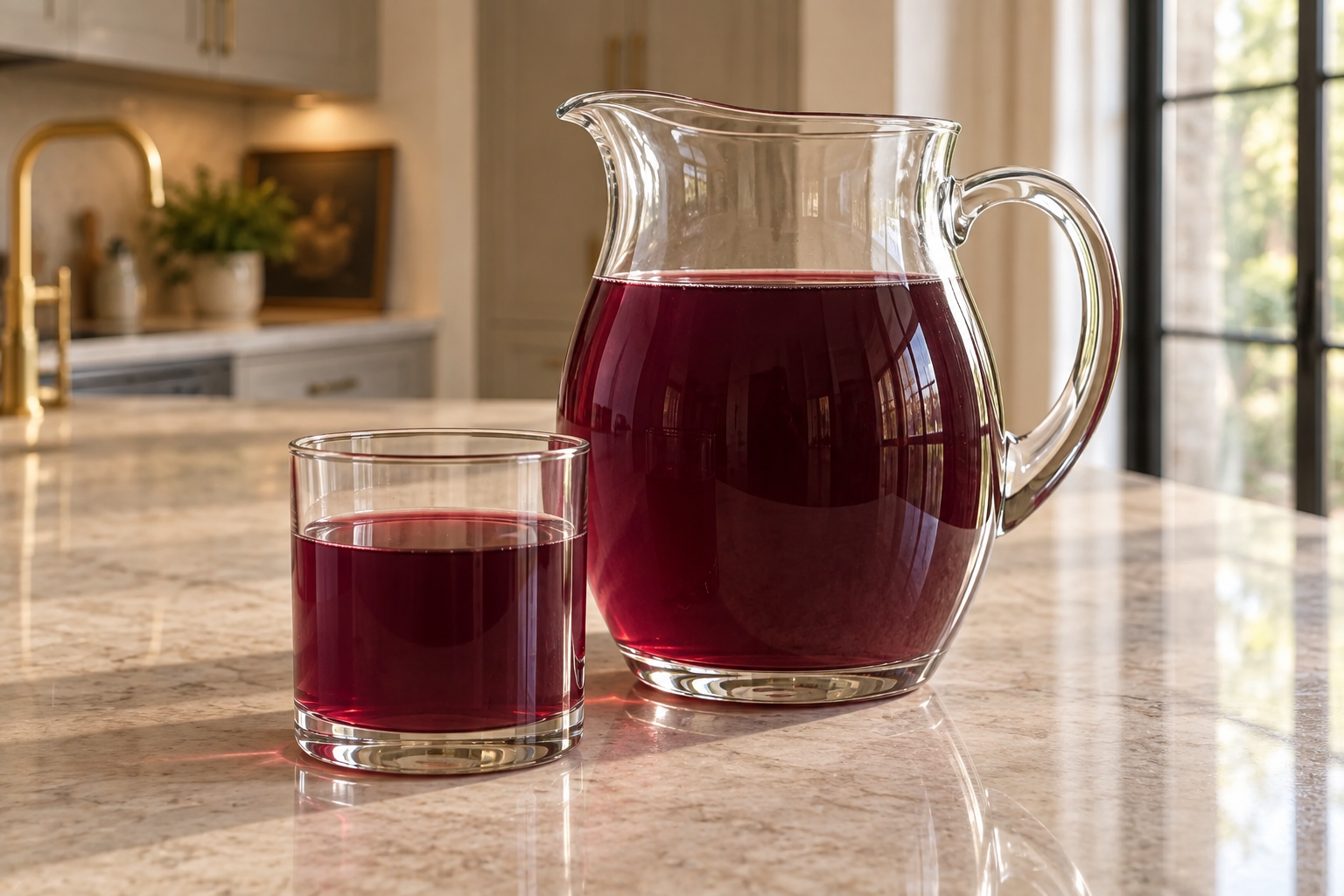
A Floral Drink Needs Clear Measurements
In a household with six kids, a new drink works better when everyone knows exactly what is in the pitcher. Lavender is familiar in soap, sachets, and garden beds, which can make it sound stranger in the kitchen than it really is. Here it is simply a measured culinary herb, handled with the same care as the ginger and vinegar.
The two-tablespoon amount matters. Adding an unmeasured handful can bury the blueberry and make the aroma much stronger than intended. The brief pulse also matters. The lavender goes into an already smooth blueberry base, then blends for about ten seconds before the drink is strained.
Use Culinary Lavender Buds
Choose lavender sold for culinary use. This recipe uses the buds themselves. It does not use lavender essential oil, fragrance, extract, decorative potpourri, or flowers of unknown treatment. Read the ingredient label and keep the measured buds with the other recipe ingredients.
Use two tablespoons whether the culinary lavender buds are fresh or dried. This card photographs and describes the dried-bud branch because the small buds make the ten-second pulse easy to see. If you use fresh culinary lavender, measure the edible buds after separating them from tough stems.
Keep the rest of the formula unchanged: six cups filtered water, two cups blueberries, one-third cup raw honey, one-quarter cup plain apple-cider vinegar, and two tablespoons minced fresh ginger. The lavender is an addition to that complete ratio, not a replacement for the blueberries or ginger.
Build the Blueberry Base First
Pour one-third of the measured filtered water into the blender. At the standard yield, that is two cups. Add two cups fresh blueberries or fully defrosted frozen blueberries, including the juice they release. Add the raw honey, apple-cider vinegar, and minced fresh ginger.
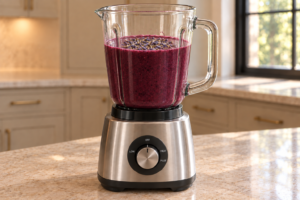
Secure the lid and blend on medium speed for about fifty seconds. The mixture should move from separate berries and clear liquid to an opaque purple puree. Look through the blender jug. Whole berries should be gone, and the blueberry skins should be reduced to tiny pieces.
Stop the blender before inspecting the mixture. If a few whole berries remain above the moving liquid, let them settle and blend again briefly. Do not pour all six cups of water into the blender; the remaining two-thirds belongs in the pitcher after straining.
Add the Lavender for a Brief Pulse
Measure two tablespoons of dried culinary lavender buds. Remove the blender lid only after the blades have stopped. Scatter the buds over the smooth purple puree, replace the lid, and blend for about ten seconds.
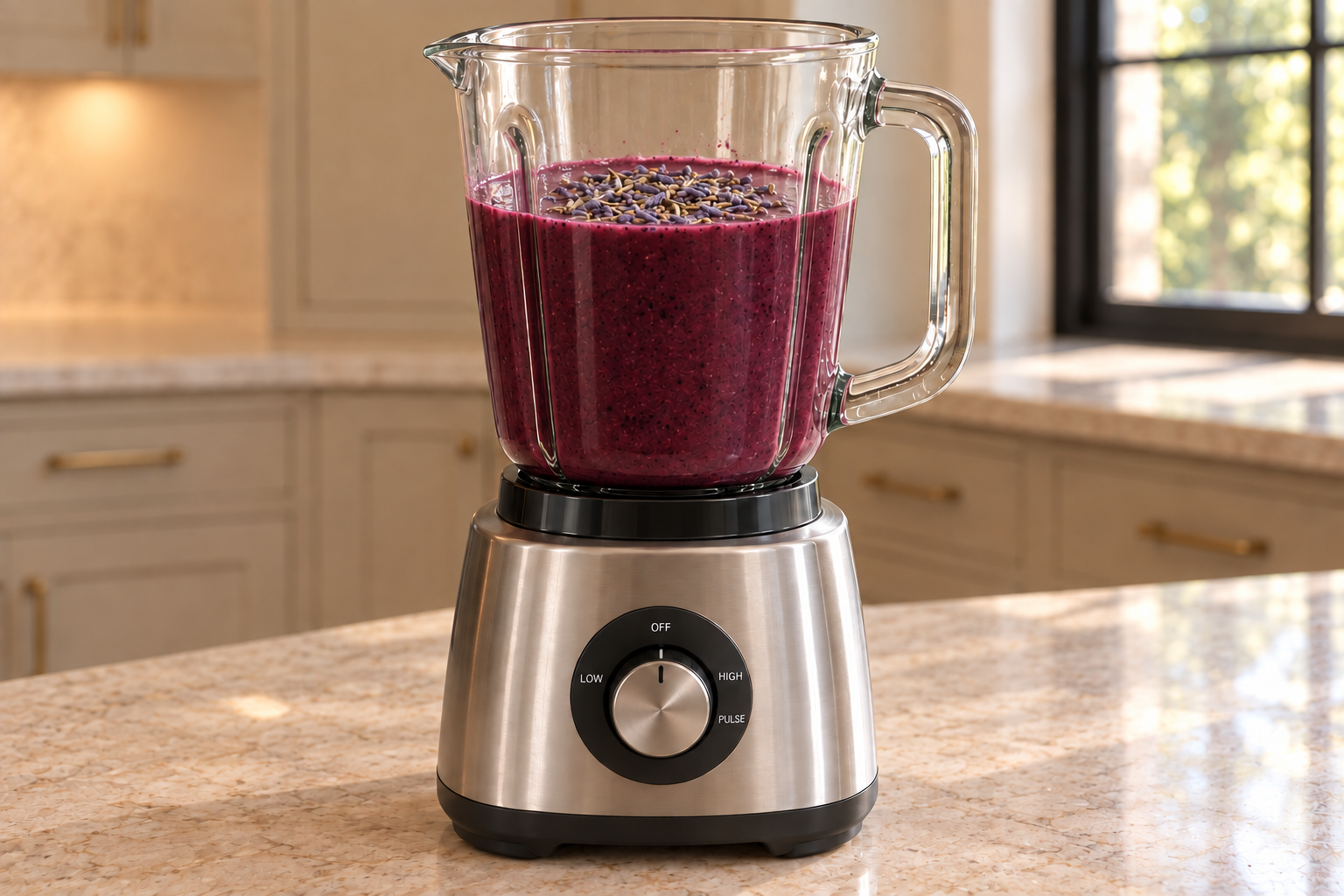
The goal is to distribute and lightly break the lavender, not grind it into an invisible powder. After the brief pulse, tiny dark-purple berry skins and small lavender pieces may still be visible in the puree. Those solids are supposed to remain behind in the strainer.
Blend the blueberry base smooth before adding the lavender. That keeps the fifty-second berry puree and the ten-second lavender pulse distinct, so the order is clear and repeatable.
Strain the Berry and Lavender Solids
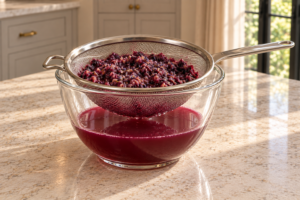
Set a fine-mesh stainless-steel strainer over a glass or ceramic bowl. The strainer rim or arms must rest fully on the bowl so it cannot tip. Use a bowl deep enough to hold the strained concentrate without letting the liquid rise back into the mesh.
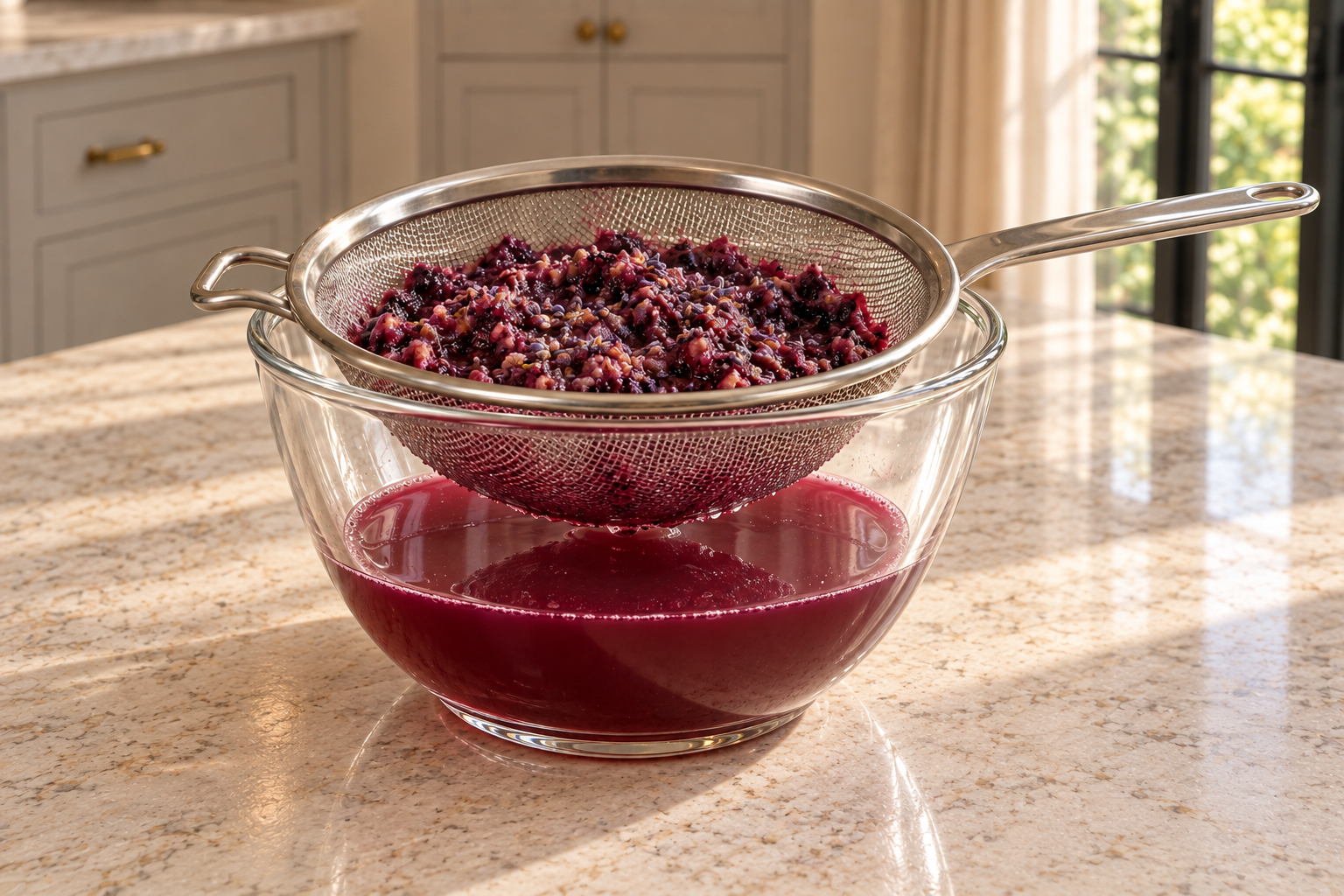
Pour the puree into the supported strainer. Let the deep-purple liquid collect in the bowl while the blueberry skins, seeds, ginger, and lavender buds remain above. Press gently only if needed. Stop when the solids look mostly drained and liquid is no longer running freely.
Transfer the strained concentrate to a glass pitcher or an eight-cup glass jar. Add the remaining two-thirds of the filtered water—four cups at the standard yield—and stir until the color looks even from top to bottom. Cover and chill until cold.
Lavender Changes the Aroma, Not the Texture
The finished drink should pour like a strained fruit beverage. It should not be thick like a smoothie or speckled with floating lavender buds. Hold the glass near a window and the outer edge should look translucent, even though the center of the pitcher remains a deep violet-red.
The first aroma should be blueberry and lavender, followed by the spicy smell of ginger and the sharpness of vinegar. The lavender should be noticeable without covering every other ingredient. Because the formula is strained, the texture remains smooth and easy to pour.
If the finished drink is cloudy with pulp, check the mesh size and the pressure used during straining. Fine sediment may settle during refrigeration. Stir the pitcher before pouring rather than forcing dry pulp through the strainer.
Fresh Drink, Not a Probiotic Ferment
Apple-cider vinegar is already a fermented ingredient, but adding it to blueberries, honey, ginger, lavender, and water does not prove that the complete pitcher underwent controlled fermentation. This recipe does not use a measured starter, a defined anaerobic method, or a verified fermentation endpoint.
Treat it as a fresh fruit-and-herb drink. This method does not establish probiotic content or specific electrolyte, hydration, detoxification, or digestion effects. The useful kitchen technique is simple: smooth the berry base, add lavender for a brief pulse, strain the solids, dilute, chill, and serve.
If you want the flavors to mingle before serving, keep the covered pitcher in the refrigerator. A cold rest deepens the combined berry, ginger, vinegar, and lavender aroma while keeping the drink in the same chilled, fresh method.
Where It Fits on GAPS
This recipe fits Full GAPS. Its central ingredients are blueberries, fresh ginger, raw honey, cider vinegar, culinary lavender, and filtered water. Fruit and honey remain foods to use thoughtfully within the complete Full GAPS pattern.
It is not an Introduction Diet recipe. A strained raw berry drink with honey, vinegar, and lavender does not move into an early Intro stage because it has passed through a blender. It is also not a No-Plant recipe because the berries, ginger, and lavender are essential to the formula.
The drink contains no dairy, eggs, nuts, grains, or added starch. Those absences describe the measured recipe. They do not require substitute ingredients or extra claims.
Serve the Two Blueberry Switchels Side by Side
The fresh blueberry switchel with raw honey leaves out the lavender and keeps the fruit, ginger, vinegar, and honey more direct. This lavender version uses the same base but adds a distinctly floral layer through a measured pulse.
For a gathering, make one pitcher of each and keep them clearly separated. The finished drinks may look similar after straining, so use separate pitchers or a simple written label at the table. That lets people choose between the direct blueberry-ginger version and the floral lavender version.
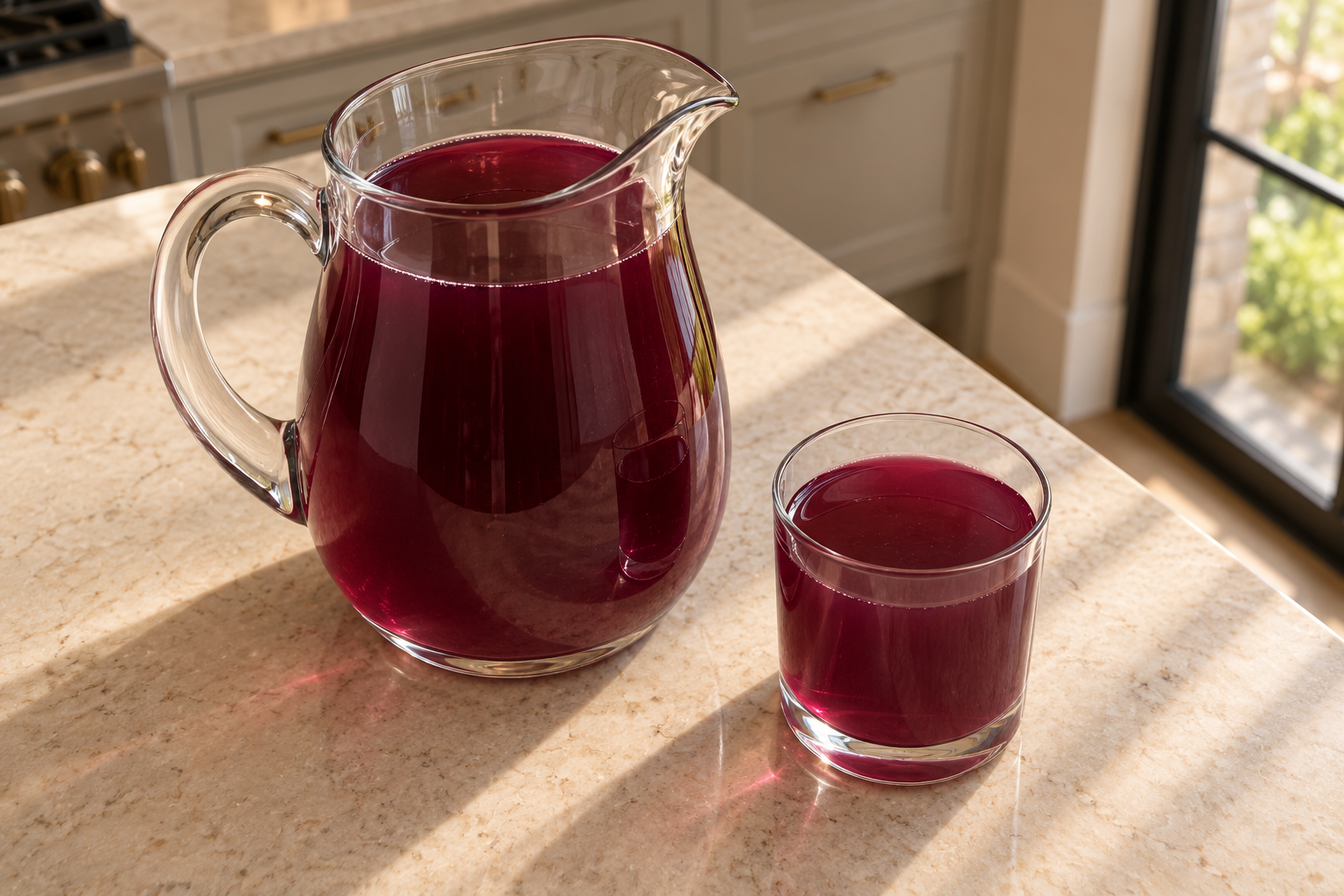
Serve cold in plain glasses after stirring the pitcher. A modest glass is enough to taste the balance of berry, ginger, vinegar, honey, and lavender without treating a sweet fruit drink as the base of the meal.
Storage and Make-Ahead Notes
Keep the finished switchel covered in the refrigerator and use it within four days for the freshest flavor. Stir before pouring. Use clean glasses and avoid returning a used utensil to the pitcher.
The aroma should remain clean, fruity, floral, and sharp. Discard the drink if it develops unexpected pressure, visible surface growth, or an odor that no longer matches the fresh pitcher you made. This recipe does not reinterpret an uncertain change as successful fermentation.
For a larger group, make a second complete batch or use the recipe card’s 2× control. If the doubled concentrate exceeds the blender’s safe fill line, blend it in two equal batches and combine the strained liquid in a larger covered glass container.
Equipment That Keeps the Method Clear
You need a blender with a secure lid, measuring cups and spoons, a fine-mesh stainless-steel strainer, a glass or ceramic bowl that fully supports the strainer, and a glass pitcher or eight-cup jar. A small prep bowl can hold the measured culinary lavender until the base puree is smooth.
Set the bowl and strainer together before blending. The strainer should not balance on a narrow rim, and its handles should not float beyond the bowl without support. This setup matters because the puree is heavy enough to tip an unstable strainer.
Frequently Asked Questions
Can I Use Fresh Lavender?
Yes. Use two tablespoons whether the culinary lavender buds are fresh or dried. Remove tough stems before measuring fresh buds.
Why Is the Lavender Added After the First Blend?
Puree the blueberry base for about fifty seconds, then add the lavender and blend for about ten seconds more. That order keeps the method precise and prevents the lavender from being blended for the full berry-puree time.
Can I Leave the Lavender Buds in the Pitcher?
Not in this formula. The berry, ginger, and lavender solids are strained out before the remaining water is added. The finished texture should be smooth and pourable.
Is This Fermented?
No. This is the immediate fresh branch. It is blended, strained, diluted, chilled, and served without a controlled fermentation process.
Can I Double the Recipe?
Yes. Double every measured ingredient. Blend in two batches when necessary, and keep the one-third/two-thirds water division intact.
Lavender Blueberry Switchel Recipe
Lavender Blueberry Switchel With Raw Honey for Full GAPS
Ingredients
Equipment
Method
- Pour one-third of the filtered water into the blender—2 cups at 1×. Add the blueberries, raw honey, apple-cider vinegar, and minced fresh ginger. Secure the lid and blend on medium speed for about 50 seconds, until the mixture is an opaque purple puree with no whole berries and the blueberry skins are tiny.
- Stop the blender. Add the measured culinary lavender buds to the smooth berry base, replace the lid, and blend for about 10 seconds. The lavender should be distributed and lightly broken, with small pieces still visible before straining.
- Set the fine-mesh strainer securely over the bowl with its rim or arms fully supported. Pour in the puree. Let the liquid drain, pressing gently if needed, and stop when the blueberry, ginger, and lavender solids look mostly drained.
- Transfer the strained deep-purple liquid to the pitcher. Add the remaining two-thirds of the filtered water—4 cups at 1×—and stir until the color is even from top to bottom.
- Cover and chill until cold. Stir before serving. The finished drink should pour smoothly, look translucent at the edge of the glass, and contain no floating lavender buds.
Notes
Tried this recipe?
Let us know how it was!Keep More Homemade Drinks in Rotation
For more measured family drinks built from recognizable ingredients, our planned Drinks Cookbook is the most relevant resource for this recipe. Watch the WFLI shop for the cookbook and other kitchen guides as they are released.

Leave a comment