

This honey lemon curd is bright and tangy, with raw honey softening the sharp citrus and coconut oil giving it a smooth, spoonable finish. This version uses coconut oil and gives the curd its own complete Full GAPS recipe.
When our family started GAPS, we looked for versions of the foods we already enjoyed instead of treating every familiar dish as something we had to give up. That swap-first approach is why I like keeping recipes clear: this is the lemon curd, measured and explained on its own, rather than tucked inside a separate cake post.
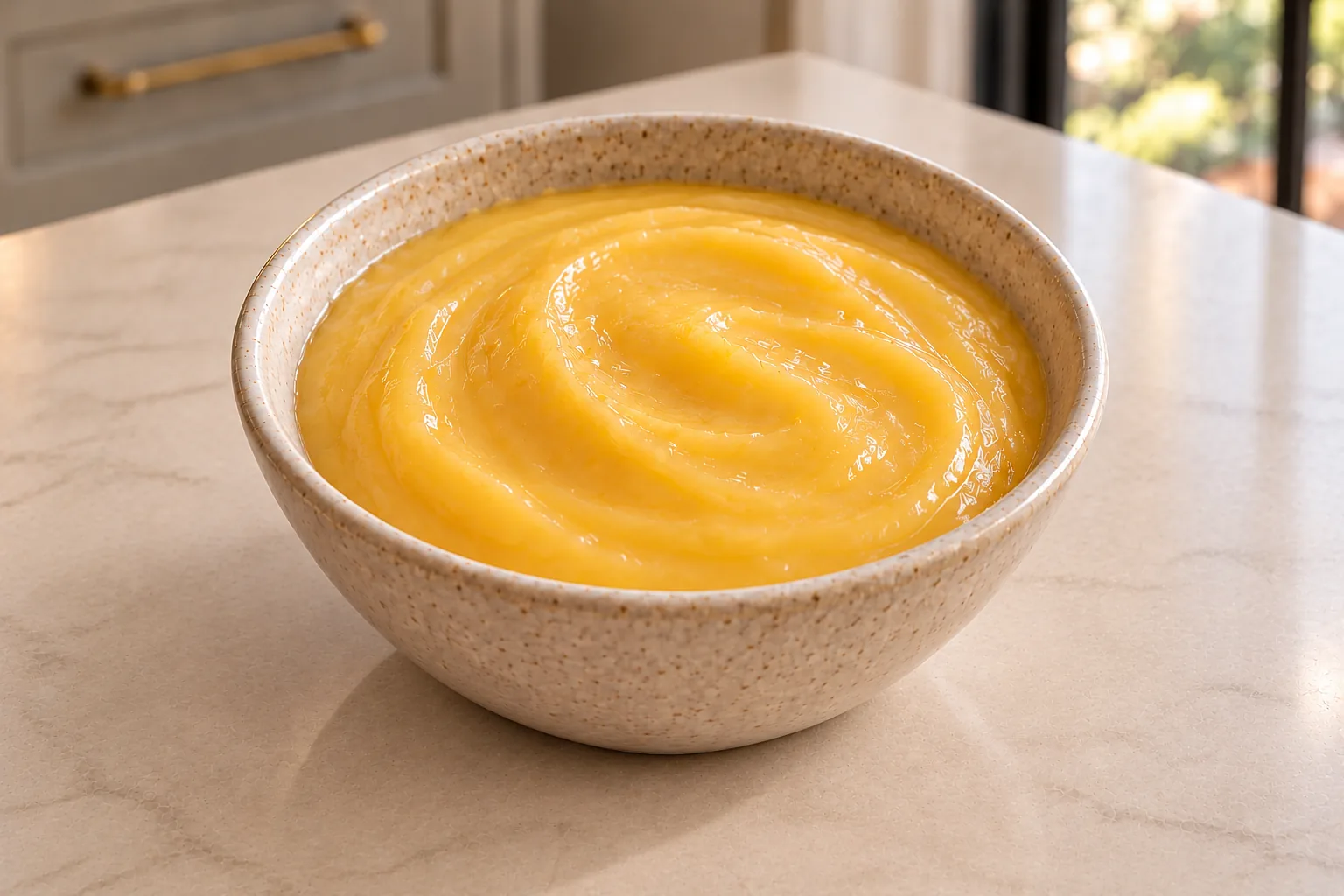
Why This Version Is Different
This formula has four whole eggs, three yolks, one-half cup each of honey and fresh lemon juice, a generous amount of lemon zest, and six tablespoons of coconut oil. A separate honey vanilla bean lemon curd for Full GAPS uses ghee, a different egg ratio, and a direct saucepan method. The two recipes stay separate so each one has its own clear ingredient list and directions.
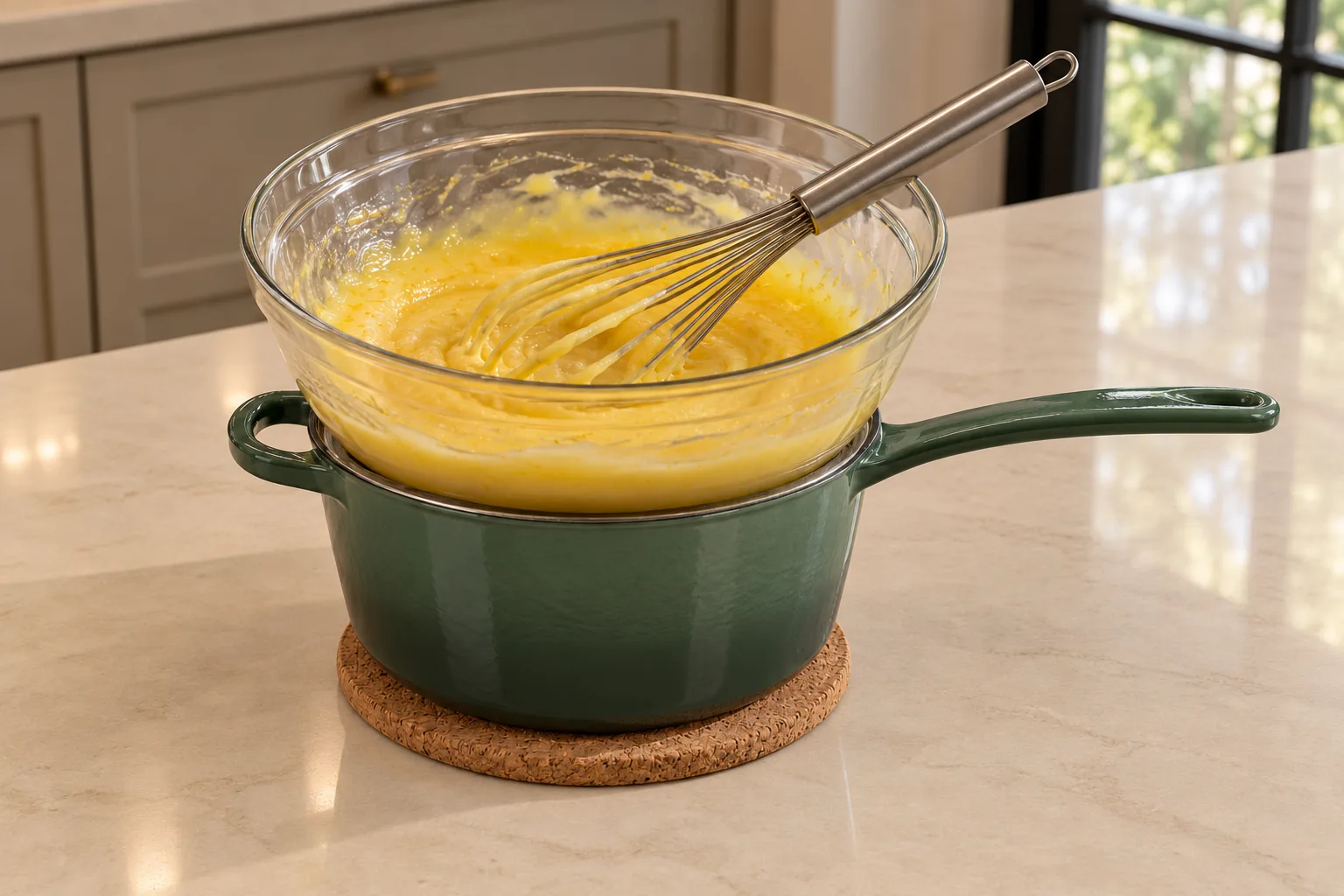
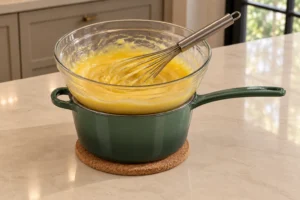
The double boiler gives the eggs gentler, indirect heat while you whisk. The mixture begins thin and loose; after several minutes it becomes opaque, thicker, and pudding-like. Fresh zest brings a sharp lemon fragrance, while the honey and coconut oil round out the finished curd.
Full GAPS Fit
This is a Full GAPS dessert, not an Introduction Diet recipe. It is made with fresh lemon, eggs, raw honey, and coconut oil. Keep the measured honey in the recipe as written.
For a ghee-based curd with vanilla, use the separate recipe linked above; it has its own measured formula and method.
Ingredients
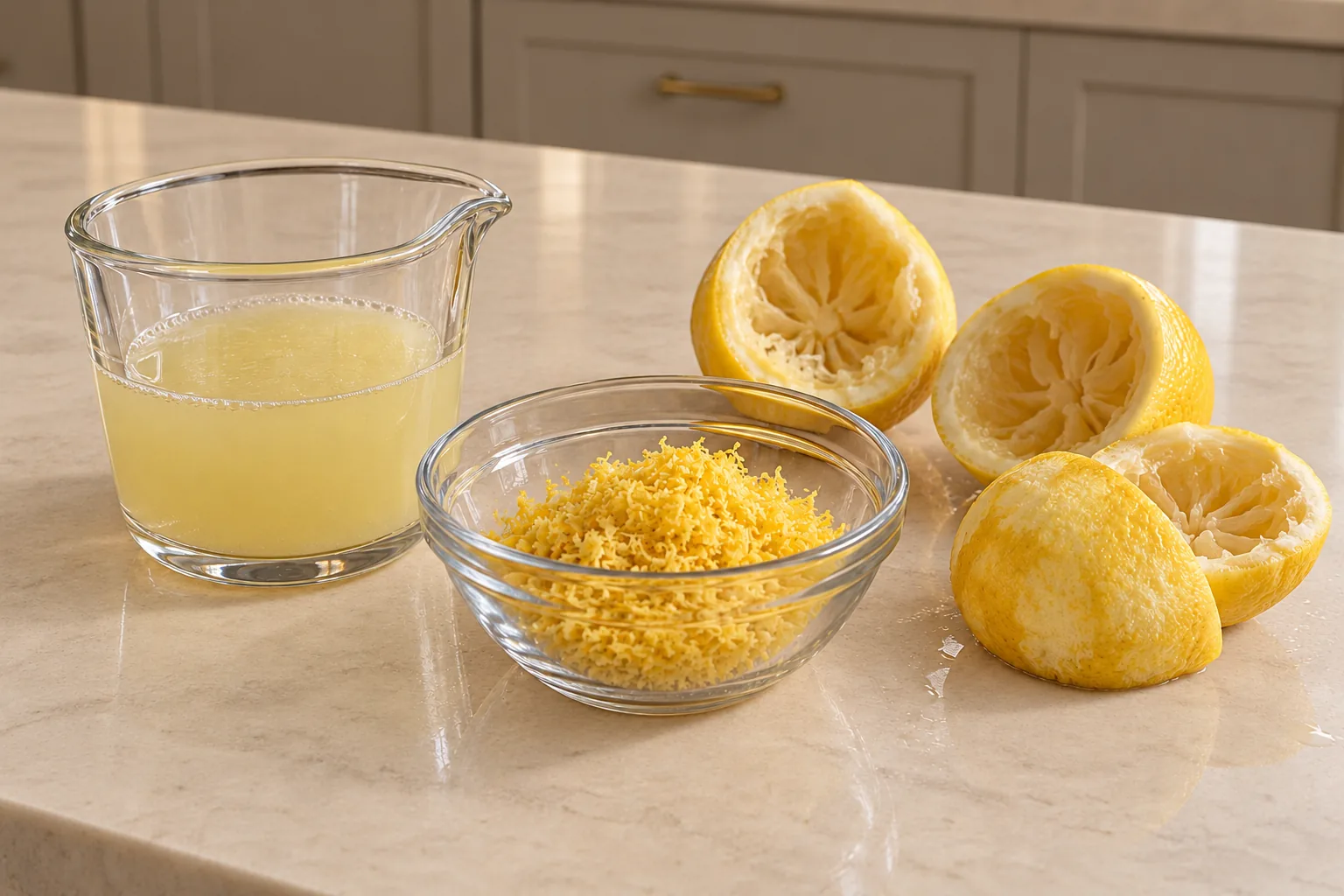
Use fresh lemons for both the zest and juice. Zest them before juicing so the rind is easy to hold, then measure the juice after squeezing; lemon size and juiciness vary. Finely grated zest disperses evenly and gives the curd a fresher aroma than larger strips.
The formula uses six tablespoons of coconut oil. If yours is unrefined, it may add a light coconut aroma; a refined coconut oil keeps the lemon more prominent. Either way, measure the amount as written and melt it gently in the top of a double boiler.
How to Make Honey Lemon Curd
- Prepare the lemons. Finely zest the lemons, then squeeze and measure one-half cup of juice. Strain out any seeds. The zest should be fine and fragrant, with none of the bitter white pith.
- Whisk the egg mixture. In a measuring jug or bowl, whisk the four whole eggs, three yolks, honey, lemon zest, lemon juice, and sea salt until evenly combined. It should be a thin, uniformly pale-yellow mixture with fine zest flecks, not separate streaks of clear juice and egg.
- Melt the coconut oil. Set up a double boiler with simmering water below and the coconut oil in the upper bowl. Let the oil melt without letting the bowl touch the water. Keep the water at a gentle simmer.
- Cook the curd. Slowly whisk the egg mixture into the melted coconut oil, keeping the whisk moving across the bottom and around the sides of the bowl. Continue whisking for 6 to 8 minutes. At first it will be loose and fluid; as it thickens, the whisk leaves tracks that close more slowly and the curd coats the back of a spoon like soft pudding. Keep the double-boiler water at a gentle simmer so it does not splash into the curd.
- Strain and chill. Pour the warm curd through a fine-mesh strainer into a clean bowl, pressing gently if needed to pass it through. Cover and refrigerate for about 2 hours, or until cold. It will be softer while warm and firmer once chilled.
Serving and Storage
The curd is tart first, with the honey following behind and a gentle coconut finish. Spoon it over Full GAPS nut-butter pancakes or waffles, or serve a small bowl on its own. The number of servings depends on how much curd you serve with each portion.
Transfer it to a clean, shallow container, cover, and refrigerate promptly. Keep it chilled and use within 3 to 4 days. For safe handling, return egg dishes to the refrigerator within 2 hours.
Frequently Asked Questions
Can I use butter instead of coconut oil?
This Full GAPS version is measured with six tablespoons of coconut oil. It keeps the separate eight-tablespoon butter option out of this card rather than swapping the amounts. For a finished ghee-based curd with its own ratios and method, see the linked Full GAPS lemon-curd recipe.
Why use a double boiler?
It heats the egg mixture indirectly, giving you time to whisk as it thickens. Keep the water gently simmering and keep the whisk moving so the curd thickens evenly instead of catching on a hot spot.
How do I know when the curd is thick enough?
At the right thickness, the curd looks like soft pudding and coats the back of a spoon. A whisk track closes gradually rather than vanishing immediately. It will firm further as it chills.
Will it taste strongly of coconut?
That depends on your coconut oil. Unrefined oil can leave a light coconut aroma; refined oil lets the lemon lead. The lemon zest is important in either case because it brings the fresh citrus scent to the finished curd.
Can I make this for the Introduction Diet?
No. This post is labeled for Full GAPS and is not an Intro Diet recipe.
Recommended Equipment
A heatproof bowl that rests securely over a saucepan makes the double boiler. I use Le Creuset cookware in Artichaut; the Signature Round Saucepan is a useful lower pot for this small batch. A stainless whisk, glass measuring cup, fine-mesh strainer, fine zester, and shallow glass container are the other pieces you need. A stainless balloon whisk and fine-mesh strainer are current options.
A Baking Project for Later
If you enjoy using lemon curd as a filling, the upcoming Nut Flour Baking Recipe Card Deck will bring together the nut-flour breads and bakes we make versions of on Full GAPS. It is in the works now; visit the WFLI shop for the catalog.
Honey Lemon Curd Recipe
Honey Lemon Curd with Coconut Oil for Full GAPS
Ingredients
Equipment
Method
- Finely zest fresh lemons, then squeeze and measure 1/2 cup juice. Strain out any seeds.
- Whisk 4 large eggs, 3 large egg yolks, 1/2 cup raw honey, 1/4 cup finely grated lemon zest, 1/2 cup fresh lemon juice, and 1/8 teaspoon sea salt until evenly combined.
- Set up a double boiler with gently simmering water in the lower pan. Add 6 tablespoons coconut oil to the upper bowl and let it melt; the bowl should rest securely above the water without touching it.
- Slowly whisk the egg mixture into the melted coconut oil, keeping the whisk moving across the bottom and sides. Continue for 6 to 8 minutes, until the curd is thick like pudding and coats the back of a spoon.
- Strain the curd into a clean bowl. Cover and refrigerate about 2 hours, until cold.
Notes
Tried this recipe?
Let us know how it was!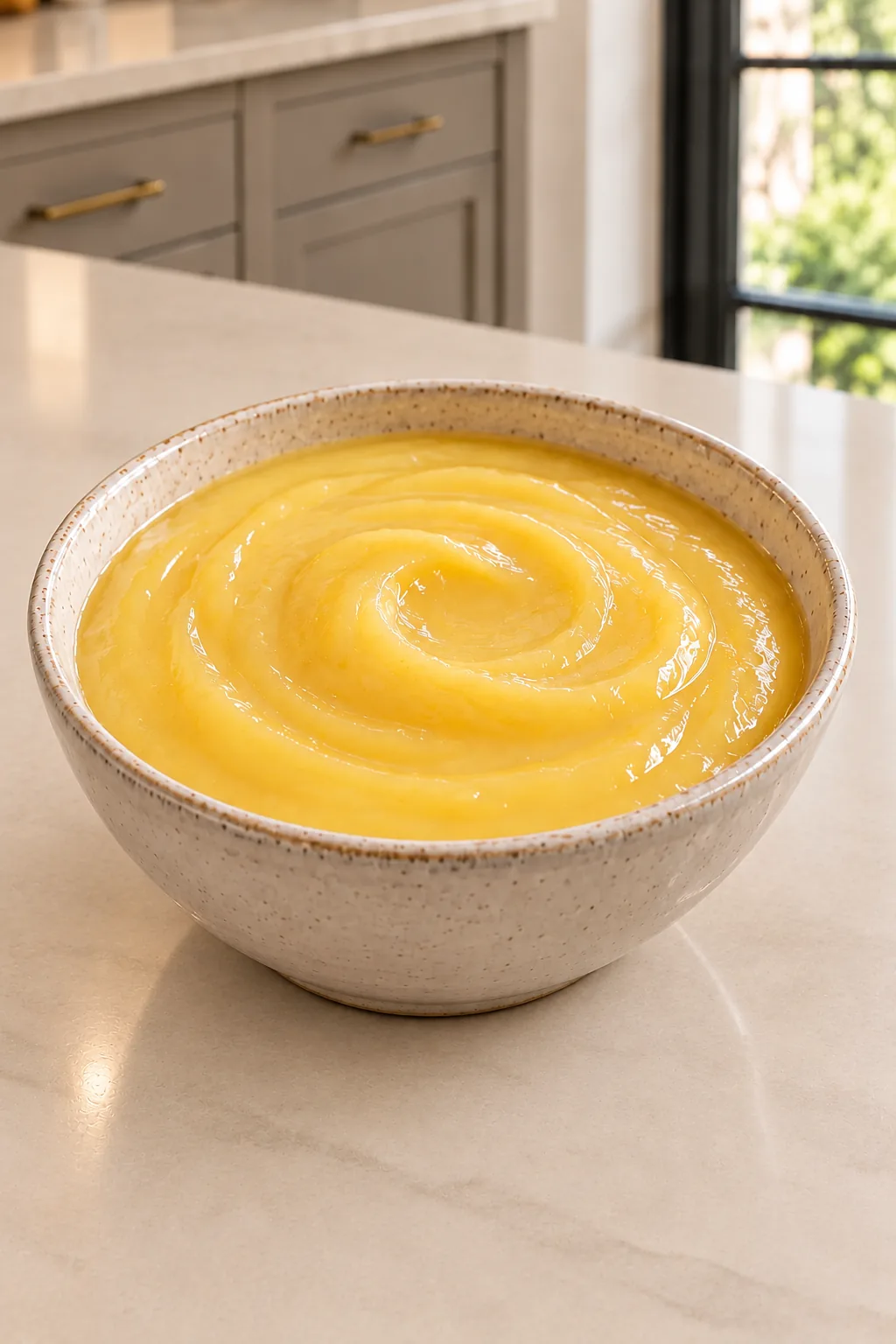

Leave a comment