

This Full GAPS Bun Bo Hue keeps the deep, salty, citrusy character of the Vietnamese beef noodle soup while changing the parts that do not fit this version of the diet. Zucchini noodles replace packaged noodles. Homemade beef meat stock carries the broth. Fresh lemongrass, ginger, mushrooms, daikon, sour apple, fish sauce, cilantro, green onion, and lime build the rest of the bowl.
The broth is clear and amber-brown rather than thick. The steak stays in distinct slices, and the zucchini noodles remain bright green with a little bite. You prepare the broth base, meat, and noodles separately, then bring them together at the table. That separation is what keeps the bowl from turning into soft zucchini swimming under overcooked beef.
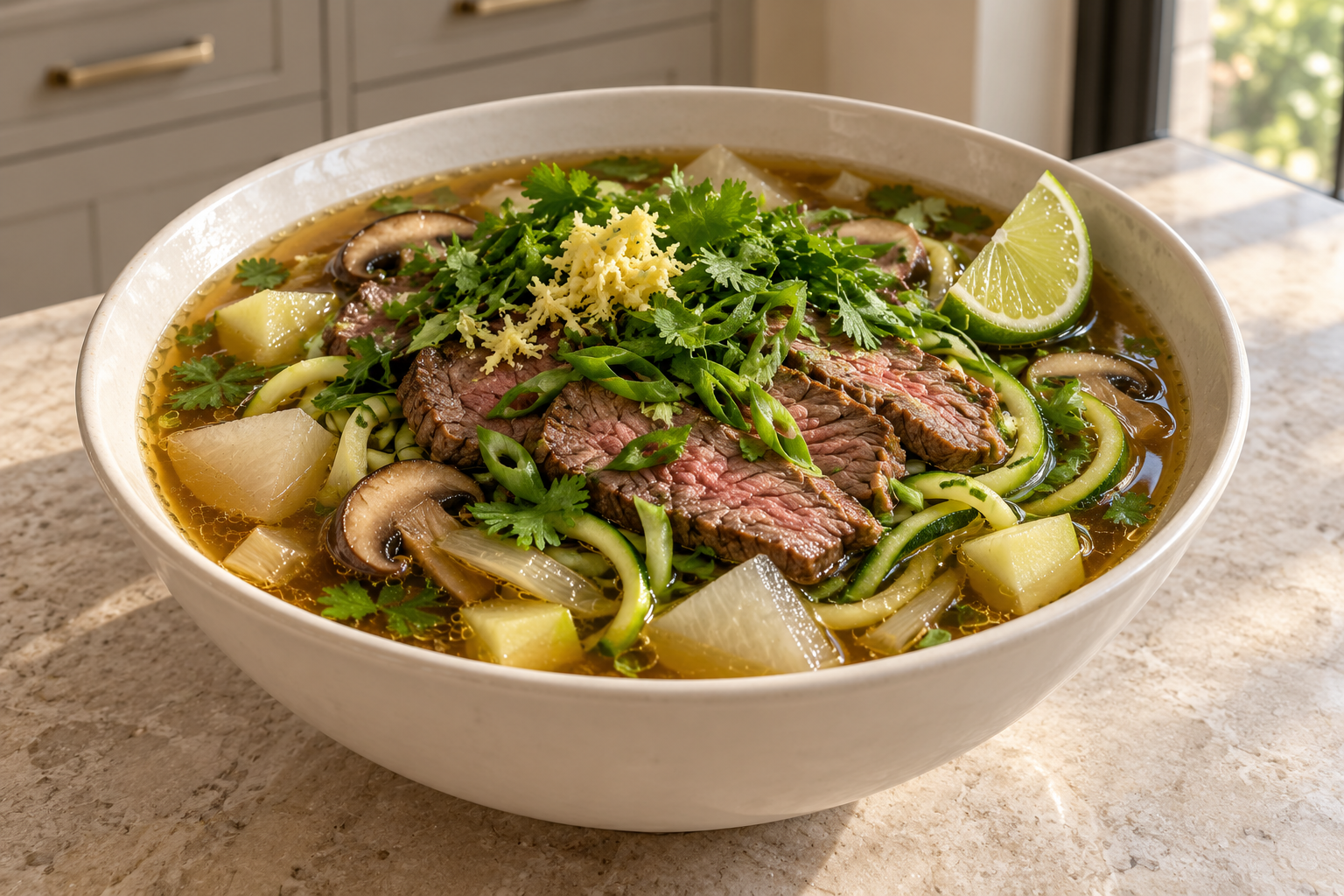
A Full GAPS Bun Bo Hue Adaptation
Bún bò Huế is a Vietnamese beef noodle soup associated with the city of Huế. Traditional and home versions vary, but rich stock, noodles, beef, lemongrass, and fresh garnishes are central to the dish. This version is an adaptation for a later Full GAPS meal. It does not pretend zucchini noodles are the same as rice noodles. They give you the noodle shape and a useful way to carry the broth without adding a packaged substitute.
I start a pot of meat stock first thing in the morning because having stock ready to drink or turn into soup is the routine that made GAPS doable in our house. I homeschool before working second shift, so meals built from parts help. This recipe follows that same practical pattern. The meat stock is already made. The vegetable base simmers while the steak and zucchini noodles are prepared, and everything meets in the bowl.
Use three cups of homemade GAPS beef meat stock made separately from raw meaty beef parts. The 30-minute vegetable simmer in this recipe seasons the finished soup. It does not replace the full meat-stock process or turn plain water and vegetables into meat stock.
Choose Four Cups of Broth Vegetables and Sour Apple
The measured broth base uses four cups total of chopped produce. Fill that measure with daikon radish, sliced mushrooms, green-onion whites, and peeled Granny Smith apple in the proportions that suit your pot. The total stays four cups even when the balance changes.
Daikon becomes tender and translucent around the edges. Mushrooms deepen the broth. Green-onion whites soften into the background. Sour apple brings a light sweetness without the coconut sugar used in other versions, and sour apple is the fruit choice used here with beef. Peel it and cut it into small pieces so it cooks at the same rate as the other produce.
This photographed formula does not use pineapple. It also does not use mung-bean sprouts, packaged noodles, coconut sugar, sausage, banana blossom, chile paste, or commercial soup base. Keeping those choices out makes the bowl easier to read and keeps every ingredient aligned with this exact Full GAPS version.
Prepare Fresh Lemongrass for the Broth
Use three fresh lemongrass stalks. Cut off the dry tops and reserve the tender usable length. Peel away the tough outer layers from the lower three inches until you reach the paler core. Trim off the bulb end, then smash the lower section with the flat heel of a heavy knife or a rolling pin.
Smashing is the useful cue. The stalk should split and become fragrant without turning into tiny pieces. Add both the smashed lower section and the upper stalk to the pot, then remove every stalk before the meat stock is stirred in. The broth should smell clearly citrusy, but no woody lemongrass fibers should end up in the bowl.
Simmer the Vegetable Broth Base
Put the four cups of chopped produce, two cups filtered water, two teaspoons sea salt, and the prepared lemongrass into a large stainless stockpot. Cover the pot and bring it to a boil. Lower the heat to medium-low and simmer, covered, for 30 minutes.
Keep the simmer steady rather than hard. A hard boil can reduce the liquid before the vegetables are ready. At the end, the pot should hold about five cups of liquid and cooked solids. The daikon should be fork-tender, the mushrooms should look supple, and the apple should be soft but still recognizable. Add only enough hot water during the simmer to prevent the pot from drying below that endpoint.
While the pot cooks, chop the cilantro, finely grate the ginger, and slice the green parts of the onions. Keep the lime wedges for the table. These garnishes stay fresh until the bowls are assembled.
Pan-Fry the Top Sirloin in Beef Tallow
Heat two tablespoons of beef tallow in a heavy skillet over medium-high heat. Add three-quarters to two pounds of top sirloin and season it with sea salt. The range is part of the recipe: use the smaller amount when the broth and vegetables are the focus, or the larger amount when you want generous steak in every bowl.
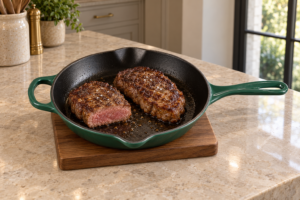
Once the first side has a deep brown crust, reduce the heat to medium and turn the steak. Cook five to eight minutes per side, or longer for a thick piece. Cut into the thickest part to check the center. The photographed steak has a warm pink center under a browned exterior. Keep the cooked meat warm, then slice it thinly across the grain before assembly.
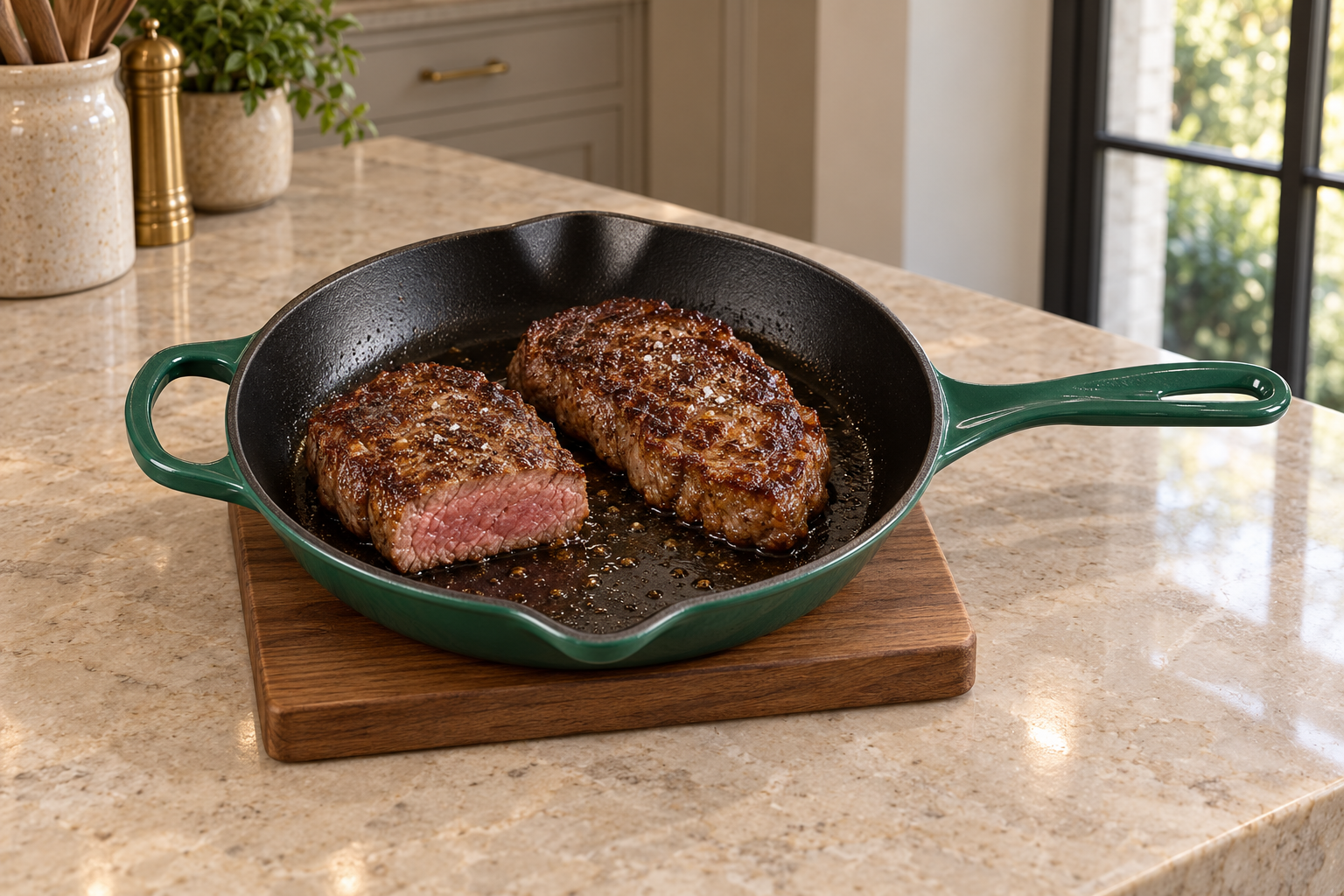
Keep the Zucchini Noodles Bright and Separate
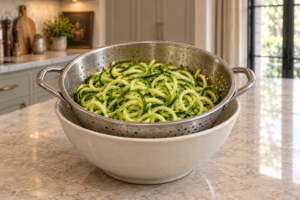
Spiralize six medium zucchini. Bring a separate saucepan of water to a boil, add the zucchini noodles, and cook them for only one to two minutes. They should bend easily while staying bright green. If they become dull, limp, and watery, they have gone too far.
Drain the noodles immediately and rinse them with cold water to stop the cooking. Let them sit in a stainless colander nested securely in a bowl while the broth is finished. This keeps extra water out of the serving bowls and prevents the noodles from continuing to soften.
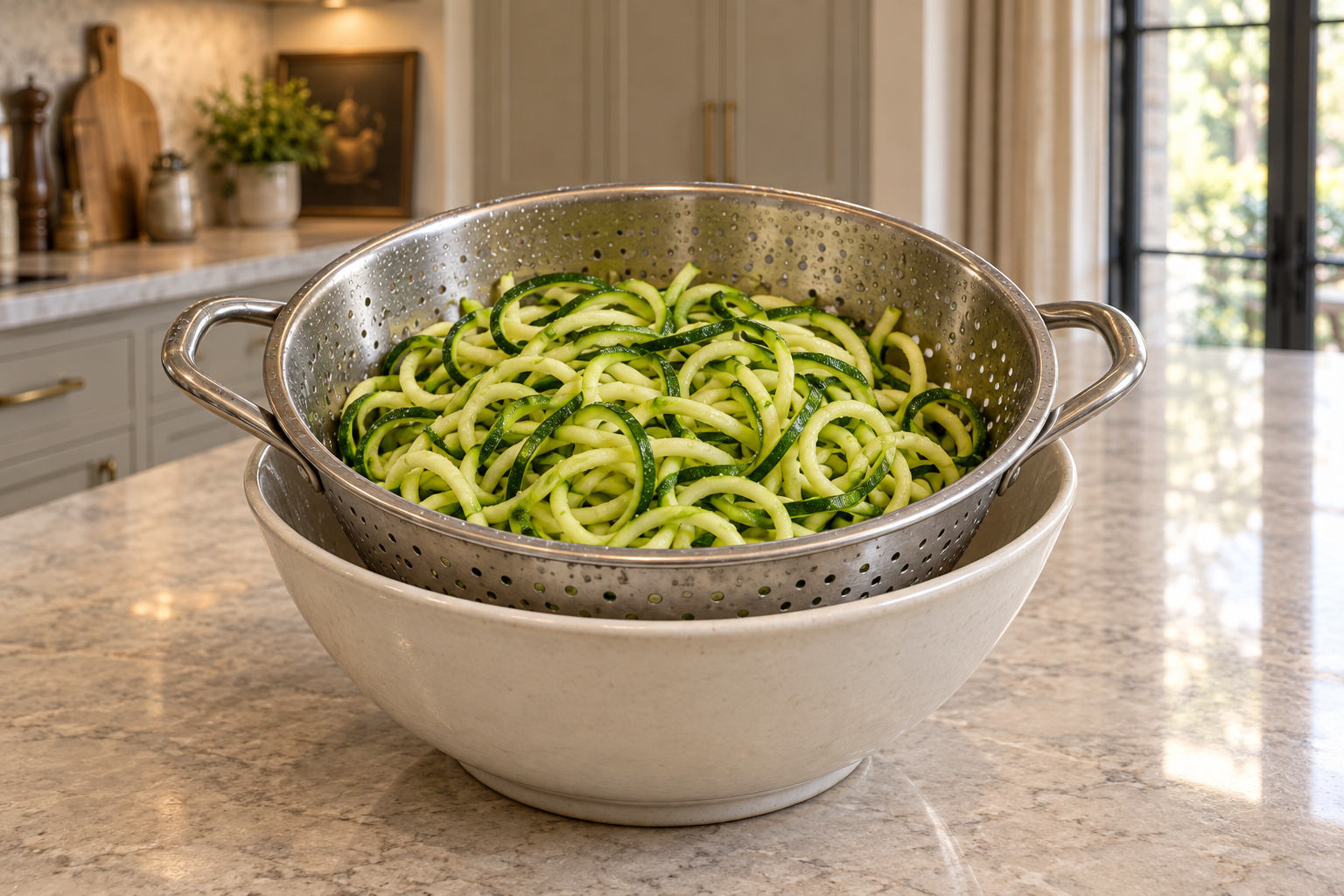
Finish the Broth Without Recooking the Meat Stock
Remove the lemongrass from the cooked vegetable base. Stir in three cups of hot homemade beef meat stock and two tablespoons of traditionally fermented fish sauce made without non-GAPS additives. Warm the combined broth until it is steamy.
The meat stock is already complete before it enters this recipe. You are heating it with the cooked produce, not starting another long stock cook. The finished liquid should remain pourable and clear enough to see the zucchini noodles beneath the surface. Taste after the fish sauce is incorporated before deciding whether the bowl needs more sea salt.
Assemble Each Bowl Just Before Serving
Divide the drained zucchini noodles among six deep bowls. Ladle in the hot broth and cooked vegetables. Arrange the thin steak slices on top, then add finely grated ginger, chopped cilantro, sliced green-onion greens, and a lime wedge.
The heat of the broth warms the steak and releases the ginger and cilantro fragrance without cooking the garnishes into the liquid. Squeeze in lime at the table. The first taste should be beefy and salty, followed by lemongrass and ginger, with a light sour finish. The apple should support the broth rather than make it taste like fruit soup.
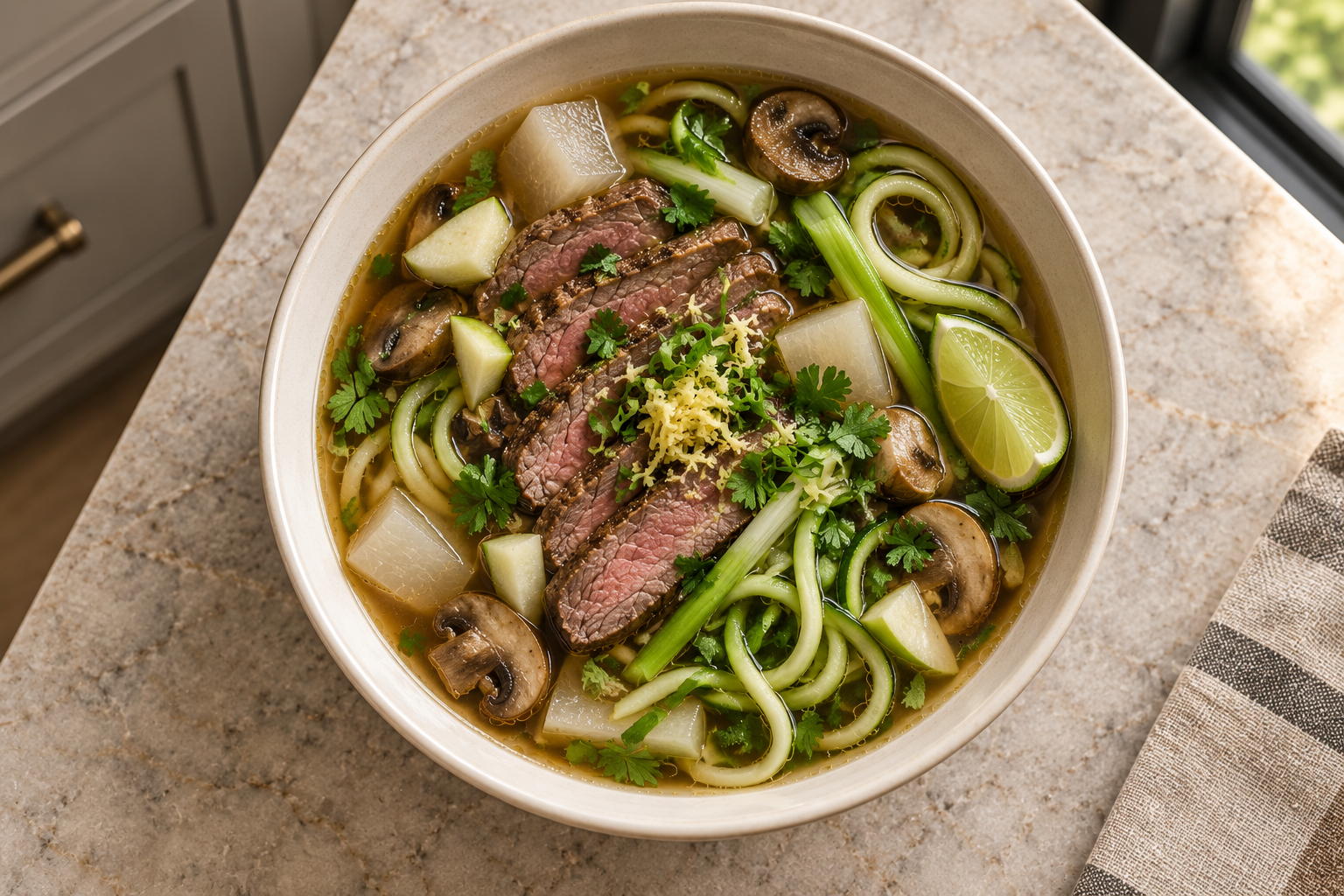
Where This Recipe Fits on GAPS
This is a later Full GAPS meal. It uses homemade raw-meaty beef stock, fresh beef, tallow, non-starchy vegetables, sour apple, fresh herbs, ginger, lime, and traditionally fermented fish sauce made without non-GAPS additives. It is grain-free and dairy-free.
It is not an Introduction Diet recipe. The steak is pan-fried, and the finished bowl uses raw cilantro, ginger, green onion, and lime. Someone moving through Intro can use the linked beef meat stock in the way that fits their current stage, but this complete bowl belongs later.
This is also not a No-Plant or ketogenic version because zucchini, daikon, mushrooms, onion, apple, herbs, ginger, and lime are central to this recipe. Removing all of those foods would create a different soup rather than an adaptation of this card.
Serving Bun Bo Hue for a Family Meal
Set the components out separately and assemble the bowls as people sit down. That lets each person receive plenty of broth without the zucchini noodles sitting in it for too long. A broad ladle works for the broth and vegetables. Tongs or a fork can portion the noodles and steak.
If you want another meal that uses zucchini noodles in a completely different way, try the zucchini noodles with bacon, Brussels sprouts, and prepared hazelnuts. That recipe is a dry skillet meal, while this one depends on hot meat-stock broth. The link is useful when you have more spiralized zucchini than this soup needs.
Store the Components Separately
Cool and refrigerate leftover broth with its cooked vegetables in a covered container. Keep the steak and zucchini noodles in separate covered containers. Storing everything together makes the zucchini release water and absorb broth until the strands lose their texture.
Reheat the broth and vegetables until steamy. Warm the steak only as much as needed, then assemble fresh bowls with the cold-rinsed zucchini noodles and new garnishes. The hot broth will finish warming the noodles without another boil.
Equipment for This Soup
You need a large stainless stockpot with a lid, a heavy skillet, a separate saucepan for the zucchini noodles, a spiralizer, a stainless colander, a large supporting bowl, a ladle, and basic cutting and measuring tools. The steak photograph uses the Le Creuset Signature 10.25-inch skillet in Artichaut, fully supported on a heatproof trivet after cooking.
The stockpot needs room for the chopped produce, water, and later addition of meat stock without crowding the rim. The colander must sit securely in the sink or nest inside a larger bowl. It should never balance loosely above the counter.
Frequently Asked Questions
Can I Use Sausage Instead of Steak?
This Full GAPS card uses fresh top sirloin. Commercial sausages commonly contain ingredients that do not fit GAPS. If you use sausage in another version, choose pure-meat sausage made with full-fat meat, salt, pepper, and permitted fresh aromatics, with no commercial seasoning mix.
Can I Make the Meat Stock in the Same Pot?
Use the linked beef meat stock prepared ahead from raw meaty beef parts. The short vegetable simmer in this recipe is not the full meat-stock process. Keeping them separate protects the stock identity and lets the finished soup stay within the 30-minute cook time printed on this card.
Why Rinse the Zucchini Noodles?
The cold rinse stops the one-to-two-minute cooking step. It helps the strands stay green and distinct until the hot broth reaches the bowl. Drain them well so rinse water does not dilute the soup.
Can I Use Lemongrass Essential Oil?
This recipe uses three fresh lemongrass stalks. Prepare, smash, simmer, and remove them as directed. The fresh stalks give the broth its citrus fragrance without adding essential oil to the food.
Can I Leave Out the Sour Apple?
Yes. Keep the total chopped produce at four cups by using more daikon, mushrooms, or green-onion whites. The apple is the measured optional-fruit branch in this version, and leaving it out makes the broth less sweet.
Can I Add Bean Sprouts or Packaged Noodles?
Not to this Full GAPS formula. The card uses zucchini noodles and omits mung-bean sprouts and packaged noodles. A different noodle or sprout version would need its own ingredient review and would no longer match the recipe documented here.
Full GAPS Bun Bo Hue Recipe
Bun Bo Hue with Zucchini Noodles for Full GAPS
Ingredients
Equipment
Method
- Prepare the lemongrass. Cut off the dry tops, peel away the tough outer layers from the lower 3 inches, trim off the bulb end and smash the lower section until split and fragrant.
- Put the 4 cups chopped produce, filtered water, 2 teaspoons sea salt and prepared lemongrass in a large stainless stockpot. Cover and bring to a boil. Reduce to medium-low and simmer, covered, for 30 minutes, adding only enough hot water to prevent the pot from reducing below about 5 cups of liquid and solids. The daikon should be fork-tender, the mushrooms supple and the apple soft but recognizable.
- While the vegetable base simmers, chop the cilantro, finely grate the ginger and slice the green-onion greens. Cut the lime into wedges and set the fresh garnishes aside.
- Heat the beef tallow in a heavy skillet over medium-high heat. Season the top sirloin with sea salt and brown the first side. Reduce the heat to medium, turn and cook 5 to 8 minutes per side, or longer for a thick piece. Cut into the thickest part to check the center. Keep warm, then slice thinly across the grain before assembly.
- Bring a separate saucepan of water to a boil. Add the spiralized zucchini and cook only 1 to 2 minutes, until the strands bend easily but remain bright green. Drain immediately, rinse cold and leave in a supported colander to shed excess water.
- Remove all lemongrass from the vegetable base. Stir in the hot homemade beef meat stock and fish sauce. Warm until steamy, without beginning another long simmer. Taste before adding any more sea salt.
- Divide zucchini noodles among 6 deep bowls. Ladle in broth and cooked vegetables. Top with sliced steak, grated ginger, cilantro, green-onion greens and a lime wedge. Serve immediately.
Notes
- Use separately prepared homemade beef meat stock. The 30-minute vegetable simmer is part of the finished soup and does not replace the complete meat-stock process.
- The 4-cup produce measure scales as a total. Change the proportions of daikon, mushrooms, green-onion whites and sour apple without changing the combined amount.
- The photographed branch uses top sirloin, beef tallow, sour apple and fresh lemongrass. It omits sausage, pineapple, bean sprouts, packaged noodles, coconut sugar, chile paste and lemongrass essential oil.
- The steak amount is a budget and portion range. The 2x control scales 3/4-2 pounds to 1 1/2-4 pounds; use a skillet large enough to avoid crowding or cook in batches.
- Store broth, steak and zucchini noodles separately so the noodles do not absorb the broth and soften during storage.
Tried this recipe?
Let us know how it was!Build a Soup Rotation Around Homemade Stock
Once meat stock is already in the refrigerator, soups like this become much easier to fit into a weekday. Our upcoming Soups & Stews Cookbook is built around that same approach: practical Full GAPS meals with clear prep order, physical cooking cues, and family-size planning. Find current guides and catalog updates in the WFLI shop.

Leave a comment