

This beef jerky starts with one pound of thinly sliced beef and a honey, garlic, ginger, pepper, and coconut-aminos marinade. Chill the slices in the marinade for 6 to 8 hours. Heat the marinated beef to 160°F while it is still moist, then dry it slowly in a 200°F oven until the pieces bend with small surface cracks but do not snap.
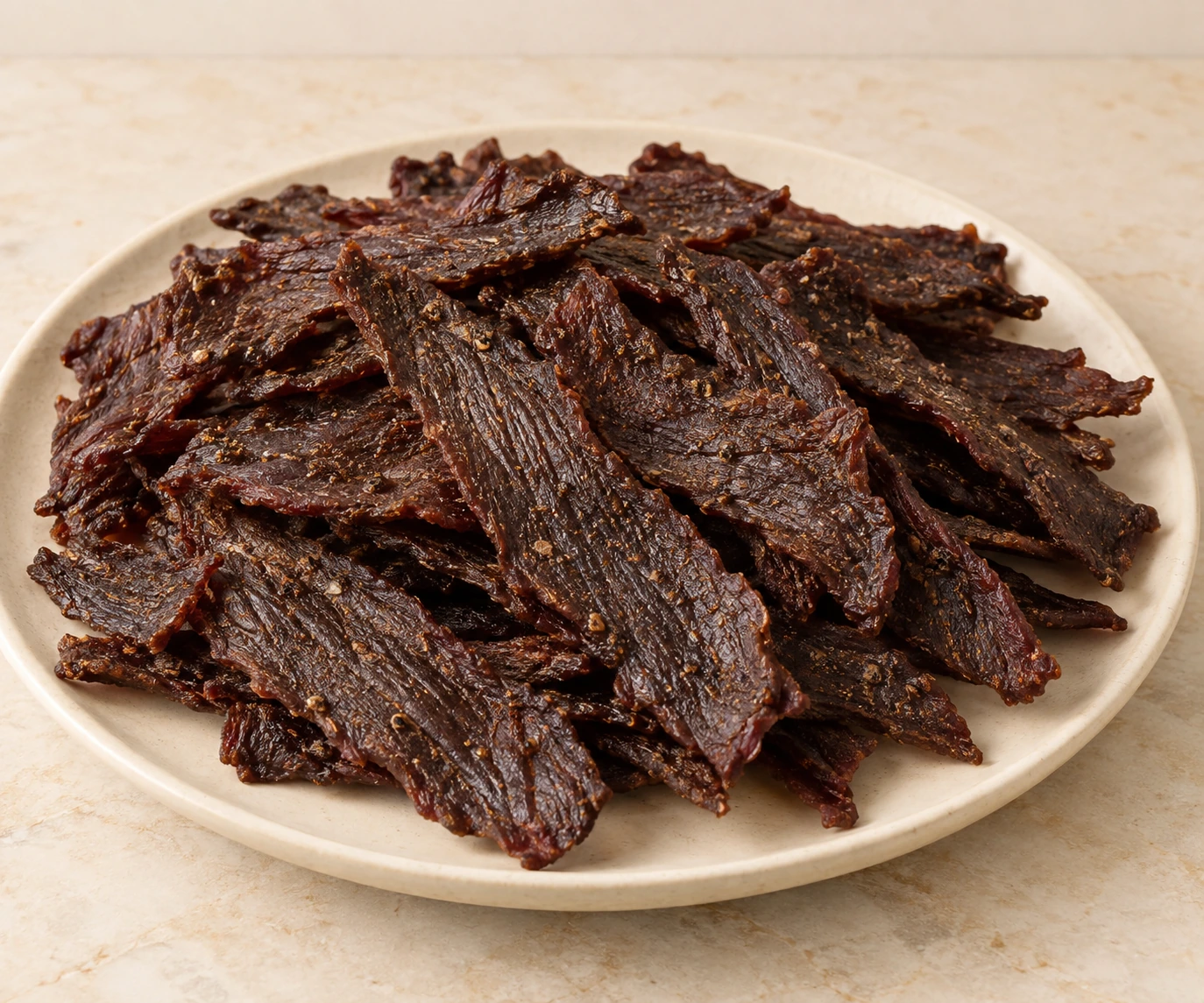
The recipe has separate preparation, refrigeration, moist-heating and drying stages. The overnight-length marinade takes no stove time, but the later cooking steps need a temperature check and a cooled-strip texture check. Plan those checks along with the approximately four-hour oven stage.
Our family brings food along or eats before going out. This recipe makes small pieces that are ready to eat from the refrigerator, but it is not a room-temperature-storage recipe. Cool the batch and keep it refrigerated using the storage directions below.
Yield: About 25 pieces from 1 pound of raw beef
Prep time: 10 minutes
Partial freeze: 30 minutes
Marinating time: 6 to 8 hours
Wet-heat step: Until the thickest strips reach 160°F
Oven time: About 4 hours, or until properly dry
Ingredients
- 1 pound brisket, skirt steak, or bottom round
- 1/4 cup coconut aminos from a bottle whose complete current ingredient list fits GAPS, without non-GAPS additives
- 3 tablespoons raw honey
- 3/4 teaspoon pure garlic powder, without additives
- 3/4 teaspoon pure ground ginger, without additives
- 1/2 teaspoon freshly ground black pepper
For the wet-heat step: Filtered water only if needed to cover the marinated beef; discard it with the used marinade.
The marinade combines savory coconut aminos with honey, garlic, ginger and black pepper. Whisk the honey through the liquid before pouring it over the slices. Use the named brisket, skirt steak or bottom round and cut it to the quarter-inch thickness in the method. The beef is then moist-heated before the separate drying stage.
Method
- Put the beef in the freezer for 30 minutes. It should be firm enough to hold still under the knife without being frozen solid.
- Slice the beef into 1/4-inch-thick pieces. Arrange the slices in an 11 x 7-inch or similarly sized baking dish.
- Whisk the coconut aminos, raw honey, garlic powder, ground ginger, and black pepper in a small bowl. Pour the marinade evenly over the beef.
- Cover the dish and refrigerate for 6 to 8 hours.
- Transfer the beef and all of its marinade to a stainless-steel or enameled saucepan. Add only enough filtered water to cover the strips if the marinade alone does not cover them. Heat the beef while it is still moist, checking several of the thickest strips with a metal-stem food thermometer until their centers reach 160°F. Do this before the drying step.
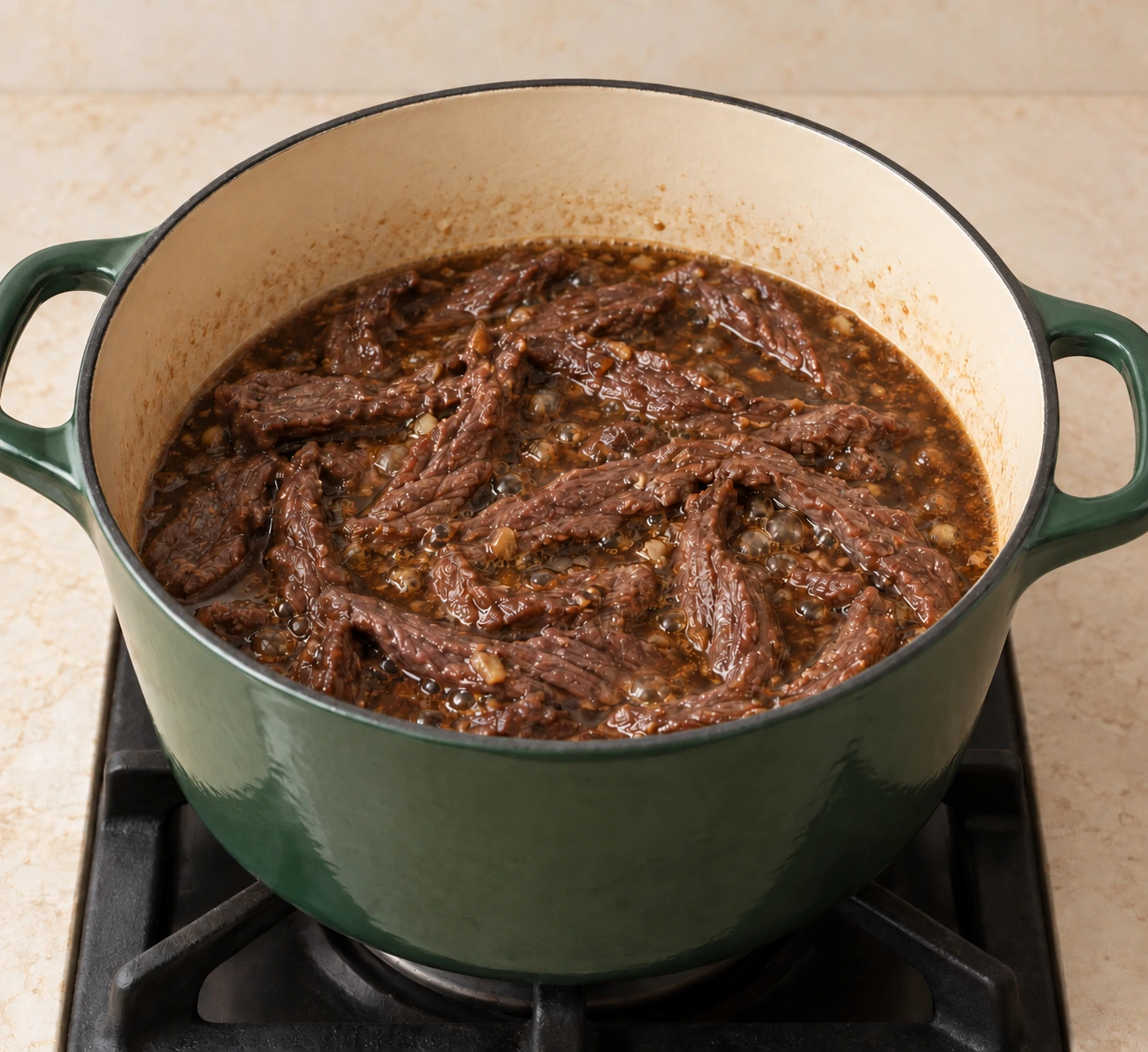
- Heat the oven to 200°F with a rack in the middle position. Set two uncoated stainless-steel racks over two large uncoated stainless-steel rimmed baking sheets.
- Lift the hot beef from the saucepan. Discard the used marinade and water, then drain and pat the strips dry. Arrange them on the racks with about 1/4 inch between slices.
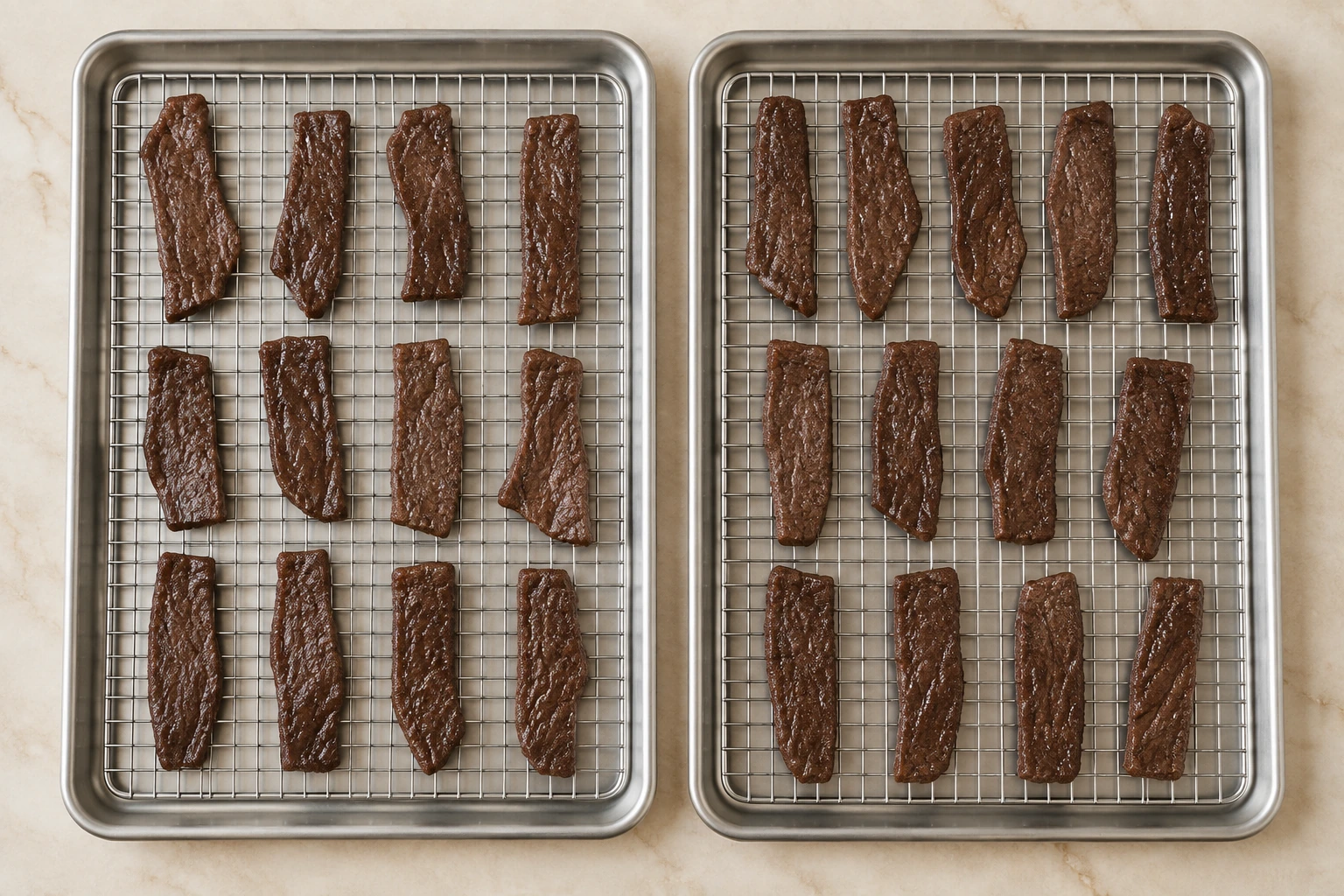
- Dry the beef in the oven for about 4 hours, checking the texture near the end. Bend a cooled test piece: the surface should develop small cracks, but the strip should not break. Continue drying if it is wet or soft.
- Cool the jerky completely. Keep it in a covered glass container in the refrigerator for up to 2 weeks.
The30-minute partial freeze makes the beef firm enough to slice without freezing it solid. Cut the pieces to the stated quarter-inch thickness before arranging them in the marinating dish.
Whisk until the honey is distributed through the coconut-aminos mixture. Cover and refrigerate the marinating beef for 6 to 8 hours, then transfer the strips and all their marinade to the saucepan for the accepted moist-heat step.
Near the end of drying, cool a test strip briefly and bend it. A dry strip develops small surface cracks without breaking. If it is wet or soft, keep drying and check again; the approximate four-hour time does not replace that texture check.
The Physical Cues That Matter
The 30-minute freeze is there to make thin slicing easier. Stop at firm and sliceable; the beef does not need to freeze through.
The160°F check happens while the strips are still moist in the saucepan, before they go onto the oven racks. Drain and pat the heated strips dry, then leave about a quarter inch between them on the racks.
Cool a test piece briefly before bending it. Look for small surface cracks without the strip snapping. Continue drying if it is wet or soft.
Why This Version Fits Full GAPS
Use fresh beef, raw honey and pure, single-ingredient garlic powder and ground ginger without starch, sugar or other additives. Black pepper completes the measured seasoning.
Use the measured quarter-cup of coconut aminos whose complete current ingredient list fits GAPS. The official GAPS FAQ bases its answer on manufacturer information, so check the product you choose. Soy tamari is not the ingredient used here.
FAQ
Can I Use Tamari Instead of Coconut Aminos?
Tamari is made from soy. This Full GAPS recipe uses coconut aminos with a qualifying current ingredient list.
Can I Replace the Powdered Garlic or Ginger with Fresh?
The recipe uses three-quarter teaspoon each of pure garlic powder and ground ginger. These are the measured seasoning forms for its marinade.
How Do I Know the Jerky Is Finished?
Bend a cooled test strip. Its surface should develop small cracks without the piece breaking. Continue drying if it remains wet or soft.
Does the Beef Need to Freeze Solid Before Slicing?
No. Freeze it for 30 minutes so it becomes firm and easier to slice into 1/4-inch pieces.
How Should I Store It?
Cool the jerky completely, cover it and refrigerate it for up to two weeks.
Can I Cut the Beef Thicker Than 1/4 Inch?
Cut the slices to a quarter inch as the method directs. This keeps the preparation consistent across the batch.
Why Does the Recipe Call for Two Baking Sheets?
Two uncoated stainless-steel racks over rimmed stainless-steel baking sheets give the strips space to dry. Leave about a quarter inch between pieces as described in the method.
Ingredients
Method
- Put the beef in the freezer for 30 minutes. It should be firm enough to hold still under the knife without being frozen solid.
- Slice the beef into 1/4-inch-thick pieces. Arrange the slices in an 11 x 7-inch or similarly sized baking dish.
- Whisk the coconut aminos, raw honey, garlic powder, ground ginger, and black pepper in a small bowl. Pour the marinade evenly over the beef.
- Cover the dish and refrigerate for 6 to 8 hours.
- Transfer the beef and all of its marinade to a stainless-steel or enameled saucepan. Add only enough filtered water to cover the strips if the marinade alone does not cover them. Heat the beef while it is still moist, checking several of the thickest strips with a metal-stem food thermometer until their centers reach 160°F. Do this before the drying step.
- Heat the oven to 200°F with a rack in the middle position. Set two uncoated stainless-steel racks over two large uncoated stainless-steel rimmed baking sheets.
- Lift the hot beef from the saucepan. Discard the used marinade and water, then drain and pat the strips dry. Arrange them on the racks with about 1/4 inch between slices.
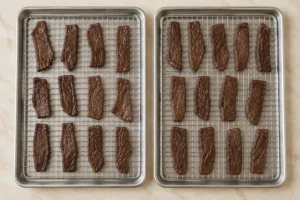
- Dry the beef in the oven for about 4 hours, checking the texture near the end. Bend a cooled test piece: the surface should develop small cracks, but the strip should not break. Continue drying if it is wet or soft.
- Cool the jerky completely. Keep it in a covered glass container in the refrigerator for up to 2 weeks.
Notes
Tried this recipe?
Let us know how it was!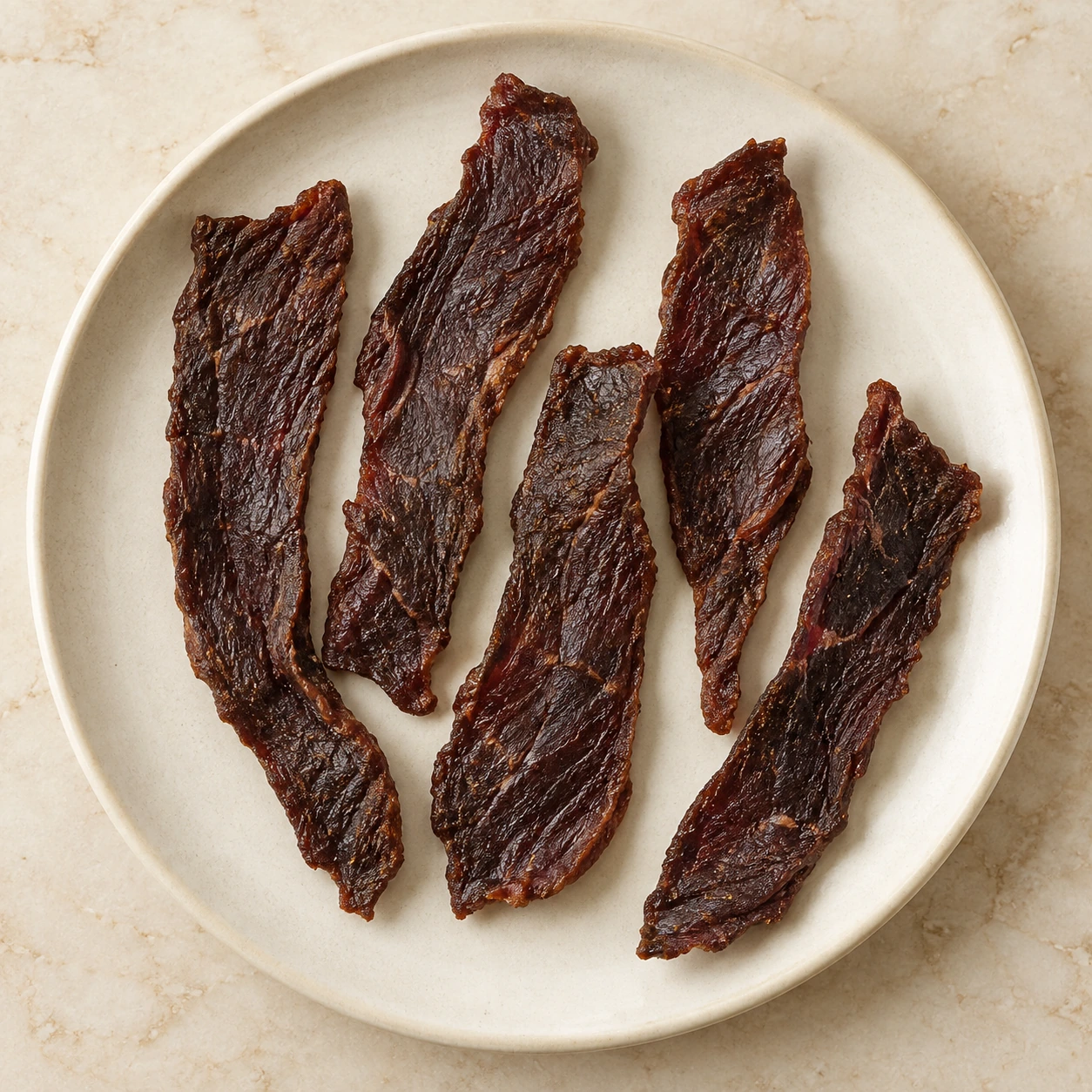
Storage and Serving
Let the jerky cool completely on the racks before packing it away, so trapped heat does not create condensation in the storage container.
Cool the jerky completely, cover it and refrigerate it for up to two weeks.
Portion the cooled jerky as needed and keep the rest covered in the refrigerator. It is ready to eat without reheating; this recipe provides no room-temperature holding route.
Related Recipes
For beef served warm, try Full GAPS Bacon-Wrapped Steak Bites. Their ingredients and cooking method are separate from this jerky recipe.
Recommended Equipment
- A sharp knife for slicing the beef
- An 11 x 7-inch or similarly sized baking dish for marinating
- A small bowl and whisk for the marinade
- A stainless-steel or enameled saucepan
- A metal-stem food thermometer
- Two uncoated stainless-steel racks and rimmed baking sheets
- A covered glass container for refrigerated storage
Next Steps
The Protein-Packed Snacks Cookbook is coming soon. For more ideas for planning food away from home, School & Daycare on GAPS is also planned. Browse all recipes while those resources are being prepared.

Leave a comment