

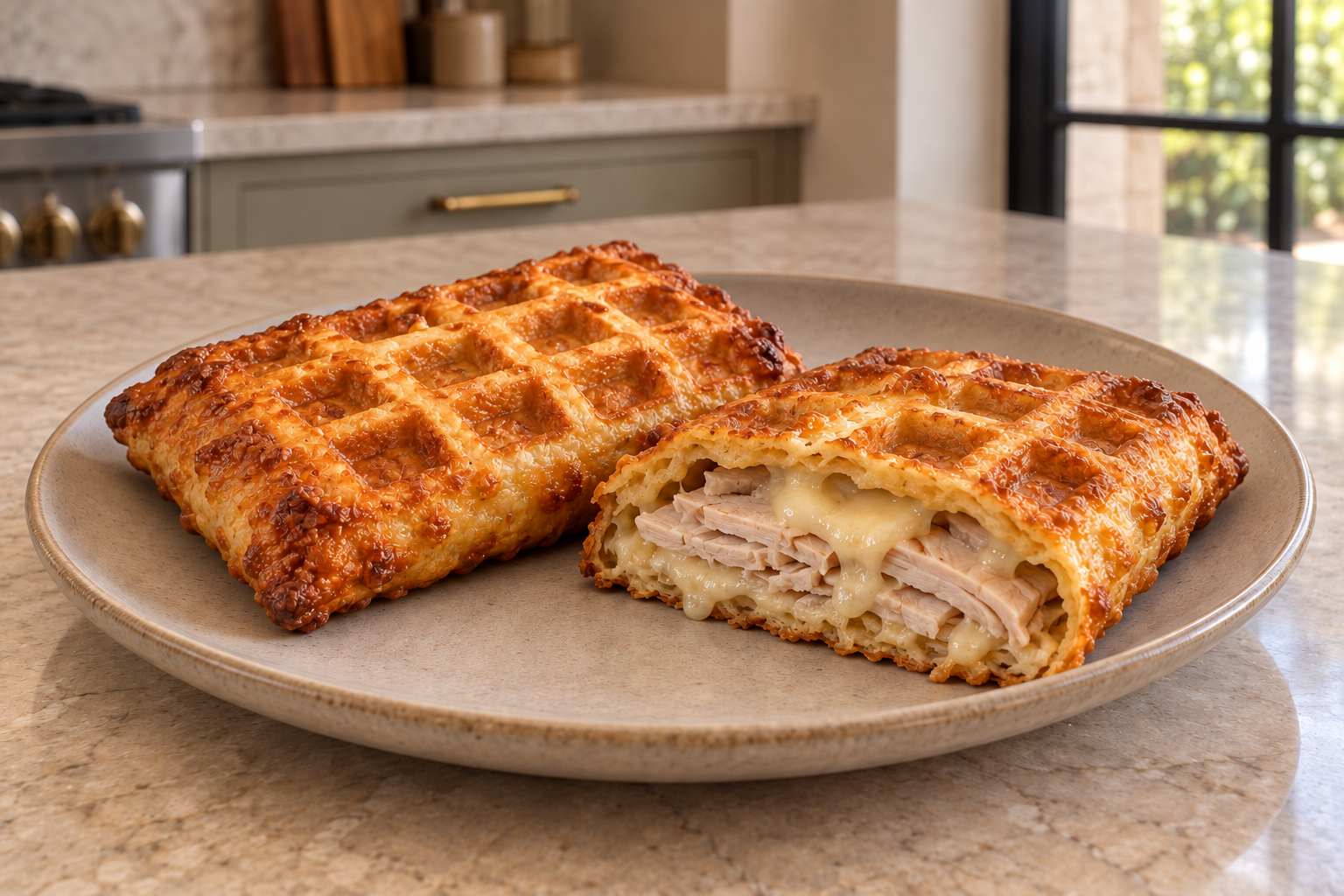
These almond flour turkey and Gruyere hot pockets turn a thick egg-and-aged-cheese batter into a flexible waffle shell, then finish it in the oven around home-roasted turkey and more Gruyere. There is no dough to roll, and the waffle grid gives the outside crisp edges while the center stays tender enough to fold.
This version is built specifically for later Full GAPS. It uses aged cheeses, almond flour, and homemade ghee; leaves out psyllium husk and baking soda; and replaces deli meat with leftover home-cooked roast turkey. The finished pockets should be deep golden outside, hot through the center, and filled with melted cheese rather than loose shredded cheese.
Why the Waffle Iron Makes This Easier
A traditional filled pastry asks you to mix a dough, chill or rest it, roll it evenly, add the filling, and seal it without tearing. Here, the waffle iron presses and partially cooks the shell in about two minutes. You transfer that flexible rectangle to the sheet pan, fill one half, fold, crimp, and let the oven finish the job.
With six kids, a recipe that portions itself is useful for lunches and snack plates. Each person gets a complete pocket instead of loose sandwich parts sliding around the plate. The method also keeps the active work short, which matters on days when lunch needs to fit between schoolwork, appointments, and the next round of kitchen cleanup.
Why This Version Uses Almond Flour
Almond flour is less absorbent than coconut flour, so this branch uses one-quarter cup. The separate coconut-flour hot pockets use only four teaspoons. Those amounts are not interchangeable in the same card, and each version needs its own formula.
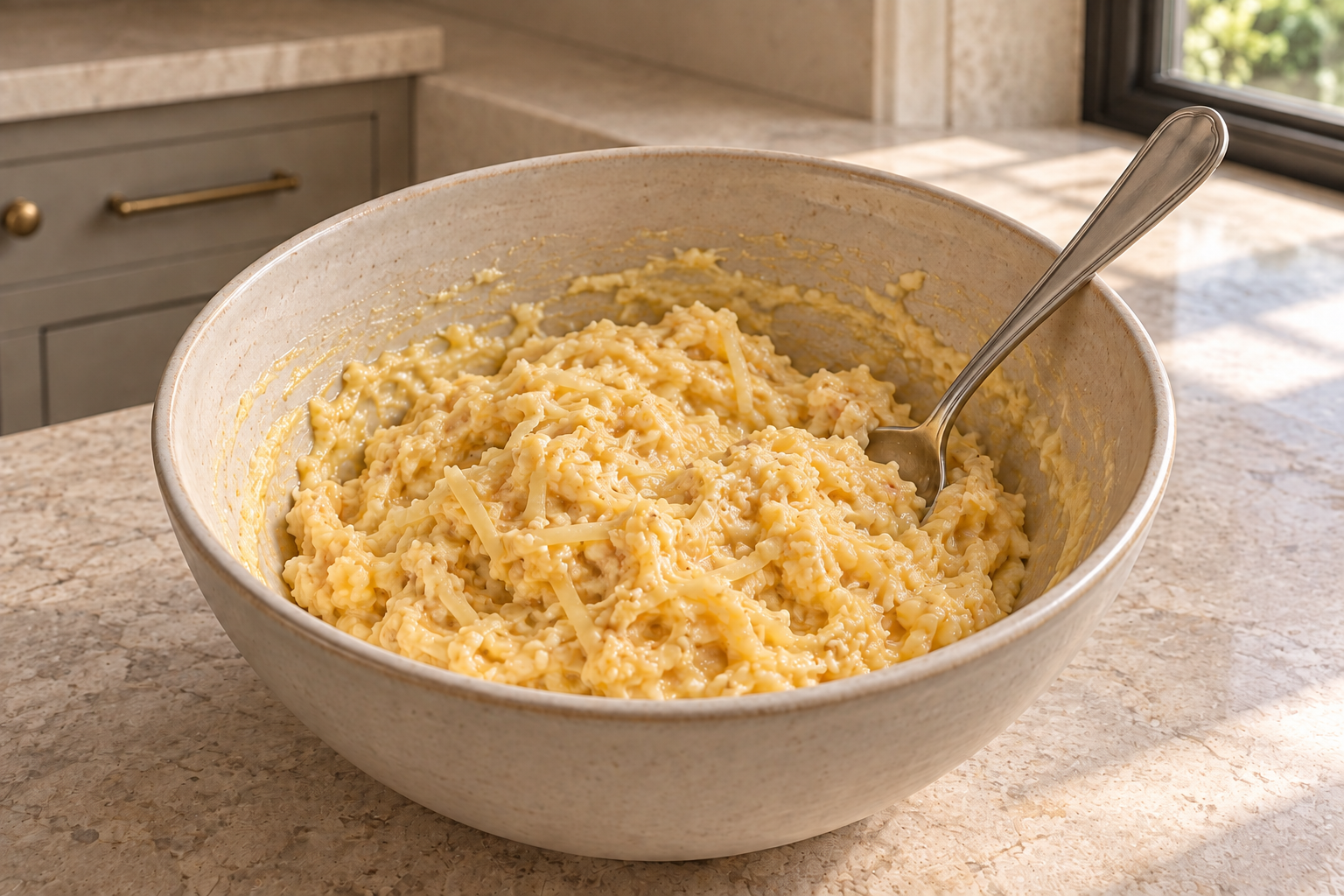
The almond-flour batter should still be thick and cheese-heavy, but it will look slightly smoother and looser than the coconut-flour version. It should resist the spoon and mound softly rather than pour like pancake batter. You should not see dry flour or a pool of loose egg around the edges after stirring.
Use Aged Cheese for Later Full GAPS
The shell uses one and one-quarter cups finely grated aged Gruyere plus one-quarter cup aged Parmesan. The filling uses another one-half cup Gruyere, divided between the two pockets. Finely grated cheese spreads through the egg mixture more evenly and helps the shell hold together.
This is a later Full GAPS recipe after aged cheese has been introduced and tolerated. Fresh mozzarella is not used in this version. If your household is not ready for aged dairy, this cheese-based pocket is not the right recipe to adapt into an earlier stage.
Use Leftover Home-Cooked Turkey
Use two thin slices of leftover home-roasted turkey, one for each pocket. The meat should be fully cooked, chilled promptly after its original meal, and sliced thin enough to fold inside the partially cooked waffle. Commercial deli meat is not part of this formula.
Keep the filling modest. A thick stack of turkey or a mound of cheese will push the edges apart and make the pocket harder to crimp. One thin slice of turkey and one-quarter cup grated Gruyere per pocket gives the filling enough room to melt without spilling heavily onto the pan.
Use Homemade Ghee in the Batter
Melt one tablespoon homemade ghee and let it cool slightly before stirring it into the eggs and cheese. It should remain liquid but should not be hot enough to cook strands of egg when it reaches the bowl.
The ghee adds richness and helps the shell release from a properly seasoned iron. Brush the waffle iron lightly with additional ghee only if your iron normally needs it; do not pour extra fat into the measured batter.
Mix the Thick Cheese Batter
Crack two eggs into a small mixing bowl. Add the one and one-quarter cups Gruyere, Parmesan, one-quarter cup almond flour, and melted ghee. Stir until no dry almond-flour pockets remain and the cheese is evenly coated.
The mixture will resist the spoon and hold a mound for a moment when pushed to one side. That is the cue you want. A thin, runny batter can escape the iron and will not create the flexible, cheese-rich shell needed for folding. If the mixture still pours freely after thorough stirring, wait one minute and stir again before adding anything.
Partially Cook the Shell
Preheat the oven to 350°F and line a stainless-steel sheet pan with unbleached parchment. Preheat an uncoated cast-iron waffle iron. Spread half the batter into a thick rectangle so the finished shell can fold into a pocket.
Cook for about two minutes, shorter than a finished waffle. The surface should look set and pale golden, and the shell should lift without wet batter stretching from the iron. It still needs to feel flexible. If it is already dark and rigid, it has cooked too long to fold neatly.
Give the iron enough time to heat before adding the batter. On an underheated iron, the cheese can cling to the grid instead of forming a set surface. When the first shell is ready to move, its edges will release with a thin spatula and the center will lift as one flexible piece. If wet batter remains attached to the upper plate, close the iron and give it another fifteen to thirty seconds before checking again.
Fill Without Overstuffing
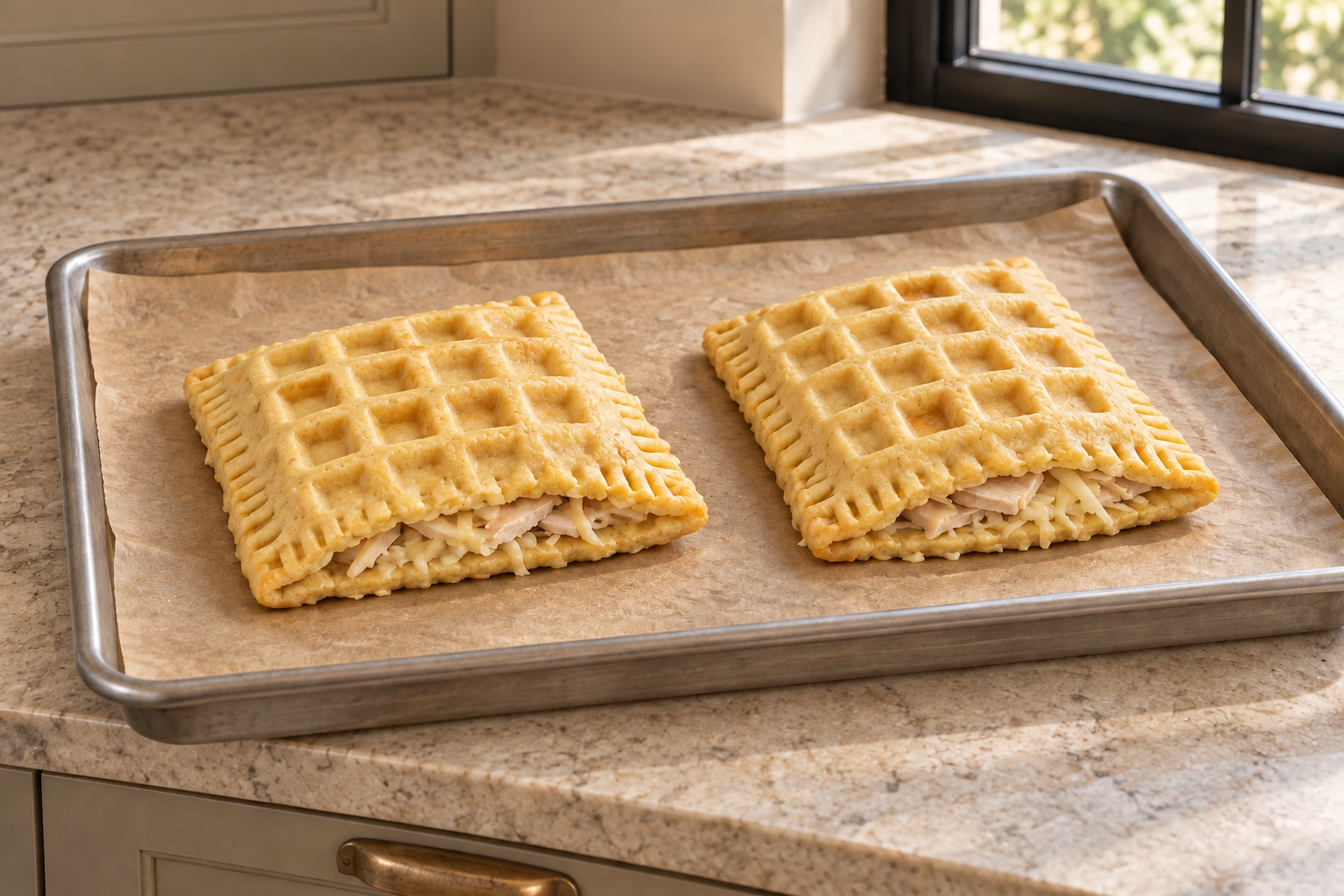
Transfer the partially cooked shell to the prepared pan. Put one thin slice of roast turkey and one-quarter cup grated Gruyere on one half, leaving a border around the edge. Fold the empty half over the filling.
Press the edges with the side of a spoon or the tines of a fork. The shell may not seal like raw pastry dough, and a few small cracks are acceptable. It should hold its folded shape and close in several places without the filling bulging out.
Finish the Pockets in the Oven
Bake for eight to ten minutes. The waffle-grid shell should deepen from pale gold to a crisp golden brown, and the edges should feel firm when nudged with a spatula. The Gruyere inside should be fully melted and the turkey should be hot.
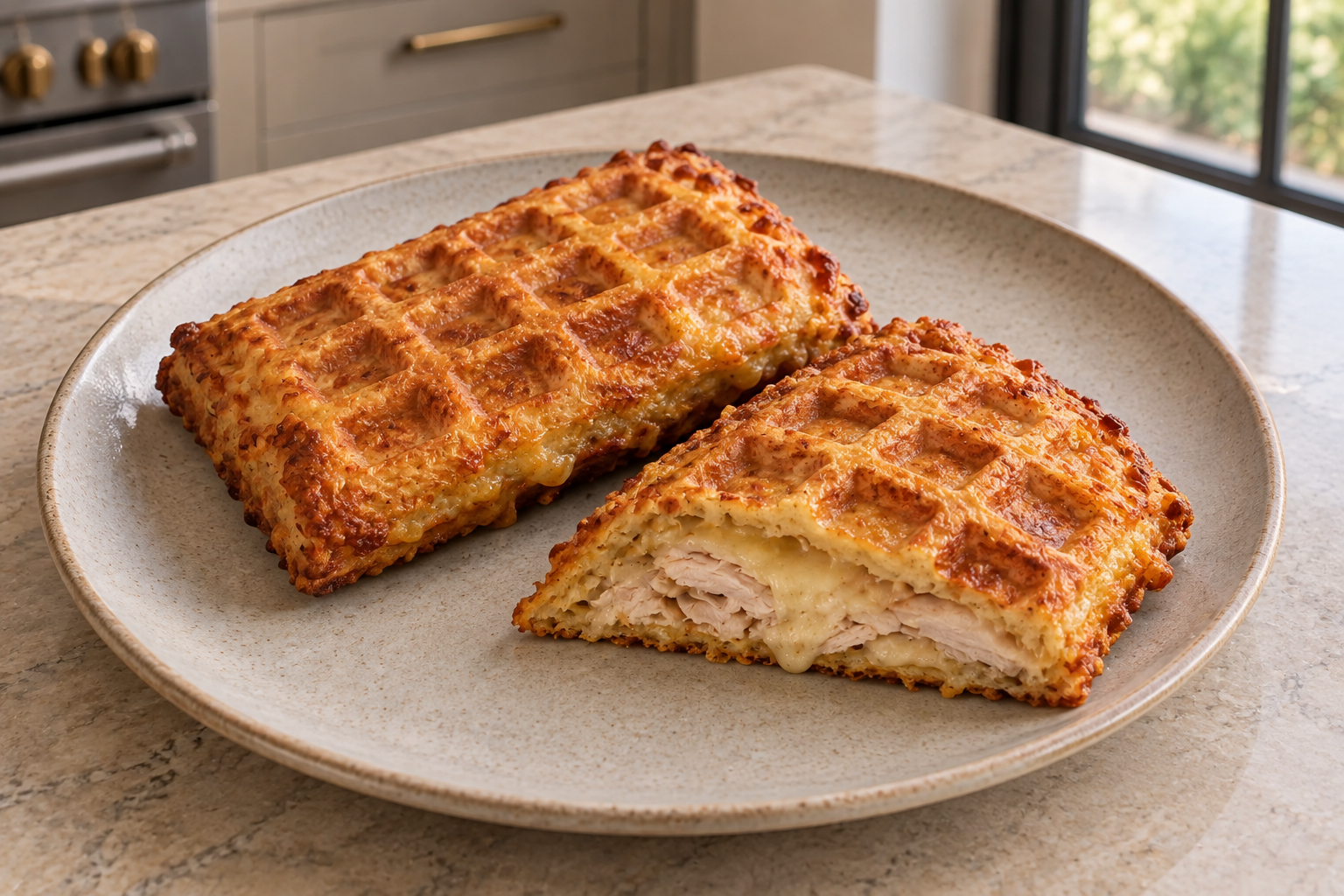
Remove each pocket before the cheese-rich edges turn very dark. Let it stand for a few minutes before cutting, because the filling will be hotter than the outside. A clean cut should show a thin turkey layer and melted cheese held between two tender waffle layers.
Check the first pocket at eight minutes and use its color to guide the second. A thinner shell may finish sooner, while a thicker rectangle may need the full ten minutes. The goal is a shell that feels firm enough to pick up without becoming brittle at the corners.
What the Finished Texture Should Be
The outside should have crisp waffle ridges and lacy cheese at the edges. The inner shell should remain tender rather than dry or breadlike. Almond flour gives the center a tender, slightly nutty texture that is denser than wheat pastry while still holding together around the filling.
The aroma should be toasted aged cheese and warm turkey. The Gruyere supplies a nutty, savory flavor, while Parmesan deepens the shell. There should be no baking-soda taste, mustard sharpness, or sweetness.
Where It Fits on GAPS
This is a later Full GAPS recipe after whole eggs, properly prepared almond flour, ghee, aged Gruyere, and aged Parmesan are individually tolerated. It is not an Introduction Diet recipe and is not suitable for dairy-free or No-Plant variations as written.
The GAPS version omits psyllium husk, baking soda, and Dijon mustard. It uses leftover home-cooked turkey instead of deli meat. Use almond flour prepared according to your current GAPS practice; the formula contains no grains, starch, commercial processed meat, or fresh mozzarella.
Serving and Storage
Serve the pockets warm on their own or with a simple tolerated vegetable. For a lunchbox, cool the pocket fully before packing so trapped steam does not soften the crisp waffle ridges.
Wrap leftovers and refrigerate for up to three days. Reheat on a parchment-lined stainless sheet pan at 325°F for ten to fifteen minutes, until the shell is crisp again and the cheese is melted. A microwave softens the waffle texture.
Recommended Equipment
You need an uncoated cast-iron full-size waffle iron, a small mixing bowl, a sturdy spoon, measuring cups and spoons, a stainless-steel sheet pan, unbleached parchment, a fork or spoon for crimping, and an offset metal spatula.
A full-size rectangular iron makes two larger pockets with fewer batches. Check the WFLI shop for current equipment recommendations and linked reviews as they are added.
Frequently Asked Questions
Can I Substitute Coconut Flour in This Recipe?
Use the separate coconut-flour formula rather than swapping cup for cup. This almond version uses one-quarter cup; the coconut version uses four teaspoons and absorbs egg much more strongly.
Why Are Psyllium and Baking Soda Missing?
They are omitted for the Full GAPS version. Eggs and aged cheese provide the structure, and the waffle iron sets the shell before folding.
Can I Use Deli Turkey or Ham?
Use leftover home-cooked meat for this recipe. Commercial deli meat is outside the locked Full GAPS formula.
Why Did My Pocket Crack When I Folded It?
The shell may have cooked too long or been spread too thin. Remove it after about two minutes, while it is set but still flexible, and keep the filling away from the border.
Do I Need a Full-Size Waffle Iron?
No, but a full-size rectangular iron makes two larger pockets with fewer batches. A smaller chaffle iron uses less batter at a time and produces more small shells. Keep each shell thick enough to fold, use the same set-but-flexible cue, and avoid piling extra filling into the smaller pockets.
Can I Use Leftover Chicken?
Yes. Thinly sliced home-cooked chicken can replace the turkey in the filling. Keep the measured meat portion the same, use meat that was chilled promptly after its original meal, and avoid commercial deli chicken with unverified seasonings or additives.
Can I Double the Recipe?
Yes. Double every measured ingredient, cook each shell separately, and keep the same two-minute partial cook and eight-to-ten-minute oven finish. Do not crowd the waffle iron or sheet pan.
Almond Flour Turkey and Gruyere Hot Pockets Recipe
Almond Flour Turkey and Gruyere Hot Pockets for Full GAPS
Ingredients
Equipment
Method
- Heat the oven to 350°F. Line a stainless-steel sheet pan with unbleached parchment and preheat an uncoated cast-iron full-size waffle iron.
- Stir the eggs, 1 1/4 cups Gruyere, Parmesan, almond flour, and melted ghee in a small bowl. The batter should be thick and cheese-heavy, slightly smoother than the coconut-flour version, with no dry almond-flour pockets or loose egg pooling around the edge.
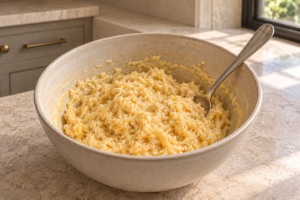
- Spread half the batter into a thick rectangle in the preheated iron. Cook for about 2 minutes, until set and pale golden but still flexible. Transfer to the prepared sheet pan and repeat with the remaining batter.
- Put one thin slice roast turkey and 1/4 cup filling Gruyere on one half of each shell, leaving a border. Fold the empty half over the filling and press the edges with a spoon edge or fork tines. A few small cracks are acceptable if the pocket holds its shape.
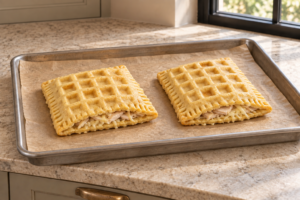
- Bake for 8 to 10 minutes, until the waffle ridges are crisp golden, the edges feel firm, the Gruyere is melted, and the turkey is hot. Rest for a few minutes before cutting.
Notes
Tried this recipe?
Let us know how it was!Pack Full GAPS Lunches With Less Guesswork
Our planned School & Daycare Kit is the most relevant companion for portable meals like these. It is designed to help families explain food boundaries and pack practical options without starting from scratch each time. Watch the WFLI shop as it is released.

Leave a comment