

For the GAPS failure-to-thrive feeding sequence, Dr. Natasha Campbell-McBride says to continue breastfeeding while homemade solid foods are introduced and to keep nursing until at least 18 to 24 months. That range is a minimum in the passage. It is not a direction to stop when the baby reaches 24 months.[1][2]
I’ve breastfed for almost six years straight, alongside family meals, siblings, and the rest of a busy day. Our family’s experience does not include a failure-to-thrive recovery. Here, I’m explaining the feeding sequence in the GAPS books and showing a simple way to keep its nursing and food-introduction notes together.
Poor weight gain or weight loss needs prompt clinical assessment. Keep breastfeeding and food introduction within your baby’s individual feeding plan; do not withhold needed milk to enforce a food attempt. Breastfeeding support, intake, growth, and possible medical causes all belong in that assessment.[4]
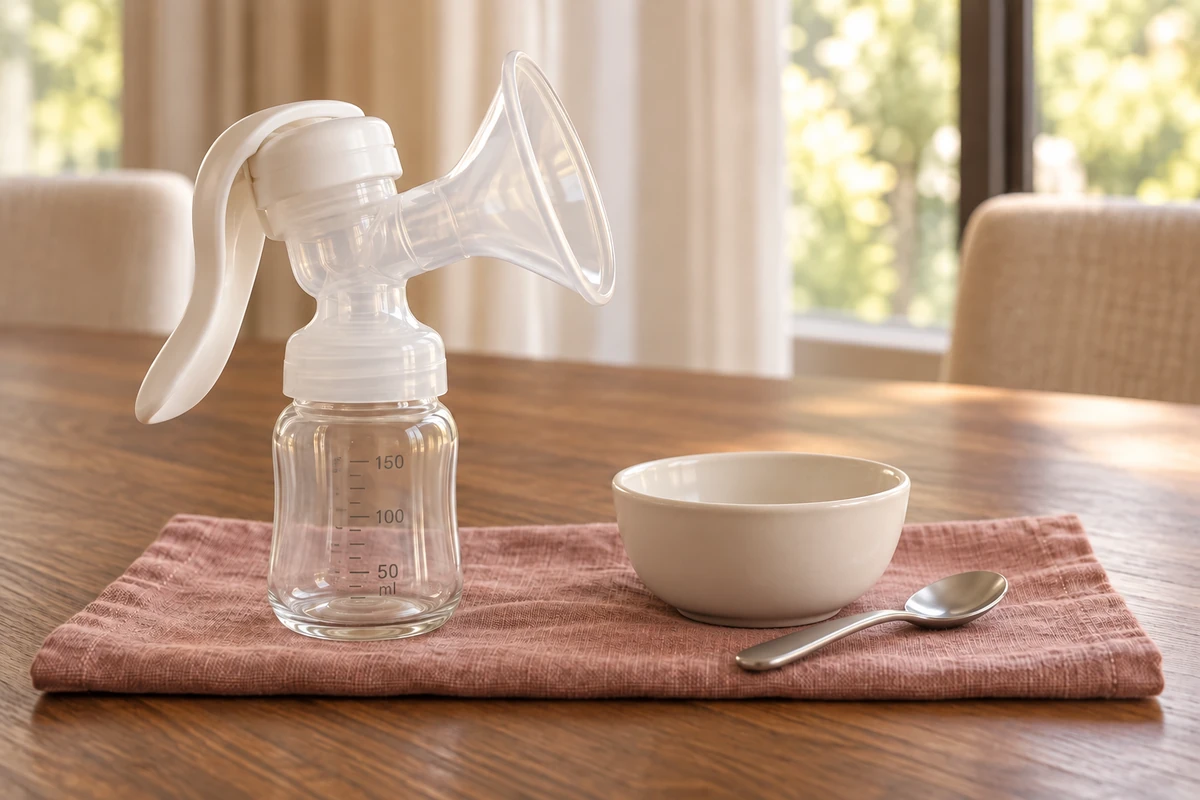
The Breastfeeding Timeline
| Point in the Sequence | Role of Breastfeeding | What to Remember |
|---|---|---|
| Opening food attempts | Nursing follows the small food attempt as a reward or top-up | Breastfeeding does not stop when solid food begins |
| When the baby is distressed | Breastfeed for comfort without requiring the food attempt first | Comfort nursing is not withheld to enforce the sequence |
| As solid foods expand | Nursing continues while foods from the New Baby chapter are introduced gradually | Breast milk does not replace the solid-food progression |
| Through recovery | Continue to at least 18 to 24 months | The passage does not set 24 months as a mandatory stop date |
The expanded Gut and Psychology Syndrome book says to use breast milk as a reward for another year or more after beginning this sequence. It then says these babies benefit greatly from longer breastfeeding, at least until 18 to 24 months. The official GAPS failure-to-thrive page repeats the same minimum.[1][2]
Breastfeeding Continues Alongside Solid Food
In this route, breastfeeding and solid-food introduction run together. The opening food attempt comes first, followed by nursing as the familiar top-up. As the baby takes larger amounts and begins the other foods in the New Baby schedule, breastfeeding remains in place.[1]
The failure-to-thrive first-food guide explains the stock, probiotic food, starting amount, timing, and gradual progression described in the book.
Why GAPS Keeps Breastfeeding Alongside Food
In Gut and Physiology Syndrome, Dr. Campbell-McBride describes breast milk as a probiotic food. She says it contains microbes and provides food for the microbial community in the baby’s digestive system. She also describes active immune cells, immunoglobulins, enzymes, growth factors, hormones, neurotransmitters and other components involved in development of the gut wall, gut flora, immune system and nervous system.[3]
The same section calls solid-food introduction another important stage in gut-flora development and directs readers back to the first GAPS book for the detailed baby sequence. Its stated pattern is to continue breastfeeding while homemade foods are introduced slowly.[3]
The 2020 discussion also describes a different situation: some babies in Dr. Natasha’s clinic became ill with their mother’s milk. She describes mothers having to stop breastfeeding in those cases and recommends a healthy wet nurse, another breastfeeding woman who can share her milk, when a mother cannot breastfeed. That discussion and the longer-breastfeeding recommendation address different feeding situations.[3]
Nourishment and Reward Have Different Jobs
Breast milk remains nourishment throughout the sequence. The reward language describes the order of the food attempt: the baby has a small amount of the food described in the book, then nurses. The word reward does not reduce breastfeeding to a behavior tool or make it nutritionally optional.[1]
That order also does not become a rule for every moment of the day. The source gives a direct exception when the baby is distressed.
Distress Changes the Order
If the baby is distressed or unhappy for any reason, the expanded book and official page say to breastfeed for comfort without placing demands. That is not the time to insist on a new food. The food attempt waits until the baby and mother are calm again.[1][2]
If you are keeping notes, a short entry such as “Baby upset; breastfed for comfort; food attempt postponed” is enough. It helps another caregiver understand what happened without making the note into another task to manage.
What “At Least 18 to 24 Months” Means
The phrase at least sets the lower boundary of the recommendation. The passage does not say to stop on the child’s second birthday. It also does not promise that every child following this route will finish the solid-food progression at the same point.
This recommendation belongs to the failure-to-thrive discussion. It describes a longer window for breastfeeding alongside food rather than setting a weaning age for every breastfed child.
What Extended Breastfeeding Does Not Replace
Longer nursing does not replace the New Baby food sequence. The source says a baby older than six months rarely gets enough nourishment from breast milk alone. Warm meat stock, tolerated homemade probiotic food and the later foods still increase gradually.[1][2]
It also does not replace finding out why a baby is not growing as expected. A feeding and growth assessment helps identify what that particular baby needs.[4]
Plan the Longer Window as Part of Family Life
Keep the nursing and food-introduction notes in one place, such as a notebook or a note on your phone. Record the food offered, whether nursing followed, any comfort-only nursing, and foods already established. A few clear entries are easier to use than a chart that takes too long to fill in.
A shared record can help another caregiver see what has already been offered and when the baby last nursed. Keep it simple enough to use on an ordinary busy day.
Keep Nursing and First Foods Connected
Two courses cover these parts of family life: Nursing Mama on Full GAPS and Little Bellies: Baby’s First GAPS Foods. You can browse both in the course catalog.
For the wider condition discussion, use the failure-to-thrive overview. The growth and feeding record helps organize the history for a review.
References
- Campbell-McBride, Natasha. Gut and Psychology Syndrome, second German edition (2015), Part 2, “Gedeihstörungen” (Failure to Thrive). The English wording here is translated from the supplied edition, based on the expanded English edition (2013).
- Campbell-McBride, Natasha. GAPS Diet for Fussy Eaters and Failure to Thrive, “Failure to Thrive.”
- Campbell-McBride, Natasha. Gut and Physiology Syndrome (2020), “Gut Flora,” “Where Does the Gut Flora Come From?”: breast milk and the introduction of solid food.
- American Academy of Pediatrics. Growth Faltering in Newborns and Infants.
The personal beliefs, opinions, philosophies, and/or views shared in this article are solely based upon my own GAPS experience and may not align with nor reflect the views of GAPS or Dr. Natasha Campbell-McBride, or the content in Dr. Natasha’s GAPS books, podcasts, blog posts, social media posts, or training courses.

Leave a comment