

This dairy-free chorizo-stuffed spaghetti squash is the warm, practical kind of dinner that makes a busy evening feel much more manageable. The squash roasts in its own shell, the fresh chorizo filling mixes in one bowl, and the finished halves arrive at the table as their own serving dishes. There is plenty of savory filling in every portion, with tender golden squash strands underneath.
In our house, oven dinners are especially useful on days when school, work, and family life all overlap. Once the squash has been cut and filled, the last half hour is hands-off. That gives me time to put together a simple salad, clear the table, or help someone with whatever needs attention next without hovering over a skillet.
This is the dedicated dairy-free Full GAPS formula. Homemade additive-free coconut cream binds the chorizo with homemade coconut flour, and there is no cheese finish. If cultured cream and aged cheddar are already part of your Full GAPS meals, use the separate Cheddar Chorizo-Stuffed Spaghetti Squash recipe. Each version has its own ingredients, timing, photographs, and recipe card so you never have to guess which directions apply.
Why the Dairy-Free Version Gets Its Own Recipe
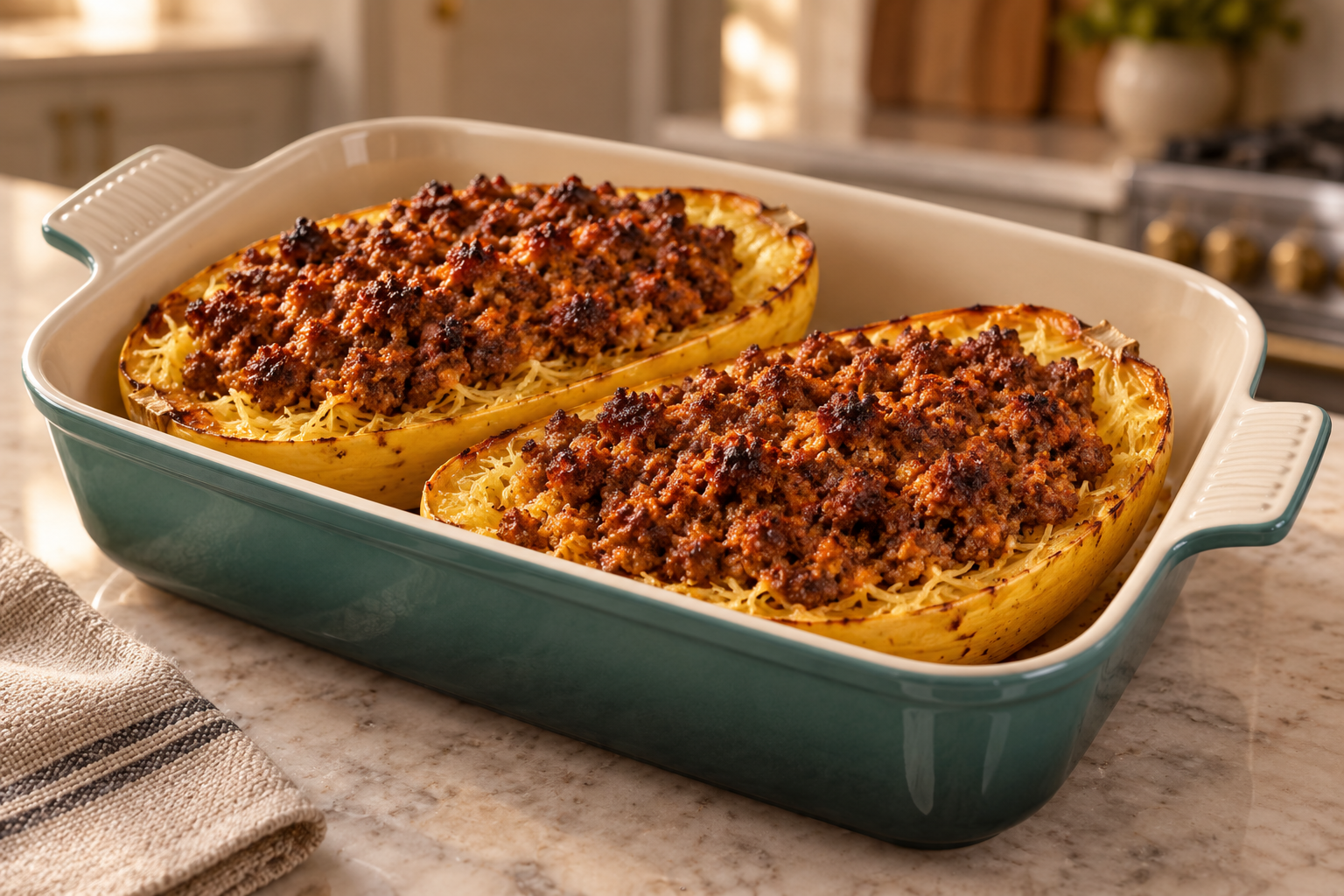
Leaving off cheese is only part of the change. The filling uses coconut cream instead of cultured dairy, and the recipe ends after the 30-minute filled-squash bake. That makes the cook time ten minutes shorter than the cheddar version. The finished top should look browned and craggy from the chorizo rather than covered with a melted layer.
The source-measured coconut cream is blended into the meat, not poured over the top. It gives the filling enough moisture to stay tender while the homemade coconut flour helps hold the juices. Pure bicarbonate keeps the filling from tightening into a dense block. When mixed correctly, it should be cohesive but still look like seasoned sausage rather than a creamy sauce.
Choosing Full GAPS Ingredients
Spaghetti squash: Choose one whole squash that feels heavy for its size and has a firm, intact shell. The shape does not need to be perfectly even, but both halves should fit in your baking dish after it is cut lengthwise.
Fresh chorizo: Use one pound of fresh, uncured bulk chorizo with a complete ingredient list. It should contain meat, fat, mineral salt, and GAPS-compatible herbs and spices, without sugar, starch, smoke flavor, curing salts, preservatives, or fillers. Chorizo blends vary widely, so the label matters more than the name on the package.
Homemade coconut cream: Use thick homemade cream from additive-free coconut. Stir it smooth before measuring. Avoid canned products containing gums, starches, emulsifiers, sweeteners, or preservatives. The measured half cup goes directly into the raw chorizo mixture.
Homemade coconut flour: Grind additive-free unsweetened desiccated or shredded coconut until fine, then measure two level tablespoons. This is not the same as commercial defatted coconut flour, which is much more absorbent and may make the filling dry.
Cooking fat: Coconut oil, ghee if tolerated, butter if tolerated, lard, or another accepted GAPS fat can coat the squash. For a strictly dairy-free plate, choose coconut oil or lard.
Pure bicarbonate: Sift the measured half teaspoon over the filling ingredients so it distributes without leaving bitter pockets. Use pure bicarbonate of soda, not baking powder or a mixed raising agent.
How to Make Dairy-Free Chorizo-Stuffed Spaghetti Squash
Give the Whole Squash a Head Start
Heat the oven to 375°F. Put the whole, uncut spaghetti squash in the baking dish and bake for 25 minutes. This does not cook it through. It softens the hard shell enough that the knife is easier to control. The squash will still feel firm through an oven mitt when it comes out.
Move it to a sturdy cutting board with two oven mitts. Let it stand for a few minutes if needed, then cut it in half lengthwise with a large sharp knife. Scoop out the seeds and the loose, wet strings from each cavity. Leave the firmer flesh attached to the shell.
Roast the Squash Halves
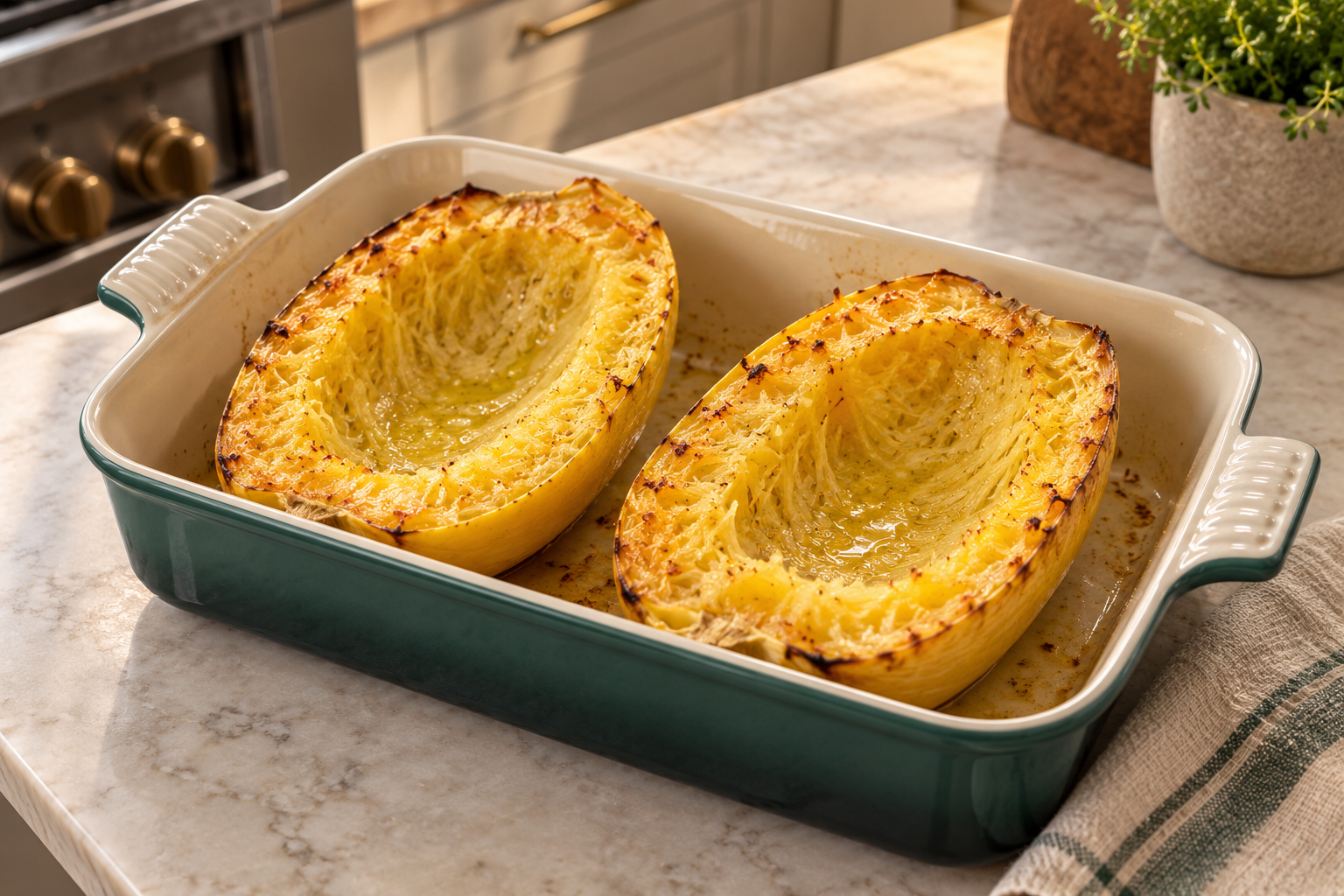
Rub the cut surfaces with one tablespoon of dairy-free GAPS cooking fat. Aim for a thin, even sheen rather than liquid collecting in the bottom. Place the halves cut-side down in the casserole dish and bake for another 25 minutes.
At the end of this bake, the squash should yield when you press the interior with a fork, and the flesh should separate into narrow strands without collapsing into purée. The shell needs to remain sturdy enough to hold the filling.
Mix the Coconut-Cream Chorizo Filling
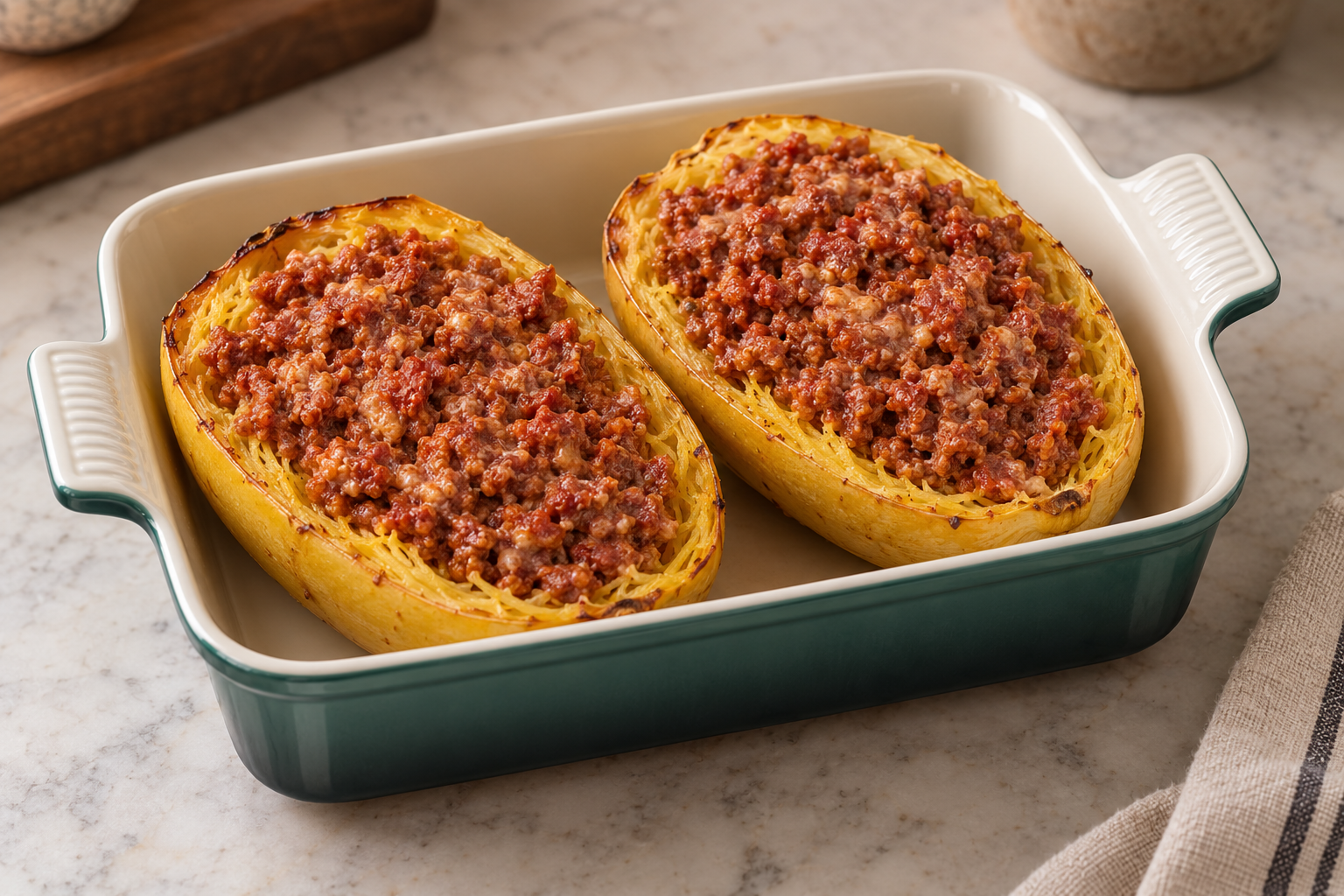
While the squash roasts, combine the fresh chorizo, homemade coconut cream, homemade coconut flour, and sifted bicarbonate in a large mixing bowl. Work the ingredients together until the coconut cream disappears into the meat and there are no dry flour pockets. The mixture should look slightly lighter than plain chorizo and become easier to stir, but it should not be runny or coated with a visible white sauce.
Turn the roasted halves cut-side up and season the exposed squash lightly with mineral salt. Fresh chorizo is already seasoned, so this should be a restrained sprinkling. Divide the filling evenly between the two cavities and level it gently from end to end. Do not press it into a hard compact layer.
Bake Until Browned and Set
Return the filled squash to the 375°F oven for 30 minutes. The surface should deepen to a reddish brown with darker crisp points, and the meat should be completely set with no raw pink areas. You should see active bubbling where the filling meets the hot squash strands, but not a pool of thin liquid in the shell.
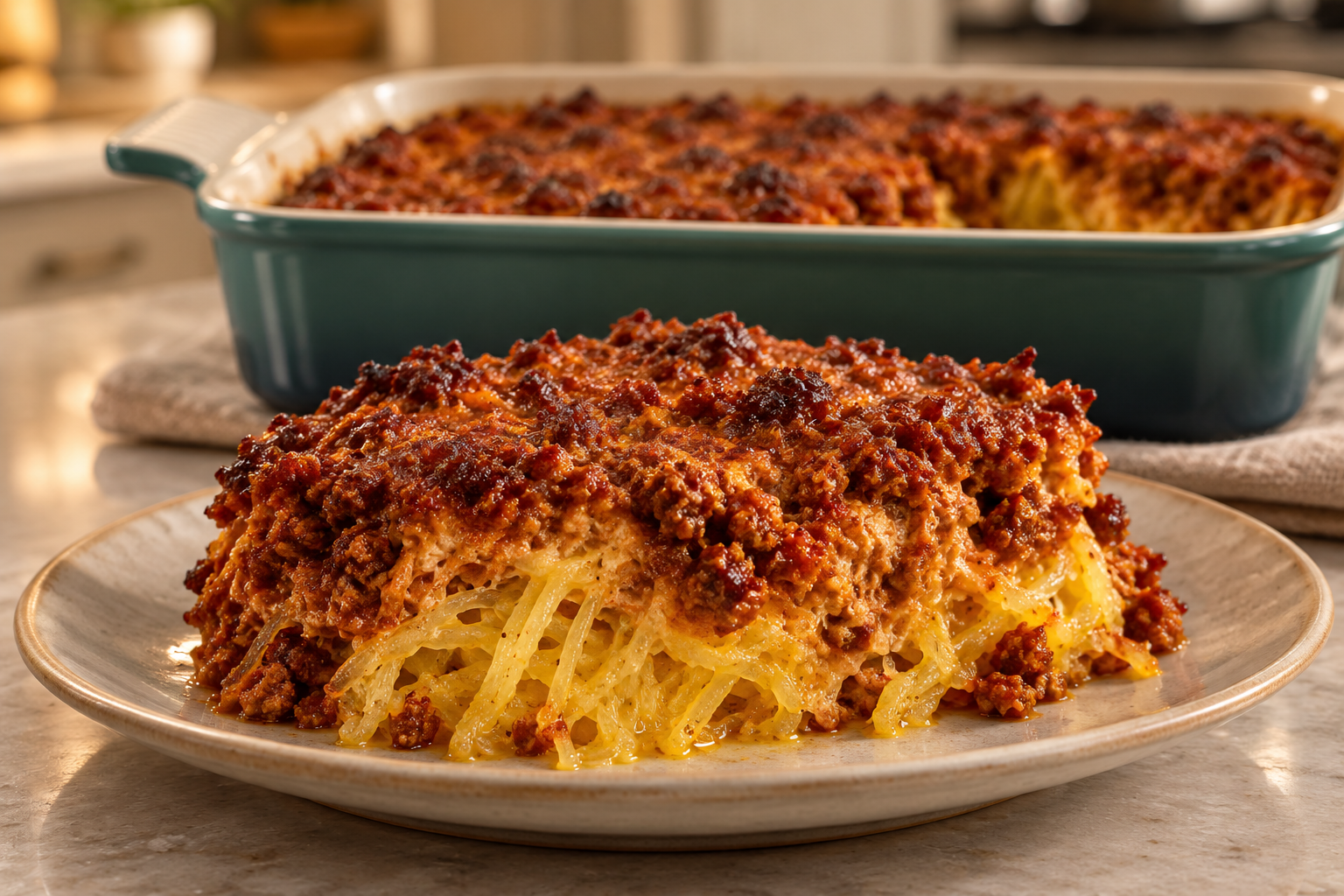
Rest the halves for about 5 minutes, then cut each one crosswise to make four servings. Keep each quarter in its shell, or scoop the strands and filling together onto a plate. The serving should show distinct squash strands beneath a moist, browned chorizo layer.
Dairy-Free Chorizo-Stuffed Spaghetti Squash for Full GAPS
Ingredients
Equipment
Method
- Preheat the oven to 375°F.
- Put the whole uncut spaghetti squash in the baking dish and bake for 25 minutes. It should remain firm but the shell will be easier to cut.
- Move the hot squash to a stable cutting board with oven mitts. Cool briefly if needed, cut lengthwise, and scoop out the seeds and loose wet strings.
- Rub the cut interiors with the dairy-free cooking fat. Set the halves cut-side down in the casserole dish and bake for 25 minutes, until the flesh separates into strands with gentle fork pressure while the shells hold their shape.
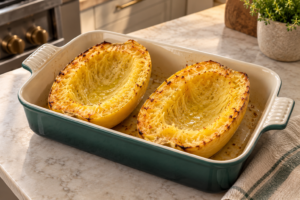
- While the squash roasts, mix the chorizo, coconut cream, homemade coconut flour, and sifted bicarbonate until no dry pockets remain and the filling is cohesive with no visible white topping.
- Turn the halves cut-side up, sprinkle the flesh lightly with mineral salt, and divide the filling evenly between the cavities without pressing it into a dense layer.
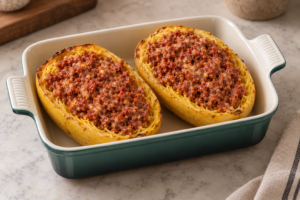
- Bake for 30 minutes, until the meat has no raw pink areas, the surface is browned and set, and the juices at the edges bubble.
- Rest for 5 minutes, then cut each half crosswise into two portions for 4 servings.
Notes
Tried this recipe?
Let us know how it was!Serving Ideas
The squash and chorizo make a complete main dish, so a simple side is enough. Serve it with leafy greens dressed with olive oil and lemon, steamed broccoli with coconut oil, or a spoonful of fermented vegetables that your family has already introduced and tolerated. The fresh acidity of a salad or ferment balances the rich sausage filling.
For children who prefer foods separated, scoop some squash strands beside a smaller spoonful of filling instead of serving the intact shell. The flavor stays the same, and the components are easier to see. Avoid calling it a substitute meal or hiding the squash; letting everyone see what is on the plate keeps the presentation straightforward.
Storage and Make-Ahead Notes
Cool leftovers promptly, cover, and refrigerate. Reheat a quarter in a covered oven-safe dish at 300°F for about 20 minutes, or until the center is hot. The cover keeps the exposed squash strands from drying before the thick filling warms through.
To get ahead, complete the two squash-baking stages, fill the halves, cover the dish, and refrigerate it the same day. Bring the dish out while the oven heats, then bake until the chorizo is thoroughly cooked and the edges bubble. A chilled dish may need a few extra minutes. Use the physical cues rather than relying only on the clock.
If you want individual portions for lunches, bake the recipe first and cool it completely before cutting. Store the quarters separately so reheating one serving does not repeatedly warm the rest.
Recommended Equipment
- A 4-quart Le Creuset Heritage rectangular dish in Artichaut, or a similarly sized nonreactive ceramic baking dish
- A stable cutting board that will not slide
- A large sharp chef’s knife
- Two thick oven mitts for moving the hot whole squash
- A sturdy spoon for removing seeds
- A large mixing bowl and flexible spatula
- Measuring cups and spoons
Frequently Asked Questions
Is this recipe completely dairy-free?
Yes, when you coat the squash with coconut oil, lard, or another dairy-free accepted cooking fat. The filling uses homemade coconut cream, and there is no cheese. If you choose ghee or butter for the squash, the finished dish is no longer dairy-free.
Why does the squash bake whole first?
The 25-minute whole-squash bake is a cutting aid. It softens the hard shell without fully cooking the interior, so the lengthwise cut is easier to control. The halves then bake cut-side down for another 25 minutes before they are filled.
Can I replace homemade coconut cream with canned coconut cream?
This Full GAPS formula is written for homemade additive-free coconut cream. Many canned versions contain gums, starches, emulsifiers, or preservatives, and their thickness varies. Use the measured homemade ingredient so the filling has the expected moisture.
Can I use commercial coconut flour?
Commercial defatted coconut flour is more absorbent than finely ground dried coconut and may tighten the filling too much. This recipe uses homemade coconut flour made from additive-free unsweetened desiccated or shredded coconut.
How can I tell whether the filling is fully baked?
The meat should have no raw pink areas. The top should be browned with a few darker crisp points, the filling should feel set rather than pasty, and the juices at the edges should bubble. Let it rest five minutes before cutting.
Is this suitable for GAPS Intro?
No. This is a Full GAPS recipe. Spaghetti squash, the seasoning profile of chorizo, homemade coconut flour, and the baked stuffed-dish format place it beyond the early Intro stages.
Can I add cheddar for one family member?
Use the separate cultured-cream and cheddar version when dairy is included. Its filling ingredient and final ten-minute bake are written as a complete formula rather than an optional note inside this card.
More Full GAPS Dinner Help
When the hardest part of Full GAPS is deciding what to put on the table every night, visit the Well Fed & Lived In shop for the upcoming Dinner Cookbook and practical family kitchen resources. This stuffed squash is the kind of dependable oven meal the collection is built around: familiar ingredients, clear physical cues, and portions substantial enough for real family life.

Leave a comment