

The Baby GAPS wrist sensitivity test uses one drop of the food on the inside of the baby’s wrist at bedtime. Let it dry, check the spot the next morning, and test the food in the same form in which it will be served. A fiery red or itchy reaction means leaving that food out for a few weeks before testing it again. After no wrist reaction, the book describes a small oral introduction followed by gradual increase.[1]
Our youngest started Baby GAPS on September 20, 2026. With six children, I would keep each child’s food notes separate. The book’s wrist observation and what happens after eating belong in separate entries.
This home wrist method cannot diagnose or rule out a food allergy. If your baby has a suspected or known food allergy, do not use a clear wrist spot to justify a home food challenge. Ask your baby’s clinician or allergist for an introduction plan.[4]
How to Do the Wrist Test
| Step | Exact Action |
|---|---|
| 1 | Take one drop of the food you plan to introduce. |
| 2 | If the food is solid, mash it with a little water so a drop can be applied. |
| 3 | Place the drop on the inside of the baby’s wrist. |
| 4 | Do the test in the evening, shortly before bedtime. |
| 5 | Let the drop dry on the skin before putting the baby to sleep. |
| 6 | Check the exact spot the next morning. |
The New Baby chapter says to use this test before introducing foods, especially at the beginning of the sequence. The evening and next-morning timing is the method it gives. It does not provide a shorter daytime version.[1]
How to Read the Result
| What You See | What the Source Says to Do |
|---|---|
| Fiery red or itchy reaction | Leave the food out for a few weeks, then test it again before another introduction attempt. |
| No wrist reaction | The book describes beginning with a small oral amount and gradual introduction; a clear skin spot does not establish that the food is safe to eat. |
| An ambiguous mark | The source does not define this as a pass or give a separate ambiguous-result rule. |
In the book’s sequence, oral introduction after the wrist step begins with a small amount, not a full serving. For a baby with suspected or known allergy, the next step is the clinician’s introduction plan, not a home challenge.[4] The week-by-week guides give the starting amount for each food.[1]
Test the Food in the Form You Will Serve
The source says to test the food in the state in which it will be introduced. Its example is raw egg yolk: test raw yolk, not a whole egg and not cooked egg. A different preparation is not treated as the same form.[1]
Use the same rule for the other Baby GAPS foods. Test the freshly pressed juice that will be served. Test the finished probiotic liquid being introduced. When cooked whole egg arrives later, record it as a different served form from the earlier raw yolk.
Where the Test Appears in Baby GAPS
- Before the first foods: the New Baby chapter gives the wrist test as the general introduction rule.[1]
- Week 1 vegetable juice: the juice is tested before the first small oral amount.[1]
- Week 2 probiotic food: homemade whey or sauerkraut juice is tested on the skin before introduction.[1]
- Weeks 4–5 raw egg yolk: the test uses raw yolk before the first teaspoon is added.[1]
The complete Baby GAPS first-food guide shows where each tested food belongs in the larger sequence. The detailed week pages hold the amounts and preparation.
The Current Egg-Yolk and Egg-White Route
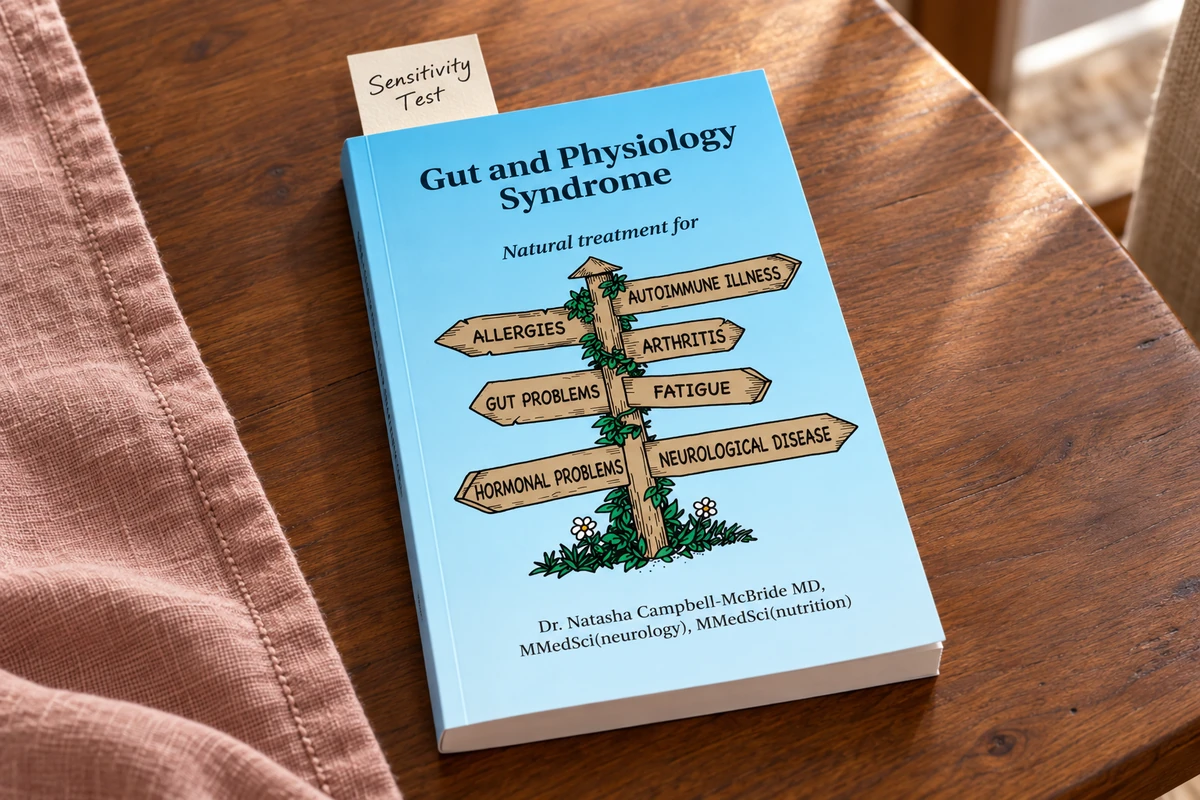
In Gut and Physiology Syndrome, Dr. Natasha Campbell-McBride gives the current sensitivity-test wording for a suspected egg allergy. Raw egg yolk and raw egg white are tested separately, on separate nights. For the yolk, carefully separate it so no white contaminates the drop. Apply it to the inside of the wrist at bedtime, let it dry and check the next morning. An angry, itchy red reaction means waiting a few weeks before testing again. The book then describes introducing yolk gradually from a small amount; this is not clearance to feed egg to a baby with suspected or known allergy.[4][2]
The same wrist method is then used for raw egg white on another night. This keeps the two egg parts separate rather than treating “egg” as one undivided test.
When the Lip Step Is Used
The lip step is not part of the general Baby GAPS wrist method for every food. It appears in the 2020 No-Plant GAPS raw-yolk passage for a person who may have an egg allergy. After no wrist reaction, the source says to put one drop on the lip and not lick it off. A swollen, red lip within a few minutes is the reaction named there.[3]
That passage concerns the No-Plant egg-introduction discussion, rather than routine baby-food screening. With suspected egg allergy, use the baby’s allergist-led plan instead of trying a lip challenge at home.[4]
The Wrist Test Does Not Replace the Oral Response Record
The book describes a small oral amount and gradual increase after its wrist step. Suspected or known allergy still calls for the clinician’s plan.[4] The later Baby GAPS guidance uses stool and skin response to decide whether a newly introduced food should be removed and tried again after a few weeks. A clear wrist spot and a later oral response are therefore recorded separately.[1]
Write down the prepared form, wrist-test date, next-morning result, first oral amount and any later stool or skin response. That keeps the wrist result from being remembered as a promise the source never made.
What to Do After a Positive Wrist Test
The book describes setting the food aside for a few weeks, continuing tolerated foods, and repeating its wrist step later. A skin reaction is a reason to discuss the food with your baby’s clinician; a later clear spot does not establish that a home oral challenge is safe.[4][1]
One positive wrist test does not restart the entire Baby GAPS schedule. It changes the route for that food while the established foods remain in place.
Keep the Test Log Simple
Use one row per prepared food form. If raw yolk, cooked whole egg and a specific juice blend are introduced at different points, they receive separate rows. With six children, I need a record I can understand at a glance the next morning. Food, form, date, wrist result, first amount and later response are enough.
Keep the Wrist Test and Food Response Together
My Baby Feeding Chart + Reaction Log brings together the food, prepared form, amount, timing, and response. It is listed in the WFLI shop.
Frequently Asked Questions
Does Every New Baby GAPS Food Get Tested?
The New Baby chapter says to perform the sensitivity test before introducing foods of any kind, especially at the beginning. It then repeats the instruction for juice, probiotic food and raw egg yolk.[1]
Does a Clear Test Mean I Can Give a Full Serving?
No. The book describes small starting amounts, but a clear wrist spot is not evidence that a food is safe to eat. With suspected or known allergy, follow the clinician’s introduction plan.[4][1]
Should Raw Yolk Be Tested as Cooked Egg?
No. The source specifically says to test raw yolk as raw yolk, not as whole or cooked egg.[1]
When Is the Lip Step Used?
The lip step appears in the 2020 No-Plant GAPS raw-yolk route after a clear wrist result when egg allergy is a concern. The source does not make it the universal second step for every Baby GAPS food.[3]
References
- Campbell-McBride, Natasha. GAPS: Gut and Psychology Syndrome, expanded second German edition (2015), Part 4, “New Baby,” sensitivity test and week-by-week examples.
- Campbell-McBride, Natasha. Gut and Physiology Syndrome (2020), “Eggs” and “The GAPS Introduction Diet.”
- Campbell-McBride, Natasha. Gut and Physiology Syndrome (2020), “How to Implement the No-Plant GAPS Diet,” raw egg-yolk wrist and lip route.
- American Academy of Allergy, Asthma & Immunology. Allergy Testing and What Do Patients and Caregivers Need to Know About Oral Food Challenges?

Leave a comment