

GAPS treats first foods as a chance for a baby to explore food with all the senses. The baby needs to touch, see and smell the food, feel its temperature and texture, move it toward the mouth voluntarily, taste it, chew, swallow and receive the body’s feedback. The two-spoon technique supports that work: one spoon belongs to the baby, and the adult uses the second spoon for feeding.[1][2]
Our youngest started Baby GAPS on September 20, 2026, our first time following the baby sequence. With six children at our table, I would keep the setup simple: food prepared for this point in the sequence, two spoons, and a washable floor cloth.
The Full Sensory Sequence
| Part of the Experience | What the Baby Is Learning | What the Adult Provides |
|---|---|---|
| Touch | Temperature and texture through the fingers | Food placed within reach |
| Sight and smell | Appearance and aroma before tasting | The food in its prepared form |
| Voluntary movement | Moving food toward the mouth by the baby’s own action | Room to explore without rushing |
| Taste, chew and swallow | The mouth’s experience of the food | A stage-appropriate texture |
| Internal feedback | How the stomach and body respond afterward | Observation and a clear food record |
In Gut and Physiology Syndrome, Dr. Natasha Campbell-McBride calls this a complex mixture of sensory input. She says new receptors, connections and centers form in the child’s brain during the process. The book connects it with emotional development, personality and the child’s relationship with food.[1]
The complete Baby GAPS first-food guide explains the week-by-week food order. This article covers the sensory and self-feeding method used with whatever food belongs at that point in the sequence.
How the Two-Spoon Technique Works
- Keep two spoons ready when you sit down to feed the baby.
- Give one spoon to the baby and let the baby do whatever they want with it.
- Use the second spoon to feed the baby while the baby handles the first.
- Continue giving the baby access to the food so hands, smell, sight and texture remain part of the meal.
- Over time, the baby learns to eat with their own spoon.[2]
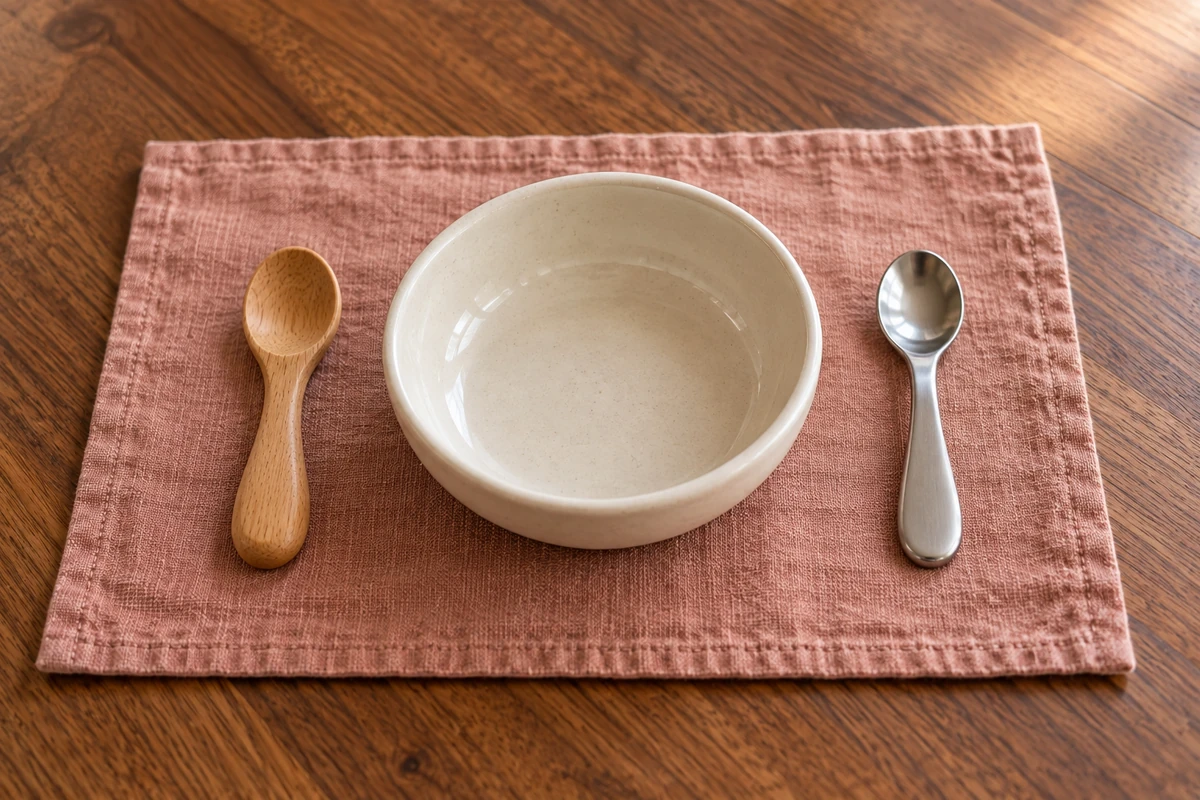
The two spoons do not have to match. In our kitchen, I would choose a small wooden or stainless-steel spoon that is easy to hold and keep the second spoon comfortable for feeding.
Stay Confident and Relaxed
The New Baby chapter says to stay confident and relaxed because babies sense when we are worried and respond to it. Choose a time when you are not rushed and can stay cheerful. The two-spoon setup helps by giving the baby an active role while the adult keeps the feeding moving.[2]
A calm meal does not need to be a perfect meal. The spoon may be waved, dropped or ignored. Food may miss the mouth. The source’s instruction is to let the baby do whatever they want with their spoon while the skill develops.
What to Do After a Refusal
If the baby refuses a particular food, the New Baby chapter says to try again one hour later or the next day. It does not say to press the same attempt until the food is accepted. Return at another calm, unhurried time.[2]
A refusal does not automatically move the food to the permanent-no list. It also does not erase the response rules elsewhere in the Baby GAPS sequence. If a newly introduced food is followed by loose stool, constipation, a new rash or an eczema flare, the source gives a separate remove, wait and retry route. The full feeding guide keeps those response cues with the stage sequence.
Accept the Mess
The book says to accept the mess from the beginning and not worry about where the food flies. The 2020 book makes the same point more broadly: in the first few years, being messy gives the child the hands-on sensory input this stage requires.[1][2]
The older chapter suggests a plastic sheet under the chair. In our low-tox home, I would use a washable cotton drop cloth instead. That changes the cleanup material, not the instruction to let the baby participate fully.
Hands Are Part of the Meal
The 2020 book says the food should be in front of the child, the child’s hands should be in it, and the child should be deeply involved in eating it. A spoon may still be used, including the adult’s second spoon. The point is that spoon-feeding does not replace the baby’s own sensory participation.[1]
Different preparations of the same ingredient also count as different experiences. The source uses egg as its example: a soft-boiled egg, an omelet and a fried egg feel and taste different. Each preparation is introduced gradually and in the stage where that form belongs.[1]
When Table Manners and Cutlery Come Later
The 2020 book describes the hands-first stage as short and says clean eating with manners will come soon enough. It does not give an exact birthday or week when the shift must happen. The child’s growing ability to use the spoon gradually changes how much the adult’s second spoon is needed.[1][2]
That means the two-spoon method is not assigned to one particular Baby GAPS week, and there is no source-defined deadline for retiring it. It fades as the baby’s own spoon starts doing more of the work.
Hands-On Eating Beyond Babyhood
The same chapter extends hands-on eating to children and adults following GAPS, particularly during the first year of treatment. At home, it recommends eating with the hands as often as possible. In a restaurant or in front of other people, it gives the practical exception: use cutlery and normal table manners.[1]
When a child is the one doing this work, the book suggests that the whole family may eat with their hands so the child is not singled out. It describes cutlery as a barrier to the full sensory input of the food and presents shared hands-on meals as a therapeutic practice, not as poor manners.[1]
Make the Setup Easy to Repeat
Keep the two spoons, the baby’s bowl and the washable floor cloth together. Put only the current stage-appropriate food in front of the baby. After the meal, record the prepared form, what the baby touched or tasted, whether the adult spoon was accepted, and any response that followed.
The book closes its two-spoon guidance by saying the period of introducing solids is short and should be enjoyed. A simple setup leaves more room for that and less time spent hunting for the second spoon.
Bring the Sensory Method Into the Kitchen
My Baby’s First Foods Cookbook brings together the preparations and textures used through the Baby GAPS sequence. It is listed in the WFLI shop.
Frequently Asked Questions
Do the Two Spoons Have to Match?
No matching requirement appears in the source. One spoon belongs to the baby and one is used by the adult.
What If the Baby Throws the Spoon?
The source says to let the baby do whatever they want with their spoon. Throwing or ignoring it does not mean the method has failed. The baby is still learning through handling and repetition.[2]
When Should a Refused Food Return?
Try again one hour later or the next day at a calm, unhurried time. A physical reaction after a new food follows the separate Baby GAPS remove, wait and retry rule.[2]
Is Hands-On Eating Only for Babies?
No. The 2020 book recommends it for children and adults following GAPS, particularly during the first year of treatment, with cutlery used when eating out in front of others.[1]
References
- Campbell-McBride, Natasha. Gut and Physiology Syndrome (2020), “Food,” “How Do We Apply This to Children on the GAPS Diet?” and “What Do We Need to Do to Help the Child Connect With Their Inner Intelligence?”
- Campbell-McBride, Natasha. GAPS: Gut and Psychology Syndrome, expanded second German edition (2015), Part 4, “New Baby,” closing solid-food guidance.

Leave a comment