

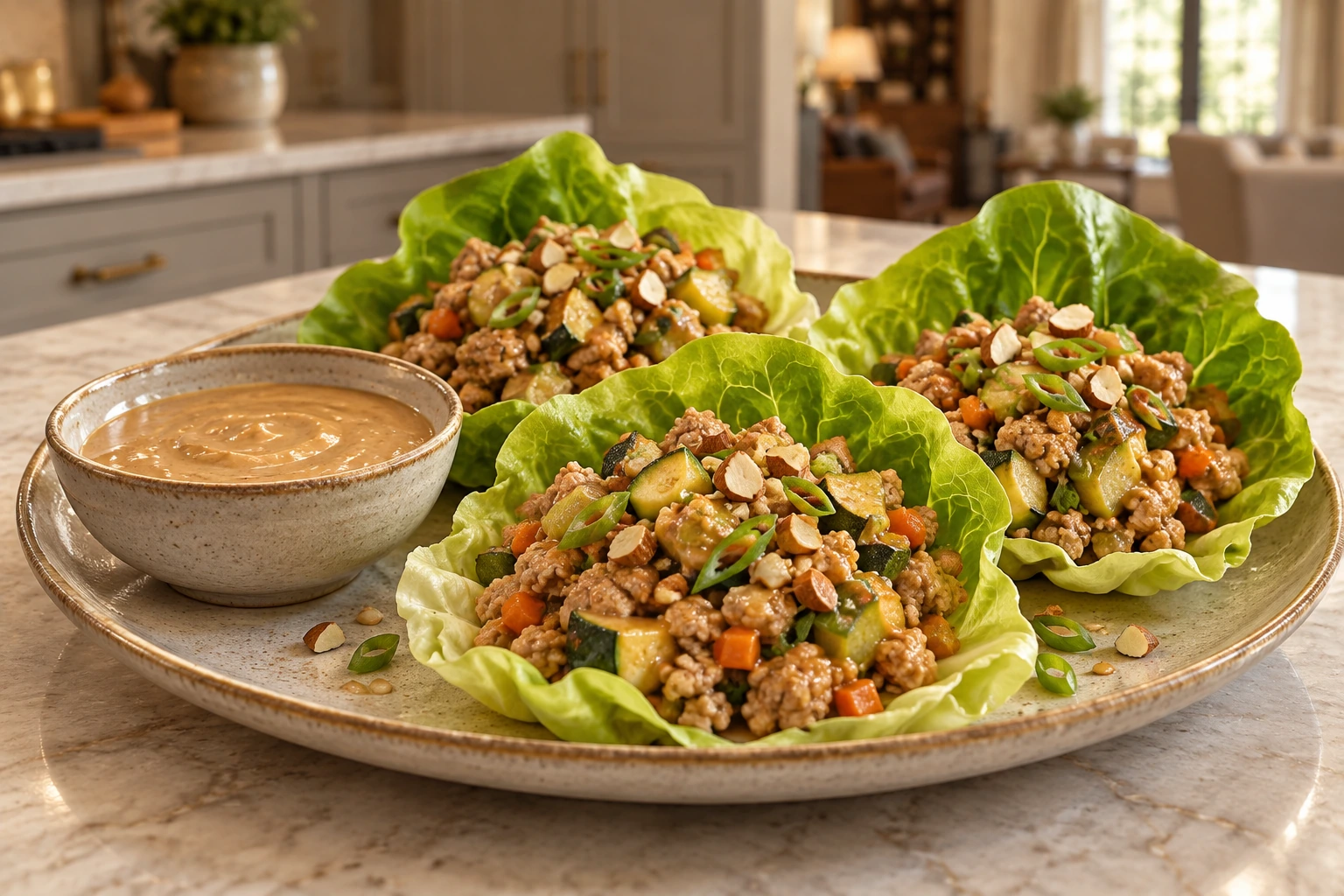
These Full GAPS turkey lettuce wraps are warm, crisp, and easy to set out for a build-your-own dinner. Ground turkey cooks with carrot, celery, zucchini, and fresh ginger, then gets two tablespoons of the almond-butter sauce right in the skillet. The rest of the sauce stays at the table for dipping. Butter lettuce keeps every bite fresh and crunchy without turning the filling into a salad.
On weekdays I am fitting breakfast, homeschool, lunch, and dinner in before I leave for second shift. A dinner that can be prepped in one stretch and assembled at the table is useful in a house with six kids. The filling can stay warm in the skillet while everyone chooses a lettuce leaf, a spoonful of turkey, and the garnish they want. I can also keep the filling and lettuce separate for the next day’s lunch instead of storing already-filled wraps that turn soggy.
GAPS Placement: Full GAPS, after raw vegetables and properly prepared nuts or peanuts are tolerated
Prep Time: 25 minutes
Cook Time: 15 minutes
Total Time: 40 minutes
Yield: 4 servings
Why This Method Works
The recipe moves quickly once the skillet is hot, so the order matters. Carrot and celery go in first because they need the longest cooking time. Zucchini follows for only two minutes. Ground turkey and ginger go in last, when the vegetables are already partly tender. That keeps the carrot and celery from tasting raw without cooking the zucchini into a wet mash.
The almond sauce also does two jobs. Two tablespoons coat the cooked turkey and vegetables in the pan. The remaining sauce is thick enough to spoon over the lettuce wraps or use as a dip. Mixing the full batch before cooking prevents guessing at the end, and reserving the pan portion keeps the rest clean for the table.
Use a wide 12-inch skillet or wok. Turkey and zucchini both release moisture. A broad cooking surface gives that liquid somewhere to evaporate so the filling stays loose and spoonable. If the ingredients are crowded into a small pan, the vegetables steam and the filling becomes watery.
What The Lettuce Wraps Taste Like
The filling is savory and gingery rather than sweet. Carrot brings a mild sweetness, celery adds a clean herbal flavor, and zucchini softens into the turkey without disappearing. Coconut aminos gives the sauce a deep salty-sweet note. Almond butter makes it creamy and nutty without turning it into a heavy gravy.
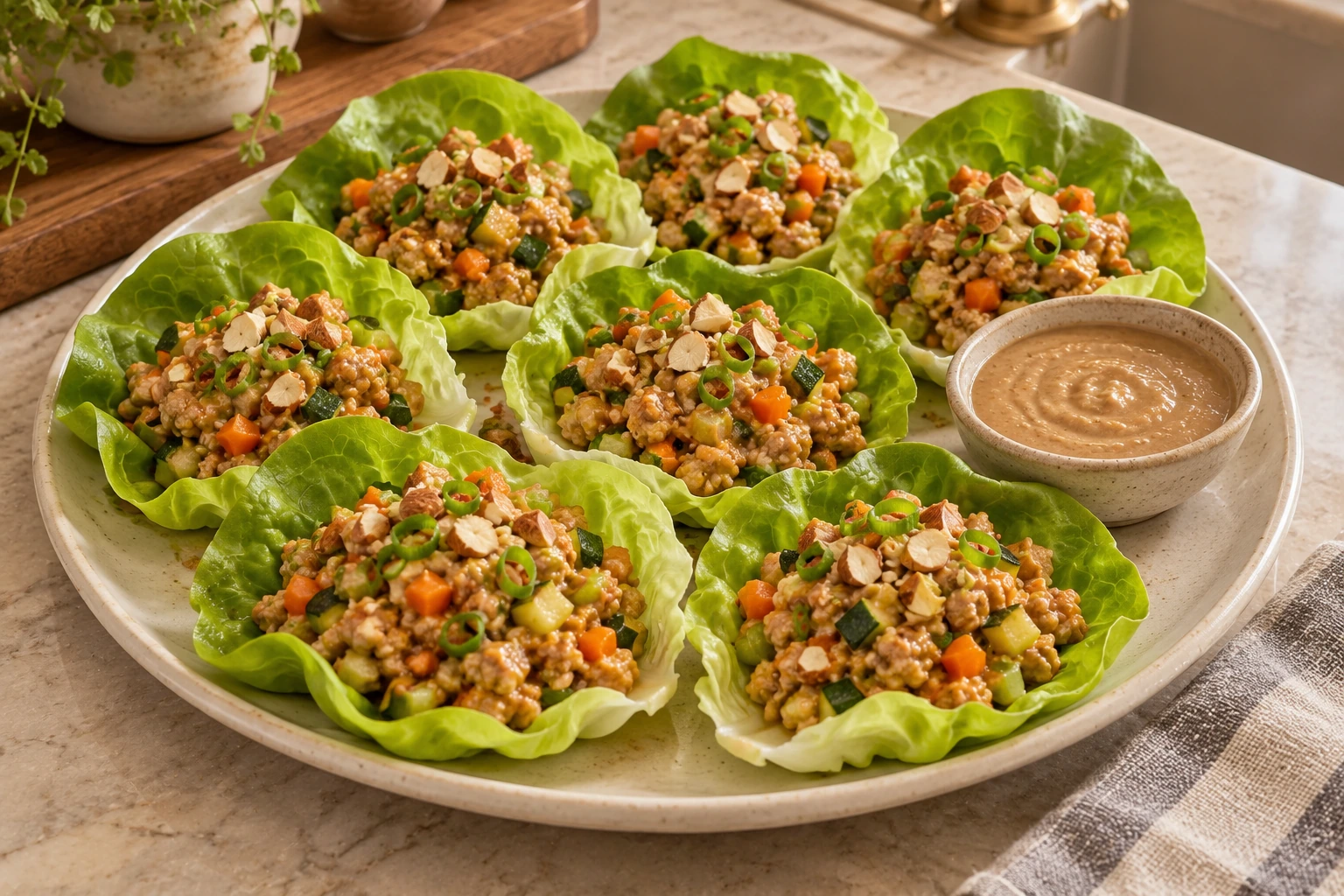
Butter lettuce is soft enough to fold but still has a crisp center rib. Iceberg gives a colder, louder crunch. Either one works. Chopped prepared almonds add another layer of crunch, while green onion or cilantro keeps the finished wrap fresh. If you use prepared peanut butter and chopped prepared peanuts instead, the sauce tastes toastier and a little more pronounced.
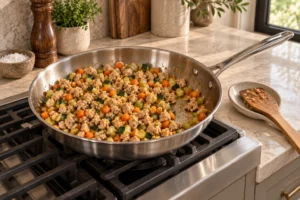
The finished filling should be moist enough to hold together on a spoon, but there should not be a puddle at the bottom of the skillet. The sauce clings to the turkey crumbles and vegetables. It does not flood the lettuce leaf.
Full GAPS Ingredient Notes
This is a Full GAPS recipe for someone who already tolerates raw lettuce and properly prepared nuts or peanuts. It is not an Introduction Diet recipe. Raw vegetables are added later, after digestive symptoms have cleared, and the nut-butter sauce is part of the formula rather than an optional decoration.
Cook the filling in homemade ghee, coconut oil, or rendered animal fat. Heated avocado oil and olive oil are left out because GAPS uses animal fats, ghee, or coconut oil for cooking and keeps cold-pressed plant oils for finished food.
For the almond version, make the sauce with smooth homemade almond butter from properly prepared almonds. If peanut butter is tolerated, the 2020 GAPS book also permits pure peanut butter. Use a smooth homemade peanut butter made from properly prepared peanuts and keep the same three-tablespoon measurement.
The fermented almond butter recipe gives you a plain savory butter made from whey-cultured almonds. Use three tablespoons in this sauce after the jar is chilled and stirred smooth.
Use coconut aminos only when the complete current ingredient list fits GAPS. Soy sauce and tamari are not substitutions in this recipe. The sauce also takes two tablespoons of filtered water, freshly pressed apple juice, or coconut water with a complete GAPS-compatible ingredient list. Filtered water makes the most savory version. Fresh apple juice gives the sauce a faint fruit sweetness. Coconut water lands between the two.
I leave out the canned water chestnuts because they are not on the GAPS food lists used for this version. There is no need to force in a replacement. The lettuce and optional prepared nuts already give the finished dish the contrast it needs.
Prepare Everything Before Heating The Skillet
Wash and dry the lettuce first. Water trapped on the leaves dilutes the sauce and makes a wrap slip apart, so spread the leaves on a clean towel while you chop the vegetables. Choose intact inner leaves that curve like a shallow cup. Very small leaves do not hold enough filling, and torn leaves leak.
Chop the carrot, celery, and zucchini into small, fairly even pieces. They do not have to be perfect dice. What matters is that the carrot pieces are not twice as thick as the celery, and that the zucchini is not cut so fine that it collapses before the turkey finishes cooking.
Finely chop the ginger. Two tablespoons is a generous amount, but large chunks create sharp bites. A chef’s knife, mezzaluna, or fine grater all work. If you use dried ginger in place of white pepper, measure one teaspoon and still keep the two tablespoons of fresh ginger in the filling.
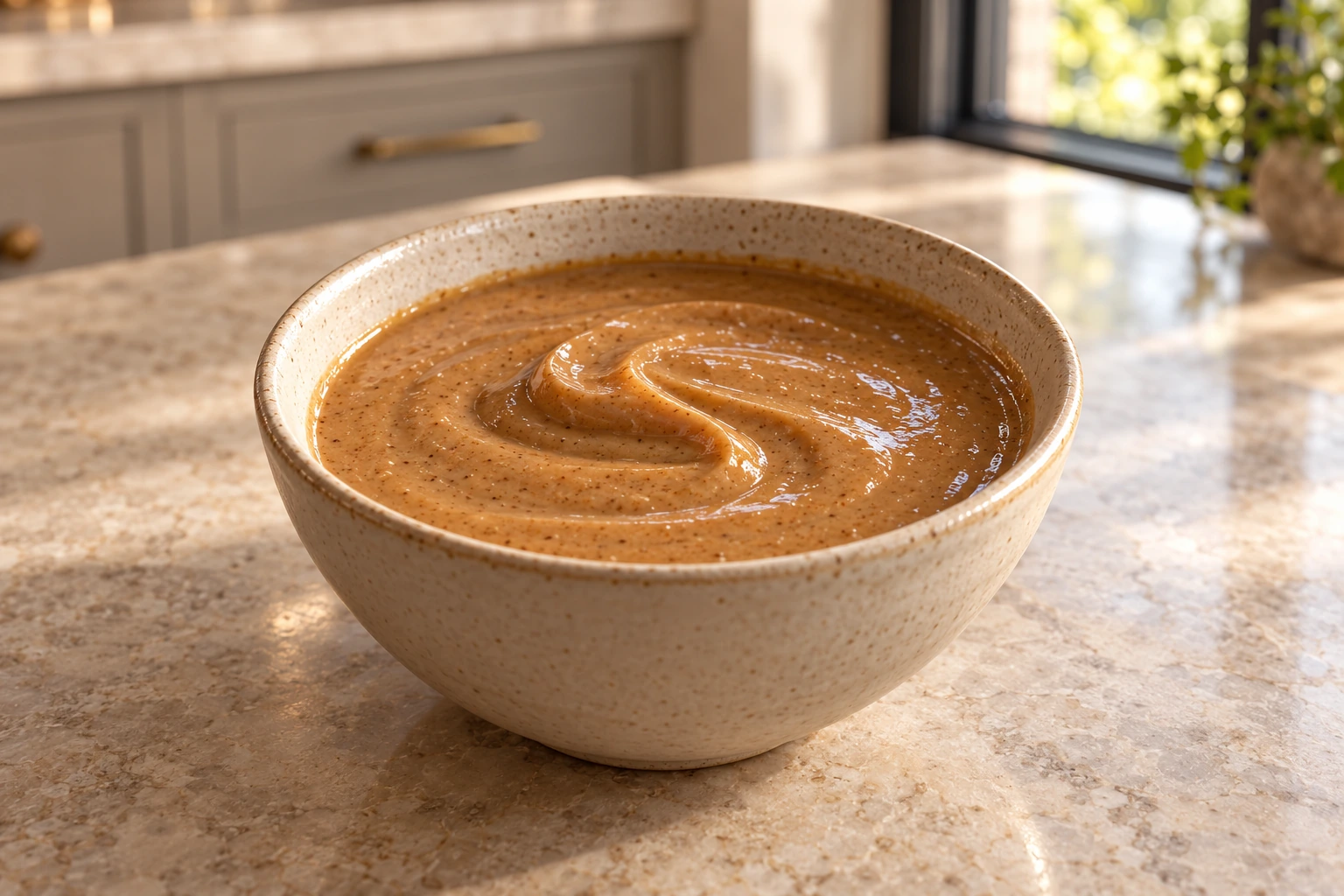
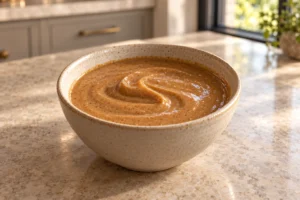
Mix the sauce before you turn on the burner. The nut butter may look stiff at first. Keep whisking until the coconut aminos and selected liquid are fully absorbed and the sauce becomes smooth and glossy. It should fall from the spoon in a thick ribbon. If a cold nut butter makes the mixture look separated, let it sit at room temperature for a few minutes and whisk again rather than changing the measured liquid.
How To Make Turkey Lettuce Wraps
Heat two tablespoons of ghee, coconut oil, or animal fat in a large skillet or wok over medium-high heat. The fat should be fully melted and shimmer across the surface, but it should not smoke.
Add the chopped carrot and celery. Cook for about five minutes, stirring often. The celery will turn brighter and slightly translucent at the edges. The carrot should lose its raw chalky look but still feel firm when pressed with the edge of the spatula.
Add the zucchini and cook for about two minutes. Look for a light sheen and a little softness around the cut edges. Stop before the pieces release enough liquid to pool in the pan.
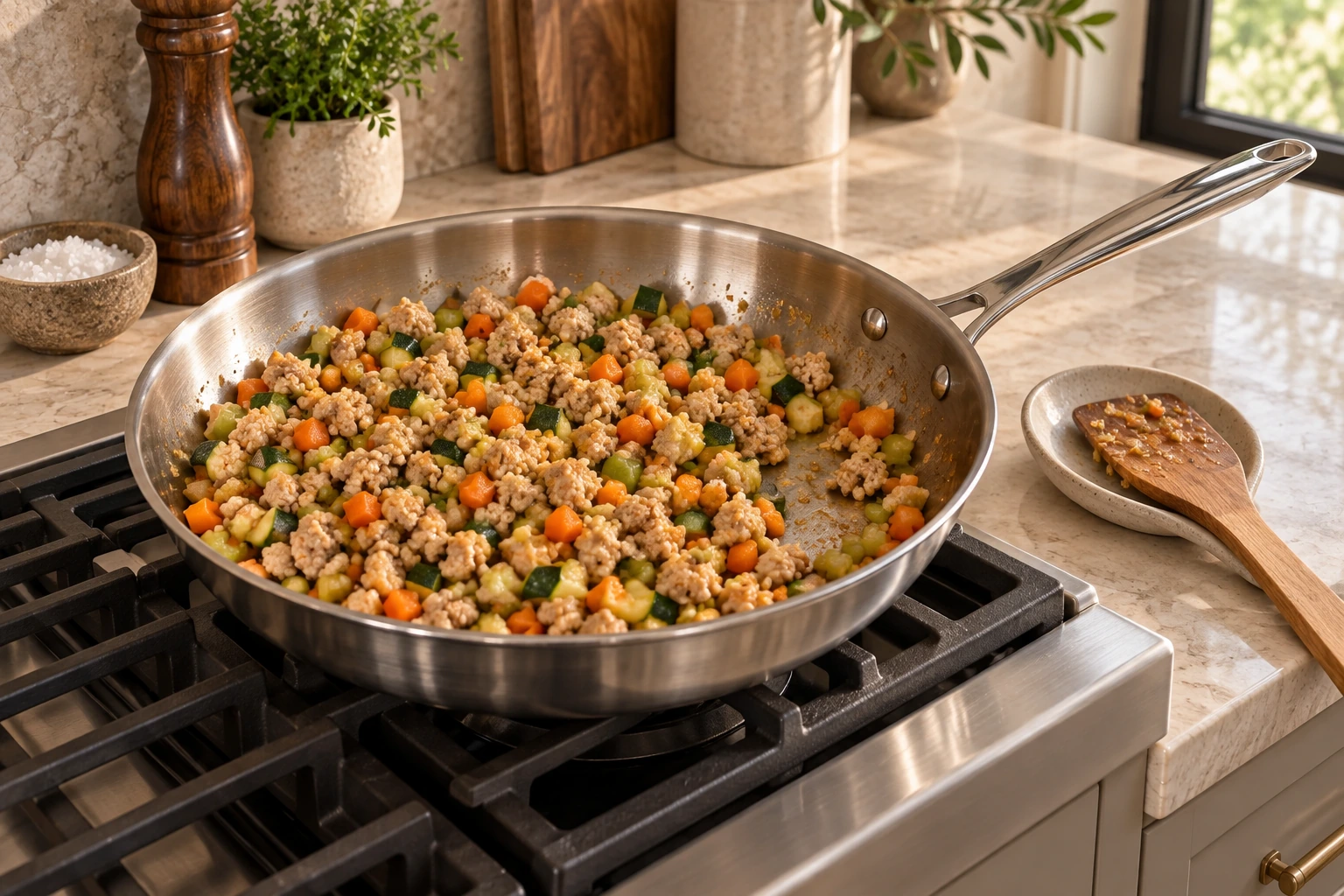
Add the fresh ginger, ground turkey, sea salt, and either white pepper or dried ginger. Break the turkey into small crumbles with a wooden or stainless-steel spatula. Cook for about five minutes, turning the meat so no large raw sections stay against the pan.
Continue cooking for about three minutes more, or until the ground turkey reaches 165°F (74°C). Time is only a guide here. The turkey should be opaque throughout with no pink pockets, and the smallest crumbles will begin to brown at the edges. Check the thickest cluster with an instant-read thermometer.
If liquid collects in the skillet, move the filling to one side and let the liquid pool on the open surface. Increase the heat briefly and let it bubble until the puddle is gone, then fold the filling back together. Do not keep cooking after the pan is dry enough to spoon. Overcooked ground turkey becomes firm and crumbly.
Stir exactly two tablespoons of the almond sauce into the fully cooked filling. The sauce should disappear into a thin coating rather than collect on the bottom of the skillet. Spoon the warm filling into the dry lettuce leaves. Add prepared chopped almonds or peanuts and green onion or cilantro if using them, then serve the remaining sauce at the table.
Asian Turkey Lettuce Wraps with Almond Sauce for Full GAPS
Ingredients
Equipment
Method
- Separate, wash, and thoroughly dry the lettuce leaves. Chop the carrot, celery, zucchini, fresh ginger, and optional garnish before heating the skillet.
- Whisk the almond butter, coconut aminos, and selected sauce liquid until smooth and glossy. The sauce should fall from a spoon in a thick ribbon. Reserve 2 tablespoons for the skillet at 1x, or 4 tablespoons at 2x, and keep the rest for serving.
- Heat the cooking fat in a wide 12-inch skillet or wok over medium-high heat until fully melted and shimmering but not smoking. Add the carrot and celery and cook for about 5 minutes, stirring often, until the celery edges look translucent and the carrot loses its raw chalky look.
- Add the zucchini and cook for about 2 minutes, just until the cut edges look glossy and begin to soften. Do not cook until it collapses or releases a puddle of liquid.
- Add the fresh ginger, ground turkey, sea salt, and white pepper or dried ginger. Break the turkey into small crumbles and cook for about 5 minutes, turning the meat so no large raw sections remain against the pan.
- Continue cooking for about 3 minutes more, or until the thickest turkey cluster reaches 165°F (74°C) with no pink center. If liquid pools in the skillet, move the filling aside and briefly increase the heat until the puddle evaporates, then fold the filling together.
- Stir the reserved sauce into the fully cooked filling: 2 tablespoons at 1x, or 4 tablespoons at 2x. Spoon into the dry lettuce leaves, add the optional prepared nuts and green onion or cilantro, and serve the remaining sauce for dipping.
Notes
Tried this recipe?
Let us know how it was!The Physical Cues That Matter
The sauce is smooth and ribboning. It should not look oily around the edges or sit in a stiff lump. When lifted with a spoon, it falls slowly and leaves a line on the surface for a second before settling.
The first vegetables are bright and partly tender. After five minutes, the celery edges look translucent and the carrot is no longer dusty or raw-looking. They still hold their shape because the turkey needs more time in the pan.
The zucchini is glossy, not collapsed. Two minutes is enough to coat and warm it. If it is already limp before the turkey goes in, the final filling is more likely to become watery.
The turkey crumbles are small and fully opaque. Break up large clusters as soon as the meat hits the skillet. At the endpoint, the thickest cluster reaches 165°F and there are no pink centers.
The pan is moist without a puddle. A little sheen keeps the filling tender. Visible liquid running to the low side of the skillet will soak the lettuce, so reduce it before adding the measured sauce.
The finished filling holds on a spoon. Once the two tablespoons of sauce are stirred in, the crumbles and vegetables look lightly coated and cohesive. The mixture is not creamy like a casserole filling and should not drip through the lettuce.
Ingredient Choices
Choose almond butter with chopped almonds for the mildest sauce. Choose prepared peanut butter with chopped prepared peanuts for a toastier version. Keep the sauce and garnish measurements the same. Do not combine several nut or seed butters in one batch because that makes the texture and flavor harder to predict.
Filtered water keeps the sauce fully savory and lets the ginger and coconut aminos lead. Freshly pressed apple juice softens the salt and brings a gentle sweetness. Plain coconut water with a GAPS-compatible ingredient list gives a lighter sweetness with a subtle coconut note. Use two tablespoons of whichever liquid you choose.
White pepper adds quiet heat without dark flecks. The one-teaspoon dried-ginger option pushes the ginger flavor further. It does not replace the fresh ginger. Use one seasoning route or the other and keep the stated amount.
Butter lettuce folds more easily around the filling. Iceberg lettuce is firmer and crunchier, but the leaves can crack if they are bent too tightly. For iceberg, use the naturally cupped inner leaves and serve them open like small boats.
Serving The Wraps
Set out the warm skillet, the dry lettuce leaves, the bowl of remaining sauce, and the optional garnishes separately. This keeps the leaves crisp and lets each person build a wrap that will hold together. Start with a modest spoonful of filling. Overfilling is the quickest way to split the leaf and lose the sauce onto the plate.
If you want a more substantial plate, serve the wraps with Full GAPS steamed cauliflower rice. The rice catches any filling that falls out without competing with the ginger and almond sauce.
For another cold-crisp dinner with almond dressing, make the Asian chicken chopped salad. For a warmer option built around coconut aminos, ginger, and garlic, the Full GAPS Asian meatballs sheet pan dinner gives you a separate beef-or-lamb formula with roasted cabbage and daikon.
Storage And Reheating
Store the filling, lettuce, sauce, and garnishes in separate covered containers. The cooked filling keeps in the refrigerator for up to three days. The sauce may thicken when chilled. Let it stand at room temperature briefly and stir before serving. Do not add extra liquid unless the measured sauce was unusually stiff from the start.
Reheat the filling gently in a covered skillet over medium-low heat. Add only a teaspoon of filtered water if it is sticking, then stop as soon as the turkey is hot. Repeated high heat dries ground turkey quickly. Keep the lettuce cold and assemble the wraps after reheating.
For a packed lunch, put the filling in one container and the dry lettuce leaves in another. Carry the sauce in a small leakproof jar. The filling can be eaten warm or cool, but the leaves should stay separate until you are ready to eat.
Frequently Asked Questions
Can I Use Store-Bought Almond Butter?
Use almond butter made from properly prepared almonds. A jar made from ordinary roasted almonds does not meet that preparation requirement. The fermented almond butter is a plain, savory option for this sauce. It is cultured with homemade whey, so it is not a dairy-free choice. Stir the chilled butter smooth before measuring three tablespoons.
Can I Use Peanut Butter Instead?
Yes, when pure peanut butter and prepared peanuts are already tolerated on Full GAPS. Use a smooth homemade peanut butter made from properly prepared peanuts and keep the same three-tablespoon amount. Pair it with the prepared-peanut garnish or omit the garnish.
Why Is Apple Juice Listed If Bottled Juice Is Not Used?
The measured option is freshly pressed apple juice. As convenient as store-bought juice may be, GAPS follows fresh-pressed fruit juice and avoids commercially prepared juice with processing or added ingredients. Filtered water is the simplest option if you are not pressing juice for two tablespoons.
Can I Use Soy Sauce Or Tamari?
No. This Full GAPS version uses coconut aminos with a complete ingredient list that fits GAPS. Soy sauce and tamari are not included substitutions.
What Replaces The Water Chestnuts?
Nothing is needed. Canned water chestnuts are left out of this Full GAPS version, and adding a different half-cup ingredient would change the filling. Lettuce and optional prepared nuts provide plenty of crunch.
How Do I Keep The Lettuce From Tearing?
Dry the leaves thoroughly, choose naturally cupped inner leaves, and do not overfill them. Spoon the filling into the firm center section and fold only as far as the leaf bends comfortably. Iceberg is best served open if its ribs feel brittle.
Can I Make The Filling Ahead?
Yes. Cook the filling, cool it promptly, and refrigerate it separately from the lettuce and remaining sauce. Reheat only the portion you need and assemble the wraps at the table.
More Build-Your-Own Family Dinners
The upcoming Dinner Cookbook is planned for families who need complete GAPS meals with the practical details kept beside the recipe. It will include serving ideas, stage placement, useful variations, and the physical cues that make dinner easier to finish correctly. Visit the WFLI shop for current guides and cookbook updates.

Leave a comment