

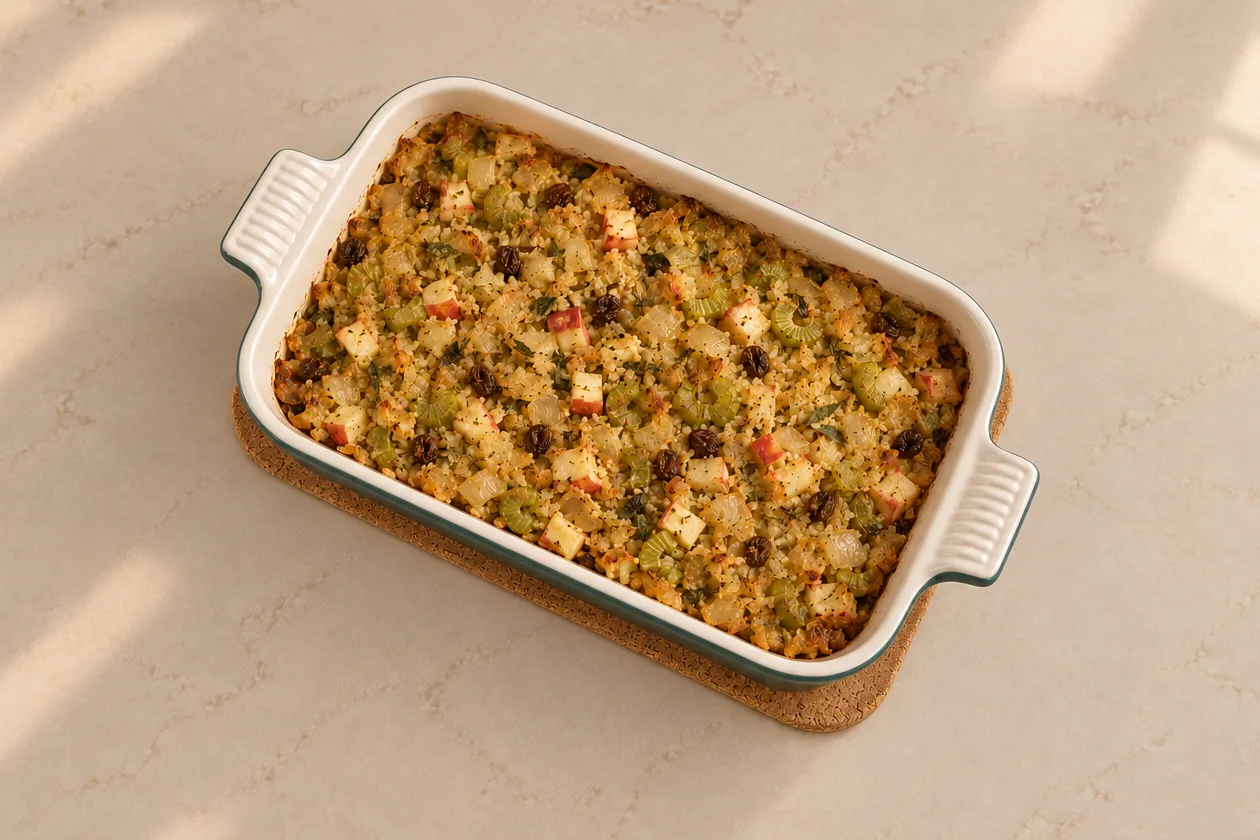
This almond meal stuffing is a breadless Full GAPS side with soft onion and celery, small pieces of apple and a little sweetness from raisins. Dry fermented almond meal and beaten eggs hold the vegetables together as they bake. Sage and thyme give it the familiar savory flavor of holiday stuffing, with lightly browned edges and a moist, spoonable middle.
I grew up an only child, and now there are eight of us in our family. Holiday preparation looks very different with six children. I want the chopping and oven time clear before I start, so I can plan a side dish alongside the rest of the meal. For this stuffing, have the dry almond meal ready ahead and give the baking dish its own place in the oven schedule.
You soften the onion, celery, apple and herbs on the stove before adding the almond meal, raisins and eggs. Then the mixture goes into its own greased baking dish. It is baked separately from the turkey, which gives you room to watch its texture and browned edges while planning the rest of the meal.
Start With Small, Evenly Diced Vegetables
Measure four cups of diced onion and two and a half cups of diced celery after chopping. They make up most of this stuffing. Small, reasonably even pieces soften more evenly than a mixture of fine bits and large chunks. The onion should remain recognizable after cooking, but you do not want a large crunchy piece standing out in a spoonful.
Use an apple corer or a knife to remove the core, then dice the apple and measure one cup. Keep the pieces close in size to the onion and celery so the apple spreads through the mixture. It adds sweetness in small bites without taking over the savory vegetables. Leave the skin on if you want those small red flecks in the finished stuffing.
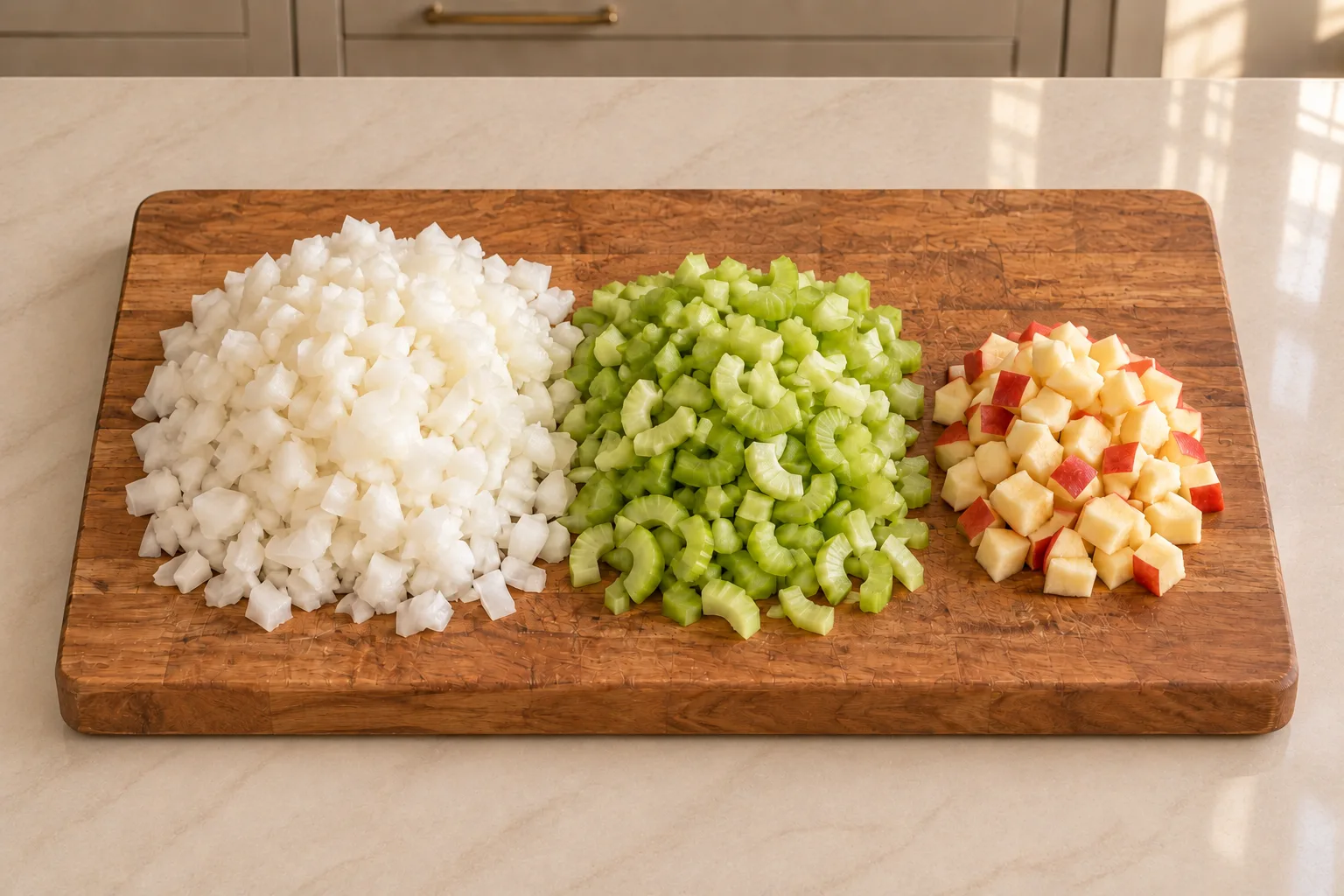
The first cooking step only softens the vegetables slightly. Heat two tablespoons of homemade ghee over medium heat, then add the onion, celery, apple and herbs. Stir while they cook for about five minutes. The onion begins to look less opaque and the vegetables become a little more flexible, without losing all their shape.
They will finish softening during the longer oven bake. Keep the stove step gentle enough that the mixture stays moist and moves easily when stirred. You are not trying to turn every piece dark brown before it reaches the casserole dish.
Use Dry Almond Meal For The Binding
Use one cup of dry fermented almond meal. It should fall in loose, fine nut crumbs. The prepared almonds are dried fully before grinding, so the meal is a dry ingredient when it joins the moist vegetables.
Fresh moist fermented almond flour carries extra water into this stuffing. Use the linked fully dry fermented meal instead. It completes fermentation before the nuts are dried and ground, so it gives you the dry crumbs this mixture needs. Have that preparation ready before stuffing day; soaking alone does not replace its fermentation step.
The almond meal is mixed through the vegetables. It is not a separate topping and it does not become toasted bread cubes. You should still see the diced vegetables in the finished dish, with the nut crumbs distributed around them and the eggs helping the mixture hold together.
Keep The Raisins And Herbs In Balance
A quarter cup of raisins goes into the whole batch. Choose plain raisins without added sugar, starch or other coatings. Mix them throughout the dish so a spoonful may have a sweet bite among the savory vegetables. The raisins should not form a heavy layer across the top.
Use two teaspoons of sage and two teaspoons of thyme. The card starts with dried sage. If you want the fresh-sage option, use fourteen fresh leaves for the one-batch recipe and chop them before they go into the pan. That is seven leaves for each teaspoon of dried sage shown, so the choice stays proportional when you scale the batch.
Add the quarter teaspoon of pepper and half teaspoon of mineral salt with the mixture. Sage and thyme carry much of the flavor. Keeping the measured seasoning clear lets you repeat the dish without depending on a packaged stuffing seasoning or a spice blend with extra ingredients.
Mix The Eggs Through Before Baking
Heat the oven to 350°F and grease a suitable casserole dish with a little more ghee. Transfer the softened vegetable mixture to the dish. Add the dry almond meal and raisins, then mix them through so you do not have a pocket of dry meal in one corner and most of the raisins in another.
Lightly beat the two eggs in a bowl before adding them. Pour them over the mixture and stir gently to distribute them. The vegetables should have a light, even coating. You should still see separate pieces, rather than a pool of yellow egg sitting around the sides.
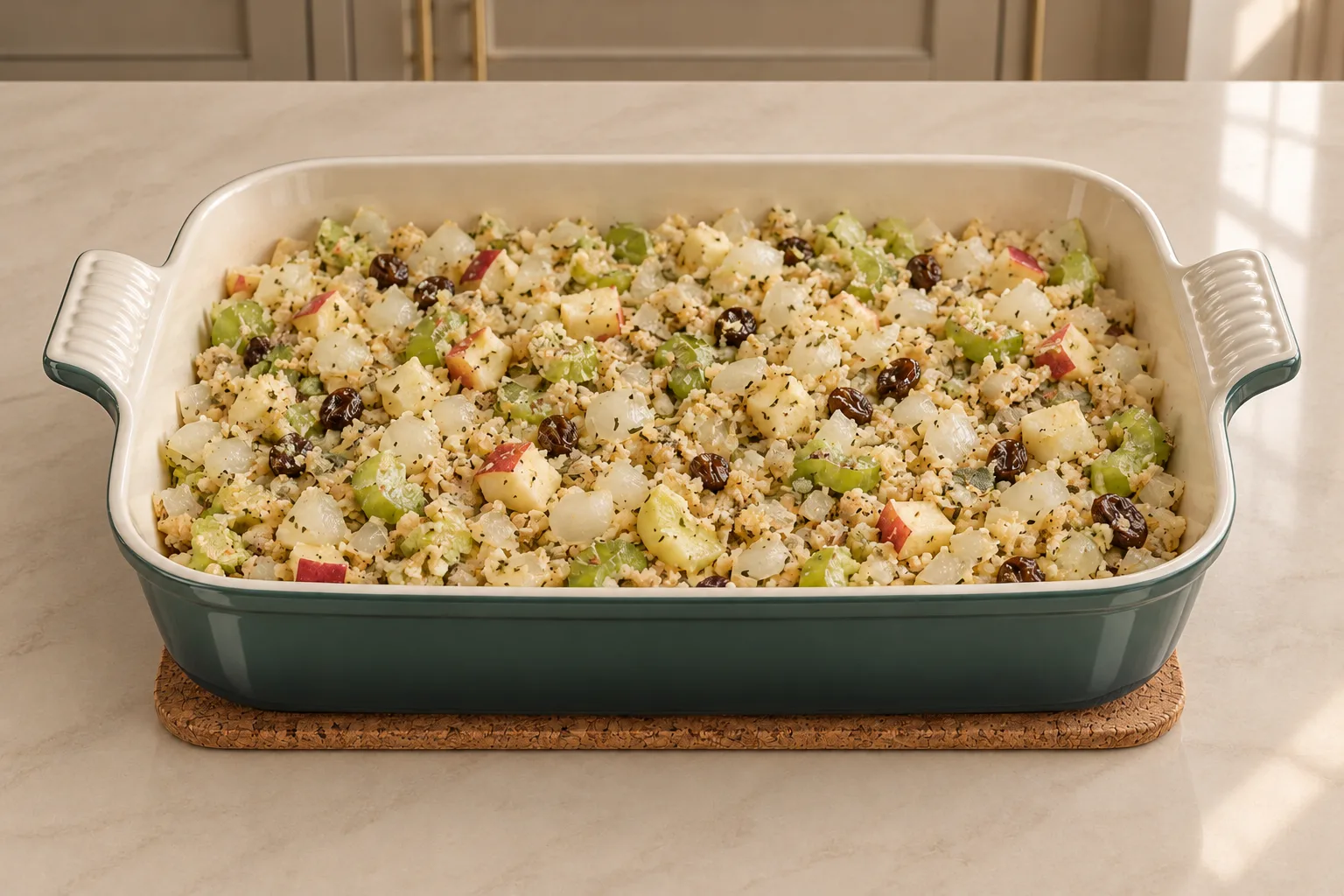
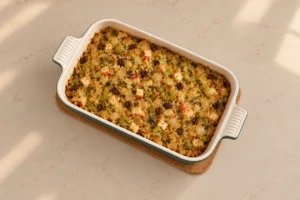
Spread the stuffing in an even layer. Choose a dish that holds the batch with room to mix and bake without spilling. The Le Creuset Artichaut rectangular baker in the photographs holds a shallow layer of this mixture. If you make a larger batch, give it more baking space instead of piling everything deeply into the same dish.
Bake For Soft Vegetables And Golden Edges
Bake at 350°F for forty-five minutes to one hour. Look for a lightly golden surface and more browning around the edges. The onion, celery and apple should be soft, and the egg binding should be set through the middle rather than leaving wet egg streaks.
A spoonful should hold together loosely while still showing the vegetables. This is not a loaf to slice into neat bread-shaped pieces. The center stays moist, with small nut crumbs and softened vegetables, while the edges can be a little firmer and more browned.
Begin checking at forty-five minutes and keep the full hour available in your meal plan. The dish size and depth affect how the middle cooks. If the middle is still wet while the edges have begun browning, give it more time and check again. Use the cooked center as well as the top color to judge the finish.
Where This Stuffing Fits On GAPS
This complete recipe fits Full GAPS. It contains prepared almond meal, raisins, apple, eggs and cooked vegetables. Keep that placement for the whole dish rather than choosing a stage based only on its cooked onion or celery.
The cooking fat is homemade ghee. You can use the same measured amount of virgin coconut oil, including for greasing the dish. The fermented almond meal uses a whey culture and contains milk, so changing the cooking fat does not make the whole stuffing dairy-free.
This is grain-free stuffing, but it contains almonds, eggs and milk from the whey used to culture the almond meal. The dry fermented meal and eggs help hold the softened vegetables together. Coconut oil changes the cooking fat, not those binding ingredients. The vegetables and fruit also mean this side does not fit No-Plant GAPS.
Plan The Preparation Around Your Meal
Have the dry almond meal and ghee ready before you start. Allow the full hour in your oven schedule, as well as about five minutes on the stove. Chopping and mixing take extra time. Preparing the almonds is a separate job, so finish that ahead of the stuffing day.
For a holiday meal, you can prepare this side the day before. Let the baked stuffing cool, cover it and refrigerate it overnight. Reheat it in a suitable covered oven dish until the center is hot throughout. Let a cold stoneware baker come to room temperature before reheating, following the maker’s care instructions, or transfer the stuffing to another suitable baking dish. For leftovers, heat the portion you want to serve and keep the rest refrigerated, so the whole batch does not go through each reheating.
For planning the oven jobs and finishing work around one holiday meal, the planned Holiday Menu & Prep Timeline fits this kind of side dish. Look for release details in the WFLI shop. Give the stuffing its own place in the oven schedule instead of leaving it until the main dish is ready to carve.
Frequently Asked Questions
Does This Recipe Use Bread?
No. Onion, celery and apple form the base. One cup of dry almond meal and two beaten eggs help hold the mixture together. You do not need to make a loaf of bread first.
Can I Use Fresh Sage?
Yes. The one-batch alternative is fourteen fresh leaves in place of the two teaspoons of dried sage. Chop them before the stove step. When scaling, use seven leaves for each teaspoon of dried sage shown in the card.
Can I Use Moist Fermented Almond Flour?
Use the linked dry meal here. Moist fermented flour brings extra water into the stuffing and will not behave like loose, dry nut crumbs. Prepare the dry meal ahead so it is ready to measure when you begin.
Can I Bake It Inside The Turkey?
This method bakes the stuffing separately in its own greased dish. Follow the casserole bake so you can check the center and browned edges directly.
Equipment And A Holiday Side
You need a board and knife, a roomy pan for softening the vegetables, a casserole dish, a mixing spoon and a small bowl for beating the eggs. Measuring cups and spoons keep the chopped ingredients and seasoning consistent. The baking dish shown is the Le Creuset Heritage rectangular dish in Artichaut. It is stoneware for the oven, so use a separate pan for the stove step.
Honey-Sweetened Cranberry Sauce gives you a tart, sweet contrast to this savory side. It has its own simple recipe and can be cooked on the stove while you arrange the oven work.
Almond Meal Stuffing Recipe
Almond Meal Stuffing With Apple and Raisins for Full GAPS
Ingredients
Equipment
Method
- Prepare the vegetables and baking dish. Heat the oven to 350°F (175°C). Grease a casserole dish with a little extra ghee or coconut oil. Dice the onion and celery. Remove the apple core with a corer or knife and dice the apple. Measure the chopped ingredients using the amounts in the ingredient list. If using the fresh-sage option, chop the leaves.
- Warm the ghee or coconut oil in a roomy pan over medium heat. Add the onion, celery, apple, sage and thyme. Sauté while stirring for about 5 minutes, until slightly softened. The onion starts looking translucent at its edges and the celery becomes more flexible; the vegetables do not need deep browning.
- Transfer the vegetable mixture to the greased casserole dish. Add the dry almond meal, raisins, pepper and salt. Mix through so the nut crumbs and raisins are distributed without dry pockets.
- Lightly beat the eggs in a small bowl, then pour them over the casserole mixture. Mix gently until the vegetables are evenly coated. There should be no separate pool of yellow egg around the sides.
- Spread the stuffing in an even, shallow layer. Use more baking space for a larger batch rather than piling it deeply into the same dish. Before baking, the mixture is moist and pale, with separate vegetables and scattered raisins visible. The surface has no browned crust yet.
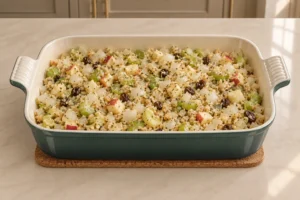
- Bake at 350°F (175°C) for 45 to 60 minutes. Begin checking at 45 minutes. The vegetables should be soft and the egg binding set through the center, with a lightly golden top and browned edges. If the center is still wet, continue baking and check again. Serve by spooning from the dish.
Notes
Tried this recipe?
Let us know how it was!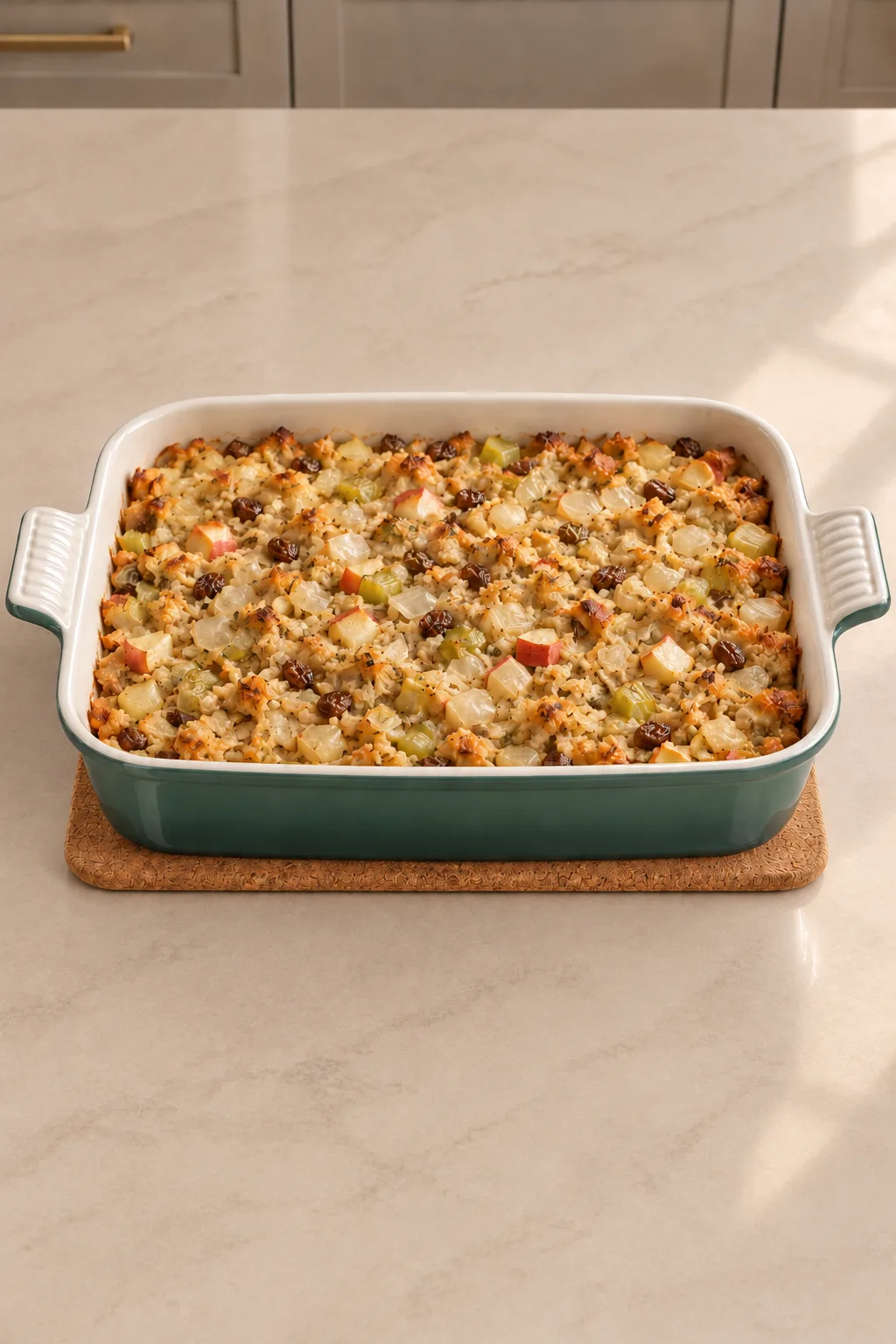

Leave a comment