

This properly prepared sesame tahini is a small, concentrated Full GAPS component made with only hulled sesame seeds and olive oil. The seeds are prepared before the recipe begins, toasted until lightly browned and nutty, cooled completely, then processed with raw olive oil into a spoonable paste.
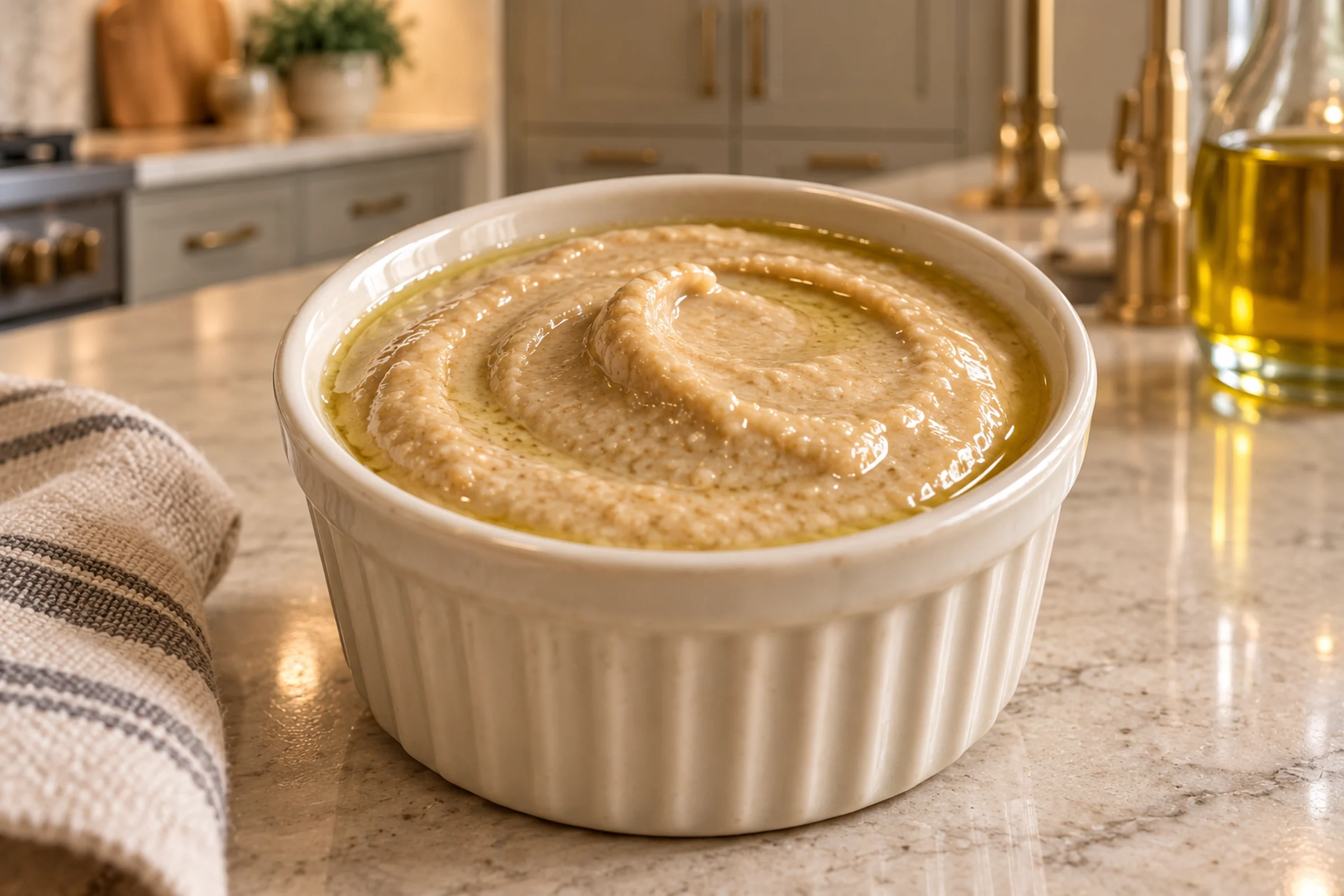
The measured batch is intentionally small: one-quarter cup, or 35 grams, of sesame seeds with two tablespoons olive oil. That is enough for recipes like the linked white navy bean hummus-style dip without leaving a large jar sitting in the refrigerator. In a busy family kitchen, making the amount the next recipe actually needs is often more useful than making a pantry-size batch.
Where This Tahini Fits On GAPS
This recipe fits Full GAPS after sesame has been introduced and tolerated. The seeds must be properly soaked, sprouted, or fermented and then fully dried before they reach the skillet. Standard sesame seeds poured straight from a package do not automatically meet that preparation step.
The olive oil stays raw. It is added only after the toasted seeds have cooled and begun breaking down in the food processor. That gives the finished tahini its smooth body without using the olive oil as a cooking fat.
Begin With Fully Dried Prepared Sesame Seeds
Measure one-quarter cup hulled sesame seeds after their preparation and drying are complete. If you use a scale, the source gives 35 grams. The seeds need to be dry enough that they pour freely and do not cling together in damp clusters. Moisture left from soaking can make them steam instead of toast and can keep the paste from developing properly.
Spread a few seeds between your fingers before heating the skillet. They should feel dry and separate, without a cool damp center. Do not rush this check. Toasting is an eight-minute step; drying is completed beforehand and is not folded into that time.
Toast Over Medium-Low Heat
Put the dry seeds in a clean, dry Le Creuset Signature 9-inch Artichaut skillet over medium-low heat. Toss or stir them frequently so the thin layer keeps moving. Sesame seeds are small and can move from pale to scorched quickly when they sit against one hot spot.
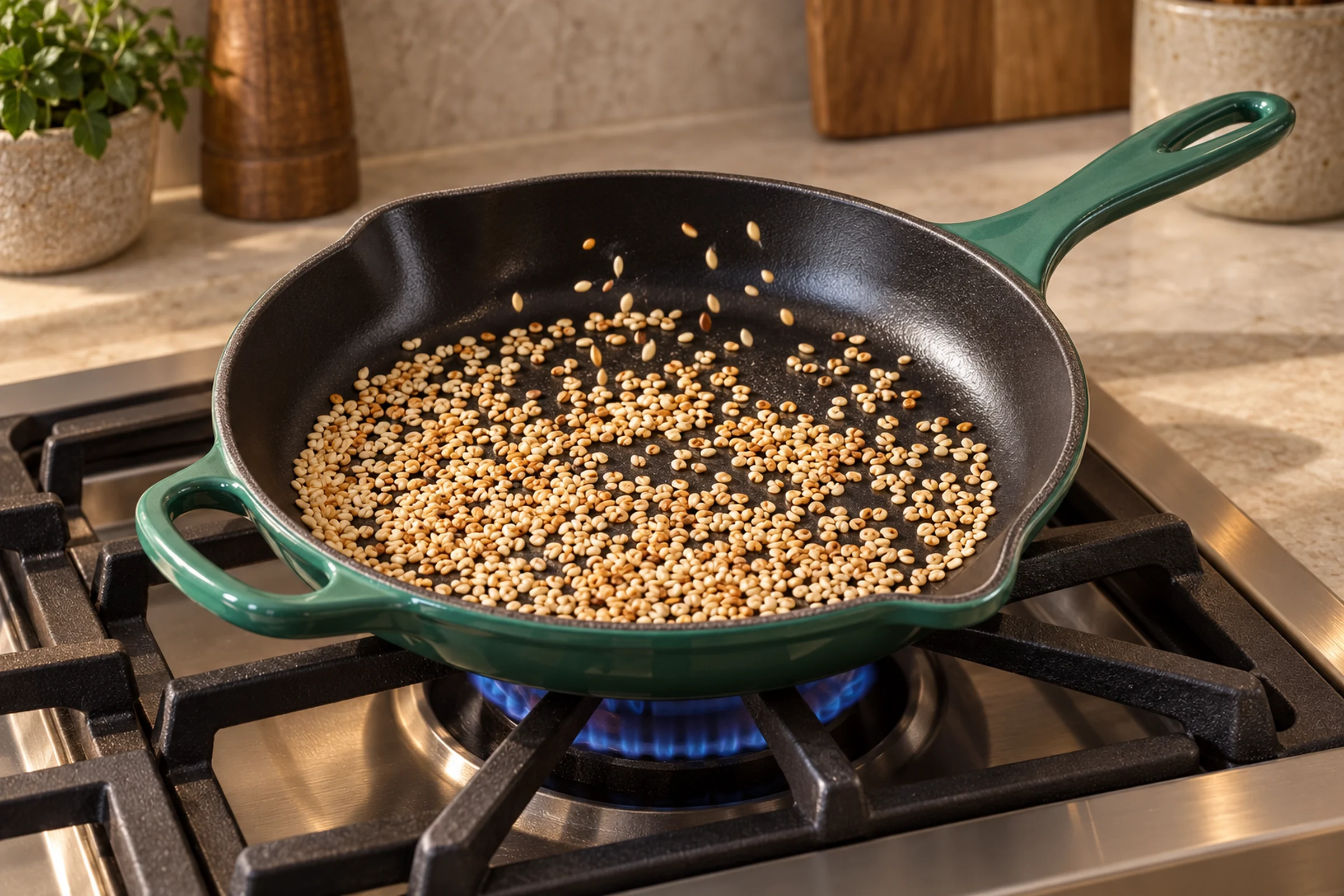
After about eight minutes, the seeds should look lightly browned rather than dark brown. Their aroma changes first. It becomes warm and distinctly nutty, without any sharp burned smell. Take the skillet off the heat at that point, because the hot cast iron continues carrying heat into the seeds.
Cool The Toasted Seeds Completely
Transfer the seeds to a plate instead of leaving them in the skillet. Spread them into a thin layer and cool them to room temperature. Warm seeds can trap heat in the processor bowl and warm the olive oil before it is fully incorporated.
They are ready when a seed at the center of the pile no longer feels warm against your fingertip. The source does not give a measured cooling time, so use the physical cue rather than inventing one.
Process Until A Paste Begins To Form
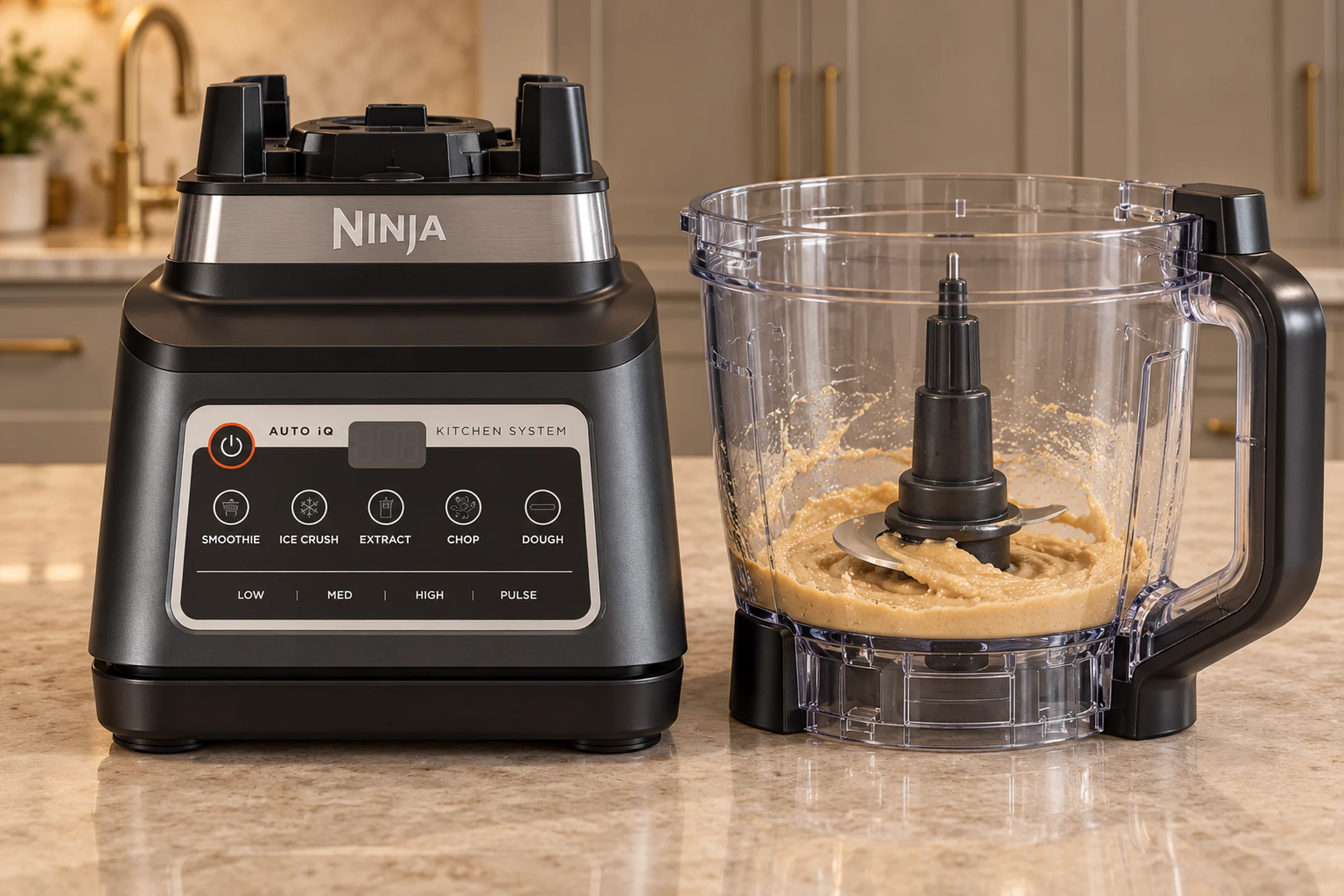
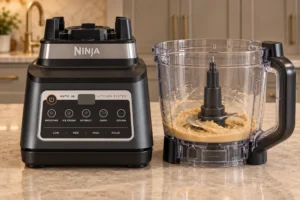
Add the cooled seeds to the food-processor bowl for the Ninja Professional Plus Kitchen System BN801. Pulse several times. At first the seeds will look sandy. Keep pulsing until the crumbs become finer and begin gathering into a thicker paste against the bowl.
Stop once to scrape the sides and bring any dry sesame back toward the blade. Because this is a small batch, the mixture may sit low in the bowl. Scraping keeps the measured seeds in the active processing area without adding unmeasured liquid.
Stream In The Olive Oil
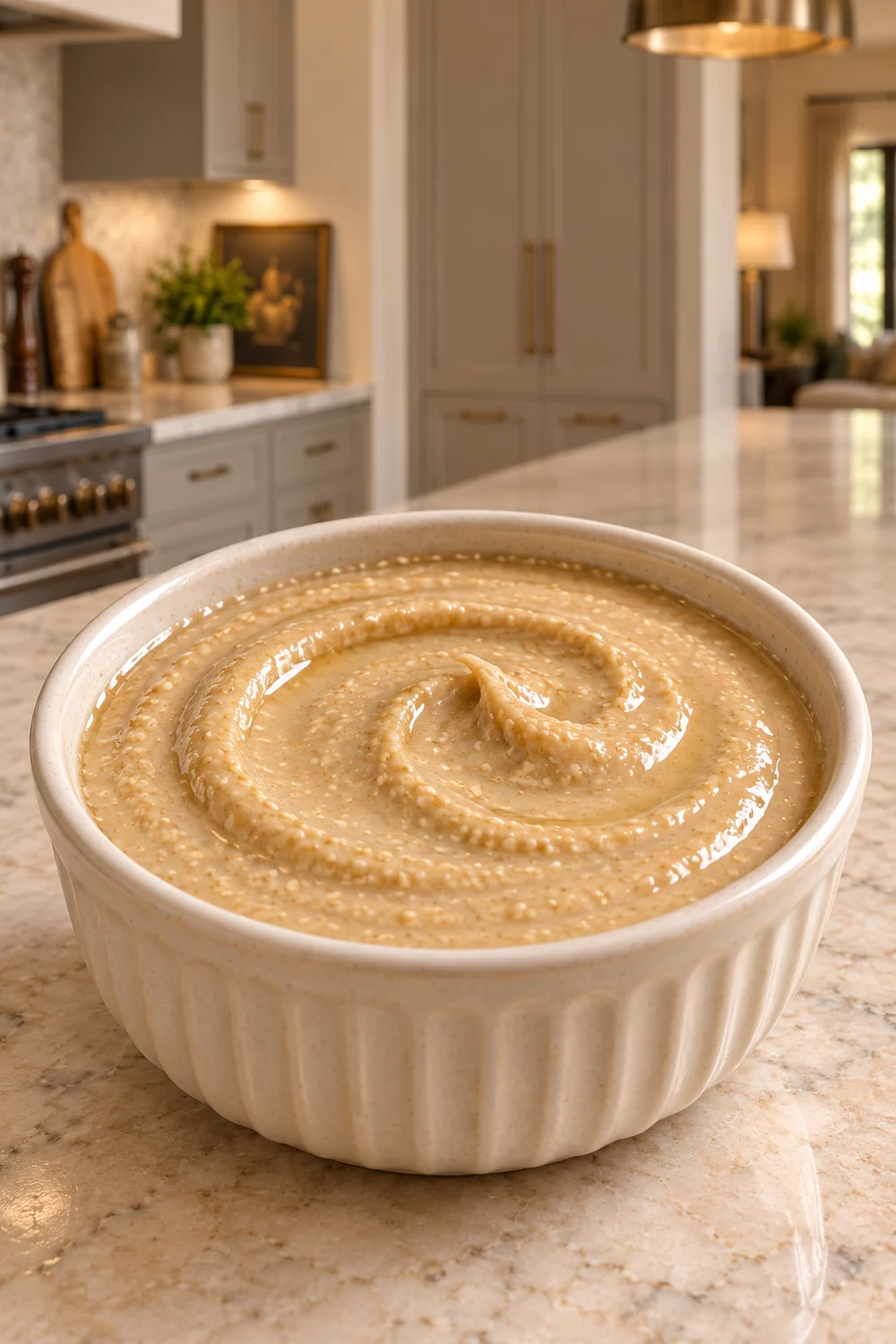
Run the processor on low and add two tablespoons olive oil in a slow stream. The dry-looking sesame paste will loosen and become glossy. Continue only until the oil is evenly combined and the tahini is spoonable.
The finished tahini should hold a soft ridge when stirred, then slowly settle. It may retain a little natural sesame texture because the batch is small. It should not contain dry seed pockets, a separate oil pool, or burned flecks.
How To Use This Small Batch
Use it in White Navy Bean Hummus-Style Dip with Grapefruit, where one-third cup tahini gives properly prepared beans a creamy, nutty base. The dip remains its own complete recipe and this tahini remains a reusable component.
You can also spoon tahini into a supported dressing or sauce formula that already measures it. Do not add extra tahini to another recipe without accounting for how its thickness and bitterness change the finished balance.
Storage
Scrape the tahini into a small clean ramekin or covered glass container. Refrigerate it after making. Stir before measuring if a little oil rises to the surface during storage.
Keep the container clean by using a dry spoon each time. Because the source does not provide a measured storage window, make this small batch for a planned recipe instead of assigning it an invented shelf life.
Frequently Asked Questions
Can I Use Sesame Seeds Straight From The Package?
Use hulled sesame seeds that have been properly soaked, sprouted, or fermented and fully dried. The source toast step comes after that preparation.
Why Did My Sesame Seeds Burn?
The skillet was probably too hot or the seeds sat too long without moving. Use medium-low heat, toss frequently, and stop at light browning and a nutty aroma.
Why Is My Tahini Grainy?
Scrape the bowl and continue pulsing until a paste begins to form before adding the oil. A small batch may keep a little texture, but it should not contain whole dry seeds.
Can I Heat The Olive Oil With The Seeds?
No. Toast the seeds in a dry skillet, cool them, and add the olive oil raw while processing.
Recommended Equipment
- Le Creuset Signature 9-inch Artichaut skillet
- Ninja Professional Plus Kitchen System BN801 food-processor bowl
- Flexible silicone spatula
- Small ramekin or covered glass container
- Measuring cups and spoons
- Kitchen scale, optional
Properly Prepared Sesame Tahini for Full GAPS
Ingredients
Equipment
Method
- Place the fully dried properly prepared sesame seeds in the clean, dry Artichaut skillet over medium-low heat.
- Toast for about 8 minutes, tossing frequently so the seeds brown evenly and do not burn. Stop when they are lightly browned and smell distinctly nutty.
- Transfer the seeds to a plate and cool completely to room temperature.
- Add the cooled toasted seeds to the Ninja BN801 food-processor bowl. Pulse until the seeds break down and begin forming a paste.
- Run the processor on low and add the olive oil in a slow stream. Continue only until the mixture is evenly combined and spoonable.
- Scrape the tahini into a small ramekin.
Notes
Tried this recipe?
Let us know how it was!Build A More Useful Full GAPS Pantry
The upcoming Sauces, Dressings & Condiments Cookbook will keep small components like this beside the recipes that use them. Watch the WFLI shop for the release.

Leave a comment