

These flourless pumpkin pancakes use two eggs, a quarter cup of plain pumpkin purée, and cinnamon. There is no flour, nut butter, starch, baking soda, or baking powder in the batter. The eggs set the structure while the pumpkin keeps the centers moist.
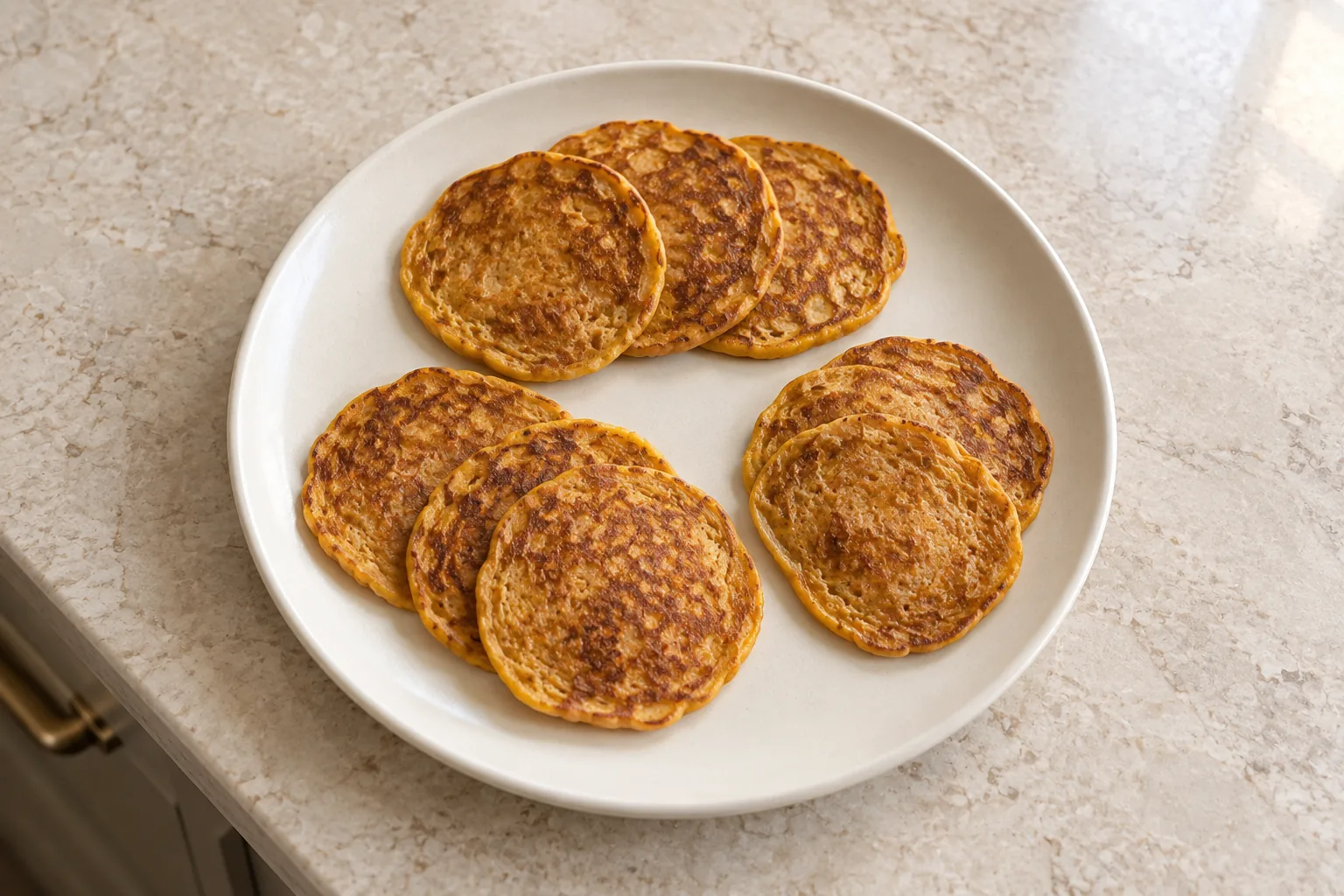
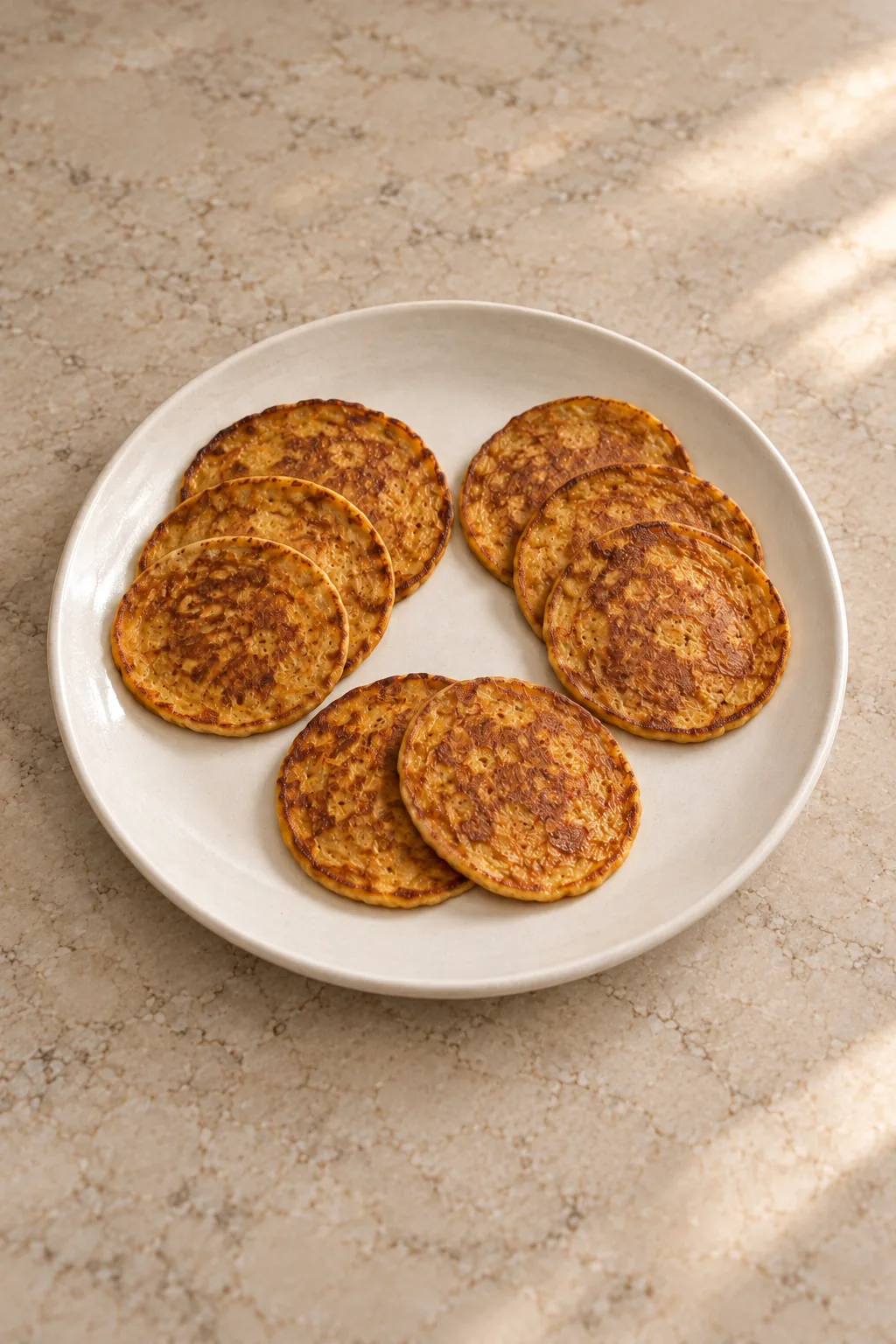
The finished pancakes are small, thin, and tender rather than tall and cakey. Their surfaces turn golden-brown, the centers stay soft, and the cinnamon smells warm without covering the pumpkin.
Breakfast in our house has to fit around homeschooling, six kids, and second-shift work. A three-ingredient batter is useful because I can see its texture immediately and cook a small test pancake before committing the rest of the bowl.
The small size matters here. Two scant tablespoons of batter make a pancake that can set through before the underside burns. A wide breakfast-style pancake is much harder to turn because this batter has no flour or nut butter to reinforce it.
Where These Pancakes Fit On GAPS
This formula fits Full GAPS after eggs, cooked pumpkin, cinnamon, and the chosen pan fat are introduced and tolerated. Use plain homemade pumpkin purée without sugar, starch, preservatives, or pumpkin-pie seasoning.
This is not the documented Introduction Diet Stage 3 pancake. The Stage 3 combination includes organic nut butter, egg, and fresh winter squash, marrow, or courgette. Leaving nut butter out of that formula creates a different recipe.
The two-egg pumpkin formula here remains a useful nut-free Full GAPS breakfast. It can also be dairy-free when cooked in coconut oil, goose fat, or duck fat and served without butter.
Maple syrup appears in the source serving suggestions but is left out of this GAPS version. If you want a topping, use raw butter after it has been introduced, a small amount of raw honey, or a permitted homemade fruit butter.
Use Plain Homemade Pumpkin Purée
Measure one-quarter cup smooth, cooked pumpkin purée. It should contain pumpkin only. Sweetened pumpkin-pie filling changes both the ingredients and the way the batter sets.
Cool the purée before measuring. Hot pumpkin can begin setting the eggs while you whisk. If the purée looks watery, let it drain in a fine stainless-steel sieve before measuring the quarter cup.
The measured purée should mound softly on a spoon and settle when stirred. A thin, watery purée produces fragile pancakes that spread too far. A very dry purée makes a thick batter that needs more whisking but should not be loosened with unmeasured liquid.
Whisk A Smooth Pumpkin Batter
Crack two eggs into a medium mixing bowl. Add the quarter cup pumpkin purée and one-quarter teaspoon ground cinnamon.
Whisk until the yolk, white, pumpkin, and cinnamon are completely combined. Scrape the bottom and sides of the bowl so no dense pumpkin streak remains.
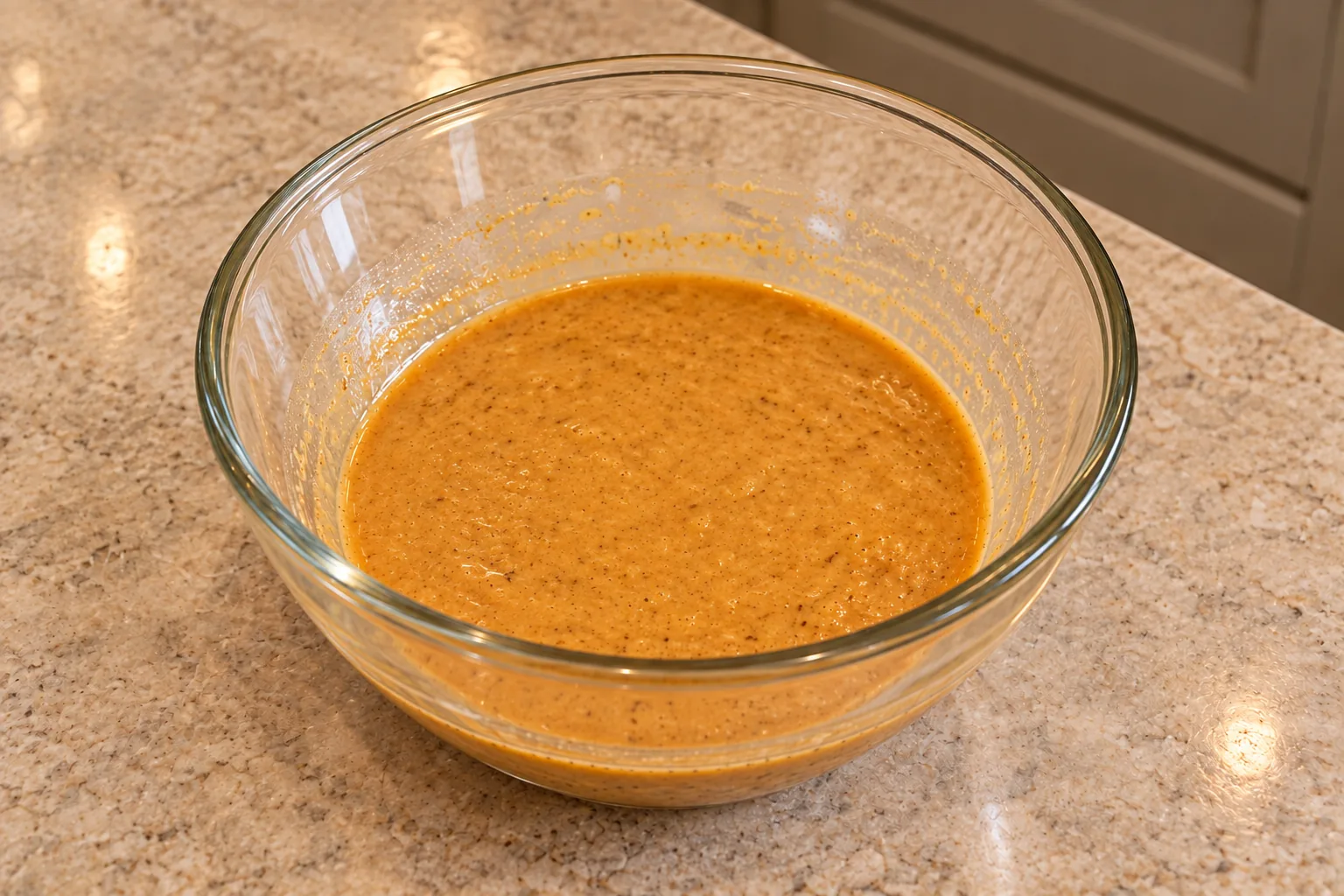
The batter is thinner than conventional pancake batter. It should pour from the spoon in a smooth orange ribbon, with fine cinnamon speckles throughout. It should not hold a mound or look fluffy.
Let the bowl stand only while the skillet warms. This batter does not need a flour-hydration rest. Whisk it briefly again if the cinnamon or pumpkin begins settling at the bottom.
Cook One Test Pancake First
Use the first small pancake to check both the batter and the burner. If it spreads into a very thin puddle, confirm that the pumpkin was measured after draining and that the full two eggs were used. Do not correct the bowl with coconut flour because that creates a different recipe.
If the test pancake stays compact but tears, give it more time before turning. The top does not need to look dry, but the center must lose its liquid shine and become slightly opaque.
Look at the underside after the test pancake releases. Golden-brown is the target. A pale bottom means the pan needs a little more heat; a very dark bottom with a wet center means it needs less. Adjust the burner before portioning the remaining batter so the rest of the batch cooks consistently.
Warm The Skillet Without Smoking The Fat
Warm the exact Le Creuset Signature 10.25-inch Artichaut skillet over medium-high heat. Add about one tablespoon coconut oil and swirl it over the cooking surface.
The oil is ready when it looks loose and glossy. It should not smoke. If the oil smokes or the first pancake darkens before its top begins setting, lower the burner before cooking the next batch.
You may use homemade ghee, goose fat, or duck fat instead of coconut oil. Keep the same visual heat cue: the fat should shimmer and move easily across the pan without burning.
Keep Each Pancake Small
Measure two scant tablespoons batter for each pancake. Leave space between them so a flexible spatula can slide underneath without touching the neighboring pancake.
Do not spread the batter into a broad circle. Let it settle on its own. A small pancake sets more evenly and is less likely to tear when it turns.
The source makes about eight small pancakes. Depending on the skillet surface, cook them in two or three batches rather than crowding the pan.
Wait For The Physical Flip Cues
Watch the edge and center instead of relying on a timer. The underside must be golden, the edge must look set, and the center should change from shiny liquid to slightly opaque.
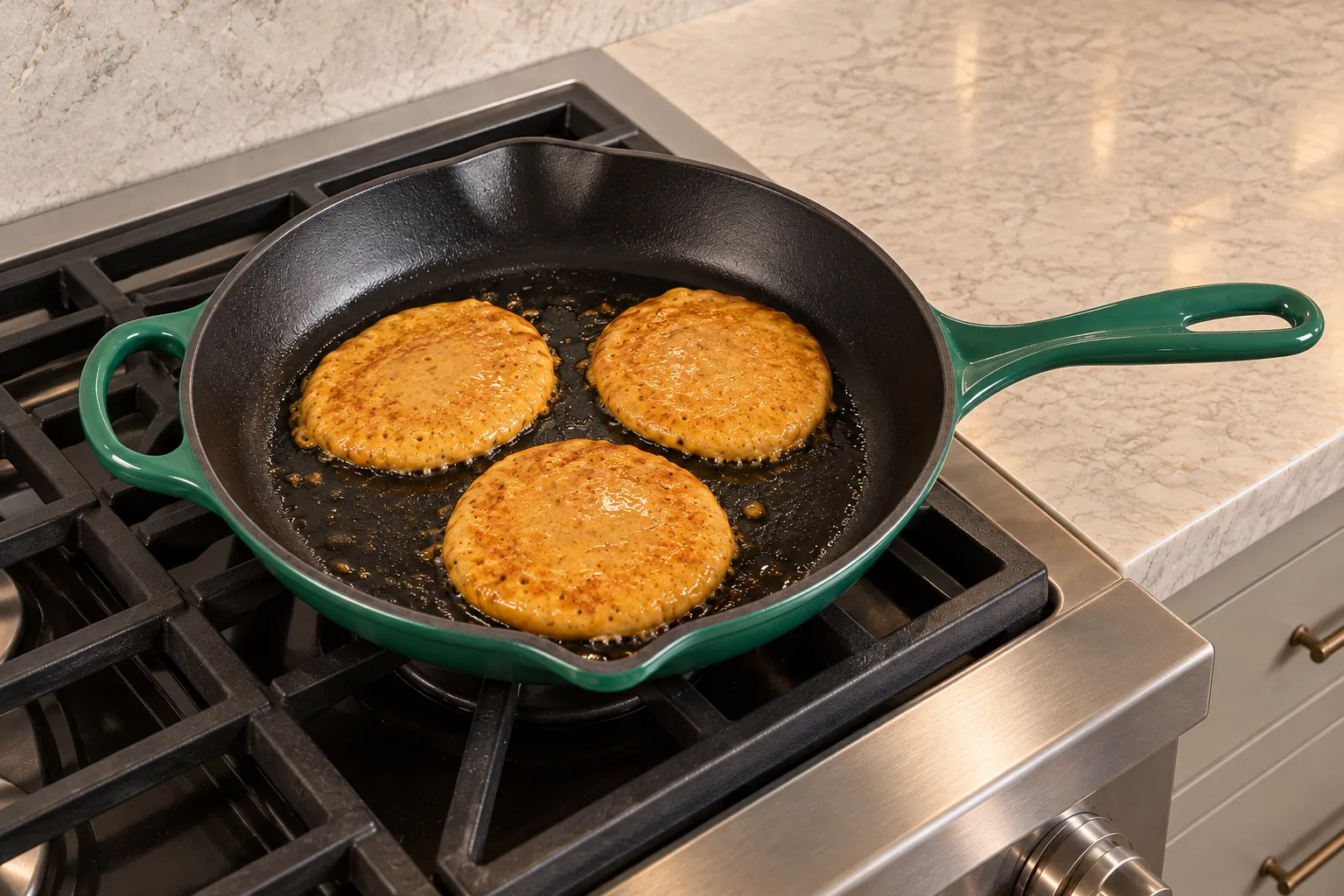
Slide the spatula under one pancake. If the edge folds or wet batter runs over the spatula, leave it in place a little longer. When it lifts as one piece, turn it gently.
Brown the second side, then transfer the pancake to a warm plate. The second side usually needs less time because the center is already partly set.
Wipe away any blackened residue before the next batch. Add only enough approved fat to keep a thin glossy film across the pan. A deep pool of oil fries the edges and makes the pancakes greasy.
What The Finished Pancakes Should Be Like
These pancakes do not rise like a boxed mix. They stay thin and moist, with softly set centers and lightly crisp, golden edges.
The pumpkin flavor is mild. Cinnamon comes through first in the aroma, followed by egg and warm squash. A dark or bitter smell means the skillet was too hot.
Cut through one pancake before serving the whole batch. The middle should look evenly set and custardy, without a line of wet batter. It should bend slightly without breaking into scrambled pieces.
Serve Them Simply
Serve the pancakes warm and plain, or add raw butter after introduction, a small amount of raw honey, or a permitted homemade fruit butter. Keep the topping appropriate for the eater’s current Full GAPS introductions and tolerance.
For another breakfast pancake with a different formula, try Nut Butter Pancakes or Waffles for Full GAPS. The Spaghetti Squash Pancake is a savory option. Both remain separate because their ingredients, ratios, and texture are different.
If you cook with ghee, use the linked homemade stovetop ghee rather than an opaque flavored product.
Store And Reheat The Pancakes
Cool leftover pancakes promptly. Refrigerate them in a covered glass container for up to three days, with parchment between layers if they tend to stick.
Reheat them gently in a lightly greased skillet over low heat. The edges should warm and regain a little crispness without becoming dark.
For longer storage, freeze the cooled pancakes in a single layer, then stack them with parchment once firm. Thaw in the refrigerator and reheat in the skillet. Freezing the raw egg batter is not part of this method.
Recommended Equipment
- Le Creuset Signature 10.25-inch skillet in Artichaut
- Medium glass or stainless-steel mixing bowl
- Balloon whisk
- Tablespoon and one-quarter-cup measures
- One-quarter-teaspoon measure
- Flexible silicone or wooden-edged spatula
- Fine stainless-steel sieve if the pumpkin purée is watery
Frequently Asked Questions
Why Are These Pancakes Full GAPS Instead Of Intro Stage 3?
The documented Stage 3 pancake uses nut butter, egg, and fresh squash. This source uses cooked pumpkin purée and eggs without nut butter, so it is kept as its own Full GAPS formula.
Can I Use Canned Pumpkin?
Use plain homemade pumpkin purée for this route. Pumpkin-pie filling contains added sweeteners and spices, and packaged purée requires a complete ingredient check that this recipe does not depend on.
Why Did My Pancakes Tear When I Flipped Them?
They were probably too large or turned before the center became slightly opaque. Keep each portion to two scant tablespoons and wait until the edge is set and the underside releases as one piece.
Why Did The Outside Burn Before The Center Set?
The skillet was too hot. Lower the burner after the initial warm-up. The pan fat should stay glossy without smoking, and the underside should brown while the top slowly loses its wet shine.
Can I Make Them Egg-Free?
Eggs provide nearly all the structure in this three-ingredient batter. Replacing both eggs would create a different formula, so this card does not offer an untested egg-free substitution.
Can I Double The Recipe?
Yes. Use the 2× button in the recipe card. Cook the same small two-tablespoon pancakes in batches; do not make them wider just because the bowl holds more batter.
Can I Add Baking Soda Or Coconut Flour?
No addition is needed. Baking soda and coconut flour would change the texture and the measured source formula. Choose a separate coconut-flour pancake recipe when that is the batter you want.
Flourless Pumpkin Egg Pancakes Recipe
Flourless Pumpkin Egg Pancakes for Full GAPS
Ingredients
Equipment
Method
- Warm the Le Creuset Artichaut skillet over medium-high heat while you mix the batter.
- Whisk the eggs, cooled pumpkin puree, and cinnamon until completely smooth, with no pumpkin streaks or separate egg white. The batter should pour in a thin orange ribbon.
- Add about 1 tablespoon coconut oil or the chosen approved fat to the skillet and swirl to coat. It should look loose and glossy without smoking.
- Spoon two scant tablespoons batter per pancake, leaving room to slide in the spatula. Keep the pancakes small and let them settle without spreading.
- Cook until each underside is golden, the edges look set, and the center changes from shiny liquid to slightly opaque. Lower the heat if the bottom darkens before the top begins setting.
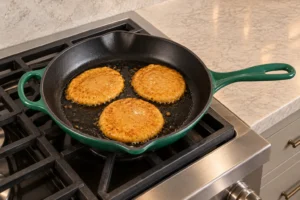
- Slide the spatula fully underneath, flip gently, and brown the second side. Serve warm. The recipe makes about 8 small pancakes, or 1 large to 2 medium servings.
Notes
Intro distinction: This is not the Introduction Stage 3 nut-butter-and-fresh-squash pancake formula.
Serving: Maple syrup is omitted. Use raw butter after introduction, raw honey, or permitted homemade fruit butter if desired.
Timing: The source gives physical cooking cues rather than times, so the card does not invent prep or cook minutes.
Tried this recipe?
Let us know how it was!Build A Breakfast Rhythm That Fits Real Mornings
The upcoming Full GAPS Breakfast Guide organizes quick skillets, make-ahead components, pancakes, eggs, and warm drinks into a practical rotation for busy family mornings. Find current releases and upcoming additions in the WFLI shop.

Leave a comment