

This caramel sauce uses three pantry staples: homemade coconut milk, raw honey, and virgin coconut oil. It cooks into a smooth, light golden sauce that stays thinner than candy caramel. That makes it easy to drizzle over a cold dessert, spoon onto ripe fruit at snack time, or warm gently when you want a simple Full GAPS sweet sauce.
One of the biggest changes we made when we started GAPS was clearing out packaged food and learning to make the things we used to buy. Sauces are part of that work. A short ingredient list helps, but the physical cues matter more than the number of ingredients. With this recipe, you are watching the boil, the first real thickening, and the shift to light brown.
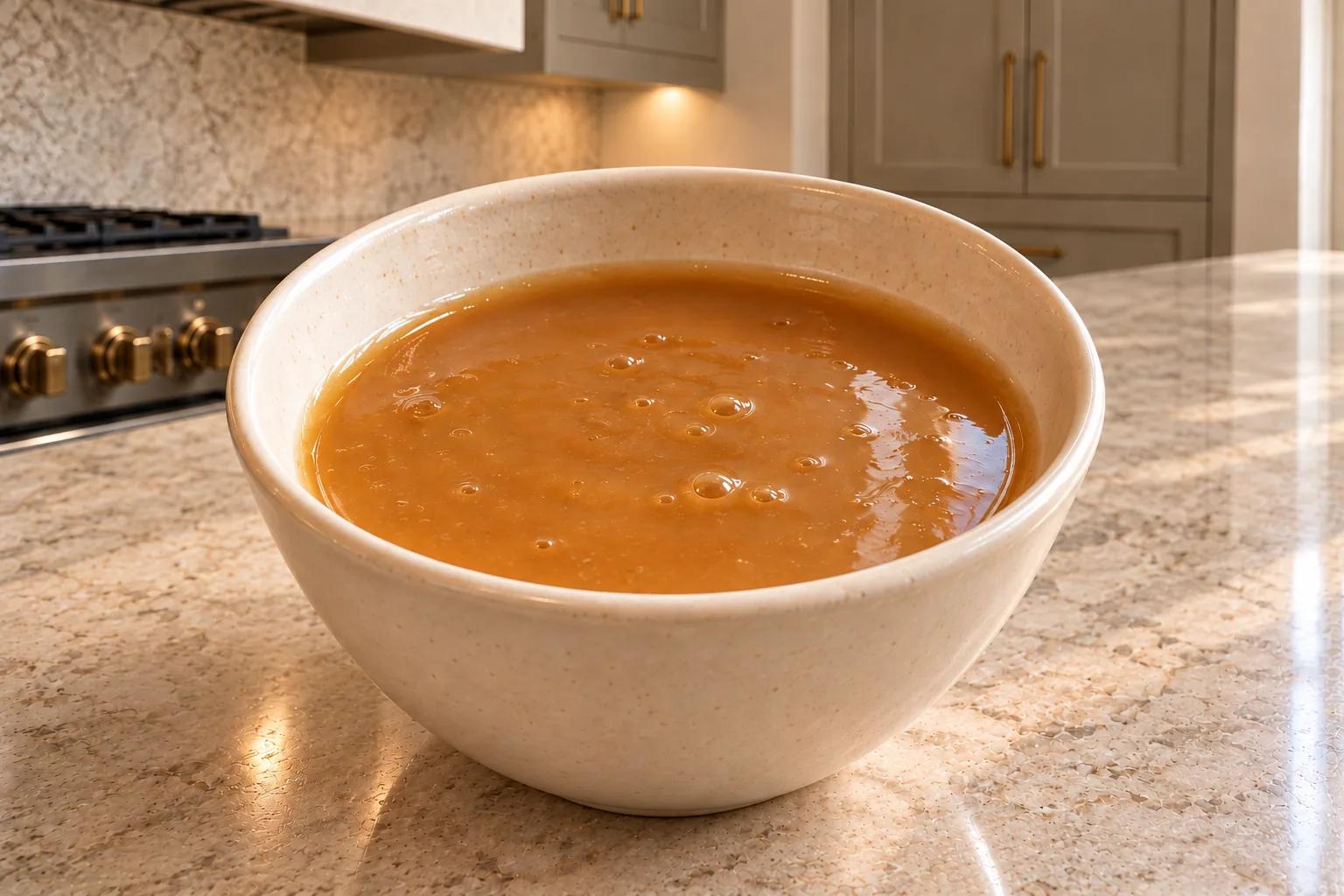
What This Caramel Sauce Is Like
This is a light, thin caramel sauce. It does not set into chewy candy and it should not look like a jarred caramel topping thickened with starch or syrup. Warm, it runs easily from a spoon. As it cools, it becomes a little more cohesive while staying pourable.
The coconut milk keeps the honey from cooking into a firm candy. Coconut oil adds richness and helps the sauce feel smooth on the tongue. The finished flavor is sweet and gently toasted, with a mild coconut note rather than a dark burnt-sugar taste.
GAPS Stage
This recipe fits Full GAPS. Use pure ingredients with no sweeteners, starches, gums, flavorings, or preservatives added. The coconut milk should be homemade, the honey natural, and the coconut oil virgin and unrefined.
Treat it as an occasional sweet sauce, not the base of a meal. Full GAPS still centers meat, fish, eggs, stock, fermented foods, natural fats, and vegetables. A small dessert or snack can fit without turning every meal into a substitute for the foods you left behind.
Ingredients
- 1/2 cup homemade full-fat coconut milk
- 1/4 cup raw honey
- 2 tablespoons extra-virgin coconut oil
- Pinch of mineral salt, optional
Start with well-stirred coconut milk so the fat and liquid are evenly combined before measuring. Our hot-water homemade coconut milk is the useful component recipe here. It gives you a pure milk without the gums, thickeners, or sweeteners that often appear in packaged coconut milk.
Raw honey is the only sweetener. Do not replace it with date sugar, coconut sugar, maple syrup, or a commercial syrup. Those substitutions change both GAPS fit and how the sauce cooks.
Use virgin coconut oil rather than a deodorized or hydrogenated product. The oil may sit in small clear beads on the pale mixture before heating. That is normal. Constant whisking brings it into the sauce as the mixture warms.
How To Make Dairy-Free Coconut Caramel Sauce
Combine The Sauce
Put the coconut milk, honey, coconut oil, and optional salt in a small stainless steel saucepan. Whisk until the honey is dispersed through the coconut milk. The mixture will be pale cream-gold. Small clear beads of coconut oil may still float on the surface.
Use a small saucepan for one batch. If you double the recipe, move to a larger saucepan before heating. The extra headroom matters because the sauce rises when it reaches a full boil.
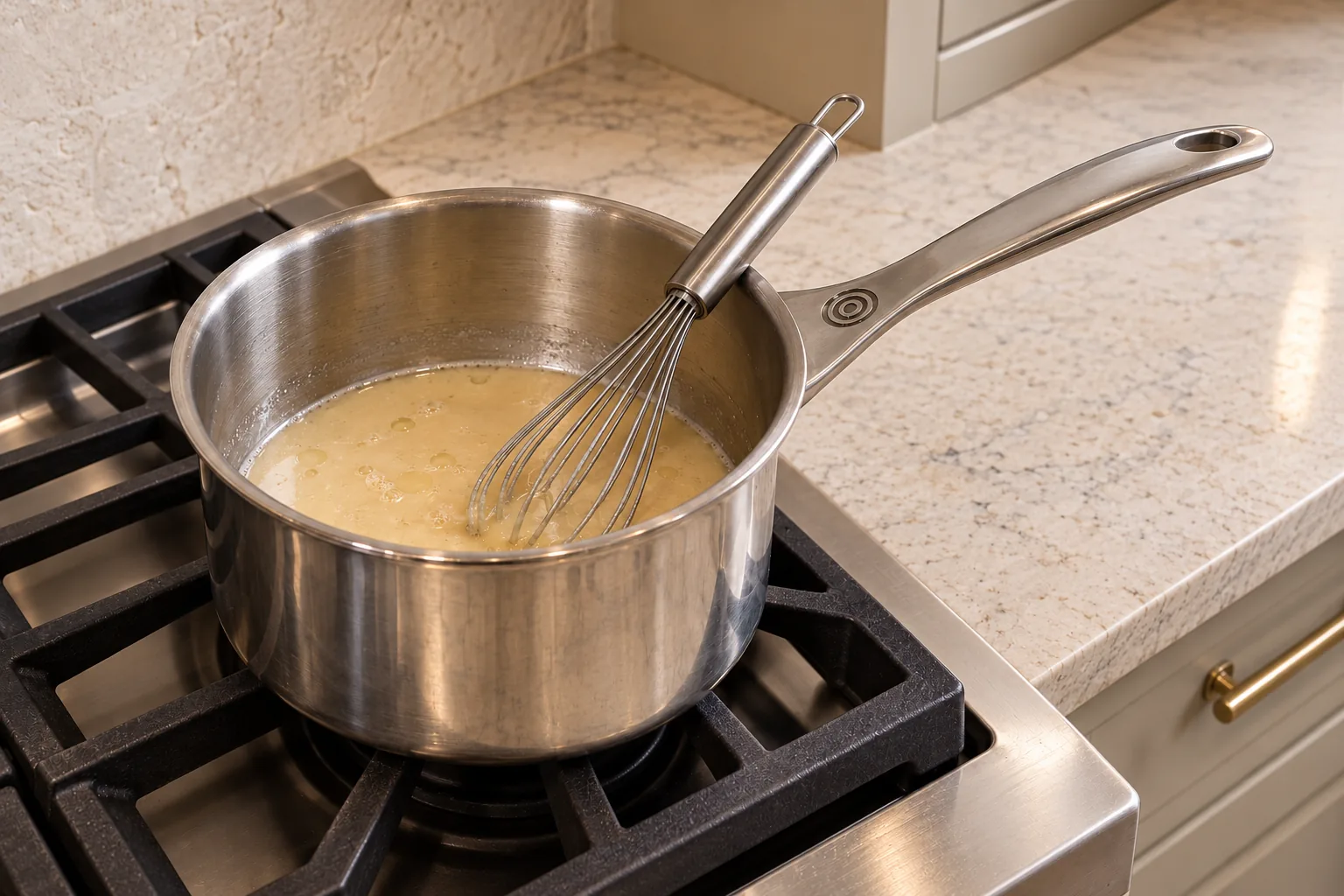
Bring It To A Boil
Set the saucepan over high heat and whisk constantly. Stay with the pan. The mixture moves from still and opaque to steaming, then foamy bubbles begin to climb from the center and edges. Keep whisking so the honey does not catch on the bottom.
Once the entire surface is boiling, lower the heat to medium. You are controlling the boil rather than stopping it. The bubbles should remain active without rushing up the sides of the saucepan.
Watch For Thickening
Continue whisking over medium heat. At first the sauce runs off the whisk almost like coconut milk. As it reduces, the bubbles become finer, the foam settles, and the whisk begins to leave a brief path across the surface before the sauce flows back together.
When you see that first real thickening, lower the heat again. Do not wait for the sauce to look like candy or pudding. It will continue to tighten as it cools.
Stop At Light Brown
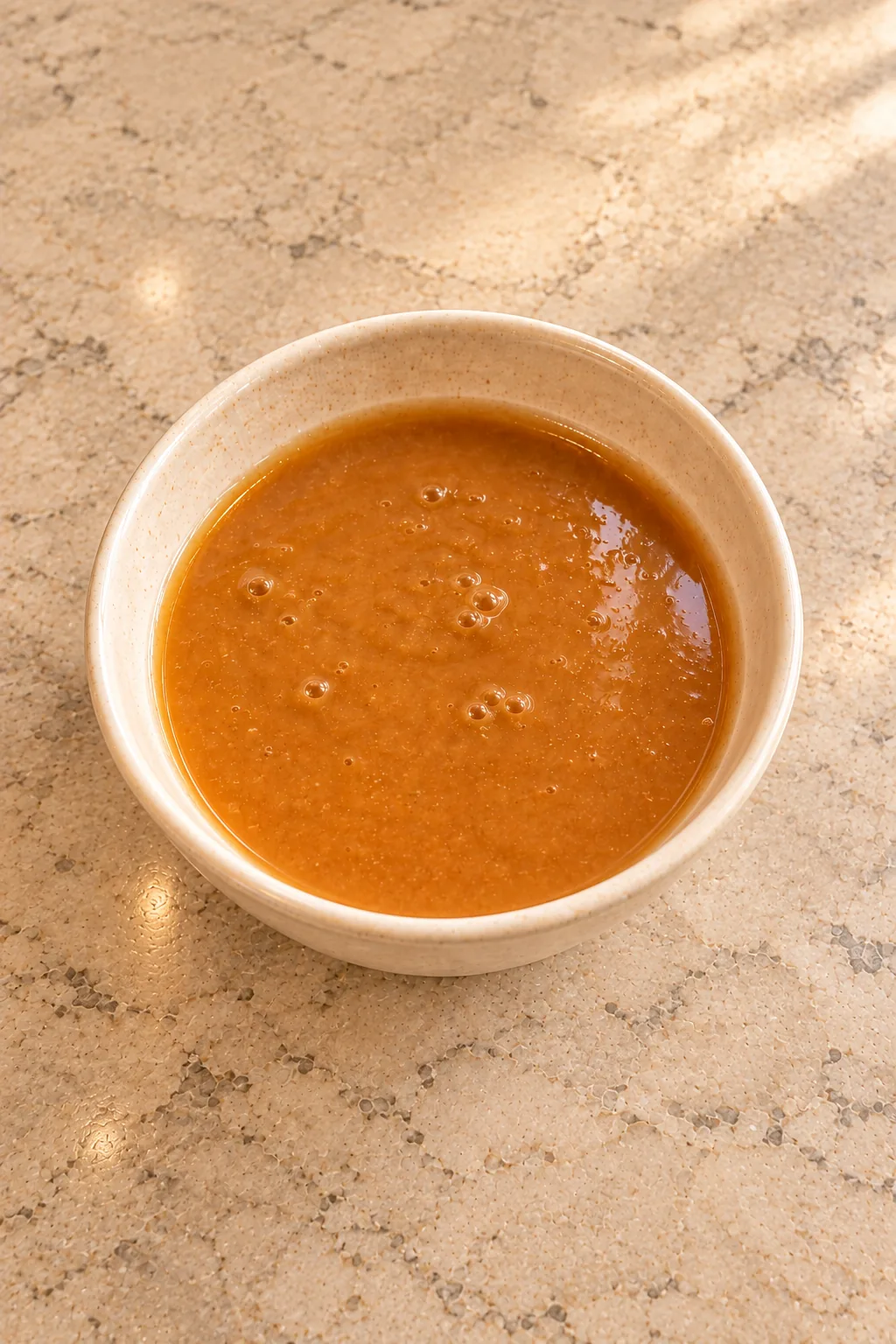
Keep whisking over low heat until the sauce changes from cream-gold to light golden brown. The finished sauce should coat the whisk in a thin glossy layer and fall back into the pan in a narrow ribbon. The ribbon disappears into the surface quickly because this is intentionally a thin sauce.
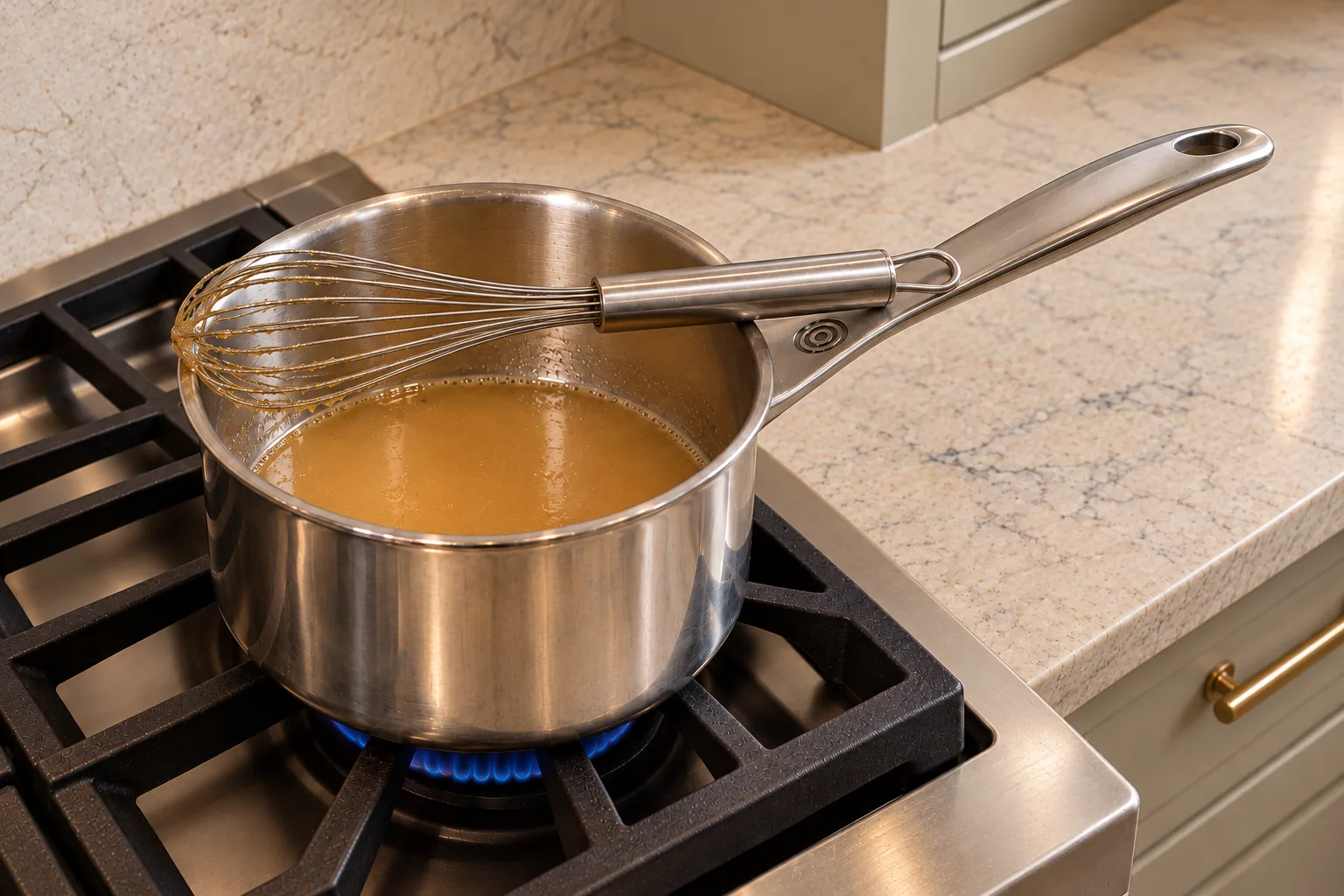
Remove the pan from the heat as soon as you reach that light-brown endpoint. Dark brown means the sauce has gone farther than this formula needs. Pour it into a heat-safe glass or ceramic container and let it cool before serving.
Dairy-Free Coconut Caramel Sauce for Full GAPS
Ingredients
Equipment
Method
- Put the coconut milk, honey, coconut oil, and optional salt in a small stainless saucepan. Whisk until the honey is dispersed. The mixture should be pale cream-gold with a few clear coconut-oil beads still visible.
- Set the saucepan over high heat and whisk constantly until the entire surface reaches a boil. Lower the heat to medium as soon as it boils.
- Continue whisking over medium heat. When the bubbles become finer and the whisk leaves a brief path that flows back together, lower the heat to low.
- Whisk over low heat until the sauce turns light golden brown, coats the whisk in a thin glossy layer, and falls back in a narrow ribbon that quickly disappears into the surface.
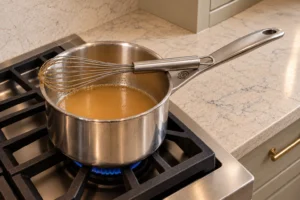
- Remove from the heat immediately. Pour into a heat-safe glass or ceramic container and cool before serving.
- To reheat, warm only the amount needed in a saucepan over low heat, whisking gently until smooth and pourable. A little coconut-oil separation is normal and should recombine with low heat and whisking.
Notes
Tried this recipe?
Let us know how it was!Why The Heat Changes Matter
High heat gets the small batch to a boil. Medium heat lets water cook away without letting the mixture surge out of the pan. Low heat gives you time to see the color change and stop before the honey moves toward a candy texture.
That staged heat is the method. If you leave the burner on high for the whole cook, the bottom can darken before the rest of the sauce has reduced evenly. If you begin on very low heat, the sauce spends longer warming and the endpoint is harder to read. The three heat levels keep the changes clear.
A thermometer is not required because the source formula uses visual cues rather than a candy temperature. Watch the surface, the whisk trail, and the color. Those cues tell you when to lower the heat and when to stop.
How To Serve It
Drizzle the cooled sauce over a Full GAPS homemade ice cream when you want a simple caramel finish. It also works as a small dip for ripe banana or pear slices at snack time. Keep the portion modest because honey-based sweets can crowd out the foods that do most of the work in a Full GAPS day.
For a chocolate option, the coconut-milk cocoa ganache uses the same homemade coconut-milk component with cocoa and honey. It produces a different finish, so keep the two sauces as separate recipes rather than combining them.
Storage And Reheating
Transfer the cooled sauce to a covered glass jar or ceramic container and refrigerate it. Coconut oil firms when cold, so the sauce will look thicker straight from the refrigerator. That does not mean it has turned into candy.
Reheat only the amount you plan to use. Put it in a small saucepan over low heat and whisk gently until it becomes smooth and pourable again. The oil may separate a little during reheating. Low heat and steady whisking bring it back together.
Do not microwave it in an unknown plastic container. A small stainless saucepan gives you better control over the heat and lets you see when the sauce has recombined.
Troubleshooting
The Sauce Is Too Thin
Let it cool before deciding. This recipe is supposed to be thinner than commercial caramel sauce, and it tightens slightly as it cools. If it still looks exactly like coconut milk after cooling, it likely needed more reduction before the heat was lowered.
The Sauce Is Too Thick
The sauce cooked past the light-brown endpoint or stayed on the burner after it began to thicken. Warm it over low heat and whisk in a small spoonful of the homemade coconut milk until it loosens. Add only a little at a time so you do not wash out the caramel flavor.
The Coconut Oil Separated
A little separation can happen during cooling or reheating. Warm the sauce gently and whisk from the bottom until the surface looks glossy and uniform. Do not turn the heat up to rush it.
The Bottom Is Darkening
Move the pan off the burner immediately and pour the sauce into a clean heat-safe container without scraping the bottom. A dark or bitter smell means the honey caught. Constant whisking and the high-to-medium-to-low heat sequence prevent that problem.
Frequently Asked Questions
Can I Use Store-Bought Coconut Milk?
Homemade coconut milk is the cleanest route for this GAPS version because you control every ingredient. Many packaged coconut milks contain gums, starches, sweeteners, or preservatives. If you use a packaged product, the complete label must be pure and additive-free, but the linked homemade method removes the guessing.
Does Raw Honey Stay Raw After Cooking?
No. The honey is heated in this sauce. The recipe uses natural honey as the permitted Full GAPS sweetener, while the cooking method creates the caramel flavor and color.
Will This Set Into Caramel Candy?
No. This formula is a light, thin sauce. The separate honey caramel candy uses a different liquid ratio and a candy-temperature endpoint. Do not keep cooking this sauce in an attempt to turn it into that recipe.
Can I Double The Recipe?
Yes. Double each measured ingredient and use a larger saucepan. Keep the same physical cues. The larger batch may take longer to reach each cue, so follow the boil, thickening, and light-brown color rather than inventing a fixed time.
Can I Make It Without Salt?
Yes. Salt is optional. A small pinch sharpens the caramel flavor, but the sauce still works without it.
Recommended Equipment
- Le Creuset Signature stainless steel saucepan or another small uncoated stainless saucepan
- Small stainless balloon whisk
- Heat-safe glass jar or neutral ceramic serving pitcher
- Small wooden spoon for serving after the sauce cools, if needed
A heavy stainless saucepan spreads the heat more evenly and makes it easier to watch the color. Avoid nonstick coatings and reactive unlined aluminum.
Build A Homemade Sauce Shelf
The planned Sauces, Dressings & Condiments Cookbook brings the small recipes together so you can replace packaged bottles without searching through the whole site every time. You can find it with the current and upcoming WFLI resources in the shop.

Leave a comment