

You can cook ground beef straight from the freezer without scorching the outside while the center stays solid. The useful method starts with a cold skillet and a measured half cup of water. As the water heats, steam softens the outside of the block so you can scrape away thin layers, expose the frozen center, and keep working inward.
This is a different process from browning thawed ground beef. You are not trying to sear the frozen block. First you thaw and separate it in the skillet. Then you let every trace of water cook away and brown the loose crumbles in the beef’s own rendered fat.
Frozen ground beef is not the route I plan for, but dinner still has to happen when the package never made it into the refrigerator. For a household of eight, knowing how to recover the meal without a microwave or a second pan is worth keeping.

Where This Frozen Ground Beef Fits On GAPS
This skillet method fits Full GAPS after plain beef and natural sea salt are introduced and tolerated. It is not an early Introduction Diet method because the final stage cooks away the water and browns the meat against the skillet.
Use frozen plain ground beef with no seasoning packet, injected solution, sugar, starch, preservatives, or flavoring. Pastured or grass-finished beef is preferred when it fits your budget and access. The only other ingredients are filtered water and natural sea salt.
Package Shape Changes The First Stage
A thin flat package exposes more surface to the warm water and loosens faster than a thick compact block. Keep the same half-cup starting measurement either way. Turn a thick block more often so each frozen face gets time against the warm skillet and steam.
Remove all store wrapping before the beef enters the pan. Do not cook plastic film, a foam tray, an absorbent pad, butcher paper, or a vacuum bag. If paper is frozen to the meat, run only the wrapped surface under cool water long enough to release the paper, then place the unwrapped block in the skillet.
If the beef was frozen in an irregular mound, scrape the thinnest projections first. They soften before the center. Keeping those loose pieces around the block lets them cook while the center catches up.
Keep The Frozen Route Separate
The standard How to Cook Ground Beef recipe starts with thawed beef in a preheated skillet and includes onion and garlic. This card starts with a frozen block in a cold skillet and uses water to loosen it. The starting temperatures and ingredients change how the beef cooks. Follow this method for frozen beef.
Use this route when the beef is frozen solid. If the package is already thawed, follow the linked hot-skillet recipe and skip the water-assisted stage.
Start With A Cold Skillet
Set a 1- to 1 1/2-pound frozen block of ground beef in a cold 10- to 12-inch skillet. Add 1/2 cup filtered water around the block, then place the skillet over medium heat.
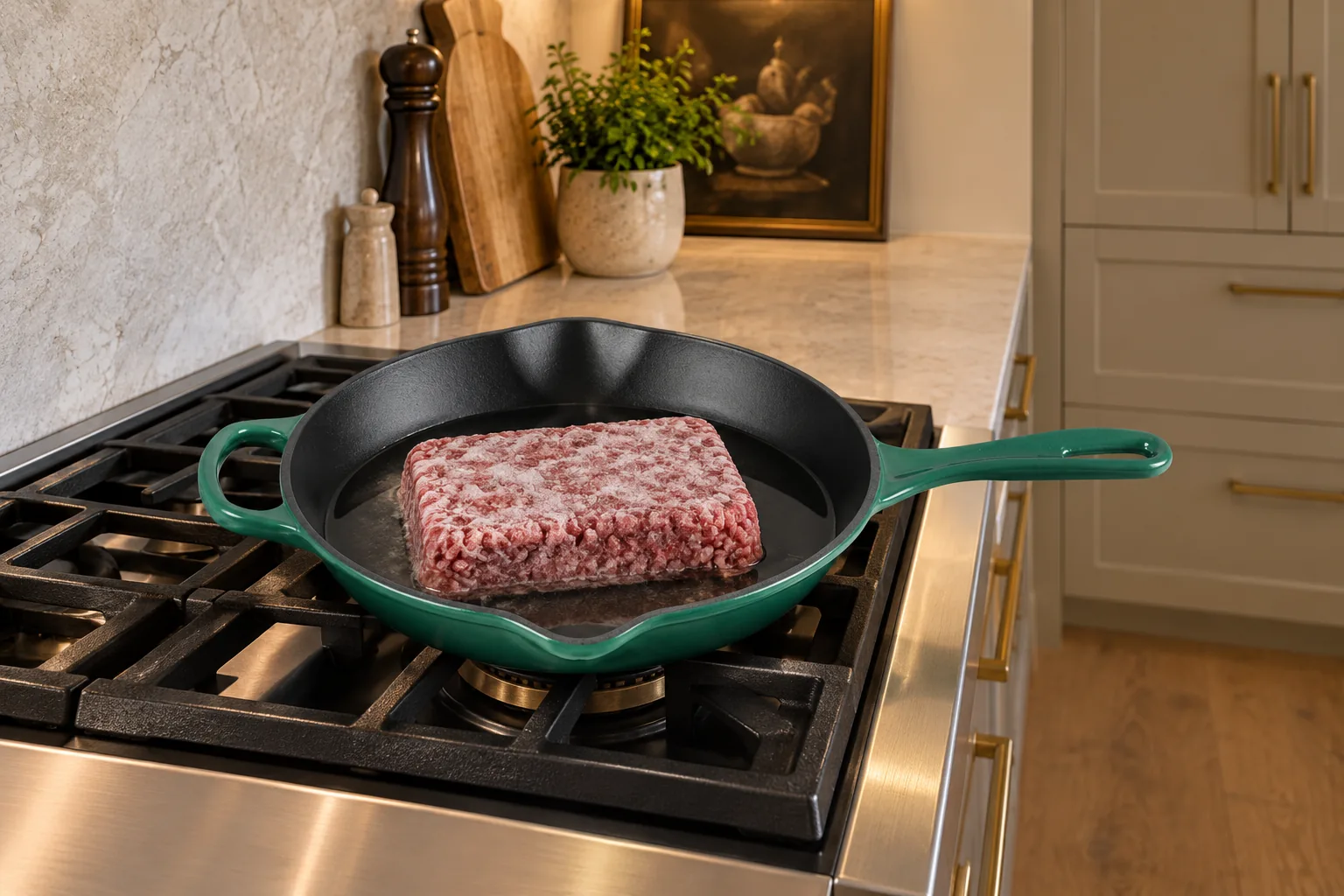
The water should reach only a shallow level around the beef. You are creating steam at the surface, not boiling the meat under a full pot of water. Leave enough open skillet surface for moisture to escape later.
Do not preheat the empty pan. A hot dry skillet can darken the outside of the block before the frozen center begins to loosen.
Let Steam Reach The Frozen Center
As the water begins to simmer, the outside of the beef changes from frosty red to a softer pink-gray. Press the edge with a wooden spoon or sturdy enamel-safe spatula. When a thin layer gives way, scrape it from the block and spread it around the skillet.
Turn the block so another frozen surface touches the warm water and pan. Continue scraping away softened meat. The center stays visibly red and firm while the loose pieces around it begin cooking.
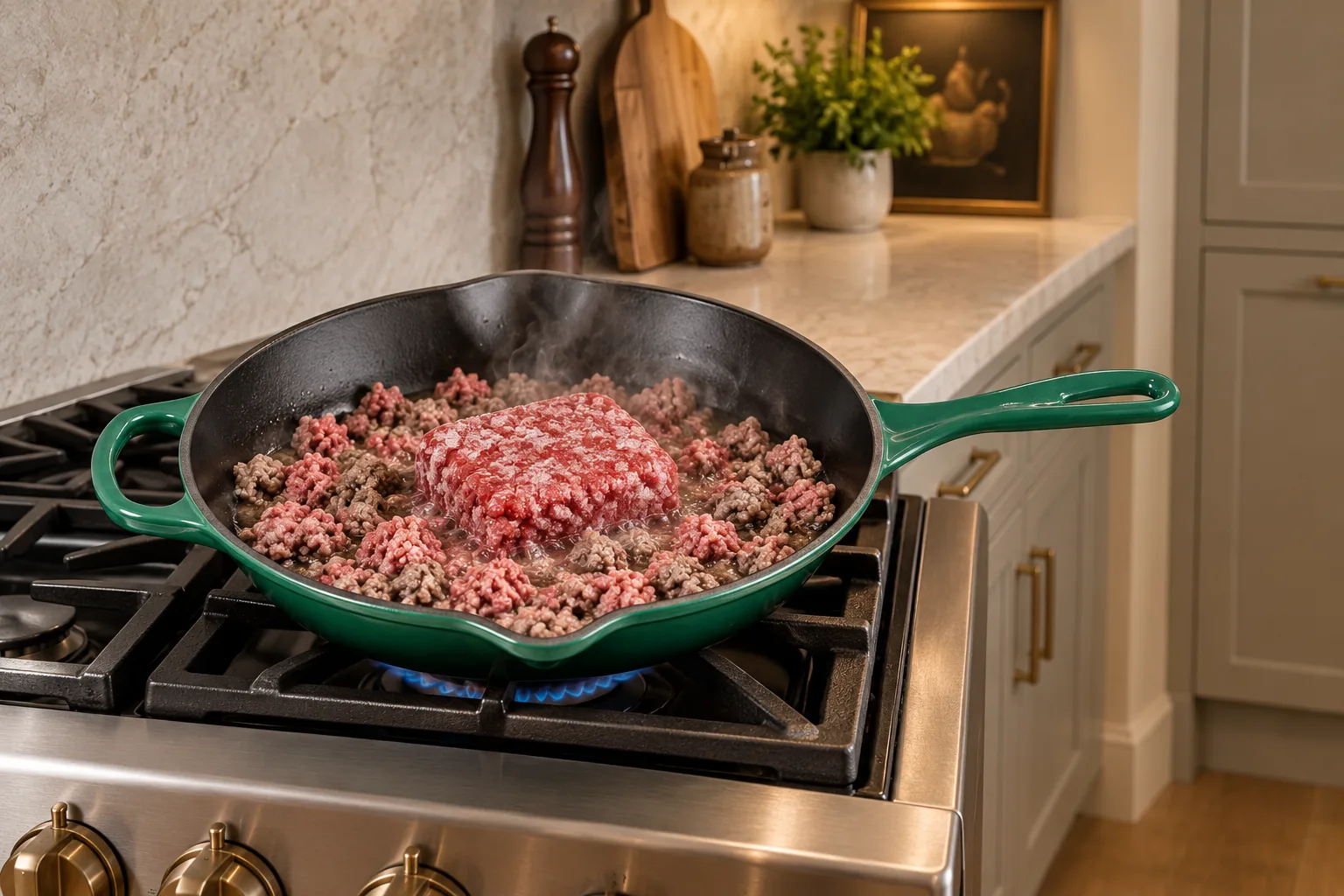
Add another 1/2 cup warm filtered water only when the first addition has nearly evaporated and the center remains too hard to scrape. The source uses about half a cup at a time as needed. Do not pour in several cups at once.
Use The Scrape Test
Press the edge of the spatula against the block without forcing it. If the meat shaves away into soft crumbles, that layer is ready. If the tool only slides across a hard icy surface, turn the block and give the steam more time.
Do not stab or chop hard at the frozen center. That can damage an enameled cooking surface and sends frozen fragments out of the pan. Work in thin layers, turning the block as each face softens.
The partial-thaw stage looks uneven by design. Some outside crumbles will already be gray-brown while the center remains red and frosty. Keep separating the meat until no solid core remains before moving to the dry browning stage.
Break The Beef Into Crumbles
Once the remaining frozen center gives way, break every piece into pea-size and slightly larger crumbles. Spread them into one broad layer so the wettest pieces are not piled in the middle.
At this point the skillet may contain brown cooking liquid and rendered fat. The water bubbles actively and looks cloudy. The fat looks clearer and glossier. Keep the pan uncovered so the water can leave.
Cook Away Every Trace Of Water
Raise the heat toward medium-high once the block is fully separated. Stir occasionally while the water evaporates. The sound changes from a loose wet bubbling to a sharper sizzle when the skillet is dry enough for browning.
Do not drain the pan while water remains. Let the moisture cook away. The beef’s own rendered fat stays behind and helps the crumbles contact the skillet.
If the pan still looks soupy after all the meat is separated, spread the beef farther apart and give it time. Adding more water at this stage moves you backward.
Brown The Separated Beef
Once the water is gone, stop stirring for a minute or two. Let the crumbles sit against the hot skillet until some edges deepen from gray-brown to a richer brown. Turn and redistribute them, then leave them alone again.
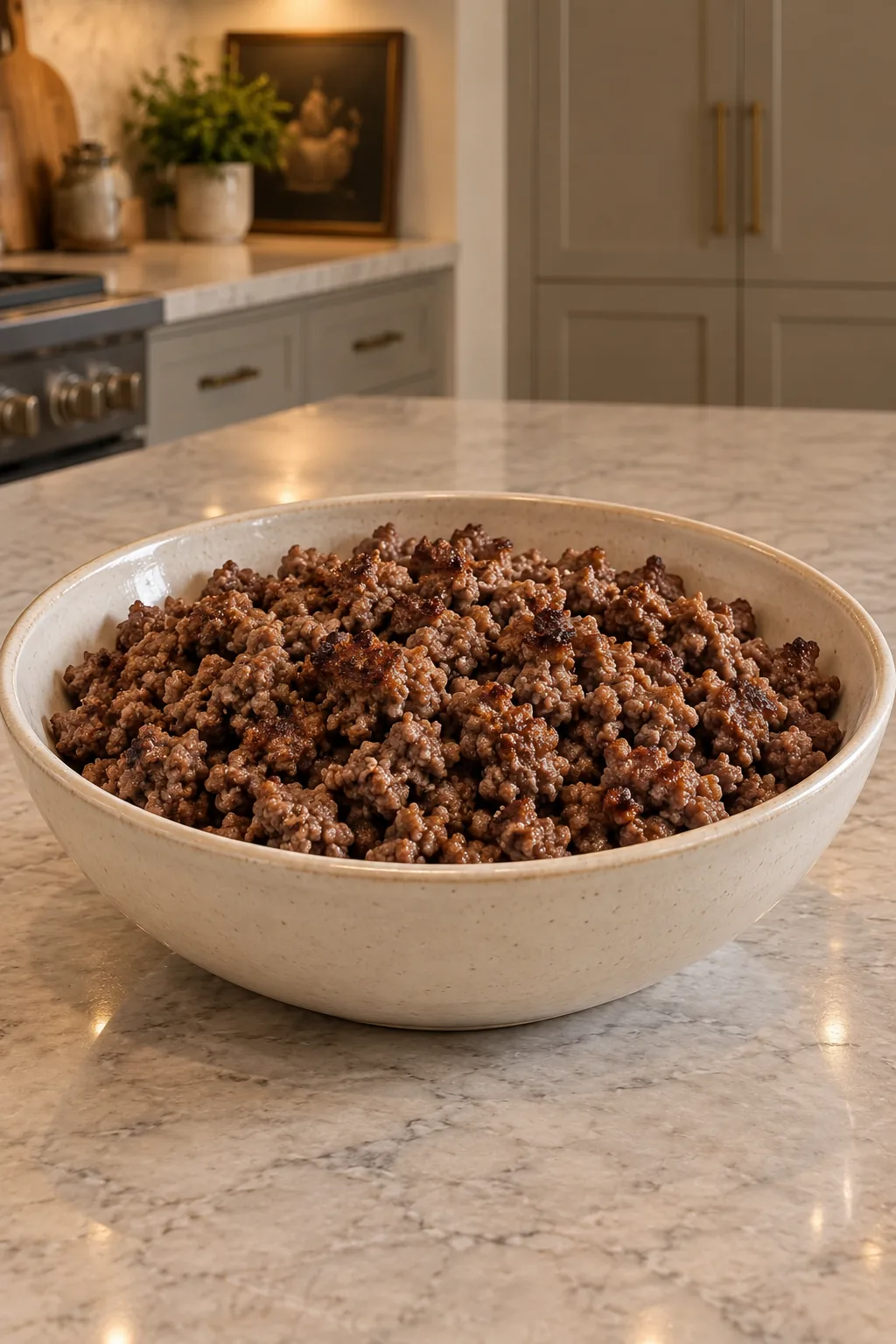
Lower the heat if crisp edges begin turning black. Continue until no pink remains and the thickest cluster reaches the source endpoint of 165°F. The finished pan should hold browned crumbles with a light fat sheen and no cloudy liquid.
Season At The End
Sprinkle natural sea salt over the cooked beef. Start with a small amount, stir, and taste. The source leaves the amount to taste, so the card does not invent a fixed measurement.
Keeping the beef plain makes it easier to use in another measured recipe. Add the spices, vegetables, or sauce required by that recipe rather than guessing at a general blend here.
Use The Cooked Beef
For a nightshade-free seasoned skillet, use the separate Nightshade-Free Mexican Ground Beef. For a family casserole with vegetables, follow the Mexican Cabbage Roll Casserole and measure only the amount of cooked beef its card requires.
If you want a soup instead of dry browned beef, choose a dedicated meat-stock or soup recipe. Do not keep adding water to this card and call the result meat stock.
Storage And Freezing
Cool the cooked beef promptly and refrigerate it in a covered glass container for up to three days. Divide it into useful portions before refrigerating if another recipe needs only part of the batch.
For longer storage, freeze the cooled crumbles flat. This may seem funny after you just cooked them from frozen, but loose cooked portions thaw faster and more evenly than the original solid raw block.
Recommended Equipment
- Le Creuset Signature 10.25-inch Artichaut skillet or another wide heavy skillet
- Wooden spoon or sturdy enamel-safe spatula
- Liquid measuring cup
- Instant-read thermometer
- Covered glass storage container
Frequently Asked Questions
Do I Need To Thaw Ground Beef Before Cooking?
No. This method thaws and cooks the frozen block in one skillet. Start cold with 1/2 cup filtered water and scrape away each softened outer layer as it loosens.
Why Does The Recipe Start In A Cold Pan?
A cold pan gives the water and frozen block time to heat together. A preheated dry skillet can scorch the outside while the center remains hard.
How Much Water Should I Add?
Start with 1/2 cup. Add another 1/2 cup warm filtered water only if the first addition is nearly gone and the center remains too frozen to scrape. Use as little as the block needs.
Why Is The Beef Not Browning?
Water is probably still in the skillet. Spread the separated crumbles out, keep the pan uncovered, and wait until wet bubbling changes to a sizzle before leaving the beef undisturbed to brown.
Can I Cover The Skillet?
The source method does not require a lid. The shallow water and direct simmer create enough steam around the block, while an open skillet makes it easier to turn the beef, watch the water level, and cook the moisture away.
Can I Add Onion And Garlic?
Use the linked thawed ground-beef recipe when you want the measured onion-and-garlic formula. This frozen card stays plain because the source’s frozen route does not place those ingredients into its water-assisted sequence.
Can I Double The Recipe?
Use the WPRM 2× control for the ingredient amounts, but cook two frozen blocks separately unless your skillet holds both with enough open surface for the water to evaporate. Two blocks crowded together will take much longer to separate and brown.
Frozen Ground Beef Recipe
How to Cook Frozen Ground Beef for Full GAPS
Ingredients
Equipment
Method
- Set the frozen ground-beef block in a cold wide skillet. Add 1/2 cup filtered water around it, then place the skillet over medium heat.

- When the water simmers and the outside softens, scrape away a thin layer. Turn the block and continue scraping softened beef into the skillet.

- Add another 1/2 cup warm filtered water only if the first addition is nearly gone and the center remains too hard to scrape. Continue until the frozen center gives way.
- Break all the beef into crumbles. Spread them into one layer and cook uncovered until every trace of water evaporates and wet bubbling changes to a sizzle.
- Leave the crumbles undisturbed for 1 to 2 minutes at a time to brown, then turn them. Cook until no pink remains and the thickest cluster reaches 165°F.
- Season with natural sea salt to taste. Serve immediately or cool promptly for another measured recipe.
Notes
Start: Cold skillet and 1/2 cup water.
Water: Add more only in 1/2-cup amounts as needed.
Timing: The source gives no fixed frozen-route time; thaw, evaporation, and 165°F cues control.
Tried this recipe?
Let us know how it was!Make Freezer Meals Easier To Use
The upcoming Whole-Animal Buying & Cut Sheet Guide helps you plan ground beef, roasts, bones, trim, and cooking fat before a freezer order arrives. Find current releases and upcoming additions in the WFLI shop.

Leave a comment