

Strawberry pico de gallo gives you the fresh, chopped texture of salsa without tomatoes or peppers. Ripe strawberries bring the juicy sweet-tart base; peeled cucumber, onion, and radish keep every bite crisp; cilantro and lime pull the whole bowl together. It is colorful and lively, but the method stays simple: chop everything into small, even pieces, fold it gently, and serve it while the produce is still firm.
As a working, homeschooling mom of six, I appreciate a recipe that can brighten the table without adding another pan to the stove. The catch is that simple chopped recipes show every shortcut. If the berries are too soft, the cucumber is watery, or the pieces vary wildly in size, the bowl turns into fruit salad with onion instead of a balanced salsa. A few careful choices make the difference, and I will show you exactly what to look for.
Why This Fits Full GAPS
This is a later Full GAPS recipe for a person who is already tolerating raw fruit and raw vegetables. The ingredients are fresh strawberries, cucumber, onion, radish, cilantro, lime juice, natural sea salt, and optional fresh garlic. There are no tomatoes, peppers, grains, starches, refined sugar, bottled dressing, or commercial seasoning blend.
Raw foods are introduced gradually in the GAPS progression. Wait until diarrhoea and other active digestive symptoms have cleared and raw produce is already going well. Because strawberries make up most of this recipe, serve it between meals rather than over a meat meal. That keeps the generous raw-fruit portion in the place the current GAPS guidance gives it.
If nightshades are the reason you have skipped ordinary pico de gallo, this bowl keeps the bright color and chopped texture without tomato or chile. It is also easy to adjust without changing the formula: leave out the optional garlic for a softer bite, use additive-free frozen strawberries when fresh berries are unavailable, or replace the strawberries with diced watermelon if strawberries are not a fit for you.
What You Need
The strawberries should smell distinctly sweet and berry-like before you cut them. Choose berries that are red through the shoulders, firm enough to hold their shape, and free of wet bruised patches. Very soft berries still taste good, but they collapse when folded with lime juice and make this particular salsa watery.
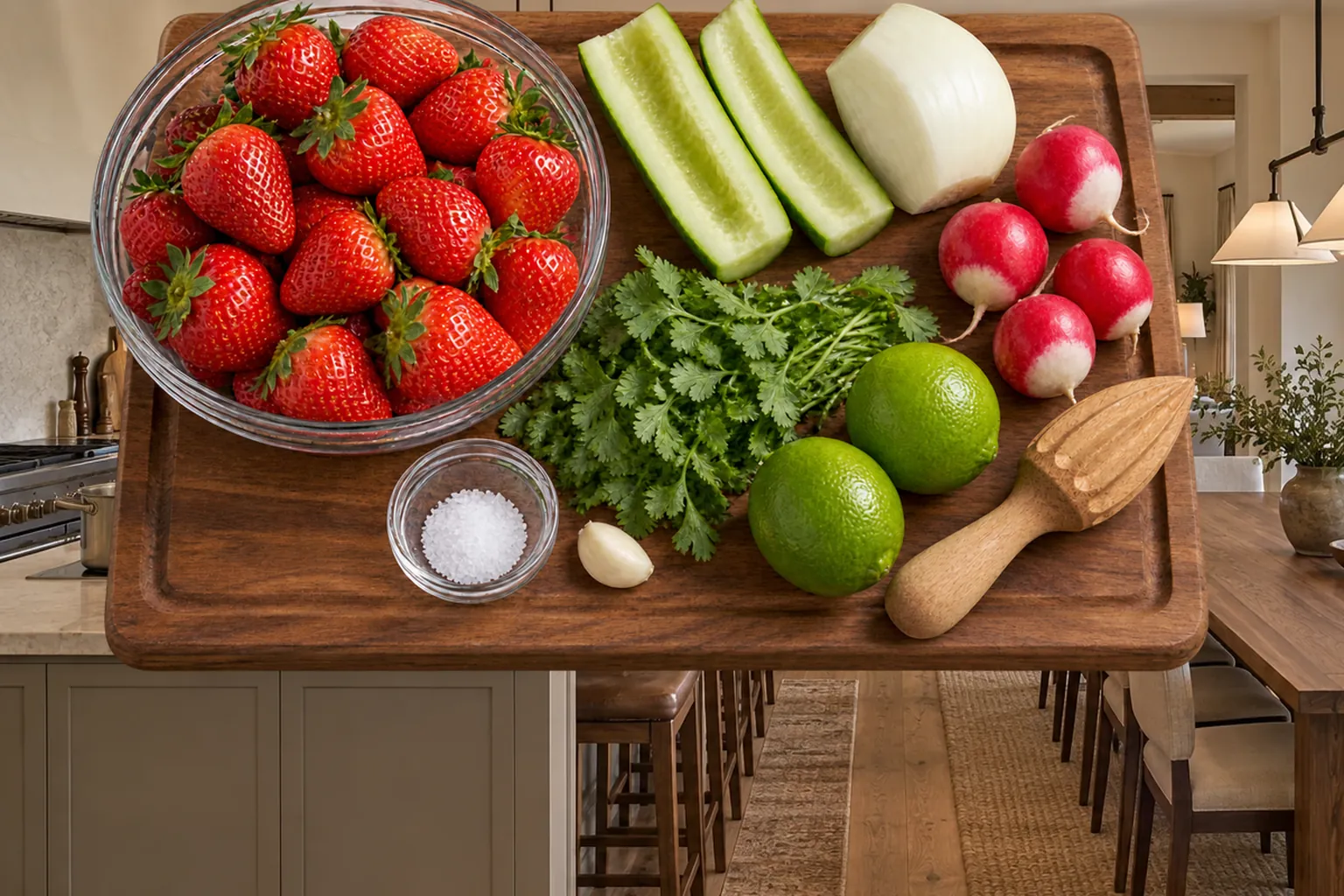
Peel the cucumber and scrape out the wet seed channel. That small step matters because the berries and lime already supply plenty of juice. Use a firm white onion and crisp radishes. The cilantro should look bright and smell fresh when you rub a leaf between your fingers. Fresh lime juice gives the cleanest flavor; bottled juice often tastes flat or bitter in a no-cook recipe.
The full four-cup batch uses:
- 3 cups fresh strawberries, about 16 ounces
- ¾ cucumber, peeled and seeded
- ¾ large white onion
- ½ cup radishes, about 4 large radishes
- ½ cup fresh cilantro
- ¼ cup fresh lime juice, from about 2 limes
- ¼ teaspoon natural sea salt
- 1 fresh garlic clove, minced, optional
How to Make Strawberry Pico de Gallo
1. Prepare the Produce
Rinse the berries, radishes, cilantro, cucumber, and limes, then dry them well. Hull the strawberries. Peel the cucumber, split it lengthwise, and scrape out the soft seed channel with a spoon. Peel the onion. If you are using the garlic, mince it finely so nobody gets a large raw piece.
Dry produce is easier to cut cleanly and does not dilute the lime. The cucumber is ready when its center looks firm rather than wet and jelly-like. If the strawberries leave a puddle on the cutting board before you begin, set those very soft berries aside for another use and choose firmer ones for this salsa.
2. Make the Pieces Small and Even
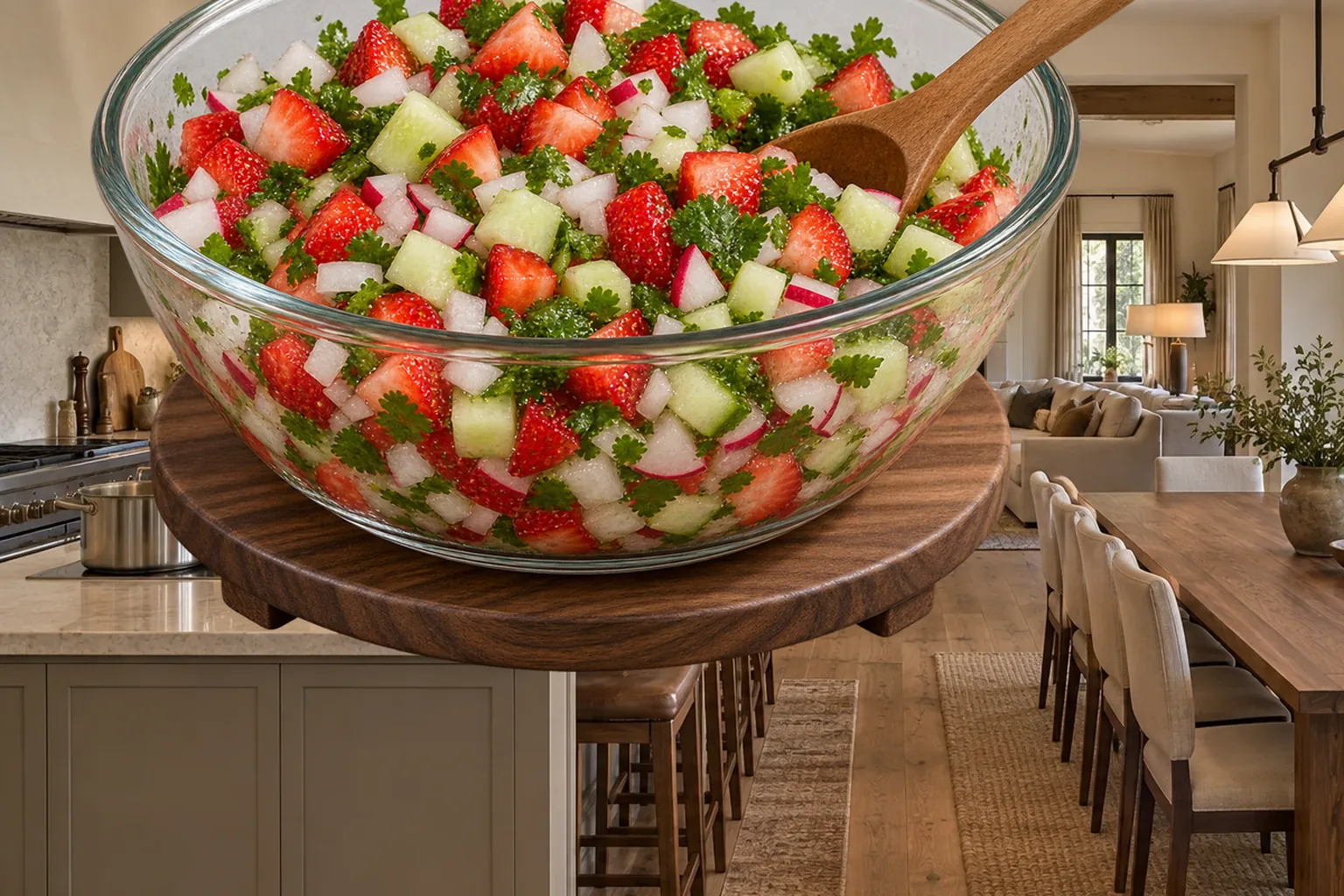
Dice the strawberries, cucumber, onion, and radishes into small squares. They do not need to look machine-perfect, but keep them close enough in size that a spoonful holds several ingredients at once. Chop the cilantro small. You should still be able to identify every ingredient; do not mince the produce into a paste.
Work from the firmest ingredient to the softest, or use a clean section of the board for the berries. A sharp chef’s knife presses through the fruit instead of crushing it. When the cutting board starts to look slick with berry juice, wipe it before continuing so the pieces stay distinct.
3. Fold, Do Not Mash
Put the diced strawberries, cucumber, onion, radishes, and cilantro into a medium glass or stainless-steel bowl. Add the lime juice, sea salt, and optional garlic. Fold from the bottom with a broad spoon until the colors are evenly distributed and the surfaces look lightly glossy.
Stop as soon as everything is coated. The right texture is juicy but spoonable, with crisp cucumber and radish and intact berry cubes. If you stir hard or keep going after the ingredients are evenly mixed, the strawberries break down and release enough liquid to collect at the bottom of the bowl.
4. Serve It Fresh
Taste one spoonful that includes strawberry, cucumber, onion, and radish. The first impression should be fresh strawberry and lime, followed by the clean crunch of cucumber and radish and a savory onion-cilantro finish. Add nothing automatically. If the flavor seems uneven, give it one or two gentle folds before deciding whether it needs the smallest additional pinch of salt.
How to Serve It
For Full GAPS, think of this as a fresh between-meal dish rather than a conventional meat topping. Spoon it into small bowls, eat it on its own, or serve it with sliced avocado. It also works beside a simple green salad as long as that snack or light plate remains separate from a meat meal.
The color makes it useful for a family snack tray, and the chopped format gives children a choice: a cautious eater can start with one spoonful while someone who already enjoys raw produce can take a larger portion. Keep the serving spoon in the bowl so the extra lime juice stays with the salsa instead of being left behind.
Storage
This salsa is best the day you make it, when the cucumber and radish still snap and the strawberry pieces hold their edges. Transfer leftovers to a covered glass jar and refrigerate them for up to two days. The mixture will soften and release more juice as it sits; fold it gently before serving rather than draining away the flavorful liquid.
Do not freeze the finished salsa. Freezing breaks the structure of the cucumber and strawberries, so the thawed mixture becomes soft and watery. If you need to work ahead, wash and dry the produce and juice the limes, then keep everything whole and chilled until you are ready to dice and combine it.
Frequently Asked Questions
Can I Use Frozen Strawberries?
Yes, provided they contain only strawberries. Thaw them in the refrigerator and drain excess liquid before dicing. Choose pieces that are still firm enough to cut. The finished salsa will be softer than a fresh-berry batch, so fold it briefly and plan to serve it right away.
Is This Recipe Nightshade-Free?
Yes. It contains no tomatoes or peppers. Strawberries provide the red color and juicy base, while cucumber and radish supply the crisp texture ordinary pico gets from firm tomato.
Can I Use Watermelon Instead?
Yes. Replace the strawberries with the same volume of firm, seedless watermelon cut into small cubes. Drain any liquid that collects on the board before combining it with the other ingredients. Watermelon makes a milder, more delicate bowl, so handle it as gently as the berries.
Can I Leave Out the Onion or Garlic?
The garlic is already optional and can simply be omitted. Onion is part of the measured formula and balances the fruit, but if raw onion is too sharp for your current tolerance, use a smaller personal serving of the finished recipe rather than changing the whole batch. Once raw onion is working well, the full amount gives the clearest pico-style flavor.
Why Is My Salsa Watery?
The usual causes are very soft berries, a cucumber that was not seeded, wet produce, or vigorous mixing. Start with firm ingredients, dry them, remove the cucumber seed channel, and fold only until combined. A little juice is normal and carries the lime and salt through the bowl; a deep puddle means the fruit has begun to break down.
How Much Does This Make?
The recipe makes about 4 cups, or 10 modest servings. WPRM’s 2× control scales the measured ingredient amounts for an 8-cup batch. Mix a double batch in a larger bowl so the berries have room to turn over without being crushed.
Recommended Equipment
- A sharp chef’s knife for clean berry and vegetable cuts
- A stable wooden cutting board with enough room to keep the chopped piles separate
- A spoon for scraping the cucumber seed channel
- A handheld citrus reamer or press
- A medium glass or stainless-steel mixing bowl
- A broad wooden or stainless serving spoon for gentle folding
- A covered glass jar for leftovers
More Fresh Salsa Recipes
If you want a tomato version for another day, try Classic Pico de Gallo for Full GAPS or the richer Pico de Gallo With Avocado. For another fruit-led, nightshade-free bowl, make Peach Ginger Salsa With Cilantro. Each one has its own complete formula and recipe card, so you can follow the version you want without sorting through nested recipes.
Build a Better Condiment Shelf
This recipe belongs in the planned Sauces, Dressings & Condiments Cookbook, a practical collection of GAPS-compatible ways to add flavor without reaching for bottled sauces. The cookbook will gather the formulas, storage notes, and pairing ideas in one place. Visit the WFLI shop to see the current and upcoming resources.
Strawberry Pico de Gallo Salsa for Full GAPS
Ingredients
Equipment
Method
- Rinse the strawberries, radishes, cilantro, cucumber, and limes, then dry them well. Hull the strawberries.
- Peel the cucumber, split it lengthwise, and scrape out the soft seed channel with a spoon. Peel the onion. If using the optional garlic, mince it finely.
- Dice the strawberries, cucumber, onion, and radishes into small, even squares. Chop the cilantro small. Keep every ingredient identifiable rather than mincing it into a paste.
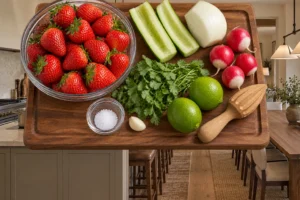
- Put the diced strawberries, cucumber, onion, radishes, and cilantro into a medium glass or stainless-steel mixing bowl.
- Add the fresh lime juice, natural sea salt, and optional garlic. Fold gently from the bottom just until the colors are evenly distributed and the pieces look lightly glossy. Stop before the berries break down or juice pools deeply in the bowl.
- Serve immediately between meals. Refrigerate leftovers in a covered glass jar for up to 2 days; fold gently before serving again.
Nutrition
Notes
Tried this recipe?
Let us know how it was!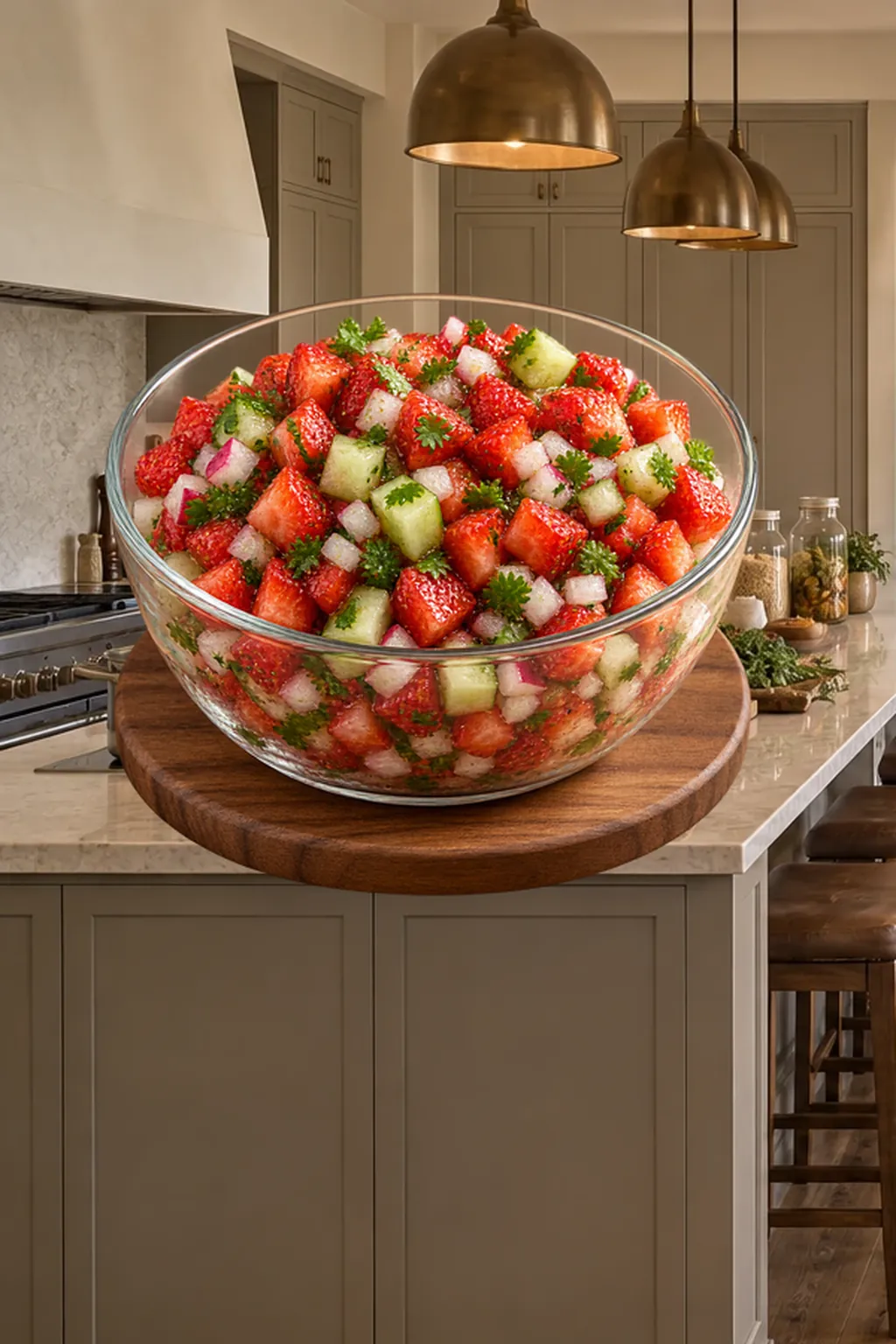

Leave a comment