

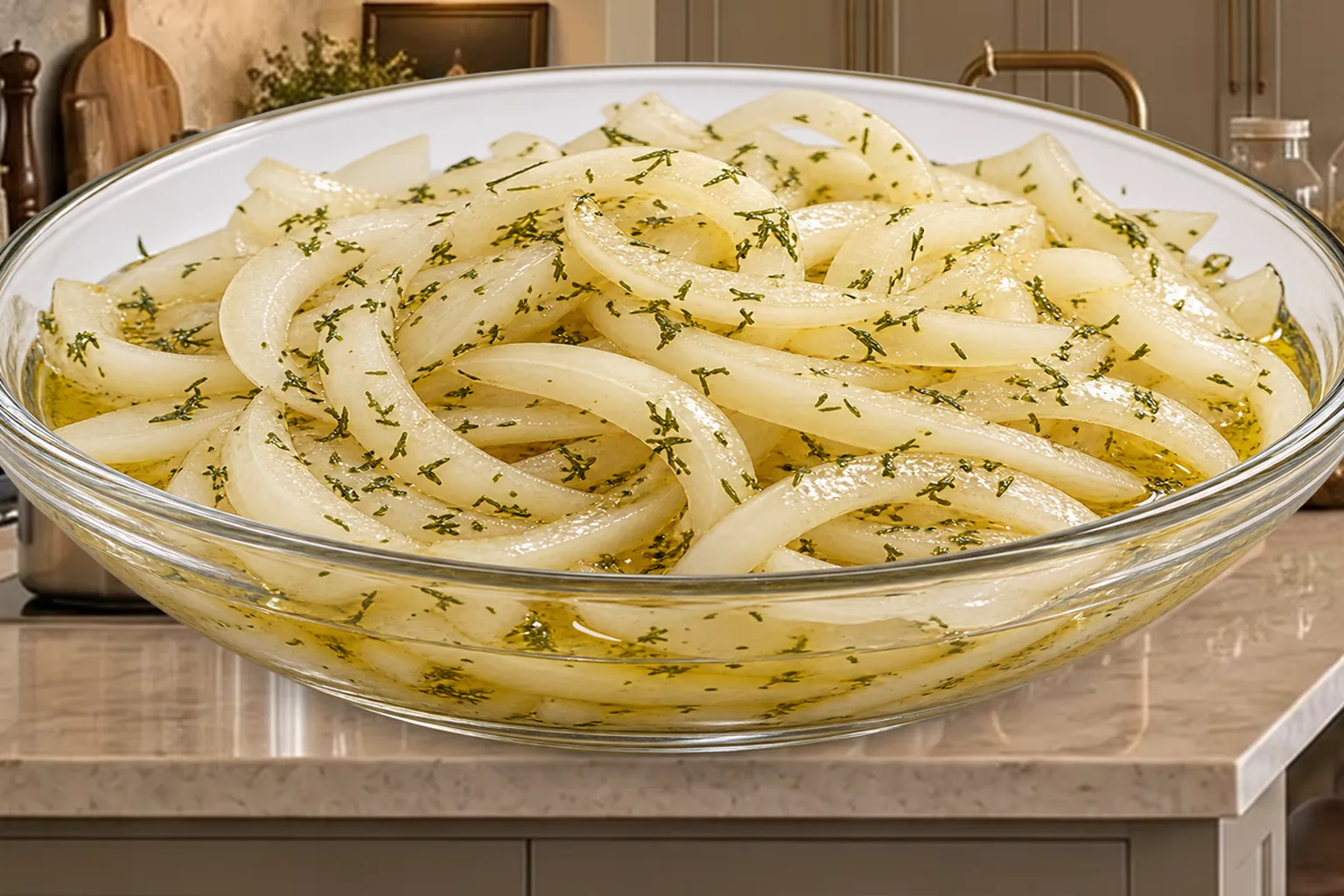
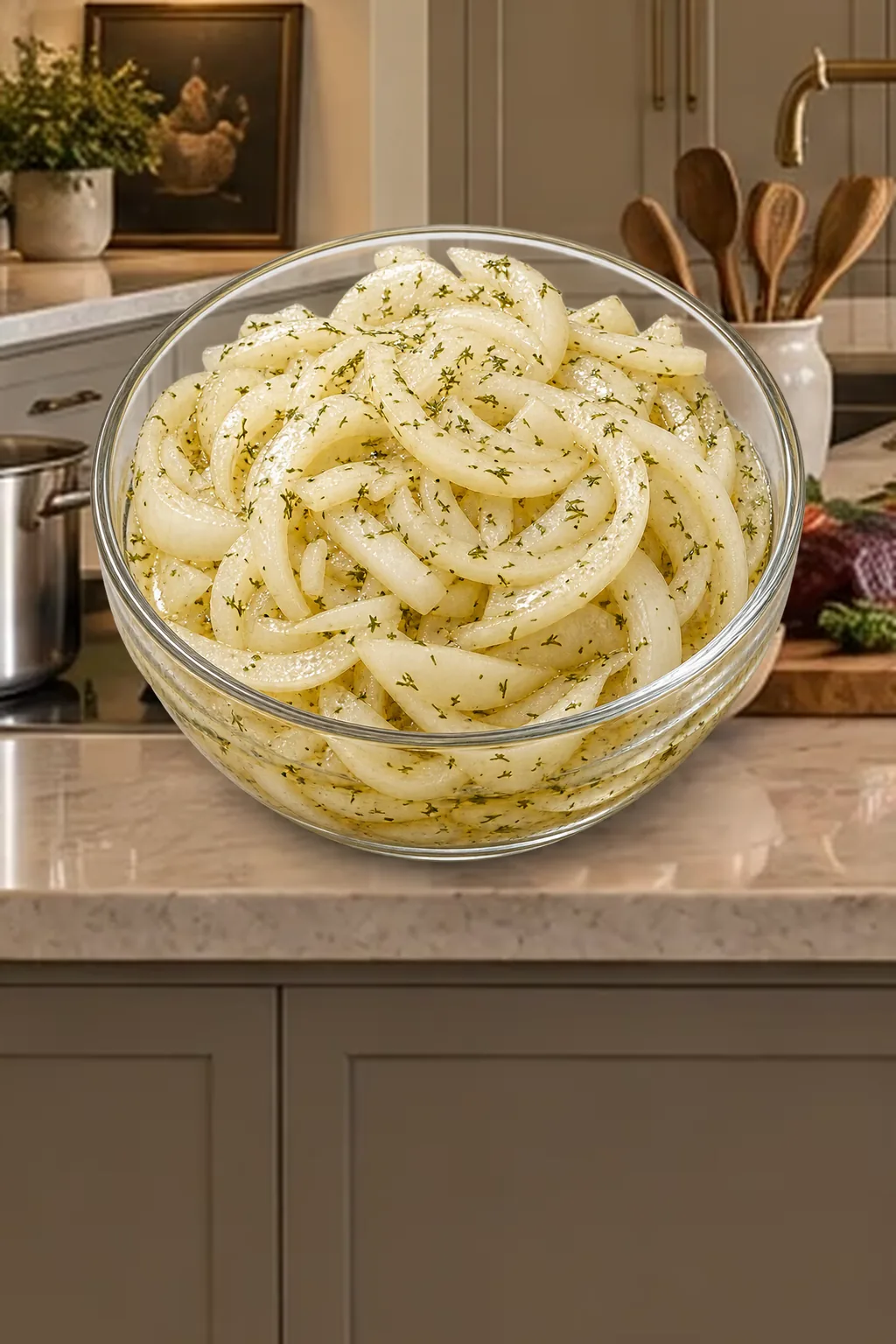
These dill-marinated sweet onions are the bright, crisp little component that makes a composed salad feel complete. Thin sweet-onion half-moons rest for at least 20 minutes in raw extra-virgin olive oil, apple cider vinegar, dried dill, and mineral salt. The edges soften slightly while the slices keep their crunch.
I like recipes like this because they move one small job out of the last ten minutes before dinner. With eight people to feed, a bowl that can be mixed earlier and pulled from the refrigerator when the rest of the meal is ready is useful far beyond one salad. The onions add acid, a little sweetness, and enough dill to wake up fish, eggs, roasted vegetables, or a plain plate of greens.
This is the measured sweet-onion formula from the Salade Niçoise source. The cucumber variation, blanched vegetables, seared salmon, roasted roots, hard-boiled eggs, vinaigrette, and final composed salad remain separate recipes so each card scales and reads clearly.
Where Dill-Marinated Onions Fit On GAPS
This recipe fits Full GAPS. Onions and dill are listed foods, raw apple cider vinegar is used in the protocol, and cold-pressed olive oil belongs on ready-to-serve food rather than in a heated pan.
That last point matters here. The oil stays raw from start to finish. The onions are sliced, tossed, and chilled; nothing is sautéed or warmed. Use extra-virgin olive oil that smells fresh and clean, without a stale or paint-like odor.
The formula contains no sugar or commercial seasoning blend. Sweet onions supply their own mild sweetness, while the vinegar and salt sharpen the flavor during the short rest.
Choose A Mild Sweet Onion
Use one large sweet onion or two small sweet onions. The source names Maui, Walla Walla, and Vidalia as examples. The variety matters because this recipe is eaten raw; a very hot storage onion can overwhelm the dill and vinegar.
A good onion should feel firm and heavy for its size. Skip bulbs with soft spots, damp patches, or a sharp fermented smell before you cut them. Peel away the dry outer skin and any papery layer that will not slice cleanly.
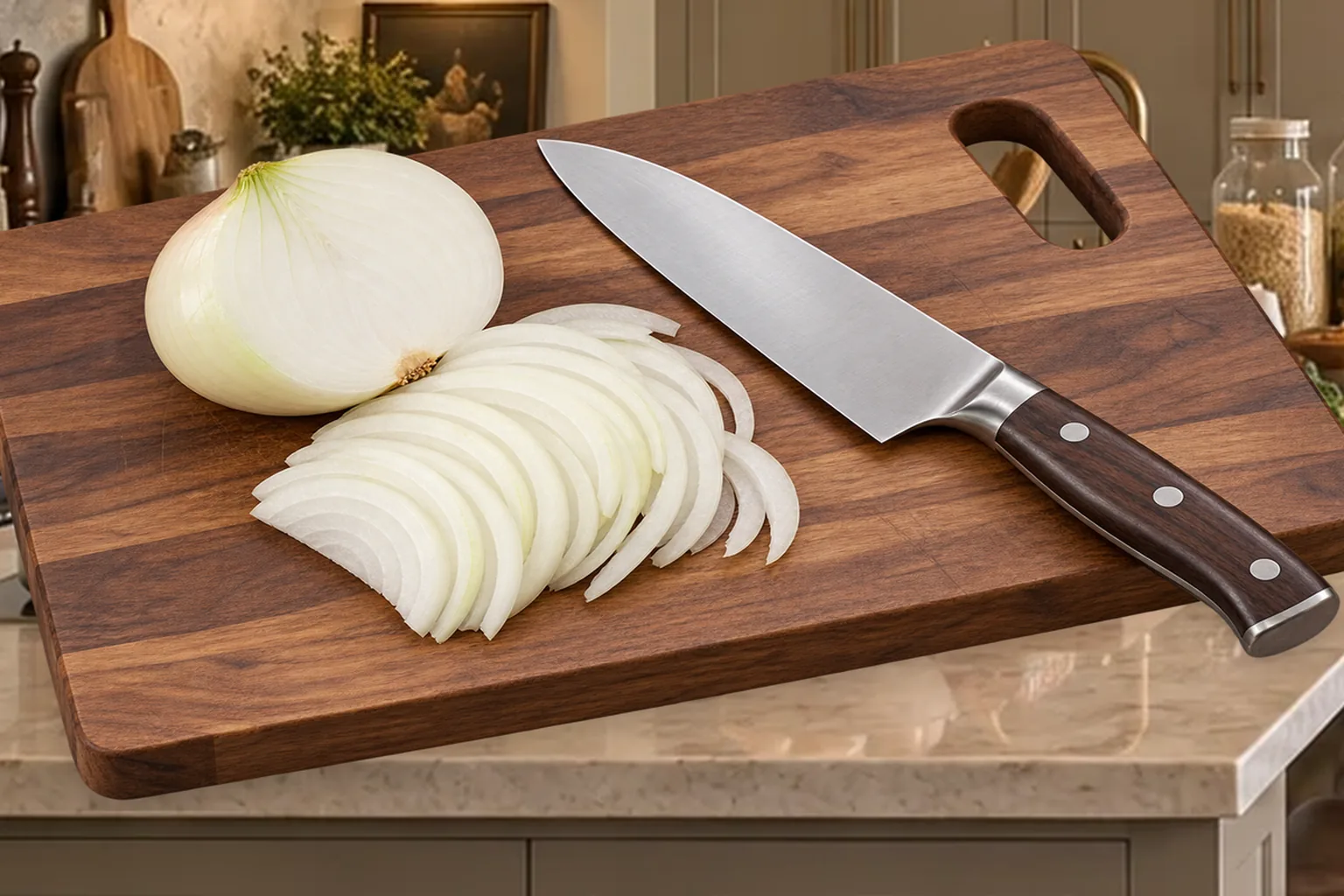
Cut the onion in half through the root and stem. Set each half flat-side down so it cannot roll, then slice it into thin half-moons. Thin slices receive the marinade evenly and soften at the edges during the rest without losing the crisp center.
Keep the root end attached while you make most of the cuts if that helps the layers stay together, then trim it away before separating the slices. The board should stay dry and steady under the onion. A sliding board or rolling onion makes thin, even cutting harder than it needs to be.
What Thinly Sliced Means Here
Aim for slices thin enough to bend but still easy to pick up with a fork. They should look translucent at the edges, with a pale opaque line remaining through the middle. Thick wedges stay aggressively crunchy and do not take on the dressing as evenly.
Keep the layers mostly intact as you slice, then separate the half-moons gently with your fingers after the knife is put away. That gives the oil, vinegar, dill, and salt access to each surface without bruising the onion into a wet pile.
If your onion is especially large, use a bowl with enough room to toss the slices without spilling them. The measured marinade is meant to coat the onion lightly. It is not a brine, and the onion should not be submerged.
When the slices vary, pull the thickest pieces apart before mixing. The thinner layers will begin taking on the vinegar first, while thick joined layers can stay hot and dry in the center. Separating them now produces a more even bowl after the 20-minute rest.
Measure The Marinade Exactly
For one batch, measure four teaspoons extra-virgin olive oil and four teaspoons apple cider vinegar. Four teaspoons is the same source amount as one tablespoon plus one teaspoon, but it scales cleanly in the recipe card.
Add one-half teaspoon dried dill weed and two generous pinches mineral salt. The dill should be the plain herb, without a seasoning packet, sugar, starch, flavoring, or anti-caking blend mixed into it.
Use raw apple cider vinegar whose ingredient list is simply apple cider vinegar. Shake the bottle first if it naturally contains sediment. That cloudiness is different from the sugar, coloring, or flavoring found in a prepared commercial marinade.
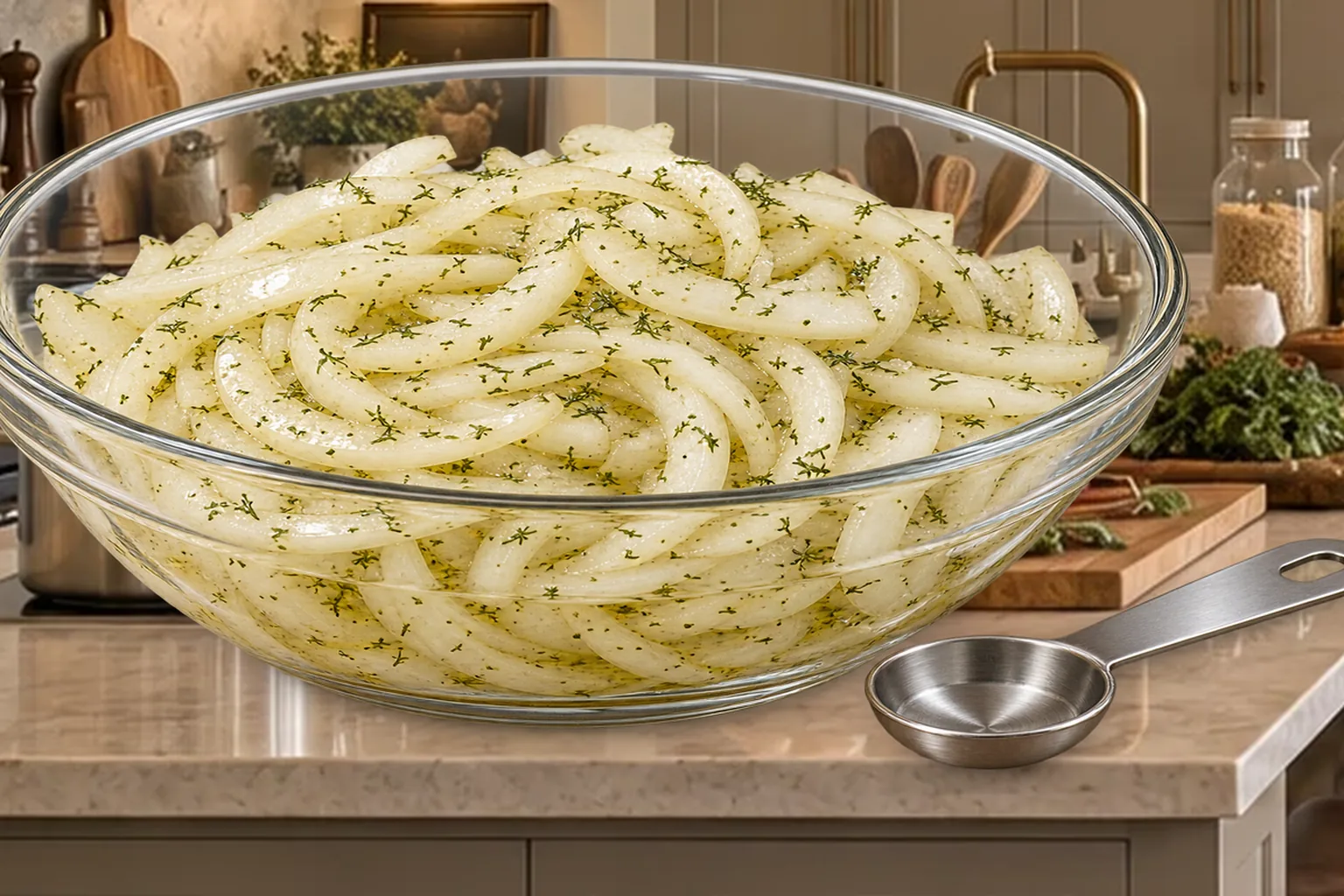
Pour the oil and vinegar over the separated onion slices, then add the dill and salt. Toss until every slice has a light sheen and the dill is distributed through the bowl. A deep puddle at the bottom means the dressing has not yet been worked through the onions; keep turning the slices until the coating looks even.
Let The Onions Rest For At Least Twenty Minutes
Cover the bowl and chill it for at least 20 minutes. The onion aroma should become milder and rounder, while the vinegar becomes noticeable without smelling harsh. The slices remain distinct and crisp; they are not cooked, fermented, or softened into jam.
The source allows a longer rest and says to keep the onions chilled until serving. It does not give a multi-day storage limit, so I do not assign one here. Make the batch ahead for the meal you are building, keep it cold, and use ordinary freshness cues rather than stretching an unsupported date.
Before serving, lift and turn the onions so the light dressing is distributed again. Natural separation is expected because the recipe does not use an emulsifier.
For a doubled batch, use two large or four small onions, eight teaspoons each olive oil and vinegar, one teaspoon dried dill, and four generous pinches salt. Use a wider bowl rather than packing the onions deeply so the doubled dressing can reach every layer.
Use The Physical Cues Instead Of Guessing
Right after mixing, the onion half-moons look bright white and sharply curved. Their surfaces should be glossy, with tiny dill flecks clinging to them. After the chilled rest, the edges look a little more translucent and flexible, but the center of each slice still snaps when bitten.
The aroma should be fresh onion, dill, and clean vinegar. It should not smell yeasty, fizzy, or strongly fermented; this is a quick marinated vegetable, not a fermented onion recipe.
The flavor lands in layers: mild onion first, then vinegar, olive oil, dill, and salt. If the onion itself is unusually hot, serving it with fish, eggs, or roasted vegetables balances the bite without changing the measured formula.
A finished slice should drape over a fork but still hold its half-moon shape. If it collapses into limp strands, it no longer has the crisp texture this quick method is meant to keep. If it tastes dry in spots, separate any joined layers and toss the bowl again.
Serve Them With Fish, Eggs, And Salads
These onions belong in the final Salade Niçoise, where their acidity cuts through salmon, hard-boiled eggs, olives, and roasted root vegetables. They also work beside sardines, on a green salad, or over warm roasted vegetables just before serving.
For another raw dressing that fits the same kind of meal, use the Fresh Herb Vinaigrette for Full GAPS. The vinaigrette and these onions remain separate formulas: one dresses the whole plate, while the other is a distinct marinated vegetable component.
You can also pair them with the Full GAPS Avocado Mango Salad when you want to compare two different short vinegar-onion methods without merging their measurements.
On a shared platter, keep the onions in a small mound rather than scattering every strand over the other foods. That lets each person take as much sharpness as they want and keeps the vinaigrette, fish, eggs, and vegetables recognizable on the plate.
Recommended Equipment
- Sturdy cutting board
- Sharp chef’s knife
- Medium glass mixing or serving bowl
- Measuring teaspoon
- Silicone spatula or serving spoon for tossing
- Fitted lid or reusable cover for chilling
Frequently Asked Questions
Can I Use A Regular Yellow Onion?
The measured source formula calls for a sweet onion. A standard yellow storage onion is usually sharper when raw and will give a noticeably different result.
Can I Heat The Olive Oil First?
No heat is used in this recipe. Full GAPS uses cold-pressed olive oil raw on ready-to-serve foods, and this short chilled marinade keeps it in that form.
Is This A Fermented Onion Recipe?
No. The onions rest in oil and apple cider vinegar for at least 20 minutes in the refrigerator. They are not held under a fermentation brine and should not be described as fermented.
Can I Replace The Dried Dill With Fresh Dill?
This card preserves the measured one-half teaspoon dried-dill formula. Fresh dill would require its own tested quantity, so it is not silently substituted here.
Why Are The Oil And Vinegar Listed As Four Teaspoons?
Four teaspoons is exactly one tablespoon plus one teaspoon, the source measurement. The single-unit entry lets the WPRM 2x control scale the ingredient cleanly to eight teaspoons.
How Long Do The Onions Need To Rest?
Give them at least 20 minutes in the refrigerator. At that point the edges should be slightly more translucent and the onion aroma milder, while the slices remain crisp.
Dill-Marinated Sweet Onion Recipe
Dill-Marinated Sweet Onions for Full GAPS
Ingredients
Equipment
Method
- Peel and halve the sweet onion. Set each half flat-side down and slice into thin, even half-moons that bend but still hold their shape.

- Separate any joined onion layers and place all the slices in a medium glass bowl.
- Add the raw olive oil, apple cider vinegar, dried dill, and mineral salt. Toss until every slice has a light sheen and the dill is evenly distributed; the onions should be coated, not submerged.
- Cover and chill for at least 20 minutes, until the edges look slightly more translucent and the onion aroma is milder while the centers remain crisp.
- Turn the onions through the dressing once more and serve chilled with fish, eggs, salads, or roasted vegetables.
Notes
Tried this recipe?
Let us know how it was!Make The Small Parts Of Dinner Earlier
The planned Weekly Kitchen Rhythm Planner is designed for components like this: dressings, cultured foods, chopped vegetables, and short marinades that make the final meal faster when they are already waiting. Find current resources and upcoming releases in the WFLI shop.

Leave a comment