

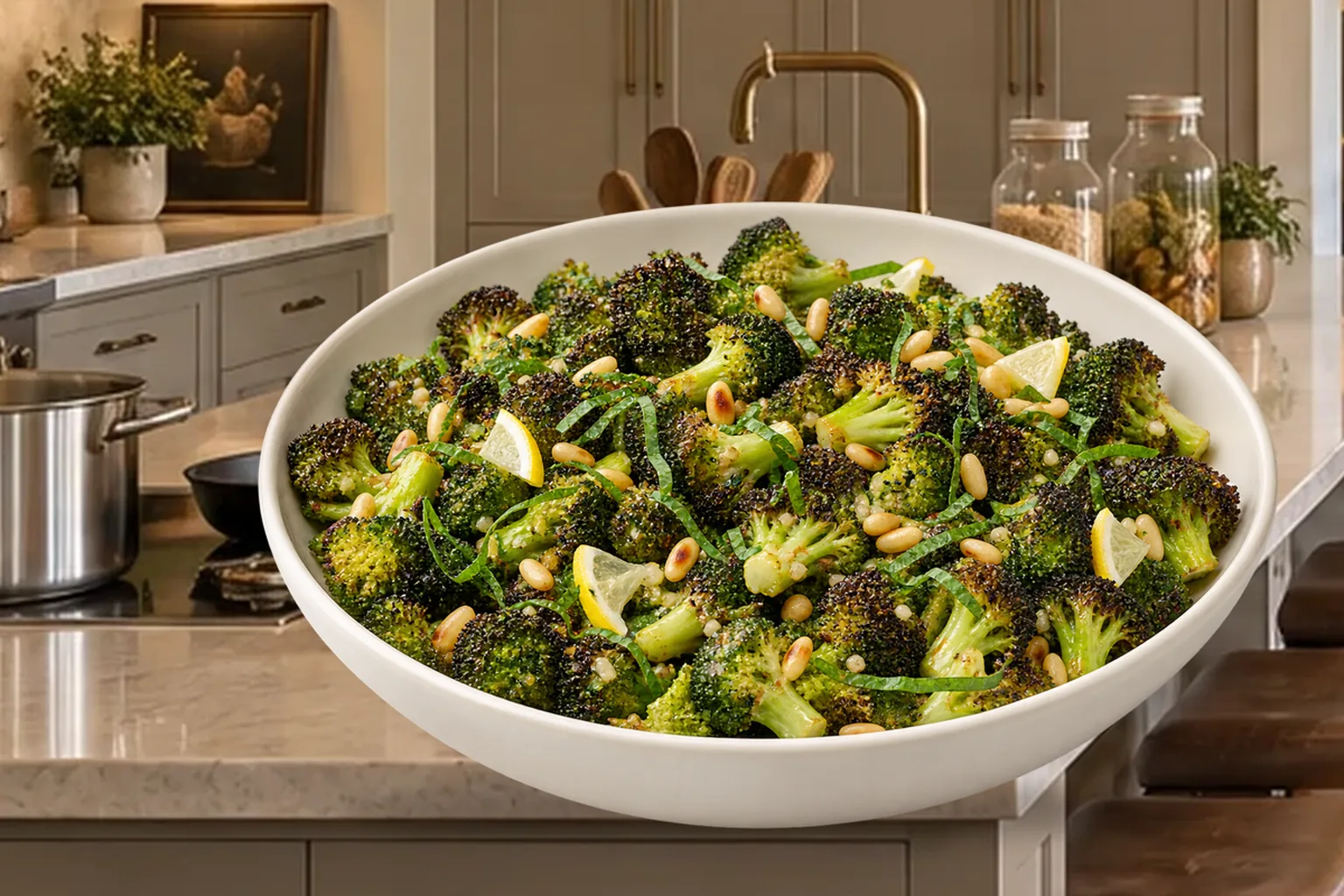
This roasted broccoli salad is what I make when a side dish needs to feel bright without being cold or fussy. The broccoli, garlic, and prepared pine nuts roast together until the florets are tender with a few dark edges. A lemon-honey vinaigrette goes on only after the pan has stopped steaming, so the olive oil stays raw.
The finished salad has contrast in every bite: warm broccoli, buttery-crisp pine nuts, fresh mint, little lemon wedges, and an optional creamy slice of avocado. Raspberries can add color and tartness when the salad is served away from a meat meal.
In a family of eight, the step that makes this easy is not the fifteen-minute roast. It is having soaked and dried pine nuts ready before dinner starts. I keep the roasting method simple and let the fresh dressing do the work at the end.
Where Roasted Broccoli Salad Fits On GAPS
This recipe fits Full GAPS after pine nuts are already tolerated and properly prepared. Broccoli, garlic, lemon, mint, avocado, raspberries, natural sea salt, raw honey, and the permitted fats all fit the Full GAPS ingredient framework.
The cooking method matters. The broccoli roasts in ghee, natural non-hydrogenated coconut oil, or rendered animal fat. The extra-virgin olive oil stays out of the oven and goes into the vinaigrette.
Balsamic vinegar, Dijon mustard, and feta are not part of this GAPS formula. The lemon juice and raw honey give the dressing its tart-sweet balance without them.
Prepare The Pine Nuts Before Recipe Day
Start this step well ahead. Cover the pine nuts with at least two inches of warm water in a glass or stainless-steel bowl, stir in good sea salt, cover, and soak for 7 to 24 hours. Eighteen hours is the preparation time given for removing the most phytic acid.
Drain the pine nuts, and rinse if you want to remove surface salt. Spread them in one layer on an uncoated stainless-steel sheet pan. Dry them in a dehydrator on its lowest setting or in the oven at the lowest setting it can hold.
Oven drying can take 12 to 24 hours. The nuts are ready when they are dry all the way through rather than damp or rubbery in the center. Cool them before storing, then measure one-third cup for the salad.
Pine nuts turn rancid quickly, so buy them fresh and keep the prepared batch cold once it has cooled completely. Do not begin the salad with still-wet soaked nuts; they will steam on the roasting pan instead of taking on light color.
Choose A Roasting Fat And Keep Olive Oil Raw
You need two different fats for two different jobs. Two tablespoons melted ghee, natural non-hydrogenated coconut oil, or rendered animal fat coat the broccoli before roasting. Two tablespoons fresh cold-pressed extra-virgin olive oil belong in the dressing.
If you use ghee, the linked stovetop homemade ghee method shows how to prepare it. Measure the roasting fat after melting so the broccoli receives the full two tablespoons.
Keep the olive oil at room temperature while the broccoli cooks. It will be whisked with lemon, honey, and salt, then tossed with broccoli that has cooled until comfortably warm and no longer steaming.
Cut And Coat The Broccoli Evenly
Heat the oven to 425°F. Chop one pound broccoli into bite-size pieces. Keep the pieces reasonably similar so the small florets do not burn while thick stem pieces are still firm.
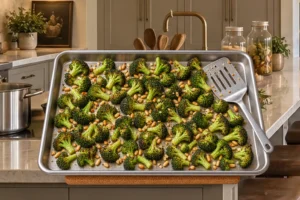
Put the broccoli on a large uncoated stainless-steel sheet pan with one-third cup soaked and fully dried pine nuts, two crushed or minced garlic cloves, two tablespoons melted roasting fat, and one-quarter teaspoon sea salt.
Toss until the broccoli looks lightly glossy from stem to crown. Look underneath a few florets for dry patches, and scrape the garlic and pine nuts back into the mixture instead of leaving them in a pile at one edge.
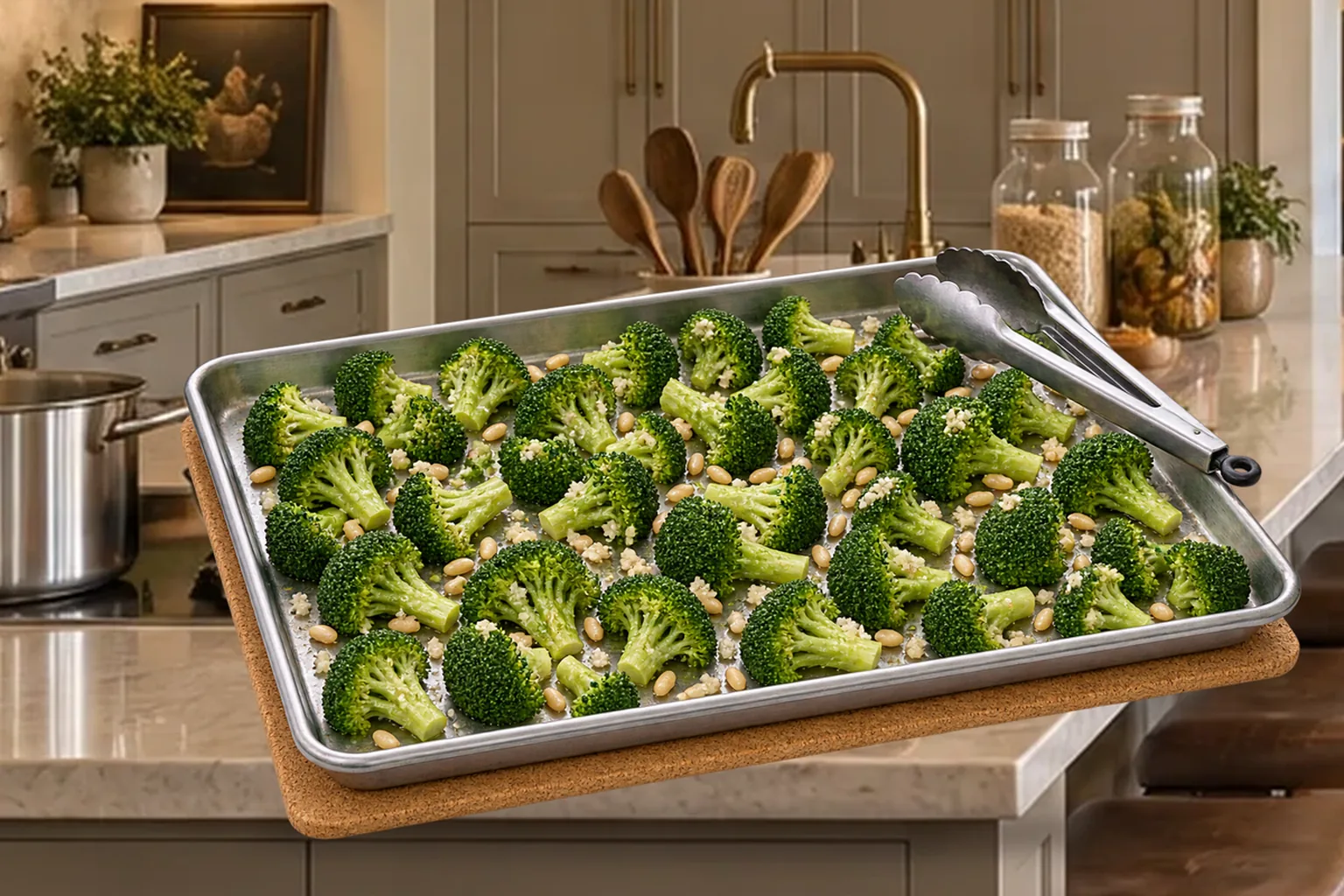
Spread everything into one roomy layer. Crowded broccoli holds steam between the pieces. A large pan gives the edges space to roast.
Roast Until The First Dark Tinges Appear
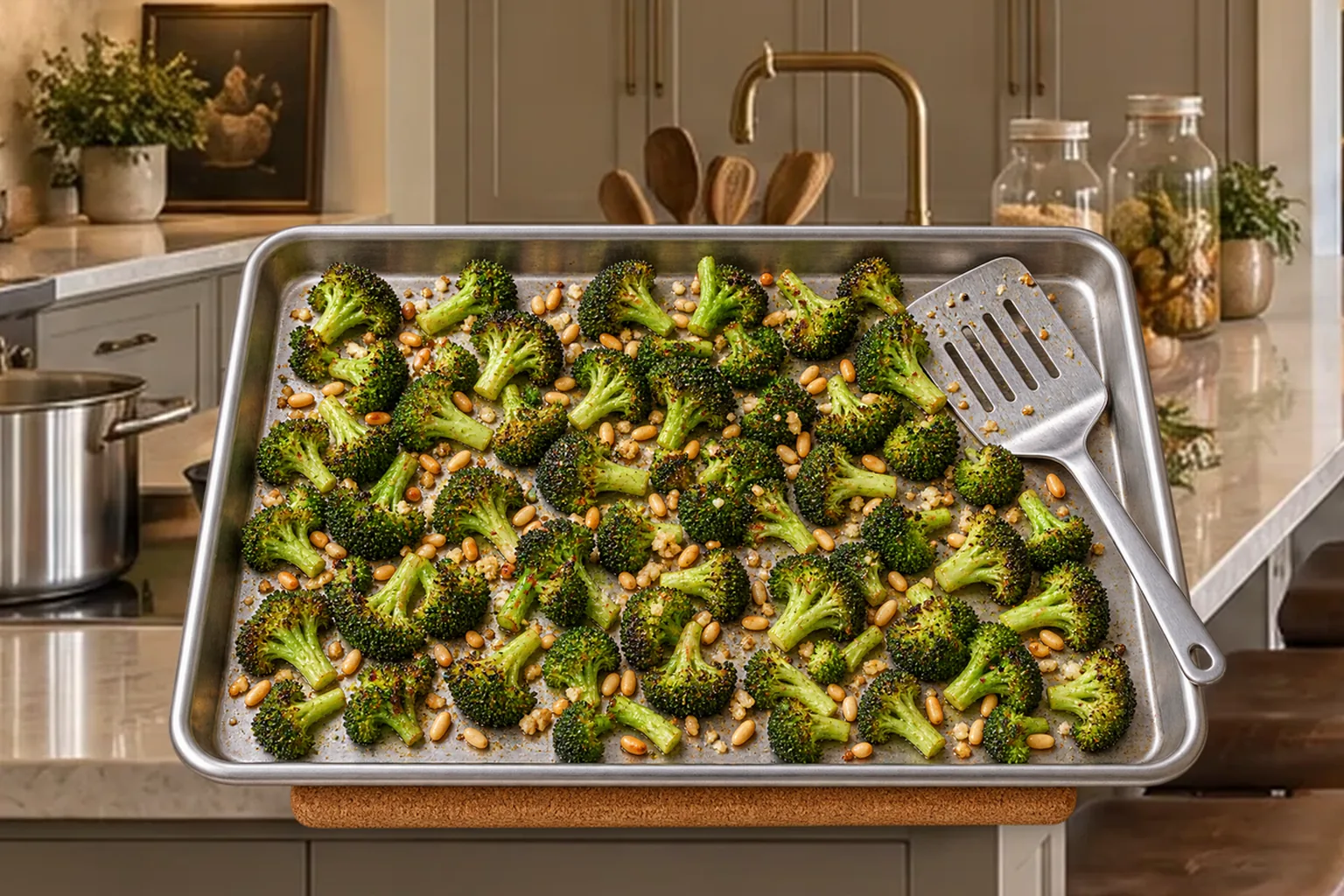
Roast for about 15 minutes. The broccoli should still look green, but a few outer tips and flat sides will develop dark brown tinges.
The garlic smells mellow and savory rather than sharp. The pine nuts should look lightly toasted, not deep brown. If the smallest garlic pieces or nuts are coloring too quickly, pull them toward the center of the pan where the heat is gentler.
Do not wait for every floret to char. The cue is the first scattered dark spots with tender broccoli that still holds its shape.
Whisk The Lemon-Honey Vinaigrette
While the broccoli roasts, add two tablespoons raw extra-virgin olive oil, two tablespoons fresh lemon juice, one teaspoon raw honey, and one-eighth teaspoon sea salt to a small glass or ceramic bowl.
Whisk until the honey is no longer sitting in a thick ribbon at the bottom. The dressing will look glossy and lightly cloudy, with no separate amber streak.
Taste the measured dressing as written before changing anything. It should be distinctly lemony, with enough honey to soften the edge without turning it into a sweet glaze.
Cool Before Adding The Raw Dressing
Take the roasted mixture out of the oven and leave it on the pan until the visible steam stops. It should be comfortably warm, not piping hot.
Move the broccoli, garlic, and pine nuts to a serving bowl. Pour the vinaigrette over them and toss until the sheen reaches the bottom pieces as well as the florets on top.
This order keeps the olive oil raw. Do not pour the dressing onto the pan while the broccoli is still giving off steam.
Add The Fresh Toppings And Serve
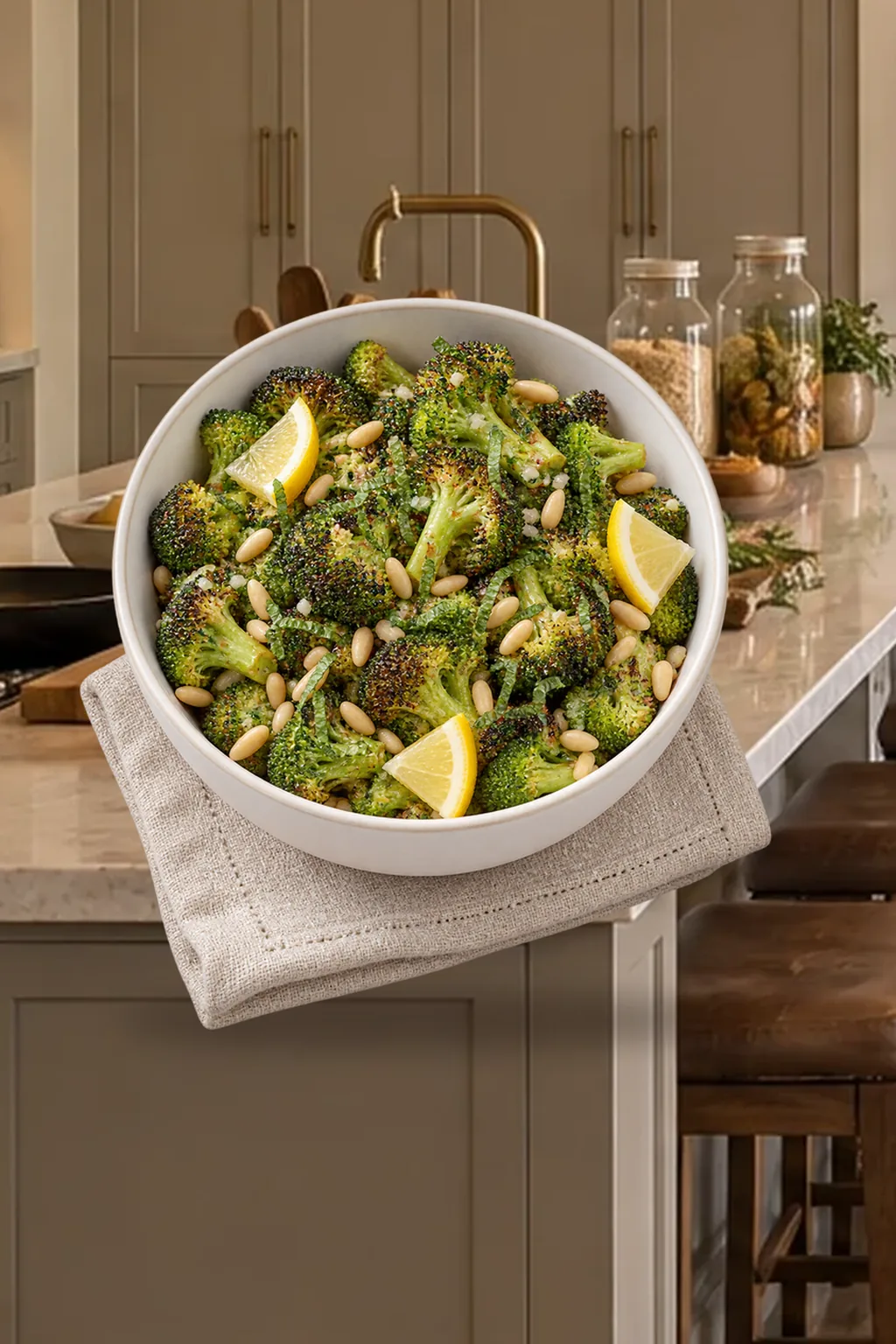
Finish with thin strips of fresh mint and tiny lemon wedges. Add sliced avocado if you want a creamy element.
Fresh or thawed frozen raspberries are optional. If this salad is being served beside meat, leave off the raw berries and enjoy the fruit separately.
Serve the salad warm soon after dressing it. The broccoli’s color is brightest then, the pine nuts still have a light bite, and the mint smells fresh rather than wilted.
What The Finished Salad Should Be Like
The broccoli should be tender with a little structure, not soft enough to collapse. Look for bright green centers, scattered roasted edges, and an even light coating of vinaigrette.
The salad smells first of roasted garlic and broccoli, then fresh lemon and mint. The pine nuts add a mild toasted richness. Honey should round the dressing without making the vegetables sticky.
A puddle of dressing at the bottom means the salad needs another gentle toss. A dry-looking top means some of the warm pieces were not coated.
Make Ahead And Store
Prepare and dry the pine nuts ahead; that is the useful batch-cooking step. Chop the broccoli and mix the vinaigrette earlier in the day if needed, but keep the dressing separate.
The salad can be refrigerated and served chilled. The broccoli will lose some of its vivid green color, while the lemon, mint, and optional raspberries keep the bowl looking fresh.
Store leftovers covered in glass in the refrigerator. The exact source does not give a fixed storage duration, so use ordinary freshness cues and serve it while the broccoli and mint still have a pleasant texture and aroma.
Recommended Equipment
- Large uncoated stainless-steel sheet pan
- Glass or stainless-steel bowl for soaking pine nuts
- Dehydrator or low-temperature oven for drying pine nuts
- Large serving bowl
- Small glass or ceramic bowl for vinaigrette
- Small stainless whisk
- Sharp knife and sturdy cutting board
- Measuring cups and spoons
Frequently Asked Questions
Why Not Roast The Broccoli In Olive Oil?
This formula keeps olive oil raw. Roast the broccoli in ghee, natural non-hydrogenated coconut oil, or rendered animal fat, then add the olive-oil dressing after the vegetables stop steaming.
Do The Pine Nuts Really Need To Be Prepared?
Yes. Soak and fully dry them before making the salad. Wet soaked pine nuts will steam on the pan and do not replace the drying step.
Can I Skip The Pine Nuts?
The accepted formula includes one-third cup prepared pine nuts. Omitting them changes the texture and identity, though the roasted broccoli and dressing can still be used as a separate variation.
Why Are Balsamic Vinegar And Dijon Missing?
The source gives a GAPS branch that omits both. This card uses fresh lemon juice, raw honey, olive oil, and sea salt for the vinaigrette.
Can I Add Feta?
No. Feta is not used in this current GAPS formula. The optional avocado supplies creaminess without changing the dressing.
Can I Use Frozen Raspberries?
Yes. Thaw them enough to separate gently and add them at serving. Keep raw fruit separate when the salad accompanies meat.
Can I Make The Salad Ahead?
Yes. Keep the dressing separate until the roasted broccoli is comfortably warm and no longer steaming. The finished salad may also be chilled, though its green color softens as it sits.
What Can I Serve With It?
For another vegetable-centered Full GAPS side, try Herb-Roasted Crispy Cauliflower or Lemon Roasted Green Beans. If the broccoli salad includes raspberries, serve the fruit portion separately from meat.
How Many Servings Does This Make?
The measured recipe makes five servings. Use the WPRM 2x control to scale every ingredient together.
Roasted Broccoli Salad Recipe
Roasted Broccoli Salad With Lemon Vinaigrette for Full GAPS
Ingredients
Equipment
Method
- Preheat the oven to 425°F.
- On a large uncoated stainless-steel sheet pan, toss the scaled broccoli, prepared pine nuts, melted roasting fat, garlic, and scaled roasting salt until every piece is lightly glossy. Spread into one roomy layer.
- Roast for about 15 minutes, until the broccoli remains green but shows the first scattered dark-brown tinges on tips and flat sides. The pine nuts should be lightly toasted, not deep brown.
- While the broccoli roasts, whisk the scaled raw olive oil, lemon juice, raw honey, and dressing salt in a small glass or ceramic bowl until glossy and no amber honey ribbon remains.
- Remove the pan from the oven and cool the roasted mixture until visible steam stops and it is comfortably warm.
- Transfer the warm broccoli, garlic, and pine nuts to a serving bowl. Pour over the raw lemon vinaigrette and toss until the bottom pieces are evenly coated.
- Top with thin mint strips and tiny lemon wedges. Add sliced avocado if desired. Raspberries are optional; omit them beside a meat meal and enjoy the raw fruit separately. Serve warm soon after dressing.
Notes
Tried this recipe?
Let us know how it was!Keep Full GAPS Prep Moving
The planned Weekly Kitchen Rhythm Planner is designed for exactly this kind of recipe: soak and dry the pine nuts ahead, mix the dressing, and keep dinner assembly short. Find current resources and upcoming releases in the WFLI shop.

Leave a comment