

This GAPS marinated asparagus salad gives a briefly cooked spring vegetable enough time to take on a bright lemon-and-mint vinaigrette. The asparagus stays green and crisp-tender rather than soft. Three hours in the refrigerator lets the dressing settle into the spears, while fresh garlic and a small amount of ground ginger keep the lemon from tasting flat.
Serve the spears whole on a platter, or cut them into short pieces before cooking for a spoonable side dish. Both routes use the same measured vinaigrette and the same marinating time. The whole-spears version looks especially good beside roast chicken or fish; the chopped version is easier to tuck into packed lunches or serve over butter lettuce.
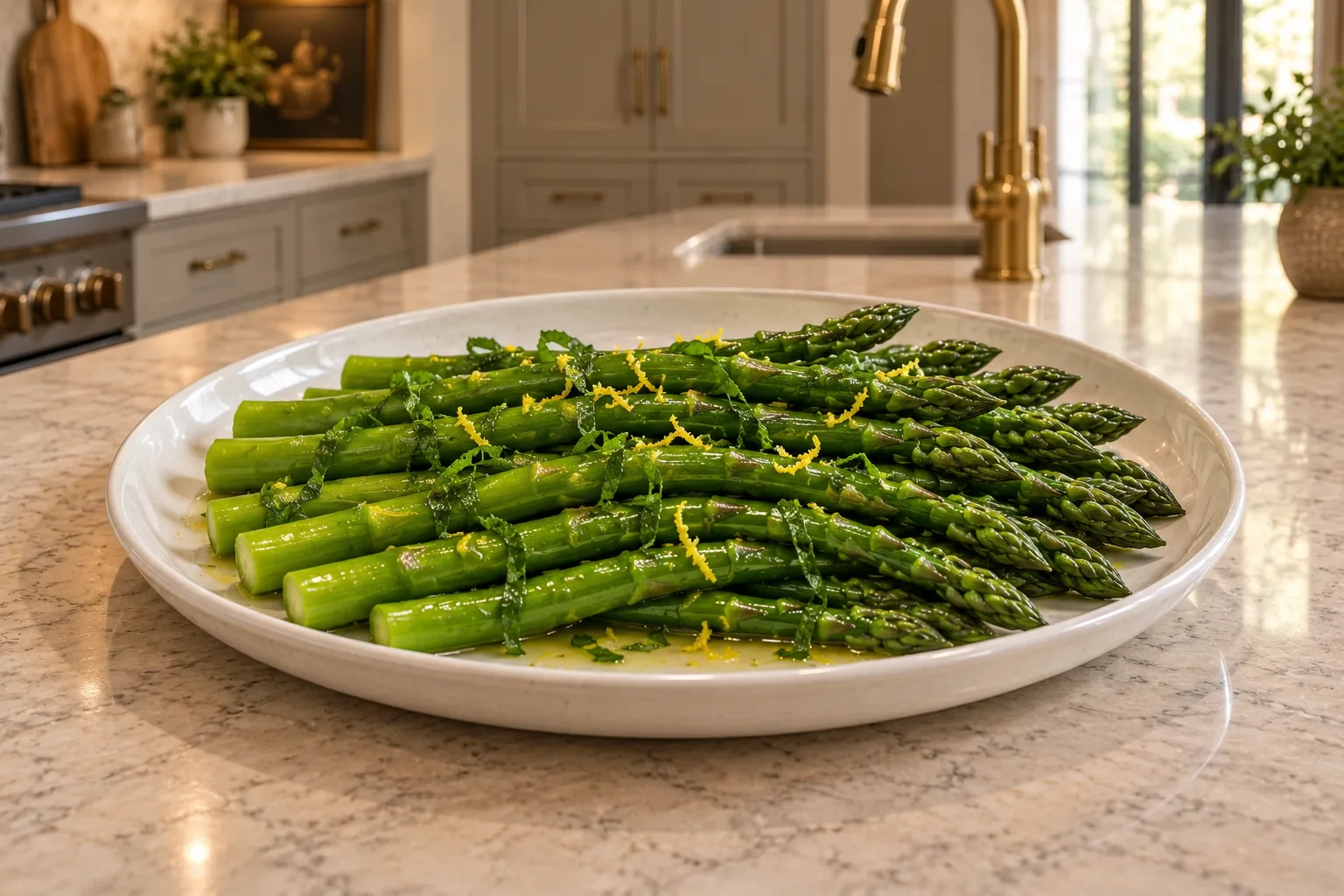
A Make-Ahead Side for a Full Family Day
Our weekdays already have breakfast, homeschool, two businesses, dinner, and my second-shift work packed into them. A side dish that can be made before the busiest part of the day earns its place quickly. The active work here is short: trim the asparagus, simmer it for a few minutes, whisk the vinaigrette, and put the dish in the refrigerator.
The waiting time is useful rather than fussy. Start the salad after breakfast for a late lunch, or make it in the early afternoon for dinner. When the meal needs to come together, the vegetable is already cooked and dressed. All that remains is lifting it from the vinaigrette and adding the optional finishing herbs or lemon zest.
This is also a practical way to handle a large bunch of asparagus without serving it piping hot. A bunch that begins around one and a half pounds often leaves close to the one pound needed here after the woody ends are removed.
Where This Marinated Asparagus Fits on GAPS
This recipe is for Full GAPS. Asparagus is allowed, but it is a fibrous vegetable and is cooked here. The cold-pressed olive oil stays raw: it goes into the vinaigrette after the asparagus has been drained, never into the hot skillet.
The measured acid is fresh lemon juice. Ordinary store-bought balsamic vinegar is not a swap for this version because most commercial balsamic contains added sugar. Lemon keeps the vinaigrette clean and bright without changing the formula into a different dressing.
Coconut aminos depends on the current ingredient label. Use it only when every listed ingredient is GAPS compliant. The same rule applies to the optional Dijon-style mustard. It is truly optional; leaving it out does not require another change to the dressing.
This complete salad is not an Introduction Diet recipe. Although cooked fibrous vegetables and raw olive oil appear during the Introduction Diet according to their stage instructions, this composed marinated salad has its own measured combination and three-hour cold rest. Keep the Full GAPS label rather than moving the whole recipe into an earlier stage.
Choose and Trim the Asparagus
Look for spears that feel firm, with tight tips and cut ends that are not deeply shriveled. Thick and thin spears both work. What matters more is that the bunch is reasonably even, because very thin and very thick stalks in the same pan will not become crisp-tender at the same time.
Bend or cut away the woody base of each stalk. For a neat platter, line up the tips and trim the remaining ends evenly. Weigh one pound after trimming when you can. If you do not have a scale, begin with a generous one-and-a-half-pound bunch and expect some variation depending on how woody the stalks are.
Decide before cooking whether you want whole spears or short sections. Whole spears go into a large skillet with one-half inch of water. Chopped asparagus goes into a medium saucepan with water just covering the pieces. The two shapes need different vessels so they cook evenly without forcing long spears into a small pot.
Cook Until Bright Green and Crisp-Tender
Bring the water to a boil over high heat. Cover the skillet if you are cooking whole spears; leave the saucepan uncovered for chopped asparagus. As soon as the water boils, lower the heat and simmer for one to three minutes.
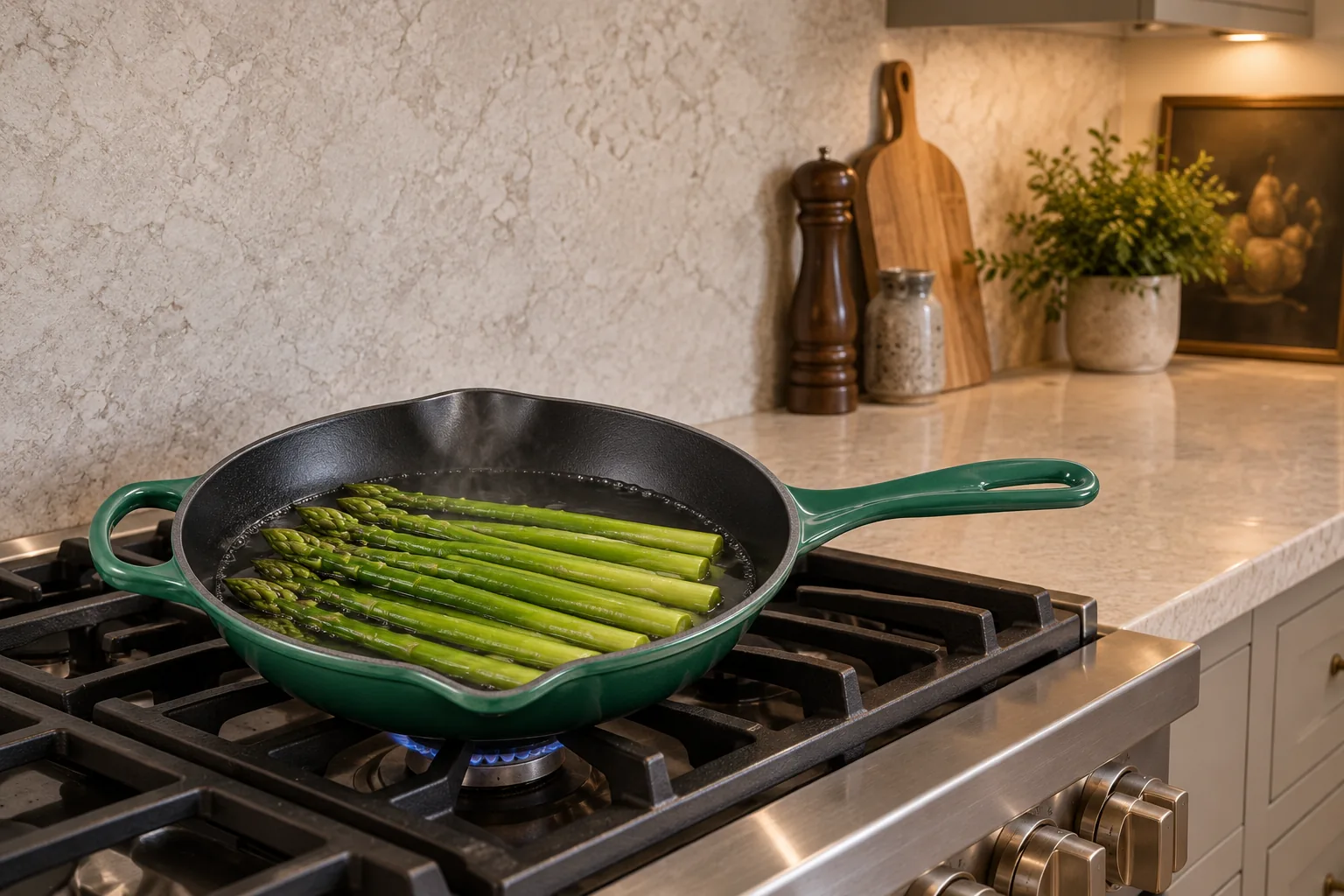
Watch the color first. The asparagus should turn a vivid green. Test a stalk near the thick end. A fork should enter with slight resistance, and a bite should have a small snap without a raw, squeaky crunch. Stop before the stalks bend limply when lifted.
Rinse the asparagus briefly under cold water and drain it well. The rinse slows the cooking, but it should not make the vegetable refrigerator-cold. A little residual warmth is useful because the warm surface takes up the vinaigrette more readily.
Shake off trapped water before the asparagus goes into the marinating dish. Excess cooking water would dilute the lemon and oil and leave the finished dressing thin around the edges.
Whisk a Raw Lemon Mint Vinaigrette
Combine one-third cup cold-pressed extra-virgin olive oil, two tablespoons fresh lemon juice, one tablespoon compliant coconut aminos, one teaspoon dried mint or one tablespoon thinly sliced fresh mint, the optional teaspoon of compliant Dijon-style mustard, one-half minced garlic clove, one-half teaspoon mineral salt, and one-quarter teaspoon ground ginger.
Whisk until the lemon no longer sits as a separate pale puddle beneath the oil. The vinaigrette will not become a thick mayonnaise-like emulsion, but it should look evenly flecked with mint, garlic, and ginger. Taste is bright, savory, and lightly herbal, with the coconut aminos rounding the sharp edge of the lemon.
Do not add chia meal, basil-seed meal, MCT oil, balsamic vinegar, soy sauce, or tamari. Keep this measured version simple and leave those additions out. The generous amount of thin dressing is intentional because the asparagus needs enough liquid to marinate.
Marinate for the Full Three Hours
Arrange whole spears in a shallow glass or ceramic dish. If you cooked short sections, use a glass bowl. Pour the vinaigrette over the still-warm asparagus and turn the pieces until every surface looks glossy.
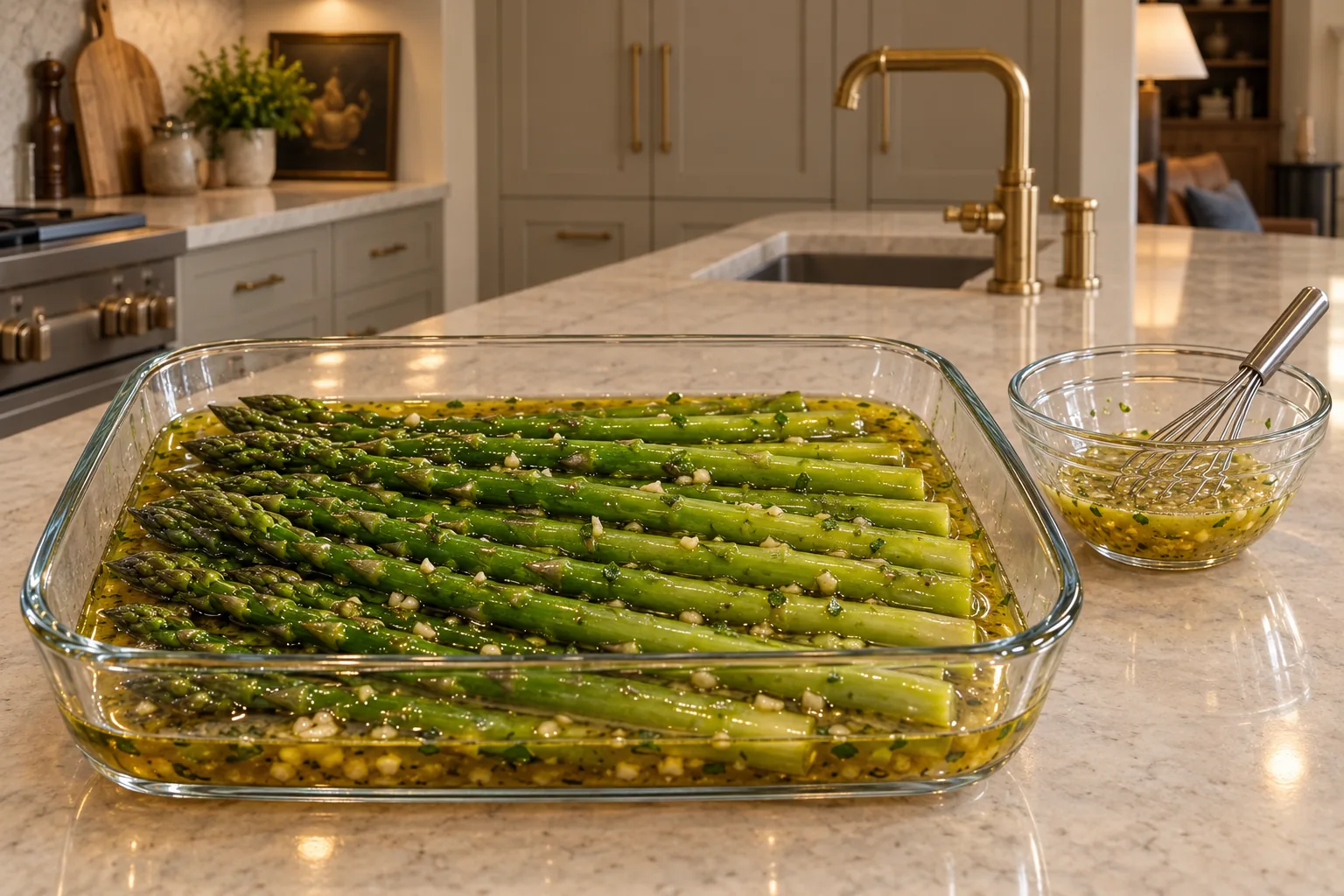
Press the asparagus down into the dressing as much as the vessel allows. There will be more vinaigrette than a quick tossed salad would use. That extra dressing is part of the method and becomes useful again at serving time.
Cover and refrigerate for three hours. Do not shorten this to a quick ten-minute toss. Freshly cooked asparagus does not immediately hold the dressing; the three-hour rest is what lets the lemon, mint, garlic, and ginger flavor the vegetable instead of sliding straight back into the dish.
If the schedule allows, take the salad out of the refrigerator one hour before serving. The olive oil loosens as it warms and the mint and lemon become more noticeable. If there is no extra hour, serve it directly from the refrigerator after the required marinating time.
How to Serve the Salad
Lift the asparagus from the vinaigrette rather than pouring the entire dish onto the platter. Arrange whole spears in the same direction for a simple side dish. For the chopped version, spoon the pieces over butter lettuce or other tender salad greens.
Use some of the reserved vinaigrette over the greens, or place it in a small bowl at the table. Optional thin ribbons of fresh mint or basil, a little zest from half a lemon, and a pinch of flaky mineral salt can finish the platter. Keep the garnish restrained so the asparagus remains the main ingredient.
This salad pairs naturally with a simply cooked protein because the dressing already supplies acid, herbs, and olive oil. It also works as an appetizer when whole spears are served at room temperature. The coming Weekly Kitchen Rhythm Planner fits this recipe’s make-ahead schedule: mark the three-hour refrigerator window and the optional one-hour warm-up so the dish is ready with the rest of dinner. Find it with the current planning and cooking resources in the WFLI shop.
Storage and Leftover Vinaigrette
Keep the asparagus covered in its marinating dish in the refrigerator. This version does not have a tested storage duration, so make the amount your household will use promptly rather than assigning it an invented number of days.
Save the extra vinaigrette with the asparagus or in a separate covered glass jar. Spoon it over the same salad when serving. If the olive oil firms in the refrigerator, let the dressing stand at room temperature until it loosens, then whisk it briefly.
The color and texture are best when the asparagus is not repeatedly warmed and chilled. Take out only the portion you plan to serve and return the rest to the refrigerator.
Recommended Equipment
For whole spears, use a large skillet that lets them lie flat; the pictured route uses the Le Creuset Signature 10.25-inch skillet in Artichaut. For chopped asparagus, use a medium stainless-steel saucepan. You will also need a shallow glass or ceramic marinating dish, a small glass bowl, a stainless-steel whisk, measuring cups and spoons, and an optional fine grater for lemon zest.
A long shallow dish works better than a deep bowl for whole spears because more asparagus can touch the vinaigrette. Whatever vessel you choose, make sure it can be covered in the refrigerator without bending the tips.
Frequently Asked Questions
Can I Use Balsamic Vinegar Instead of Lemon?
Use the measured fresh lemon juice. Ordinary store-bought balsamic is excluded because most products contain added sugar, and it would also change the flavor and color of this bright green salad.
Is Coconut Aminos Allowed on GAPS?
Check the current label. Coconut aminos works here only when every ingredient is GAPS compliant. Do not replace it with soy sauce or tamari.
Do I Have to Use Mustard?
No. The Dijon-style mustard is optional. If you use it, choose one without non-GAPS ingredients. If you leave it out, keep every other vinaigrette amount the same.
Why Is the Asparagus Still Warm When I Add the Dressing?
The brief cold rinse slows the cooking without chilling the spears all the way through. Residual warmth helps the vegetable take up the vinaigrette. Drain well so water does not dilute the dressing.
Can I Chop the Asparagus?
Yes. Cut it into sections before cooking, simmer it uncovered in a saucepan with water just covering the pieces, and marinate it in a bowl. Keep the same one-to-three-minute cooking cue and three-hour marinade.
Can I Skip the Three-Hour Marinade?
No. The full three hours distinguishes this from asparagus tossed with dressing at the last minute. The rest gives the lemon-mint vinaigrette time to cling to and flavor the crisp-tender stalks.
Can I Serve It Cold?
Yes. Serve after the three-hour refrigerator rest, or let it stand for the optional hour at room temperature so the olive oil loosens and the flavors become more pronounced.
GAPS Marinated Asparagus Salad Recipe
GAPS Marinated Asparagus Salad with Lemon Mint Vinaigrette
Ingredients
Equipment
Method
- For whole spears, place the trimmed asparagus in a large skillet and add 1/2 inch of water. For chopped asparagus, cut it into sections, place it in a medium saucepan and add water just to cover.
- Bring the water to a boil over high heat. Cover the skillet for whole spears; leave the saucepan uncovered for chopped asparagus. Reduce the heat and simmer for 1 to 3 minutes, until the asparagus is bright green and crisp-tender with a slight snap rather than a raw crunch.

- Rinse briefly under cold water and drain well. The asparagus should still feel warm. Do not chill it completely; the residual warmth helps it take up the vinaigrette.
- Arrange whole spears in a shallow glass or ceramic dish, or put chopped asparagus into a glass bowl.
- Whisk the olive oil, lemon juice, coconut aminos, mint, optional mustard, garlic, mineral salt and ginger until evenly combined. Pour it over the warm asparagus, turn the spears to coat, and press them down into the ample dressing.
- Cover and marinate in the refrigerator for 3 hours.
- If time allows, let the dish stand at room temperature for 1 hour before serving so the olive oil loosens and the flavors open.
- Lift the asparagus from the vinaigrette as you serve it, reserving the extra dressing. Serve over salad greens with some vinaigrette spooned over the top, or arrange on a platter with optional herbs, lemon zest and flaky mineral salt. Offer the remaining vinaigrette on the side.
Notes
Tried this recipe?
Let us know how it was!

Leave a comment