

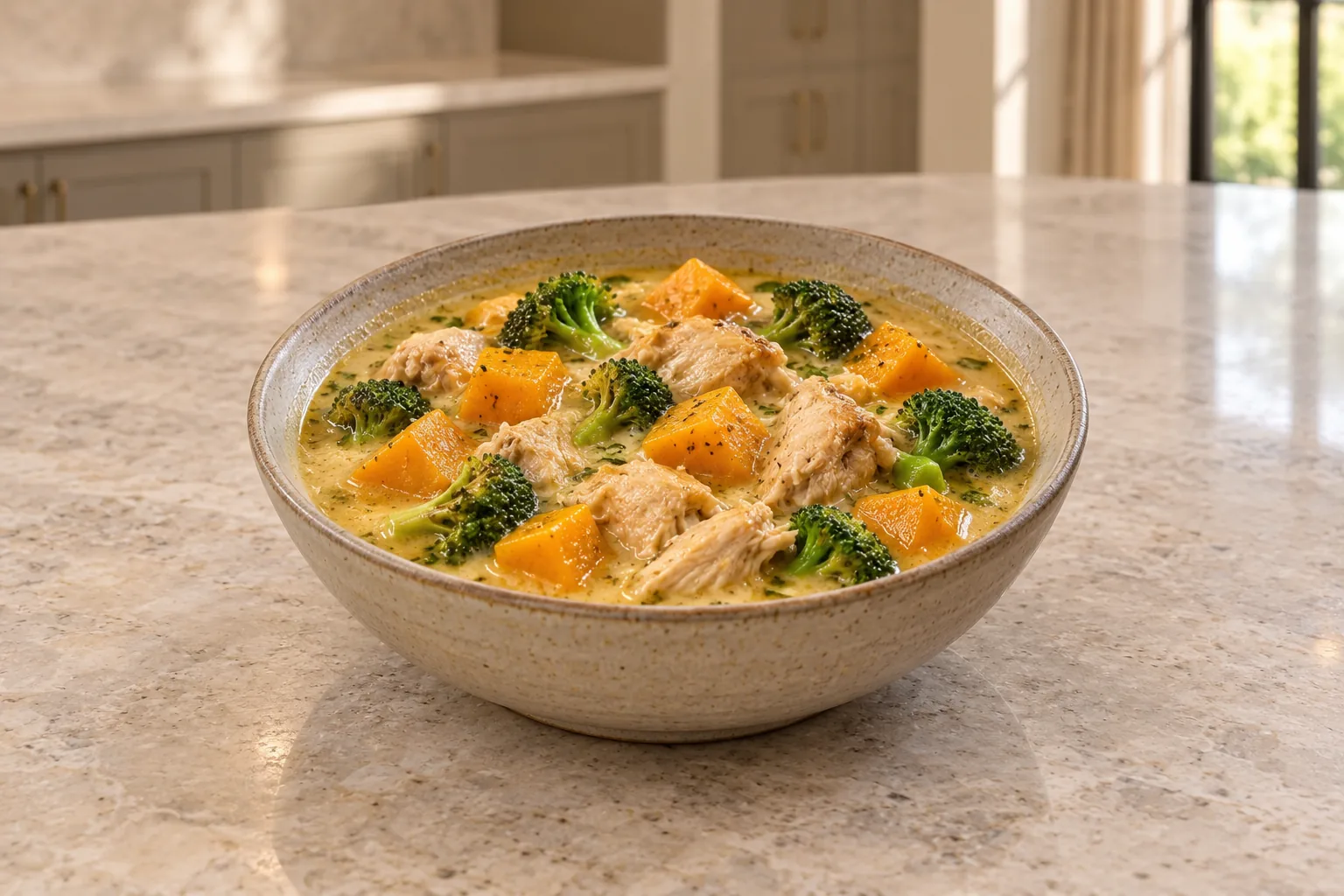
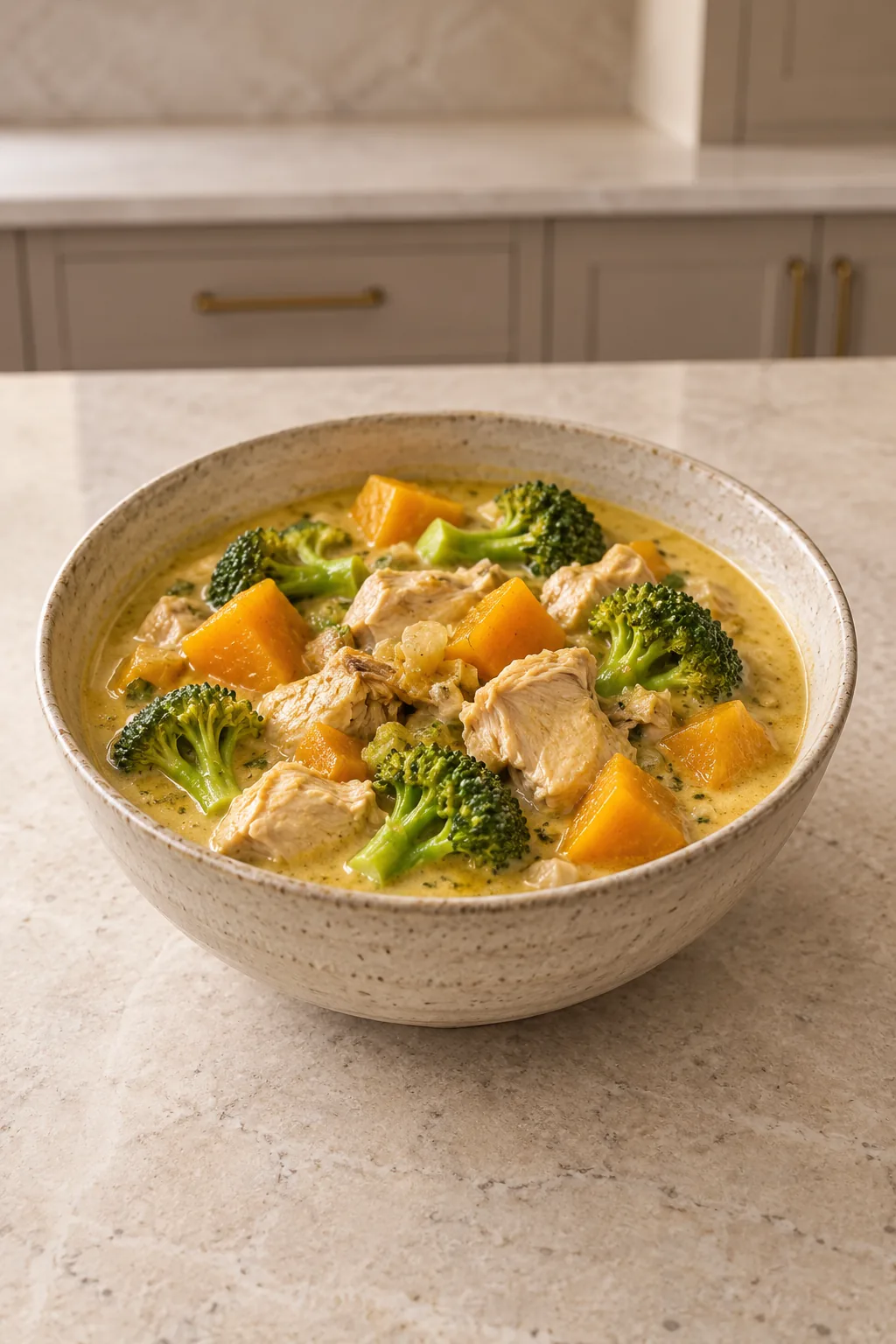
This GAPS Instant Pot chicken stew turns chicken thighs, winter squash, broccoli, homemade coconut milk, and coconut butter into one substantial Full GAPS dinner. Turmeric and ginger warm the broth without making it hot, while lime goes in at the end so its brightness does not disappear under pressure.
The sequence matters. Winter squash and spices sauté first. Chicken then pressure-cooks in the coconut base, and broccoli waits until the pressure is gone so it can steam gently and stay green. That gives you tender chicken and soft squash without making every vegetable equally soft.
With six children, homeschool, and work sharing the same day, I value dinners that leave one cooking vessel to manage. The useful part here is not a vague “dump and go” promise. It is knowing exactly when each ingredient enters the pot and what the food should look like before you move on.
Why Winter Squash Replaces Sweet Potato
The original dinner idea uses sweet potato. This Full GAPS formula uses one pound of peeled, seeded winter squash instead. Winter squash gives the stew orange cubes and gentle sweetness without carrying the source recipe’s starchy sweet potato into the GAPS version.
Butternut, delicata, kabocha, or another firm winter squash can work when it can be peeled, seeded, and cut into practical cubes. Keep the one-pound prepared weight. Cut the pieces close to three-quarter-inch cubes so they can soften during pressure cooking without disappearing completely into the broth.
This is a Full GAPS meal after every ingredient in the recipe has been introduced. It is not an Introduction Diet recipe. If you are still learning the broader food boundaries, the GAPS Diet Food List separates Intro stages from the wider Full GAPS menu.
Use Homemade Coconut Milk And Coconut Butter
Measure 13.5 fluid ounces of prepared Hot-Water Homemade Coconut Milk. The amount intentionally mirrors a standard can, but this version uses the homemade component so the stew does not inherit gums, stabilizers, sweeteners, or unclear additives.
Homemade coconut milk can be thinner than a commercial canned product. Two tablespoons of Homemade Coconut Butter add coconut solids and help give the finished liquid more body. Stir until the butter has dispersed instead of leaving pale waxy clumps around the pot.
The rest of the formula stays direct: coconut oil, turmeric, ginger, dried parsley, sea salt, garlic, boneless skinless chicken thighs, broccoli, lime, and an optional fresh herb at serving. Use pure individual spices without starch, sugar, flavor blends, or anticaking ingredients that do not fit your GAPS kitchen.
Sauté The Squash And Spices First
Put one tablespoon coconut oil and the cubed squash into the stainless-steel pressure-cooker insert. Select Sauté. Once the oil has melted, add one teaspoon each ground turmeric, ground ginger, and dried parsley, plus one and one-quarter teaspoons sea salt.
Stir and sauté for about five minutes. The squash should become glossy and evenly yellow-gold from the spices. Its outer edges begin to look slightly softened and matte, but the cubes should still hold their shape. There should not be a deep pool of liquid, dark browning, or scorched spice on the bottom.
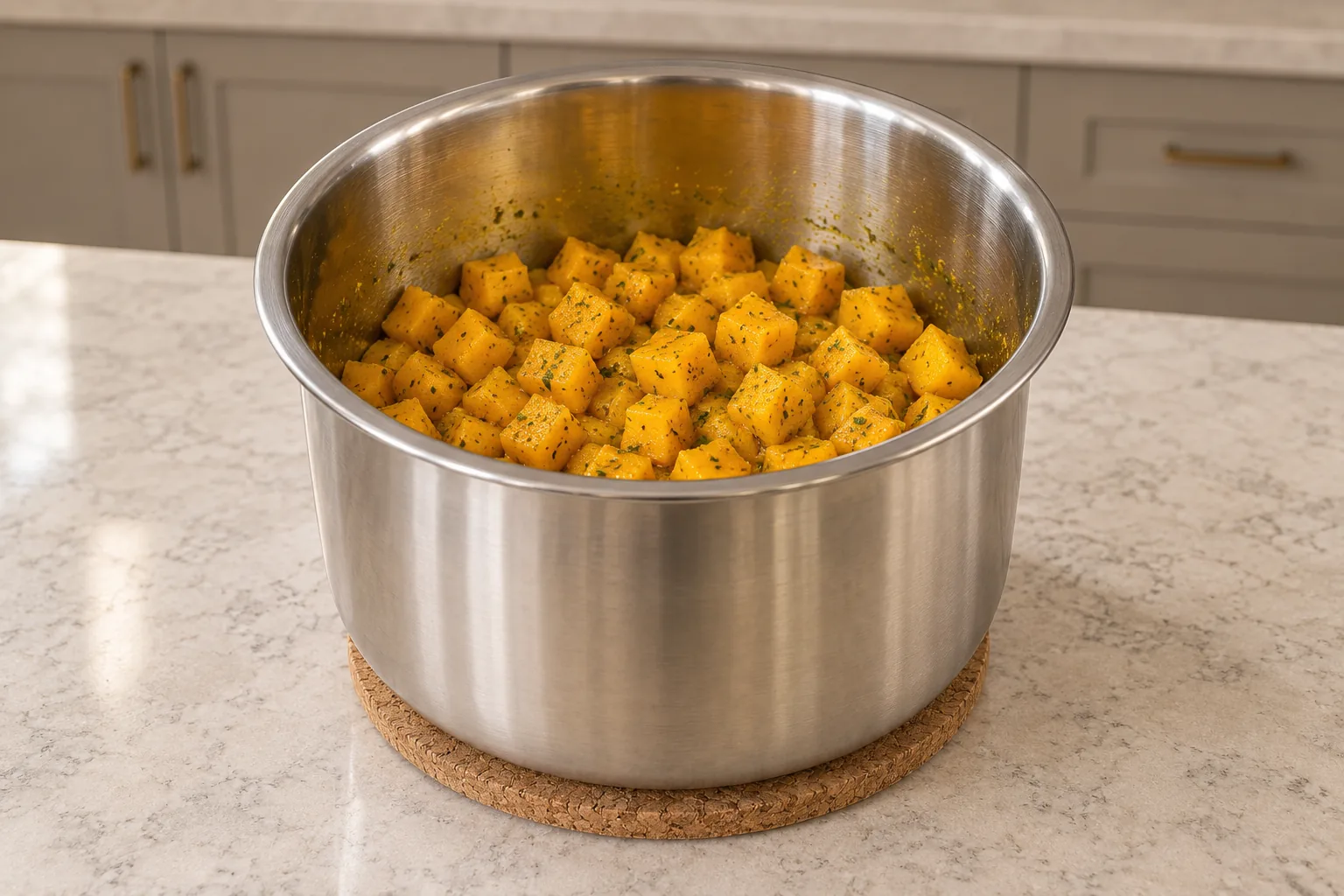
The aroma should be clearly fragrant with ginger and turmeric before liquid goes in. That physical endpoint is more useful than chasing exact browning, because moisture varies from one squash to another.
Build The Coconut Broth And Add Chicken
Pour in the measured homemade coconut milk. Add five crushed or minced garlic cloves and two tablespoons homemade coconut butter. Stir across the bottom of the insert so the spices lift into the liquid and the coconut butter begins to melt. Select Cancel once the mixture is evenly combined.
Add one and one-half pounds fresh boneless, skinless chicken thighs, about five thighs. They may stay whole or be cut into large cubes. Use a stainless-steel or wooden spatula to push each piece below the liquid line so the chicken cooks in the coconut broth rather than sitting dry above it.
The pot should now hold golden liquid around orange squash and chicken. Broccoli and lime are deliberately absent at this stage. Adding broccoli before pressure cooking would turn it very soft and olive-colored; adding lime now would mute its fresh finish.
Pressure Cook And Release Slowly
Lock the pressure lid and close the steam valve. Select Poultry, Pressure Cook, or Manual on High and set it to 15 minutes. When the cooking cycle ends, leave the valve closed and allow a 25-minute natural pressure release.
After those 25 minutes, open the steam valve slowly to release any remaining pressure. Keep your face and hands away from the steam path and open the lid only after the cooker indicates that pressure is gone. The coconut liquid should still be actively simmering when the lid comes off.
The chicken should separate with very light pressure from a serving spoon. The winter squash will be soft, and some edges may begin to round into the broth, but visible cubes should remain in a batch made with fresh chicken.
Steam The Broccoli After Pressure Cooking
Add two cups bite-size broccoli florets immediately while the stew is still hot. Cover the cooker with a heat-safe lid and select Keep Warm. Let the broccoli steam gently for about 20 minutes.
Look for florets that are tender when pierced but remain bright green. Broccoli that has turned dull olive and collapses when touched has gone farther than this method needs. Keeping it out of the pressure cycle gives the finished bowl a useful contrast with the soft squash and chicken.
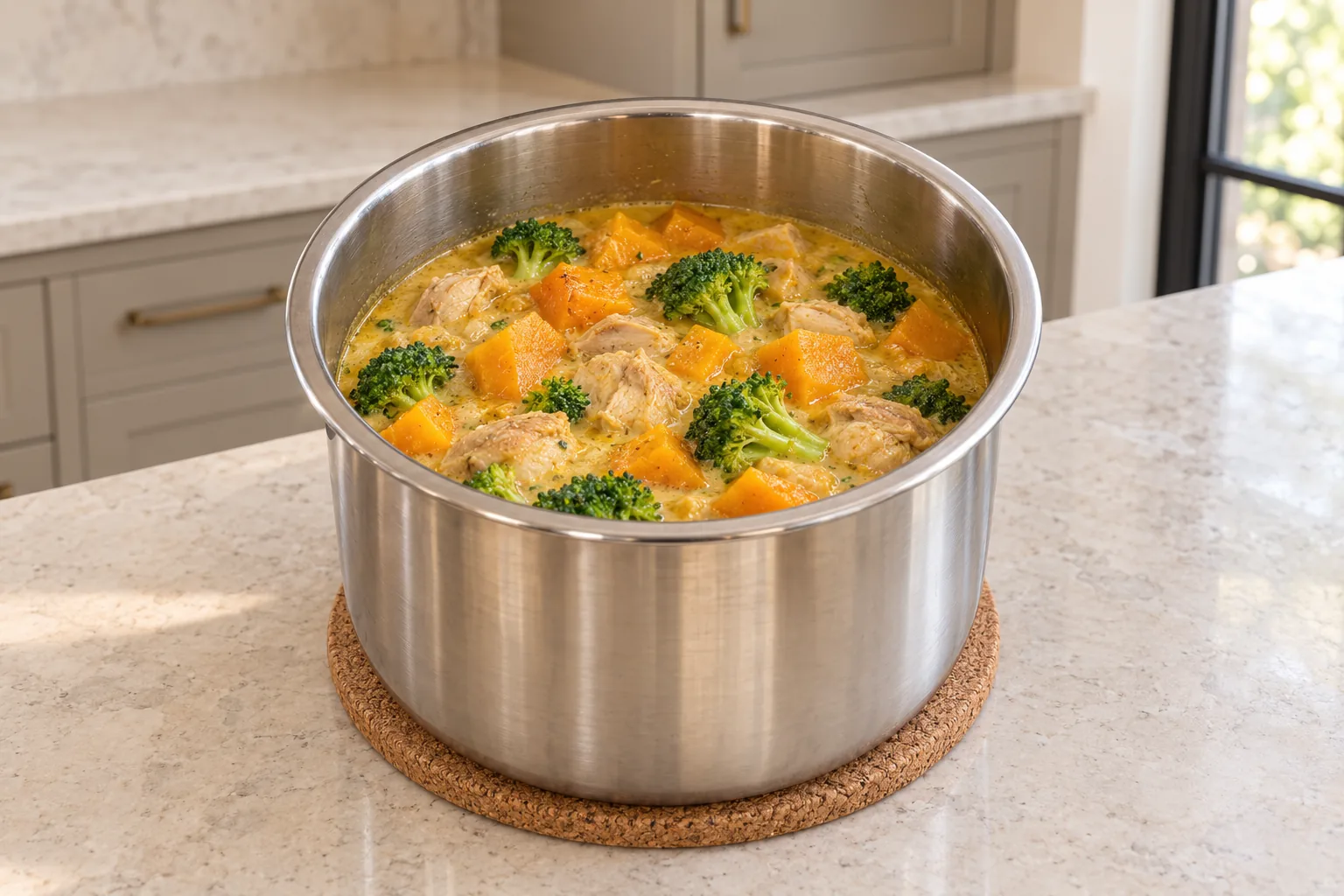
Stir in the juice of one lime after the broccoli is ready. If the thighs were cooked whole, break each into a few irregular pieces with the serving spoon. The meat should come apart easily without needing to be cut against resistance.
Where This Fits On GAPS
This stew belongs on Full GAPS after winter squash, broccoli, coconut products, garlic, lime, herbs, and spices have been introduced in the forms used here. Sweet potato is left out rather than presented as a GAPS option.
Homemade coconut milk and homemade coconut butter keep the coconut ingredients simple and additive-free. Coconut oil is the measured cooking fat. Chicken thighs bring more natural fat than breast meat and stay tender through the pressure cycle.
The recipe is dairy-free, egg-free, and grain-free as written. Those labels describe the formula; they do not change its placement as a Full GAPS dinner.
Fresh And Frozen Chicken Need Different Timing
The primary card uses fresh chicken thighs and a 15-minute pressure cycle. Frozen thighs can be used, including pieces frozen together, but they require 30 minutes under pressure instead.
That longer cycle changes the vegetables. The squash will become much softer and may partly mash into the coconut broth. Choose the frozen route when that softer texture works for the meal; use fresh chicken when you want distinct squash cubes in the finished bowl.
Do not add frozen chicken and keep the shorter fresh-chicken time. The alternate is a complete timing change, not a casual substitution made after the lid is locked.
Serving And Storage
Serve the stew in bowls as it is, or spoon it over Full GAPS Steamed Cauliflower Rice. Fresh cilantro, mint, or parsley may be added at the table. Keep the herb light enough that the lime, ginger, and coconut broth still lead the bowl.
Cool leftovers promptly and transfer them to covered glass containers. Refrigerate and use within four days. For longer storage, freeze individual portions in freezer-suitable glass containers, leaving appropriate headspace for expansion.
Thaw a frozen portion overnight in the refrigerator. Reheat in a small stainless-steel saucepan over medium heat, stirring as needed so the coconut broth warms evenly without scorching at the bottom.
Recommended Equipment
- An electric pressure cooker with an uncoated stainless-steel inner pot, such as the 8-quart Instant Pot Duo Plus
- Pressure lid and steam valve made for that cooker
- Heat-safe clear lid for the broccoli steaming step
- Chef’s knife and stable cutting board
- Stainless-steel or wooden spatula and serving spoon
- Liquid measuring cup
- Covered freezer-suitable glass containers
This recipe is written around a stainless-steel insert. Keep a coated nonstick or ceramic insert out of the WFLI cookware route even when another appliance can perform a similar pressure cycle.
Frequently Asked Questions
Can I Use Sweet Potato?
No. Use the measured one pound of winter squash for this Full GAPS formula.
Can I Use Canned Coconut Milk?
This recipe measures 13.5 fluid ounces of prepared homemade coconut milk. The linked component gives you the separate homemade method and keeps the formula consistent.
Is Coconut Cream The Same As Coconut Milk Here?
No. Use the measured homemade coconut milk. Thick coconut cream changes the liquid-to-solid balance and is not the ingredient specified for this stew.
Can I Use Chicken Breast?
Keep boneless, skinless chicken thighs in the measured formula. They carry more fat and remain tender through the pressure cycle and natural release.
Why Does The Broccoli Go In Last?
The residual heat and Keep Warm cycle are enough to steam bite-size florets. Holding them out of the pressure cycle helps them stay bright green and distinct.
What If My Squash Turns Very Soft?
Some softened edges are expected. Smaller cubes, a naturally softer squash, or the 30-minute frozen-chicken route will push the squash closer to a mash. The stew is still usable, but the texture will be less chunky.
GAPS Instant Pot Chicken Stew Recipe
GAPS Instant Pot Chicken and Winter Squash Coconut Stew
Ingredients
Equipment
Method
- Put the coconut oil and cubed winter squash in the stainless-steel pressure-cooker insert. Select Sauté.
- When the coconut oil melts, add the turmeric, ginger, dried parsley, and sea salt. Sauté for about 5 minutes, stirring, until the spices smell fragrant and the squash is glossy and yellow-gold with slightly softened edges.
- Add the homemade coconut milk, garlic, and homemade coconut butter. Stir across the bottom until the coconut butter begins to disperse, then select Cancel.
- Add the chicken thighs. Push every piece below the liquid line with a stainless-steel or wooden spatula.
- Lock the pressure lid and close the steam valve. Select Poultry, Pressure Cook, or Manual on High and set it to 15 minutes.
- When the cooking cycle ends, allow a 25-minute natural pressure release. Slowly open the steam valve to release any remaining pressure, then open the lid only after the cooker indicates that pressure is gone.
- Add the broccoli immediately while the stew is hot. Cover with a heat-safe lid, select Keep Warm, and steam for about 20 minutes, until tender but still bright green.
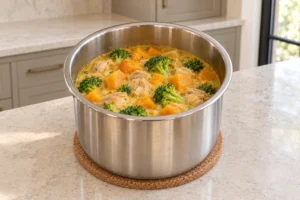
- Stir in the lime juice. If the thighs were cooked whole, break each into a few irregular pieces with the serving spoon; the chicken should separate with very light pressure.
- Serve as soup or over Full GAPS steamed cauliflower rice. Add a small amount of fresh cilantro, mint, or parsley if desired.
Notes
Tried this recipe?
Let us know how it was!More One-Pot Full GAPS Dinners
The planned Soups & Stews Cookbook will gather clearly routed Full GAPS bowls, exact homemade components, equipment notes, and practical texture cues for family-size cooking. Follow its progress in the WFLI shop.

Leave a comment