

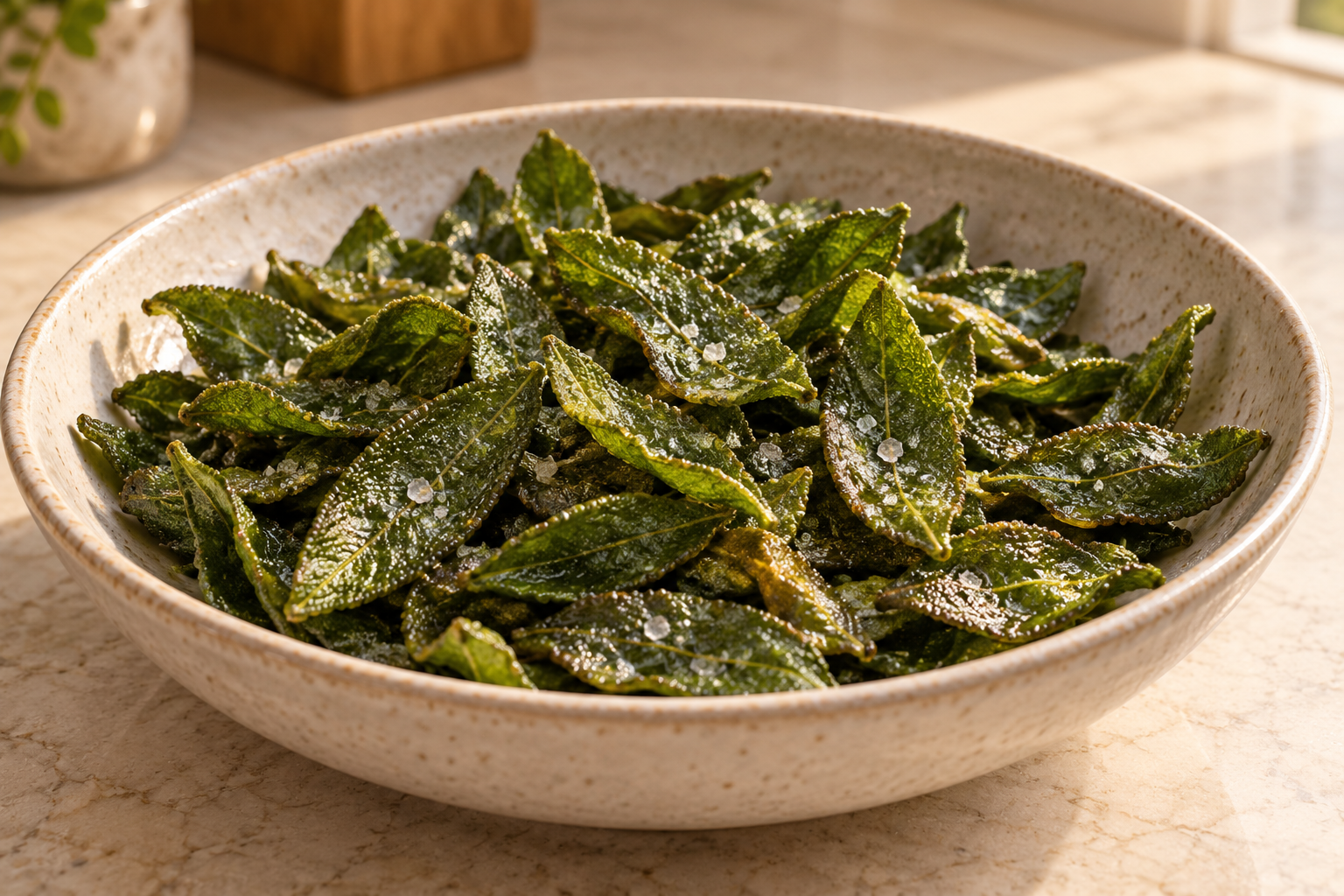
Fast cast-iron fried sage is the seconds-fast version of this crisp Full GAPS garnish. Thirty to forty fresh leaves cook in small batches in two to three tablespoons of qualifying bacon fat or another allowed rendered animal fat. Each batch leaves the skillet after only five to seven seconds.
This method is useful when the rest of the meal is already waiting. The leaves need almost no time in the pan, but the draining towel, tongs, and mineral salt have to be ready first. The finished sage is dark green, crisp at the edges, savory from the rendered fat, and best served while that fragile texture is still fresh.
This post contains only the measured cast-iron formula. The Quick Skillet-Fried Sage uses a whole bunch, one-quarter cup fat, about five leaves per batch, one flip, and a 30-to-60-second fry. Do not mix those timings or fat amounts into this card.
Why This Method Is So Fast
The skillet is already hot, the rendered fat forms a thin film, and the fresh leaves are exposed directly to the cast-iron surface. The source timing is five to seven seconds. That means there is no time to search for tongs or prepare the draining plate after the sage enters the pan.
Work in small uncrowded batches even though the recipe starts with 30 to 40 leaves. The full measured amount describes the yield, not the number that belongs in the skillet at once.
Choose the Rendered Fat
Use two to three tablespoons qualifying additive-free bacon fat or another allowed rendered animal fat. Check that commercial bacon and saved drippings do not bring sugar, starch, flavoring, smoke additives, or another excluded ingredient into the recipe.
The rendered fat should be clean and suitable for cooking. This formula does not use heated olive oil or another plant oil. If a dairy-free route matters, rendered animal fat already keeps the card dairy-free.
Prepare 30 to 40 Fresh Leaves
Count 30 to 40 fresh sage leaves and clip them from their stems. Use intact leaves, trimming away woody stem ends or damaged portions. If you wash the sage, dry every leaf thoroughly before heating the skillet.
Water clinging to the leaves can make hot fat pop and also works against the immediate crisping this short method depends on. Spread the dry leaves in a loose layer near the stove so they can be added in quick batches.
Set Up the Linen and Tongs First
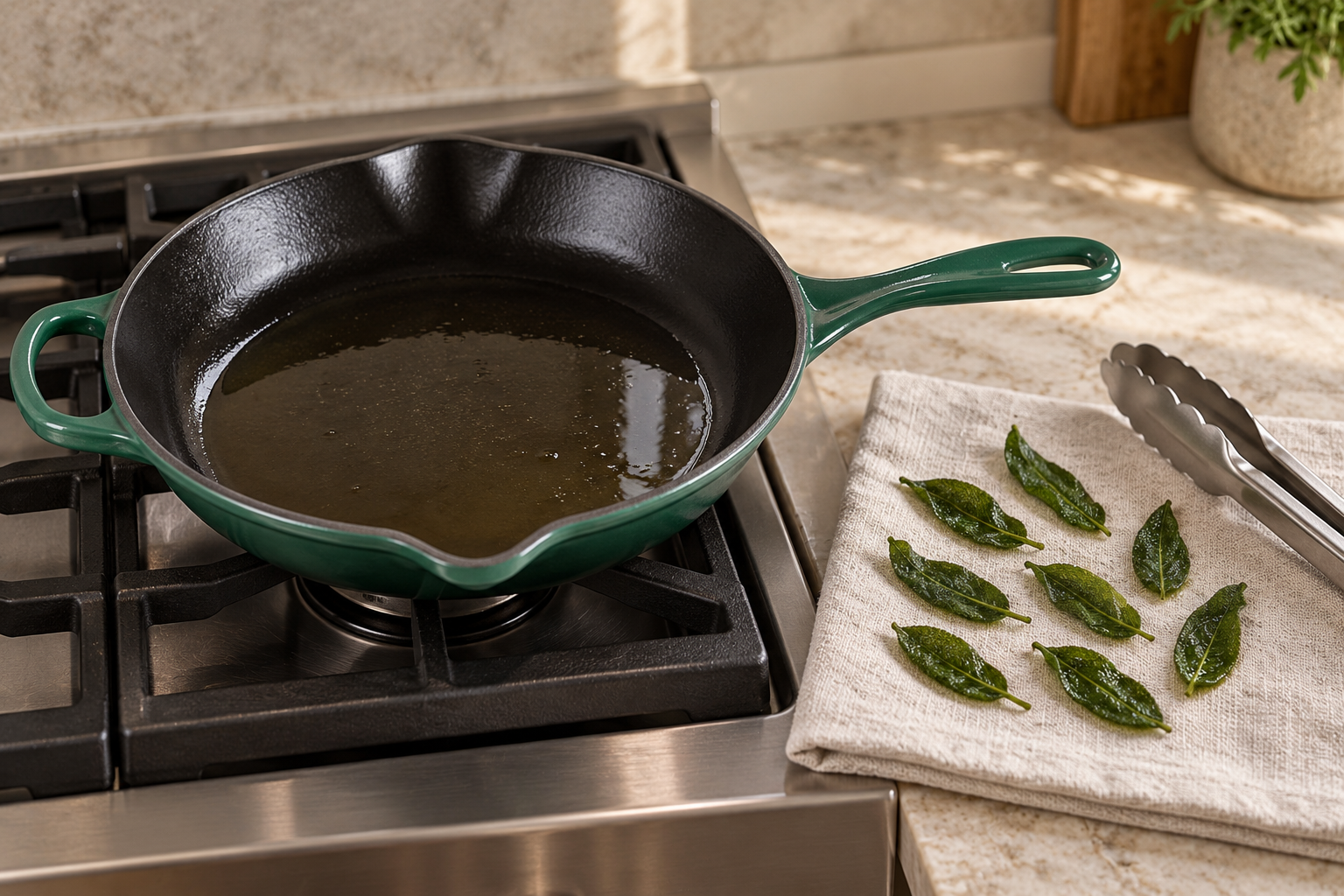
Line a heat-safe plate or tray with a clean undyed linen towel. Put stainless-steel tongs beside the skillet and keep mineral salt within reach. The fried leaves must move out of the pan at the five-to-seven-second mark and be salted while still warm.
Paper towels and plastic food-contact tools are not needed. Linen, stainless steel, and the enameled cast-iron skillet keep the setup simple and consistent with the accepted cookware.
Heat Two to Three Tablespoons of Fat
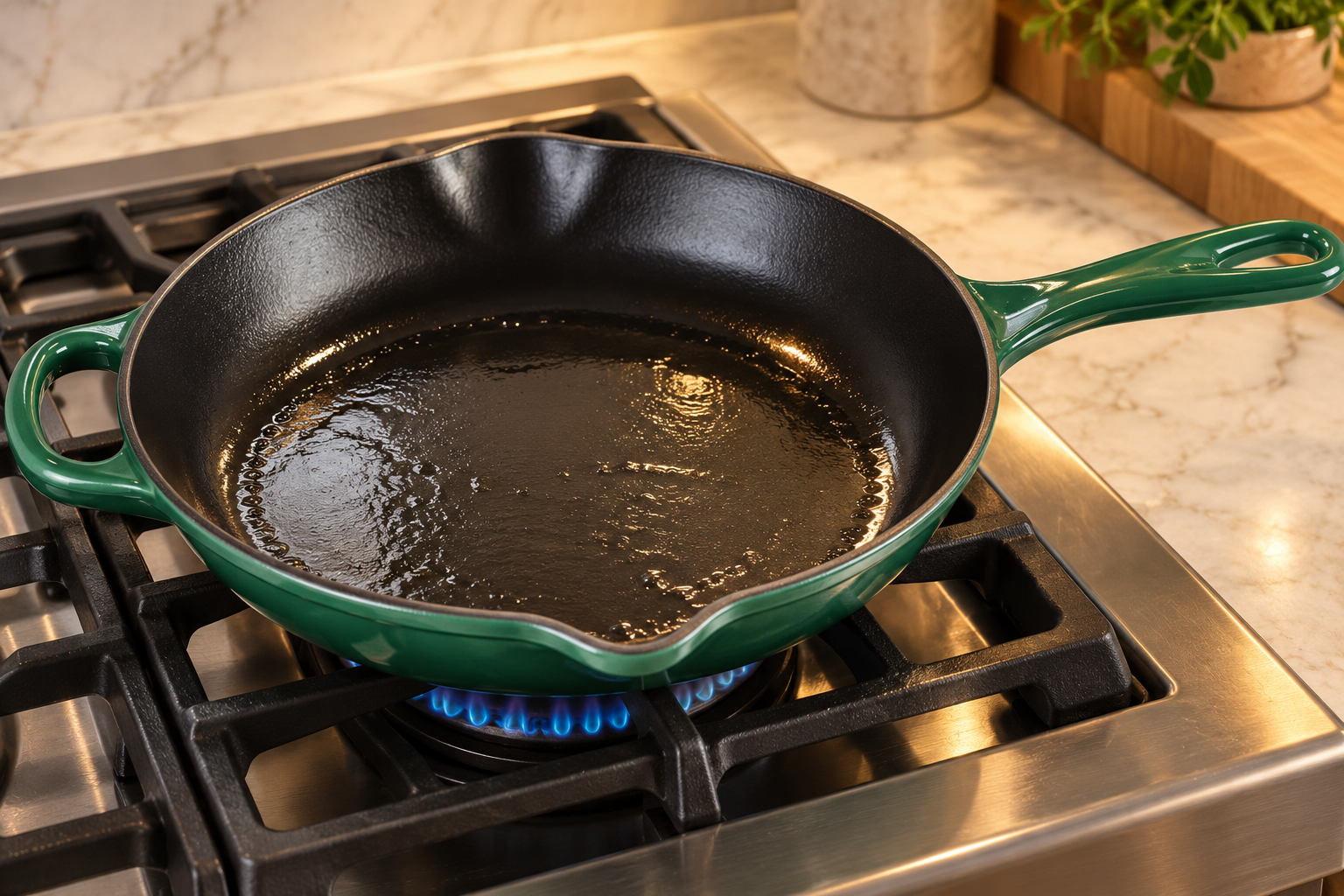
Add the rendered fat to a Le Creuset 10.25-inch Signature Skillet in Artichaut or another approved enameled cast-iron skillet. Heat it over medium until the fat is melted and forms a thin shimmering film across the black enameled interior.
The fat should look fluid and ready to sizzle around a leaf without smoking. This method does not need a deep pool. If the fat smokes, move the skillet off the burner briefly and lower the heat before continuing.
Add One Small Batch
Place one uncrowded batch of dry sage leaves into the hot fat. Stay at the stove and begin counting immediately. The leaves should sizzle on contact without disappearing beneath a deep layer of fat.
Do not load all 30 to 40 leaves at once. Overlapping leaves steam one another and cannot all reach the same endpoint within seven seconds.
Remove at Five to Seven Seconds
Lift the leaves out with stainless-steel tongs after five to seven seconds. They should be darker green, lightly blistered, and beginning to curl while remaining intact. There is no extra flip or 30-to-60-second extension in this formula.
The window is narrow. If the leaves are turning brown, they have stayed in too long or the skillet is too hot. Remove the whole batch immediately rather than waiting for every leaf to look identical.
Drain and Salt Immediately
Spread the fried leaves in a loose layer on the prepared linen. The leaves should rest separately enough for surface fat and steam to escape. Sprinkle mineral salt over them while they are still hot.
The source does not provide a measured salt amount. Season to taste. Salt should cling in small crystals and sharpen the sage flavor rather than form a heavy coating.
Repeat With the Remaining Leaves
Let the fat return to the same hot, nonsmoking state before adding another small batch. Continue until all 30 to 40 leaves are fried. Add a small amount of the same rendered fat only if the skillet no longer carries a thin cooking film.
Keep each batch separate on the linen until its surface sheen has drained. Piling hot leaves into one mound traps steam and softens the crisp edges.
Recognize the Finished Texture
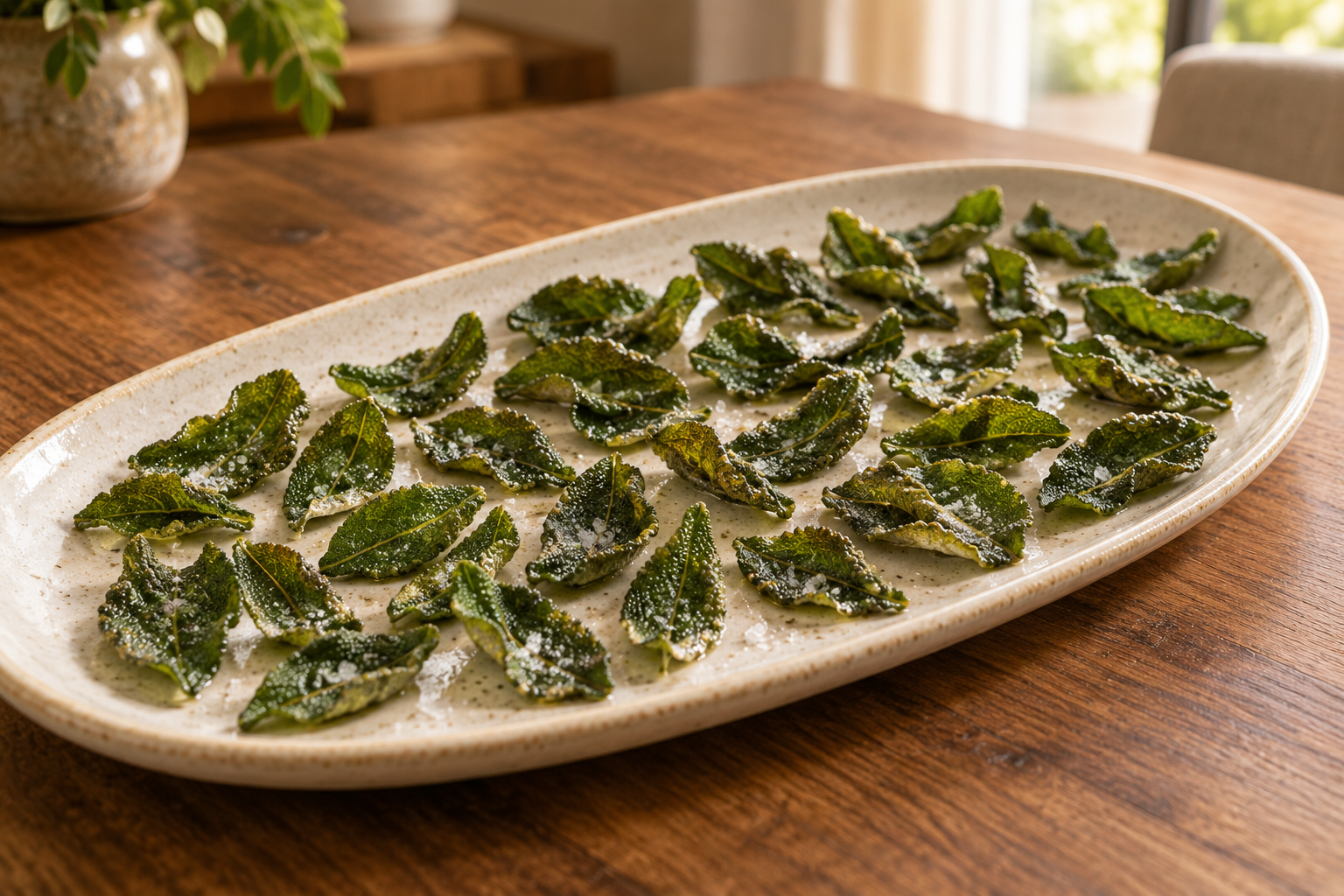
The finished leaves should remain recognizably sage-shaped. They are dark green and delicately crisp, with curled edges and fine blistering. They may glisten lightly from the rendered fat but should not sit in a puddle.
The flavor is concentrated, salty, and savory. Bacon fat gives a smokier meat note only when the original bacon itself is qualifying; another rendered animal fat keeps the sage flavor more forward.
Fast Cast Iron Fried Sage for Full GAPS
Ingredients
Equipment
Method
- Clip 30 to 40 fresh sage leaves from their stems and make sure they are fully dry.
- Line a heat-safe plate or tray with a clean undyed linen towel. Keep stainless-steel tongs and mineral salt beside the stove.
- Heat 2 to 3 tablespoons qualifying bacon fat or rendered animal fat in an enameled cast-iron skillet over medium until it forms a thin shimmering film and is hot but not smoking.
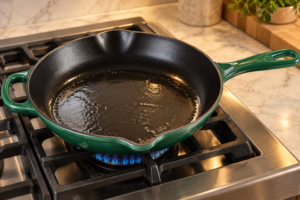
- Add one small uncrowded batch of sage leaves and stay at the stove. Fry for 5 to 7 seconds.
- Remove the batch immediately with stainless-steel tongs when the leaves are darker green, lightly blistered, intact, and beginning to curl without browning. Transfer to the clean linen towel.
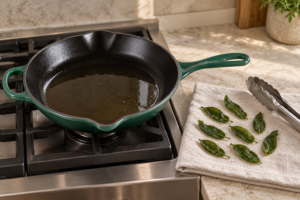
- Sprinkle the hot leaves with mineral salt to taste.
- Repeat with small batches until all 30 to 40 leaves are fried, letting the fat return to the same hot, nonsmoking state between batches and adding a small amount of the same fat only if the thin cooking film is gone.
Notes
Tried this recipe?
Let us know how it was!Troubleshooting a Five-Second Fry
If the leaves are still completely soft at seven seconds, the fat was not hot enough or the batch was crowded. Let the skillet return to the immediate-sizzle point and use fewer leaves in the next batch. Do not simply leave the same leaves in for a full minute and turn this into the other formula.
If the leaves brown before five seconds, the pan is too hot. Remove it from the burner, lower the heat, and wait for any smoke to clear. The desired change is fresh green to deeper crisp green, not brown or black.
If finished leaves soften on the plate, spread the next batch farther apart on the linen. Leaves that overlap while hot hold steam between them.
Keep the Two Fried-Sage Methods Separate
The finished leaves can look similar on the table, but the process is not interchangeable. This method begins with a counted 30-to-40-leaf yield, two to three tablespoons rendered animal fat, medium heat in cast iron, and a five-to-seven-second removal. The companion method starts with one whole bunch, uses one-quarter cup cooking fat, fries about five leaves for 30 to 60 seconds, and flips them once.
Choosing one route before heating the skillet prevents the common mistake of using the smaller amount of fat with the longer time or leaving this cast-iron batch in the pan while waiting for the other recipe’s slower sizzle cue. Use the ingredient list, skillet, and timer from the same card all the way through.
If leaf size makes one small batch look crowded, reduce the number in that panful. Keep the source total of 30 to 40 leaves for the complete yield while protecting the uncrowded contact that makes the five-to-seven-second method work.
Full GAPS Placement
This is a Full GAPS recipe after fresh sage, the chosen rendered animal fat, and mineral salt are appropriate and tolerated. It is naturally free from grains, nuts, eggs, and dairy when the rendered fat contains no dairy.
Qualifying bacon fat depends on the bacon itself. Use only additive-free bacon that fits the current ingredient rules, or choose another allowed rendered animal fat.
Ways to Serve the Crisp Leaves
Use the sage over Sausage Stuffing with Cauliflower and Pecans, Butternut Squash Casserole with Pecan Crumb, or Baked Herb Meatballs. A few leaves also add crisp contrast to a smooth Full GAPS soup.
Serve a larger portion as a snack while the leaves are freshly crisp. The rendered-fat flavor makes this version especially savory.
Storage
The source gives no tested storage duration or reheating method. Make this recipe close to serving and judge it by its immediate crisp endpoint. Do not promise that refrigeration will preserve the same delicate texture.
A storage or reheating variation would need its own supported method. It does not belong as an improvised instruction in this card.
Recommended Equipment
- Le Creuset 10.25-inch Signature Skillet in Artichaut, or another approved enameled cast-iron skillet
- Stainless-steel tongs
- Clean undyed linen towel
- Heat-safe plate or tray
- Tablespoon measure
Frequently Asked Questions
Why Is This Version Only Five to Seven Seconds?
It is a separate measured cast-iron method using two to three tablespoons rendered fat. Follow its own timing instead of averaging it with the longer flip-once recipe.
Can I Use the Whole 30-to-40-Leaf Batch at Once?
No. The count describes total yield. Fry small uncrowded batches so every leaf can be removed at the same immediate endpoint.
Can I Use Olive Oil?
No heated plant oil belongs in this formula. Use qualifying bacon fat or another allowed rendered animal fat.
Do I Flip the Leaves?
The source method does not call for a flip. Add the small batch, stay close, and remove it at five to seven seconds.
Can I Use Dried Sage?
No. The leaf count, moisture cue, timing, and photographs are built for fresh whole sage leaves.
How Much Salt Should I Add?
Salt is to taste. Sprinkle mineral salt immediately after each batch reaches the linen so it adheres while the leaves are warm.
Bring the Holiday Meal Together
Fast fried sage can be the last detail on a larger Full GAPS feast. Visit the Well Fed & Lived In shop for the upcoming Holiday Menu & Prep Timeline and Holidays on GAPS resources.

Leave a comment