

This fresh herb vinaigrette turns one cup of raw extra-virgin olive oil into a bright, savory dressing with raw apple cider vinegar, fresh sage, garlic, pure mustard powder, mineral salt and white pepper. Shake the jar until the clear layers become cloudy and the herbs stay suspended through the golden dressing.
The sage branch is earthy and clean without becoming heavy. Dill or rosemary can take the same one-tablespoon position when that is the herb you have, but each batch uses one measured herb rather than combining all three.
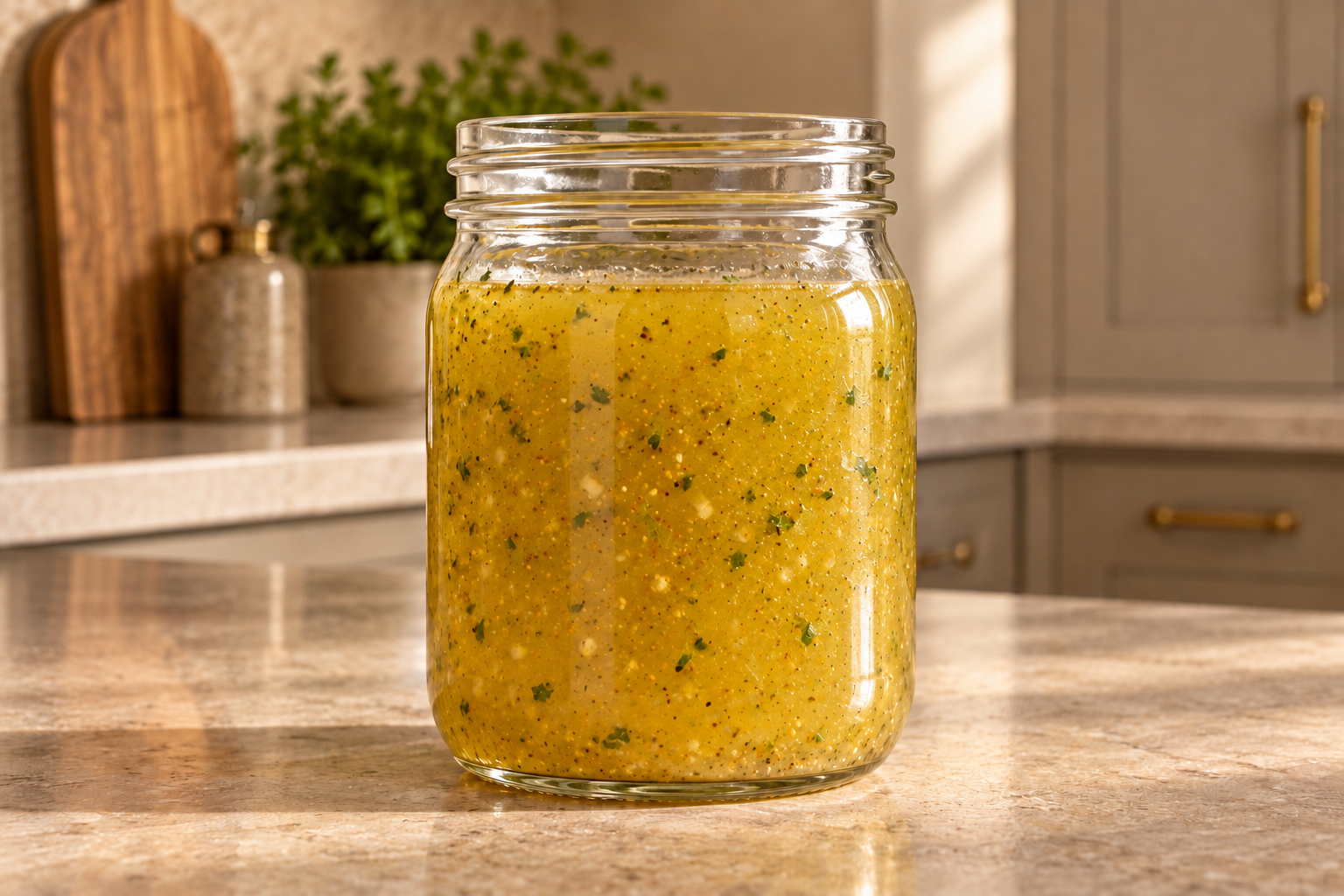
A Dressing That Earns Its Place in the Refrigerator
With six kids, homeschooling and second-shift work in the same week, I do not need a complicated dressing that creates another project at dinner. A jar I can measure, shake and use again is useful because it makes a plain bowl of vegetables feel finished without adding a pan to the stove.
Homemade also keeps the ingredient list visible. There is no prepared dressing label to decode, and this GAPS version does not depend on a sweetener, starch, gum or bottled flavor blend. The mustard is pure powder, the vinegar is raw apple cider vinegar and the oil stays raw.
Choose One Fresh Herb
The photographed batch uses one tablespoon of finely minced fresh sage. Sage brings an earthy, slightly piney edge that stands up to garlic and vinegar. Chop it small enough that the leaves move with the vinaigrette instead of collecting as broad pieces at the bottom of the jar.
Fresh dill or fresh rosemary can replace the sage in the same one-tablespoon measure. Dill makes the dressing lighter and grassy; rosemary is sharper and more resinous. Do not add a tablespoon of every herb. That would triple the measured fresh-herb amount and turn a fluid dressing into an herb-heavy sauce.
Use a single complete branch so the sensory cues stay clear. The sage version should smell like olive oil, cider vinegar, garlic and fresh sage. A dill or rosemary batch should smell distinctly of that chosen herb, not a mixed bouquet whose balance is hard to repeat.
The Exact Full GAPS Ingredient Changes
Use raw apple cider vinegar for the measured two tablespoons. Balsamic vinegar belongs to another version and is not used here. Use one-half teaspoon pure mustard powder instead of the tablespoon of Dijon. The powder must contain mustard only, without starch, sugar, anticaking agents or a seasoning blend.
Choose raw extra-virgin olive oil, preferably cold-pressed and unfiltered. This is a cold recipe, so the oil never goes on heat. Mineral salt, fresh garlic and pure white pepper complete the photographed branch. Freshly ground black pepper can replace white pepper in the same quarter-teaspoon measure.
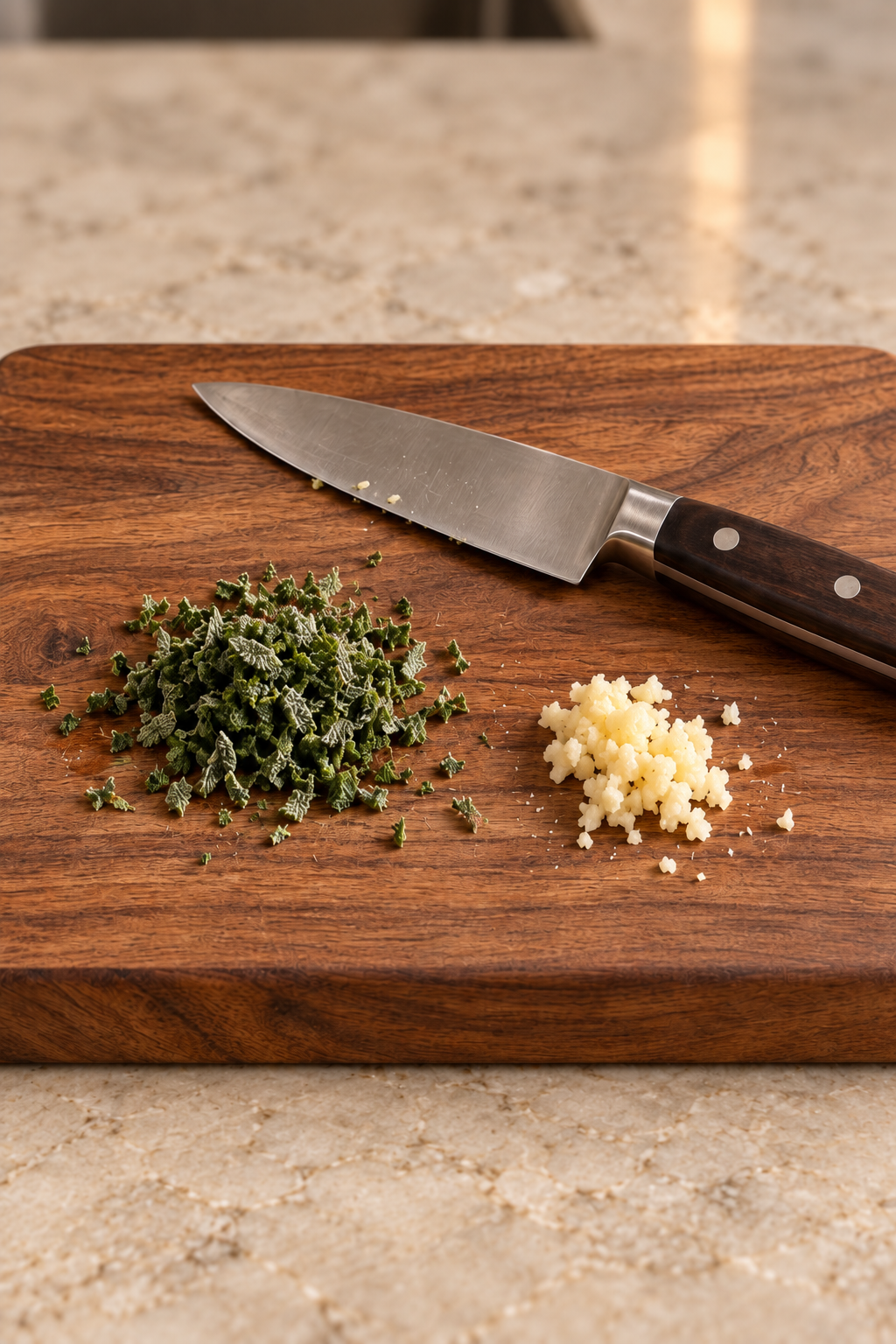
Mince the Sage and Garlic Finely
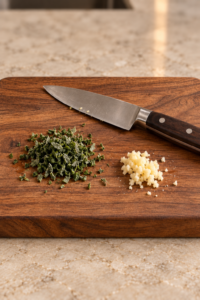
Pull the sage leaves from any tough stems, then chop until the pieces are small and fairly even. Measure one tablespoon after chopping. Crush or finely mince one garlic clove. Large garlic cubes taste harsh in a spoonful and drop quickly to the bottom; fine pieces distribute more evenly.
The cutting board should show two modest piles, not handfuls of herbs and garlic. This formula uses one tablespoon sage and one clove garlic against more than a cup of liquid. Keeping that scale visible is the easiest way to preserve a pourable vinaigrette.
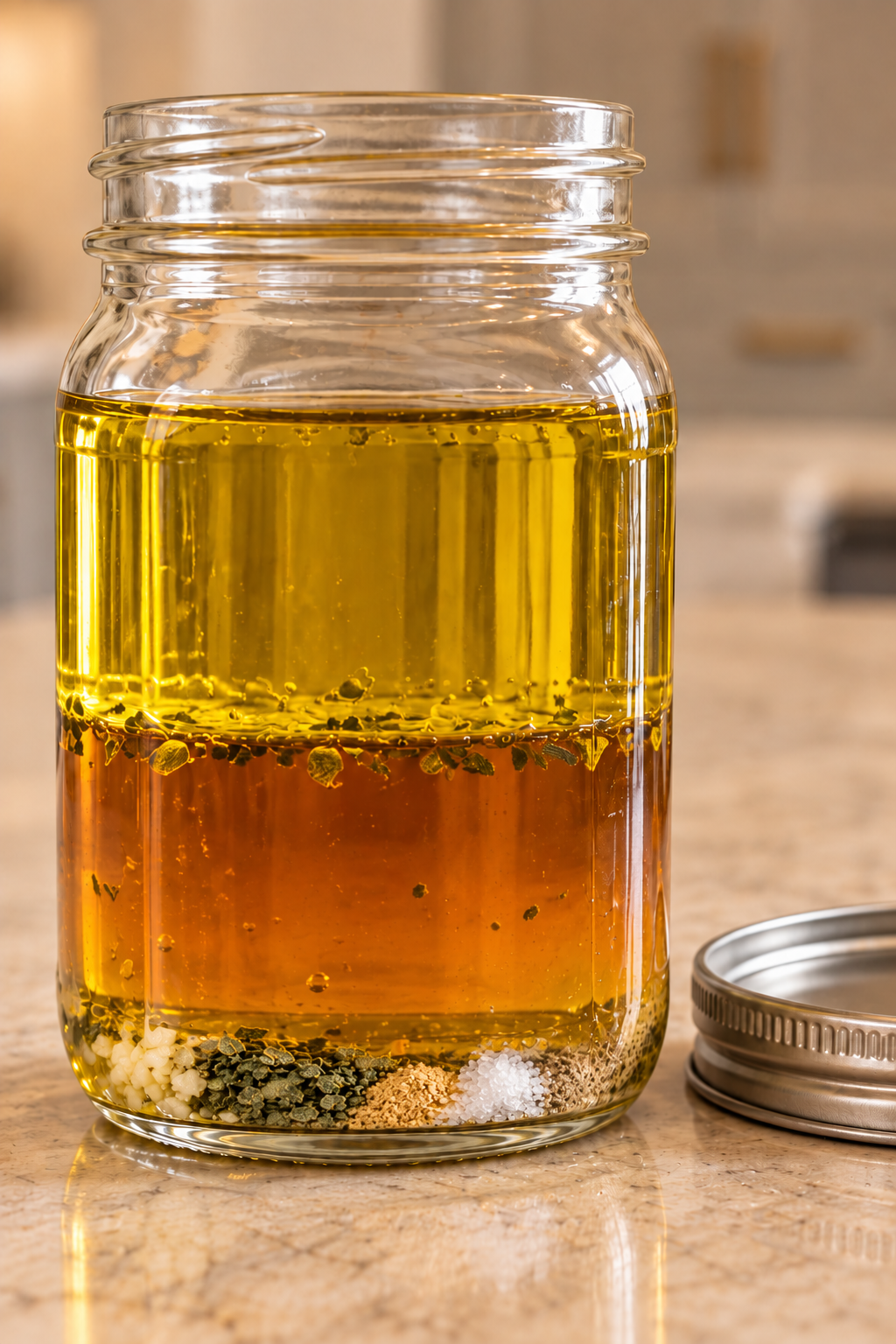
Layer the Jar Before Shaking
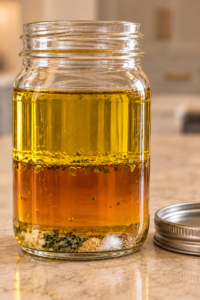
Add the vinegar, minced sage, mustard powder, garlic, salt and pepper to the jar first. Pour the olive oil over them and close the lid tightly. Before shaking, the jar should show two clear liquid zones: golden oil above the amber vinegar, with the measured aromatics resting low in the jar.
That separation is normal. Oil and vinegar do not stay combined on their own. The mustard powder and vigorous shaking help break the oil into small droplets so the dressing becomes temporarily emulsified.
Use a jar with enough empty space for the liquid to travel from end to end. If the jar is filled to the rim, the ingredients slide as one heavy mass instead of striking the lid and breaking into smaller droplets. Check the seal before shaking; a lid that is merely resting on the threads will send oil and vinegar across the counter.
Shake Until the Dressing Turns Cloudy
Hold the closed jar securely and shake vigorously. Keep going until the hard line between oil and vinegar disappears, the color turns evenly golden and cloudy, and the sage and garlic flecks move through the whole jar. No dry mustard should remain as a pale patch at the bottom.
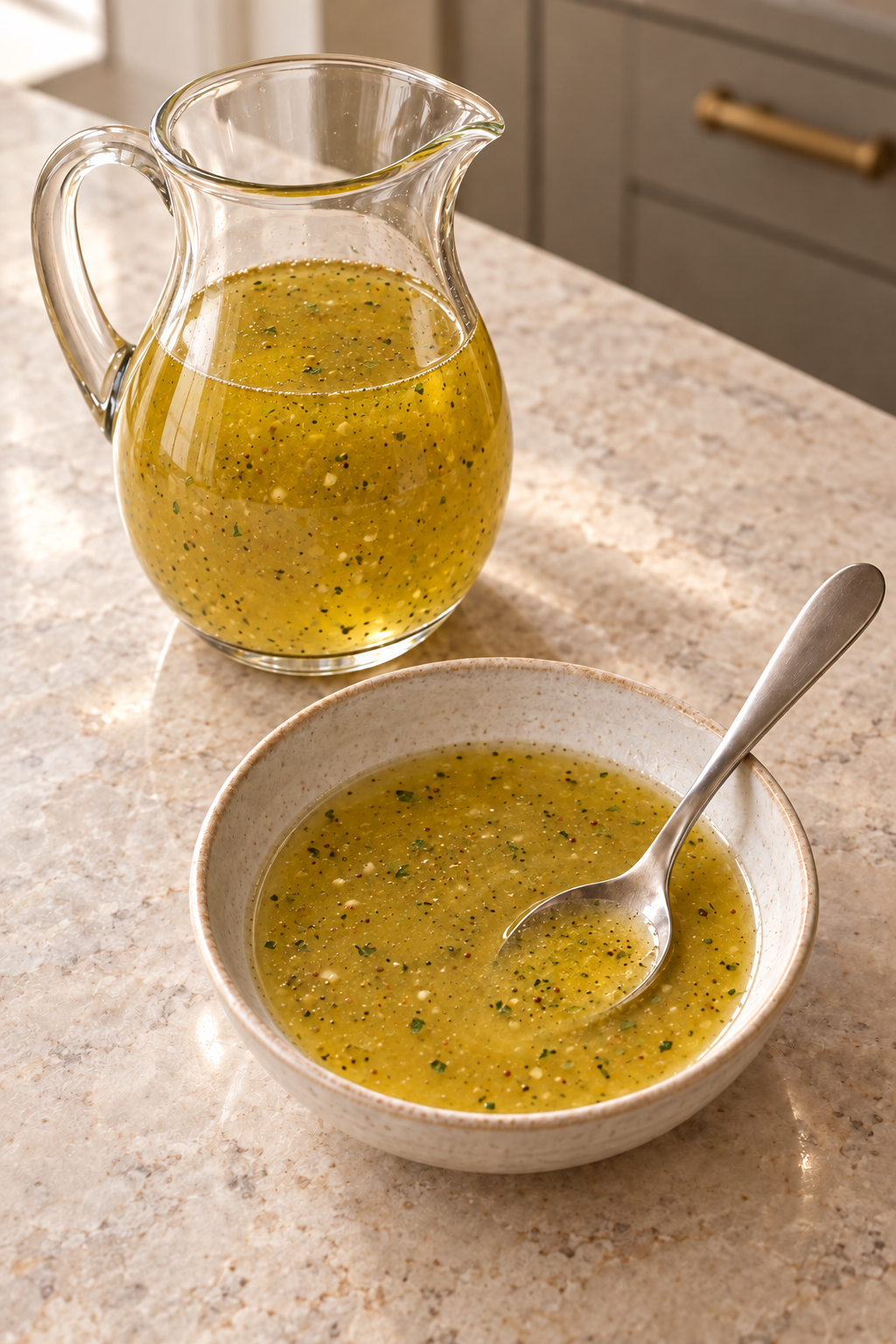
The dressing remains fluid. It should pour in a narrow stream and run back together after a spoon passes through it. If it stands in a thick mound like pesto or mayonnaise, the texture does not match this oil-and-vinegar formula.
Set the jar down for a moment after shaking. A thin layer of tiny bubbles may gather at the top, and the liquid below should stay evenly cloudy long enough to pour. Clear golden oil will gradually rise again as the jar rests. That does not mean the mustard failed; it means this is a simple shaken vinaigrette rather than a permanently stabilized commercial dressing.
For a bowl method, whisk the same ingredients until they look evenly cloudy and flecked. For a finer emulsion, blend the measured ingredients for exactly fifteen seconds. Those are mixing techniques for the same recipe, not extra dressing formulas.
What the Finished Vinaigrette Should Look and Taste Like
The color is golden with a green cast from the sage and small dark pepper specks. Tiny garlic pieces may be visible, but there should not be large white chunks. Fresh sage stays recognizable as fine green flecks rather than disappearing into a smooth green purée.
The first taste is olive oil and cider acidity, followed by garlic, mustard and the chosen herb. White pepper gives quiet warmth without the larger black flecks of freshly ground black pepper. Salt should sharpen the flavors rather than dominate them.
Smell the dressing before pouring it. Fresh sage should be clear but balanced by the vinegar and garlic. If one spoonful contains nearly all the herb flecks while the pitcher looks bare, shake again. Even distribution matters more than making the vinaigrette look perfectly smooth.
Where This Vinaigrette Fits on GAPS
This is a Full GAPS salad dressing. It uses raw olive oil, raw apple cider vinegar, fresh herb, pure mustard powder, garlic, mineral salt and pepper. It is not presented as an early Introduction Diet recipe because it brings together raw oil, vinegar, garlic, pepper and fresh herb in one cold dressing.
Use it after the individual ingredients are already established for the person eating it. The sage, dill and rosemary choices do not change the Full GAPS placement, but they do change the finished flavor enough that one measured herb branch should be chosen at a time.
How to Serve Fresh Herb Vinaigrette
Use it on simple greens, cucumber, tomato or a composed salad that needs acidity and fat. It also works beside the blueberry chicken chopped salad when you want an herb-forward dressing instead of that recipe’s measured dressing.
For serving, bring the closed jar to the table and shake it immediately before spooning or pouring. Dress only the portion of salad being eaten. Greens kept separately stay crisp, while the remaining vinaigrette can return to the refrigerator in the same covered jar.
For a sweeter mustard dressing, keep this formula separate and make the Full GAPS honey mustard vinaigrette. For a complete salad with its own cider dressing, use the Greek salad with feta and cider vinaigrette. Each link has its own measurements; do not average the formulas together.
Storage
Refrigerate the vinaigrette covered in its glass jar. The dressing keeps well when chilled, but this recipe does not provide a tested number of days, so this post does not invent one. Label the jar with the date and make the fifteen-serving batch when it fits your meal plan.
Olive oil may become cloudy or thicken when cold. Let the closed jar sit briefly at room temperature until the oil loosens, then shake vigorously before serving. The return of a clear oil layer above the vinegar is ordinary separation, not a failed batch.
Keep the rim and threads clean so the lid closes securely for the next shake. If garlic or sage collects around the neck, wipe it back into the jar with a clean utensil before refrigerating. Store the dressing itself in glass rather than transferring it into an unlabeled squeeze bottle where the date and ingredient branch are easy to forget.
Recommended Equipment
Use a cutting board, sharp stainless knife, measuring cups and spoons, and a glass jar with a tight lid. A glass or ceramic bowl and stainless whisk work for the whisked method. Use a blender with glass or stainless food-contact surfaces only when choosing the fifteen-second blended technique.
Frequently Asked Questions
Can I Use Dijon Mustard?
Use one-half teaspoon pure mustard powder for this Full GAPS version. The tablespoon of Dijon belongs to another branch.
Can I Use Balsamic Vinegar?
No. Use two tablespoons raw apple cider vinegar for this measured GAPS formula.
Can I Combine Sage, Dill and Rosemary?
Choose one fresh herb and use one tablespoon. Combining a tablespoon of each would triple the intended herb amount.
Why Did My Dressing Separate?
Oil and vinegar naturally separate as the jar stands. Close the lid and shake again until the dressing turns evenly cloudy.
Why Is My Vinaigrette Too Thick?
Check that the herb was limited to one tablespoon and the mustard powder to one-half teaspoon. This dressing should remain fluid and pourable.
Can I Whisk It Instead of Shaking?
Yes. Whisk the same measured ingredients in a glass or ceramic bowl until evenly cloudy and flecked.
Fresh Herb Vinaigrette Recipe
Fresh Herb Vinaigrette for Full GAPS
Ingredients
Equipment
Method
- Finely mince the fresh sage and crush or mince the garlic. Measure one tablespoon of the prepared herb and one garlic clove.
- Add the apple cider vinegar, minced sage, mustard powder, garlic, mineral salt and white pepper to a clean glass jar.
- Pour in the raw extra-virgin olive oil. Close the jar tightly.
- Shake vigorously until the dressing changes from clear layers to an evenly cloudy golden emulsion and the herb and garlic flecks are distributed throughout.
- Serve immediately or refrigerate covered. Shake again just before serving whenever clear oil begins collecting above the vinegar.
Notes
Tried this recipe?
Let us know how it was!Keep Homemade Dressings Ready
The upcoming Weekly Kitchen Rhythm Planner is designed to place small repeatable jobs like dressings, ferments and make-ahead components into the week before dinner gets busy. Find current resources and release updates in the WFLI shop.

Leave a comment