

This creamy lemon mint pesto is bright, fresh, and much softer in flavor than a bowl of raw mint leaves might suggest. A ten-second blanch keeps the mint green and takes the sharp edge off. Properly prepared pine nuts give the sauce body, while raw olive oil and fresh lemon turn it into a smooth Full GAPS condiment you can spoon over meat, fish, vegetables, or cauliflower rice.
The whole batch uses five measured ingredients. The method matters as much as the list. Blanch the mint quickly, chill it immediately, squeeze away the extra water, and keep the olive oil away from heat. Those four decisions give you pesto that is creamy rather than watery and fresh-tasting rather than cooked.
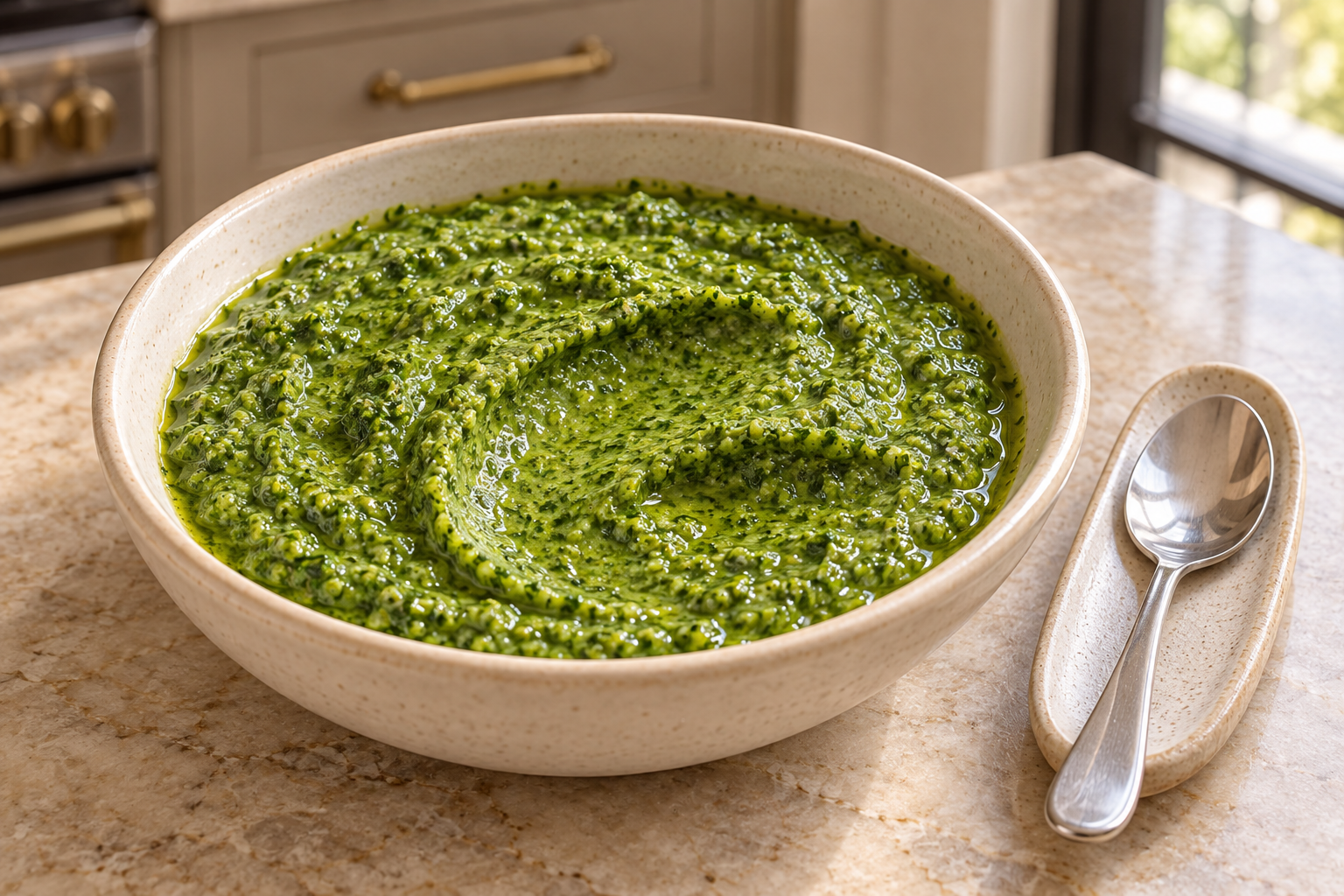
A Bright Sauce For A Busy Dinner
Our weekdays already hold breakfast, homeschool, work on the businesses, lunch, dinner, and then my second shift. I like a small homemade condiment that can make the meat and vegetables on the table feel finished without creating another full cooking project.
This pesto does that job. It comes together in about sixteen minutes once the pine nuts are prepared. The lemon wakes up a simple plate, and the blanched mint is mild enough that it does not turn every bite into mint tea. Make it when mint is abundant, then use measured spoonfuls with several meals.
What Each Ingredient Does
Fresh mint is the main flavor and color. Pack the leaves somewhat firmly into a two-cup measure after removing the thick stems. You should have about 1 1/2 to 2 ounces. Small tender petioles attached to the leaves are fine. Large tough stems do not belong in the measured batch.
Properly prepared pine nuts make the pesto creamy without cheese. Use one-quarter cup after the nuts have been soaked and sprouted or fermented, then fully dehydrated. Pine nuts go stale quickly, so smell and taste one before measuring. They should taste mild and buttery rather than sharp or paint-like.
Cold-pressed extra-virgin olive oil carries the mint and lemon across the sauce. Measure one-quarter cup and keep it raw. The olive oil goes into the food processor after the mint is blanched and cooled. It never goes into the saucepan.
Fresh lemon juice supplies the acid. Squeeze and measure two tablespoons. Bottled lemon juice can bring preservatives or a flat flavor that does not match this simple five-ingredient pesto.
Sea salt sharpens the finished sauce. Use one-quarter teaspoon of natural, unprocessed salt. This recipe does not use potassium salt blends.
Prepare The Pine Nuts Ahead
Pine nuts are seeds, so use them properly prepared for this Full GAPS recipe. Start with fresh pine nuts. Soak and sprout them when practical, or ferment them, then dehydrate them completely before storing or measuring for pesto.
The preparation happens before the fifteen-minute recipe clock begins. Keep the finished pine nuts dry and covered until you are ready to blend. Do not pour wet soaking nuts into the processor. Extra water changes the pesto texture and makes the storage guidance less useful.
This recipe uses only one-quarter cup, so it makes sense to prepare a larger batch of pine nuts for the pantry and measure what you need later. That keeps pesto day short without skipping the preparation step.
Blanch The Mint For Ten Seconds
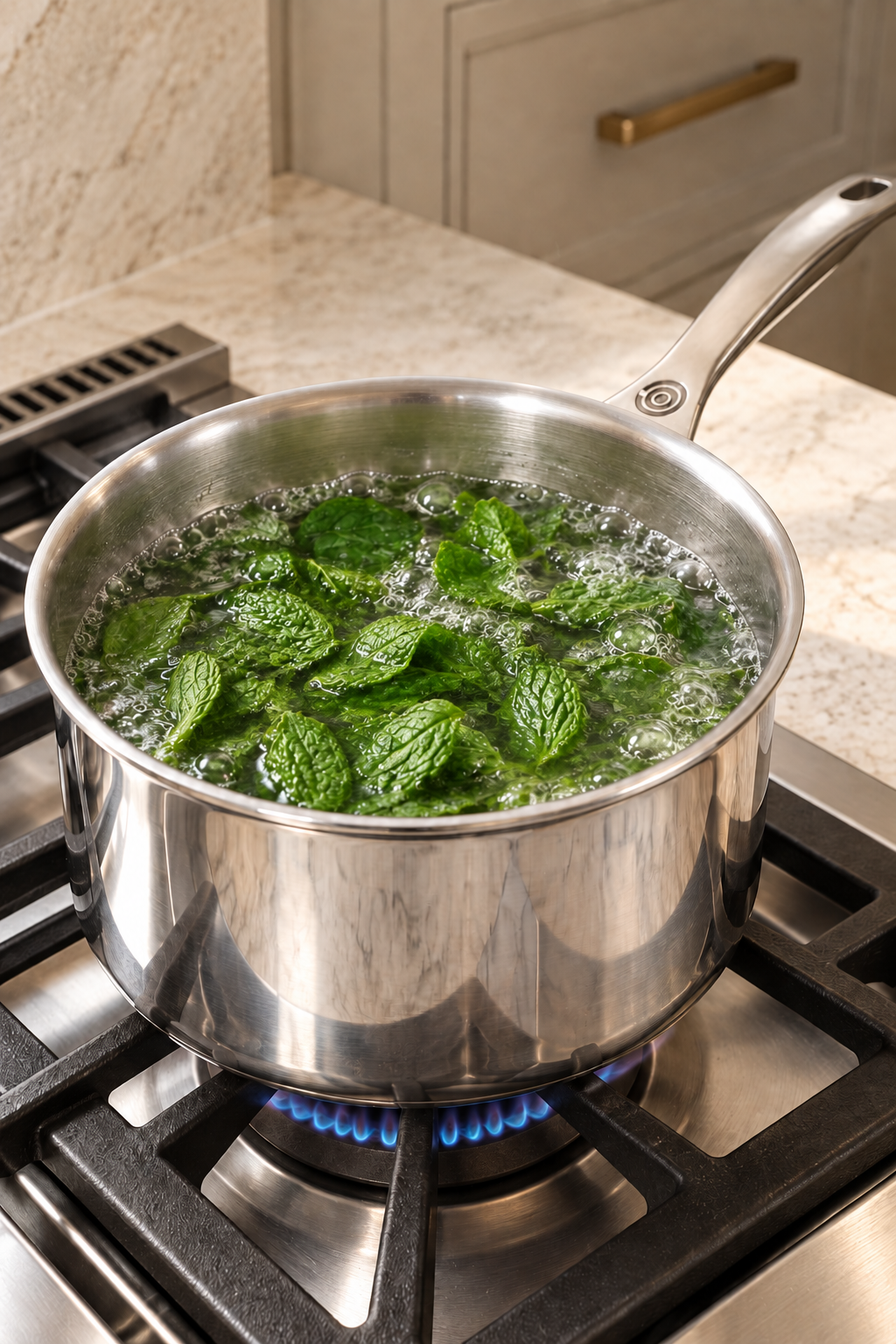
Bring a large saucepan of water to a full boil. Set a medium bowl of ice water beside the stove before the mint goes into the pan. The cold bowl needs to be ready because the blanch is measured in seconds.
Add the two packed cups of stemmed mint leaves. Stir them into the boiling water and count ten seconds. The leaves should collapse enough to fit under the water and turn an even vivid green. They should still look like mint leaves. Do not simmer them into dark, limp pieces.
Chill And Squeeze The Mint
Use a slotted spoon to move the mint straight into the ice water. Stir the leaves through the cold water for about thirty seconds so the whole batch cools, including the leaves at the center.
Lift out the mint and squeeze away most of the water. The leaves should feel cool and damp, but water should not stream from them when you press. Too much water makes the pesto loose and dulls the oil-and-lemon balance.
You do not need to dry every leaf separately. Gather the mint into a compact handful, press firmly, loosen it once, and press again. That gives the food processor a cool, evenly damp batch without leaving a puddle in the bowl.
Blend Until Smooth And Creamy
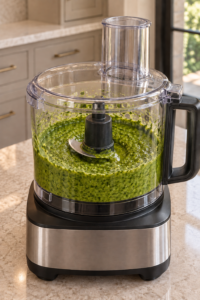
Put the squeezed mint in the food processor with the prepared pine nuts, raw olive oil, fresh lemon juice, and sea salt. Lock the lid and process until the mint pieces are very fine and the sauce looks creamy, about two minutes.
Watch the surface. At first, the leaves and nuts look separate and rough. As they break down, the pesto becomes evenly green and starts folding back toward the blade. The finished texture is thick enough to mound on a spoon, but soft enough to spread in a broad swoop. Small mint flecks remain visible. There should be no whole pine nuts or ribbons of leaf.
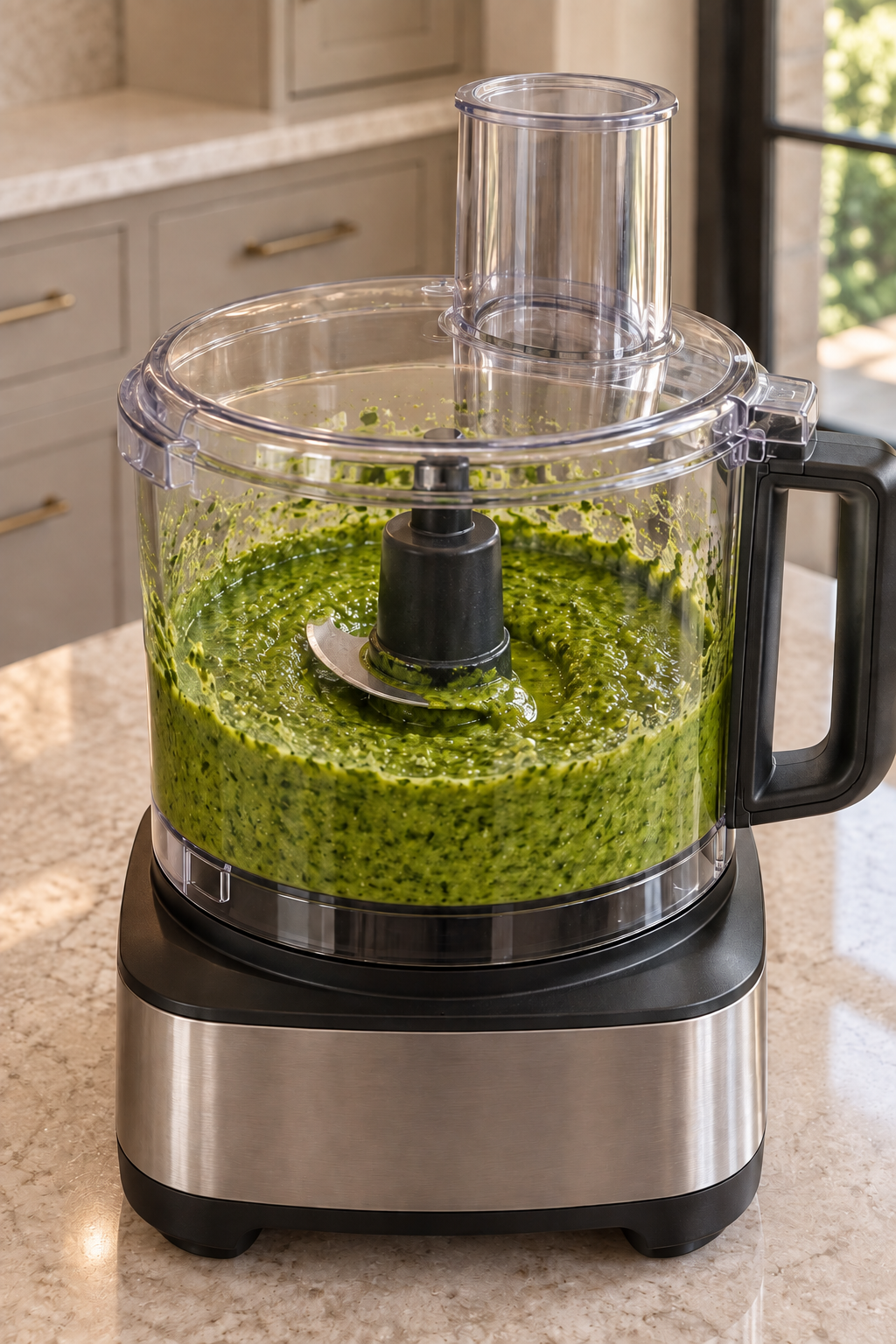
Taste the measured batch before changing anything. This recipe is intentionally lemony and mildly minty. Extra oil, nuts, lemon, or salt changes that balance, so keep the card amounts when you want the result shown here.
Where Lemon Mint Pesto Fits On GAPS
This exact recipe belongs on Full GAPS. It uses fresh mint, prepared pine nuts, raw cold-pressed olive oil, fresh lemon juice, and sea salt. It contains no dairy, garlic, grain, starch, commercial pesto, or added sweetener.
The ingredients appear at different points during the Introduction Diet. Olive oil begins in Stage 4 in small amounts and stays unheated. Raw plant foods, citrus, and prepared nuts come later. That does not turn this complete pesto into an early-stage recipe. Use it on Full GAPS after each ingredient is already tolerated.
Keep the sauce raw after blending. Spoon it onto food after cooking rather than heating it in the pan. That protects the cold-pressed olive oil and preserves the fresh green flavor.
How To Serve Lemon Mint Pesto
Spoon it over roasted or grilled lamb, chicken, or fish after the meat comes off the heat. It also works over warm zucchini, cauliflower, carrots, or green beans. The warmth loosens the pesto slightly without cooking it.
For an easy bowl, add a small spoonful to Full GAPS steamed cauliflower rice and serve it beside meat or eggs. You can also use it as a second sauce option with the Full GAPS Greek beef or lamb bowls.
If you are building a condiment rotation, keep this one beside the Full GAPS cilantro lime ranch and raw honey mustard vinaigrette. Each gives the same simple protein-and-vegetable dinner a different finish without combining several sauces into one post.

Storage And Freezing
Transfer the pesto to a clean glass jar, cover it, and refrigerate it for up to five days. Fresh pesto is bright green. The color becomes duller during storage even when the sauce is still within that window.
For longer storage, freeze the pesto in measured portions. Once firm, move the portions to a covered freezer-safe glass container and keep them frozen for up to twelve months. A one- or two-tablespoon portion is easier to thaw for a meal than one solid jar.
Thaw the portion you need in the refrigerator. Stir it after thawing because the olive oil can settle. Serve it cool or let it lose the refrigerator chill beside the meal. Do not heat it in a saucepan or microwave it until hot.
Frequently Asked Questions
Why Blanch Mint Before Making Pesto?
The ten-second blanch helps the mint stay green and softens its sharp raw flavor. The immediate ice-water bath stops the leaves from continuing to cook.
Can I Skip The Ice Bath?
Keep it. The thirty-second chill is what stops the brief blanch. Without it, the hot leaves continue softening and can lose the bright color you are trying to protect.
Can I Use Unsoaked Pine Nuts?
Use properly prepared pine nuts for this Full GAPS version. Prepare them ahead by soaking and sprouting or fermenting, then dry them completely before measuring.
Can I Heat The Pesto?
Use it as a finishing sauce. The olive oil is cold-pressed and stays raw. Spoon the pesto onto the cooked food after it leaves the heat.
Why Is My Pesto Watery?
The blanched mint probably held too much water. Squeeze until the leaves are damp without dripping before they go into the processor. Keep the oil, lemon, and pine nuts at their measured amounts.
Can I Replace The Mint With Basil?
Not in this recipe. Basil pesto has a different flavor, color, and ingredient balance. Keep it as a separate recipe instead of turning this mint pesto into a catch-all sauce.
Recommended Equipment
Use a stainless saucepan large enough for the mint to move through the boiling water, a medium bowl for ice water, a slotted spoon, and a food processor. You also need measuring cups and spoons, a citrus juicer, and a clean glass jar with a lid.
The saucepan handles the quick blanch. The food processor handles the final texture. A blender can trap this small batch below or beside the blades, so this recipe uses a food processor.
Creamy Lemon Mint Pesto Recipe
Creamy Lemon Mint Pesto for Full GAPS
Ingredients
Equipment
Method
- Bring a large saucepan of water to a boil. Set a medium bowl of ice water beside the stove.
- Stir the mint into the boiling water for 10 seconds, just until it wilts.
- Use a slotted spoon to transfer the mint to the ice water. Stir it through the ice water for about 30 seconds.
- Lift out the mint and squeeze out most of the water.
- Put the blanched mint, properly prepared pine nuts, raw olive oil, lemon juice, and sea salt in the food processor.
- Process until smooth and creamy and the mint pieces are very fine, about 2 minutes. Serve or transfer to a covered glass jar.
Notes
Tried this recipe?
Let us know how it was!Keep More Homemade Sauces Ready
The upcoming GAPS Food Swap Guide groups the homemade condiments and staples that replace the jars and bottles most families used before GAPS. Use it to see what to make ahead, what belongs in each stage, and which component recipe should be linked when another meal calls for it. Browse current resources and release updates in the WFLI shop.

Leave a comment