

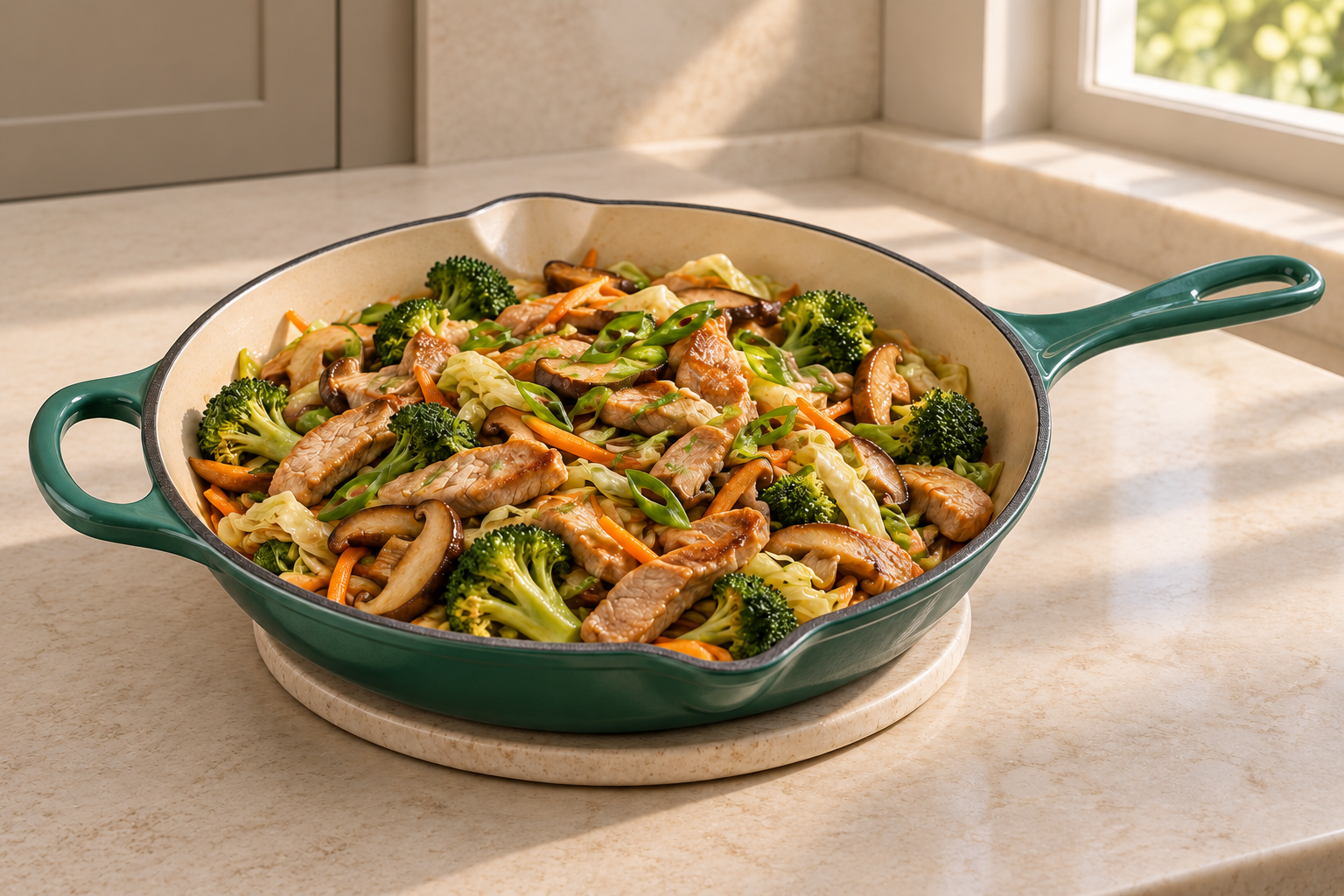
This Chinese Hot and Sour Pork Stir Fry brings thin pork, broccoli, cabbage, shiitake mushrooms, carrot, and green onions together in one pan. Fresh ginger and white pepper supply the heat. Apple cider vinegar supplies the sour finish. Coconut aminos and one cup of homemade meat stock make a light sauce that clings to the food without turning thick or glossy.
This Full GAPS version leaves out tapioca. It keeps the measured coconut aminos in the brief pork marinade, uses lard for the hot skillet, and uses finished raw-meaty meat stock in place of bone broth. Prep takes fifteen minutes, cooking takes twelve, and the recipe makes four servings.
Slice Everything Before The Skillet Gets Hot
Stir-fry cooking moves quickly, so cut every ingredient before the skillet goes over high heat. Slice one pound pork tenderloin across the grain into pieces about one-quarter to one-third inch thick. The pieces should be thin enough to cook in a few minutes but broad enough to stay distinct among the vegetables.
Cut twelve to sixteen ounces broccoli into small florets. Thinly slice one-half cabbage, about ten ounces. Slice one bunch green onions on the diagonal and keep the white pieces separate from the green tops. Remove the shiitake stems and slice four ounces caps. Cut the optional carrot into matchsticks.
With six children, homeschooling, and second-shift work shaping our week, this is the kind of dinner that only feels fast when the board is cleared before cooking begins. I can slice the vegetables earlier, refrigerate them in covered glass containers, and keep the pork separate. When dinner starts, the pan work stays close to twelve minutes instead of stopping halfway to look for the cabbage.
Marinate The Pork Without Tapioca
Put the sliced pork in a medium bowl. Add one-quarter cup pure additive-free coconut aminos, two tablespoons grated or minced fresh ginger, and one-quarter teaspoon white pepper. Toss until every slice looks lightly coated, then leave the bowl beside the stove while the vegetables are prepared.
Tapioca flour is omitted for this Full GAPS branch. Nothing replaces it. The finished sauce stays light, and the one-cup stock measure remains unchanged.
Use coconut aminos only when the current ingredient list is fully disclosed and contains no soy, grain, added sugar, starch, preservatives, flavor blends, or other non-GAPS ingredients. Do not replace it with soy sauce or tamari. The measured quarter cup is part of the marinade and the finished hot-and-sour balance.
Choose A Finished Homemade Meat Stock
Measure one cup of finished homemade raw-meaty meat stock. A mild chicken meat stock keeps the ginger and vinegar bright. A beef meat stock gives the sauce a deeper flavor. Choose one and use the full cup.
The stock is already complete before it enters the skillet. The three-minute simmer in this recipe seasons and softens the vegetables. It does not replace the separate meat-stock process or turn a commercial broth product into GAPS meat stock.
Heat The Artichaut Skillet Before Adding Lard
Set a large cast-iron skillet or wok over high heat. The photographed method uses the Le Creuset Signature 10.25-inch skillet in Artichaut, with the complete base supported on the burner. Heat the empty pan until it is hot but not smoking, then add two tablespoons lard.
The lard should melt quickly and spread into a thin sheen. If it smokes immediately, reduce the heat before adding food. Add the sliced shiitake caps and stir-fry for two minutes, until the edges soften and the cut surfaces turn glossy.
Stop The Vegetables At A Slight Wilt
Add the cabbage, broccoli, optional carrot, green-onion whites, and one-third of the measured sea salt. Stir over high heat for three to four minutes. Reduce the heat to medium if the pan begins to smoke or the vegetable edges darken too quickly.
The correct endpoint is a slight wilt. Cabbage ribbons bend and gloss over while keeping visible folds. Broccoli turns bright green and stays firm enough to hold each floret shape. Carrot matchsticks soften at the surface without going limp. The pan should not contain a pool of liquid yet.
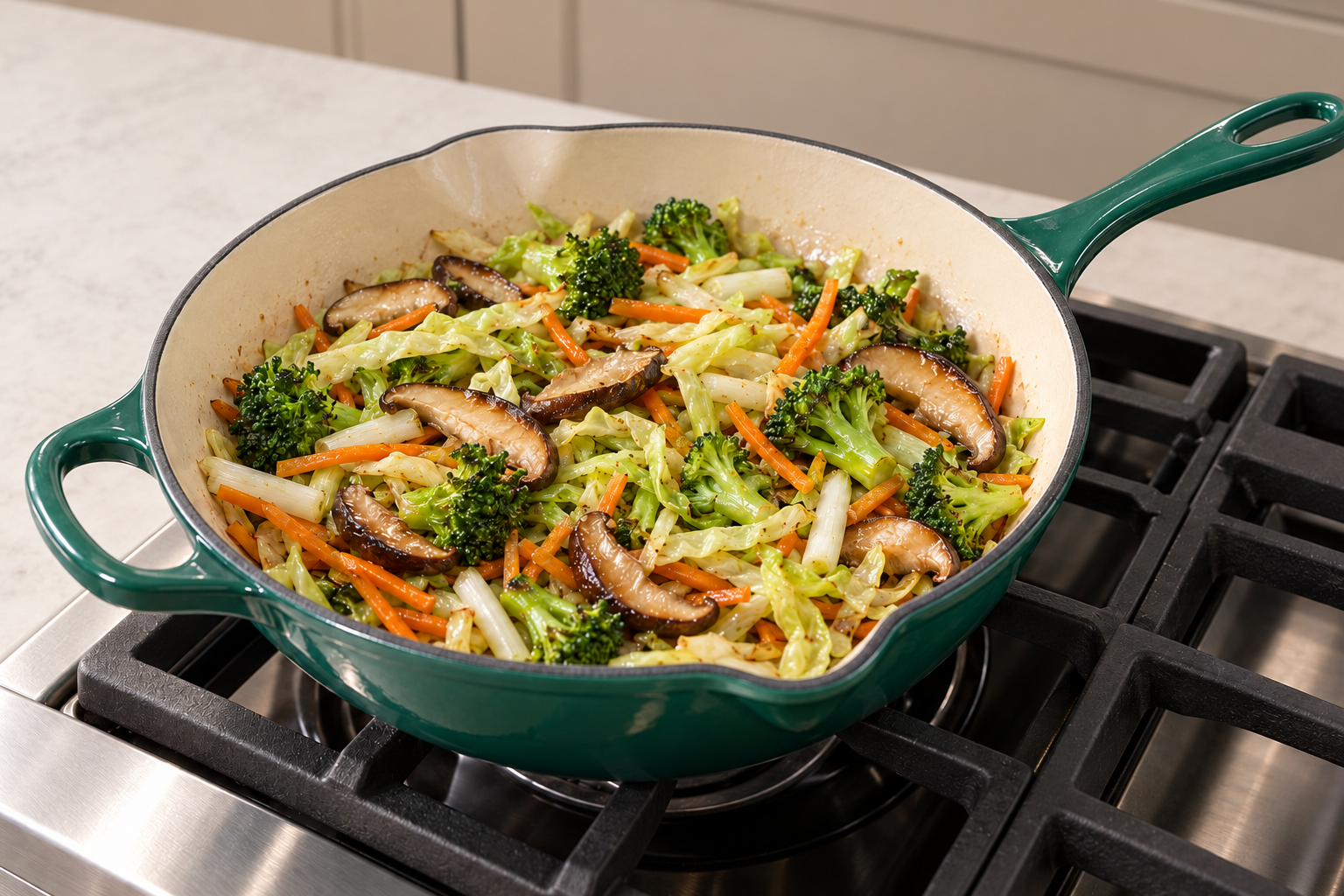
Stopping here matters because the vegetables cook again with stock and pork. If the cabbage collapses during the high-heat step, it will be soft by the time the meat is ready.
Use A Slow Simmer For The Stock
Pour the measured cup of meat stock into the skillet. Reduce the heat to medium or medium-low and maintain a slow simmer for three minutes, stirring occasionally. Look for small steady bubbles around the vegetables rather than a hard boil.
The stock will pick up coconut aminos and ginger from the pork in the next step. It should still look fluid now. Do not wait for it to become thick, and do not add a starch.
Separate The Pork As Soon As It Enters The Pan
Add the marinated pork and the remaining two-thirds of the sea salt. Stir immediately to pull the thin slices apart. Continue stirring several times during the three-to-four-minute simmer so no stack of pork cooks as one thick piece.
The pork is ready when every slice has lost its raw translucent gloss and the centers are opaque. The pieces remain separate, and the sauce begins to cling lightly to the meat and vegetables. Because the pork is thin, it moves from raw to cooked quickly. Stop before the edges become dry.
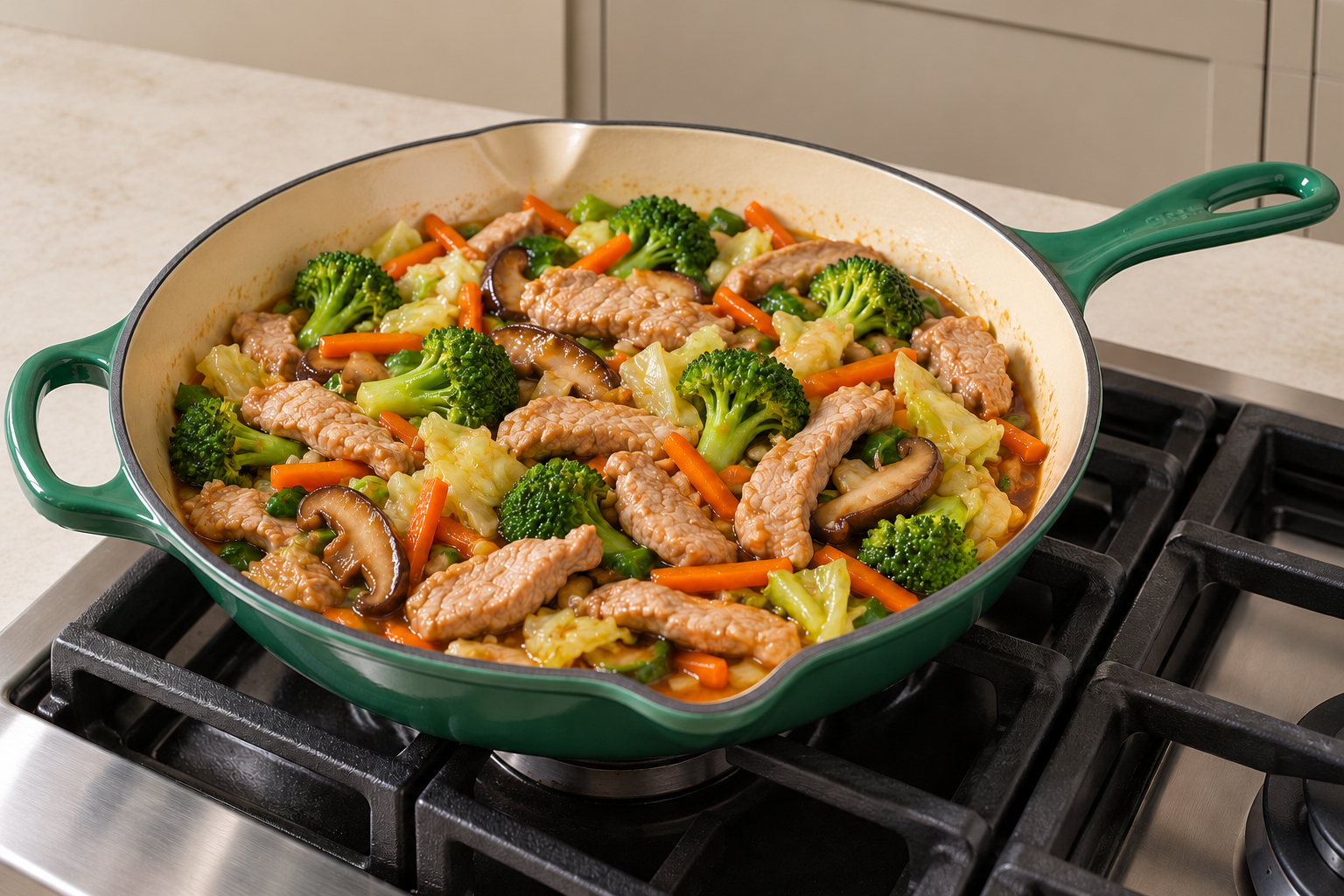
The liquid should coat the bottom of the pan without becoming a gelatinous glaze. That lighter texture is correct for the tapioca-free Full GAPS branch.
Add Vinegar After The Pan Leaves The Heat
Remove the skillet from the heat, add one tablespoon apple cider vinegar, and stir it through the hot food. Adding it at the end keeps the sour flavor clear instead of simmering it into the background.
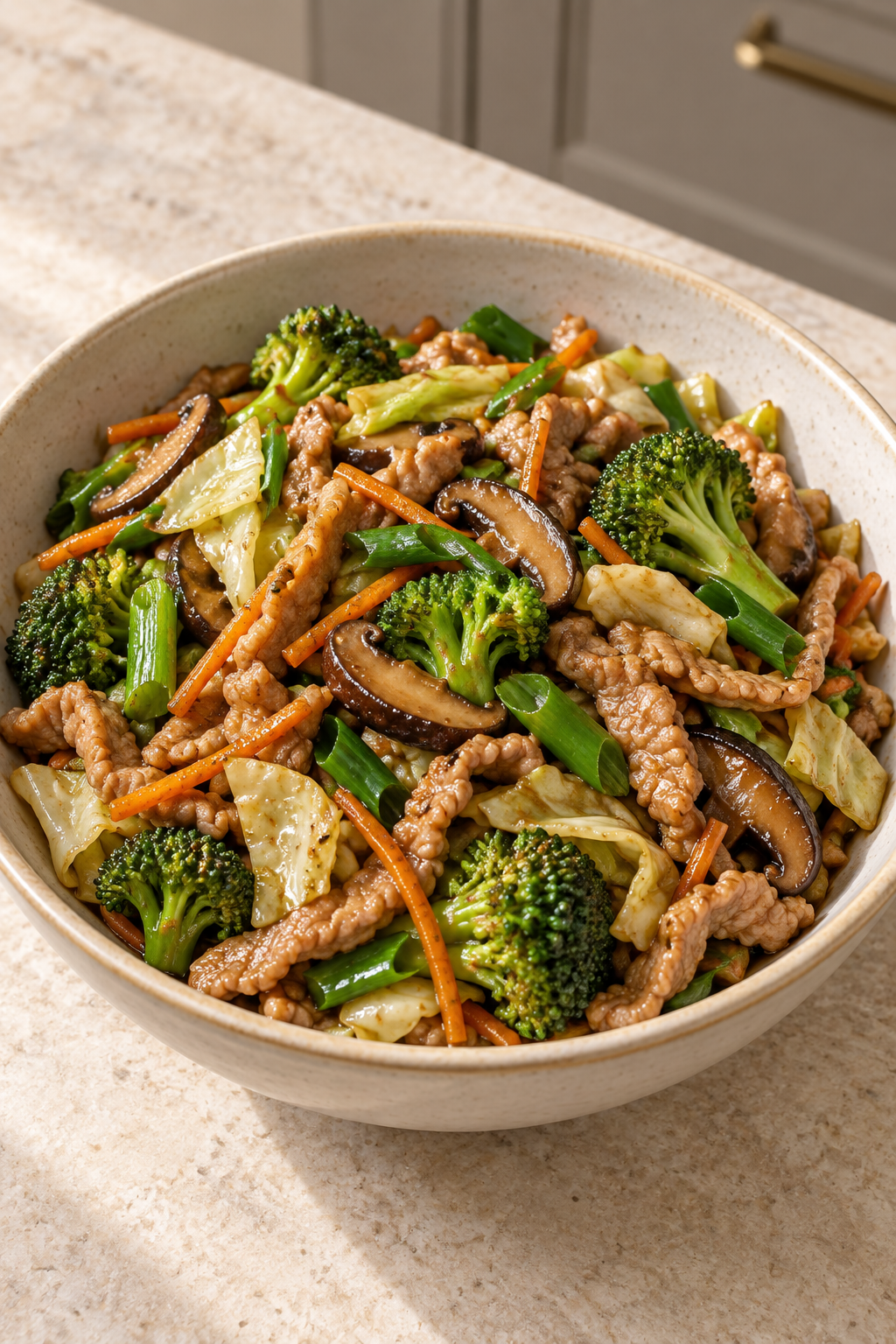
Scatter the reserved green-onion tops over the finished stir fry. The first taste should be savory from coconut aminos and stock, warm from ginger and white pepper, and distinctly sour at the finish. If one note overwhelms the others, check the exact measurements before adding anything else.
Serve the stir fry on its own or beside a separately prepared Full GAPS vegetable dish. This card does not add rice, packaged noodles, bean sprouts, bamboo shoots, chile, sesame, cilantro, or a nested cauliflower-rice recipe.
Where This Stir Fry Fits On GAPS
This is a Full GAPS dinner. It uses fresh pork, non-starchy vegetables, shiitake mushrooms, green onions, carrot, fresh ginger, apple cider vinegar, sea salt, white pepper, lard, pure coconut aminos, and homemade raw-meaty meat stock.
It is grain-free, egg-free, nut-free, and dairy-free as written. It is not an Introduction Diet recipe because the complete dish uses a high-heat stir-fry method, coconut aminos, vinegar, mushrooms, raw green-onion tops, and a broad Full GAPS vegetable combination.
The recipe does not use bone broth, tapioca flour, heated avocado oil, soy sauce, tamari, rice, noodles, commercial stir-fry sauce, or imported health and nutrition claims.
Serve It While The Vegetables Still Hold Their Shape
Divide the stir fry among four bowls or plates as soon as the green tops are added. Leaving it in the hot skillet continues softening the cabbage and broccoli even after the burner is off.
If you want another skillet dinner with broccoli, the Full GAPS Beef and Broccoli Stir Fry uses a different beef formula and sauce. For a cooler meal with a related flavor direction, the Asian Chicken Chopped Salad for Full GAPS keeps the vegetables crisp and uses its own dressing.
Storage And Reheating
Cool leftovers promptly and refrigerate them in a covered glass container. Store the finished stir fry without adding a separate side dish to the same container; extra moisture will soften the vegetables.
Reheat only until the pork is hot. A covered skillet over medium-low heat works well. Add a spoonful of finished meat stock only if the pan looks dry. Long reheating will continue cooking the thin pork and cabbage.
For make-ahead prep, slice the pork and vegetables earlier in the day and refrigerate them separately. Mix the marinade with the pork shortly before cooking so the fast sequence still begins with fresh-cut vegetables and a hot pan.
Recommended Equipment
Use a medium glass or ceramic bowl for the pork marinade, a large cast-iron skillet or wok, a cutting board, a sharp knife, measuring cups and spoons, and a broad wooden or stainless spatula. Keep the utensil resting on the counter or pan rim only when the heat is off; no tool needs to remain in the skillet.
The photographed skillet is the Le Creuset Signature 10.25-inch skillet in Artichaut. Use a larger skillet if the vegetables are crowded into a deep pile. A crowded pan traps steam and makes it harder to reach the slight-wilt cue before the stock is added.
Frequently Asked Questions
Why Is Tapioca Missing?
Tapioca flour is omitted for this Full GAPS version. Do not add gelatin, coconut flour, or another thickener in its place.
Can I Use Tamari Or Soy Sauce?
No. Use the measured pure additive-free coconut aminos. Tamari and soy sauce are not substitutions in this Full GAPS formula.
Can I Use Beef Instead Of Pork?
This card uses pork tenderloin. If you want to use thinly sliced lean beef, treat it as a separate variation and cook according to the actual slices rather than assuming the pork timing applies.
Is The Carrot Required?
One carrot is optional. This card and its photos include it, so the finished bowl shows carrot matchsticks. If you omit it, keep every other measurement unchanged.
How Do I Know The Pork Is Done?
The thin slices lose their raw translucent gloss, become opaque through the center, and remain separated. The sauce begins to cling lightly. Stop before the edges dry out.
Why Add The Vinegar Last?
Stirring it in after the skillet leaves the heat keeps the sour flavor distinct. It also prevents the vinegar from being mistaken for the stock added earlier in the method.
Chinese Hot And Sour Pork Stir Fry Recipe
Chinese Hot and Sour Pork Stir Fry for Full GAPS
Ingredients
Equipment
Method
- Combine the sliced pork, coconut aminos, fresh ginger and white pepper in a medium bowl. Toss until every slice is lightly coated, then marinate while the vegetables are prepared.
- Heat a large cast-iron skillet or wok over high heat until hot but not smoking. Add the lard. When it has melted into a thin sheen, add the shiitake caps and stir-fry for 2 minutes, until the edges begin to soften.
- Add the cabbage, broccoli, optional carrot, green-onion whites and one-third of the measured sea salt. Stir over high heat for 3 to 4 minutes, until the cabbage bends and glosses but still holds folds and the broccoli remains bright and shaped. Reduce to medium if the pan smokes.
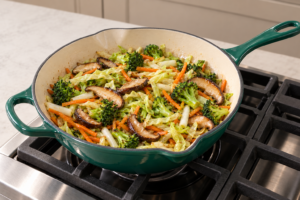
- Pour in the measured meat stock. Reduce to medium or medium-low and keep a slow simmer with small steady bubbles for 3 minutes, stirring occasionally. Do not reduce to a thick sauce.
- Add the marinated pork and the remaining two-thirds of the sea salt. Stir immediately to separate every slice. Simmer for 3 to 4 minutes, stirring several times, until the pork is opaque with no raw gloss and the light sauce begins to cling.
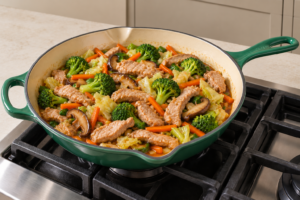
- Remove the skillet from the heat. Add the apple cider vinegar and stir it through the hot food so the sour flavor remains distinct.
- Scatter the reserved green-onion tops over the stir fry and serve immediately while the vegetables still hold their shape.
Notes
Tried this recipe?
Let us know how it was!Make Fast Dinners Easier To Repeat
A short list of one-pan dinners is useful when everyone needs to eat before the evening gets away from you. The Weekly Kitchen Rhythm Planner is the most relevant companion for mapping prep ahead of the nights that need a fast skillet meal. Find current and upcoming WFLI resources in the WFLI shop.

Leave a comment