

This butternut squash casserole gives you a soft, cinnamon-spiced center under a golden pecan crumb. The filling is smooth and rich from homemade coconut milk, eggs, raw honey, and coconut oil. The topping bakes into small nutty clumps without grain flour, refined sugar, or marshmallows.
You can bake it the day you assemble it or freeze the same unbaked casserole for later. That makes it useful for a holiday meal when oven time and counter space both matter. The measured formula fills a 9-by-13-inch dish and makes at least 12 servings.
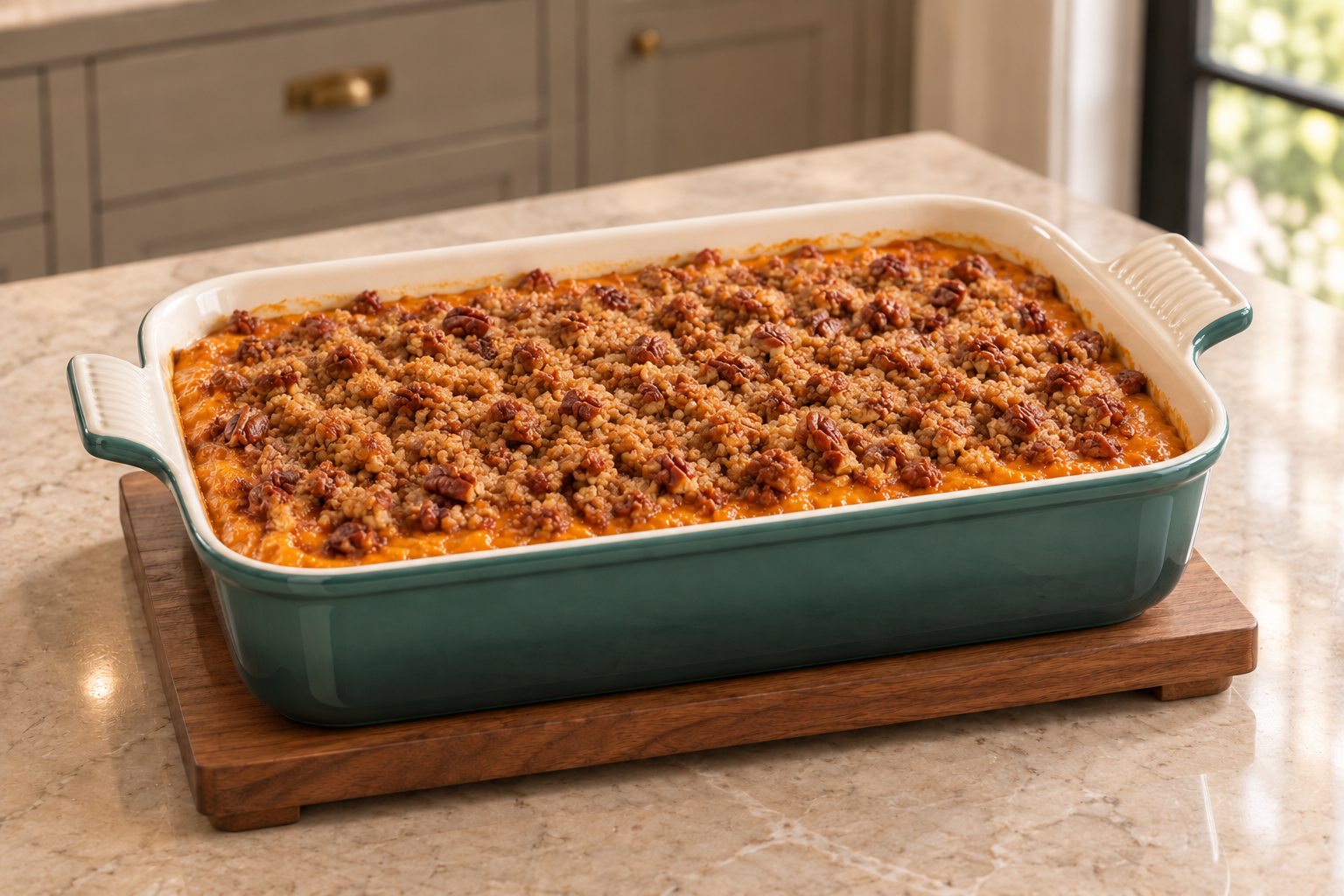
Why This Version Uses Butternut Squash
The original idea offers sweet potato or winter squash. This Full GAPS version uses butternut squash. Sweet potato remains outside Full GAPS, while butternut and other winter squashes are part of the GAPS food list. Butternut also gives the casserole a naturally sweet orange filling that works well with cinnamon, honey, and pecans.
Our GAPS Thanksgiving was not a copy of the traditional meal we used to make, but the family loved the food and the time together. That experience made me less interested in forcing an old side dish to look exactly the same. I would rather put a generous casserole on the table that fits how we actually eat now and still feels at home beside a holiday roast.
Use cooked butternut squash that has cooled before you measure it. The formula calls for eight loosely packed cups of large cooked chunks. If the squash is very watery, let excess liquid drain before measuring so the filling does not start thinner than intended.
Prepare the Pecans Before Casserole Day
The topping uses 2¼ cups properly prepared pecans. Nut preparation happens before the 30-minute recipe prep time. Start with fresh pecans, prepare them by your current GAPS soaking, sprouting, or fermentation method, then dry them completely before measuring for this recipe.
A cooled pecan should be dry and crisp through the center, without softness or chewiness. If the nuts are still damp, they will process into a heavy paste instead of a loose meal and the topping will not have the same crumbly structure. Store the finished dry pecans cold until you are ready to assemble the casserole.
Use the Homemade Components
The filling uses 1¾ cups of homemade coconut milk. Stir or shake the milk after chilling so the coconut fat is evenly mixed before measuring. This recipe does not use canned coconut milk.
The crumb needs three tablespoons of homemade coconut flour. Measure it level rather than packing it into the spoon. Coconut flour absorbs moisture quickly, which is why the topping mixture changes from separate ingredients into soft clumps after a few pulses.
Use one teaspoon of homemade vanilla extract with no added sugar or non-GAPS ingredients. Raw honey sweetens both layers: ½ cup in the squash filling and three tablespoons in the topping. Maple syrup and coconut sugar are not the sweeteners used in this Full GAPS formula.
Coconut oil supplies the measured fat in both parts. Melt the ⅔ cup for the filling, then let it cool enough that it does not cook the eggs on contact. The three tablespoons for the topping should be soft at room temperature rather than hot and fully liquid.
Blend the Filling Completely Smooth
Grease a 9-by-13-inch casserole dish with coconut oil. If you plan to bake right away, heat the oven to 325°F. Leave the oven off if the assembled casserole is going into the freezer.
Put the cooked butternut squash, homemade coconut milk, four eggs, ½ cup raw honey, melted coconut oil, homemade vanilla, one teaspoon sea salt, and one teaspoon cinnamon into a large food processor. A 14-cup bowl holds the batch; use two batches if your machine is smaller.
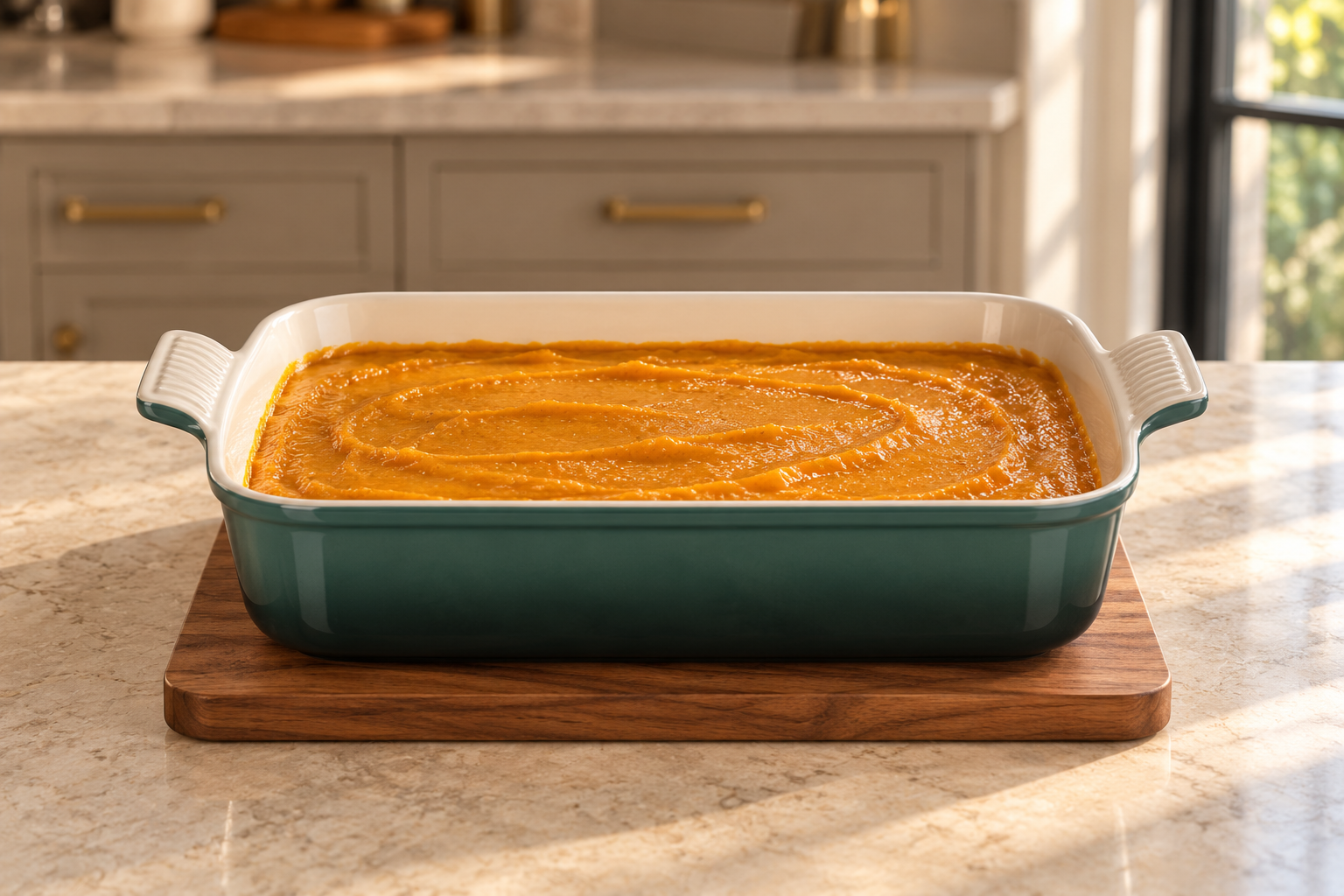
Puree for 30 to 50 seconds, stopping once to scrape down the sides with the machine off. The mixture is ready when it is uniformly deep orange and silky, with no pale egg streaks or visible squash pieces. Scrape the base of the processor bowl too, where dense squash can hide below the blade.
Pour the puree into the greased dish and smooth it into an even layer. The surface should reach the corners without climbing the sides of the dish.
Make a Pecan Crumb, Not Nut Butter
Clean and dry the food processor bowl before making the topping. Any water left in the bowl makes the nuts clump before the other ingredients are added.
Process the properly prepared pecans to a coarse meal. Stop while you can still see tiny nut pieces. If the meal begins turning glossy or sticking heavily to the bowl, it is moving toward pecan butter and has gone farther than the crumb needs.
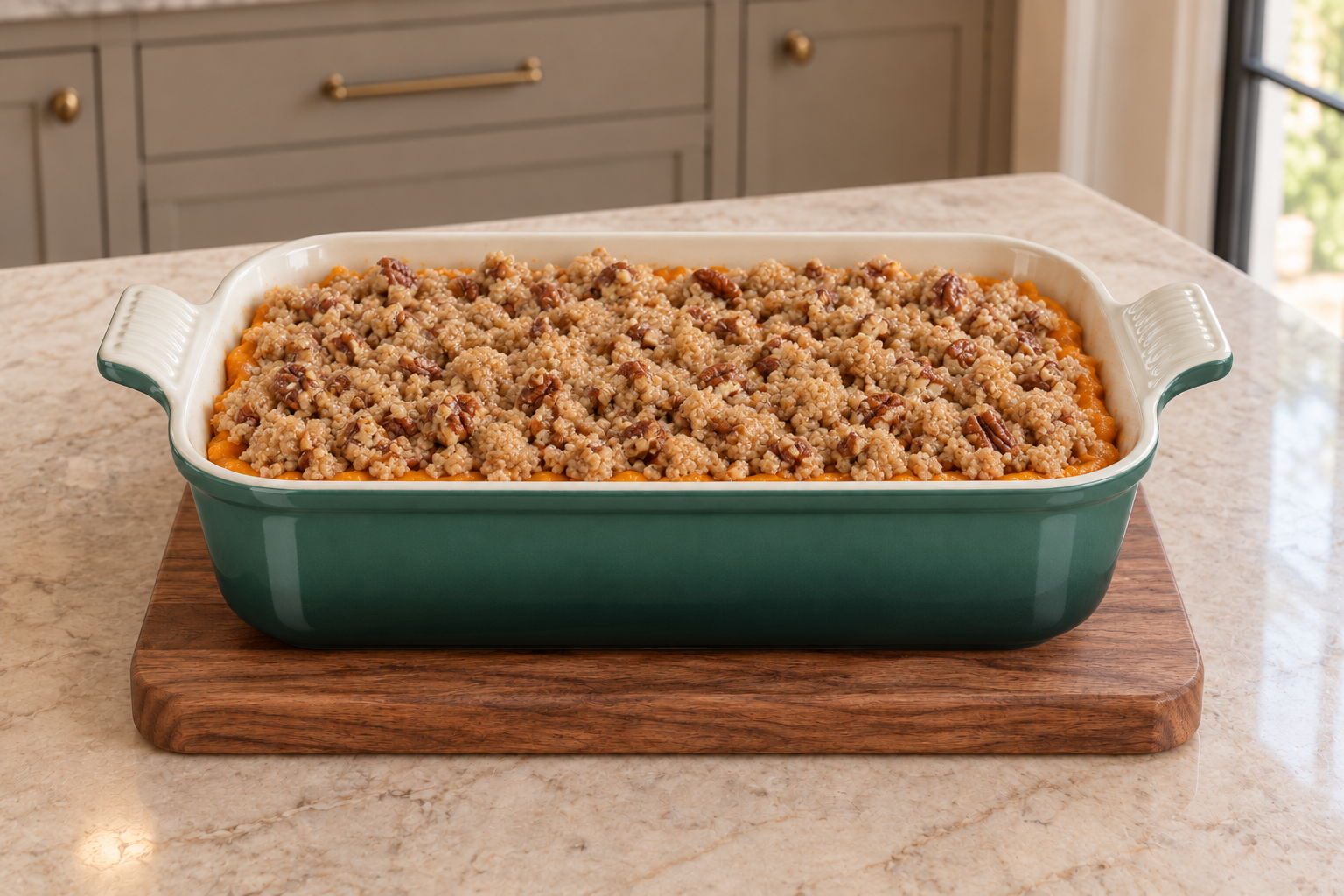
Add the homemade coconut flour, three egg yolks, three tablespoons raw honey, room-temperature coconut oil, ¾ teaspoon cinnamon, and ⅛ teaspoon plus one pinch of sea salt. Pulse just until the mixture gathers into moist, irregular clumps.
Scatter the topping evenly over the filling, including the corners. The raw crumb looks pale tan and damp. Break up very large pieces with your fingertips before they go onto the casserole, then leave some smaller clumps for texture.
Bake Now or Freeze the Same Casserole
For immediate baking, place the assembled casserole in the preheated 325°F oven. Begin checking after 45 minutes. If the pecan crumb is browning faster than the center is heating, cover the dish loosely and continue baking.
The total oven time is about one hour, but use the physical cues. The topping should be golden brown rather than dark, and the center should be hot with a slight jiggle. It will not look completely firm while it is still in the oven.
For the make-ahead schedule, cover the assembled unbaked casserole and freeze it. Move it to the refrigerator about 24 hours before serving and uncover it while it thaws. Once thawed, bake at 325°F using the same color, temperature, and center cues. The freezer and refrigerator time are not included in the 1-hour-50-minute recipe total.
After baking, leave the casserole undisturbed for 20 minutes. That rest lets the filling settle enough to serve while keeping it soft. Cutting immediately makes the hot center look looser than it will after resting.
Where This Fits on GAPS
This is a later Full GAPS side dish. It contains winter squash, homemade coconut milk, eggs, raw honey, coconut oil, homemade vanilla, properly prepared pecans, and homemade coconut flour. It is not an Introduction Diet casserole, and the pecan crumb makes it a recipe for someone already tolerating properly prepared nuts.
The recipe is dairy-free because both measured fat choices are coconut oil. It is not egg-free: the filling uses four whole eggs and the crumb uses three additional yolks. Those eggs help both layers set, so removing them would create a different formula.
This is also not a No-Plant GAPS dish because squash, coconut, pecans, and cinnamon are central to it. The sweet potato branch belongs to a later Transition context, not this Full GAPS recipe.
Serving a Holiday Meal
Let the casserole rest, then use a broad serving spoon to lift the soft filling and crumb together. A 9-by-13-inch dish provides 12 generous side portions and can stretch further when several sides share the table.
Serve it beside roast poultry, beef, or another main dish that fits your Full GAPS table. The sausage stuffing with cauliflower and pecans is another holiday side with its own savory profile, so the two dishes do different jobs on the plate.
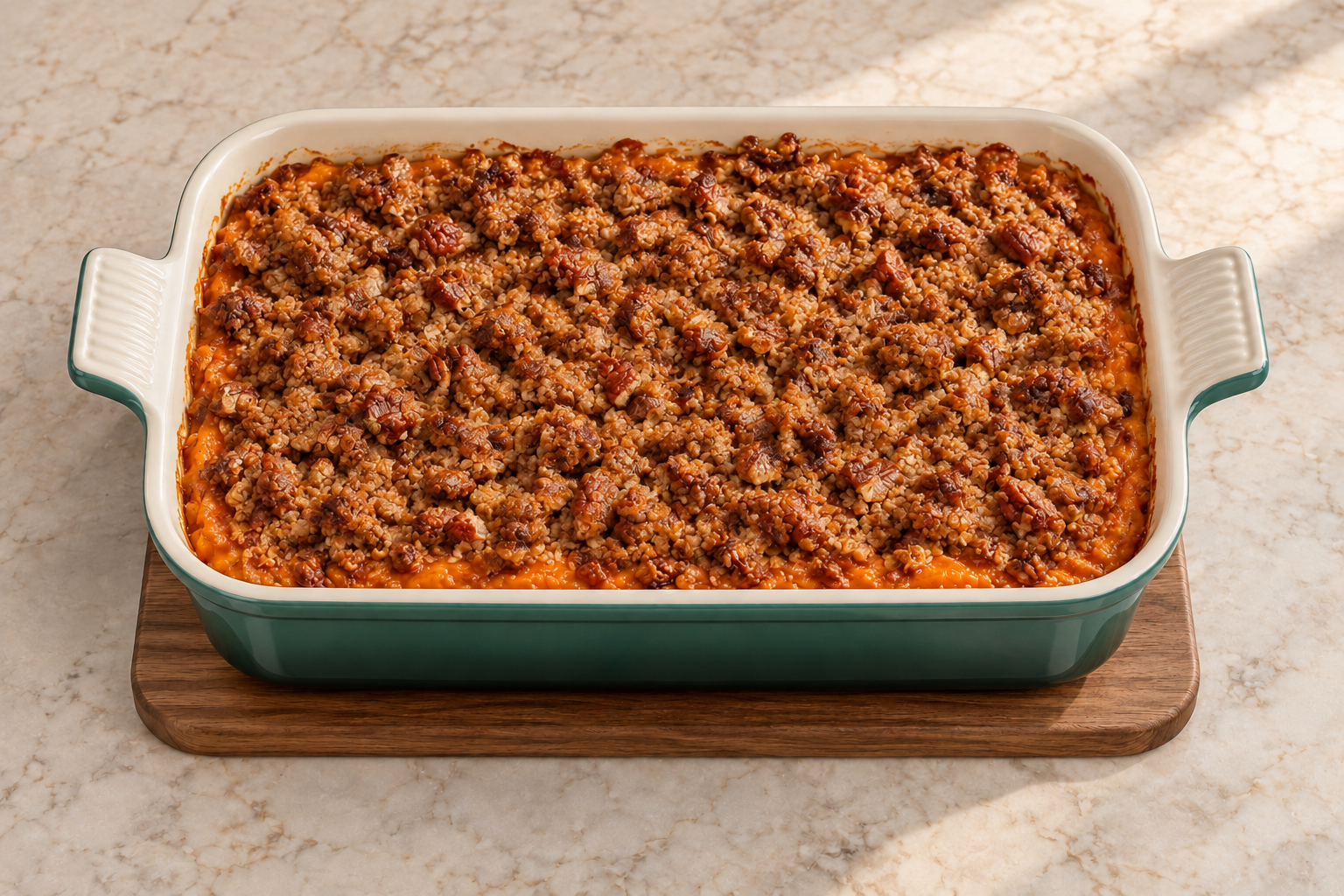
The filling is sweet enough to stand on its own. There is no need to add honey at the table or cover the top with marshmallows. The golden pecan crumb provides the contrast.
Storing and Reheating Leftovers
Once the casserole has cooled, cover leftovers and refrigerate them. Reheat only the portion you plan to serve, either covered in the oven or in another suitable dish, until the center is hot. A large cold portion takes longer than a shallow serving.
The make-ahead freezer directions apply to the assembled unbaked casserole. They are the tested place to use the freezer in this recipe. Label the covered dish with the recipe name and the instruction to thaw uncovered in the refrigerator for about 24 hours before baking.
Equipment for a Full Batch
You need a 9-by-13-inch casserole dish, a large food processor, a flexible scraper, measuring cups and spoons, and a broad serving spoon. The photographs use the 4-quart Le Creuset Heritage rectangular dish in Artichaut, which supports the full batch.
A smaller food processor works if you puree the filling in two batches. Divide every ingredient between the batches rather than blending plain squash first and adding all the eggs or honey to only one bowl. Combine the two smooth portions in the casserole dish before adding the crumb.
Frequently Asked Questions
Can I Use Pumpkin or Another Winter Squash?
Butternut is the measured Full GAPS choice in this version. Another dense, sweet winter squash may have a different water content and flavor. Keep butternut when you want the formula and cues documented here.
Why Is the Center Still Slightly Jiggly?
A small jiggle is expected when the center is hot. Check that the dish is hot through and the topping is golden, then give it the full 20-minute rest. It settles further as it cools.
Can I Use Maple Syrup or Coconut Sugar?
No. Use the measured raw honey in both the filling and topping. That is the GAPS-compatible sweetener branch used in this version.
Do I Have to Prepare the Pecans First?
Yes. Use properly prepared pecans that are fully dry and crisp before measuring. Damp nuts can turn pasty in the processor and do not give the topping the same crumb texture.
Can I Leave Out the Eggs?
Not while preserving this formula. Four whole eggs help set the filling and three yolks bind the topping. An egg-free casserole would need its own tested structure.
Can I Freeze It After Baking?
The documented make-ahead route freezes the casserole unbaked, then thaws it in the refrigerator and bakes it fresh. Use that route when you want to prepare it ahead.
Butternut Squash Casserole Recipe
Butternut Squash Casserole with Pecan Crumb for Full GAPS
Ingredients
Equipment
Method
- Grease a 9-by-13-inch casserole dish with coconut oil. If baking immediately, preheat the oven to 325°F. Leave the oven off for the make-ahead freezer route.
- Place the cooked butternut squash, homemade coconut milk, eggs, raw honey, melted and cooled coconut oil, homemade vanilla, sea salt and cinnamon in a large food processor. Puree 30 to 50 seconds, stopping once with the machine off to scrape the sides and base, until uniformly smooth with no squash pieces or egg streaks. Work in two evenly divided batches if needed.
- Spread the puree evenly in the prepared casserole dish, reaching the corners and leaving the surface smooth.
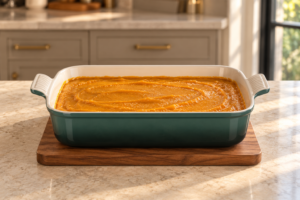
- Clean and dry the processor. Process the properly prepared, fully dried pecans into a coarse meal with visible tiny nut pieces. Stop before the meal becomes glossy or pasty.
- Add the homemade coconut flour, egg yolks, raw honey, room-temperature coconut oil, cinnamon and sea salt. Pulse just until moist irregular clumps form. Scatter the raw crumb evenly over the squash filling, including the corners.
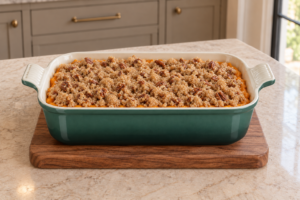
- For immediate baking, bake at 325°F for about 60 minutes. Begin checking at 45 minutes and cover loosely if the crumb browns too quickly. The casserole is ready when the topping is golden rather than dark and the hot center has only a slight jiggle.
- For make-ahead preparation, cover and freeze the assembled unbaked casserole. About 24 hours before serving, move it to the refrigerator and uncover it while it thaws. Once thawed, bake at 325°F using the same golden-topping and hot, slightly jiggly-center cues.
- Rest the baked casserole for 20 minutes before serving so the soft center can settle further.
Notes
- The 30-minute prep, 60-minute bake, and 20-minute rest equal the 1-hour-50-minute total. Advance pecan preparation, cooling squash, freezing, and the approximately 24-hour thaw are not included.
- Use butternut squash, raw honey, homemade coconut milk, homemade coconut flour, and homemade vanilla for this Full GAPS version. Sweet potato, maple syrup, coconut sugar, and canned coconut milk are not included.
- The 2x control doubles the measured formula to 24 servings. Use two 9-by-13-inch dishes or an equivalently tested capacity; do not overfill one dish. Work in processor batches within the machine’s limit.
- The documented freezer route freezes the assembled casserole unbaked, thaws it uncovered in the refrigerator, then bakes it fresh.
Tried this recipe?
Let us know how it was!Plan the Holiday Meal Before Oven Day
If several dishes need the oven, decide which ones can be assembled, chilled, or frozen before the holiday. Our upcoming Holiday Menu & Prep Timeline is designed for that kind of planning. Find the current kitchen guides and catalog updates in the WFLI shop.

Leave a comment