

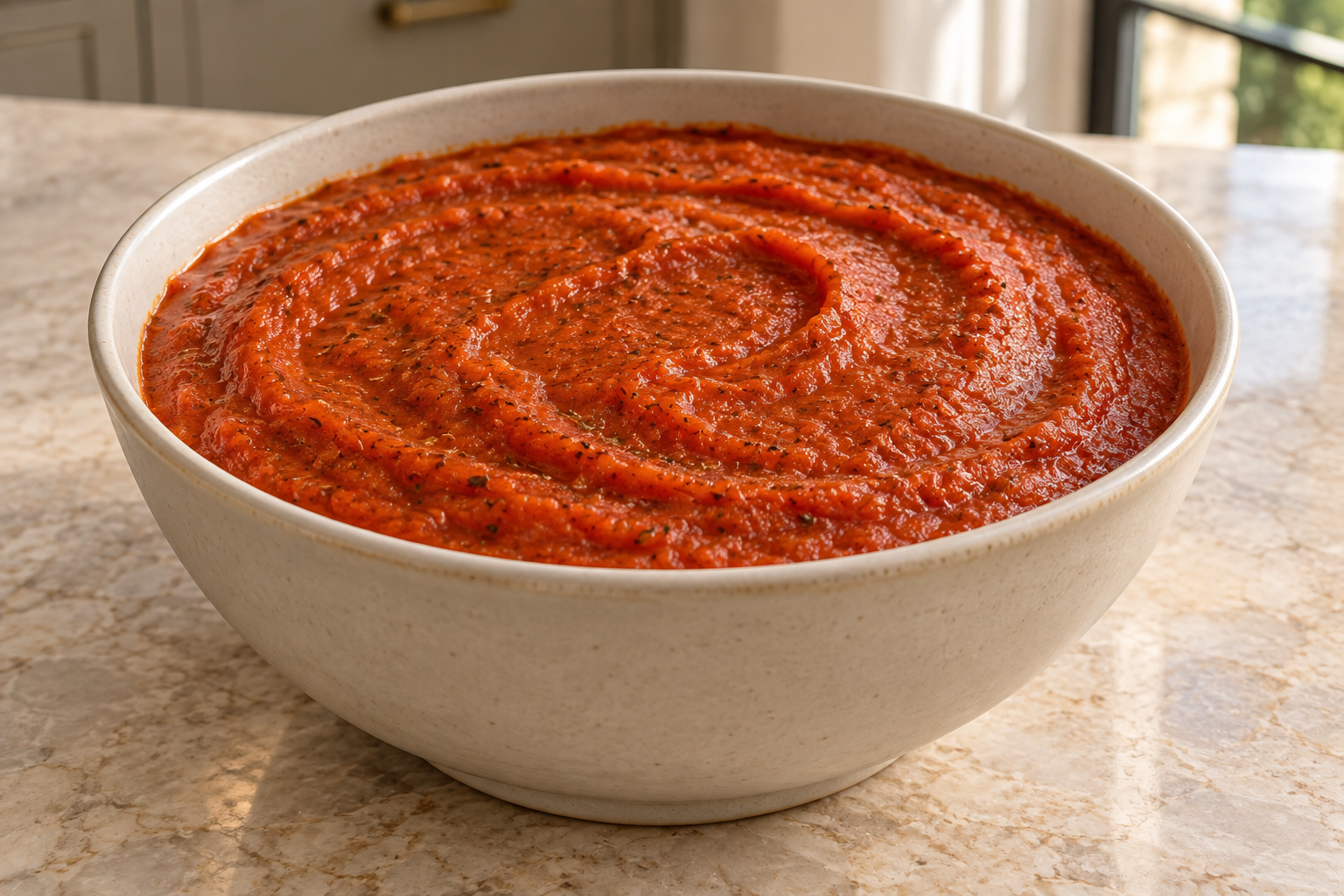
This pressure cooker nomato sauce turns carrots, beets, and onions into a thick red sauce without tomatoes. Homemade meat stock gives it a savory base. Fresh lime, ginger, garlic, and dried herbs give the cooked vegetables a brighter finish. The pressure cooker handles the roots first, then the blender brings everything together.
The batch makes about five cups, so you can use some for dinner and freeze the rest in meal-sized portions. It is a Full GAPS sauce for cooked vegetables, shredded meat, or other meals where you want a tomato-free option. The flavor is sweet from the carrots and onions, earthy from the beets, and tangy from the lime. Ginger adds a little sharpness without a pepper-based seasoning.
A Larger Batch For A Busy Week
I cook in the morning before work, with homeschooling in that same part of the day. We do not have a settled bulk-prep routine right now. That makes recipes with a useful amount left over worth paying attention to. If you are already cooking, having another meal’s sauce ready is a practical place to start.
Our meat stock changes with the budget, what is available, and the time we have. The steady part is the pot started in the morning. This recipe uses a measured amount of that stock, so the sauce can fit beside an existing kitchen routine instead of becoming another whole project. Freeze the extra in amounts that make sense for your meals, not just in whichever container is closest.
Pressure Cooker Or Stovetop?
Choose this version when you want the larger batch and have a pressure cooker. The roots cook for 15 minutes under pressure, followed by a 30-minute natural release. That release is part of the method. Plan for it rather than reading “15 minutes” as the time from starting the appliance to finished sauce.
If you want a smaller batch without a pressure cooker, use the stovetop nomato sauce. That recipe uses four carrots, one beet, and a turnip. This one uses eight carrots, two beets, and onions. The herb and liquid amounts differ too. They are two complete recipes, so choose one ingredient list instead of mixing the quantities.
The stovetop sauce is useful when you prefer to steam or boil the roots and watch their tenderness directly. This larger version lets the pressure cooker do that first part. Both end with a smooth puree, but their different vegetables give you different ways to make a tomato-free sauce.
Ingredients That Build The Flavor
Use eight medium carrots, two small to medium beets, and two small to medium onions. Carrots supply most of the vegetable volume. The beets contribute the red color, while softened onion brings sweetness and a savory flavor. Medium roots matter here: a very large beet changes both the proportion and the finished taste.
Measure 1⅓ cups of homemade chicken meat stock, or use homemade beef meat stock when you want a beef-based sauce. This liquid cooks with the roots and goes into the blender afterward. Keep it rather than draining it away with the vegetable skins.
The fresh lime juice is six tablespoons in total. You can measure that as ¼ cup plus two tablespoons. Lemon juice is also an option in this pressure-cooker formula. Use the same measured amount if you choose it. Fresh citrus gives the sweet cooked vegetables a tangy finish without adding vinegar or sugar.
Grate the fresh ginger before measuring two tablespoons. Rough pieces and a packed spoonful of grated ginger are not the same measurement. Four garlic cloves are optional. Smash or mince them for blending. One tablespoon dried oregano and one teaspoon dried basil finish the herb mixture, with ½ teaspoon sea salt.
Cook The Vegetables Under Pressure
Place the carrots, beets, and onions in the pressure cooker insert with the measured stock. You can peel the vegetables beforehand. If you leave the beet and onion skins on for cooking, remove them after the roots cool enough to handle. Wash everything well before it goes into the pot.
Check that your appliance’s sealing ring and lid are properly fitted, then use its pressure-cook or manual setting for 15 minutes. Follow the manufacturer’s sealing instructions and fill limits. The liquid and vegetables need to remain inside the appliance’s working capacity.
When the timed cycle ends, cancel the cooking cycle and let the pressure come down naturally for 30 minutes. Then release any remaining pressure by the method specified for your appliance. Open the lid only after pressure has fully released. The initial heating time varies, so the pressure-cooking countdown is not the whole kitchen time.
Cool, Peel, And Transfer
Transfer the vegetables to a large plate with tongs and let them cool slightly. They should be soft rather than firm in the center. The onions will look translucent and may fall apart into layers. Cooked beet skins can rub away once the beets are cool enough to handle. Remove any onion skins that remain.
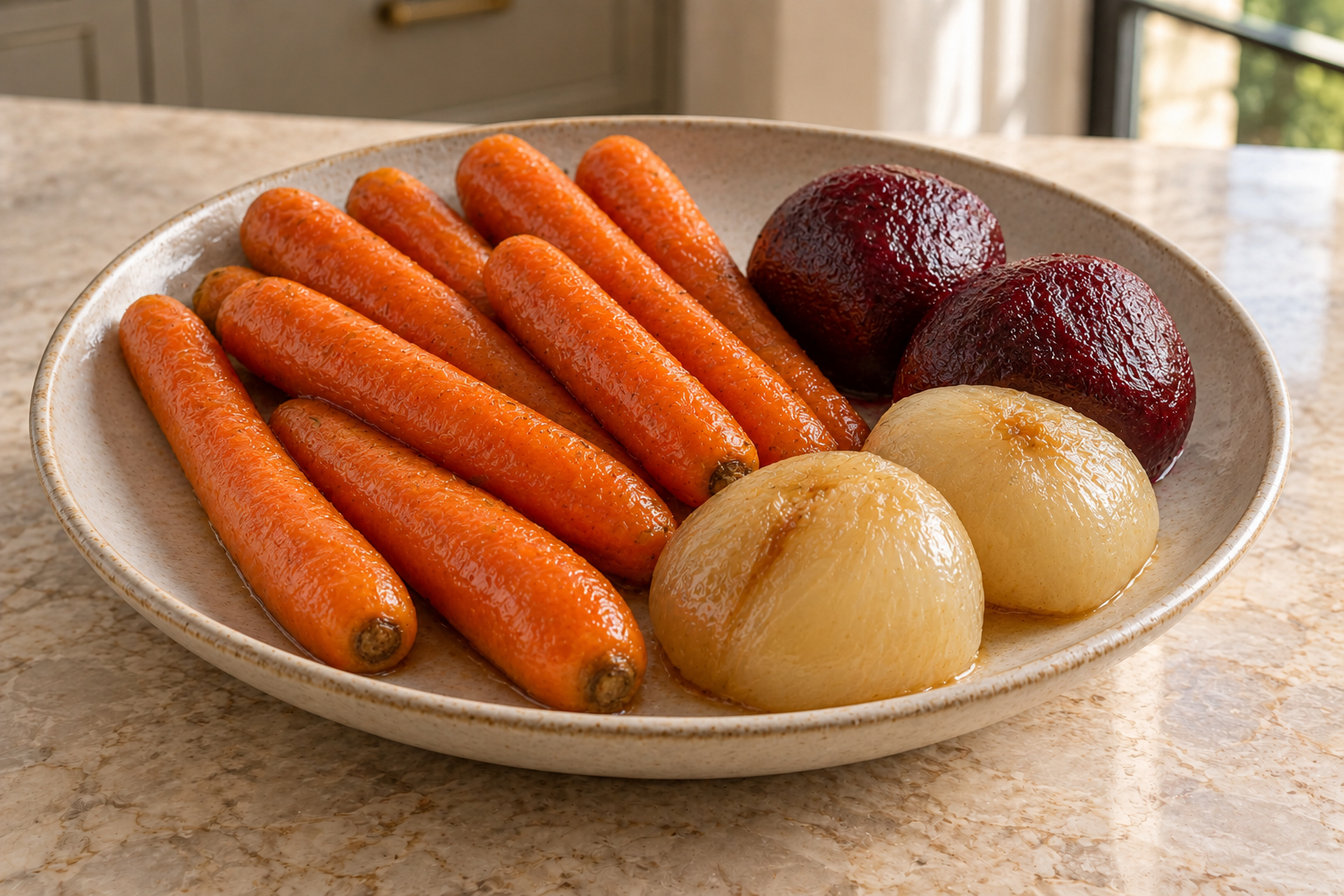
Cut the beets and onions in half, or separate the softened onion layers, so they fit into the blender comfortably. Keep the warm stock from the cooker. It carries the vegetable flavor and is part of the measured sauce.
Blend In The Citrus And Herbs
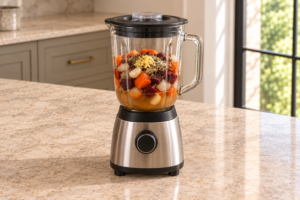
Put the cooked vegetables into the blender. Add the warm cooking stock, grated ginger, optional garlic, measured lime or lemon juice, oregano, basil, and salt. Follow your blender’s directions for warm mixtures and its maximum fill level. Blend in portions if this batch is larger than its permitted capacity.
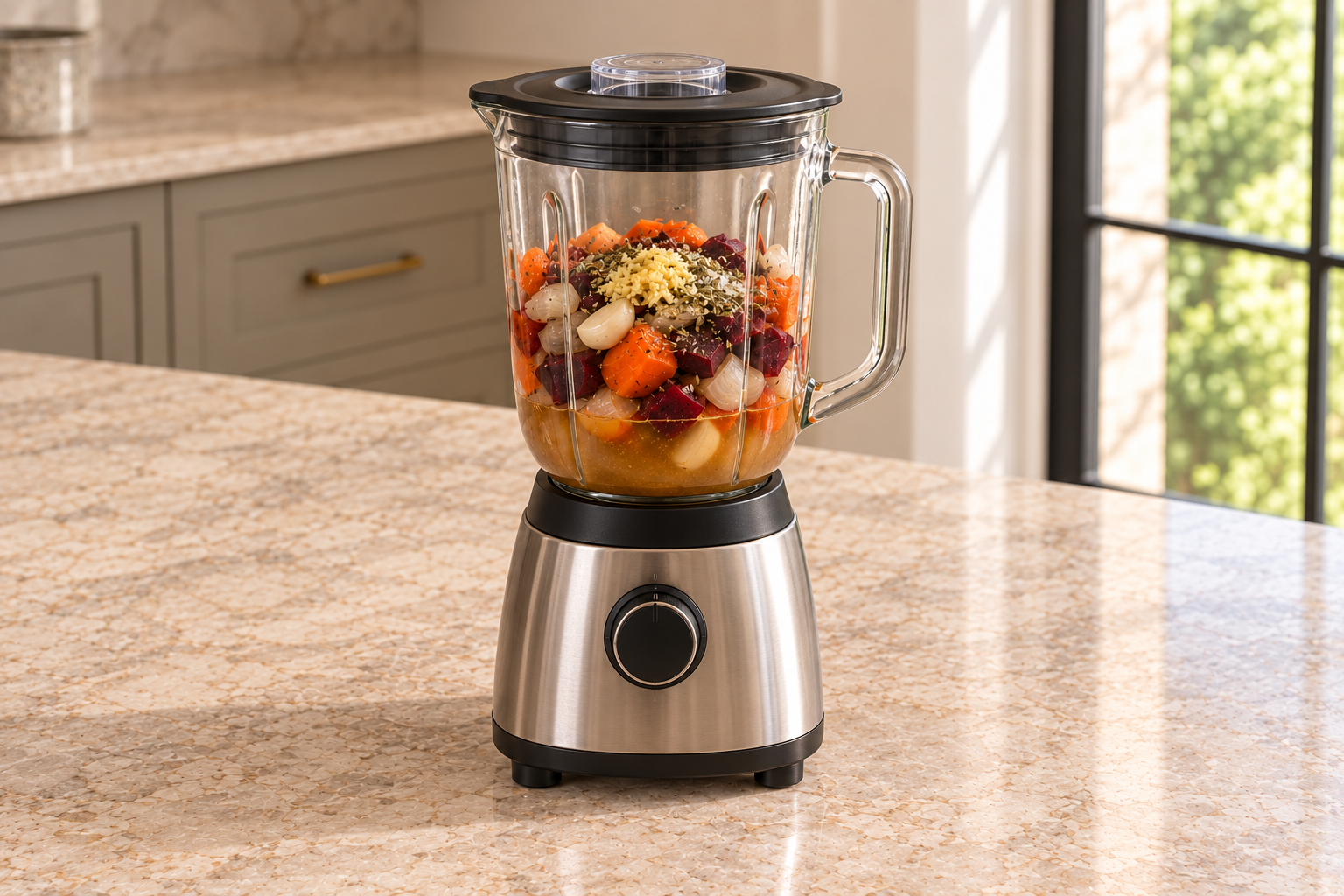
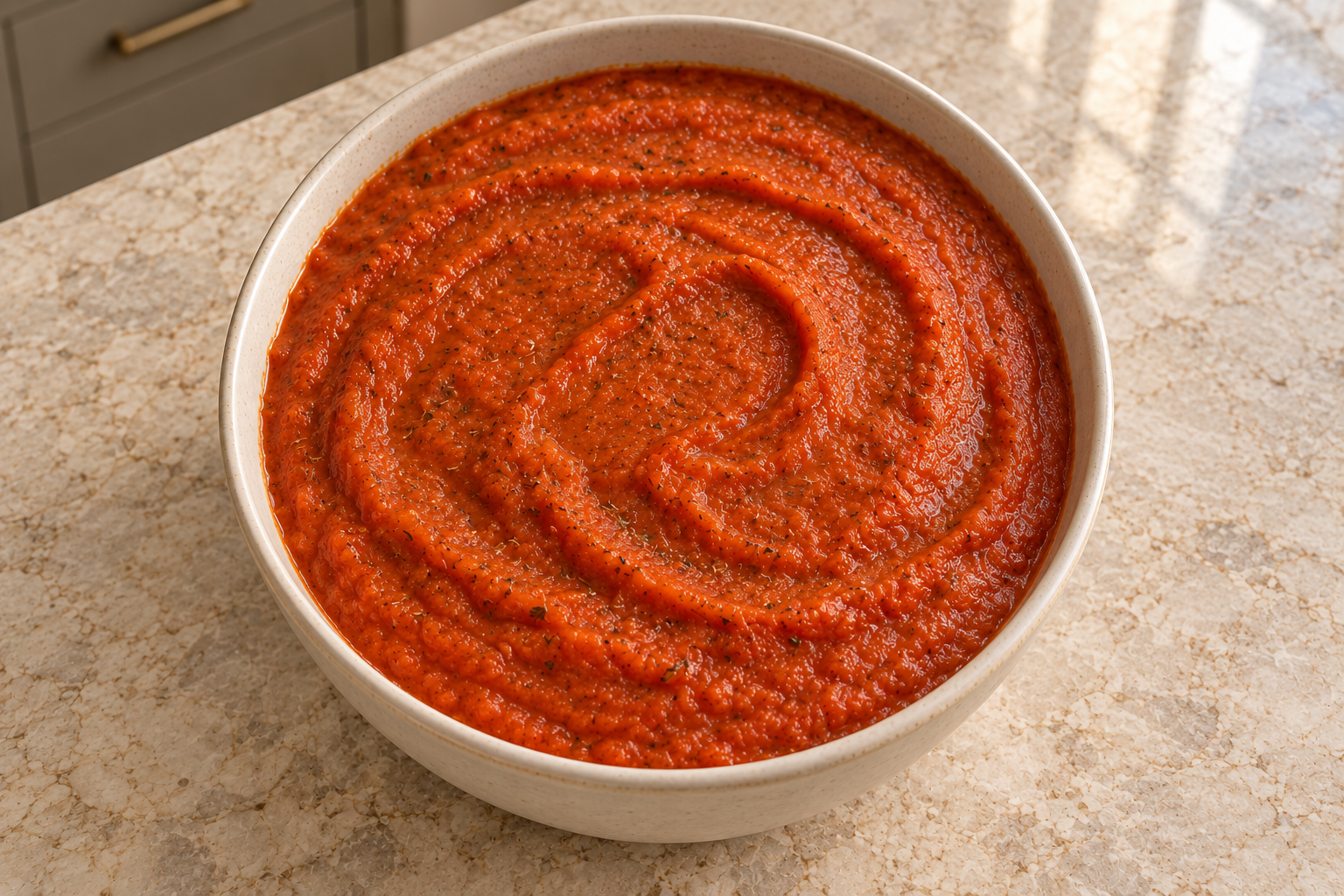
Puree on medium-high speed for about 30 seconds, stopping with the machine off to scrape the sides if needed. Resume until the sauce is smooth. Look for an even red-orange color, fine herb flecks, and a thick puree without separate onion layers or beet pieces.
The roots provide the body of the sauce. There is no flour or starch to thicken it afterward. It should gather softly when spooned rather than run like stock. If a piece of vegetable stays against the jug wall, stop and scrape it into the mixture instead of leaving it in an otherwise smooth batch.
Full GAPS And The Ingredient Options
This recipe is written for Full GAPS. Carrots, beets, onions, fresh ginger, garlic, citrus, and additive-free herbs belong in the GAPS food guidance. The stock here is homemade meat stock. It is different from long-cooked bone broth, even though both may be used as a liquid in other recipes.
Tomatoes are allowed on Full GAPS. You do not have to remove them just because you are following GAPS. This sauce offers a tomato-free choice when that is useful in your household. It also avoids peppers and potatoes; none of those ingredients is needed to make its color or texture.
The measured options are straightforward: lime or lemon juice at the same amount, chicken or beef meat stock, and garlic included or left out. The recipe contains no dairy, eggs, or nuts. Keeping those ingredients out does not require another substitution.
It is not a No-Plant GAPS sauce because the roots are its main ingredient. The uncooked citrus, ginger, and optional garlic are added after pressure cooking, so this is not an early Intro sauce either. For an earlier Intro meal, use a sauce written for that stage. The cooked texture alone does not determine the stage.
Serving A Tomato-Free Meal
Warm a portion gently and spoon it over cooked zucchini ribbons or another Full GAPS vegetable you already enjoy. Let cooked vegetables drain before adding sauce so they do not leave a pool of water underneath it. A thicker puree coats the vegetables more evenly.
You can also serve it beside shredded chicken or beef and cooked vegetables. The ginger and citrus have their own flavor, so try a spoonful with the meal before covering everything in sauce. This lets you choose the amount you want on the plate without altering the whole batch.
For another tomato-free dinner idea, the nightshade-free beef chili has its own complete seasoning and sauce method. Follow its measurements rather than substituting this puree for every liquid. If you want a complete dinner recipe instead of a sauce, that is another place to start.
Portioning And Storage
Serve what you need, then cool and cover the rest for refrigeration or freeze portions for later. The five-cup batch gives you enough to divide by meal. Smaller portions are easier to thaw than one large block when you only need sauce for a few plates.
Use freezer-suitable glass containers and leave the expansion space their instructions require. Label the sauce with its name and date. Thaw it in the refrigerator, stir, and warm it gently before serving. If a little liquid separates, mix it back through first.
To make a double batch, double every ingredient using the card’s 2× control. Check the pressure cooker’s capacity before doubling the batch. Cook in separate batches if necessary, and blend in portions within the blender’s limit.
Equipment For This Method
A pressure cooker with a stainless-steel insert handles the first part of this recipe. Check its minimum liquid requirement for your model as well as its maximum fill mark. Use the separate stovetop recipe if you prefer to cook with a saucepan.
You will also use tongs, a large plate, a knife, a ginger grater, and measuring tools. The blender needs to accommodate warm ingredients under its own instructions. A clear glass jug is useful for seeing whether pieces remain above the puree.
Frequently Asked Questions
Can I Use Lemon Instead Of Lime?
Yes. This pressure-cooker recipe allows either fresh lime or lemon juice. Use six tablespoons total. Measure the juice rather than assuming every fruit gives the same amount.
Does The Sauce Need Garlic?
No. The four cloves are optional. Omitting them leaves the carrots, beets, onions, ginger, citrus, and dried herbs to flavor the sauce.
Why Is There A Natural Release?
The 30-minute natural release is part of the cooking method for these roots. Leave that time in your plan. Releasing immediately changes the method and removes that resting period under gradually falling pressure.
Should I Drain Away The Stock?
No. Transfer the vegetables for peeling and cooling, but keep the cooking stock for the blender. It is the measured savory liquid in the sauce.
Is This Just A Doubled Stovetop Sauce?
No. The stovetop sauce uses turnip and its own herb and liquid measurements. This recipe uses onion, oregano, and basil with pressure cooking. Follow the formula for the method you choose. For a smooth fruit-balanced soup rather than a sauce, use the Nightshade-Free Nomato Soup with Nectarines and Cherries.
Pressure Cooker Nomato Sauce Recipe
Pressure Cooker Nomato Sauce for Full GAPS
Ingredients
Equipment
Method
- Place the carrots, beets, and whole onions in the pressure cooker insert. Add the measured homemade meat stock. Peeling beforehand is optional; wash all vegetables well.
- Check that the sealing ring and lid are fitted correctly. Seal according to the appliance instructions and pressure cook on the manual or pressure-cook setting for 15 minutes.
- When the timed cycle ends, cancel cooking and allow a natural pressure release for 30 minutes. Then release any remaining pressure by the method specified for your appliance. Open only when pressure has fully released.
- Transfer the soft vegetables with tongs to a large plate and let cool slightly. Keep the cooking stock. If skins were left on, rub the cooled beet skins away and remove the onion skins.
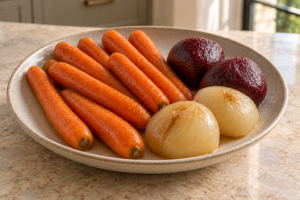
- Cut the beets and onions in half, or separate the softened onion layers, so they fit into the blender.
- Place the cooked vegetables in the blender with the warm cooking stock. Add the grated ginger, optional garlic, fresh lime or lemon juice, oregano, basil, and salt. Follow the blender instructions for warm ingredients and fill level, working in portions if needed. Puree on medium-high about 30 seconds until smooth; stop the machine before scraping the sides if needed.
Notes
Tried this recipe?
Let us know how it was!Plan The Meal That Uses The Extra Sauce
Give the extra sauce a place on your meal plan before it disappears into the back of the freezer. Choose the next meat-and-vegetable dinner that will use it and note which stock you need for the next batch. Our planned Weekly Kitchen Rhythm Planner fits that kind of kitchen organization. Find our kitchen resources in the WFLI shop.

Leave a comment