

The liver and gut are closely connected. Blood leaving the digestive tract reaches the liver through the portal circulation, carrying nutrients and other absorbed substances. In the GAPS framework, Dr. Natasha Campbell-McBride connects abnormal gut flora and a damaged gut lining with an increased burden on that system.[1]
That connection is useful to understand, especially when you are reading about bile, fat digestion, and liver tests in different parts of the book. Keeping those topics separate also makes it easier to ask a precise question about your own symptoms or results.
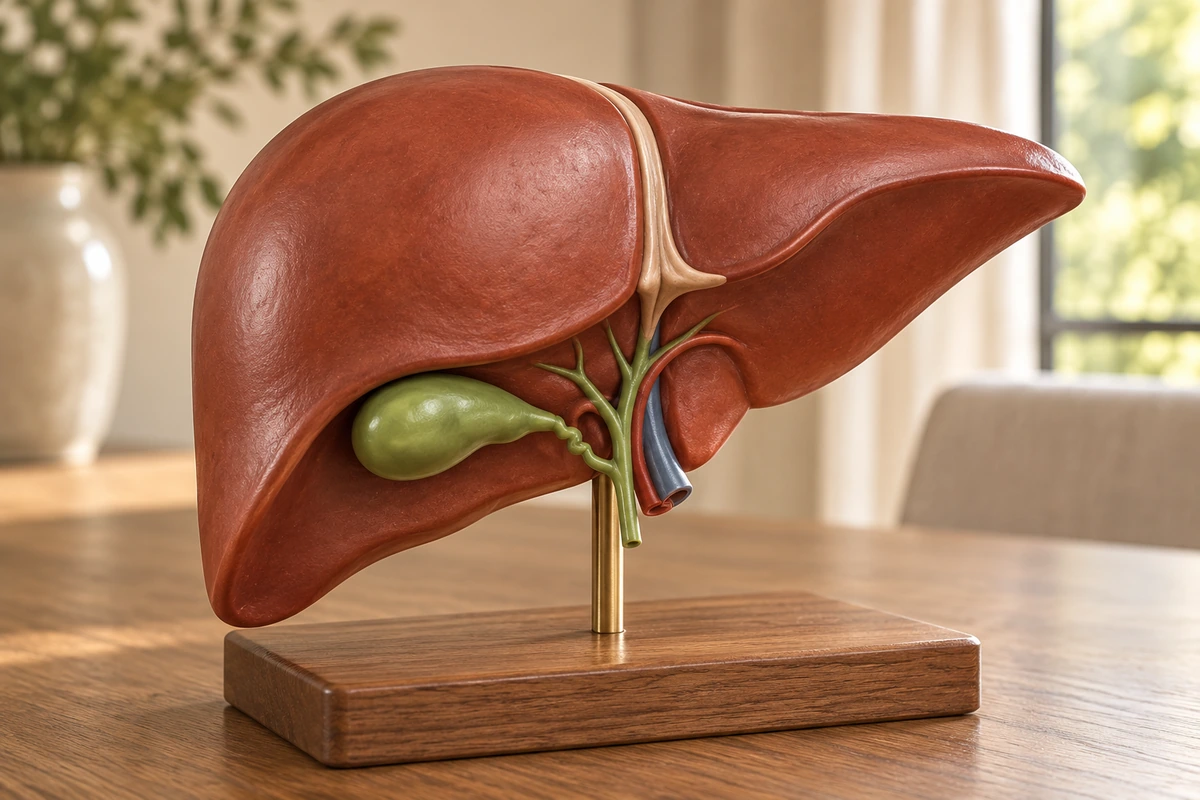
What the Liver Does
Campbell-McBride describes the liver as processing nutrients, manufacturing substances such as cholesterol, and handling or recycling many active molecules. It also produces bile. Her account of liver support starts with nourishment and the digestive system, rather than treating the liver as an isolated filter.[1]
| Job | What to Keep in Mind |
|---|---|
| Nutrient processing | The liver receives material from the digestive tract. |
| Bile production | The liver makes bile; the gallbladder stores and releases it. |
| Handling absorbed substances | What arrives from the gut is part of the liver’s work, not a direct measurement of your personal toxic load. |
How GAPS Explains the Gut Connection
The book describes abnormal microbes producing substances that reach the liver, along with material crossing an impaired gut lining. In that explanation, improving digestion and nutritional status reduces what the liver has to handle. The chapter does not provide a formula for measuring how much of its capacity is available for each job.[1]
It is worth keeping the direction of this explanation clear. Campbell-McBride is describing how gut problems may affect another organ. A headache, nausea, or a difficult meal does not by itself establish liver disease or a blocked bile duct.
Supporting Research on the Gut-Liver Relationship
The gut-liver relationship is also studied in clinical research. Bajaj and colleagues followed 181 people admitted to hospital with cirrhosis. Gut microbial patterns at admission were associated with later outcomes, including organ failure. This was an observational study in people with established cirrhosis.[4]
That research gives a concrete example of why gut microbes matter when studying liver health. The GAPS chapter applies its own broader nutritional framework to the relationship; the study population and the book’s wider explanation should remain clear when you read them together.
Reading the GGT Discussion
The official GAPS FAQ’s Liver Question 7 attributes a rise in GGT during die-off to yeast-related alcohol production and describes it positively. That is the author’s explanation in the FAQ, not a way to determine why an individual result is high.[2]
GGT results need to be read alongside symptoms, medicines and supplements, and other tests. An elevated result cannot confirm beneficial die-off or rule out a liver or bile-duct problem. Keep the actual result and reference range rather than deciding that a change is good or bad from the number alone.[3]
What to Record Before a Follow-Up
- Write down the test name, result, laboratory range, and date.
- List the medicines and supplements you were using when the sample was taken.
- Note changes in pain, nausea, stool color, urine color, and appetite.
- Bring earlier results if you have them so the pattern can be reviewed.
New jaundice or a suspected gallstone attack needs prompt assessment. Yellowing of the eyes or skin, dark urine, pale stools, fever, vomiting, or persistent upper-abdominal pain should not be explained away as a useful detox response.[5]
Where Bile and Food Fit
Campbell-McBride recommends gradual introduction of tolerated fats and discusses juices, the GAPS shake, and other liver-support approaches. Keep the food-stage rules with those preparations. A shake is a separate recipe, and its ingredients are not automatically suitable because you have spent a particular number of weeks on GAPS.[1]
Use the bile and fat-digestion guide for the gradual-fat discussion, and the gallstone-formation guide for the source’s stone model. This page does not give an enema, supplement, or stone-clearing schedule.
Your Next Step
If your question begins with a test result, bring the result and your notes to the clinician who ordered it. If it begins with a meal pattern, use the fat-digestion guide to organize what you have noticed.
If you are putting the wider GAPS plan together, Understanding & Preparing for the GAPS Diet is listed in the WFLI shop.
For the wider organ map and the other guides in this series, return to Liver, Bile, and Lungs.
References
- Campbell-McBride, Natasha. Gut and Physiology Syndrome (2020), “The Liver and the Lungs.”
- Campbell-McBride, Natasha. Official GAPS FAQs, “Liver,” Question 7, GGT and die-off discussion.
- MedlinePlus. Gamma-glutamyl Transferase (GGT) Test.
- Bajaj, J. S., et al. Association Between Intestinal Microbiota Collected at Hospital Admission and Outcomes of Patients With Cirrhosis. Clinical Gastroenterology and Hepatology (2019), 17:756–765.e3.
- NIDDK. Symptoms & Causes of Gallstones.

Leave a comment