

Crohn’s disease and ulcerative colitis are two different inflammatory bowel diseases. The 2020 Gut and Physiology Syndrome book places both within the GAPS autoimmune framework and uses the same core tools for each, while changing the starting route according to the condition of the gut.[1][2] This guide explains the distinction, the GAPS framework, the protocol branches, and the recovery account in the source material.
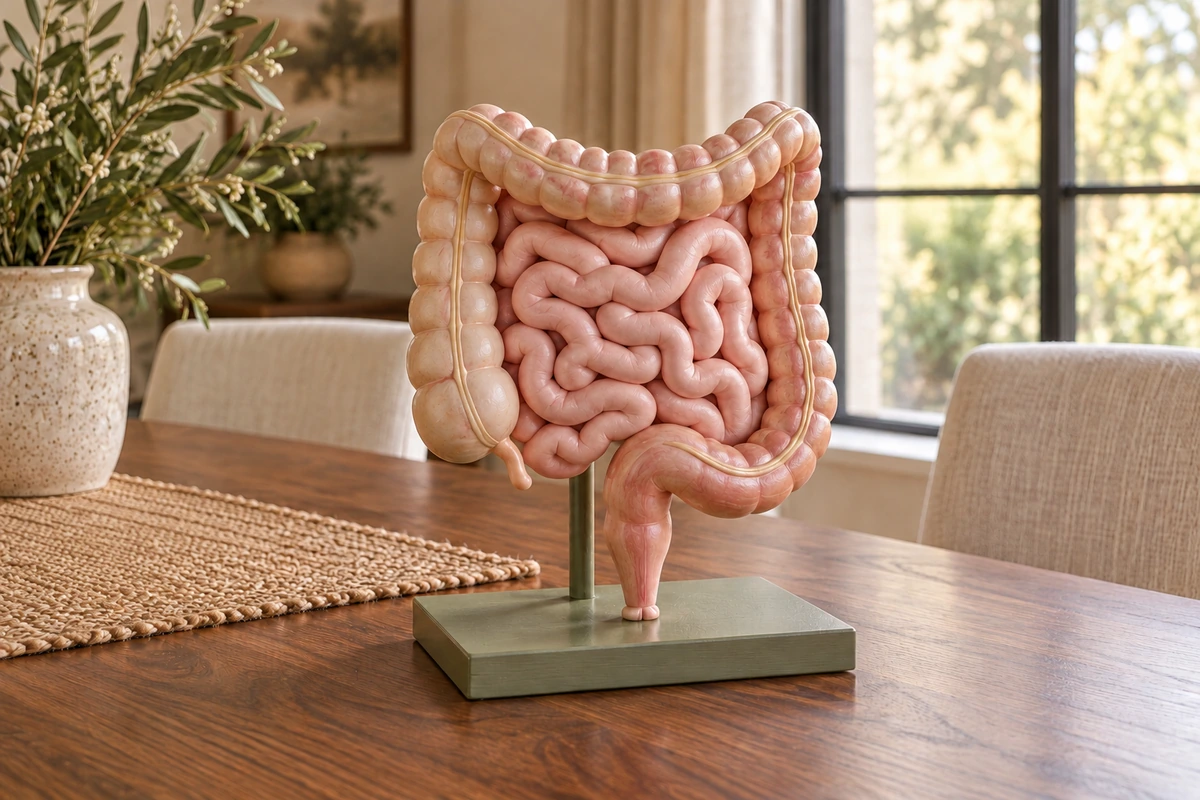
Crohn’s and Ulcerative Colitis Are Different Diagnoses
Ulcerative colitis affects the inner lining of the large intestine. Crohn’s disease can affect any part of the digestive tract, most commonly the small intestine and the beginning of the large intestine.[3][4] Doctors use history, examination, blood and stool tests, endoscopy, biopsy, and imaging to distinguish Crohn’s disease from ulcerative colitis and from other conditions with similar symptoms.[4][5]
GAPS does not erase that diagnostic difference. In the official GAPS FAQ, Dr. Natasha Campbell-McBride places the two conditions in the same group of inflammatory bowel disorders and says the diagnostic label is not important for the management being discussed.[6] That is a statement about the GAPS route, not a claim that the medical diagnoses are identical.
How GAPS Frames Inflammatory Bowel Disease
Gut and Physiology Syndrome lists Crohn’s disease and ulcerative colitis among the autoimmune conditions it connects with an unhealthy gut.[2] Its explanation begins with abnormal gut flora, a damaged intestinal wall, material crossing that damaged barrier, and an immune response that remains active while the exposure continues.[7]
Read the mechanism guide when you want to follow the gut-wall, inflammation, source-described autoimmune process, enteric nervous system, opiate-like peptide, probiotic, and inflammatory-food sequence step by step.
Where This Dietary Approach Came From
Campbell-McBride traces the dietary foundation of GAPS to the Specific Carbohydrate Diet. In her historical account, Elaine Gottschall found that diet through Dr. Sidney Haas in 1958 while seeking help for her daughter, who had severe ulcerative colitis and learning problems. Campbell-McBride writes that Gottschall later helped thousands of people with Crohn’s disease, ulcerative colitis, celiac disease, diverticulitis, and chronic diarrhea, then published Breaking the Vicious Cycle in 1994. Campbell-McBride used the diet in her clinic, adjusted it for her patients, and says those changes became the GAPS Diet.[8]
That is the origin story given in the GAPS book. It explains how the protocol developed; it does not turn the historical account into a separate clinical trial.
Which GAPS Route Applies
The starting route depends on what the digestive system can tolerate. For chronic diarrhea that may include blood or mucus, the 2020 book directs readers to consider the No-Plant GAPS Diet for as long as it takes the diarrhea to settle. When stools become more normal and inflammatory markers reduce or disappear, the person can try moving into Stage 1 of the Introduction Diet.[9] The book also names GAPS Liquid Fasting, which removes solid food for a time, for this group.[9]
Those branches are not interchangeable meal plans. Use the Crohn’s and ulcerative colitis food and protocol guide for the No-Plant foods, move into Intro, six stages, liquid-fast branch, active-bleeding enema limit, meat-stock timing, illness setbacks, and medication context.
Medication and Setbacks
The GAPS condition entry says that many people begin the protocol while taking medication. Its instruction is not to stop medication abruptly. It describes reducing medication gradually only as symptoms improve on the diet.[1] The passage gives no universal taper, dose, or medication schedule.
The official FAQ also describes a child whose Crohn’s symptoms returned after a viral illness. Campbell-McBride recommends returning to the Introduction Diet and moving very slowly through the stages; she says No-Plant GAPS may be used first before returning to Intro.[6] A setback therefore changes the route in the source material; it does not erase the work already done.
What Recovery Looks Like in the GAPS Source
The 2020 book follows one boy with ulcerative colitis and a learning disability. He entered No-Plant GAPS at age six after years of diarrhea, blood and mucus, abdominal pain, asthma, hay fever, anemia, learning problems, and poor growth. The book reports that his stools normalized within weeks, his medication was reduced and then stopped within six months, and later testing found no remaining inflammation at two years and four months. He stayed on animal foods for three years before plant foods were brought back slowly.[10]
That is one source-documented recovery account, with its own sequence and timing. The same condition entry says progress may be slow and that many people with Crohn’s disease or ulcerative colitis need some form of GAPS for life.[1] It should not be turned into a promised timetable for another person.
Where to Go Next
Choose the page that matches the question you need to answer:
- What Causes Crohn’s Disease and Ulcerative Colitis in GAPS explains the gut-flora, gut-wall, immune, nervous-system, and probiotic mechanisms.
- GAPS Diet for Crohn’s Disease and Ulcerative Colitis covers the No-Plant, Intro, food, fasting, stock, enema, illness, and medication branches.
- Crohn’s Disease and Ulcerative Colitis Symptoms brings the digestive and whole-body signs together without using a checklist as a diagnosis.
The 90-Day Family Food Diary gives you one place to record food, stool patterns, symptoms, sleep, stress, and the stage or branch you are following.
Frequently Asked Questions
Are Crohn’s and Ulcerative Colitis the Same Disease?
No. They are distinct diagnoses with different patterns and locations of inflammation.[3][4] The GAPS FAQ groups them as inflammatory bowel disorders and uses the same core protocol route for the management it discusses.[6]
Does Everyone Start With No-Plant GAPS?
No. The source uses No-Plant when chronic diarrhea, blood or mucus, or an inability to tolerate even the early Introduction Diet shows that the gut needs a more limited starting route. The move into Intro begins when stools and inflammation improve.[9][11]
Does GAPS Say Recovery Is Possible?
Yes. Campbell-McBride presents recovery as possible and includes the ulcerative-colitis case described above. She also says healing speed varies, progress can be slow, and many people need to retain some form of GAPS long term.[10][1]
Should Medication Stop Before Starting GAPS?
No. The source says not to stop medication abruptly and describes gradual reduction only as symptoms improve. It does not supply one universal taper or dose schedule.[1]
References
- Campbell-McBride, N. Gut and Physiology Syndrome (2020), “Crohn’s disease, ulcerative colitis,” pp. 413–414.
- Campbell-McBride, N. Gut and Physiology Syndrome (2020), “Gut and Physiology Syndrome,” pp. 9–10.
- National Institute of Diabetes and Digestive and Kidney Diseases. “Definition and Facts for Crohn’s Disease.” Accessed October 7, 2026.
- National Institute of Diabetes and Digestive and Kidney Diseases. “Ulcerative Colitis.” Accessed October 7, 2026.
- National Institute of Diabetes and Digestive and Kidney Diseases. “Diagnosis of Crohn’s Disease.” Accessed October 7, 2026.
- Campbell-McBride, N. “Crohn’s disease and ulcerative colitis,” Q66, GAPS FAQs.
- Campbell-McBride, N. Gut and Physiology Syndrome (2020), “All autoimmunity is born in the gut,” pp. 55–57.
- Campbell-McBride, N. Gut and Physiology Syndrome (2020), “The GAPS Diet,” p. 171.
- Campbell-McBride, N. Gut and Physiology Syndrome (2020), “Diarrhoea,” pp. 369–370.
- Campbell-McBride, N. Gut and Physiology Syndrome (2020), ulcerative-colitis case study, pp. 197–199.
- Campbell-McBride, N. Gut and Physiology Syndrome (2020), “No-Plant GAPS Diet,” pp. 192–194.

Leave a comment