

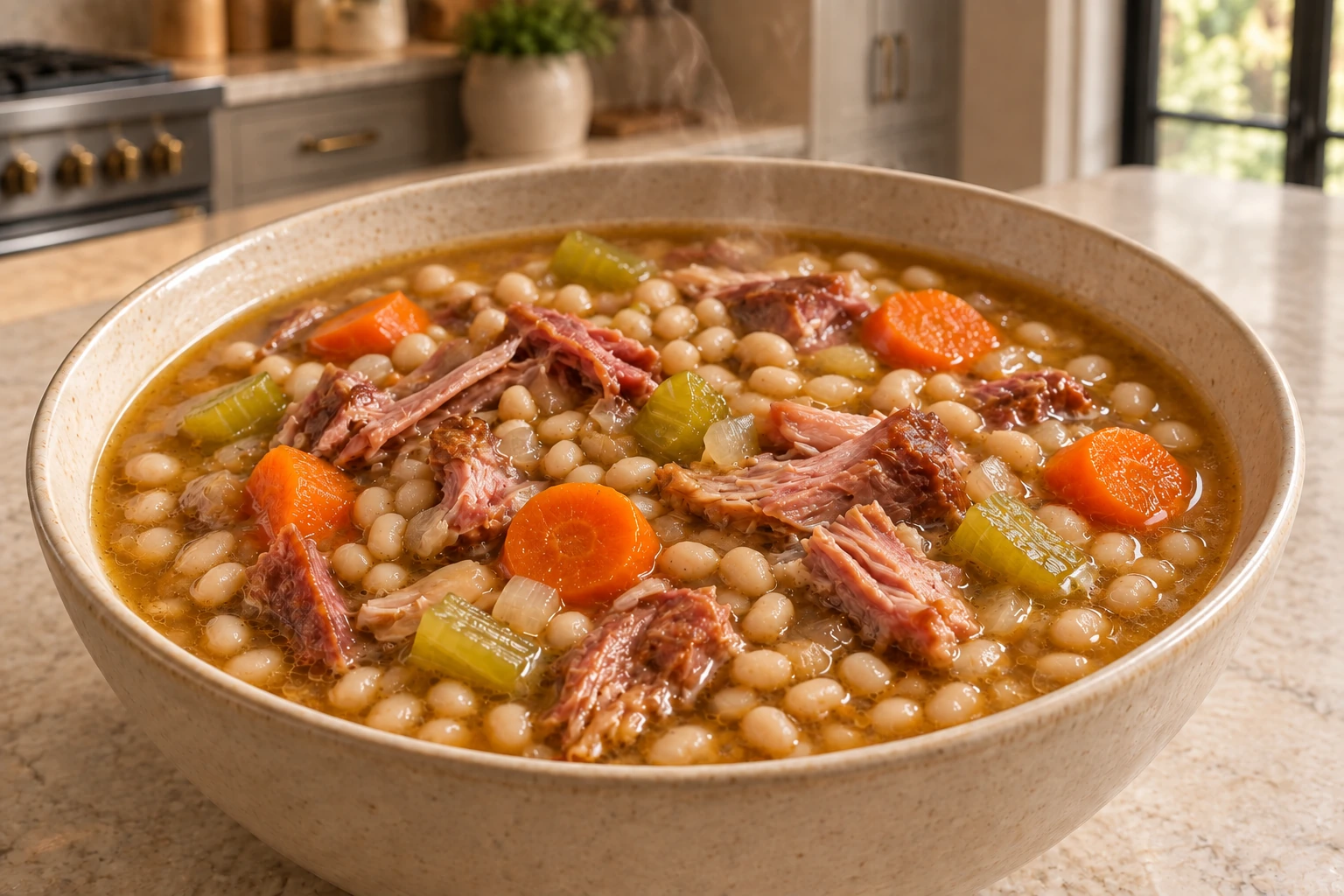
This white navy bean and pork hock soup is built for Later Full GAPS: very soft beans, pulled pork, carrots, celery, onion, garlic, and thyme in homemade chicken Meat Stock. The finished broth is savory and full-bodied, while the properly prepared navy beans make each bowl thick enough to feel like dinner instead of a cup of stock with a few pieces floating in it.
The cooking is easy. The calendar takes planning. Start the beans several days before you want the soup, then cook them in fresh water and drain them. The pork hocks and vegetables get their own six-hour slow cook. The two parts come together only after the meat pulls cleanly from the bones.
GAPS stage: Later Full GAPS, after properly prepared white navy beans and the homemade whey or kefir used for fermentation are tolerated.
Yield: 6 to 8 servings.
Plan ahead: 18 to 24 hours to soak, 4 to 6 days to ferment, additional time to cook the beans until very soft, then about 6 hours on low for the soup.
The routine that made GAPS workable in our house was starting a pot of meat stock first thing in the morning. That gives the liquid and the cooked meat a job before the day fills up with homeschooling, work, and everything else. This soup follows the same practical rhythm. It is not a last-minute meal, but most of the time is hands-off once the beans are prepared. I can get the hocks and vegetables into the slow cooker, then let dinner move along while I handle the rest of the day.
The bean preparation is the part that cannot be compressed into an overnight soak. White navy beans are one of the specific beans used on Full GAPS when they are properly prepared. Here that means an alkalized soak, a whey-or-kefir fermentation, and a separate fresh-water cook before the beans ever touch the soup.
Ingredients
Prepare the Beans
- 1 pound dried white navy beans
- A pinch of pure bicarbonate of soda for the first soak, plus another pinch whenever the soak water is changed
- Warm water for soaking
- Fresh water for fermentation and cooking
- Homemade whey or kefir, using 1/2 cup for every 1 quart of fermentation water
For the Soup
- 2 meaty naturally smoked pork hocks with no sugar or chemical additives, after naturally smoked meat is tolerated; or 2 fresh, additive-free uncured pork hocks
- 8 cups homemade chicken Meat Stock made from a raw whole bird or raw meaty bone-in pieces
- 6 celery ribs, cut into bite-size pieces
- 6 carrots, cut into 1/2-inch coins
- 1 yellow onion, chopped
- 10 garlic cloves, peeled and smashed
- 6 sprigs fresh thyme
- 2 teaspoons Celtic sea salt, plus more to taste if needed
Use white navy beans, rather than another white bean chosen by appearance. Keep pure bicarbonate of soda separate from baking powder. For the fermentation starter, maintain the ratio of 1/2 cup homemade whey or kefir for every quart of fresh water you actually use. If you make whey by straining yogurt, begin with a completed batch of Homemade 24-Hour GAPS Yogurt.
The hock choice changes the flavor. Naturally smoked hocks give the soup its familiar smoky depth, but that route belongs later, after natural smoke is tolerated, and only when the ingredient list contains no sugar or chemical additives. Fresh uncured hocks keep the same two-hock formula and give you tender pork without promising a smoky result.
Steps
- Soak the beans. Put the dried white navy beans in a large glass bowl or jar and cover them with warm water by at least 2 inches. Stir in a pinch of pure bicarbonate of soda. Soak for 18 to 24 hours. Replace the water with freshly simmered warm water once or twice as it cools, adding another pinch of pure bicarbonate each time. Drain and rinse.
- Ferment the beans. Cover the soaked beans with fresh water. Measure how much water you use, then add 1/2 cup homemade whey or kefir for every quart. Leave the beans in a warm place for 4 to 6 days. Keep them under the liquid. Drain and rinse when the fermentation time is complete.

- Cook the beans separately. Bring a large pot of fresh water to a full boil. Add the fermented beans and let the water return to a boil. Reduce the heat and simmer until the beans are very soft all the way through, then drain them. Do not move firm or chalky beans into the soup.
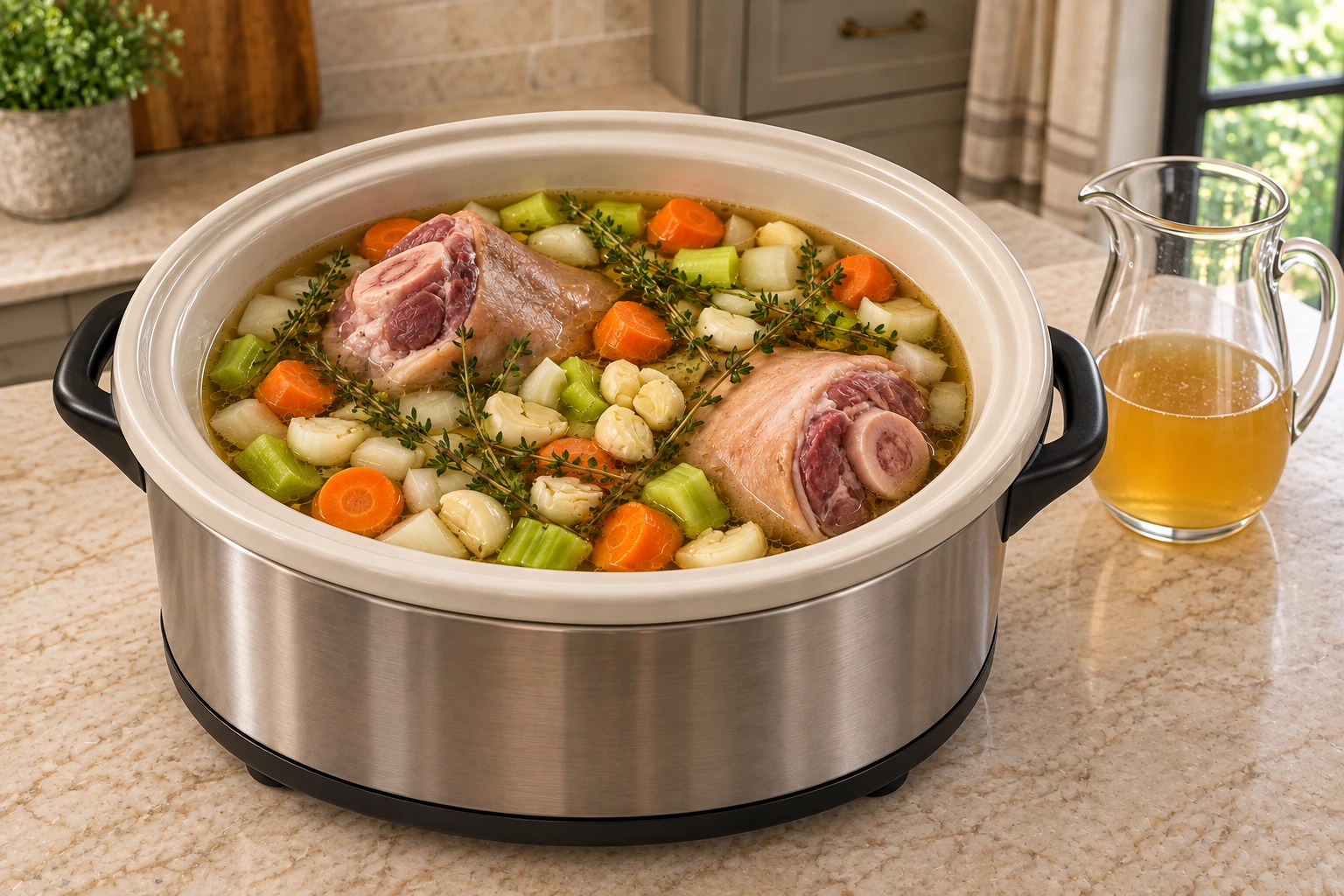
- Load the slow cooker. Put the 2 selected pork hocks, chicken Meat Stock, celery, carrots, onion, garlic, and thyme into the slow cooker. The beans stay out for now. Cover and cook on low for about 6 hours, until the pork is tender enough to pull easily from the bones.
- Finish the soup. Lift out the thyme and pork hocks with tongs. When the hocks are cool enough to handle, pull off the meat and discard the bones and any pieces you do not want in the bowl. Return the pork to the slow cooker. Stir in the fully cooked beans and 2 teaspoons Celtic sea salt. Heat until the beans are hot, then taste the broth and add more salt only if needed.
During the first soak, the beans absorb water and become noticeably plumper. Keep enough warm water over them that swelling beans do not rise above the surface. After fermentation, rinse them before the fresh-water cook. The cook is finished when a bean crushes easily and the center is creamy, with no dry or chalky core. Time alone cannot replace that texture check.
The slow cooker should look full of solid ingredients before cooking, with the hocks nestled among the vegetables and the stock surrounding them. Keep the complete base of the slow cooker on a dry, stable counter. After roughly six hours on low, the carrots should be tender and the hock meat should loosen with very little resistance. If you have to saw at it or tug hard, cover the cooker and give it more time.
What to Look For
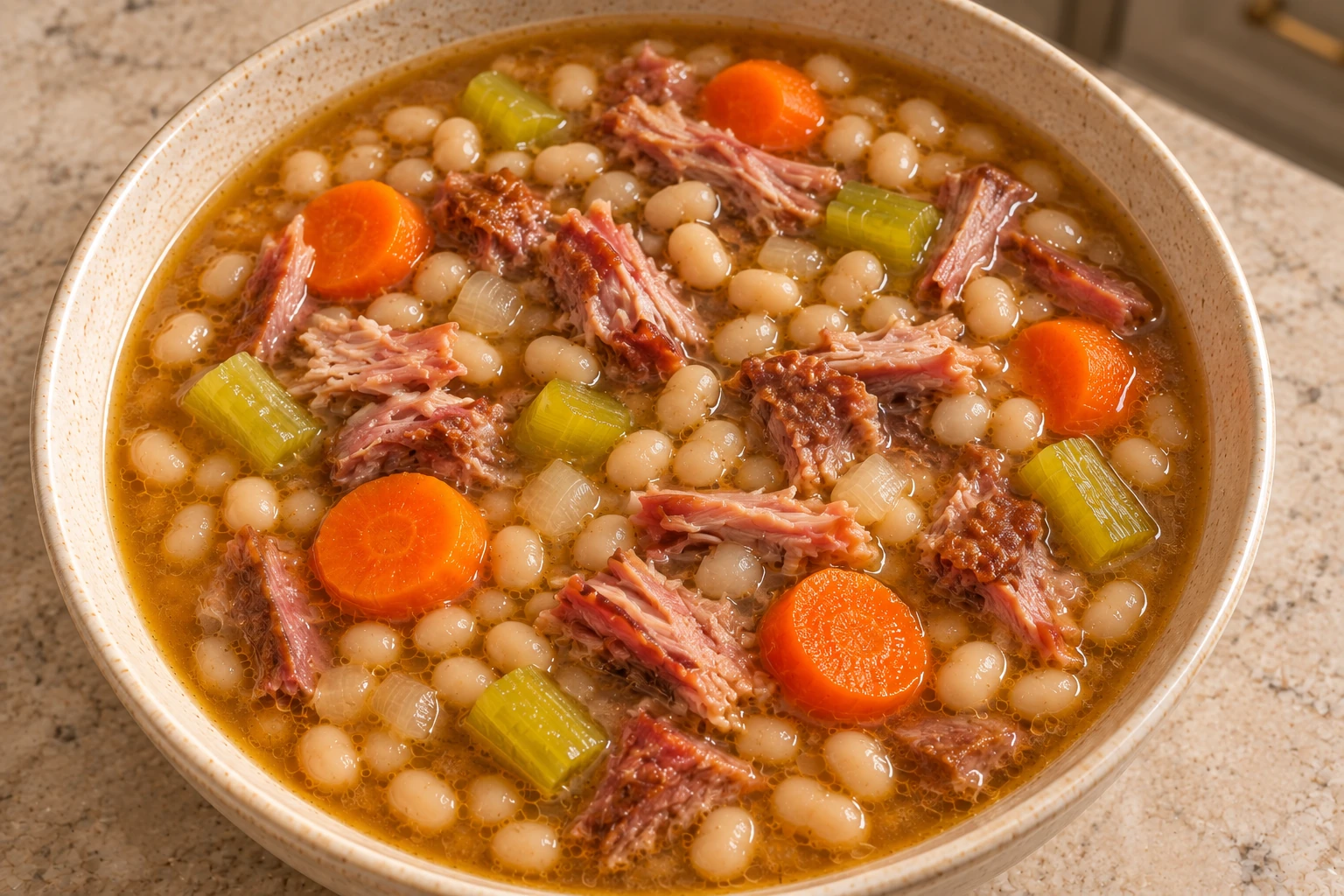
The finished soup should have separate pieces you can still recognize. The carrots hold their round shape, the celery and onion are soft, the pork is pulled into irregular pieces, and the navy beans are tender enough to give the broth some body. A spoonful should carry beans and pork with it instead of leaving every solid at the bottom of the bowl.
With fresh hocks, the aroma is pork, garlic, thyme, and chicken Meat Stock. Naturally smoked hocks add smoke only when you choose that branch. The broth may look golden or slightly cloudy from the soft beans and meat. That is normal. What matters is that the beans have no firm centers and the pork is tender, not a required shade of broth.
Full GAPS Notes
This is a Later Full GAPS soup because properly prepared white navy beans are the limiting ingredient. Bring them in only after digestive symptoms have settled and they are tolerated. The fermentation also assumes that the homemade whey or kefir you choose is already part of your current GAPS progression.
Use homemade raw-meaty chicken Meat Stock for the full 8 cups. Meat Stock begins with raw meat on the bone, joints, skin, and connective tissue and cooks for a few hours. Long-cooked bare-bone broth is a different preparation. This recipe needs the finished chicken Meat Stock before the slow cooker is loaded.
The naturally smoked route is optional. Read every ingredient on the hocks. Natural smoke does not make added sugar, curing chemicals, or other additives disappear. If that route is not appropriate yet, use 2 fresh additive-free uncured hocks and expect a clean pork-and-thyme flavor instead.
Storage and Serving
Serve the soup hot once the beans are heated through and the seasoning is right. Six to eight servings is a realistic range because bowl size and the amount of meat on the hocks vary. Keep the card at one batch when you want the original pot, then use its multiplier to increase all fixed ingredients together.
Cool leftovers promptly in shallow glass or stainless-steel containers instead of leaving a full slow-cooker crock on the counter. Refrigerate covered and use within 2 days, or freeze meal-size portions for longer storage. Reheat only the portion you need until the broth is hot throughout. The beans will continue to thicken the soup slightly as it rests.
If you want to divide the work, finish the fermented beans first, cook and drain them, and keep them cold while the hocks cook. Add them only during the final heating step. That preserves the complete bean method and keeps already-soft beans from spending another six hours in the slow cooker.
Frequently Asked Questions
Why Do the Beans Take Several Days?
The preparation includes three separate jobs: an 18-to-24-hour alkalized soak, a 4-to-6-day fermentation, and a fresh-water cook until very soft. An overnight soak completes only the first part.
Can I Use Canned White Beans?
Not for this version. Canned beans do not document the soak, fermentation, fresh-water cook, and drain used here. Begin with the pound of dried white navy beans so you control the full preparation.
Why Cook the Beans Separately?
The fermented beans need to return to a full boil in fresh water, simmer until very soft, and be drained. The slow cooker is doing a different job with the hocks and vegetables. Combining those jobs too early would leave the bean preparation incomplete.
Can I Use Smoked Pork Hocks?
Yes, later in Full GAPS when naturally smoked meat is tolerated. Choose 2 meaty hocks with no sugar or chemical additives. If the label does not fit, use 2 fresh additive-free uncured hocks instead.
What If the Beans Are Still Firm?
Keep simmering them in fresh water. Test again by pressing one open. The center should be creamy without a chalky spot before you drain the batch and add it to the soup.
Can I Use Bone Broth Instead of Chicken Meat Stock?
Use the 8 cups of homemade chicken Meat Stock named in this recipe. Long-cooked bare-bone broth has a different preparation and timing in GAPS. If you need the component first, follow the linked chicken Meat Stock recipe before starting the slow cooker.
Related Recipes
GAPS Chicken Meat Stock supplies the full 8 cups used here and shows the shorter raw-meaty stock method. Homemade 24-Hour GAPS Yogurt is the starting point when you plan to strain yogurt for the whey used in the bean fermentation.
If keeping meat stock ready is the part of GAPS that makes weekday meals possible for you too, The Stock Pot Course is the most relevant WFLI resource for building that routine around your budget, schedule, and the cuts available to you.
Recommended Equipment
You need a large glass bowl or wide-mouth jar for soaking and fermenting, a roomy stainless-steel pot for the separate bean cook, and a slow cooker with a ceramic crock and glass lid for the soup. Keep the appliance fully supported on a dry counter. A fine-mesh colander makes the bean rinses easier. Use sturdy tongs for lifting the hocks, plus a sharp chef’s knife, a wooden cutting board, and shallow glass or stainless-steel containers for cooling leftovers.
White Navy Bean and Pork Hock Soup
Ingredients
Equipment
Method
- Soak the beans. Put the dried white navy beans in a large glass bowl or jar and cover them with warm water by at least 2 inches. Stir in a pinch of pure bicarbonate of soda. Soak for 18 to 24 hours. Replace the water with freshly simmered warm water once or twice as it cools, adding another pinch of pure bicarbonate each time. Drain and rinse.
- Ferment the beans. Cover the soaked beans with fresh water. Measure how much water you use, then add 1/2 cup homemade whey or kefir for every quart. Leave the beans in a warm place for 4 to 6 days, keeping them under the liquid. Drain and rinse.

- Cook the beans separately. Bring a large pot of fresh water to a full boil. Add the fermented beans and let the water return to a boil. Reduce the heat and simmer until the beans are very soft all the way through, then drain. A bean should crush easily with no firm or chalky center.
- Load the slow cooker. Put the 2 selected pork hocks, chicken Meat Stock, celery, carrots, onion, garlic and thyme into the slow cooker. Do not add the beans yet. Cover and cook on low for about 6 hours, until the pork pulls easily from the bones.
- Finish the soup. Lift out the thyme and pork hocks with tongs. Pull the meat from the bones and return it to the slow cooker. Stir in the fully cooked beans and 2 teaspoons Celtic sea salt. Heat until the beans are hot, then taste and add more salt only if needed.

Leave a comment