

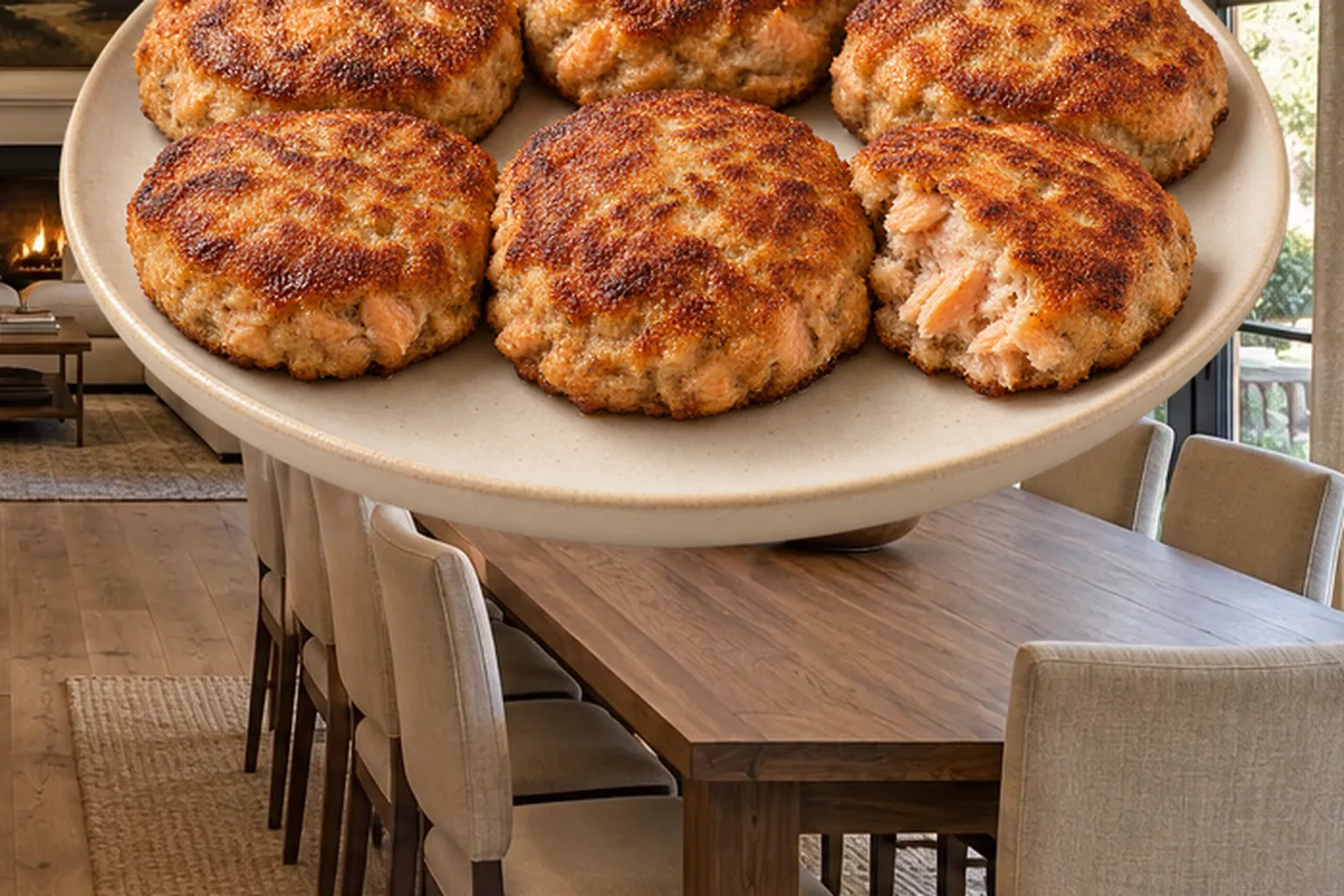
These Full GAPS salmon patties use the shortest ingredient list in this salmon-patty set: canned wild salmon, egg, mineral salt, and rendered cooking fat. They cook quickly, turn deeply golden on both sides, and stay moist and flaky inside.
The formula is built around a ratio because canned salmon comes in different sizes. Use one to two eggs for every can of salmon. Start with one egg. Add the second only when the mixture needs more help holding together.
I do most of our cooking in the morning before homeschool and second shift, so a protein that moves from pantry to skillet in minutes is useful here. You can also bake the same mixture when you would rather put one tray in the oven and keep moving.
Where These Salmon Patties Fit on GAPS
This recipe is for Full GAPS after salmon and eggs have been introduced and tolerated. Choose wild salmon canned only in water, its own juice, or an allowed oil, with no sauce, sugar, starch, preservative, smoke flavor, or other additive.
GAPS permits fish canned in those simple liquids. When the same fish is available in a glass jar, that is the preferred package. The practical rule at the store is still the same: read the entire ingredient list and leave behind salmon packed with sauces or flavor systems.
Cook the patties in lard, tallow, or fat rendered from properly prepared additive-free uncured bacon. The bacon used for that fat must have no sugar, curing agents, smoke flavor, preservatives, or other additives. These patties need no breadcrumb, flour, onion, herb blend, or vegetable filler.
Choose and Drain the Salmon
The source does not assign a can weight, so I am not turning this into a fixed fourteen-ounce formula. One can is the base unit. If you use two cans, double both egg rows on the recipe card and shape proportionally more patties.
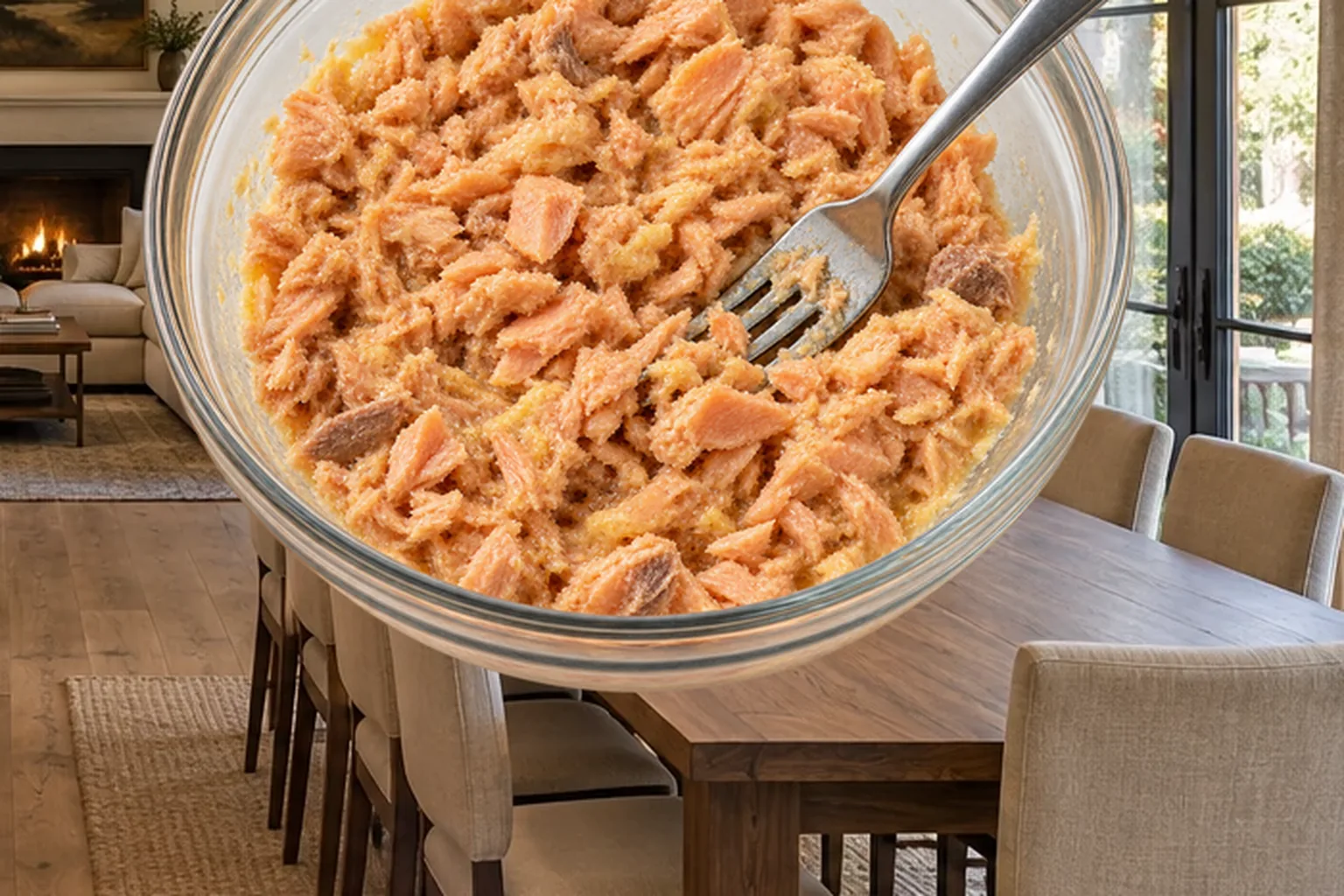
Drain the salmon well and put it in a glass or stainless-steel mixing bowl. Keep the softened skin and tiny bones when they are included. Flake everything with a fork until the large pieces are broken apart but the fish still has visible texture.
Water left in the can can make the mixture loose. Press the lid against the salmon while draining, or let the fish sit briefly in a fine stainless strainer. You want moist fish, not liquid pooling at the bottom of the bowl.
Use the Egg-per-Can Ratio
Add one egg for each can of salmon, then add mineral salt to taste. Mix thoroughly with a fork. The egg should disappear into the salmon instead of sitting in yellow streaks around the bowl.
Press a small handful together. If it holds its shape when you set it back in the bowl, stop at one egg. If it crumbles immediately, add the optional second egg allowed for that can and mix again. Do not add flour to solve a loose mixture.
The finished mixture should look evenly moistened and cohesive while remaining visibly flaky. It should not look like a smooth purée. Shape it into six to nine patties of similar thickness so the whole batch reaches the same golden endpoint.
Cook the Patties in a Skillet
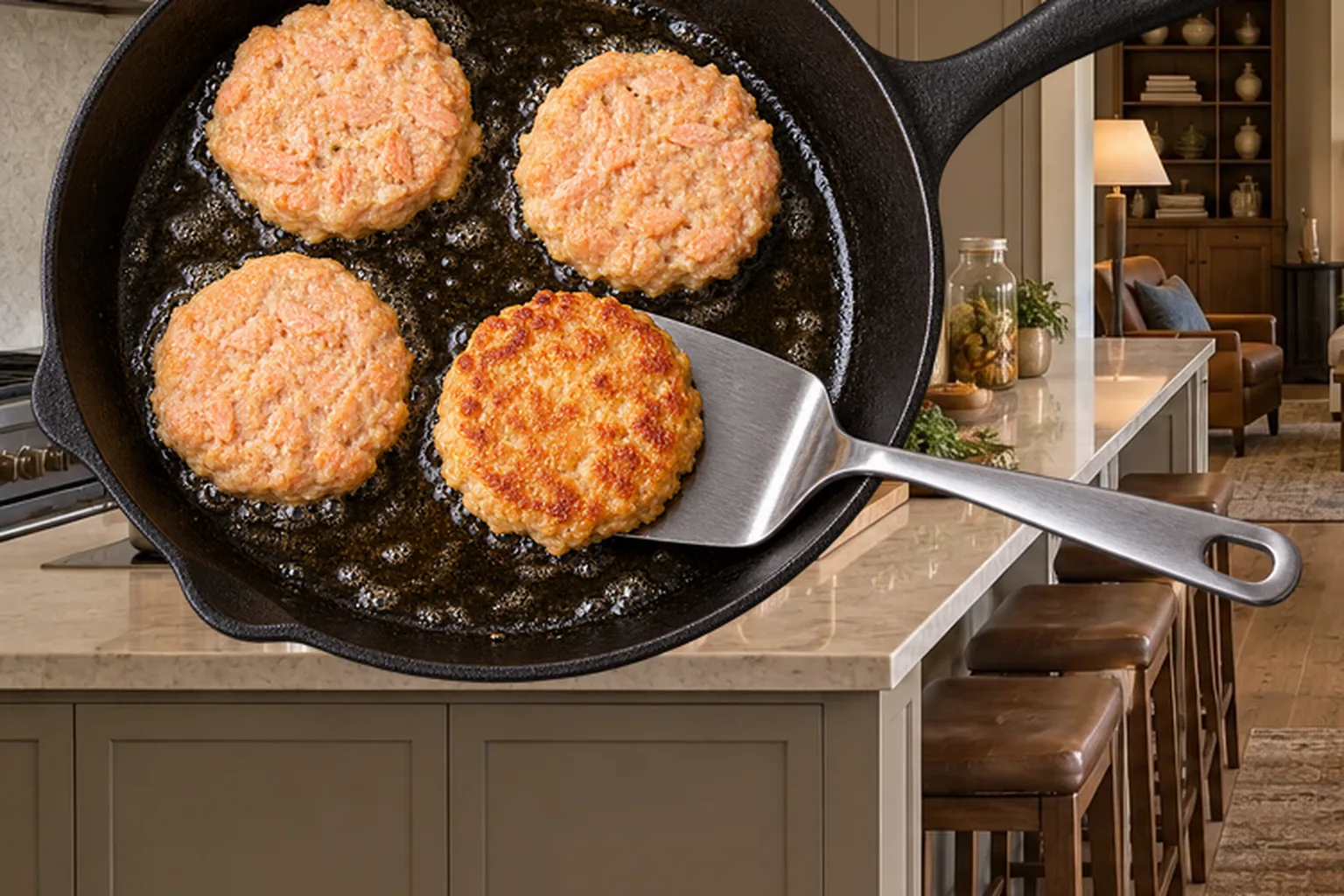
Heat a cast-iron or stainless-steel skillet over medium-high heat. Add enough lard, tallow, or qualifying rendered bacon fat to coat the bottom. Let a solid fat melt and spread across the cooking surface before adding the patties.
Place the patties in the hot fat with enough room for a thin spatula to reach each edge. If the skillet cannot hold the full batch without crowding, cook in rounds. Crowded patties trap steam and make clean browning harder.
Cook the first side for two to three minutes. Watch the lower edge. It will change from soft salmon pink to firm and matte, and the patty should release when a thin spatula slides underneath. If it tears or clings, give it a little more time before forcing the flip.
Flip once and cook the second side for another two to three minutes. Both flat faces should be golden brown. The center should remain moist and flaky rather than dry or bread-like.
Use the Oven Method When It Fits Better
Heat the oven to 400°F. Grease an uncoated stainless-steel or cast-iron baking pan with a little of the same rendered fat. Arrange the shaped patties with room to turn them.
Bake for 20 minutes total. Flip every patty after 10 minutes, then return the pan to the oven for the remaining 10 minutes. The oven version uses the same salmon, egg, salt, and yield. It does not need a breadcrumb coating or oil spray.
The skillet gives you direct contact browning and a crisper surface. The oven lets you cook the full batch with less attention. Choose the method that fits the meal, and keep the formula itself unchanged.
Serve the Patties Without Hiding Them
Serve the patties hot with a simple vegetable side, a green salad, or raw vegetable sticks. The Roasted Broccoli Salad With Lemon Vinaigrette gives you a warm vegetable and a raw finished dressing beside the fish.
For a creamy dip, start with Full GAPS Immersion-Blender Mayonnaise and turn it into the tartar-style sauce your family uses. Keep the condiment separate until serving so refrigerated or frozen patties stay plain and easy to reheat.
Store and Reheat the Cooked Patties
Cool the cooked patties before placing them in a covered glass container. Refrigerate for up to three days. They can be eaten cold, brought to room temperature, or reheated.
Warm one patty in a skillet with a little rendered fat for about a minute, or use a toaster oven for about 10 minutes. Heat only until the center is hot so the salmon does not dry out.
Freeze cooked patties in an airtight glass container for up to four months. Separate layers so you can remove one portion without thawing the whole batch. Thaw in the refrigerator or warm a frozen patty in the toaster oven.
Recommended Equipment
Use a glass or stainless-steel mixing bowl, a dinner fork, and a thin stainless-steel spatula. For the skillet method, use an uncoated cast-iron or stainless-steel skillet large enough to leave turning room around each patty.
For the oven route, use an uncoated stainless-steel or cast-iron baking pan. Grease it with the same rendered animal fat used for the skillet version.
Frequently Asked Questions
How Many Eggs Should I Use?
Use one to two eggs for each can of salmon. Mix in one egg first. Add the optional second egg only when the mixture will not hold together.
What Size Can Does This Recipe Need?
The source does not assign a can weight. Follow the egg-per-can ratio rather than inventing a fixed size.
Can I Leave the Salmon Bones In?
Yes. Keep the softened skin and tiny bones when present, and mash them through the salmon with the fork.
Can I Use Rendered Bacon Fat?
Yes, when it comes from properly prepared additive-free uncured bacon with no sugar, curing agents, smoke flavor, preservatives, or other additives. Lard and tallow also work.
Why Are My Patties Falling Apart?
Drain the salmon well, mix the egg through every flake, and wait for the first side to release before turning. Use the optional second egg only within the allowed one-to-two-eggs-per-can range.
Can I Bake Them Instead?
Yes. Bake at 400°F for 20 minutes and flip after 10 minutes. Keep the same salmon, eggs, mineral salt, and rendered fat.
How Many Patties Does One Batch Make?
The source yields about six to nine patties. Patty size determines the exact count, so keep their thickness even rather than forcing a specific number.
Full GAPS Salmon Patties Recipe
Full GAPS Salmon Patties With Egg and Rendered Fat
Ingredients
Equipment
Method
- Drain the canned salmon well. Keep the softened skin and tiny bones when present, and flake everything in a glass or stainless-steel bowl with a fork.
- Add the first egg and mineral salt. Mix until the egg is evenly distributed and the salmon remains visibly flaky.

- Press a small portion together. If it holds its shape, stop. If it crumbles immediately, mix in the optional second egg allowed for that can.
- Shape six to nine patties of similar thickness.
- For the skillet method, heat a cast-iron or stainless-steel skillet over medium-high heat. Add enough rendered animal fat to coat the bottom.
- Add the patties without crowding. Cook 2 to 3 minutes, until the lower edges are firm and matte and the first side is golden enough to release.

- Flip once and cook the second side for 2 to 3 minutes, until both faces are golden and the center remains moist and flaky.
- Serve hot.
- For the oven alternative, heat the oven to 400°F and grease an uncoated stainless-steel or cast-iron baking pan with the same rendered fat.
- Arrange the patties with room to turn, bake for 10 minutes, flip, and bake 10 minutes more.
Notes
Tried this recipe?
Let us know how it was!Make the Weekday Protein Plan Easier
The planned Weekly Kitchen Rhythm Planner will help you map quick skillet meals, freezer portions, and the days when an oven batch makes more sense. Find the current WFLI guides and offers in the WFLI shop.


Leave a comment