Ingredients
Equipment
Method
- Drain the canned salmon well. Keep the softened skin and tiny bones when present, and flake everything in a glass or stainless-steel bowl with a fork.
- Add the first egg and mineral salt. Mix until the egg is evenly distributed and the salmon remains visibly flaky.

- Press a small portion together. If it holds its shape, stop. If it crumbles immediately, mix in the optional second egg allowed for that can.
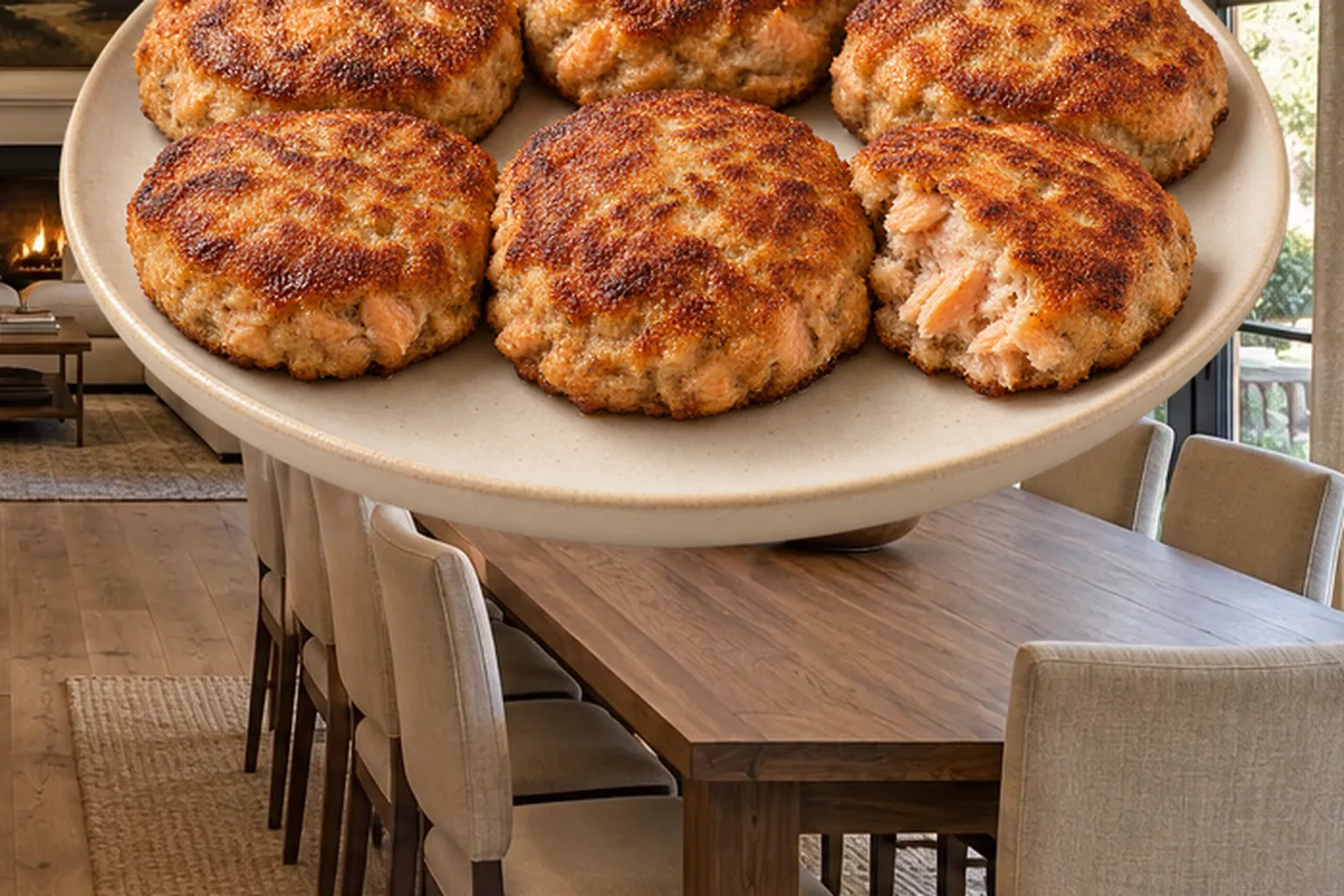
- Shape six to nine patties of similar thickness.
- For the skillet method, heat a cast-iron or stainless-steel skillet over medium-high heat. Add enough rendered animal fat to coat the bottom.
- Add the patties without crowding. Cook 2 to 3 minutes, until the lower edges are firm and matte and the first side is golden enough to release.

- Flip once and cook the second side for 2 to 3 minutes, until both faces are golden and the center remains moist and flaky.
- Serve hot.
- For the oven alternative, heat the oven to 400°F and grease an uncoated stainless-steel or cast-iron baking pan with the same rendered fat.
- Arrange the patties with room to turn, bake for 10 minutes, flip, and bake 10 minutes more.
Notes
Full GAPS after salmon and eggs are introduced and tolerated. The source yields about 6 to 9 patties from the one-can base ratio. Use wild salmon packed only in water, its own juice, or an allowed oil, with no sauce, sugar, starch, preservative, smoke flavor, or other additive. Use 1 to 2 eggs per can. Refrigerate cooked patties up to 3 days or freeze up to 4 months.